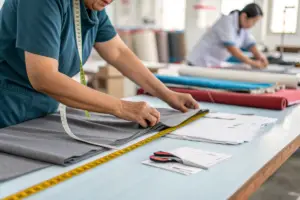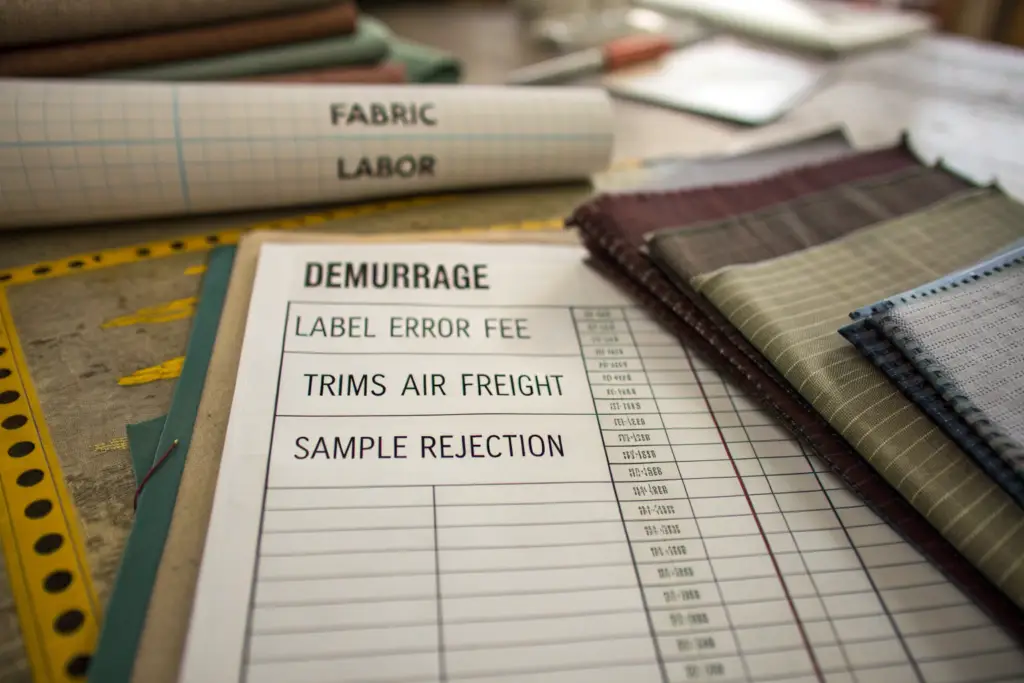
You have the spreadsheet open. The factory quoted you $6.50 per unit FOB. You calculated the ocean freight at $0.80 per unit. You added your 12% duty. You projected a beautiful 65% margin. You are a genius. Then, three months later, you look at your actual credit card statement and your accounting software. The margin is 42%. Where did the money go? It evaporated into the Hidden Costs of clothing production. A brand owner I work with calls this the "Phantom Tax." It is the gap between the quoted price and the actual landed cost.
The hidden costs in clothing production and logistics fall into three main categories: Sampling and Development Fees (unbudgeted revisions, testing), Supply Chain Friction (demurrage, customs exams, split shipments), and Quality Failure Costs (rework, chargebacks, markdowns from late delivery). These costs can easily add 10-20% to the initial quoted FOB price.
You cannot negotiate what you cannot see. At Shanghai Fumao, we believe in transparent costing. We want our B2B partners to understand the real cost of getting a garment to the rack so they can price accurately and protect their profit. Let me pull back the curtain on the most common and expensive surprises that eat away at your bottom line, and show you how a disciplined clothing manufacturer helps you avoid them.
What Are the Real Costs of Sampling and Product Development?
The FOB price you negotiate is for the bulk production of a perfect, approved style. It does not include the journey to get to that perfect style. The sampling phase is often treated as a sunk cost of doing business, but unmanaged, it is a profit killer before you even sell a single unit.
Hidden development costs include: Rush Fees for lab dips and strike-offs, Multiple Sample Iterations due to poor fit or miscommunication, International Courier Fees (often $50-$100 per sample shipment), and Fabric Surcharges for sample yardage. These costs are rarely included in the initial "per unit" bulk quote.
I recall a women's wear brand that went through five rounds of fit samples on a tailored jacket. Each round required a new sample to be cut and sewn ($150 labor + $50 fabric), and then express shipped to the US ($60). That single style cost them over $1,200 in development before they ordered a single unit. If they had ordered only 500 units, that development cost added $2.40 per unit to their actual cost. That wiped out a huge chunk of their expected margin. This is why we push so hard for Digital Sampling and clear Tech Packs. It reduces the number of physical iterations. This is a key area where AI in garment sourcing is making a huge impact.
Why Are Lab Dip and Strike-Off Fees More Than You Think?
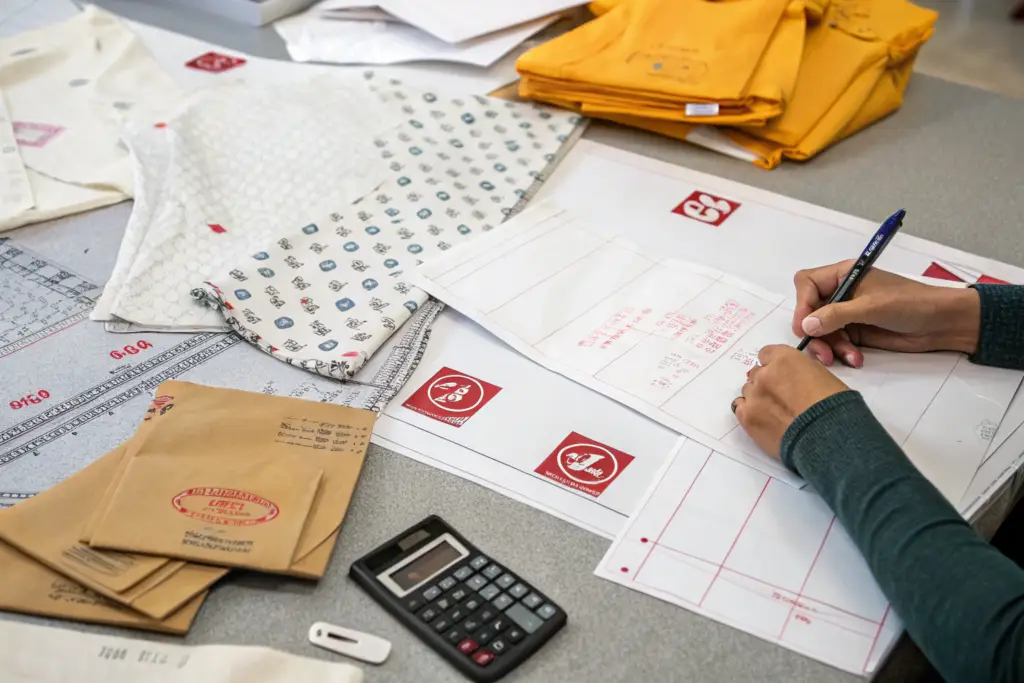
A lab dip is a small swatch of fabric dyed to match your color. A strike-off is a small sample of your print on the actual fabric. These sound like minor, free services. They are not. The dye house charges for the machine time and the dye stuff. A single lab dip can cost $50-$100. If it takes three tries to match the exact shade of "Dusty Rose," that is $300 in color matching fees before you buy a yard of bulk fabric.
Furthermore, if you are doing a placement print or an engineered print (like a border print on a skirt), the strike-off fee can be $200-$400 because it requires a special screen setup. These costs are usually passed through to the client. We always quote these fees upfront. Beware of factories that say "Lab dips are free." They are not free. They are burying the cost somewhere else in the garment price, or they are using a low-quality dye house that will cause you color matching problems later.
How Much Do Fit Sample Revisions Actually Cost?
The sample itself has a cost: CMT (Cut, Make, Trim) plus Fabric. But the hidden cost is Time. Every round of sampling adds 2-3 weeks to your development calendar. That is 2-3 weeks of lost selling time.
If you are a brand launching a Spring collection, and sampling pushes your bulk delivery from February 15th to March 5th, you just missed two weeks of peak selling. That is a hidden cost far greater than the $150 sample fee. It is lost profit from compressed full-price sales. This is why we offer Production Upon Sample Approval and why we are so strict about measurements on the first sample. We want to get it right on Sample #1 to protect your timeline and your margin.
What Logistics Fees Surprise First-Time Importers?
You have budgeted for the ocean freight. The factory told you it is $2,800 for a 40ft container. You think you are done. Then the container arrives at the Port of Los Angeles. And the invoices start arriving in your inbox. These are the Port Fees and Accessorial Charges that are not included in the standard ocean freight quote.
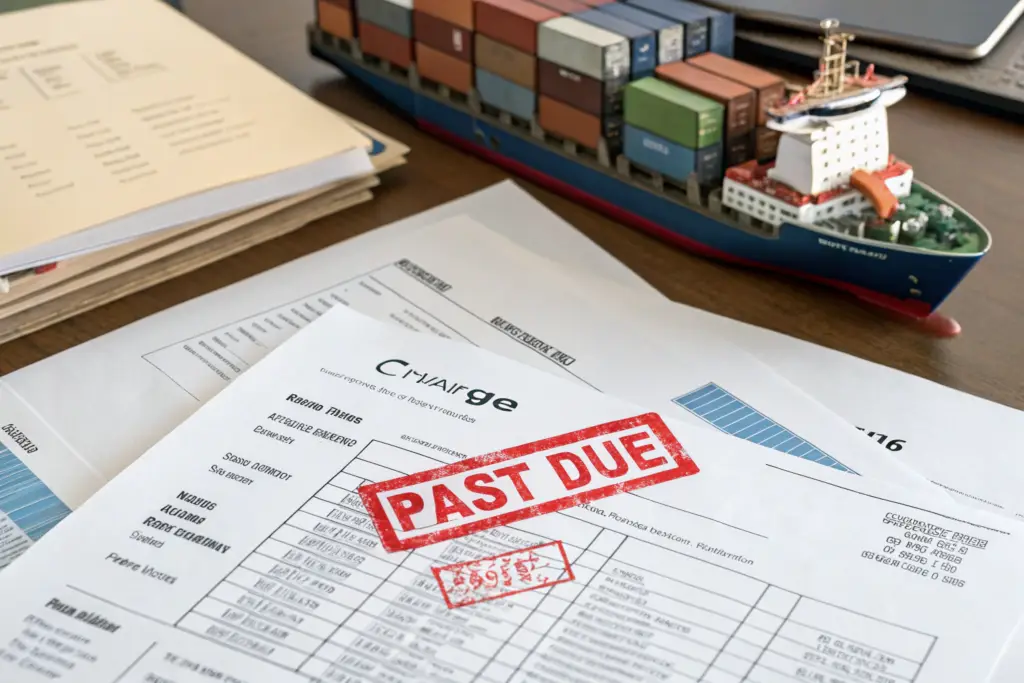
Common hidden logistics fees include: Demurrage (storing the container at the port past free time), Detention (keeping the container at your warehouse too long), Chassis Fees (renting the wheels to move the container), Pier Pass/TMF (infrastructure fees at congested ports), and Customs Exam Fees (if your container is selected for inspection).
I had a distributor client who received a $2,200 bill for Demurrage because his previous factory had mislabeled the cartons, and the warehouse couldn't locate the specific SKU the trucker needed. By the time they sorted it out, the "free days" had expired. The client had to pay $200 per day just to let the container sit on the dock. This is a pure loss. This is why DDP shipping is so valuable. When we manage the logistics, we absorb the risk of these fees. We are incentivized to clear the container fast. For FOB buyers, these fees are a constant danger.
What Is the Real Cost of a US Customs Exam?
You hope it never happens. But statistically, about 3-5% of containers are flagged for an exam. There are different levels:
- VACIS (X-Ray): Usually quick, minimal cost.
- Tailgate Exam: They open the back and look at the first few cartons. Cost: $300-$500 for the exam fee, plus the trucker's waiting time.
- Intensive Exam: They pull the container to a Centralized Examination Station (CES), unload everything, and inspect it. Cost: $1,000 - $3,000+ in exam fees, labor, and re-loading charges. Plus 7-14 days of delay.
If you are not prepared for this, it can destroy your cash flow. A factory that provides meticulous, accurate documentation (packing lists, invoices, fabric certificates) significantly reduces the chance of an intensive exam. This is a hidden value of working with an experienced clothing manufacturer.
How Do "Split Shipments" Double Your Costs?
Your order is 10,000 units. The factory says, "We can ship 6,000 now, and 4,000 in two weeks." This sounds helpful. It is a trap. You just turned one consolidated shipment into two.
Instead of paying one set of documentation fees, one port charge, one trucking delivery fee, you are now paying double. The cost per unit for logistics on the 4,000 unit tail-end shipment is astronomically high. It is far better to wait and ship the full container. We always advise clients against split shipments unless the cost of lost sales from waiting exceeds the extra logistics cost. This is a key part of reliable delivery strategy.
How Do Quality Failures Create Hidden Financial Drag?
The goods arrived. They are mostly okay. But you find 50 units with broken zippers. And 100 units with a stain on the sleeve. You do not return the whole shipment. You "make it work." But the cost of these defects is far higher than just the wholesale value of those 150 units.
Hidden quality costs include: Rework Labor (paying a local seamstress to fix hems), Customer Returns and Refunds (including outbound and return shipping), Customer Service Time (handling complaints), and Brand Damage (lost future sales from disappointed customers). These costs are rarely tracked back to the specific production run, but they bleed the business dry.
I worked with a men's wear brand that had a consistent issue with buttons falling off their shirts. They had a 3% return rate attributed to "missing buttons." They thought, "It's just a button." But the average cost of processing a return (shipping, inspection, repackaging) was $12. For 3,000 units sold, that was 90 returns. That was over $1,000 in direct costs, plus the lost opportunity to sell that shirt at full price. Over a year, this "minor" issue cost them $15,000. This is why our quality control focuses on seemingly small details like button attachment security and thread tension. Prevention is the only cure for hidden quality costs.
What Are Retailer Chargebacks and How Do They Erode Profit?
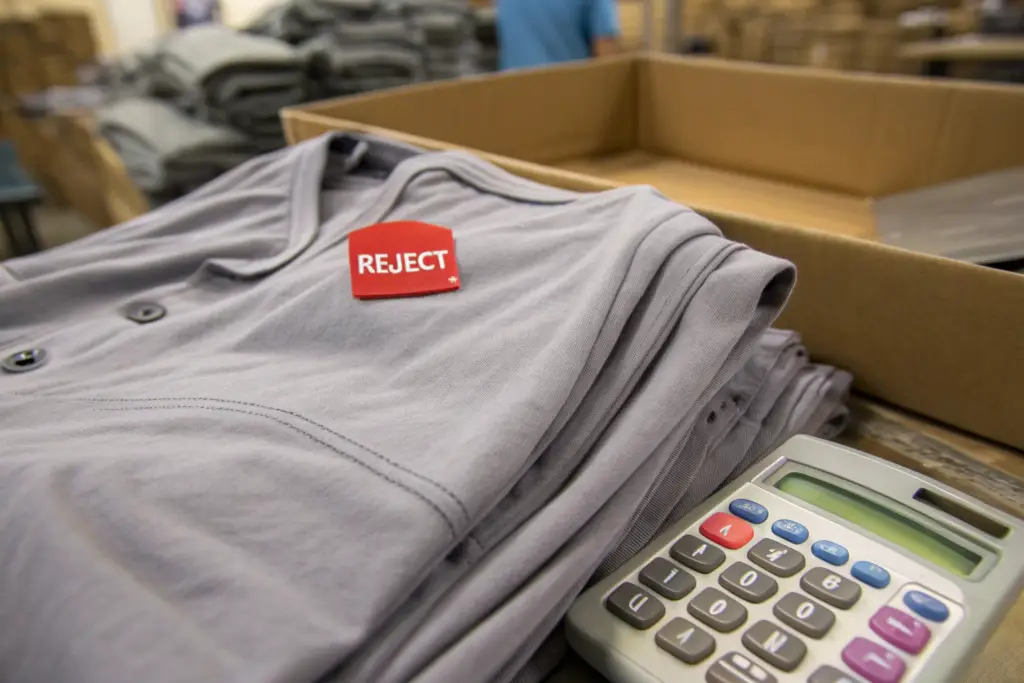
If you sell wholesale to large retailers, this is the single biggest hidden cost. A Chargeback is a fine deducted from your invoice for violating the retailer's vendor compliance manual.
- Late Delivery: $500 - $5,000 fine or 3-5% of invoice value.
- Incorrect Labeling: Barcode doesn't scan? Fine. Missing hangtag? Fine.
- Poor Packaging: Wrong carton size? Wrong polybag thickness? Fine.
I have seen a brand lose 15% of their invoice value to chargebacks because their factory used a generic carton that didn't meet the retailer's specific requirements. The factory had saved $0.50 per carton. It cost the brand $7,000 in fines. This is the definition of penny wise, pound foolish. We maintain a library of Retail Compliance Manuals for major US stores. We ensure every shipment meets the specific carton marking, labeling, and packing requirements of the final destination. This is a core service for large company buyers.
What Is the True Cost of a Customer Return?
Let's break down the math of a single returned $48 dress that arrived with a loose thread the customer didn't want to deal with.
- Refund: -$48 Revenue
- Outbound Shipping: -$8 (cost you paid)
- Return Shipping: -$8 (label you provided)
- Warehouse Labor: -$4 (to process and inspect)
- Lost Opportunity: -$24 (you can't resell it at full price if it's slightly worn or out of season)
- Total Cost of That One Return: ~$92
You lost money on that sale. Preventing that one loose thread in the factory costs pennies. Failing to prevent it costs nearly a hundred dollars. This is the economic reality that drives our quality assurance obsession at Shanghai Fumao. We are not just making clothes. We are protecting our clients' profit margins.
What Financial Risks Are Hidden in Payment and Currency Terms?
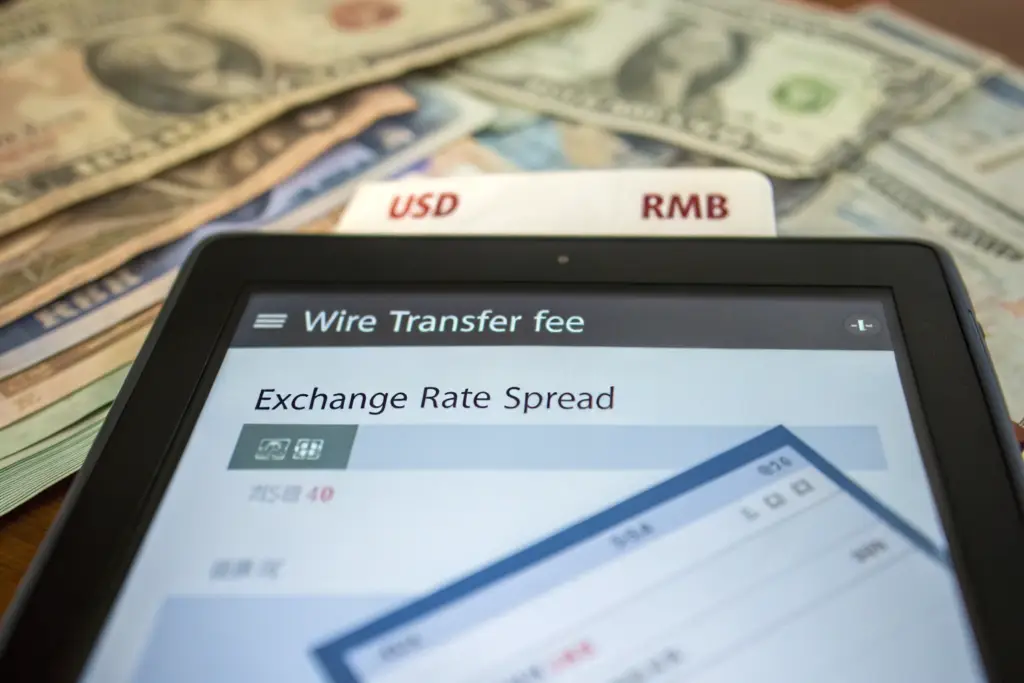
You negotiated a price in US Dollars. You wire the money. You think that is the end of it. But the banking system takes a cut. And the value of the dollar relative to the Chinese Yuan fluctuates daily. These financial frictions are invisible on the garment spec sheet but visible on your P&L.
Hidden financial costs include: International Wire Transfer Fees (often $25-$50 per transaction), Intermediary Bank Fees (another $15-$30 deducted en route), and Currency Exchange Rate Fluctuation Risk. If the dollar weakens against the RMB between the time you quote and the time you pay the balance, your actual cost in dollars goes up.
We try to minimize these costs for our clients. We use FinTech platforms that offer better exchange rates and lower fees than traditional banks. We also encourage clients to lock in pricing and pay deposits promptly to avoid currency swings. For a brand operating on thin margins, saving 2% on currency exchange can be the difference between a profitable season and a loss. This is part of the competitive pricing equation that goes beyond the FOB quote.
How Do Bank Fees Eat Into Small Order Profitability?
If you are placing a small order of $5,000, the flat fees hit hard. A $50 wire fee on a $5,000 order is a 1% surcharge. On a $50,000 order, it is only 0.1%. This is one reason why minimum order quantities (MOQs) exist in B2B manufacturing. The administrative and financial overhead of small orders is proportionally much higher. Understanding this helps brand owners see why factories are reluctant to accept very small runs. We offer consolidated payment options for clients with multiple small orders to reduce this fee burden.
What Is the Impact of Tariff Engineering and Misclassification?
This is a dangerous hidden cost—or a hidden saving. The Harmonized Tariff Schedule (HTS) is complex. A men's knit shirt might have a duty rate of 19.7%. A similar woven shirt might have a duty rate of 26.9%. Classifying the garment correctly is a legal requirement.
Some factories promise a lower duty rate by misclassifying the product (e.g., calling it a "sleepwear top" when it is a blouse). This is fraud. If US Customs catches it, the brand owner (the Importer of Record) is liable for back duties, penalties, and interest. This can be a five or six-figure bill. We classify all goods accurately using official USITC HTS lookup tools. We will never risk our clients' businesses with illegal tariff engineering. The "savings" are a hidden liability.
Conclusion
The difference between a profitable apparel brand and a struggling one often lies in how well they manage the costs that are not on the factory invoice. The FOB price is just the tip of the iceberg. Beneath the surface lurk the sampling fees, the port storage charges, the retailer fines, the currency fluctuations, and the silent profit killer of poor quality.
You cannot eliminate these costs entirely. They are part of the global manufacturing ecosystem. But you can predict them and mitigate them. You can work with a clothing manufacturer like Shanghai Fumao that provides transparent costing upfront. You can choose DDP shipping to cap your logistics exposure. You can invest in rigorous quality control to prevent the downstream costs of returns and chargebacks.
A cheap factory that hides these costs will ultimately be more expensive than a transparent factory that helps you plan for them. Protecting your bottom line means understanding the full financial picture.
If you want a partner who helps you see the whole iceberg, not just the tip, let's discuss your next project. Our Business Director, Elaine, can provide a detailed cost breakdown template to help you plan for a truly profitable production run. Email Elaine at: elaine@fumaoclothing.com.