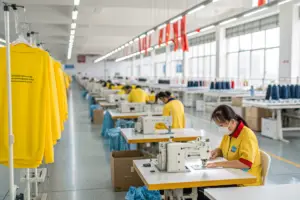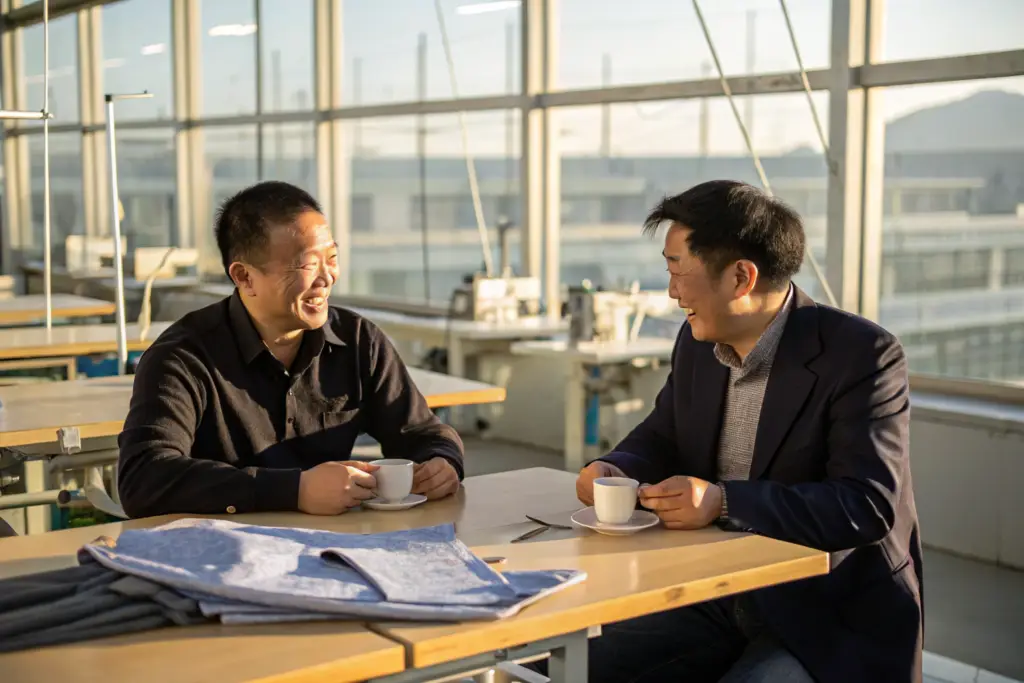
I used to dread my phone ringing. Every call from a brand partner felt like a problem. A shipment was delayed. A color was off. A price had changed. My stomach would tighten before I answered. I assumed this was normal. Manufacturing is stressful. Relationships with overseas factories are supposed to be tense. Then I met a brand owner who had been working with the same factory for 12 years. I asked him how often they had disputes. He looked confused by the question. "We don't have disputes," he said. "We have conversations. We solve problems together. I trust them completely." I did not believe him at first. I assumed he was lucky or naive. But over the next few years, I studied his approach and rebuilt my own factory's relationships around the same principles. Today, our brand partners call us with ideas, not complaints. The stress is gone. The partnership is real.
You build a completely stress-free relationship with your overseas wholesale clothing factory by replacing transactional opacity with radical transparency, replacing hope with a jointly owned production calendar, and replacing the "buyer versus supplier" mindset with a "single profit and loss statement" partnership. Stress in factory relationships comes from three sources: financial surprises, communication breakdowns, and the fear that the factory is hiding problems. You eliminate financial surprises by agreeing on an open-book costing model where the factory's margin is visible and fair. You eliminate communication breakdowns by assigning a single dedicated point of contact who responds within hours, not days. And you eliminate the fear of hidden problems by building a culture where the factory is rewarded for surfacing bad news early, not punished. The result is a relationship where you spend your mental energy on growing your brand, not on managing your factory.
The stress-free factory relationship is not a myth. It is a system. It requires effort to build and discipline to maintain. But once it is built, it transforms your business from a source of anxiety into a source of competitive advantage. I want to share exactly how we built this system at Shanghai Fumao, and how you can demand and co-create it with any factory you work with.
Why Is Radical Financial Transparency the Only Foundation for a Trust-Based Factory Partnership?
A brand owner once told me she assumed her factory was making a 40% margin on her orders. She had no evidence for this. She had just heard that factories overcharge foreign brands. This suspicion colored every interaction. When the factory asked for a price increase due to rising cotton costs, she assumed it was a lie. She pushed back hard. The factory, feeling distrusted, stopped volunteering information. The relationship spiraled into adversarial silence. Eventually, I showed her our open-book cost breakdown. She saw exactly what the fabric cost, what the labor cost, and what our margin was. The suspicion evaporated. She realized we were not trying to cheat her. We were trying to run a sustainable business. That transparency changed everything.
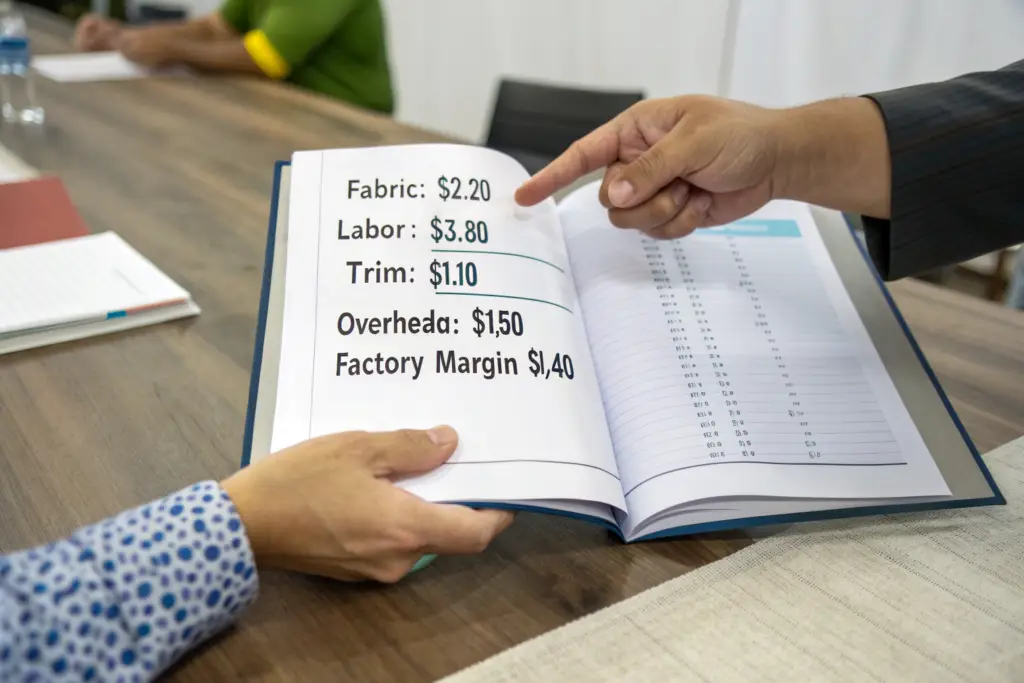
Radical financial transparency eliminates the suspicion that poisons overseas factory relationships. When the factory hides its cost structure behind a single FOB price, the brand fills the information void with worst-case assumptions. When the factory shares a detailed cost breakdown, including its own margin, the brand understands exactly what they are paying for. They see that a price increase is driven by a documented rise in cotton prices, not by factory greed. They see that the factory's margin is reasonable, not exploitative. This transparency is not a risk for the factory. It is a trust accelerator. The brand stops negotiating every line item and starts partnering on cost optimization. They might suggest a fabric substitution that saves money without sacrificing quality. They might agree to larger order quantities that reduce the factory's per-unit overhead. The conversation shifts from "How can I pay less?" to "How can we reduce the total cost together?"
The open-book model does not mean the factory gives away its negotiating power. It means the factory demonstrates that its pricing is fair. A fair price, openly shown, is the strongest defense against a buyer's demand for discounts. The buyer who can see the factory's 8% net margin is much less likely to demand a 10% price cut than the buyer who assumes the factory is hiding a 40% margin.
How Does an Open-Book Costing Model Transform a "Price Negotiation" into a "Cost Optimization" Partnership?
When a brand sees a traditional FOB price of $15.00, they have one lever: demand a lower price. When a brand sees an open-book breakdown showing fabric at $5.50, labor at $4.00, trim at $1.50, overhead at $2.00, and margin at $2.00, they have multiple levers. They might say, "I have a relationship with a zipper supplier that could reduce the trim cost by $0.40. Would you be open to using them?" Or, "If we increase the order quantity from 500 to 800 units, does your labor cost per unit drop?" The conversation becomes a collaborative engineering problem rather than a confrontational haggle. The factory's margin is protected. The brand's cost is reduced through genuine efficiency gains. This is the open-book costing methodology in action. It requires the factory to be confident in its efficiency and transparent in its accounting. The factories that embrace it never go back.
Why Should the Factory's Margin Be Visible and Protected to Create a "Single P&L" Mentality?
A factory that hides its margin invites attack. A factory that openly displays a reasonable 8% to 12% net margin, and explains that this margin funds equipment maintenance, worker training, and quality control, invites respect. The brand understands that a healthy factory margin is in their own interest. A factory that earns no profit cannot invest in better machines or skilled workers. Quality declines. The brand suffers. By making the margin visible and protected, the factory signals that the relationship is not a zero-sum game. The factory's profit is not the brand's loss. It is the engine that sustains the brand's quality. We display our margin structure to every brand partner. It is the most powerful sales tool we have.
What Specific Communication Architecture Removes All Ambiguity and Fear from Daily Production Management?
A brand owner I work with used to wake up at 3 AM to send emails to her factory in China. She would ask for updates on three different orders. She would wait until the next morning for a reply. The reply would be vague. She would send follow-up questions. The cycle would repeat. She was losing sleep and gaining anxiety. Two years ago, we gave her access to a live production dashboard. She can now open her phone at any hour, see exactly what stage each order is in, see the inspection results, and see any flagged issues with the factory's mitigation plan already attached. She stopped sending status inquiry emails entirely. She now sleeps through the night.
You remove ambiguity and fear from daily production management by implementing a three-layer communication architecture. Layer one is a shared, cloud-based production dashboard that provides real-time status visibility without requiring a single email. The brand sees the cutting completion percentage, the sewing line output, and the packing status updated live. Layer two is a weekly 15-minute structured video call with a fixed agenda: review of the dashboard, discussion of any flagged risks, and approval of any decisions needed in the next seven days. Layer three is a 24-hour emergency response protocol for issues that cannot wait for the weekly call. A dedicated merchandiser is assigned to the brand and responds to any urgent message within 24 hours, even if only to acknowledge receipt and provide a timeline for resolution. This architecture eliminates the "just checking in" email and replaces it with structured, predictable information flow. Stress comes from uncertainty. Certainty comes from visibility.
The communication architecture is not expensive technology. It is a commitment to structured information sharing. The factory that provides real-time visibility and a fixed weekly call is the factory that respects the brand's need for predictability. The factory that forces the brand to chase for updates is the factory that creates stress.
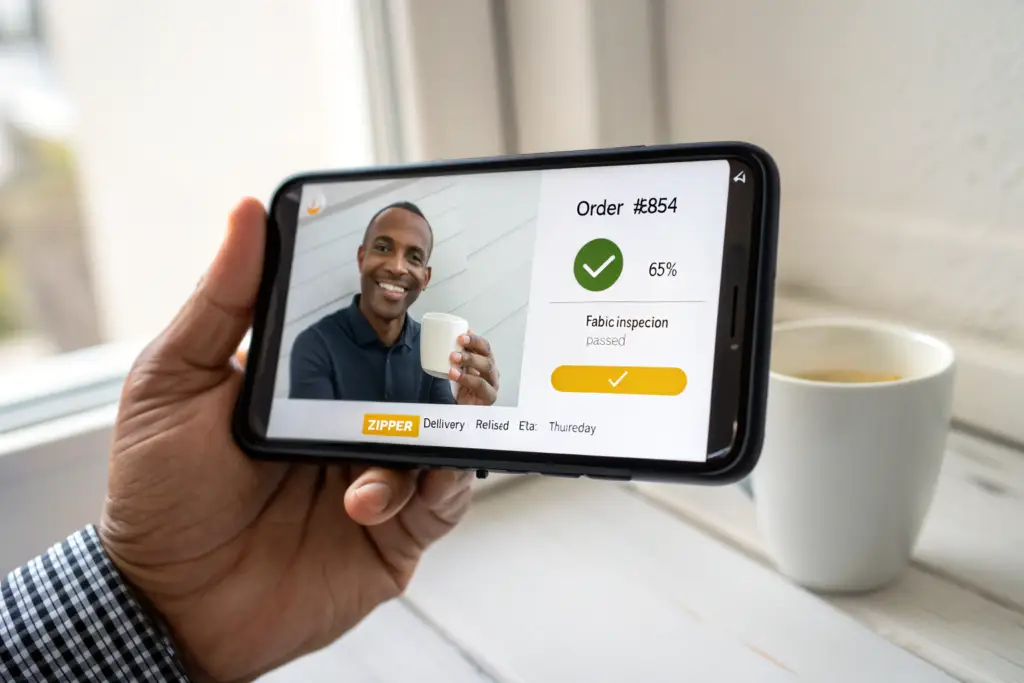
The "just checking in" email is a symptom of an information vacuum. The brand does not know what is happening, so they ask. The factory receives 20 such emails a day from different brands and becomes overwhelmed. Responses become slow and generic. The brand interprets the slow response as evasion and becomes more anxious. The cycle escalates. A shared production dashboard breaks the cycle by filling the information vacuum. The brand looks at the dashboard. The dashboard shows the current status. The brand does not need to send the email. The factory does not need to answer it. Both parties reclaim hours of productive time. We use a production tracking platform that integrates with our shop floor scanning system. The dashboard is not a manually updated spreadsheet that someone forgets to refresh. It is a live feed from the sewing line. The data is as current as the last barcode scan.
What Is the "One Name" Rule and Why Does Having a Single Dedicated Merchandiser Prevent Communication Chaos?
The "One Name" rule states that a brand partner should have exactly one person at the factory who is responsible for their account. That person is a dedicated, bilingual merchandiser. When the brand has a question, they contact one person. That person either answers the question or coordinates internally to get the answer. The brand never has to navigate the factory's internal organization chart. They never get transferred between departments. They never explain their problem twice. The merchandiser becomes the brand's internal advocate. They know the brand's preferences, their quality standards, and their communication style. The dedicated merchandiser model is the single most effective stress-reduction tool in overseas manufacturing. It replaces the faceless organization with a trusted human being.
How Do You Design a "No Surprises" Production Calendar That Both Sides Are Actually Accountable To?
A brand owner once missed her own launch date by three weeks because she took ten days to approve a lab dip. The factory had sent the lab dip on the scheduled date. The brand owner was busy at a trade show and let it sit. When the delivery was late, she blamed the factory. The factory quietly showed her the timestamped email with the lab dip. The delay was hers. The relationship soured because the calendar had no accountability for the brand's side of the process. We now build a joint production calendar that includes brand-side deadlines with equal weight to factory-side deadlines.
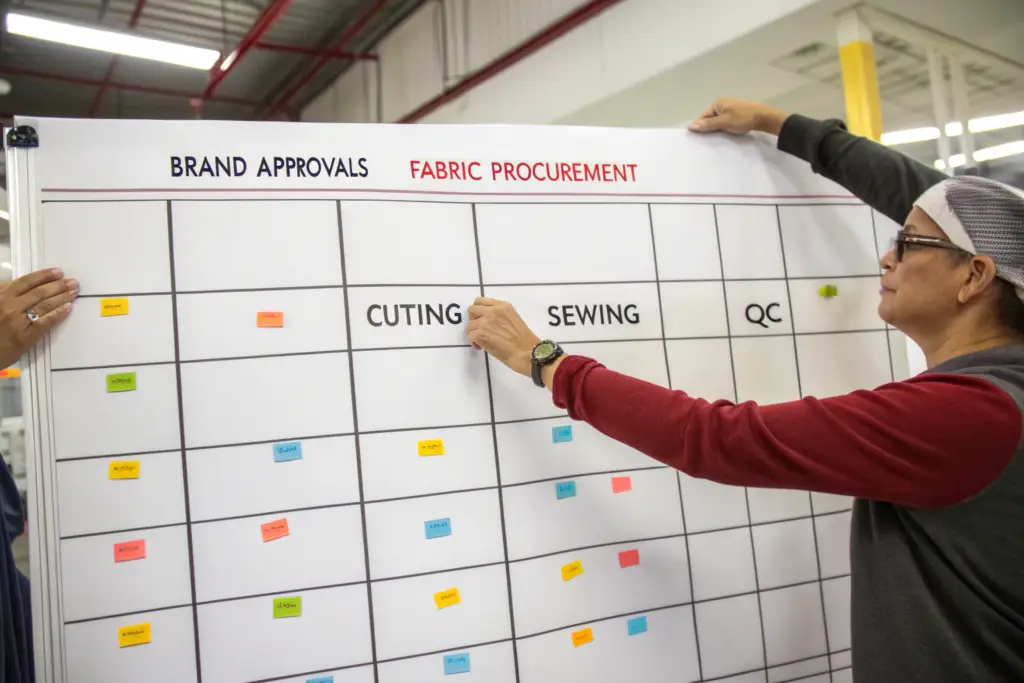
A "No Surprises" production calendar is a jointly owned, legally documented timeline that includes both factory deadlines and brand deadlines. It specifies that the factory will deliver the lab dip by October 5th, and the brand will approve or reject it by October 8th. If the brand misses the October 8th deadline, the shipment date moves back by an equal number of days. This mutual accountability removes the blame game from production delays. When a delay occurs, the calendar shows exactly which party missed which deadline. There is no argument. There is only data. The calendar is reviewed weekly, and any deviation is flagged immediately with a corrective action plan. The stress of a late shipment is replaced by the clarity of a documented timeline. Both parties know exactly where they stand.
The joint calendar is not a punishment tool. It is a planning tool. It forces the brand to allocate internal resources for approvals. It forces the factory to allocate production capacity. It surfaces potential conflicts months in advance. A brand that sees their fabric delivery date conflicting with a Chinese national holiday in October can adjust the timeline before the problem occurs.
How Can Critical Path Method (CPM) Scheduling Solve the Chronic Problem of "The Factory Was Waiting on My Approval"?
The Critical Path Method maps every task required to complete the production, identifies which tasks are dependent on others, and calculates the longest path through the project. The CPM schedule makes visible the fact that a one-day delay in brand approval causes a one-day delay in fabric procurement, which causes a one-day delay in cutting, and so on. When the brand sees the cascading impact of their late approval, they are much more likely to prioritize it. The CPM schedule also identifies which tasks have "float," meaning they can be delayed without impacting the final delivery. This allows the brand to focus their urgency on the critical tasks and relax on the non-critical ones. We build a Critical Path Method schedule for every production order. It is the skeleton of the production calendar.
What Is a "Reciprocal Delay Penalty" Clause and How Does It Force Mutual Respect for Deadlines?
A standard manufacturing contract penalizes the factory for late delivery. It rarely penalizes the brand for late approvals. This creates a one-sided accountability that breeds resentment. A reciprocal delay penalty clause states that if the factory misses a deadline, they are liable for the air freight differential or a discount. If the brand misses an approval deadline, the delivery date is adjusted accordingly, and the brand may be liable for factory idle time if the delay exceeds a threshold. The clause is not about collecting penalties. It is about creating mutual respect for the calendar. When both parties have skin in the game, both parties meet their deadlines. We have found that simply having the clause in the contract, and reviewing it during onboarding, eliminates 90% of approval delays.
Conclusion
A completely stress-free relationship with your overseas wholesale clothing factory is not built on luck or finding the perfect factory. It is built on three deliberate systems. Financial transparency replaces suspicion with partnership. A structured communication architecture replaces chaos with clarity. A mutually accountable production calendar replaces blame with shared responsibility. These systems require investment from both the brand and the factory. They require the factory to open its books and share its data. They require the brand to show up for weekly calls and meet their approval deadlines. The investment is small compared to the cost of the alternative: sleepless nights, angry emails, and a relationship that slowly corrodes into adversarial silence.
The brand owner who told me he had no disputes with his factory was not naive. He was systematic. He had built the systems that prevent disputes from arising. He had chosen a factory that was willing to be transparent, communicative, and accountable. He had held up his end of the partnership. The result was not just a reliable supply chain. It was peace of mind.
At Shanghai Fumao, we have built these systems into our standard operating model. We offer open-book costing to every brand partner. We assign a dedicated merchandiser to every account. We build a joint production calendar with mutual accountability for every order. We provide a live production dashboard so you never have to ask for an update. We do this not because it is easy, but because we have learned that a stress-free brand partner is a loyal brand partner.
If you are tired of the anxiety that comes with managing an overseas factory relationship, we can show you a different way. At Shanghai Fumao, we will walk you through our open-book cost model, our production dashboard, and our joint calendar template. Contact our Business Director, Elaine, at elaine@fumaoclothing.com. She can schedule a video call to show you exactly how our communication architecture works and introduce you to the merchandiser who would manage your account. Your factory relationship should be a source of competitive strength, not chronic stress. Let's build that together.