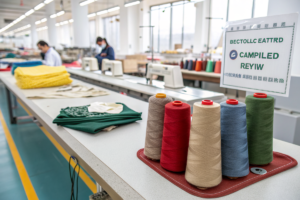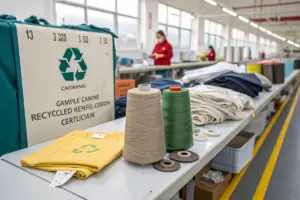
A brand owner I work with used to build her wholesale catalog the old way. She and her designer would sit in a room with coffee, mood boards, and gut feelings. They would pick 40 styles they "loved" and present them to retail buyers. Some seasons, they got lucky. Most seasons, they had a 60% sell-through rate and a warehouse full of the styles nobody wanted. Two years ago, she started feeding her historical sales data into an AI analytics platform. The AI flagged something she had never noticed. Her "core basics" were not her best sellers. Her "fashion forward" styles were. The data showed that her boutique buyers were using her catalog for trend discovery, not replenishment. She cut her basics SKU count by 30% and doubled her fashion styles. Her next season sell-through hit 89%. The AI saw what her intuition missed.
You leverage advanced AI-driven analytics to perfectly optimize your wholesale clothing catalog by feeding your historical sales data, buyer behavior patterns, and real-time market trends into a predictive platform that generates a ranked, color-optimized, margin-weighted assortment plan. The AI analyzes which styles are complementary so you can build "bundled buy" recommendations for retailers. It predicts future demand by comparing your SKU velocity against broader market search trends. It identifies cannibalization, where two similar styles eat into each other's sales. And it continuously A/B tests your catalog layout and pricing strategy, moving slow sellers out of prime positions. The result is a catalog that is not based on a designer's favorite color, but on a statistical probability of a wholesale reorder. This does not kill creativity. It protects your cash flow so you can afford to be creative.
The brands that will dominate wholesale apparel in the next five years are not the ones with the most famous designers. They are the ones that treat their catalog like a data product. Every style is a hypothesis. Every color is a variable. Every price point is a test. The AI provides the laboratory. I want to share exactly how our most advanced brand partners are using these tools, and how you can start applying them to your own wholesale catalog today.
How Can Predictive Demand Forecasting Completely Eliminate Overstock of Unpopular Catalog Styles?
A brand owner I know used to order the same quantity for every style in her catalog. 300 units per style, every season. This "flat buy" approach meant her best sellers sold out in week three, leaving money on the table. Her worst sellers sat on warehouse shelves for six months and eventually sold for below cost. She was essentially taxing her winners to pay for her losers. We connected her sales history to an AI forecasting tool. The tool analyzed three years of sell-through data at the SKU level. It identified that her floral midi dresses sold 4x faster than her solid shift dresses. The tool recommended a dynamic buy: 600 units for the florals, 150 units for the solids. She followed the recommendation. Her overall sell-through rate improved by 22%. Her inventory holding costs dropped by $18,000.
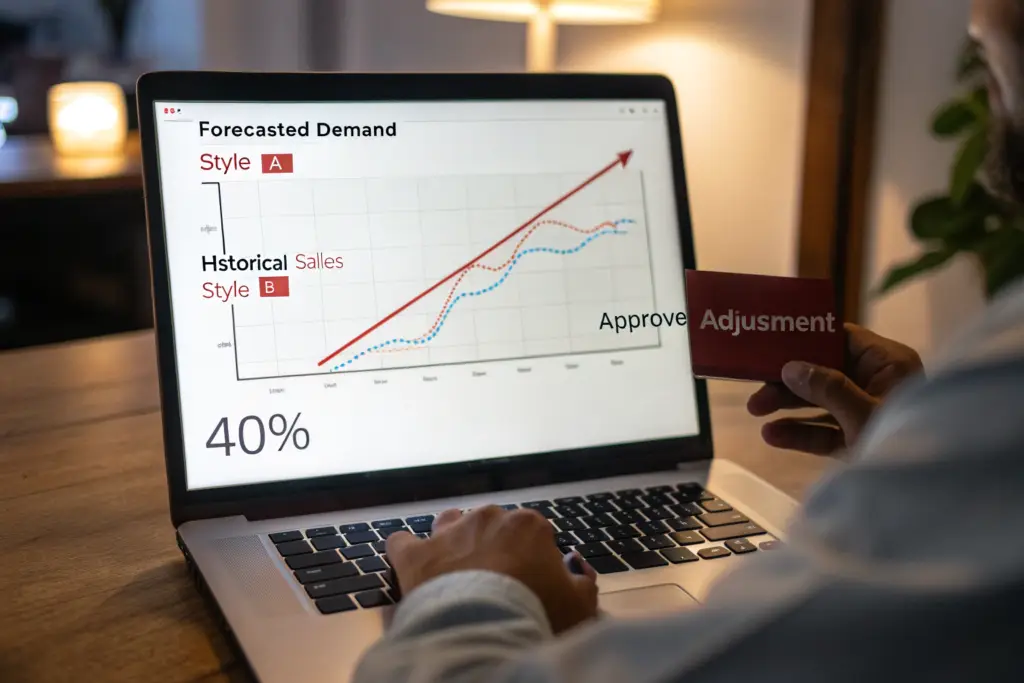
AI-driven predictive demand forecasting eliminates overstock by analyzing historical sales velocity, not just total units sold, alongside external market signals like Google Trends and social media sentiment. The AI does not just look at what sold last year. It analyzes the rate of sale, the weeks of inventory remaining, and the markdown depth required to clear lagging stock. It then generates an optimized buy quantity for each style that maximizes margin while constraining total inventory investment. You no longer guess that a style is "strong." You know, with statistical confidence, that the style has a 92% probability of selling out at full price within six weeks. The system also identifies "zombie styles," those that sell just enough to avoid being cut but not enough to justify their catalog space. Killing these zombies frees up production capacity for the styles that actually drive profit.
The key is feeding the AI clean data. Garbage in, garbage out. The brand must have at least two seasons of clean SKU-level sales data, including markdowns and returns, for the predictions to be reliable. A brand starting from scratch can use proxy data from similar brands, but the real power comes from training the model on your own customer behavior.
How Can AI Clustering Algorithms Group Your Wholesale Buyers by Behavior to Personalize Catalog Recommendations?
Not all wholesale buyers are the same. A boutique in Los Angeles has different customer demographics than a boutique in Chicago. AI clustering algorithms analyze buyer purchase history and group them into segments: "Trend-First Buyers" who always order the new fashion colors, "Replenishment Buyers" who reorder best-selling basics, and "Margin Buyers" who only order when you offer a discount. Once these clusters are identified, you can create digital catalog views tailored to each segment. The Trend-First Buyer sees the new arrivals on page one. The Replenishment Buyer sees their past reorder items with a one-click restock button. The AI clustering in B2B e-commerce increases order size because the buyer feels the catalog was curated for them personally.
What Is a "Zombie SKU" and How Does AI Identify It Before It Drains Your Working Capital?
A Zombie SKU is a style that is not quite dead but not truly alive. It sells one or two units a week. It never sells out. It never hits a zero balance. It just sits there, consuming warehouse space, catalog real estate, and the production team's attention. Human merchandisers often keep Zombie SKUs alive because "it's a classic" or "that one buyer in Texas likes it." AI has no such sentimentality. The AI calculates the contribution margin per cubic foot of warehouse space. A Zombie SKU that generates $200 in gross profit but occupies a pallet position that could hold a best-seller generating $2,000 is flagged for termination. We helped a brand cut 15% of their catalog using a SKU rationalization algorithm. Their revenue stayed flat, but their profit jumped 18% because they stopped producing garments nobody really wanted.
What Role Do Image Recognition and Trend Scraping Algorithms Play in Perfecting Your Color and Design Assortment?
A brand owner I work with was constantly late on color trends. By the time she saw a color trending on Instagram, it was already saturated. She started using an AI image recognition tool that scraped runway shows, street style blogs, and TikTok fashion content. The tool identified that "Digital Lavender" was spiking in visual frequency three months before the traditional trend reports picked it up. She added two lavender pieces to her catalog as a test. They sold out in pre-book. The AI gave her a three-month head start on the trend cycle.
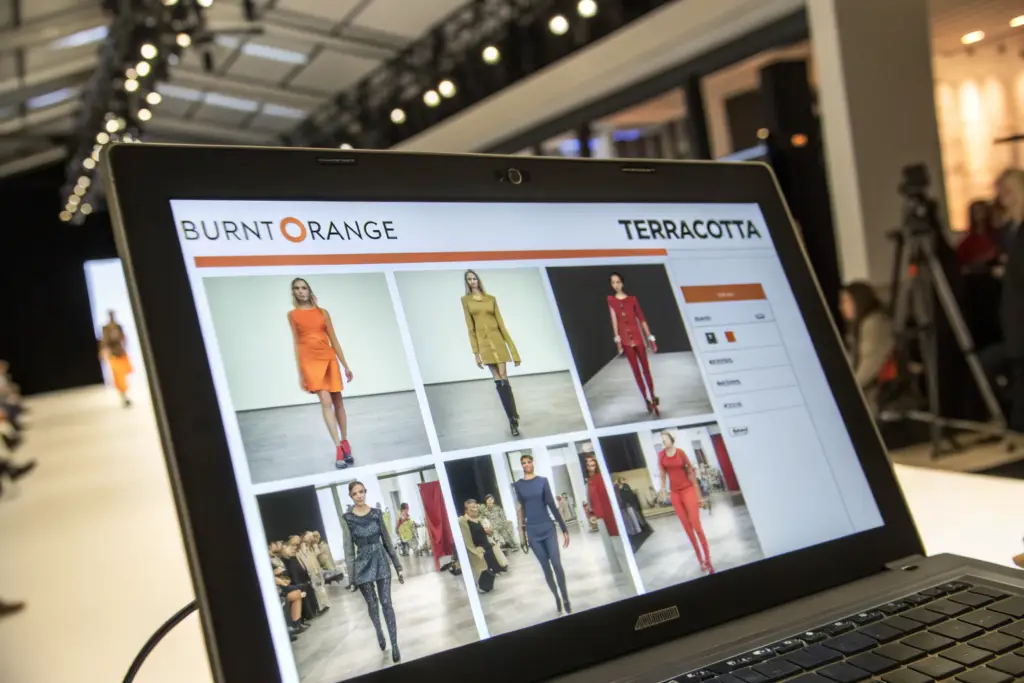
AI image recognition and trend scraping algorithms perfect your color assortment by ingesting millions of images from global fashion weeks, social media, and competitor catalogs, then extracting the dominant color hex codes and pattern types. The AI does not just tell you what is popular now. It graphs the trajectory of a color's frequency over time, identifying "rising" colors that are gaining momentum and "declining" colors that are losing relevance. It also analyzes your own catalog's color mix and benchmarks it against the market. You might discover that your assortment is 40% blue when the market demand is shifting to green. The AI provides a gap analysis that tells you exactly which colors to add and which to drop to align your catalog with emerging demand. This takes the guesswork out of the most expensive decision in fashion: choosing colors that will sell.
The technology is not about replacing designers. It is about giving designers a data-informed palette to work from. The designer's job is to interpret the trend with creativity and brand identity. The AI's job is to make sure the designer is not investing their time in a color the market is about to abandon.
How Can You Use Image Recognition to Prevent "Color Overlap" Cannibalization Within Your Own Catalog?
A common catalog mistake is offering two styles in an identical shade. A customer sees a red blouse and a red dress. They do not buy both. They choose one. The catalog has cannibalized its own sale. AI image recognition can scan your entire catalog, extract the color values, and flag styles with less than a 5% color variance. It then recommends either merging the styles or shifting one to a complementary color that expands the palette rather than competing within it. This is impossible to do manually across a 100-SKU catalog. The AI does it in seconds.
What Are the Limits of Scraping TikTok and Runway Data Given the Speed of Micro-Trends?
The risk of micro-trend scraping is overreaction. A color might spike on TikTok because of a single viral video, then disappear in two weeks. By the time you produce the garment, the trend is dead. Advanced AI tools filter for durability. They look for colors that have sustained growth across multiple platforms for at least four consecutive weeks before flagging them as actionable. We advise brands to use AI trend data for "fashion accent" colors that occupy 10-15% of the catalog, not the core neutrals. The durability filtering in trend forecasting AI prevents you from chasing a fad.
How Does AI-Driven Price Optimization and Dynamic Line Sheet Layout Maximize Wholesale Order Value?
A brand using a static PDF line sheet saw an average order value of $850. They switched to an AI-driven digital line sheet that reordered styles based on the individual buyer's past purchase history. The same catalog, the same styles, but presented differently. The buyer who always bought knitwear saw knitwear first. The buyer who responded to discounts saw a "New Account Special" banner. The average order value jumped to $1,200. The catalog did not change. The presentation did.
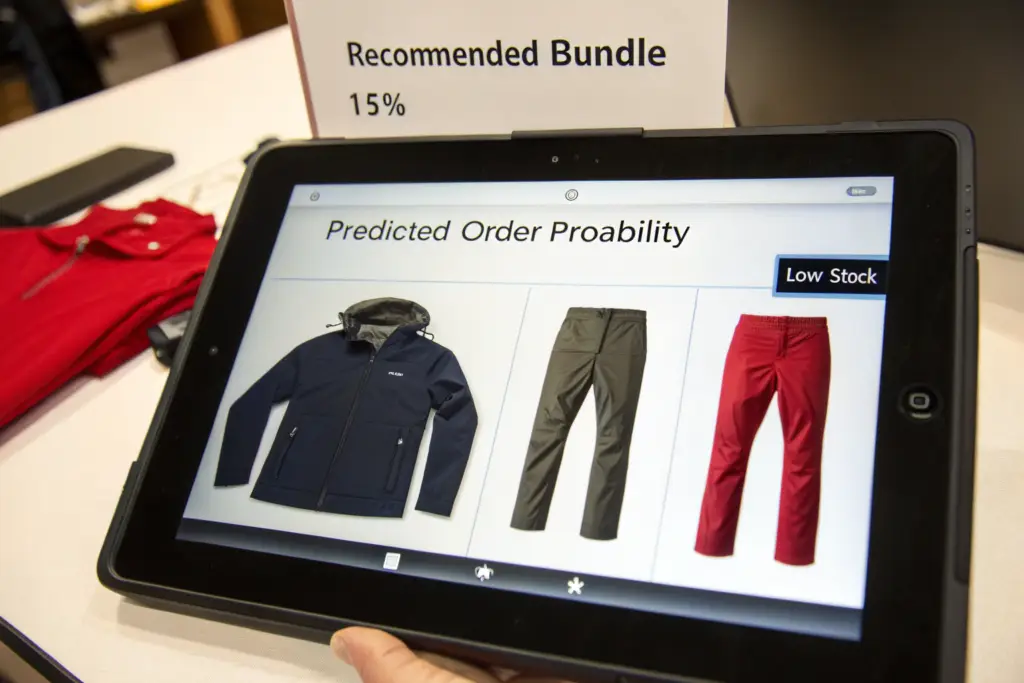
AI optimizes your catalog layout by predicting the probability of a buyer ordering a specific style and placing that style in the top-left "hot spot" of your line sheet. It goes beyond static merchandising by dynamically bundling items. The AI analyzes historical transaction data to find that buyers who purchase Style A have an 80% probability of also purchasing Style B. It then creates a "Complete the Look" bundle with a small discount incentive, increasing the average order value. For pricing, the AI conducts continuous price elasticity tests. It might find that a $45 price point generates the same unit volume as a $42 price point, adding $3 of pure margin. Over thousands of units, this algorithmic price optimization adds tens of thousands of dollars to the bottom line without changing the garment.
The static catalog is dead. The wholesale buyer of 2026 expects a B2B experience that feels as personalized as their consumer shopping experience. They want to feel like the catalog was built for their store, not blasted to a thousand generic accounts.
How Can Market Basket Analysis Automate "Bundled Buy" Recommendations for Retail Buyers?
Market basket analysis is an AI technique that finds associations in transaction data. It might discover that boutiques ordering your linen blazer also order your silk shell top 70% of the time. Instead of hoping the buyer manually finds the shell top, the AI presents the items together on the line sheet as a "Curated Set" with a pre-calculated retail margin for the buyer. This makes the buyer's job easier and increases your units per transaction. We implemented this for a brand using a market basket analysis platform and their add-on item sales increased by 35%.
What Is Price Elasticity Modeling and How Can AI Find the Exact Price Point That Maximizes Profit, Not Just Revenue?
Price elasticity modeling measures how sensitive your buyers are to price changes. If you raise the price from $40 to $45 and unit sales drop only 2%, the price increase is highly profitable. If sales drop 20%, the price increase is a disaster. AI can run these calculations across every SKU and every buyer segment. It might find that your East Coast buyers are price-insensitive to your premium wool coats but your Midwest buyers are highly sensitive. The AI then recommends a segmented pricing strategy. The price elasticity AI models ensure you are not leaving margin on the table for buyers who are willing to pay more.
Conclusion
Leveraging advanced AI-driven analytics to optimize your wholesale clothing catalog is the clearest path to higher margins, faster inventory turns, and a stronger relationship with your retail buyers. The technology allows you to forecast demand with precision, cut Zombie SKUs that drain your working capital, identify emerging colors before your competitors, and personalize your line sheet to each buyer's behavior. The brands that adopt these tools now are building a structural advantage that will be very difficult for laggards to overcome.
The AI does not replace the creative soul of your brand. It does not design the garments. It does not choose the brand story. What it does is remove the guesswork from the commercial decisions that determine whether your brand survives. It tells you which styles to bet big on, which colors the market is ready for, and which prices will maximize your profit. It turns your catalog from a creative portfolio into a precision-engineered revenue machine.
At Shanghai Fumao, we support our brand partners who are adopting AI-driven optimization by providing the flexible manufacturing backbone these tools require. AI might tell you to cut a slow-selling style and double down on a fast-selling one. Our low MOQ and rapid replenishment programs mean you can pivot without being stuck with inventory. Our digital production tracking integrates with your inventory systems so your AI has real-time supply chain data to work with.
If you are ready to stop guessing and start optimizing, we are here to help with the production side of that equation. At Shanghai Fumao, we can discuss how our manufacturing flexibility supports a data-driven catalog strategy. Contact our Business Director, Elaine, at elaine@fumaoclothing.com. She can share examples of how other brand partners have used sales data to restructure their production orders for maximum profitability. The future of wholesale is data-driven. Make sure your factory can keep up with your algorithms.