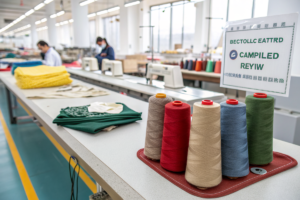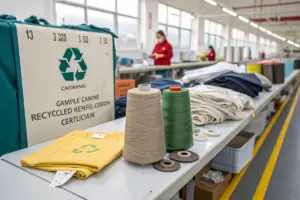
I stood in a freezing warehouse in Chicago three winters ago with a furious brand owner. She had two garments in her hands. Same style. Same size. Same factory. One had been pulled from the first shipment, the other from the reorder shipment three months later. The first hoodie felt plush, thick, and buttery against the skin. The second hoodie felt thin, rough, and slightly papery. The color matched perfectly. The measurements matched perfectly. The hand feel, the tactile soul of the garment, was completely different. The reorder batch sold terribly. The brand's retail partners accused them of a "bait and switch." The problem was not the design. It was the finishing process. The mill had changed their softener supplier without telling anyone. The brand lost $22,000 on markdowns because a chemical nobody thought to track had been swapped.
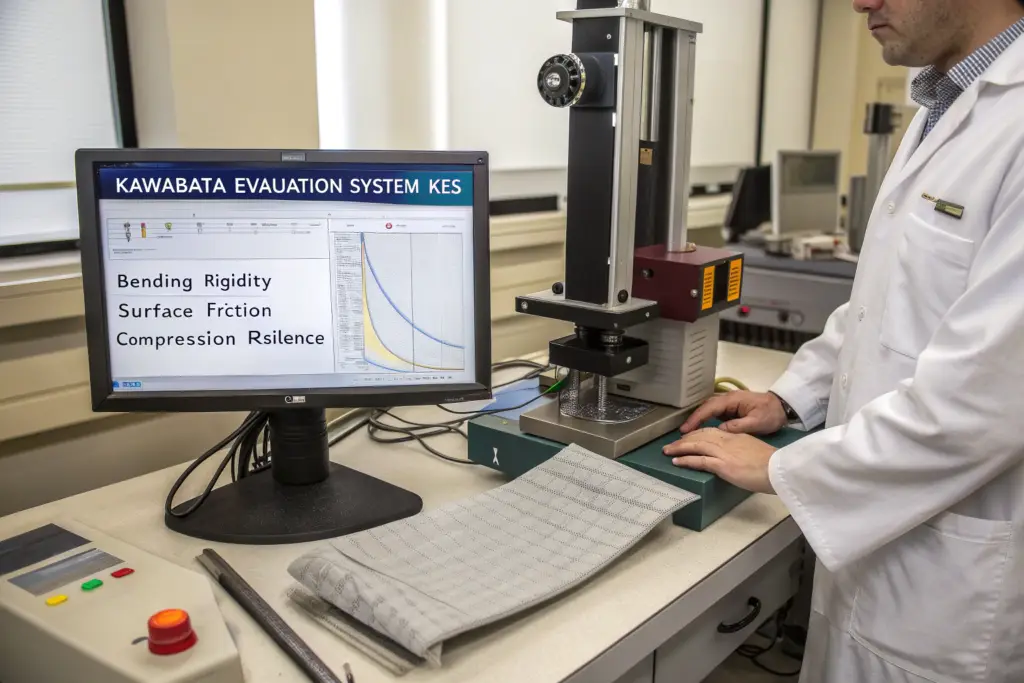
You guarantee the same hand feeling of a whole batch of finished clothes by controlling the mechanical finishing parameters and the chemical recipe as strictly as you control the dye lot. Hand feel is not magic. It is physics and chemistry. It is determined by the yarn twist, the fabric weight, the surface brushing, and the enzyme or silicone softener applied in the final wash. To lock this down, you must create a physical "Hand Feel Standard" swatch that is sealed and signed off, and you must require the factory to measure the coefficient of friction and bending rigidity of every bulk batch against this standard using a Kawabata Evaluation System or a simpler digital handle meter. You also lock the chemical recipe by specifying the exact trade name and supplier of the softener, prohibiting substitution. Finally, you mandate a pre-production wash test on the bulk fabric before it goes to cutting, because a fabric that feels perfect off the roll can change completely after the first laundry cycle. Consistency is engineered, not wished for.
Hand feel is the first thing a customer notices in a store and the thing that turns a one-time buyer into a loyal fan. A brand that ignores hand feel is gambling with the sensory experience that defines their product. I want to share exactly how we control hand feel at Shanghai Fumao, and how you can demand the same level of precision from any factory producing your garments.
What Is the Scientific Basis of Fabric Hand Feel and How Do You Measure It Objectively?
For decades, the textile industry relied on "expert judges" to touch fabric and assign a score. One person's "buttery soft" was another person's "flimsy." This subjective method caused countless disputes between brands and factories. The brand owner says, "This feels rougher than the sample." The factory owner says, "It feels the same to me." There was no way to resolve the argument because there was no measurement. Today, the technology exists to measure hand feel as precisely as we measure sleeve length.
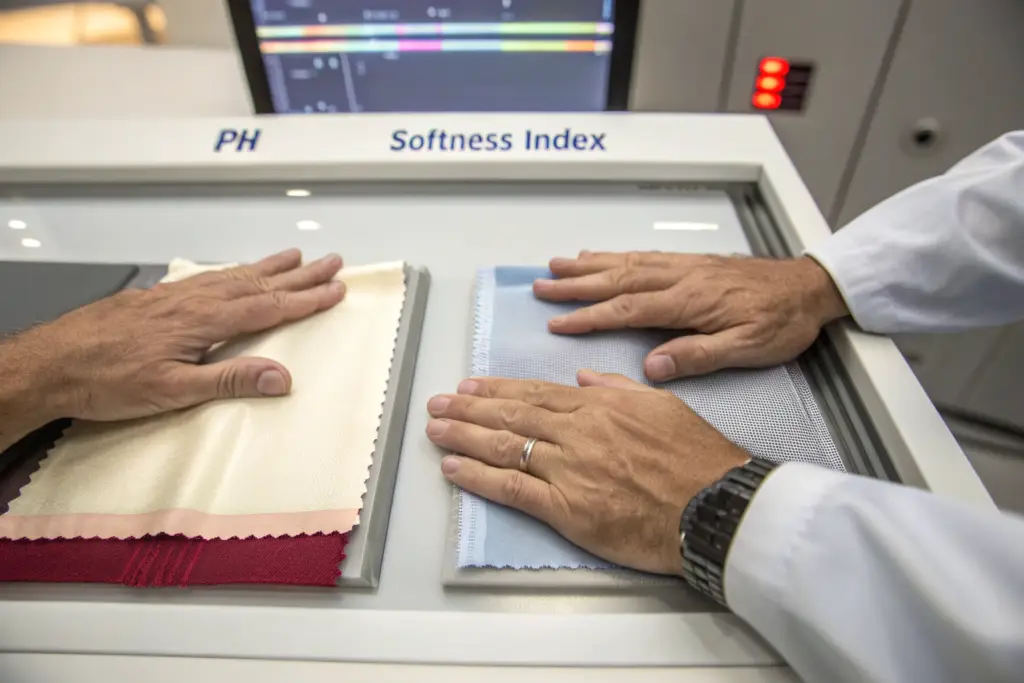
Fabric hand feel is scientifically defined by three quantifiable physical properties: surface friction, which determines smoothness or roughness; bending rigidity, which determines stiffness or drape; and compression resilience, which determines fullness or softness. A fabric that feels "soft" has low bending rigidity and high compression resilience. A fabric that feels "crisp" has high bending rigidity and low surface friction. These properties are measured objectively using a Kawabata Evaluation System (KES) or a PhabrOmeter, which output numerical values. When you replace subjective adjectives with numerical data, you create a measurable, enforceable standard. You can say, "The approved hand feel standard has a bending rigidity of 0.08 gf·cm²/cm and a surface friction coefficient of 0.22." The bulk production must match these numbers within an agreed tolerance. This eliminates the argument and replaces it with a pass or fail test.
Most factories do not own a KES machine. They are expensive and require trained operators. But a brand can still build a hand feel standard by sending their approved sample to a textile testing laboratory and requesting a "Handle Measurement Report." The report costs a few hundred dollars and provides the numerical benchmark. The factory can then use a simpler, calibrated digital handle tester for routine quality control, provided it is correlated against the lab standard.
How Do You Create a "Golden Hand Feel Standard" Swatch That the Factory Must Match in Bulk Production?
The Golden Standard is a physical fabric swatch, cut from the approved pre-production sample, that has been washed according to the care label instructions. It is sealed in an airtight, light-proof bag to prevent yellowing or contamination. The bag is signed by both the brand owner and the factory manager across the seal, so it cannot be opened and swapped. This swatch is not just for visual reference. It is accompanied by a one-page document that lists the numerical specifications: the bending rigidity, the surface friction, and the compression resilience, all measured by a third-party lab. The factory must test every bulk dye lot against this Golden Standard. If the lot matches the visual and tactile reference AND falls within the numerical tolerance, it is approved for cutting. This is the only way to lock hand feel across multiple production runs months apart. We use this system for all our brand partners. The fabric hand feel standardization protocol is a proven quality control methodology.
What Is the Difference Between Surface Friction and Bending Rigidity in Solving a "Too Rough" Customer Complaint?
If a customer complains a garment is "too rough," you need to know which property to fix. Surface friction is the slipperiness of the fabric surface. A fabric feels scratchy because the fiber ends are protruding and catching on the skin. This is fixed by adding a lubricating softener or by enzyme washing to eat away the surface fuzz. Bending rigidity is the stiffness of the fabric. A fabric feels rough because it does not flex to conform to the body, creating pressure points. This is fixed by mechanical compaction or by using a softer yarn. The fix for a friction problem is different from the fix for a rigidity problem. If you treat the wrong property, you will not solve the complaint. The objective measurement tells you which property is out of spec, so you can direct the dye house to the correct corrective action.
How Do Mechanical Finishing Processes Like Compacting and Brushing Drift Over Time and Change Hand Feel?
A brand we work with produced a jersey t-shirt that was a massive hit. The fabric had a beautiful, dense, weighty drape. For the reorder, the factory used the same yarn and the same knitting machine. But the fabric that arrived felt thinner and limper. The brand was baffled. The investigation revealed the issue was the compacting machine. Compacting is a process where the fabric is overfed into heated rollers, forcing the fibers to relax and bulk up. The technician on the reorder batch had set the overfeed at 15% instead of the 22% used on the first batch. A 7% adjustment on a dial changed the entire character of the fabric.
Mechanical finishing processes change hand feel through physical manipulation, not chemistry. Compacting controls shrinkage and increases density and bulk. Brushing or napping raises surface fibers to create fleece-like softness. Calendering flattens the fabric under high heat and pressure to create a smooth, crisp hand. These processes drift over time because of machine wear, operator settings, and factory pressure to speed up production. To prevent drift, you must specify the exact machine parameters in your tech pack: the overfeed percentage for compacting, the roller speed and brush type for brushing, and the temperature and pressure for calendering. You then require the factory to log these parameters for every single roll. If a batch feels different, you do not guess what went wrong. You check the log. The log tells you if the operator changed the setting.
Mechanical finishing is the factory's biggest lever to adjust hand feel, and it is often adjusted without the brand's knowledge because the factory wants to save time or energy costs. The only defense is a mandatory parameter log.
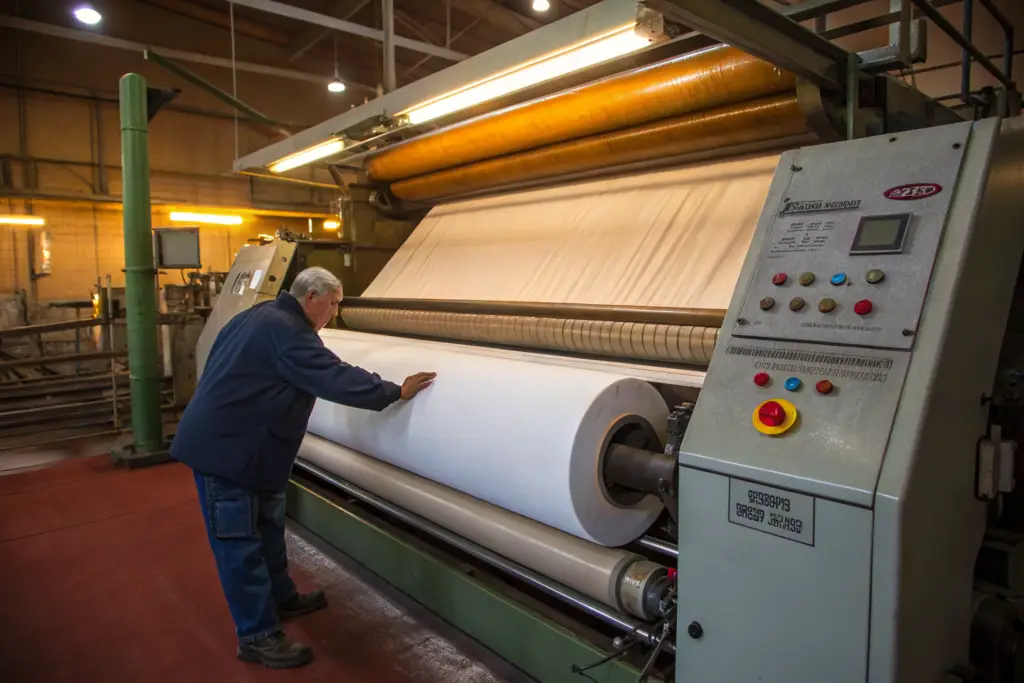
Why Do Enzyme Washing and Silicone Softener Application Produce Radically Different "Soft" Sensations?
Enzyme washing uses cellulase proteins to eat away the micro-fuzz on cotton fibers. The result is a clean, smooth surface that feels naturally soft, almost like a well-worn vintage garment. It is a permanent change. Silicone softeners coat the fibers with a lubricating film. The result is a slippery, slick, highly lubricated surface feel. It can wash out over time. A customer describing a garment as "silky" is feeling silicone. A customer describing a garment as "buttery" is feeling enzyme-washed cotton. Both are soft. They feel completely different. If your brand built its reputation on a silky silicone finish, and the factory switches to an enzyme wash to save costs, your customers will notice the difference. You must specify not just "soft finish" but the exact finishing chemistry. The textile finishing chemical specifications must be locked in the bill of materials.
How Often Should a Factory Calibrate Its Compacting Machine to Prevent "Thin" Feeling Fabric?
Compacting machines rely on a felt blanket that degrades with use. As the blanket wears, the machine loses its grip on the fabric, and the overfeed becomes less effective. The fabric comes out thinner. A factory should replace the felt blanket every 1,000 hours of operation and calibrate the overfeed percentage against a standard test fabric weekly. We require our production teams to run a shrinkage and weight test on the first meter of every compacted roll. If the GSM is more than 3% below target, the machine is immediately recalibrated. This prevents the gradual drift that produces "thin" feeling fabric at the end of a long production run.
What Chemical Recipe Documentation Is Required to Prevent a "Fake Soft" Hand Feel That Washes Out?
A fast fashion brand famously sold leggings that felt incredible in the store. After two washes, they felt like sandpaper. The factory had applied a heavy cationic softener that created a dramatic, slippery hand feel on the rack but had zero wash durability. The softener was essentially a temporary coating designed to sell the garment, not to last. This is called "fake soft." The brand's return rate skyrocketed once the reviews came in. The brand owner had no idea what chemical was used because the spec simply said "soft finish."
You prevent fake soft hand feel by mandating a fully documented finishing recipe that specifies the chemical trade name, supplier, and active ingredient, and by requiring a wash durability test on the bulk fabric. A real soft finish is created by either mechanical action, enzymatic bio-polishing that physically removes rough fibers, or durable silicone macro-emulsions that cross-link with the fiber and survive 20+ home laundry cycles. A fake soft finish is created by cationic surfactants or non-durable hydrophilic agents that rinse out after one or two washes. To guarantee the hand feel lasts, you must specify the finishing chemistry in the purchase order and test the fabric after 5 accelerated home laundry cycles per AATCC Test Method 135. If the hand feel changes significantly between the unwashed and washed state, the chemistry is wrong, and the batch is rejected.
This is a hard conversation to have with a factory. Many factories use cheap cationic softeners because they are easy to apply and make the fabric feel amazing during final inspection. They do not care what happens after the customer washes the garment. The brand must care, and must enforce it through testing.

What Is the Difference Between a Cationic, Non-Ionic, and Silicone Macro-Emulsion Softener on Long-Term Durability?
Cationic softeners are cheap and provide a high level of initial softness and anti-static properties. They have poor wash fastness and are mostly gone after three washes. Non-ionic softeners provide a more natural, less slippery softness and are often used in combination with other finishes. They have moderate wash fastness. Silicone macro-emulsions are the premium option. The silicone forms a cross-linked polymer film on the fiber. This film is highly flexible, extremely durable, and can survive 30 to 50 washes. If your brand position is premium, you must specify a silicone macro-emulsion from a named supplier like Dow or Wacker. The textile softener chemistry types should be written into your restricted substances list, not just your bill of materials.
How Do You Conduct a 5-Cycle Wash Test to Verify That the Softness Is Permanent?
The test is simple and devastating. Take a bulk fabric sample. Cut it into two pieces. Measure the hand feel of the unwashed piece using your digital handle meter. Wash the second piece five times according to AATCC 135 using standard Tide detergent and tumble dry on medium. Measure the hand feel again. The difference between the unwashed and washed measurements reveals the durability of the finish. A genuine silicone finish will show less than a 10% change in the friction coefficient. A cheap cationic finish will show a 40% to 60% change. If the fabric feels significantly rougher after washing, the finish is not durable, and the batch must be rejected or re-finished. We perform this test on every new dye lot.
How Do You Standardize the Subjective "Touch" Inspection Across Multiple Factory QC Inspectors?
A brand owner once rejected a batch because the fabric felt "too dry." The factory manager felt the same fabric and said it felt "normal." They were both right, based on their personal sensitivity. The brand owner had dry hands. The factory manager had just applied hand lotion. Their tactile perception was literally different based on their skin condition. This is the fundamental problem with subjective hand feel inspection. Human fingers are not calibrated instruments. They change hour by hour based on humidity, temperature, and skin moisture.
You standardize subjective touch inspection by implementing a "Reference Standard Calibration" at the start of every QC shift. The inspector must rub the approved Golden Standard swatch between their fingers for ten seconds, then rate the standard on a 1-to-5 scale for smoothness, softness, and fullness. Their rating of the standard becomes the baseline for the day. They then touch the bulk sample and rate it against that baseline, not against an abstract memory. You also must control the environment: the inspection room should be 65% relative humidity and 20°C. Dry air makes fabric feel harsher. Humid air makes it feel softer. By controlling the environment and calibrating the inspector against a physical reference every shift, you remove the personal variation that causes false rejects and false accepts.
The calibration protocol is simple. It takes two minutes per shift. It prevents the most common quality dispute in the apparel industry: the argument about whether the fabric "feels right."

What Is the "Anchor Reference" Method for Training Inspectors to Distinguish a True Hand Feel Shift from Production Noise?
The Anchor Reference method uses three swatches: the approved standard, a deliberately harsher reject, and a deliberately softer reject. The inspector learns to feel the range of acceptable variation. Anything that feels harsher than the harsh anchor is an automatic fail. Anything within the range is a pass. This prevents the most common inspector error: rejecting acceptable fabric because they are in a "critical mood" or accepting substandard fabric because they are tired. The sensory evaluation anchor method is adapted from the food and beverage industry. It works just as well for textiles.
How Do Humidity and Temperature Dramatically Skew a Manual Touch Inspection?
Cotton is hygroscopic. In a dry, air-conditioned QC room, cotton fabric feels stiff and rough because the fibers are dehydrated. That same fabric, taken into a humid warehouse, will absorb moisture from the air and feel dramatically softer. A QC inspector who rejects a batch in a dry room is rejecting fabric that the customer will find perfectly soft in a normal environment. You must condition fabric samples at standard atmospheric conditions for 24 hours before testing. We use a textile conditioning room that maintains exactly 65% RH and 20°C. Every hand feel test, manual or instrumental, is performed in this controlled environment.
Conclusion
Guaranteeing the same hand feeling across an entire batch of finished clothes is a process of scientific measurement, mechanical control, and chemical transparency. It requires you to abandon subjective adjectives and adopt objective friction and rigidity measurements. It requires you to lock down the mechanical finishing parameters on the compacting and brushing machines. It requires you to specify the exact silicone emulsion in your chemical recipe and test it for wash durability. And it requires you to calibrate your human inspectors against a physical Golden Standard every single shift. None of these steps are expensive. They are all cheaper than the $22,000 markdown loss from a batch of garments that felt wrong.
The Chicago warehouse incident taught me that a brand's reputation lives in the customer's fingertips. A garment that looks right but feels wrong is a defective garment. The customer may not be able to articulate the difference, but they feel it. They know something is off. They do not buy from that brand again.
At Shanghai Fumao, we have integrated all of these hand feel control measures into our production process. We maintain a Golden Hand Feel Standard library for every brand partner. Our finishing recipes are locked and audited. Our compacting machines are calibrated weekly. Our QC inspectors calibrate their touch against the reference swatch at the start of every shift. We do this because we know that consistent hand feel is not a luxury. It is the physical proof that your brand keeps its promises.
If you have experienced hand feel inconsistency in your production, or if you want to build a measurable hand feel standard for your next collection, we can help. At Shanghai Fumao, we will create a physical Golden Standard swatch for your approved sample, complete with a third-party lab report. We will show you our finishing parameter logs and our inspector calibration protocol. Contact our Business Director, Elaine, at elaine@fumaoclothing.com. She can send you a sample "Hand Feel Specification Sheet" that you can use with any factory. Your customer's first touch is your brand's first impression. Control it with scientific precision.