You have spent months sketching. You have agonized over the fabric selection. You have finally created a rare style of women’s wear dress with a unique cut-out detail that you just know is going to be a best-seller. You send the tech pack to a factory for a quote. Two months later, you are scrolling Alibaba and see your dress. Same cut-out detail. Same silhouette. A different brand name, listed for 30% less than your planned retail price. Your stomach drops. Your design has been leaked, copied, and is now being sold to your competitors. This is the dark side of apparel manufacturing that many brand owners fear most.
Fumao’s B2B model protects your brand and designs through a multi-layered approach: strict NDAs and contractual IP clauses, supply chain segregation of your custom molds and patterns, and a business model built on long-term partnership rather than short-term retail competition. We do not sell to consumers. We do not own brands. Your designs remain exclusively yours.
We are not a retailer. We are not a distributor. We are a pure-play clothing manufacturer. Our only path to profit is your success. At Shanghai Fumao, we have built our entire operation around the confidentiality and security that established US brands and emerging company owners require. Let me show you exactly how our B2B structure and internal protocols ensure that your intellectual property stays where it belongs: with you.
What Legal and Contractual Protections Do We Offer for IP?
Trust is earned, but in business, it also needs to be written down. A handshake does not protect a unique print design. A WeChat message does not prevent a factory from using your customizable logo mold for another client. You need a legal framework that defines ownership from day one.
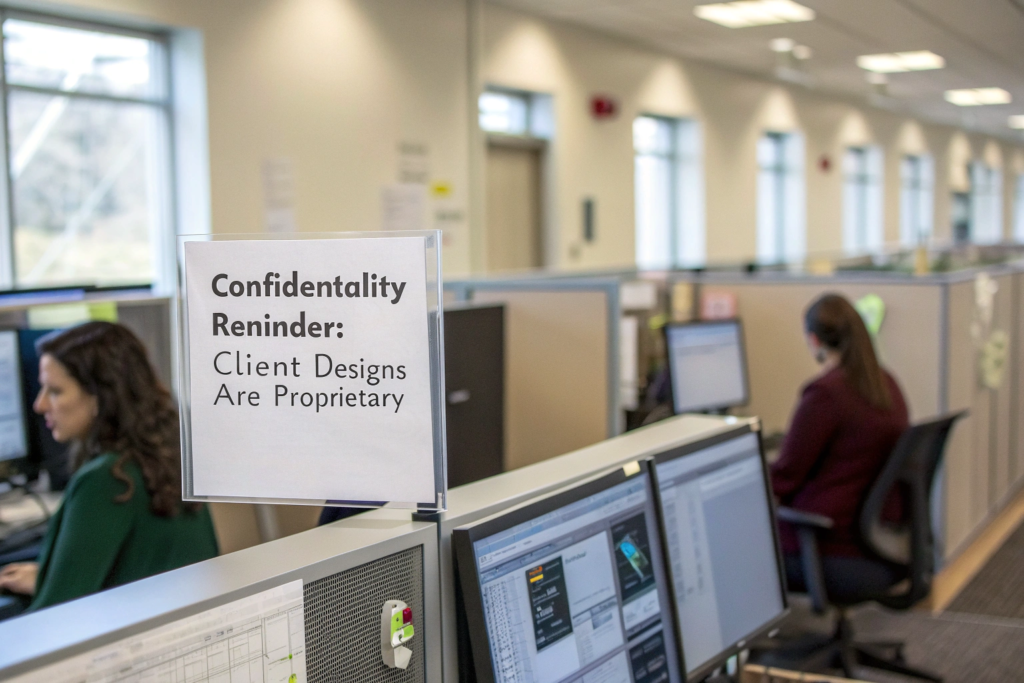
Before any tech pack is opened or any sample is cut, Fumao executes a standard Non-Disclosure Agreement (NDA) and a Manufacturing Agreement that explicitly assigns all Intellectual Property (IP) rights to the client. These documents clearly state that your designs, patterns, and custom tooling belong solely to you and cannot be used for any other purpose or shown to any other party.
This is not just a piece of paper. It is a commitment. We have had clients who came to us after being burned by factories in other countries where IP law is difficult to enforce. They were relieved to find a partner who proactively offered these protections. According to international trade law experts, a well-drafted NDA is the essential first step in safeguarding proprietary designs and trade secrets when manufacturing overseas. It creates a legal obligation of confidentiality and provides a basis for legal recourse if that obligation is breached. Our legal framework is designed to meet the standards of large company buyers who require strict vendor compliance.
How Does an NDA Protect My Tech Pack and Designs?
A Tech Pack is the blueprint of your brand. It contains your graded specs, your fabric sources, your trim details, and your construction methods. It is your secret sauce. An NDA (Non-Disclosure Agreement) legally prevents the receiving party (Fumao) from sharing that information with any third party or using it for any purpose other than manufacturing your specific Purchase Order.
Here is what a standard Fumao NDA covers:
- Confidential Information: This includes all technical data, patterns, sketches, customer lists, and pricing strategies shared by the client.
- Duration: The confidentiality obligation typically lasts for 3-5 years after the end of the business relationship, ensuring your past seasons’ designs remain protected.
- Return of Materials: Upon request, all physical samples, patterns, and digital files must be returned to the client or destroyed.
This means our pattern maker cannot take your unique dress pattern and use it as a "starting point" for another brand’s project. It means our sales team cannot show your sample to a visiting buyer from a different company. The NDA creates a "cone of silence" around your project.
What Happens to My Custom Molds and Tooling After Production?
This is a critical detail that many brand owners overlook. When you pay for a custom button mold, a branded zipper puller die, or a specific embroidery digitizing file, who owns that physical tooling?
At Fumao, the contract states that all custom tooling paid for by the client is the property of the client. After production is complete, we have two options, based on your preference:
- Storage: We store the molds and tooling in a secure, segregated area of our warehouse at no charge for a period of 24 months. If you place a reorder, we use the exact same mold, ensuring consistency and saving you the tooling fee.
- Return or Destruction: You may request that we ship the molds to you, or we will provide a Certificate of Destruction with photo evidence showing the mold has been rendered unusable.
This prevents your custom brand hardware from appearing on another company’s garment. I have heard horror stories of brands finding their exact custom buttons on a competitor’s shirt because the factory reused the mold. We ensure this never happens. This is part of our commitment to reliable delivery of exclusivity.
How Do We Segregate Your Production from Other Brands?
Legal documents are essential. But what happens on the factory floor at 2:00 PM on a Tuesday? Does the cutting supervisor keep your designs separate? Or do they get mixed in with other brands’ orders on the same cutting table? Physical segregation is where the rubber meets the road in brand protection.
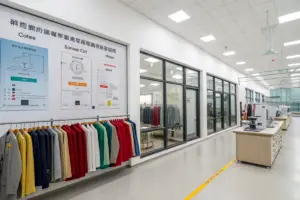
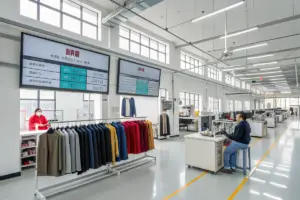
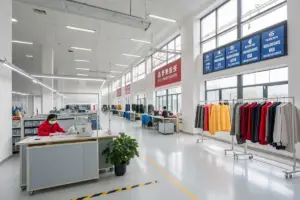
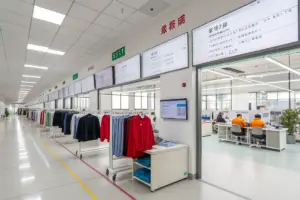
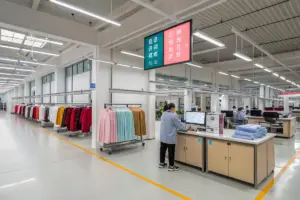
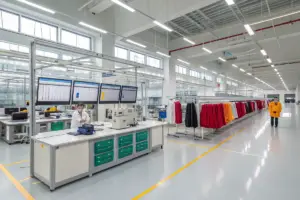
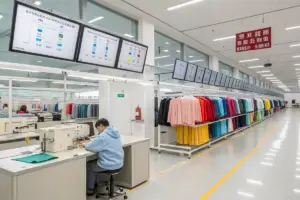
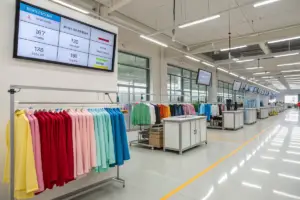
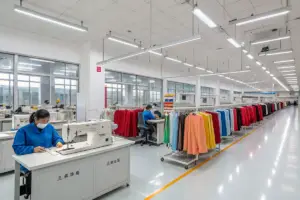
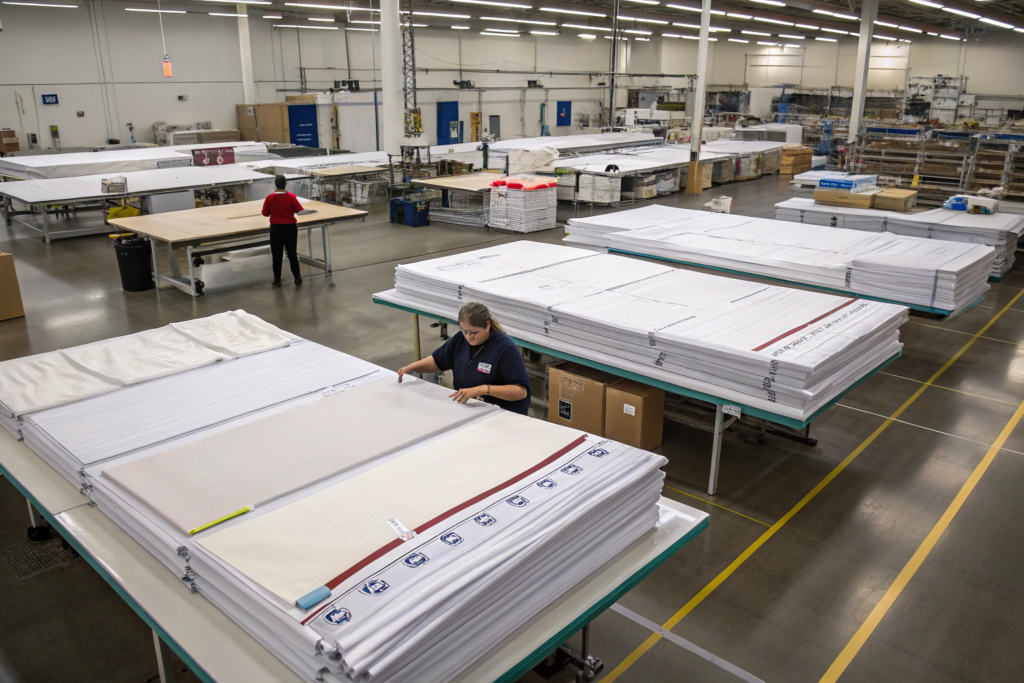
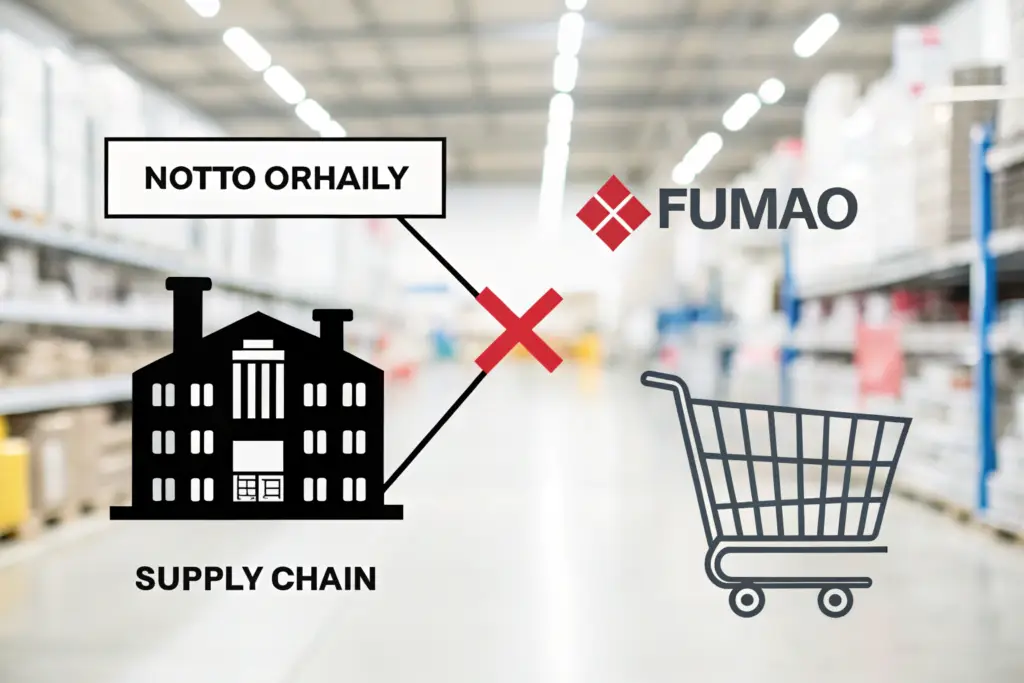
Fumao segregates client production physically and digitally. Each client’s fabric rolls are stored on dedicated shelves with barcode labels. Cutting is done in dedicated time blocks per client. Finished goods are stored in separate, labeled areas of the warehouse. No two clients’ goods are ever mixed in the same carton or on the same sewing line at the same time.
I recall a men’s wear brand that was terrified of their premium woven fabric being substituted with a cheaper quality. To alleviate this fear, we gave them a Virtual Factory Tour. Our Project Manager walked the floor with a phone, showing them their specific fabric rolls on the shelf, their specific bundles on the cutting table, and their specific finished garments on the rack. The client could see the physical separation. This transparency is a core part of our B2B service. Industry best practices for supply chain security emphasize the importance of physical segregation to prevent counterfeiting and unauthorized mixing of goods .
How Are Digital Design Files and Patterns Secured?
In the age of cloud computing, digital security is as important as physical locks. Your Tech Pack, pattern files (CAD), and embroidery digitizing files are stored on secure servers.
We use a Role-Based Access Control system. This means:
- The Sales Manager can see the project name and timeline.
- The Pattern Maker can open the CAD file to make adjustments.
- The Cutting Room Supervisor can see the marker layout.
- No single person outside the designated project team can access the entire file package.
Furthermore, our servers are backed up daily and protected by firewalls. We never share files via unsecured personal email accounts. We use a secure cloud portal for file transfer. This protects against both external hacking and internal data leakage. For large company buyers, this level of digital security is a non-negotiable part of vendor compliance.
Can Factory Visitors See My Products Being Made?
This is a common concern. Factories often give tours to prospective clients. What if a competitor is walking through the factory and sees your new collection on the sewing line?
We have a strict Visitor Policy. Tours are given on a pre-defined route that avoids active client production areas unless specific permission is granted. If a client has a particularly sensitive rare style or a new launch, we can schedule their production during a time when no tours are booked, or we can move their line to a more private area of the 5 production lines floor. We respect the need for a "quiet period" before a major launch. Your apparel is not a showroom display for other brands.
How Does Our Wholesale-Only Model Prevent Channel Conflict?
You have built your brand on a specific price point and a specific customer experience. You sell through your website and select boutiques. The last thing you need is the factory that makes your clothes undercutting you by selling "excess inventory" or "samples" directly to consumers on eBay or Amazon. This is called Channel Conflict, and it is a silent killer of brand value.
Fumao is a strict B2B wholesale manufacturer. We do not operate any Direct-to-Consumer (DTC) retail channels. We do not sell on Alibaba Retail, Amazon, eBay, or any other consumer platform. We do not own any apparel brands. Our revenue comes exclusively from fulfilling Purchase Orders for our brand partners.
This structural separation is the most powerful form of brand protection we offer. Because we do not compete with you, we have zero incentive to hold back your best-selling styles for ourselves. We want you to sell more so that you will reorder with us. This aligns our interests perfectly. I have spoken with distributors who had factories suddenly launch a "factory direct" website selling the exact same kids’ wear they were ordering. It destroyed their margin overnight. That is a betrayal of the B2B trust. It will never happen at Shanghai Fumao. This model is the foundation of a sustainable wholesale manufacturing partnership.
Do You Ever Sell Excess Inventory or Samples?
This is the number one question we get from brand owners worried about brand dilution. The answer is a firm No. We do not have a "sample sale." We do not have an outlet store.
Here is what happens to excess fabric and samples:
- Samples: Development samples are kept for internal reference or shipped to the client upon request. They are never sold.
- Excess Fabric: Small remnants are recycled through textile waste programs. Large quantities of unused greige fabric are held for the client’s next reorder or, with written permission, used for a different client if it is a generic, unbranded quality.
- Defective Units: Garments that fail quality control are cut up and destroyed or recycled into industrial wiping cloths. They do not enter the consumer market.
This policy protects the scarcity and value of your apparel. You can be confident that the only way a customer can buy your design is through your store.
How Does This Model Benefit My Long-Term Brand Strategy?
When you partner with a factory that only does B2B, you are not just buying production capacity. You are securing a silent, reliable back-end partner. This allows you to focus 100% of your energy on your brand—marketing, community building, and design.
You do not have to worry about:
- Price Undercutting: The factory will not pop up as a cheaper alternative on Google Shopping.
- Design Leakage: The factory has no brand to funnel your “greatest hits” into.
- Inventory Fog: You know exactly where every unit of your product is because it is either in transit or in your warehouse.
This peace of mind is invaluable for a CEO scaling a business. It allows you to build a consistent, premium brand identity without the fear of being sabotaged by your own supply chain.
What Steps Do We Take to Prevent Design Leakage Internally?
The biggest threat to design security is not always a malicious external hacker. Sometimes, it is a well-meaning employee who wants to show off the "cool jacket" they just made. Or a pattern maker who keeps a personal library of "interesting design details." Internal culture and training are the final layer of brand protection.
Fumao cultivates a culture of confidentiality through regular employee training, compartmentalized access to information, and a zero-tolerance policy for IP theft. Employees only see the pieces of the puzzle they need to do their job. The cutting team does not see the customer name. The finishing team does not see the cost sheet.
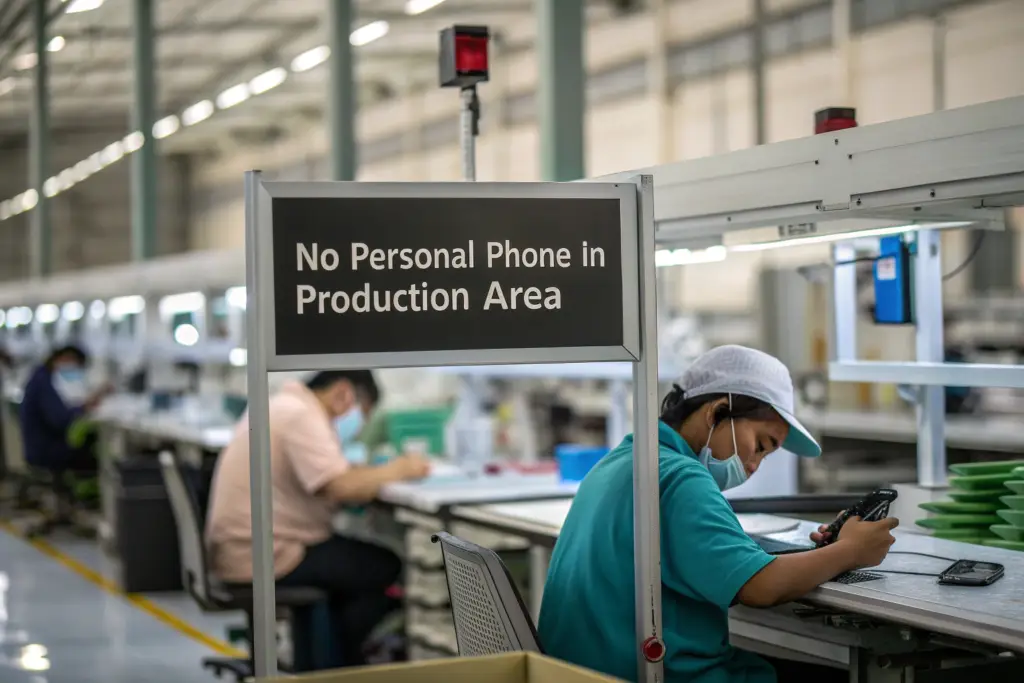
We conduct quarterly training sessions on Intellectual Property Protection. Employees are reminded that the garments on the line are the property of the client and that taking photos or sharing details on social media is grounds for termination. This is especially important in the age of TikTok and WeChat, where a 10-second video from the factory floor could reveal a whole season’s collection. We have a No Personal Phone in Production Area policy for sensitive orders. This is not about being draconian. It is about respecting the trust our brand partners place in us. Industry research highlights that internal human factors are often the weakest link in supply chain security, making training and culture essential .
How Is Information Compartmentalized Among Staff?
Not everyone in the factory needs to know everything. Our Project Managers are the central point of contact and have the full picture. But other departments work on a "need-to-know" basis.
- Cutting Room: Sees the pattern pieces and the fabric. Does not see the client name or the final retail price.
- Sewing Line: Sees the bundle and the seam instructions. Does not see the trim card with the brand name until the final stages.
- Quality Control: Sees the finished garment and the spec sheet. Focuses on measurements and defects, not the design story.
This compartmentalization limits the risk of a single disgruntled employee leaking an entire collection. It is a standard security practice in high-value manufacturing operations.
What Is the Protocol If a Client Suspects a Leak?
Transparency is key. If a client ever suspects that their design has been compromised from our end (which has never happened, but we have a protocol), we do not get defensive. We launch an Internal Audit.
The steps include:
- Access Log Review: We check the server logs to see exactly who accessed the client’s digital files and when.
- Production Floor Review: We review the physical log of who worked on that specific line and whether any visitors were present.
- Full Disclosure: We share the findings of the audit with the client, regardless of the outcome.
This commitment to transparency is part of our reliable delivery promise. It extends beyond just shipping dates; it covers the security of your creative assets.
Conclusion
Protecting your brand and designs in the global apparel supply chain requires more than a handshake. It requires a partner whose entire business model is structurally aligned with your success. At Shanghai Fumao, our B2B focus, our strict legal framework, our physical segregation protocols, and our internal culture of confidentiality all work together to create a secure environment for your intellectual property.
You should never have to worry about finding your rare style on a knock-off website. You should never have to wonder if your customizable logo zipper pulls are being used on someone else’s jacket. You should be able to share your tech pack with confidence, knowing it will be used for one purpose only: bringing your vision to life, exclusively for your brand. The examples and policies we have outlined—from NDAs to no-photo zones—are the safeguards that allow you to sleep soundly while we handle the manufacturing.
We believe that a clothing manufacturer should be an invisible, reliable engine, not a visible competitor. Our profit comes from your repeat orders, not from selling your designs out the back door. Whether you are a large company buyer, a growing distributor, or an emerging brand owner, your secrets are safe with us.
If you are looking for a production partner who treats your intellectual property with the same care you do, let’s have a confidential conversation. Our Business Director, Elaine, can discuss our security protocols in more detail and provide a standard NDA for your review. Please email Elaine at: elaine@fumaoclothing.com.