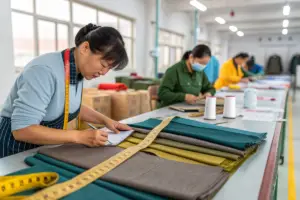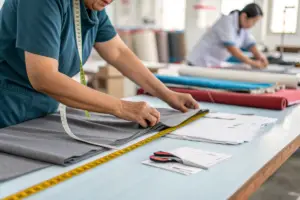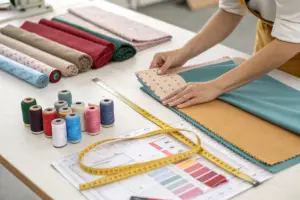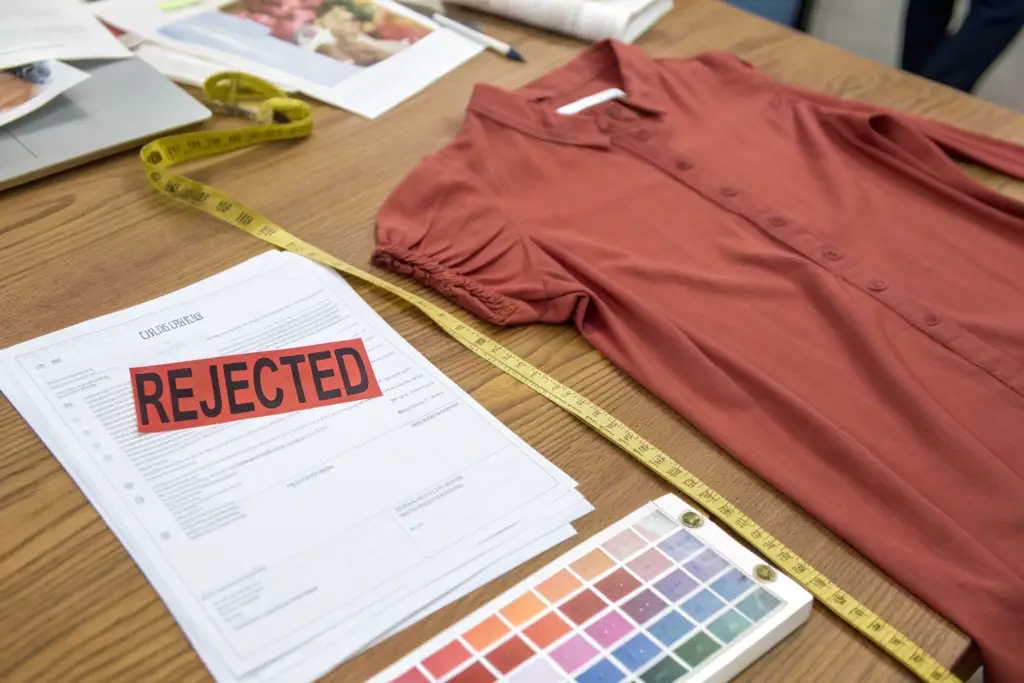
You have been waiting three weeks for this package. The DHL envelope arrives. You tear it open. You pull out the sample of your new woven shirt or women's wear dress. Your heart races. You try it on the fit model. It looks... okay. The fabric feels nice. You shoot off a quick email: "Looks good! Approved." Six weeks later, 3,000 units arrive looking nothing like the sample. The color is off. The fit is boxier. You are stuck. This scenario plays out every day in the apparel industry because brand owners rush the single most important step in manufacturing: Sample Approval.
The most common mistakes in garment sample approval are: Approving based on photos instead of physical inspection, failing to measure every point on the spec sheet, ignoring the difference between sample fabric and bulk fabric, and not documenting approvals with a formal "Sealed Sample" process. These shortcuts lead to costly bulk production errors that damage brand reputation and erode profit.
The sample is not just a pretty prototype. It is a legal and technical contract. At Shanghai Fumao, we treat the sample approval process as the moment of truth where we lock in every single detail that will be replicated 5,000 times. Let me walk you through the most frequent—and expensive—mistakes that buyers make during this phase, and how a disciplined approach can save your brand from disaster.
Why Is Approving a Sample by Photo a Costly Error?
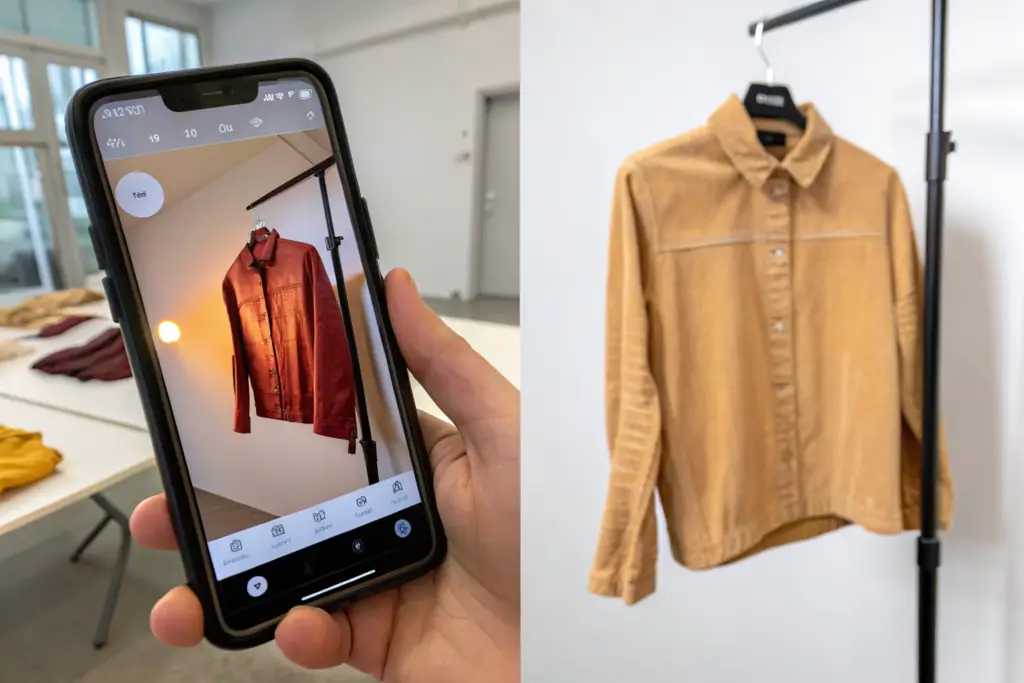
We all do it. The factory is pushing for approval. You are busy. You ask for a "photo of the sample on a mannequin." The photo arrives. It looks sharp. You reply, "Approved." This is the fastest way to make a $50,000 mistake. Smartphone cameras and factory lighting are liars. They can hide a multitude of sins—wrinkled seams, slight color shifts, and poor fabric drape.
Photos distort color, hide texture flaws, and mask fit issues. A camera sensor interprets color differently than the human eye, especially under factory fluorescent lights. A photo cannot tell you if the fabric handfeel is scratchy or if the zipper is sticky. Physical inspection of the sample is non-negotiable for professional quality control.
I recall a men's wear brand that approved a rare style of bomber jacket based on WeChat photos. The jacket looked like a rich olive green in the pictures. When the bulk arrived, the color was a flat, muddy brown under US retail lighting. The factory had used a flash, which washed out the yellow undertones. The client had to sell the jackets at a 40% discount. That single "photo approval" cost them $22,000 in lost margin. We strongly advise clients: Never approve a first sample or a fit sample from a photo. Wait the 3-4 days for the physical package. It is the cheapest insurance you can buy in apparel manufacturing.
How Does Lighting Affect Color Perception in Photos?
Color is a function of light. Change the light, and you change the color. This is known as metamerism in the textile industry. A fabric that matches the Pantone chip perfectly under the factory's cool white LED might look completely different under the warm incandescent lights of a boutique or the natural daylight streaming through a customer's window .
When a factory takes a photo, the camera automatically adjusts White Balance. It tries to make the scene look "neutral." In doing so, it often strips out the subtle warmth or coolness of the actual dye. This is why we only approve lab dips and bulk color standards under a D65 Lightbox (simulated noon daylight). It provides a consistent, objective reference that cannot be faked by a phone filter. According to color science experts, different light sources have different spectral power distributions, meaning colors will appear differently under each type of light .
What Details Are Invisible in a Digital Image?
A photo is a 2D representation of a 3D object. It flattens everything. Here is what you cannot verify from a photo:
- Seam Strength: You cannot pull on the seam to see if it "grins" (opens up).
- Handfeel: Is the fabric soft or sandpapery? Is the fleece backing looped or brushed?
- Zipper Function: Does it glide smoothly or catch every two inches?
- Stretch Recovery: Does the spandex bounce back or stay bagged out?
I have seen samples that looked perfectly sewn in photos, but when physically handled, the thread tension was so tight that the seams puckered like a ruffled potato chip. Physical interaction is the only way to assess garment construction quality.
Why Do Buyers Skip Measuring Key Spec Points on Samples?
You receive the sample. You hold it up. It "looks" like a Medium. You check the length. Seems fine. You approve it. This is called "Eyeballing." It is the second most expensive mistake in apparel. Garments are engineered products with tolerances. A half-inch difference in chest width across a production run of 10,000 units is a massive inconsistency that will drive returns.
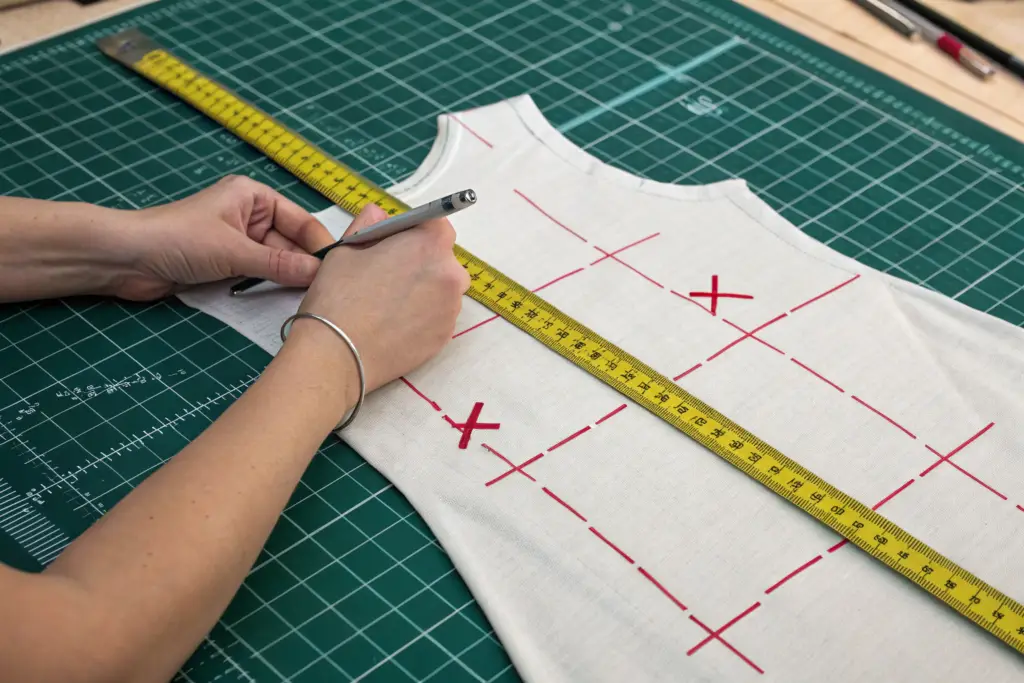
Skipping spec measurements on a sample means you are approving a fit and silhouette that may not match your tech pack. A "Medium" in one factory might be a "Small" in another. Only by measuring every critical Point of Measure (POM) against the official spec sheet can you ensure the bulk production will fit your target customer consistently.
We had a distributor of activewear who approved a legging sample based on "feel." The sample fit their fit model well, but they did not measure the waistband. The bulk arrived, and the waistband was a full inch smaller. The factory had used a tighter elastic in the sample room than they ordered for bulk. The return rate on that SKU was 22%. The client lost thousands in shipping and restocking fees. The lesson: The measuring tape is your best friend. Industry standards emphasize that accurate measurements are the cornerstone of consistent sizing and fit across production lots .
What Is a "Point of Measure" (POM) and Why Does It Matter?
A Point of Measure is a specific location on a garment where a dimension is taken. For a basic T-shirt, common POMs include:
- Chest Width (1" below armhole)
- Body Length (from High Point Shoulder to hem)
- Sleeve Length (from shoulder seam to cuff)
- Shoulder Width (seam to seam across back)
These measurements are defined in the Tech Pack. If you do not measure the sample against the Tech Pack, the Tech Pack is worthless. The bulk factory will follow the sample they were given, not the paper spec. If the sample is off-spec and you approve it, you have just approved a "new" spec. This is how size drift happens over seasons. Consistent use of POMs during sample approval ensures that a customer who buys a size Medium this season gets the same fit as last season. This consistency is crucial for brand loyalty and for meeting the rigorous standards of large company buyers.
How Can a Fit Model Mask Sample Measurement Errors?
Fit models are essential for checking drape and comfort. But they are not precision measuring instruments. A skilled fit model can "cheat" a bad fit. They might stand perfectly still, hold their breath, or adjust their posture to make a tight sleeve look acceptable. They might not notice that the shoulder seam is 0.5" too far back because it "feels okay" standing still.
The measurement comes first. If the sample measures correctly on the table, then you put it on the fit model to check for movement and comfort. If it fails the measurement test, it should never touch the fit model. This is a discipline that professional clothing manufacturers enforce. We provide a Measurement Report with every sample we ship. This report shows the Target Spec, the Tolerance, and the Actual Measurement. It removes the guesswork.
What Is The Danger of Ignoring Fabric Handfeel and Drape?
You approved the fabric swatch. It was a beautiful 120 GSM cotton lawn. The sample arrives, and you approve the style. But you do not notice that the sample feels slightly stiffer than the swatch. The factory used a different finishing process on the sample yardage. You approve it. The bulk arrives feeling like cardboard. The "soft, breezy summer dress" you designed is now a stiff, uncomfortable sack.
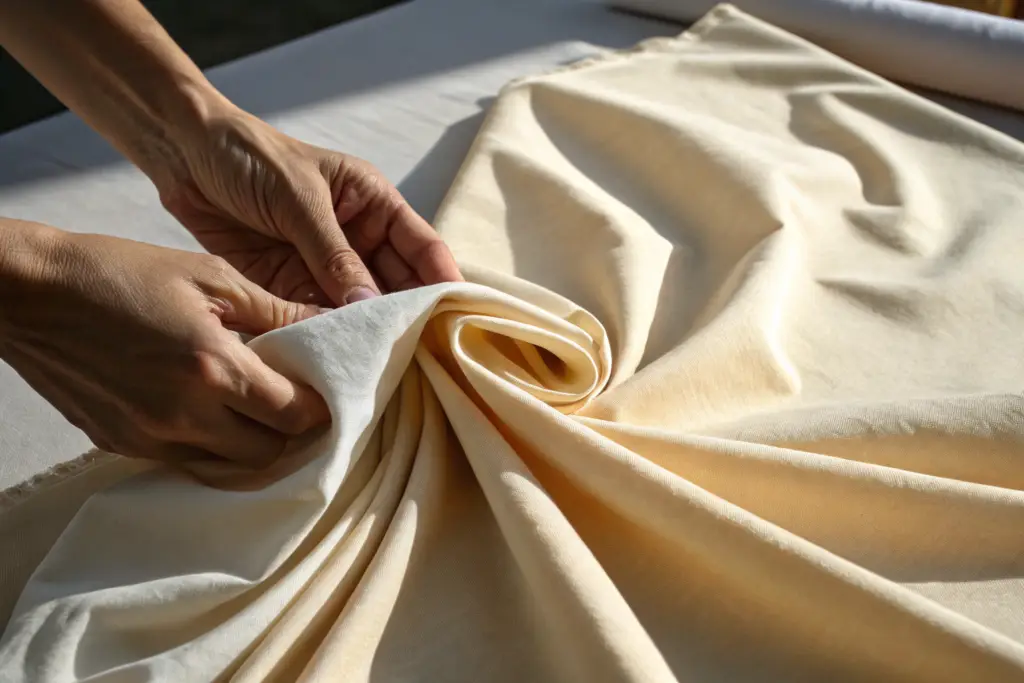
Fabric handfeel and drape are subjective but critical quality attributes that cannot be captured in a spec sheet. A fabric can meet all technical specifications (weight, yarn count) but still feel "cheap" due to harsh finishing. The sample approval stage is the only opportunity to lock in the desired tactile experience.
I recall a women's wear brand that sourced a "Peach Skin" finish for a blouse. The sample had a beautiful, subtle sanded texture. The bulk fabric arrived with a much heavier, almost fuzzy peach finish. The mill had changed the sanding roller grit to speed up production. The client had approved the sample but did not note the specific "handfeel" in the approval comments. The bulk blouses looked like they were covered in lint. They had to be heavily discounted. According to textile experts, the finishing process significantly impacts the final hand and performance of the fabric .
Why Does the Same Fabric Specification Feel Different from Different Mills?
This is one of the great mysteries of textile sourcing. You can give two mills the exact same spec: 40/1 Combed Cotton, 120 GSM, Reactive Dye. The fabric from Mill A will feel soft and silky. The fabric from Mill B will feel crisp and dry. Why? Because of the finishing recipe. The amount of softener, the type of enzyme wash, the calendering pressure—these are proprietary "secret sauces" that mills use.
This is why we encourage clients to seal a fabric swatch along with the garment sample. The swatch becomes the physical standard for bulk quality control. If the bulk fabric does not match the handfeel of the sealed swatch, we reject it, even if the paper specs match. This level of attention to top quality is what defines a premium B2B manufacturing partner.
How Does Drape Impact the Overall Look of a Garment?
Drape is how the fabric hangs under its own weight. A fabric with good drape (like silk or rayon) flows and hugs curves. A fabric with poor drape (like stiff canvas or heavily sized cotton) stands away from the body and creates a boxy silhouette. You can design a beautiful, body-skimming dress on paper. If you use a fabric with the wrong drape, it will look like a tent.
During sample approval, you must evaluate the garment on a body or a dress form, not just flat on a table. Watch how it moves. Does it swing? Does it cling in the wrong places? You cannot change the drape of 5,000 units after they are sewn. The sample is your chance to get it right.
Why Is Poor Documentation of Changes a Recipe for Disaster?
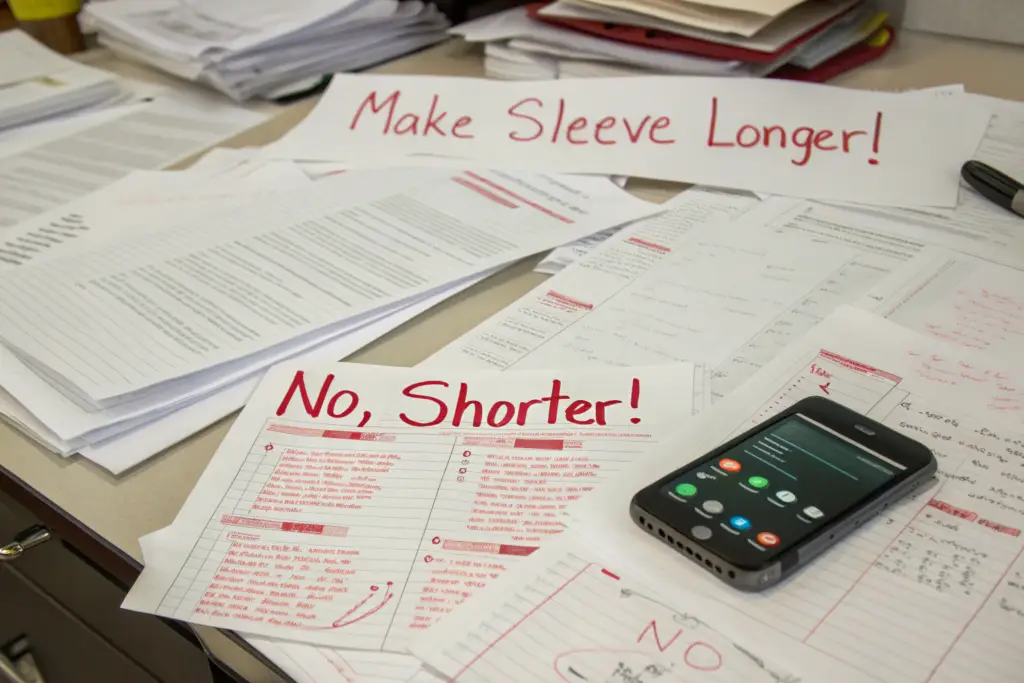
The sample arrives. You love the body, but the sleeves are too long. You email the factory: "Shorten sleeves by 1 inch." The factory replies: "OK." Three weeks later, Sample #2 arrives. The sleeves are perfect, but now the body is 2 inches wider. "Why did you change the body?" you scream. "We had to re-cut the pattern for the sleeve and the marker shifted," they reply. This is "Revision Drift."
Failing to document every single change in a centralized, version-controlled Tech Pack leads to errors in bulk production. An email trail is not a technical specification. Every revision must be captured in an updated spec sheet and confirmed with a new physical sample or a detailed photo annotation.
I have seen a men's wear order where the client requested five small changes over WeChat voice memos. The factory misinterpreted one memo and changed the collar point length instead of the collar band height. The bulk shirts arrived with a weird, 1970s-style point collar. The client had no written record to dispute it because the change was verbal. At Fumao, we enforce a strict "Revision Lock" process. After the first sample, all change requests must be annotated on a PDF of the spec sheet or marked clearly on a photo. We then issue a formal "Sample Revision Sheet" that lists every change point-by-point. The client signs off on this sheet before Sample #2 is cut. This creates a clear paper trail and protects both parties. This disciplined approach aligns with best practices in apparel product development.
What Is a "Sealed Sample" and Why Is It Your Legal Protection?
A Sealed Sample is the final, approved prototype that is signed off by both the buyer and the factory. It is placed in a tamper-proof plastic bag with a signed hangtag. It is kept in the factory's production office and used as the Gold Standard for bulk inspection.
If a dispute arises—"The bulk collar is smaller than the sample!"—the Sealed Sample is removed from the bag and measured. It is the final arbiter. Without a Sealed Sample, disputes become "he said, she said" arguments that damage relationships. We create a Sealed Sample for every style we produce. We also take high-resolution photos of the Sealed Sample from every angle and include them in the final Quality Assurance file. This is your insurance policy against bulk production surprises.
How Should You Communicate Fit Corrections to a Factory?
Vague language is the enemy. "Make it slimmer" is subjective. "Make it a little longer" is a guess. Effective fit corrections use specific, measurable language.
| Vague Instruction | Specific, Measurable Instruction |
|---|---|
| "Sleeve is too tight" | "Increase Bicep Circumference by 1/2" (1.27cm). Target: 14" flat." |
| "Body is too boxy" | "Take in Side Seam at Waist by 1/4" on each side (1/2" total circumference)." |
| "Collar sits weird" | "Adjust collar roll line. Reduce collar band height at Center Front by 1/8". See attached photo markup." |
Always include a photo with the area circled and an arrow showing the direction of the change. This visual communication bridges the language gap and ensures the pattern maker understands exactly what you want. This is standard practice for professional customization and private label work.
Conclusion
Sample approval is not a formality. It is the most important quality control checkpoint in the entire apparel manufacturing lifecycle. It is the moment when the design in your head becomes a tangible, replicable product. Rushing this step—approving by photo, skipping measurements, ignoring handfeel, or communicating poorly—is a gamble with your brand's reputation and your bottom line.
The mistakes we have explored—the olive jacket that turned brown, the legging with the tight waistband, the dress that felt like cardboard—are all preventable with discipline. It requires treating the sample as a technical document, not just a pretty prototype. It requires measuring everything, touching everything, and documenting everything. The extra 48 hours you spend on a thorough sample approval will save you months of heartache and thousands of dollars in markdowns later.
At Shanghai Fumao, we see the sample approval process as a partnership. We provide the measurement reports, the photo annotations, and the sealed samples to make this process as rigorous and transparent as possible. We want you to catch the issues on Sample #1, so there are no surprises on Carton #500.
If you want a manufacturing partner who values precision in the sample room as much as speed on the production line, let's talk. Our Business Director, Elaine, can walk you through our sample development and approval protocols. Please email Elaine at: elaine@fumaoclothing.com.