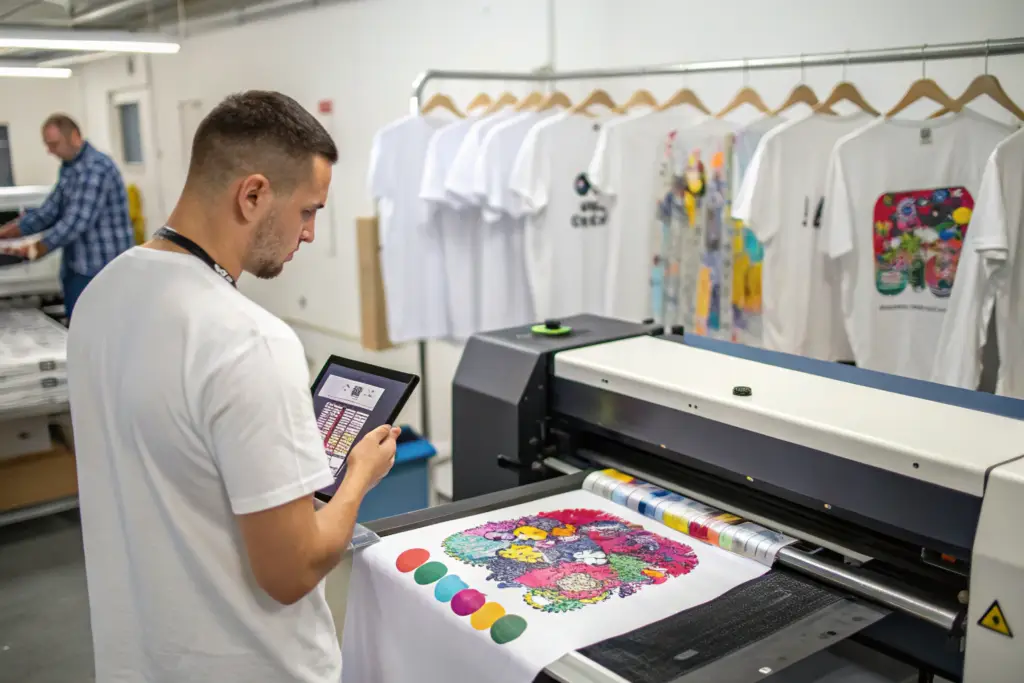
Digital printing is revolutionizing the custom apparel industry because it removes minimum order quantities, cuts sampling time from weeks to days, and eliminates screen printing setup costs. Brands can now print one shirt or one thousand shirts at the same per-unit cost.
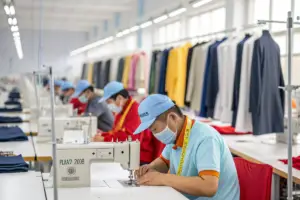
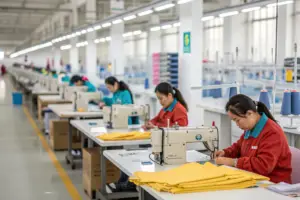
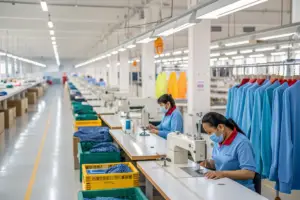
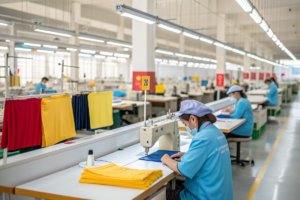
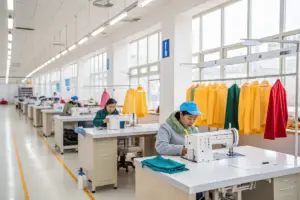
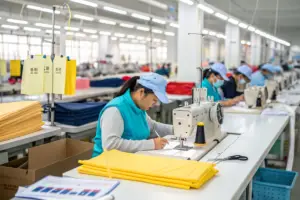
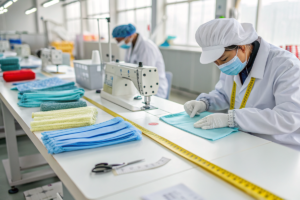
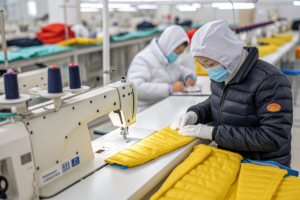
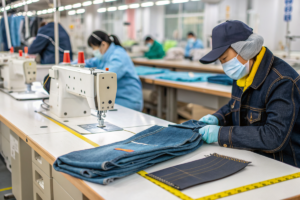
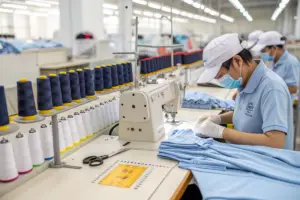
I run a clothing factory in China with five production lines. We ship to North America and Europe. Five years ago, most of our clients used screen printing for custom designs. Today, more than half of our small-batch orders use digital printing. The change is huge. It has changed how brands test new designs, how they manage inventory, and how they launch collections. Let me explain why this technology is such a big deal.
How does digital printing eliminate minimum order quantities?
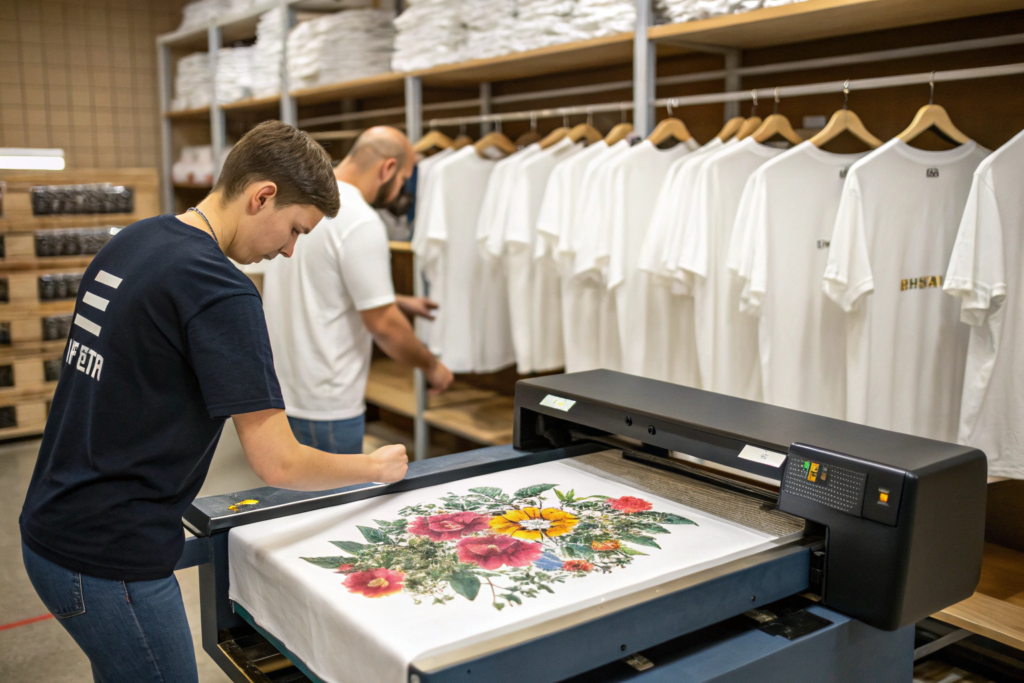
Screen printing requires setup. You make a screen for each color. You mix inks. You test the print. That setup takes time and money. So you need to print many shirts to make the setup worth it. Digital printing has no setup. You send a file. The printer prints. That changes everything.
What is the real cost comparison between screen printing and digital printing?
The math has shifted. Screen printing is still cheaper for very large runs. But digital printing wins for small and medium runs. The break-even point changes every year as digital printing gets better and cheaper.
Here is a cost comparison for a one-color design on a t-shirt:
| Order Quantity | Screen Printing Cost Per Shirt | Digital Printing Cost Per Shirt | Winner |
|---|---|---|---|
| 1 shirt | $25 to $40 (setup fee included) | $8 to $12 | Digital |
| 12 shirts | $8 to $12 | $7 to $10 | Digital |
| 50 shirts | $5 to $7 | $6 to $8 | Digital |
| 144 shirts | $3.50 to $5 | $5 to $7 | Screen (close) |
| 500 shirts | $2.50 to $3.50 | $4.50 to $6 | Screen |
| 1,000 shirts | $2 to $3 | $4 to $5.50 | Screen |
For a four-color design with front and back print, digital printing wins up to 300 pieces. After that, screen printing becomes cheaper. But here is the key. Most custom apparel brands do not print 1,000 pieces of a single design anymore. They print 50 to 200 pieces of many designs. Digital printing fits that model perfectly.
A client from Austin tested 15 new t-shirt designs with us last year. Each design was 50 pieces. With screen printing, the setup cost would have been $300 per design. Total setup would have been $4,500. With digital printing, setup was zero. The client paid only for the prints. They spent $3,200 total. They saved $1,300 and got the shirts in 10 days instead of 25 days.
How does digital printing enable on-demand production?
On-demand production means you print after the customer orders. You do not print before. You hold no inventory. You take no risk. This was impossible with screen printing. The setup cost was too high for single shirts. Digital printing makes it possible.
Here is how on-demand production with digital printing works for a custom apparel brand:
| Step | Traditional Screen Printing | Digital Printing (On-Demand) |
|---|---|---|
| Customer places order | You already have inventory | You receive the order |
| You check inventory | Yes, you have 500 shirts in a box | No inventory needed |
| You ship to customer | Same day or next day | You send order to printer |
| Production happens | Weeks or months ago | After the order is placed |
| Days from order to shipment | 1 to 2 days | 3 to 7 days |
| Risk of dead inventory | High (you printed first) | Zero (you print after sale) |
A client from Denver runs a niche brand for hiking enthusiasts. They have 200 active designs. Each design sells 10 to 30 pieces per month. With screen printing, they would need to hold 200 designs x 30 pieces = 6,000 shirts in inventory. That is $30,000 to $40,000 of tied-up capital. With digital printing, they hold zero inventory. They print each shirt when a customer orders it. Their cash flow improved dramatically.
We now offer direct-to-garment printing for all small-batch clients. The printer connects directly to our order system. When a client sends an order, the printer starts within minutes. No human touches the file. No setup. No minimum. That is the revolution.
How does digital printing reduce sampling time from weeks to days?
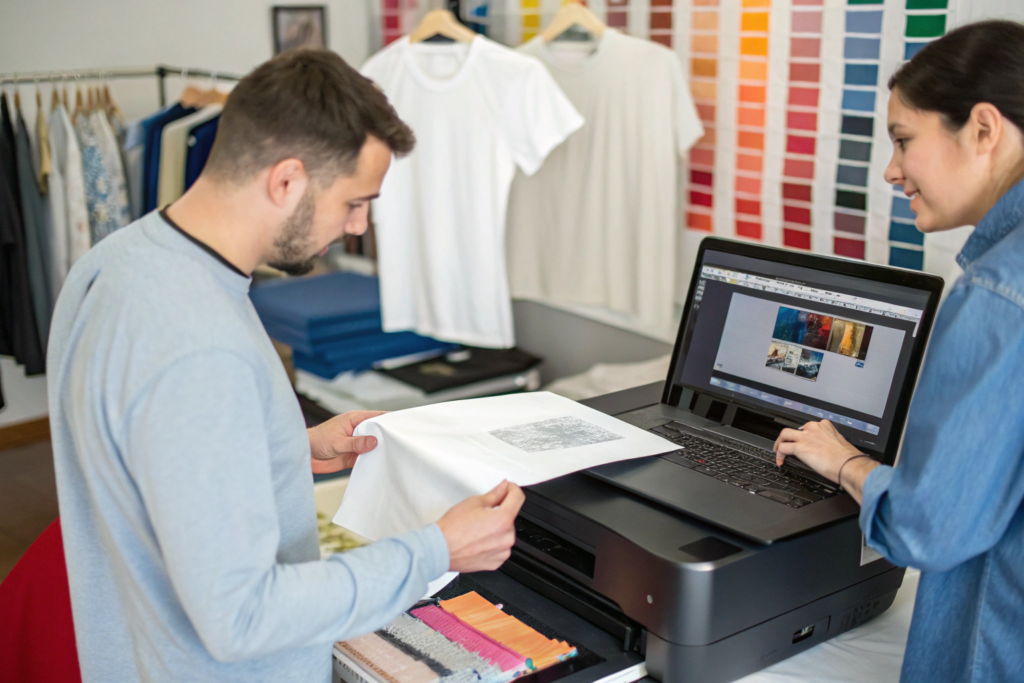
Sampling used to be the bottleneck in custom apparel. You sent a design. The factory made a screen. They printed a sample. You waited a week. You did not like the color. They made another screen. You waited another week. That process could take a month. Digital printing changes that completely.
How many design iterations can you test in one week with digital printing?
With screen printing, you might test two or three design changes in a month. With digital printing, you can test ten design changes in a single day. You send a new file. The printer prints it in 10 minutes. You look at it. You adjust. You print again.
Here is a sampling timeline comparison:
| Sampling Task | Screen Printing | Digital Printing |
|---|---|---|
| Prepare design file | 1 hour | 1 hour |
| Create screen or prep printer | 4 to 8 hours (screen making) | 5 minutes (load file) |
| Print first sample | 1 hour (after screen ready) | 10 minutes |
| Review and note changes | 30 minutes | 30 minutes |
| Adjust design and re-print | 4 to 8 hours (new screen) | 10 minutes |
| Total time for 3 iterations | 2 to 3 days | 2 to 3 hours |
A client from Portland used digital printing to develop a complex all-over print hoodie. They tried 22 color variations in one week. With screen printing, that would have taken three months and cost $5,000 in screen fees. With digital printing, the cost was $440 in sample prints. They found the perfect color combination on version 18. The hoodie became their best-selling product.
The speed of sampling changes the whole design process. You are not afraid to try weird ideas. You can test a design for one day and drop it if it does not work. You can A/B test five designs on social media before choosing one for production. That speed is a superpower for small brands.
Can you simulate fabric texture and color accurately with digital samples?
This is the one place where digital printing still has limits. Digital samples look good. But they do not always feel like the final product. The ink sits on top of the fabric. Screen printing ink bonds into the fabric. The difference matters for some products.
Here is how digital print quality compares to screen print quality across different factors:
| Quality Factor | Digital Printing | Screen Printing | Winner |
|---|---|---|---|
| Color vibrancy on white fabric | Excellent | Excellent | Tie |
| Color vibrancy on dark fabric | Good (needs white underbase) | Excellent | Screen |
| Softness of hand feel | Very soft (no thick ink layer) | Soft to medium | Digital |
| Wash durability | Good (500+ washes with proper care) | Excellent (1,000+ washes) | Screen |
| Photographic detail | Excellent (no color limit) | Poor (limited by screens) | Digital |
| Pantone color matching | Good (close but not exact) | Excellent (exact match possible) | Screen |
For most custom apparel brands, digital printing is good enough. The color is close. The durability is fine for most use cases. The softness is actually better. But for high-end fashion brands or workwear brands that need exact Pantone matching, screen printing is still better.
We offer both methods at Shanghai Fumao. We help clients choose based on their specific needs. A streetwear brand with complex photographic prints? Digital. A corporate uniform brand with two exact Pantone colors? Screen.
How does digital printing enable mass customization and personalization?
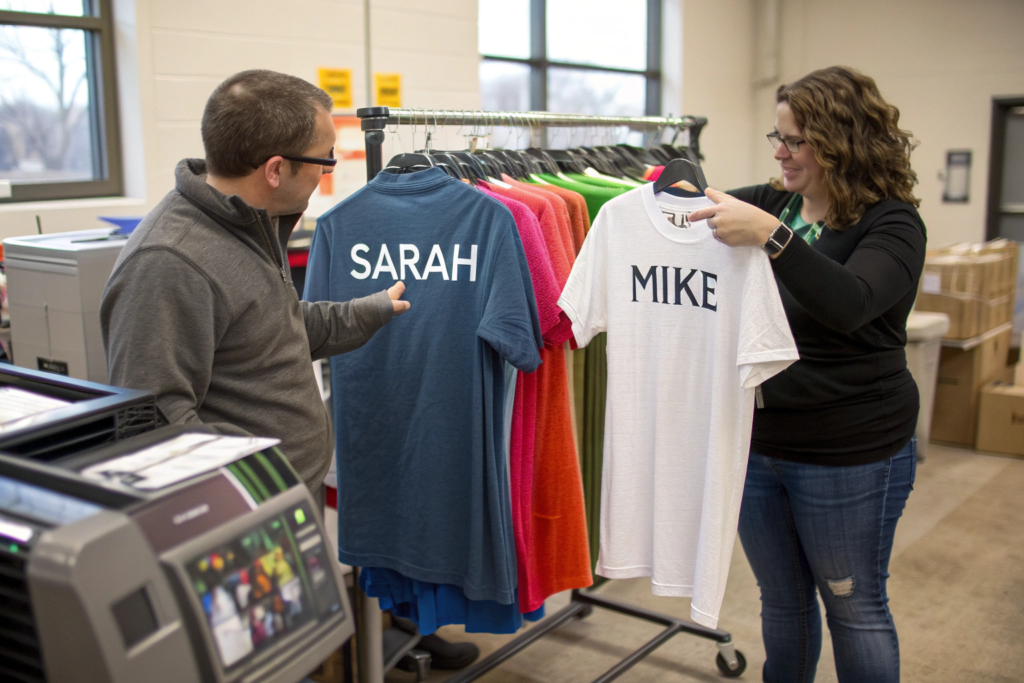
Mass customization means making each product different for each customer. One shirt has "Sarah." The next shirt has "Mike." The third shirt has a different design entirely. Screen printing cannot do this. Digital printing does it easily. Each print can be unique.
What is the cost of printing 100 different designs on 100 shirts?
With screen printing, 100 different designs on 100 shirts is impossible. You would need 100 screens. The setup cost would be $5,000 to $10,000. The time would be weeks. The cost per shirt would be $50 to $100.
With digital printing, 100 different designs on 100 shirts is easy. You load 100 files. The printer prints them one by one. The cost per shirt is the same as printing 100 copies of the same design. Here is the comparison:
| Scenario | Screen Printing | Digital Printing |
|---|---|---|
| 100 shirts, same design | $3 to $5 per shirt | $6 to $8 per shirt |
| 100 shirts, 100 different designs | Not feasible (cost $5,000+ in screens) | $6 to $8 per shirt |
| 500 shirts, 25 designs (20 each) | $2.50 to $4 per shirt + $1,250 in screens | $5 to $7 per shirt |
| 1,000 shirts, 100 designs (10 each) | Impossible (cost $5,000+ in screens) | $4.50 to $6.50 per shirt |
A client from Nashville sells custom pet shirts. Each shirt has a different dog breed illustration. Customers choose the breed. The client prints that specific breed. They have 75 different breeds. They sell 10 to 20 shirts per day. With screen printing, they would need 75 screens in stock. That is $3,750 in screen costs. With digital printing, they have zero screen costs. They just store digital files.
This personalization capability is opening new business models. Name shirts. City shirts with custom landmarks. Event shirts with attendee names. Wedding shirts with bridal party roles. All of these were expensive or impossible before digital printing. Now they are standard offerings.
How does variable data printing work for apparel?
Variable data printing means changing one part of the design while keeping the rest the same. The base design is the same. The name or number changes on each shirt. This is perfect for sports teams, corporate events, and schools.
Here is how variable data printing works in our factory:
| Step | What Happens | Time Required |
|---|---|---|
| 1 | Client uploads base design file | 5 minutes |
| 2 | Client uploads CSV file with 100 names | 5 minutes |
| 3 | Our software merges name into each design | 2 minutes |
| 4 | Printer prints shirt 1: "Team Sarah" | 90 seconds |
| 5 | Printer prints shirt 2: "Team Mike" | 90 seconds |
| 6 | Repeat for all 100 shirts | 2.5 hours total |
A client from Boston runs a corporate team-building company. They print shirts for 500-person events. Each shirt has the attendee's name and department. Before digital printing, they ordered blank shirts and added name tags. The name tags fell off. The shirts looked cheap. Now they print the names directly on the shirts. The quality is higher. The attendees keep the shirts as souvenirs. The client gets more repeat business.
The software cost for variable data printing is low. We pay $100 per month for a variable data printing tool. That tool processes thousands of name changes every week. The ROI is enormous.
How does digital printing reduce inventory risk and dead stock?
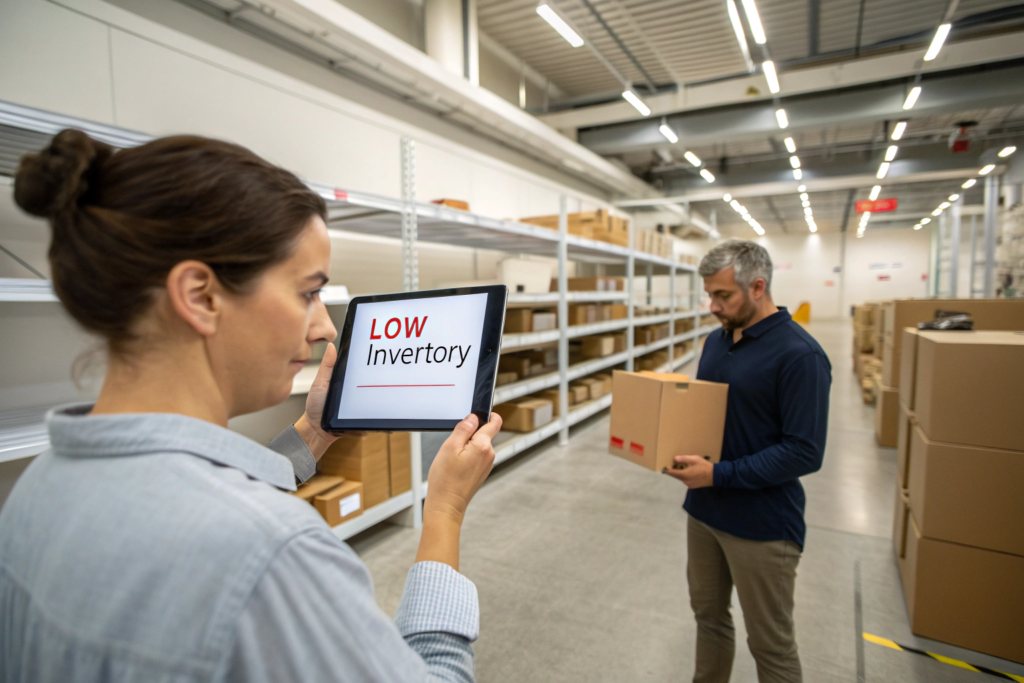
Dead stock is the enemy of apparel brands. You print 1,000 shirts. You sell 400. The other 600 sit in a box for two years. You paid for them. You store them. You eventually sell them at a loss. Digital printing lets you avoid this by printing only what you need.
How much inventory can you save by switching to print-on-demand?
The savings are huge. You move from holding months of inventory to holding zero inventory. Your cash is not tied up in shirts. Your warehouse is empty. Your risk is gone.
Here is a print-on-demand inventory comparison for a brand that sells 500 shirts per month across 50 designs:
| Metric | Traditional Screen Printing | Digital Print-on-Demand |
|---|---|---|
| Inventory held per design | 30 to 50 pieces | 0 pieces |
| Total inventory held | 1,500 to 2,500 shirts | 0 to 100 samples |
| Inventory value | $7,500 to $15,000 | $0 to $500 |
| Warehouse space needed | 100 to 200 sq ft | 10 sq ft (for samples) |
| Dead stock after 6 months | 300 to 600 shirts (20% to 30%) | 0 to 10 samples |
| Cash tied up in inventory | $7,500 to $15,000 | $0 |
A client from Philadelphia switched from screen printing to digital print-on-demand for their entire product line. They had $22,000 tied up in inventory before the switch. After the switch, they had zero inventory. They used that $22,000 to launch two new product categories. Their total revenue grew by 40% in one year.
The trade-off is higher per-unit cost. Digital printing costs more per shirt than screen printing at high volumes. But the inventory savings often outweigh the higher unit cost. You pay a little more for each shirt. But you never pay for shirts that do not sell. That trade-off makes sense for most small and medium brands.
Can you combine digital and screen printing for the best of both worlds?
Yes. Many of our clients use a hybrid model. They test with digital printing. Then they scale with screen printing for proven designs. This gives you low risk and low unit cost.
Here is our hybrid production recommendation:
| Stage | Printing Method | Order Size | Why |
|---|---|---|---|
| Design testing | Digital | 5 to 20 pieces | Low setup cost, fast iterations |
| Market validation | Digital | 20 to 100 pieces | No inventory risk, test demand |
| Proven bestseller | Screen | 200+ pieces | Lower per-unit cost |
| Replenishment for bestseller | Screen | 100+ pieces | Consistent color matching |
| One-off custom orders | Digital | 1 to 10 pieces | Only feasible method |
A client from Atlanta used this hybrid model for a music festival shirt. They designed 20 different artist shirts. They printed 50 of each digitally. They sold them at the festival. Three artist shirts sold out in two days. They immediately placed a screen printing order for 500 of each of those three designs. The screen printed shirts arrived in 14 days. They sold another 1,200 shirts online after the festival.
The hybrid model works because digital printing acts as your testing ground. You do not commit to screen printing until you know the design sells. That is smart business. That is the revolution.
Conclusion
Digital printing is not replacing screen printing completely. That is not the point. The point is that digital printing opens new possibilities. You can print one shirt at a reasonable price. You can test ten design variations in a week. You can put a different name on every shirt. You can hold zero inventory and still run a profitable apparel brand.
These possibilities were not available five years ago. Now they are standard. Small brands can compete with large brands. Large brands can test more designs with less risk. Everyone wins.
We invested in digital printing equipment at Shanghai Fumao because our clients asked for it. They wanted smaller batches. They wanted faster sampling. They wanted personalization. We listened. Now we run both digital and screen printing lines. We help each client choose the right method for their specific order.
If you are still using screen printing for everything, you are missing opportunities. You are holding too much inventory. You are testing too few designs. You are moving too slowly. Digital printing can fix those problems.
Let us show you how. Contact our Business Director Elaine. Her email is elaine@fumaoclothing.com. Send her a design file. She will send you a digital sample in 48 hours. You will see the quality yourself. Then you can decide. No pressure. Just options.