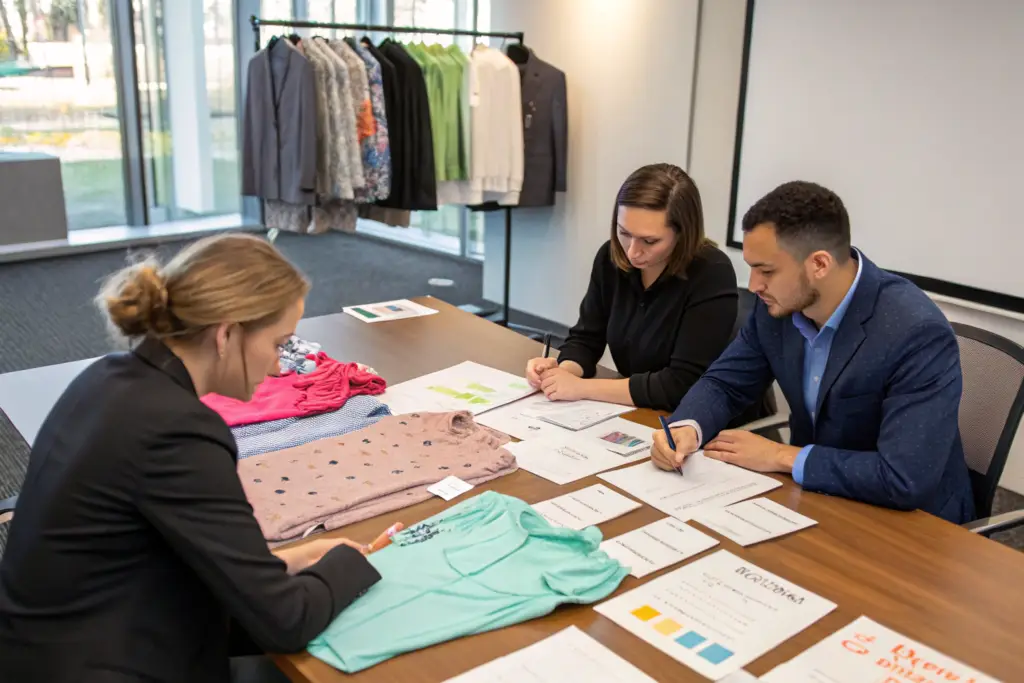
The best strategies for liquidating excess wholesale clothing inventory include selling to off-price retailers, using B2B liquidation marketplaces, running flash sales for past customers, donating for tax benefits, and repurposing items into sample packs or mystery boxes. Each method works best for different types of excess stock.
I run a clothing factory in China with five production lines. We ship to North America and Europe. Excess inventory is a fact of life in apparel. Even the best brands overproduce sometimes. A color does not sell. A size run is unbalanced. A customer cancels an order. I have helped dozens of clients turn dead stock into cash. Let me share what works and what does not.
How do you quickly identify which inventory needs liquidation?
You cannot liquidate everything the same way. Some inventory sells fast at good prices. Some inventory needs deep discounts. Some inventory is better donated. The first step is sorting your excess stock into categories. We use a simple system based on age and demand.

What inventory metrics separate slow sellers from dead stock?
Not all excess inventory is the same. Slow sellers are items that still have some demand. They just need a price reduction or better placement. Dead stock has no demand at current prices. It needs a different channel.
Here is how we help clients classify excess inventory:
| Inventory Type | Age | Sell-Through Rate | Best Action |
|---|---|---|---|
| Seasonal overstock | Less than 60 days past season | 40% to 60% | Discount 20% to 30% on your own site |
| Slow mover | 90 to 180 days old | Less than 10% per month | B2B marketplace or flash sale |
| Dead stock | More than 180 days old | Less than 2% per month | Off-price retailer or donation |
| Customer return | Any age | Cannot sell as new | Sample sale or mystery box |
| Canceled order | Brand new | 0% (no channel set up) | Sell to liquidator or jobber |
A client from Chicago had 5,000 pieces of women's blouses. The blouses were 120 days old. They had sold only 8% of the total run. We sorted them by color. Black and navy sold okay. Pink and yellow sold zero. We sent the black and navy to a B2B marketplace. We sold the pink and yellow to an off-price retailer at 70% off cost. The client recovered 45% of their total investment. Not great. But better than zero.
We use a simple rule now. If an item has not sold 20% of its inventory in 90 days, it is dead stock. Stop trying to sell it at full price. Move it to liquidation immediately. Every month you wait, the value drops.
How do you calculate your true liquidation break-even point?
Many brand owners think they need to recover 100% of their cost. That is a mistake. Money tied up in dead stock costs you every month. You pay for storage. You pay for staff to manage it. You lose the opportunity to invest that money in new products.
Here is how to calculate your true cost of holding excess inventory:
| Cost Component | Percentage of Inventory Value | Notes |
|---|---|---|
| Storage (warehouse rent) | 3% to 5% per year | More if you use third-party logistics |
| Insurance | 1% to 2% per year | Often overlooked |
| Staff time | 2% to 4% per year | Picking, packing, counting |
| Opportunity cost | 8% to 12% per year | Money that could be in new products |
| Obsolescence | 5% to 15% per year | Fashion items lose value fast |
| Total annual holding cost | 19% to 38% | This is money you lose by keeping dead stock |
A client from Texas had $100,000 of excess inventory. Their holding cost was about 25% per year. That is $25,000 per year just to keep the stock. After six months, they had lost $12,500 in holding costs. They sold the inventory to a liquidator for $40,000. Their net recovery was $27,500 after holding costs. If they had sold six months earlier, they would have recovered $50,000.
The math is simple. Sell fast. Even at low prices. The holding cost eats your profit every month.
Which B2B liquidation channels offer the best recovery rates?
Different channels give different recovery rates. Some channels are fast but pay low prices. Some channels take longer but pay better. You need to match your inventory to the right channel. We have tested most of them with our clients.

How do off-price retailers like TJ Maxx and Ross work?
Off-price retailers buy excess inventory from brands. They pay 20% to 40% of the original wholesale price. Then they sell the products in their stores at 40% to 60% off retail. It is a fast way to move large volumes.
We connected a client from Florida with an off-price buyer. The client had 15,000 pieces of men's woven shirts. The original wholesale price was $12.00. The off-price buyer offered $3.50 per piece. That is 29% of wholesale. The client accepted. They received $52,500 within 30 days. The alternative was storing the shirts for another year.
Here is how off-price retail partnerships typically work:
| Channel | Recovery Rate | Speed | Minimum Quantity | Best For |
|---|---|---|---|---|
| TJ Maxx / Marshalls | 20% to 35% of wholesale | 30 to 60 days | 5,000 pieces | Brand name merchandise |
| Ross Stores | 15% to 30% of wholesale | 30 to 45 days | 3,000 pieces | Basic apparel |
| Burlington | 10% to 25% of wholesale | 45 to 60 days | 2,000 pieces | Seasonal closeouts |
| Nordstrom Rack | 30% to 50% of wholesale | 60 to 90 days | 1,000 pieces | Premium and designer brands |
The key requirement for off-price retailers is presentation. Your products need to look clean. They need proper hang tags and poly bags. They need to be free of defects. We help our clients prepare their excess inventory before sending to off-price buyers. A small investment in repacking can increase recovery by 10% to 15%.
What are the best online B2B liquidation marketplaces?
Online marketplaces are good for smaller lots. You can sell 500 pieces instead of 5,000 pieces. The recovery rates are sometimes higher than off-price retailers. But you do more work yourself.
We have used several B2B liquidation platforms for our clients. Here is our experience:
| Marketplace | Recovery Rate | Fees | Best Lot Size | Good For |
|---|---|---|---|---|
| B-Stock | 15% to 40% of wholesale | 5% to 10% | 500 to 5,000 pieces | Branded excess inventory |
| Liquidation.com | 10% to 30% of wholesale | 6% to 12% | 200 to 2,000 pieces | Mixed lots and customer returns |
| 888 Lots | 20% to 35% of wholesale | 8% | 300 to 3,000 pieces | Overstock and shelf pulls |
| BulkApparel | 25% to 45% of wholesale | 10% to 15% | 100 to 1,000 pieces | Small brands, sample packs |
A client from Oregon sold 800 pieces of women's activewear on B-Stock. The original wholesale value was $16,000. They sold the lot for $5,200. That is 32.5% recovery. After fees, they received $4,680. The whole process took 14 days from listing to payment. They were happy because the activewear was 10 months old and taking up warehouse space.
The trick with online marketplaces is good photos and accurate descriptions. Do not hide defects. Be honest about the condition. Buyers on these platforms are professional resellers. They will inspect your lots. If you lie, they will return the goods or leave bad feedback.
How can flash sales and customer emails clear inventory fast?
Your existing customers are your best liquidation channel. They already know your brand. They already trust your quality. You do not need to find new buyers. You just need to give them a good deal.

What email strategy works best for excess inventory?
Do not send a boring "we have excess inventory" email. That does not work. Create urgency. Create exclusivity. Make your customers feel they are getting a special deal.
Here is an email template that worked for a client from Pennsylvania. They had 1,200 pieces of last season's knit sweaters:
Subject line: "Private sale for our best customers. 50% off. 48 hours only."
Body: "We made too many sweaters. That is our mistake. Your gain. Take 50% off our entire knitwear collection. No code needed. Discount applies at checkout. Sale ends Friday at midnight. Limited quantities."
The client sent this email to 4,500 past customers. Open rate was 38%. Click rate was 12%. They sold 890 sweaters in 48 hours. That is 74% of the excess inventory. The remaining 310 pieces went to a B2B marketplace.
Here is a flash sale email sequence that works for apparel excess inventory:
| Day | Email Type | Content | Best Time to Send |
|---|---|---|---|
| Day 1, 9 AM | Announcement | 48 hour flash sale, up to 60% off | Tuesday or Wednesday |
| Day 1, 7 PM | Reminder | "Sale ends tomorrow. Your favorites are selling fast." | Evening when people check email |
| Day 2, 10 AM | Scarcity | "Last chance. Only X pieces left at this price." | Mid-morning after work starts |
| Day 2, 8 PM | Final call | "Sale ends at midnight. Last few items." | Evening before deadline |
The key is frequency. Do not send just one email. Send three or four over 48 hours. Each email should have a different angle. The first email announces. The second reminds. The third creates scarcity. The fourth creates urgency.
Should you create mystery boxes or sample packs for liquidation?
Mystery boxes work well for mixed excess inventory. You take items that did not sell individually. You bundle them into a box. You sell the box at a low price. Customers do not know exactly what they will get. But they know the total value is higher than the price.
A client from Michigan used mystery boxes to clear customer returns. They had 2,500 returned items. Some had small defects. Some were the wrong size. Some were just tried on and sent back. They bundled five items into each box. Each box sold for $29.99. The original retail value of five items was $150 to $200.
Here is how mystery box liquidation worked for them:
| Box Type | Contents | Box Price | Original Value | Recovery Rate |
|---|---|---|---|---|
| Women's top box | 5 assorted blouses or shirts | $29.99 | $150 to $180 | 17% to 20% |
| Men's casual box | 3 tees + 2 polos | $34.99 | $160 to $200 | 18% to 22% |
| Activewear box | 2 leggings + 2 sports bras + 1 top | $39.99 | $200 to $250 | 16% to 20% |
| Kids' mix box | 7 pieces (various sizes) | $24.99 | $120 to $150 | 17% to 21% |
They sold 450 boxes in three weeks. That is 2,250 items cleared. Total revenue was $14,000. The alternative was throwing away the returns or donating them. Mystery boxes turned a total loss into partial recovery.
The rules for mystery boxes are simple. Be honest about the range of items. Do not promise specific colors or styles. Ship fast. Customers who buy mystery boxes are usually happy if the total value is clearly higher than the price.
What tax strategies can turn dead stock into real value?
Sometimes the best financial move is not selling. Donating excess inventory can give you tax benefits that are better than low-price liquidation. You need to understand the rules. We learned this from a client who saved $45,000 in taxes one year.

How does the enhanced tax deduction for inventory donation work?
In the United States, C corporations can get an enhanced deduction for donating inventory to qualified charities. The deduction is cost plus half the profit. The maximum deduction is twice the cost.
Here is how Section 170(e)(3) tax deduction works for apparel donations:
| Donation Type | Deduction Calculation | Example ($10 cost) |
|---|---|---|
| Regular donation (not inventory) | Lower of cost or fair market value | $10 deduction |
| Inventory donation to qualified charity | Cost + 50% of gross profit (max 2x cost) | Cost $10 + 50% of ($20 retail - $10 cost = $10) = $20 deduction |
| Inventory donation for food or clothing | Cost + 50% of gross profit (special rule) | Same as above |
A client from Virginia donated 8,000 pieces of women's outerwear. The cost per piece was $18. The retail value was $79. Their gross profit per piece was $61. The enhanced deduction was $18 + ($61 x 50%) = $48.50 per piece. Total deduction was $388,000. Their tax rate was 21%. They saved $81,480 in taxes. If they had sold the outerwear to a liquidator at $5 per piece, they would have received only $40,000.
The rules are strict. The charity must be qualified. The donation must be used for the poor or for educational purposes. You need a written receipt. You need a valuation from a qualified appraiser for donations over $5,000.
Which charities accept bulk clothing donations?
Not all charities want bulk clothing. Some are overwhelmed. Some only take specific types. You need to find the right partner.
Here are charities that accept bulk apparel donations for tax deductions:
| Charity | What They Accept | Minimum Quantity | Documentation Provided |
|---|---|---|---|
| Goodwill | Most clothing in sellable condition | Any | Receipt with estimated value |
| Salvation Army | Clean, usable clothing | Any | Receipt, can provide appraisal letter |
| Soles4Souls | New or gently used shoes and clothing | 500+ pieces | Detailed donation receipt for tax purposes |
| Dress for Success | Women's professional attire (new or like new) | By appointment | Donation acknowledgment letter |
| Big Brother Big Sister | All clothing, linens, accessories | 10+ bags | Itemized receipt for larger donations |
A client from Georgia worked with Soles4Souls. They donated 12,000 pieces of children's clothing. The clothing was new but from a canceled order. The charity distributed the clothing to families in need after a natural disaster. The client received a detailed donation receipt. Their tax deduction was $72,000. That was better than any liquidation offer they received.
The key is planning. Do not wait until December to think about donations. Talk to a qualified tax professional first. Make sure your business structure qualifies. C corporations get the best enhanced deduction. S corporations and LLCs have different rules.
Conclusion
Excess inventory is not a failure. It is a normal part of the apparel business. The mistake is holding onto it too long. Every month you keep dead stock, you lose money on storage, staff time, and missed opportunities. The best strategy is to act fast. Sort your inventory. Calculate your break-even point. Choose the right channel for each category of excess stock.
Sell to off-price retailers for large volumes. Use B2B marketplaces for smaller lots. Run flash sales for your existing customers. Create mystery boxes for mixed returns. Donate for tax benefits when liquidation prices are too low.
We help our clients plan for excess inventory from the start. We build flexible production terms that let them reduce orders when sales are slow. We keep grey fabric in stock so they do not get stuck with printed fabric that cannot be used for other styles. Prevention is better than liquidation.
If you have excess inventory right now and you do not know what to do with it, let us talk. Visit Shanghai Fumao to learn about our production process. Then contact our Business Director Elaine. Her email is elaine@fumaoclothing.com. Tell her what excess stock you have. She will give you honest advice on liquidation options. Sometimes the best move is to sell fast and move on.