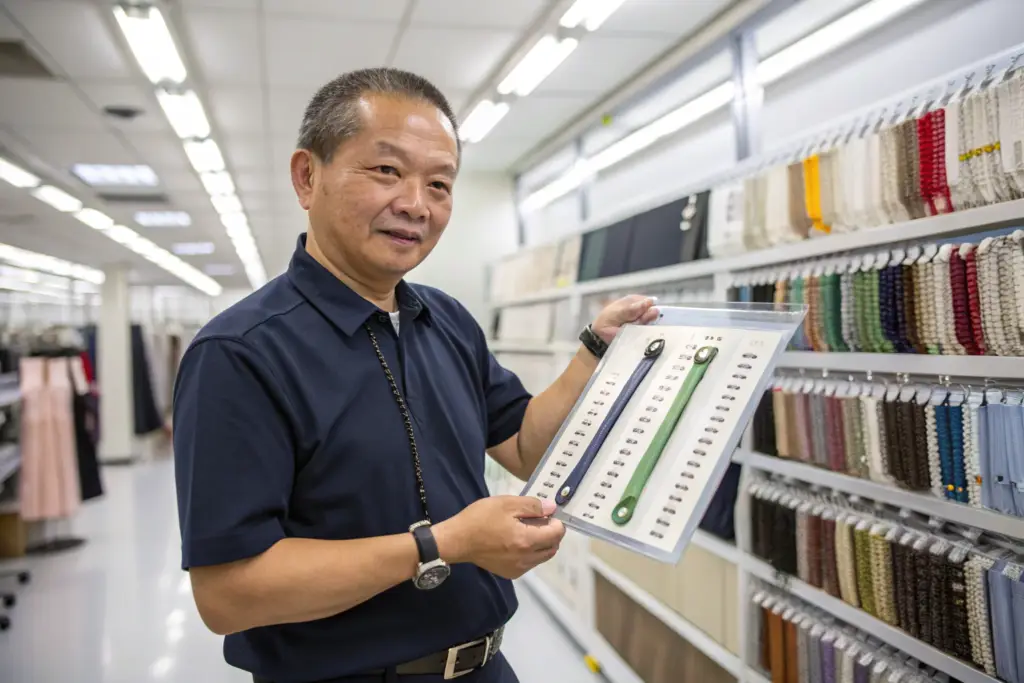
You have a beautiful fabric. You have a perfect pattern. You sew the sample. But the zipper is wrong. It does not match. It is stiff. It breaks. The buttons are cheap. They fall off. The label is crooked. The sample looks unprofessional. You are frustrated. I have seen this happen many times. Brands focus on fabric. They forget trims and accessories. But trims are what the customer touches. They are what breaks. They are what shows quality.
Based on our experience producing millions of garments, fabric trims and accessories are as important as the fabric itself. They affect the function, durability, and appearance of the garment. For example, last year we worked with a brand from New York. They had a beautiful wool coat. But the zipper was low quality. It jammed. Customers returned the coat. We replaced the zipper with a YKK zipper. The next sample was perfect. The brand learned that trims matter. That is why fabric trims and accessories are critical in sampling.
So, why are fabric trims and accessories important in sampling? Let me break it down. I will explain how they affect function. I will discuss how they impact durability. I will show how they influence appearance. And I will give you a framework for selecting and testing trims during sampling.
How Do Trims and Accessories Affect Garment Function?
Function is the first thing a customer notices. I remember a client from Chicago. They made a jacket with a cheap zipper. The zipper jammed. Customers could not close the jacket. They returned it.
Trims and accessories determine how a garment functions. A zipper must zip smoothly. A button must button easily. A snap must snap securely. For the Chicago client, we now test every zipper in the sample. We zip and unzip 20 times. If it jams, we reject it. For woven shirts, we test the buttonholes. They must be the right size. The button must pass through easily. For knits, we test the neckband. It must stretch and recover. For denim, we test the rivets. They must hold securely. Function is tested in the sample. If the trim fails in the sample, it will fail in bulk.

What Trims Affect Function Most?
Trims that affect function:
- Zippers (smooth operation, locking)
- Buttons (ease of buttoning, security)
- Snaps (snap strength, ease of snapping)
- Elastic (tension, recovery)
- Drawstrings (ease of pulling, secure ends)
For a sportswear client, they tested the elastic in the waistband. It had good recovery. The leggings stayed in place.
How Do You Test Zipper Function?
Test zipper function by:
- Zipping and unzipping 20 times
- Checking for jams
- Testing the locking mechanism (if applicable)
- Checking the puller attachment
For a denim client, they tested the zipper on the sample. It worked smoothly. They approved.
How Do Trims and Accessories Impact Durability?
Durability is critical. I remember a client from Boston. They made a shirt with cheap buttons. The buttons fell off after one wash. Customers complained.
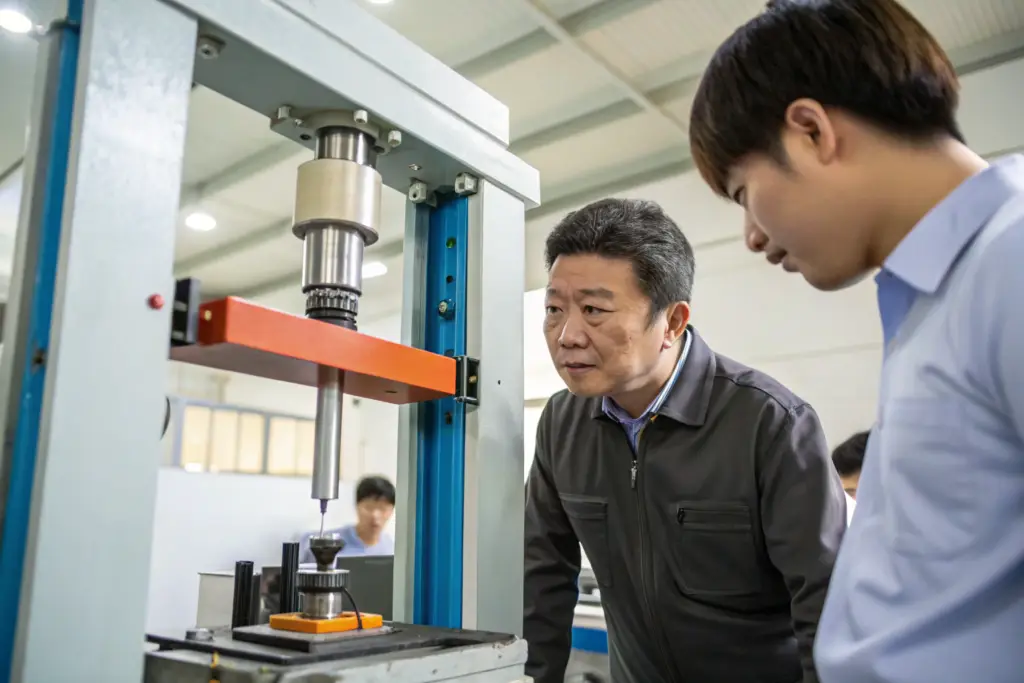
Trims and accessories must withstand wear and washing. A button must not fall off. A zipper must not break. A label must not fade. For the Boston client, we now test button pull strength. We pull the button with 70 Newtons of force. It must not detach. For woven shirts, we test the buttonhole stitching. It must not unravel. For knits, we test the neckband. It must not stretch out. For denim, we test the rivets. They must not pull out. Durability is tested in the sample. If the trim fails, we choose a better quality trim.
What Durability Tests Are Performed on Trims?
Durability tests include:
- Button pull strength
- Zipper cycle test (how many times it can zip)
- Snap cycle test
- Colorfastness to washing and light
- Abrasion resistance (for labels)
For a sportswear client, they tested the screen print on the label. It did not crack after 20 washes.
How Do You Test Button Security?
Button security is tested with a tension gauge. The button is pulled with increasing force. It must withstand 70 Newtons (about 15 pounds) without detaching. For a kids' shirt client, they tested every button. All passed.
How Do Trims and Accessories Influence Appearance?
Appearance is what the customer sees. I remember a client from Seattle. They used mismatched buttons. The buttons were a different shade than the fabric. The sample looked cheap.
Trims and accessories must match the fabric in color, finish, and style. A button should complement the fabric. A zipper should blend or contrast intentionally. A label should be placed straight. For the Seattle client, we now provide a trim card with the sample. The client approves the color match. For woven shirts, we match the button color to the fabric. For knits, we match the thread color. For denim, we match the rivet finish to the hardware. Appearance is also about placement. A crooked label ruins the look. We check label placement on every sample. It must be centered and straight.

How Do You Match Trim Color to Fabric?
Trim color is matched using Pantone numbers or visual comparison. For a sportswear client, they provided the Pantone number for the zipper. The zipper matched the fabric.
How Do You Ensure Proper Label Placement?
Label placement is checked by:
- Measuring from the seam
- Ensuring it is centered
- Ensuring it is straight
- Checking that it is not twisted
For a denim client, the leather patch was centered on the waistband. The sample looked professional.
How Do You Select and Test Trims During Sampling?
Selecting trims is a process. I remember a client from New York. They did not specify trims. The factory used whatever they had. The trims did not match.
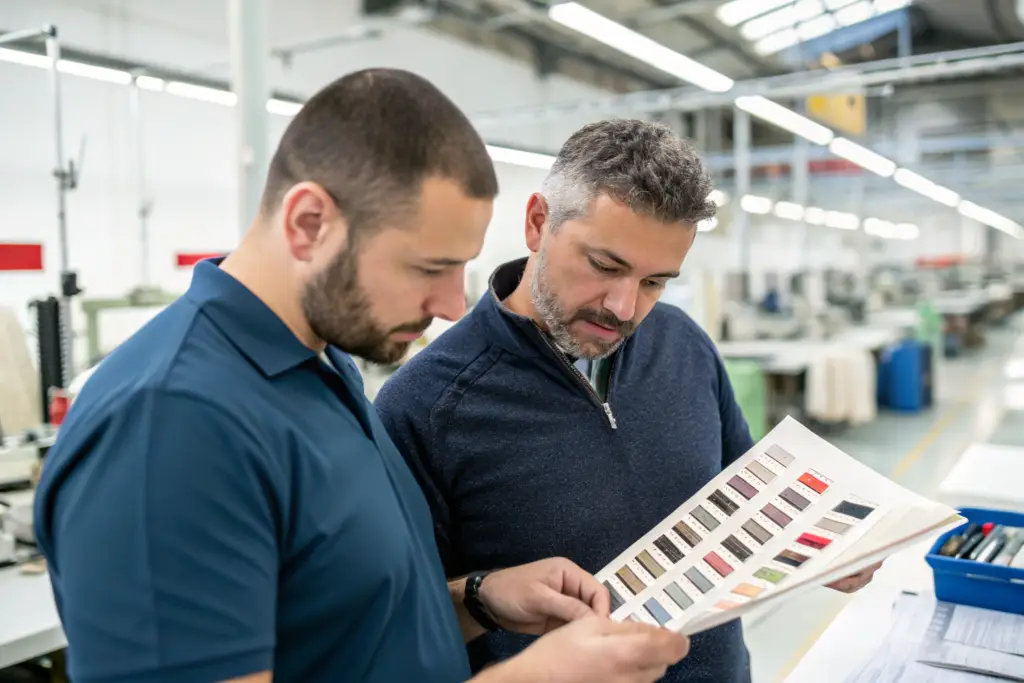
During sampling, trims should be selected and approved. Provide a trim card. Specify the zipper type, button style, label placement. For the New York client, we now use a trim approval process. The client approves the trim card before sampling. For woven shirts, they approve the button style and color. For knits, they approve the thread color. For denim, they approve the rivet finish. After the sample is made, we test the trims. We test function, durability, and appearance. If a trim fails, we replace it. The trim is then approved. The approved trim is used for bulk production.
What Information Should Be on a Trim Card?
A trim card should include:
- Zipper type, size, color, and supplier
- Button type, size, color, and supplier
- Label type, size, color, and placement
- Thread color and type
- Elastic width and type
For a sportswear client, the trim card included a screen print sample. The client approved it.
How Do You Test Trims on the Sample?
Test trims by:
- Zipping and unzipping 20 times
- Pulling buttons and snaps
- Checking label placement
- Washing the sample (if possible)
- Checking colorfastness
For a denim client, they washed the sample. The rivets did not rust. The buttons did not fade.
Conclusion
Fabric trims and accessories are critical in sampling. They affect function, durability, and appearance. A good zipper works smoothly. A secure button stays attached. A straight label looks professional. During sampling, trims must be selected, approved, and tested. The approved trims become the standard for bulk production.
At Shanghai Fumao, we have a trim library with thousands of options. We provide trim cards. We test every trim on the sample. We ensure that your garment functions well, lasts long, and looks great.
Let us help you select the right trims for your sample. Contact our Business Director, Elaine, directly at elaine@fumaoclothing.com. Send us your trim requirements. We will include them in your sample.