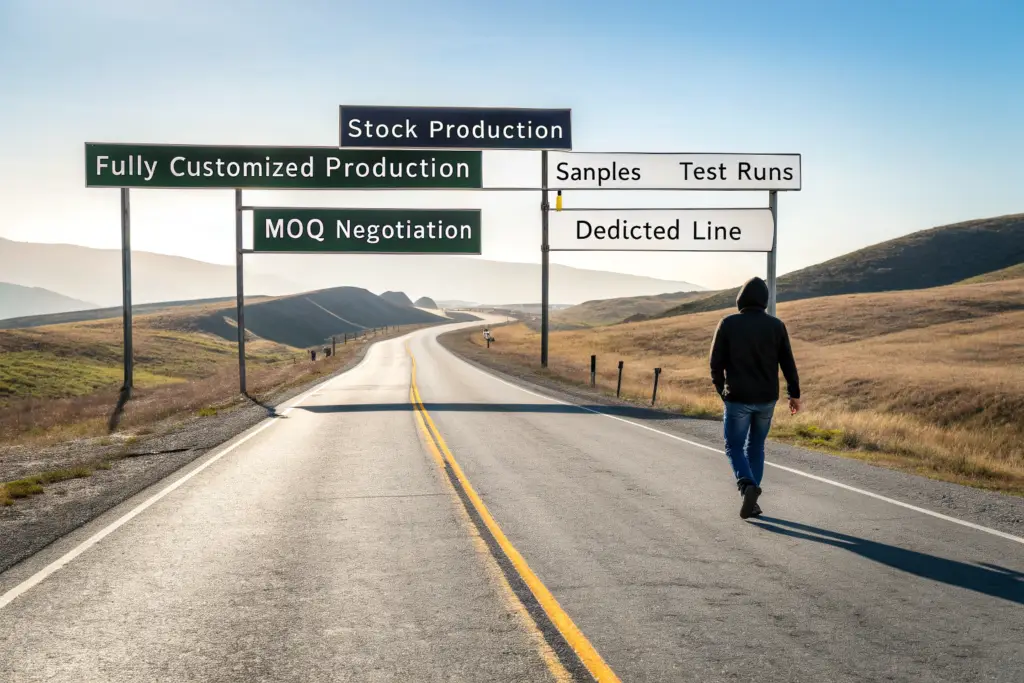
You have been selling stock garments. You buy from suppliers who have ready-made styles. You add your label. It works. But you are not unique. Your competitors sell the same styles. You compete on price. Your margins are thin. You want to stand out. You want fully customized production. Your own designs. Your own fabrics. Your own trims. Your own fit. It sounds great. But it also sounds scary. You have questions. How do you start? What if the minimums are too high? What if the quality is not consistent? What if it costs too much?
To transition your apparel brand to fully customized production, you need to move step by step. Start with one style, not your whole line. Find a factory that accepts small minimum order quantities. Invest in a proper tech pack. Create a sampling process. Build quality standards. Scale as you gain confidence. The transition is not a single leap. It is a series of small steps. Each step builds knowledge. Each step reduces risk. In 12 months, you can go from selling stock styles to having a fully customized line that no one else can copy.
I have run a clothing factory for over a decade. I have helped dozens of brands make this transition. Some did it smoothly. Some struggled. The ones who succeeded followed a process. They did not try to do everything at once. They started small. They learned. They scaled. I have seen brands go from buying stock t-shirts to developing complex, customized collections that sell out every season. The transition is possible. You just need a plan.
Why Should You Transition to Fully Customized Production?
Before you make the transition, you need to understand why it matters. Customization is not just about having unique products. It changes your business model. It changes your competitive position.
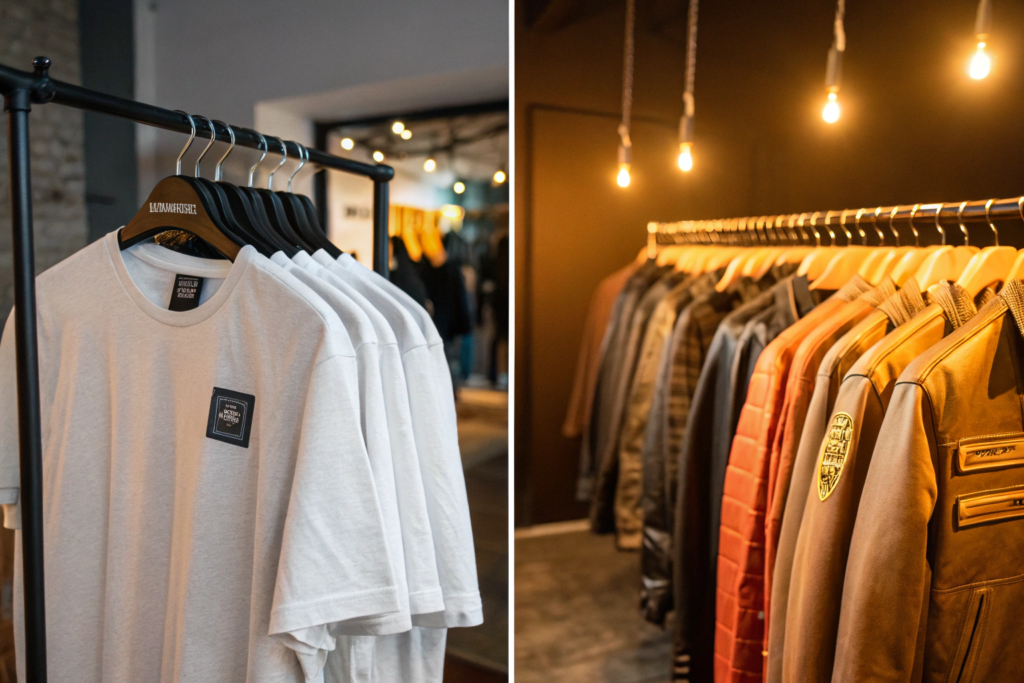
How does customization create brand differentiation?
When you sell stock styles, you are selling what everyone else sells. The same t-shirt. The same jacket. The same pants. The only difference is your label. Customers have no reason to choose you over another brand. You compete on price. Your margin is squeezed.
When you sell customized products, you are selling what only you have. Your fit. Your fabric. Your colors. Your details. Your label is not just a tag. It is a promise of uniqueness. Customers choose you because they cannot get that product anywhere else. You compete on design and quality. You can charge more. Your margin expands.
A client in Los Angeles started with stock t-shirts. They were selling for $25. Margin was 30%. They transitioned to customized t-shirts. They developed their own fit. They chose a unique fabric. They added custom labels and packaging. Their retail price went to $45. Margin went to 50%. They sold out. Customers loved the unique product. The transition paid for itself.
You should think about your brand identity. What makes you different? Customization is how you express that difference.
How does customization improve customer loyalty?
Stock products are replaceable. If a customer likes your t-shirt, they can find a similar one from another brand. There is no loyalty. Customized products are not replaceable. If a customer loves your fit and your fabric, they cannot get it anywhere else. They come back. They become loyal.
Customization also allows you to build a relationship with your customers. You are not just selling a product. You are selling your vision. Your story. Your customers buy into that story. They become advocates. They tell their friends. They defend your brand.
A client in San Francisco transitioned to customized denim. They developed a unique fit for different body types. They used high-quality Japanese denim. They added custom hardware. Their customers became obsessed. They posted photos. They referred friends. The brand grew through word of mouth. The customized product created a community.
You should consider how customization can deepen your connection with your customers. Your products become a reflection of your brand values.
How to Prepare for the Transition to Customized Production?
The transition starts with preparation. You cannot just call a factory and ask for customized production. You need to have your designs ready. You need to have specifications. You need to know what you want.

What is a tech pack and why is it essential?
A tech pack is your instruction manual for the factory. It tells them exactly what to make. Without a tech pack, you are asking the factory to guess. Guessing leads to mistakes. Mistakes lead to delays. Delays lead to frustration.
A tech pack should include:
- Technical drawing: Front, back, and side views of the garment. Flat sketch with details.
- Measurement spec sheet: All measurements for each size. Chest, length, sleeve, shoulder, etc.
- Fabric specification: Fiber content, weight, construction, color, supplier.
- Trim specification: Zippers, buttons, labels, thread, elastic. List each trim with supplier and part number.
- Construction details: Seam types, stitch types, topstitching details, finishing details.
- Packaging details: Folding, polybag, carton, labels.
A client in New York tried to start customized production without a tech pack. They sent photos and wrote descriptions. The first sample was wrong. The second sample was wrong. The third sample was close but not perfect. They wasted 3 months and $2,000 on sampling. They then hired a technical designer to create a proper tech pack. The next sample was approved on the first try. The tech pack was the missing piece.
You should invest time in creating a good tech pack. It is the most important document in customized production. If you cannot create it yourself, hire a technical designer. The cost is worth it.
How do you develop a fit standard?
Fit is what customers feel. If the fit is wrong, nothing else matters. Stock styles have standard fit. Customized styles allow you to develop your own fit. But you need to define it.
To develop a fit standard:
- Create a fit block: A base pattern for each garment type. T-shirt block, shirt block, jacket block.
- Grade for sizes: Create size specifications for S, M, L, XL.
- Conduct fit sessions: Use fit models. Try the samples. Adjust the pattern. Repeat.
- Document the final fit: Record all measurements. This becomes your standard.
A client in Seattle spent 4 months developing their fit standard. They did three fit sessions. They adjusted the pattern each time. They documented everything. Once the fit was finalized, all future orders were consistent. Their customers loved the fit. They knew exactly what to expect.
You should be patient with fit development. It takes time. But once you have a good fit, you have a competitive advantage.
How to Find and Qualify a Factory for Customized Production?
Not all factories do customized production. Many only do stock or OEM. You need to find a factory that is set up for customization. You need to qualify them. You need to build a partnership.
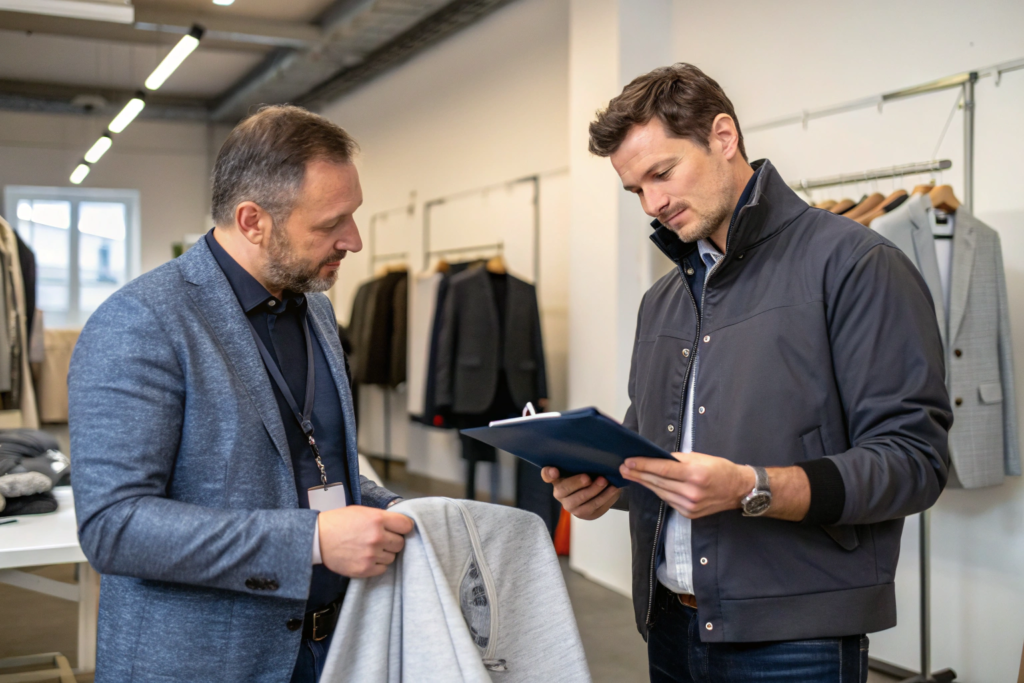
What should you look for in a customized production factory?
Look for factories that:
- Have a sample room: Customized production starts with sampling. The factory needs a sample room with pattern makers and sample sewers.
- Accept low MOQs: Customized production often starts with small quantities. Look for factories that accept 50-200 pieces per style.
- Have a technical team: They need pattern makers, graders, and technical designers. These people interpret your tech pack.
- Are willing to communicate: Customization requires more communication. The factory needs to be responsive.
- Have quality systems: Customized products need consistent quality. Look for factories with in-line QC.
A client in Chicago evaluated three factories. One only did high-volume stock production. They wanted 5,000 pieces per style. The second had a sample room but poor communication. The third had a sample room, accepted 100-piece MOQs, and had a responsive technical team. The client chose the third.
You should ask potential factories about their experience with customized production. Ask for examples. Ask about their MOQs. Ask about their sampling process.
How do you evaluate their sampling capability?
Sampling is the gateway to customized production. A factory that cannot make good samples cannot make good production.
Evaluate their sampling capability by:
- Requesting a sample: Start with a simple style. See how they interpret your tech pack.
- Checking sample quality: Is the stitching clean? Is the fit correct? Are the details accurate?
- Evaluating communication: Do they ask clarifying questions? Do they provide updates?
- Assessing lead time: How long does sampling take? 2-4 weeks is reasonable.
- Checking revisions: How do they handle changes? Are they cooperative?
A client in Boston requested a sample from a factory. The sample was good. The communication was clear. The factory asked smart questions about the tech pack. The client felt confident. They proceeded to production.
You should do a test sample before committing to a large order. The sample reveals the factory's capabilities.
How to Start Small and Scale Customized Production?
The biggest mistake brands make is trying to do too much too fast. They try to produce 20 customized styles at once. They get overwhelmed. The factory gets overwhelmed. Quality suffers. Timelines slip. The brand gets discouraged.
Start small. Scale gradually.
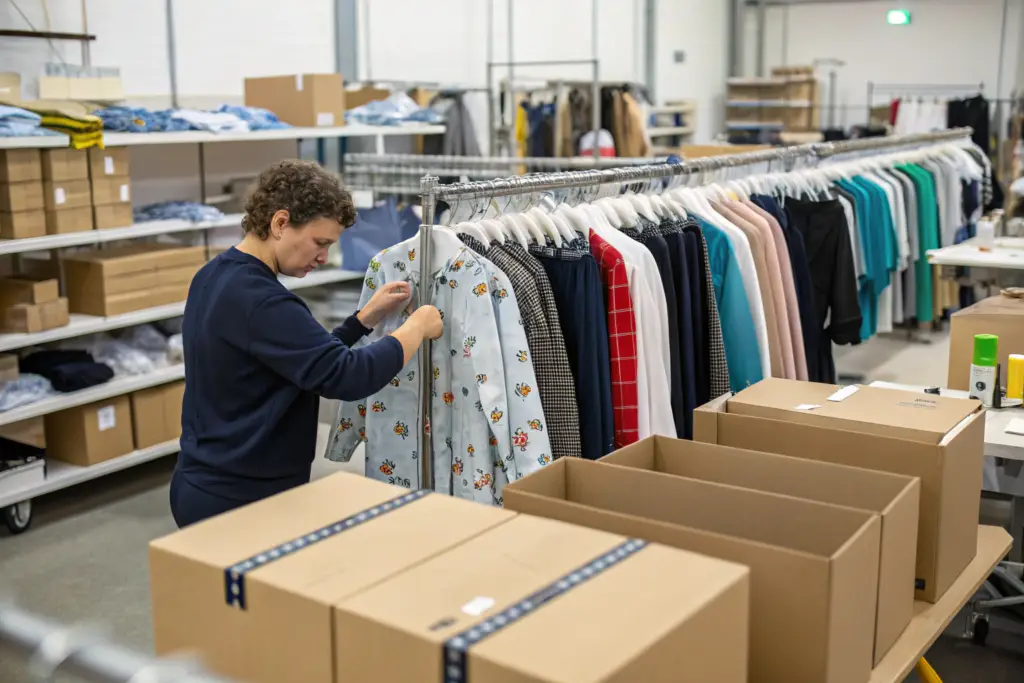
Why should you start with one style?
Starting with one style reduces risk. You learn the process. You learn the factory. You learn what works and what does not. You make mistakes on one style, not twenty.
Benefits of starting with one style:
- Lower financial risk: You invest in one style, not your whole line.
- Simpler communication: You focus on one tech pack, one set of trims, one production process.
- Easier quality control: You monitor one style. You learn the factory's quality patterns.
- Faster learning: You see the whole process from design to delivery. You apply those lessons to your next style.
A client in Denver started with one customized hoodie. They developed the tech pack. They sourced the fabric. They did two sample rounds. They produced 200 pieces. They sold them. They learned. The next season, they added two more styles. The season after, they added five. Within two years, they had a full customized line. Starting with one style made the transition manageable.
You should choose your best-selling category for your first customized style. It is the style you know best. It has the highest chance of success.
How do you manage minimum order quantities (MOQs)?
MOQs are the biggest barrier to customized production. Factories need to cover setup costs. They need to make a profit. Small orders are less profitable. But many factories now accept smaller MOQs for customized work.
Strategies for managing MOQs:
- Negotiate: Ask for 100-piece MOQs instead of 500. Some factories will agree for new clients.
- Combine styles: If you want 100 pieces of three styles, ask for a combined 300-piece order. This can meet the factory's minimum.
- Pay a small-order premium: Accept a higher per-unit cost for small quantities. This covers the factory's setup cost.
- Use a factory with small-batch capability: Some factories specialize in low MOQs. Find them.
A client in Austin wanted to start with 50 pieces per style. Most factories wanted 300. They found a factory that specialized in small batches. The per-unit cost was higher. But the client could start without overcommitting. As they grew, the cost came down.
You should be willing to pay a premium for small quantities. It is the cost of learning. As you scale, your unit cost will decrease.
How to Build a Long-Term Customized Production Partnership?
Customized production is not transactional. It is a partnership. You and your factory are building something together. You need to invest in the relationship.
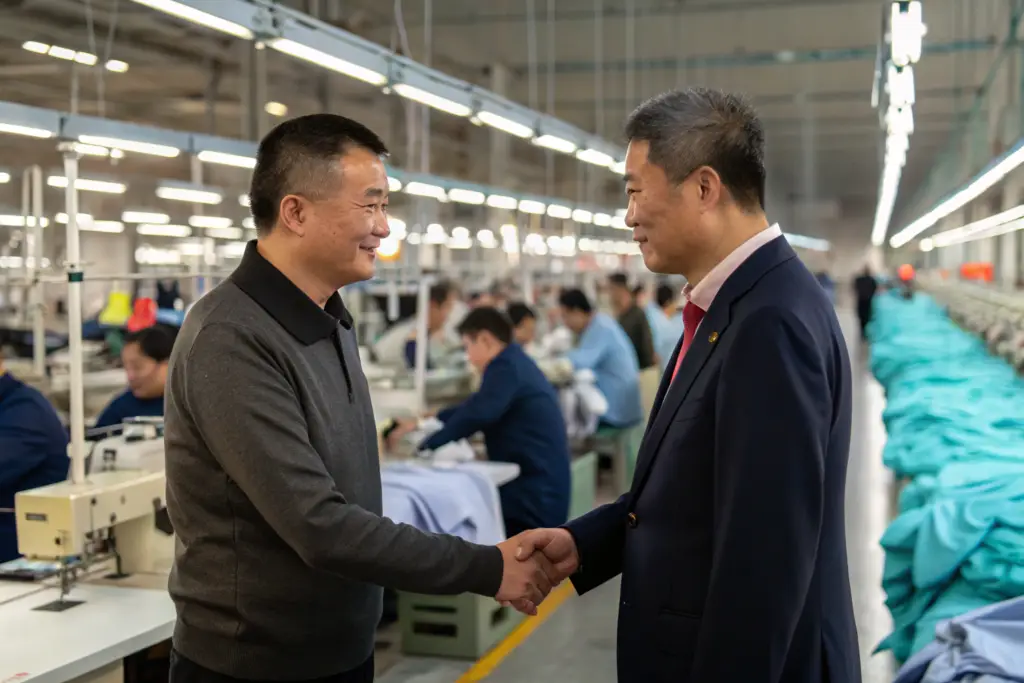
How do you build trust with your factory?
Trust is built over time. It is built through consistent communication, fair treatment, and shared success.
Build trust by:
- Communicating clearly: Share your tech packs, your quality standards, your timelines.
- Paying fairly: Do not squeeze the factory on price. A fair price ensures they invest in your quality.
- Providing feedback: Tell them what works and what does not. Help them improve.
- Visiting regularly: If possible, visit the factory. Meet the team. See the production.
- Sharing your plans: Tell them about your growth. They will invest in capacity for you.
A client in San Francisco visited our factory twice a year. They brought their team. They met our production managers. They shared their plans for the next year. We invested in new machines for their styles. The trust was deep. The partnership was strong.
You should treat your factory as an extension of your team. They are not just a vendor. They are a partner in your success.
How do you scale production without scaling problems?
As you grow, your orders get larger. You add more styles. You need to scale your partnership without scaling problems.
Scaling strategies:
- Communicate your forecast: Give the factory a 12-month forecast. They can plan capacity.
- Reserve production lines: Ask the factory to dedicate lines to your styles. This ensures consistent quality and lead times.
- Invest in tooling: As you grow, invest in specialized machines or fixtures for your styles. The factory will prioritize you.
- Build safety stock: Hold inventory of your core styles. This buffers against demand spikes or production issues.
- Maintain a backup plan: Even with a strong partnership, have a backup factory identified. You may never need them. But the option reduces risk.
A client in New York grew from 5,000 pieces per year to 50,000 pieces per year with us. They shared their forecast. We added a dedicated line for their styles. They invested in specialized machines. The growth was smooth. The quality remained high.
You should plan for growth. Do not wait until you are overwhelmed. Talk to your factory about how you will scale together.
Conclusion
Transitioning your apparel brand to fully customized production is a journey. It takes time. It takes investment. It takes patience. But the rewards are worth it. You get unique products that no one else has. You get higher margins. You get loyal customers. You build a brand that stands for something.
Start with one style. Create a proper tech pack. Find a factory that accepts small MOQs. Do test samples. Develop your fit. Start production. Learn. Add more styles. Build a partnership. Scale.
The brands that succeed are the ones who take the first step. They do not wait until everything is perfect. They start. They learn. They improve. They grow.
At Shanghai Fumao, we specialize in helping brands transition to customized production. We accept small MOQs. We have a full sample room. We have a technical team. We work with you to develop your tech pack. We help you find the right fabrics and trims. We produce small batches so you can test the market. We grow with you as your brand grows.
If you are ready to start your transition to fully customized production, we would like to help. Our Business Director, Elaine, can walk you through the process. She can answer your questions about tech packs, sampling, MOQs, and lead times. You can reach her at elaine@fumaoclothing.com. Let us build your customized collection together.