You find a great factory. You negotiate a good price. You place your order. The goods arrive at the port. Then you get a bill. It is much higher than you expected. You look at the charges. There are duties. There are fees. You do not understand them. Your profit margin disappears. You wonder how other brands manage this. You realize you do not understand tariffs. You are not alone. This is one of the most confusing parts of apparel importing.
To navigate the complex world of international textile tariffs, you need to understand three core elements: the Harmonized System (HS) codes that classify your products, the country of origin rules that determine which tariff rates apply, and the free trade agreements and special programs that can reduce or eliminate duties. Success comes from planning your tariff strategy before you place your order, not after your goods arrive at the port. The difference between paying 5% duty and 30% duty often comes down to how you structure your supply chain and how accurately you classify your products.
I have run a clothing factory in China for over a decade. I have helped hundreds of American and European brands navigate tariffs. I have seen brands pay thousands of dollars in unnecessary duties. I have also seen brands use legal strategies to reduce their tariff burden significantly. The difference is knowledge. Tariffs are complex. But they follow rules. Once you understand the rules, you can plan around them. You can make the system work for you.
What Are HS Codes and Why Do They Matter for Your Apparel Business?
HS codes are the language of international trade. Every product has a code. The code determines the duty rate. It also determines if there are any restrictions. If you use the wrong code, you can overpay. You can also get in trouble with customs. Getting the code right is the first step to managing your tariff costs.
How do I find the correct HS code for my garment?
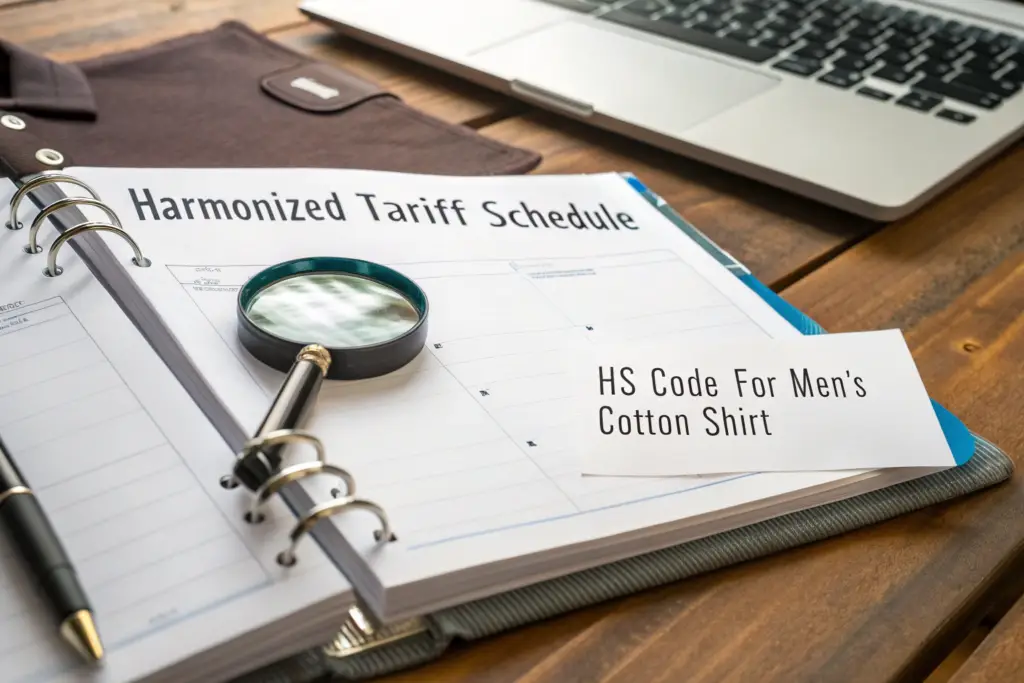
Finding the correct HS code is not always simple. Apparel codes are based on multiple factors. The fiber content matters. A cotton shirt and a polyester shirt have different codes. The gender matters. Men's and women's garments have different classifications. The construction matters. Knit and woven garments are in completely different sections of the tariff schedule.
The US uses the Harmonized Tariff Schedule of the United States (HTSUS). You can search it online. For apparel, codes start with 61 for knitted garments and 62 for woven garments. Then the code narrows down based on the garment type. A men's cotton knit shirt is 6105.10. The full code goes to 10 digits. The first six digits are international. The last four are country-specific.
A common mistake is using a broad code. Some brands use 6105.10 for all men's knit shirts. But there are subcategories. Shirts with two or three buttons have one code. Shirts with four or more buttons have another code. The duty rate can differ by a few percentage points. Over a large order, that adds up.
We had a client in New York who had been using the same HS code for all their woven shirts for years. They were paying a 16% duty. We reviewed their products with them. Many of their shirts were actually classified under a different code with a 12% duty. They had been overpaying by 4% for three years. That was thousands of dollars. They corrected their codes and saved money immediately.
You can ask your freight forwarder or customs broker to help with classification. They do this every day. You can also request a binding ruling from US Customs for a new product. This is a formal decision on the correct classification. It gives you certainty. If you follow the ruling, you will not be penalized for misclassification.
What are the duty rates for common apparel categories?
Duty rates vary widely across apparel categories. Understanding the range helps you plan your costs. Here are approximate duty rates for common categories entering the US from China, without any special programs:
| Garment Type | Fiber | Typical Duty Rate Range |
|---|---|---|
| Knit T-shirts | Cotton | 16.5% - 18.5% |
| Knit Sweaters | Cotton | 8% - 12% |
| Woven Dress Shirts | Cotton | 19.5% - 20.5% |
| Woven Trousers | Cotton | 14% - 17% |
| Jackets | Cotton | 9% - 10% |
| Swimwear | Synthetic | 24% - 28% |
| Bras | Any | 7% - 9% |
| Leather Jackets | Leather | 6% - 8% |
These rates can change. They can also be affected by additional tariffs. Section 301 tariffs on Chinese goods added extra duties on many apparel categories. A woven cotton shirt that had a base duty of 19.5% might now have an additional 7.5% to 25% Section 301 duty. The total duty could be over 40%.
A client in Los Angeles was importing women's knit sweaters from China. They assumed the duty was 10%. They did not check. The actual duty was 10% base plus 15% Section 301. Their total duty was 25%. They had not factored this into their costing. Their margin was negative. They had to raise prices. They lost sales. This mistake could have been avoided with proper research.
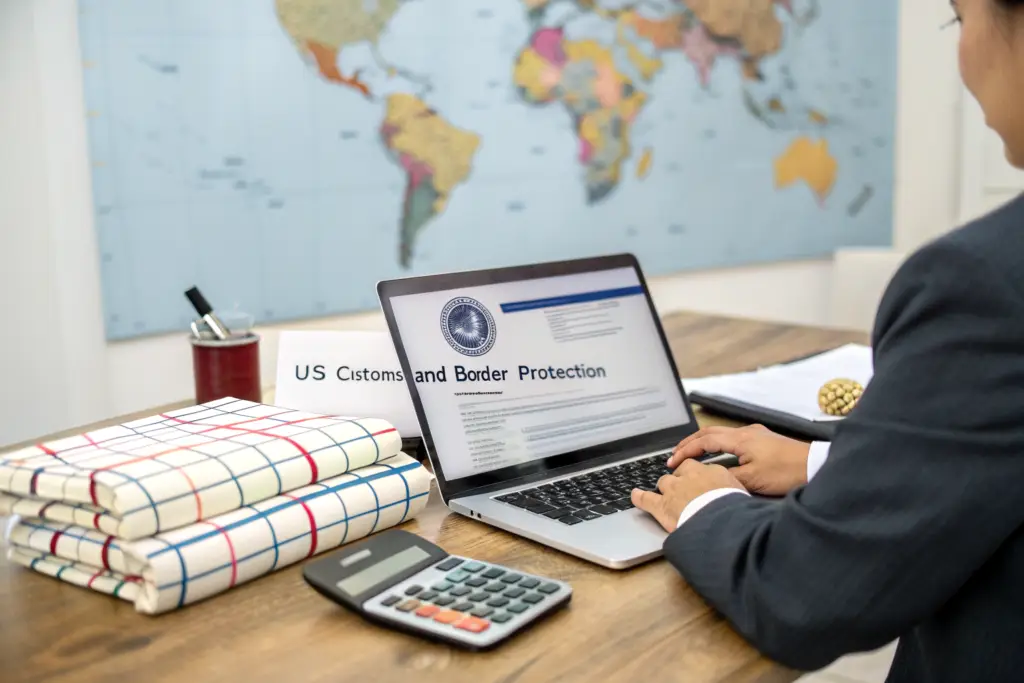
You should check current duty rates before you price your products. The USITC Tariff Database is the official source. You can search by HS code and see the current rate. You can also see if there are any additional duties. Do this for every product category you import. It takes time. But it protects your margin.
How Does Country of Origin Affect Your Tariff Costs?
Country of origin is not just where the garment is sewn. It is a legal determination. It affects the tariff rate. It affects eligibility for trade programs. Many brands think they can just ship from a different country to avoid tariffs. It is not that simple. The rules are specific. You need to understand them.
What are the rules for determining country of origin?
In the US, the country of origin for apparel is generally where the garment is assembled. This means where the fabric is cut and sewn into a finished garment. However, there are exceptions. If the fabric is from a different country, that can matter. If key components are added in another country, that can change the origin.
The "substantial transformation" rule applies. The product is considered to originate in the country where it undergoes its last substantial transformation. For apparel, cutting and sewing usually count as substantial transformation. But if the garment is made from fabric that is knitted and dyed in one country, then cut and sewn in another, the origin is usually the country where cutting and sewing happened.
A common strategy to avoid Chinese tariffs is to move production to Vietnam or Bangladesh. But you need to be careful. If you send Chinese fabric to Vietnam just for hemming, the product may still be considered Chinese origin. The transformation is not substantial enough. Customs can look at the value added. If most of the value comes from Chinese materials, they may rule that the origin is still China.
We had a client who tried to avoid Section 301 tariffs by shipping Chinese fabric to Cambodia for final assembly. The fabric was 80% of the garment's value. The Cambodian labor was 10%. Customs audited them. They ruled the origin was China. The client had to pay the additional duties plus penalties. They learned that origin is not about where the last stitch is made. It is about where the substantial value and transformation occur.
You should work with a customs broker who specializes in apparel. They can advise you on origin planning. They can help you structure your supply chain to achieve the origin you want. This is especially important if you are trying to qualify for free trade agreements.
How do free trade agreements reduce or eliminate duties?
Free trade agreements (FTAs) are agreements between countries. They eliminate or reduce duties on qualifying products. The US has FTAs with several countries that produce apparel. These include Mexico, Canada, Vietnam (through CPTPP, though the US is not a member), and several Central American countries under CAFTA-DR.
The US-Mexico-Canada Agreement (USMCA) is important for apparel. Garments made in Mexico or Canada from US or Mexican fabric can enter the US duty-free. This is called "yarn forward" rule. The yarn must be made in the US or Mexico. The fabric must be made in the US or Mexico. The garment must be cut and sewn in the US or Mexico. If you meet these rules, you pay zero duty.
CAFTA-DR includes Costa Rica, Dominican Republic, El Salvador, Guatemala, Honduras, Nicaragua. Similar rules apply. If you use US or regional yarn and fabric, you can get duty-free access. Many US brands have shifted production to these countries to avoid tariffs on Chinese goods.
However, these programs require documentation. You need a certificate of origin. You need to prove that your materials meet the rules. This adds complexity. But the savings can be significant. A 25% duty on a $20 garment is $5. Over 10,000 garments, that is $50,000. The cost of managing the documentation is much less.
A client in Chicago shifted their denim production from China to Mexico. They used US-made denim fabric. They had the jeans cut and sewn in Mexico. They qualified for USMCA. Their duty went from 16% to 0%. The freight cost was slightly higher. But the total landed cost was lower. They increased their margin. Their customers did not see a price increase. The move was a win for everyone.
You should evaluate if your supply chain can qualify for FTAs. If you are using US fabric, manufacturing in Mexico or Central America makes sense. If you are using Asian fabric, you may not qualify. You need to weigh the trade-offs between material sourcing, labor cost, and tariff savings.
What Are Section 301 Tariffs and How Do They Impact Chinese Apparel?
Section 301 tariffs are additional duties on Chinese goods. They were imposed in 2018 and continue today. They affect most apparel categories. Many brands were caught off guard. They did not plan for these duties. They had to absorb the cost or raise prices. Understanding these tariffs is essential for anyone importing from China.
Which apparel categories are subject to Section 301 tariffs?
Most apparel from China is subject to Section 301 tariffs. There are four lists. Lists 1, 2, and 3 cover many goods. List 4 covers the remainder. Apparel is mostly on List 3 and List 4. The duty rates vary. Some are 7.5%. Some are 25%. Some categories have exclusions. But exclusions expire. They are renewed or not. It is complex.
For example, cotton t-shirts (HS 6109.10.00) have a base duty of 16.5%. They have an additional 7.5% Section 301 duty. Total is 24%. Woven cotton trousers (HS 6203.42.00) have a base duty of 16.6%. They have an additional 7.5% Section 301 duty. Total is 24.1%. Some performance apparel categories have lower additional duties or exclusions.
The situation changes. New lists are added. Exclusions expire. Duty rates change. This is not a static situation. You need to check current status for every order. The USTR Section 301 website has the official information. It is not easy to read. But it is the source.
We had a client in Boston who imported technical jackets from China. They thought all their products were subject to 7.5% additional duty. They were paying it. Then they discovered that one of their styles qualified for an exclusion. The exclusion had been available for two years. They had not claimed it. They had overpaid by $30,000. They were able to file for a refund. But they had to spend time and money on the process. If they had checked the exclusion list, they could have saved that money from the start.
You should work with a customs broker who actively tracks Section 301 changes. They can tell you if your products qualify for exclusions. They can help you apply for refunds if you overpaid. This is not a one-time check. You need to monitor it for every order.
What are the strategies for managing Section 301 tariffs?
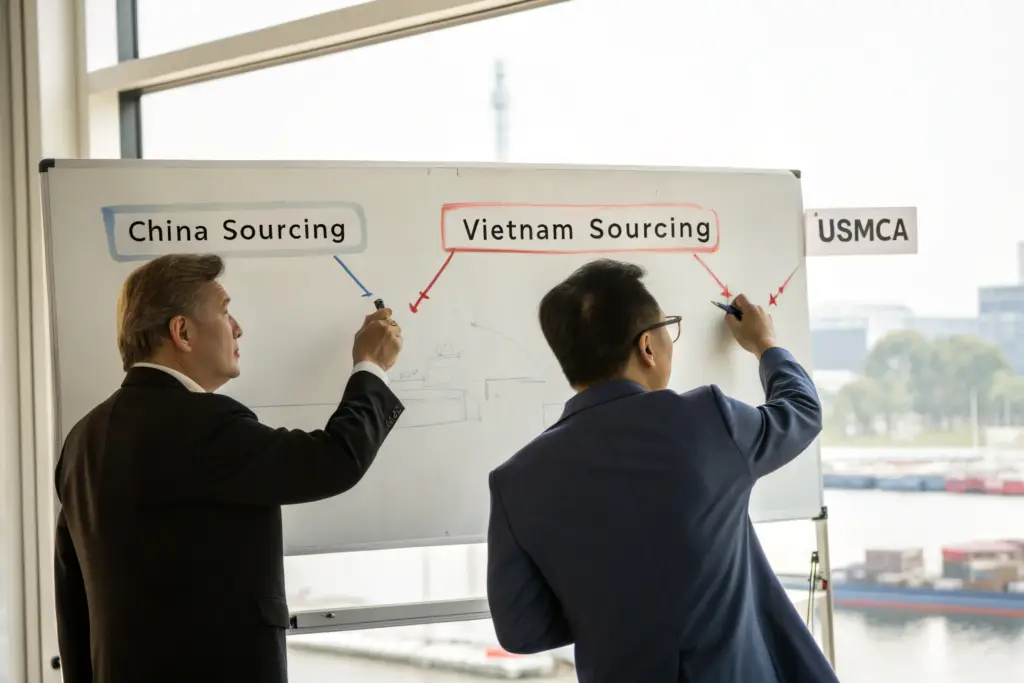
There are several legal strategies for managing Section 301 tariffs. The simplest is to shift production to another country. Vietnam, Bangladesh, India, Indonesia, and Cambodia are common alternatives. Their duty rates are lower. They do not have Section 301 tariffs. However, you must ensure quality and lead times meet your needs.
Another strategy is to use the "first sale" rule. This allows you to pay duty on the price the factory sells to your intermediary, not the price the intermediary sells to you. If you work with a trading company, this can reduce your duty base. The duty is calculated on the first sale price. This is a legal strategy. But it requires proper documentation.
You can also use a Foreign Trade Zone (FTZ). You import goods into an FTZ without paying duty immediately. You can store them, repack them, or even do light manufacturing. You pay duty only when the goods leave the FTZ for US consumption. This defers your duty payment. It can also reduce duty if you do value-added work inside the zone.
A client in Miami used an FTZ strategy for their swimwear line. They imported finished swimwear from China into an FTZ. They did not pay duty at entry. They stored the goods there. They fulfilled orders from the FTZ. They paid duty only on the goods that sold. This improved their cash flow. They did not pay duty on inventory that sat for months.
These strategies are complex. You need professional advice. A good customs broker or trade attorney can help. The cost of advice is usually less than the duty you save. Do not try to navigate these rules alone.
How Can You Build a Tariff Strategy That Protects Your Margins?
Tariffs should not be an afterthought. They should be part of your product development process. You need a strategy. You need to make decisions before you place orders. The best time to think about tariffs is when you are designing the product. The worst time is when the goods are on the water.
How do I calculate total landed cost including tariffs?
Total landed cost is the complete cost of getting your product to your warehouse. It includes the factory price, freight, insurance, and duties. Many brands only calculate the factory price. They are surprised by the final bill. You need to calculate total landed cost before you set your retail price.
The formula is:
- Factory price (FOB price, ex-factory, or delivered to port)
- Plus freight (sea freight, air freight, or trucking)
- Plus insurance (if you pay for it)
- Plus duty (based on the customs value, which is usually the FOB price plus freight and insurance)
- Plus brokerage fees (customs broker fees)
- Plus any other fees (port fees, demurrage, etc.)
For a garment with an FOB price of $20, freight of $2, duty at 24%, the duty is $5.28. Total landed cost is $27.28 plus other fees. If you only budgeted $22, you have a problem.
We had a client in Atlanta who sourced shirts from us. They calculated their margin based on the FOB price. They did not include duty. They launched their line. They sold well. Then they got the duty bill. Their profit was gone. They had to go back to their investors for more money. They learned the hard way. Now they calculate landed cost before they approve any order.
You should build a landed cost calculator for your business. Include all costs. Update it when freight rates change. Update it when duty rates change. Use it for every purchase order. This tool will protect your margin.
How do I work with my factory to optimize tariff strategy?
Your factory can help you with tariff strategy. They know the rules. They know the alternatives. They can advise you on sourcing. They can help you with documentation. But you need to ask. You need to make tariff planning part of your conversation.
Ask your factory about their experience with different countries. Have they produced in Vietnam? What was the quality? What were the lead times? What were the costs? They can give you real data. They can help you evaluate alternatives.
Ask them about documentation. Can they provide the certificates you need for free trade agreements? Can they help with origin documentation? A factory that is organized with documentation is valuable. A factory that struggles with paperwork will create problems at customs.
At Shanghai Fumao, we help our clients with tariff planning. We tell them about current rates. We advise on alternative sourcing if it makes sense. We provide all the documentation they need for customs. We see ourselves as partners in their supply chain. Tariffs are part of that partnership.
If you are planning to import from China or other countries, have a conversation with your factory about tariffs. Ask them how they can help. A good factory will have answers. They will not leave you to figure it out alone.
Conclusion
International textile tariffs are complex. But they are not impossible to navigate. The key is to treat tariffs as a strategic element of your business, not an afterthought. You need to understand HS codes and how to classify your products correctly. You need to understand country of origin rules and how they affect your duty rates. You need to understand free trade agreements and how to qualify for them. You need to track Section 301 tariffs and plan around them.
The brands that succeed in this environment are the ones who build tariff planning into their product development process. They calculate landed cost before they set prices. They work with factories that understand the rules. They work with customs brokers who keep them informed. They do not wait until the goods are at the port to figure out the duty bill.
At Shanghai Fumao, we have helped hundreds of brands navigate tariffs. We have seen the strategies that work. We have seen the mistakes that cost money. We share this knowledge with our clients. We want them to succeed. Their success is our success.
If you are importing apparel and want to ensure you are managing your tariff costs effectively, we would be happy to share our experience. Our Business Director, Elaine, can help you understand the tariff landscape and how it applies to your products. You can reach her at elaine@fumaoclothing.com. Let us build a sourcing strategy that protects your margins and grows your business.