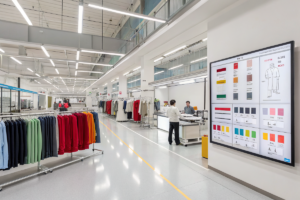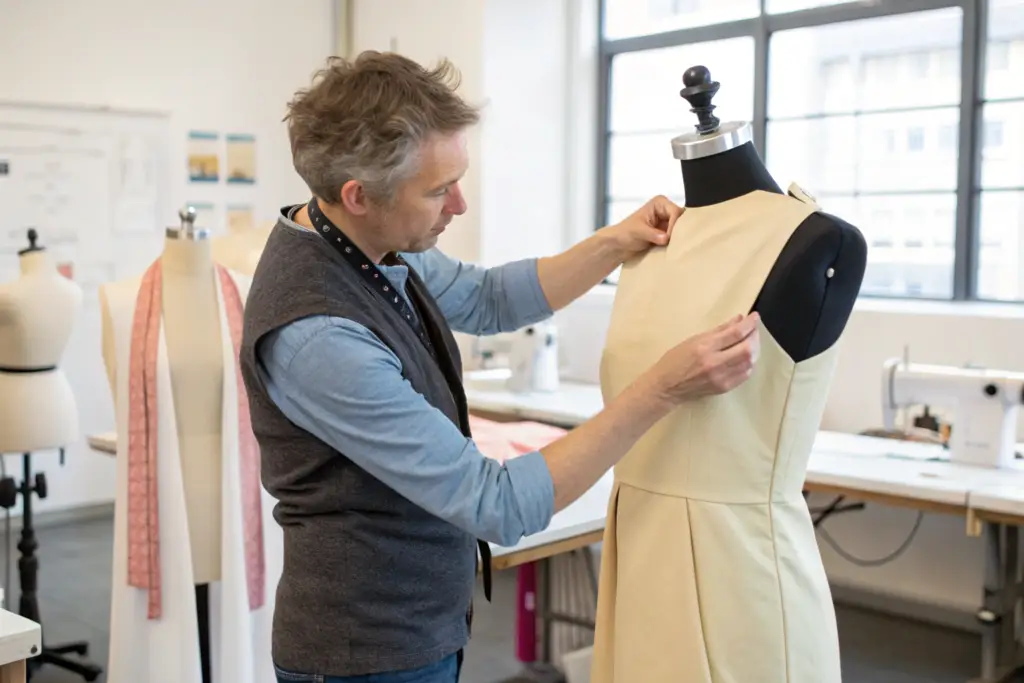
You have a sample. You try it on. Something feels wrong. But you cannot tell why. The shoulders feel off. The armhole binds. The waist is uncomfortable. You make changes. The next sample is still wrong. I have seen this many times. The problem is not the pattern. It is not the factory. It is the body you are testing on. You are using a different body each time. Or you are using a mannequin. Or you are guessing. A fit model solves this problem.
Based on our experience fitting thousands of garments, a fit model is a trained person with consistent body measurements who wears samples to evaluate fit. The role of a fit model is to provide objective, repeatable feedback on how a garment fits. For example, last year we worked with a denim brand from Los Angeles. They were using different employees to test fits. The feedback was inconsistent. One person said the rise was too short. Another said it was too long. We brought in a professional fit model with consistent measurements. The model wore every sample. The feedback was consistent. The brand fixed the fit in two rounds. That is the role of a fit model.
So, what is the role of a fit model in sample development? Let me break it down. I will explain what a fit model is. I will show you why consistency matters. I will discuss how to choose a fit model. And I will give you a framework for working with fit models.
What Is a Fit Model and What Do They Do?
A fit model is not a runway model. I remember a client from New York. They hired a fashion model to test fits. The model was very thin. The sample fit her. But the target customer was a different body type. The samples did not fit the actual customers.
A fit model is a person with specific, consistent body measurements that represent the target customer. Their role is to wear sample garments and provide feedback on fit, comfort, and movement. They are not hired for their looks. They are hired for their measurements and their ability to articulate fit. For the New York client, we found a fit model with measurements matching their target customer: 34" bust, 27" waist, 37" hip. The samples now fit the actual customers. For women’s wear, fit models are typically sizes 2, 4, 6, or 8. For men’s wear, they are typically sizes 32 or 34 waist, 40 or 42 chest. For children’s wear, they are sized by age or height.
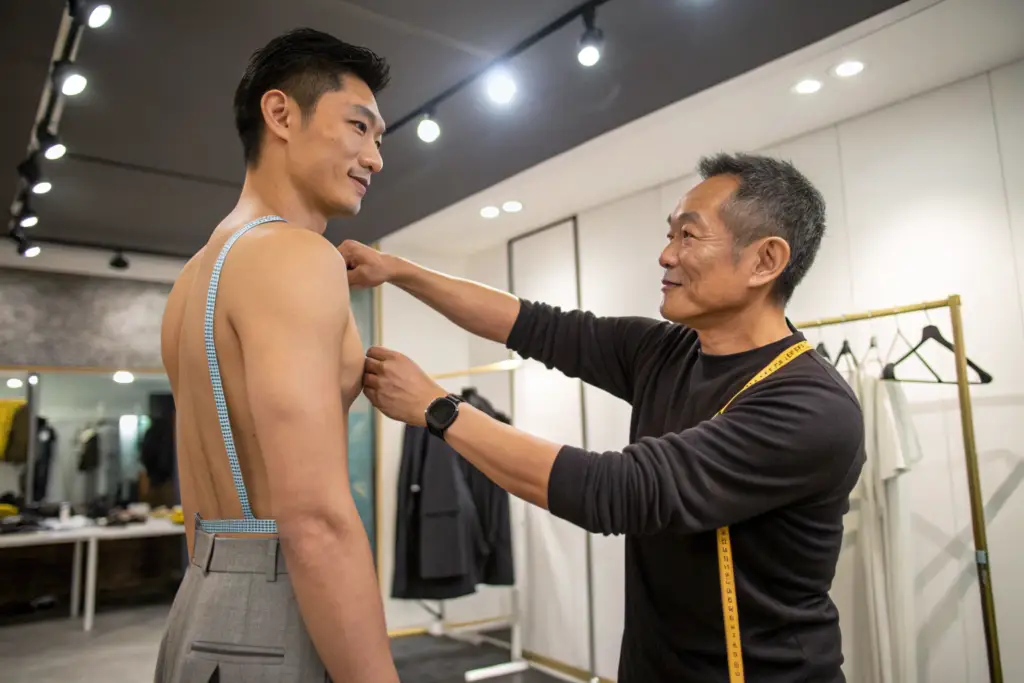
What Are the Key Measurements of a Fit Model?
Key measurements include:
- Height
- Chest/bust
- Waist
- Hip
- Shoulder width
- Arm length
- Inseam
- Rise (for pants)
- Thigh circumference
- Bicep circumference
For a denim client, the fit model’s rise measurement was critical. The same rise measurement was used for every sample. Consistency was maintained.
How Does a Fit Model Differ from a Mannequin?
A mannequin is static. It does not move. It does not feel. A fit model moves. They can tell you if the armhole binds. They can tell you if the waist is uncomfortable. They can tell you if the fabric is itchy. For a sportswear client, the fit model raised her arms to test the armhole. The mannequin could not do that.
Why Is Consistency Important in Fit Modeling?
Inconsistent feedback leads to inconsistent fit. I remember a client from Chicago. They used different people to test fits. One week, a size 6 employee tested the sample. The next week, a size 8 employee tested the same sample. The feedback was different. The pattern maker was confused.
Consistency is the most important quality in a fit model. The model’s measurements should not change. The same model should test every sample. This ensures that changes in fit are due to pattern adjustments, not changes in the model’s body. For the Chicago client, we established a dedicated fit model. The model’s measurements were recorded monthly. They did not change. The feedback was consistent. For woven shirts, the same model tested every sample round. The shoulder width was adjusted based on consistent feedback. For denim, the same model tested the rise across multiple rounds. The pattern maker knew that changes in fit were real.
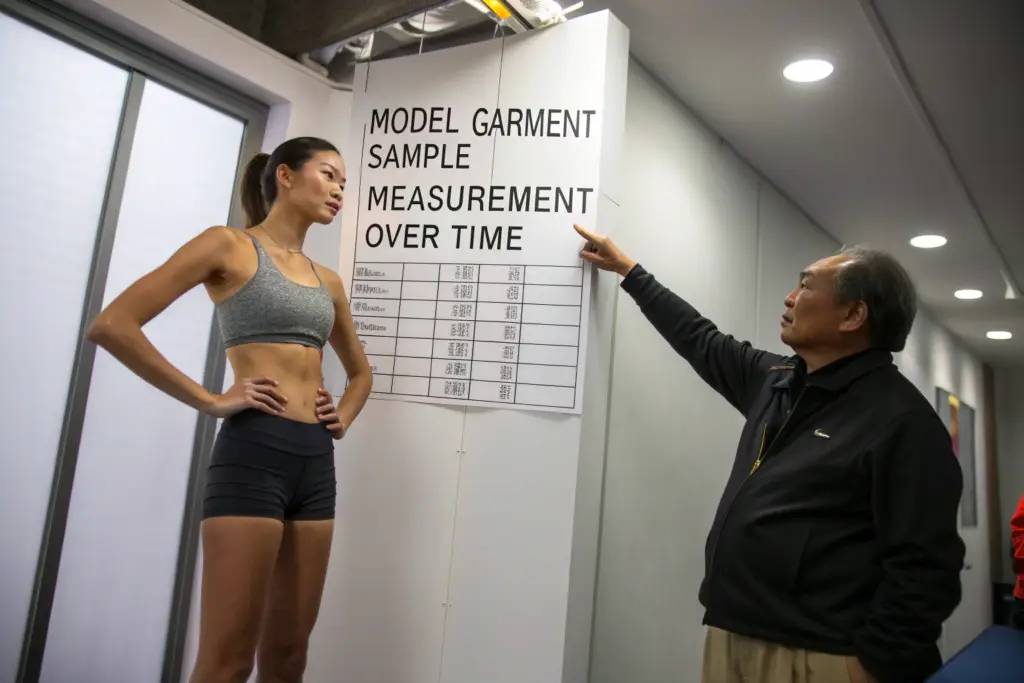
How Do You Maintain a Fit Model’s Consistency?
Maintain consistency by:
- Measuring the model monthly
- Tracking weight fluctuations
- Using the same model for all samples of a style
- Training the model to stand the same way
- Using the same fitting room and lighting
For a sportswear client, the fit model’s measurements were taken before each fitting session. They were consistent. The client trusted the feedback.
What Happens If a Fit Model’s Measurements Change?
If a fit model’s measurements change, the feedback becomes unreliable. The model should be replaced. For a men’s wear client, the fit model gained 5 pounds. The waist measurement changed. The pattern adjustments were wrong. We replaced the model. The fit improved.
How Do You Choose the Right Fit Model for Your Brand?
The wrong fit model ruins your fit. I remember a client from Boston. They sold to women aged 50 and older. Their fit model was 22 years old. The fit was wrong for their customers.
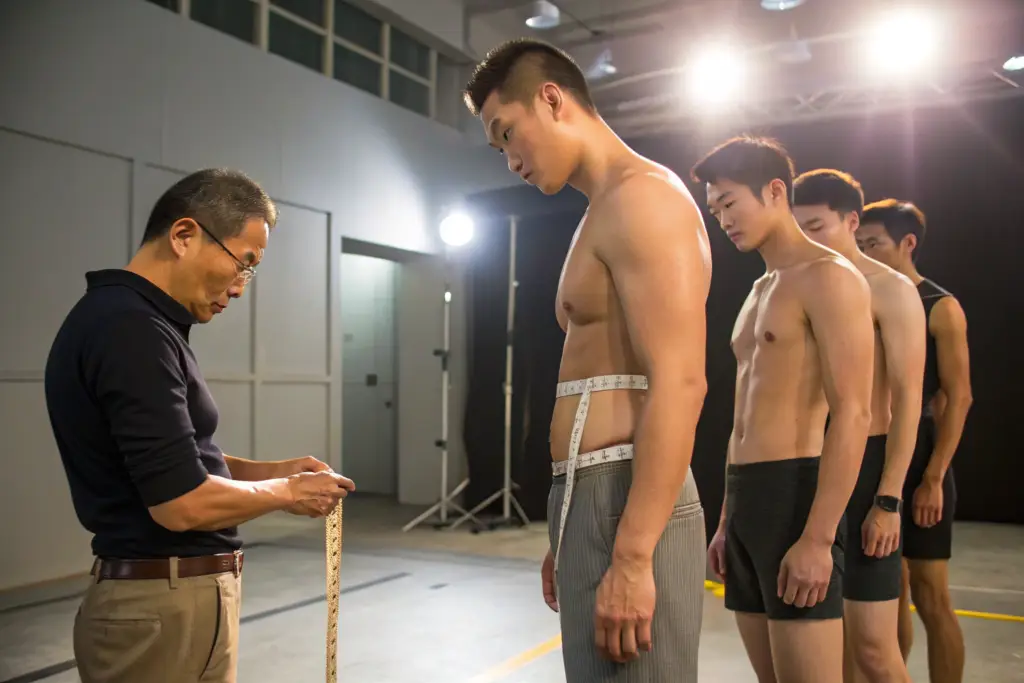
Choose a fit model who represents your target customer. Consider age, body shape, and size. For a women’s brand targeting women aged 40 to 60, choose a fit model in that age range. The body proportions are different. For a plus-size brand, choose a fit model in the plus-size range. The grading and fit are different. For a men’s workwear brand, choose a fit model with an athletic build. The shoulders and chest are broader. For a children’s brand, choose a fit model of the target age. A 5-year-old is shaped differently than an 8-year-old.
What Body Types Should Your Fit Model Represent?
If your brand sells to multiple body types, consider multiple fit models. For a women’s brand, you may need:
- A size 2 fit model for small sizes
- A size 6 fit model for medium sizes
- A size 12 fit model for large sizes
For a denim client, they used three fit models: size 28, size 32, and size 36. The grading was validated across the range.
How Do You Evaluate a Fit Model’s Feedback Ability?
During selection, ask the candidate to try on a sample. Ask them to describe the fit. Listen for specific feedback. "The shoulder seam is 0.5 inches past my shoulder point" is good. "It feels big" is not good. For a sportswear client, we tested three candidates. One gave specific feedback. She was hired.
How Do You Work with a Fit Model During Sample Development?
Working with a fit model requires a structured process. I remember a client from Seattle. They had a fit model. But they did not document the feedback. Each session was different. The pattern maker was confused.
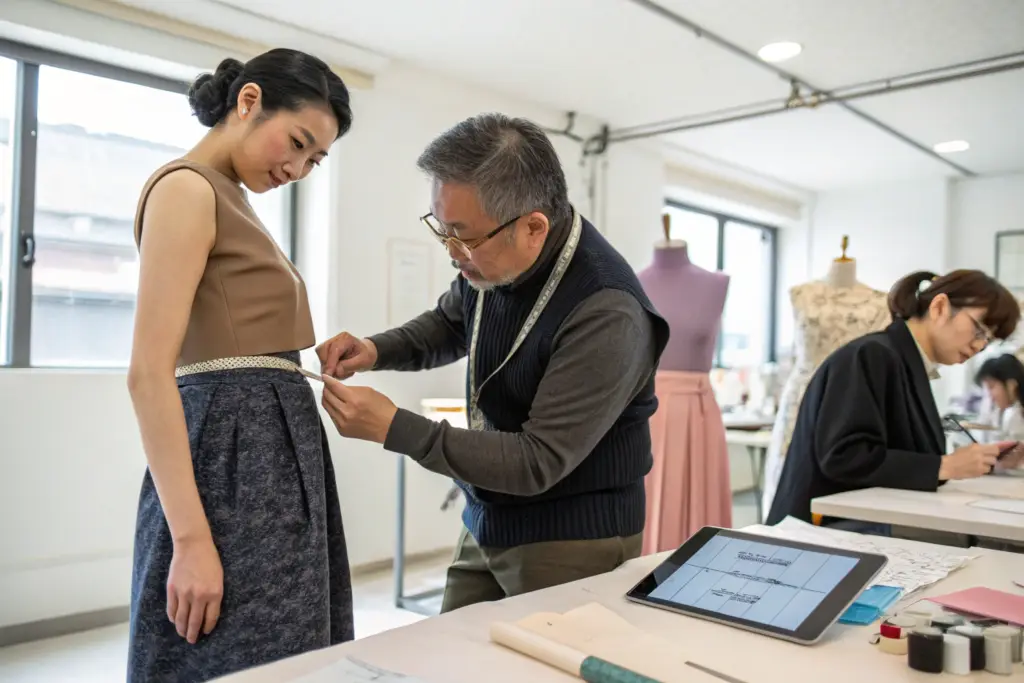
A fit model session should follow a standard protocol. The model wears the sample. The pattern maker and designer observe. Feedback is documented on a fit note form. Photos are taken. For the Seattle client, we created a fit session checklist. The model stood in a standard pose. The pattern maker measured key points. The fit notes were recorded. For woven shirts, the session includes checking the collar, placket, cuffs, and hem. For denim, it includes checking the rise, thigh, knee, and leg opening. For outerwear, it includes checking the armhole for layering.
What Is the Standard Protocol for a Fit Session?
A standard fit session includes:
- Model stands in neutral pose (arms relaxed, feet shoulder-width apart)
- Pattern maker checks key measurements (waist, chest, shoulder, etc.)
- Designer observes the overall silhouette
- Model performs movement tests (raise arms, sit, bend)
- Feedback is documented on fit note form
- Photos are taken from front, back, and side
- Pins are used to mark changes
For a sportswear client, the movement test included stretching and jumping. The model provided feedback on binding and restriction.
How Do You Document Fit Model Feedback?
Documentation is essential. Use a fit note form. Record:
- Style name and sample round
- Model’s measurements
- Date of session
- List of issues with locations, descriptions, and corrections
- Photos with arrows and pins
For a denim client, the fit note form included a diagram of the jeans. The model marked where the rise was too short. The pattern maker saw exactly what to change.
Conclusion
A fit model is a trained person with consistent body measurements who wears samples to evaluate fit. Their role is to provide objective, repeatable feedback. Consistency is key. The same model should test every sample. Choose a model who represents your target customer. Work with a structured protocol. Document feedback.
At Shanghai Fumao, we have a team of fit models representing different sizes and body types. We measure them monthly. We use a standard fit session protocol. We document feedback. We help our clients achieve consistent fit.
Let us help you with your fit samples. Contact our Business Director, Elaine, directly at elaine@fumaoclothing.com. Tell us about your target customer. We will recommend the right fit model for your brand.