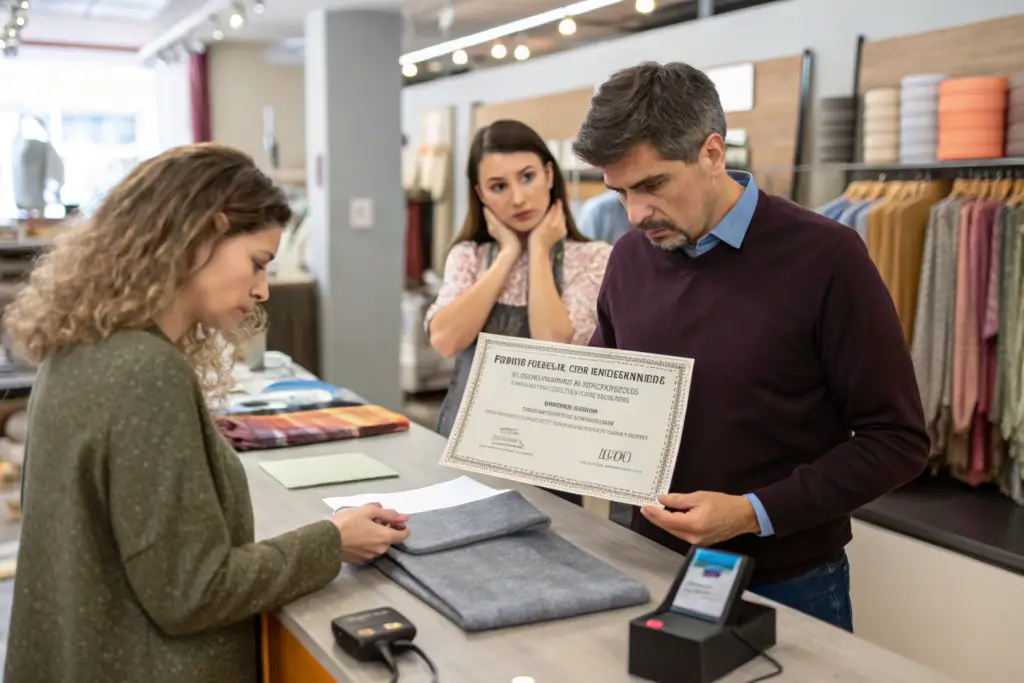
You have a brand. You promise your customers that your products are safe. You promise that they are organic. You promise that they are sustainable. You trust your fabric supplier. They give you a certificate. You approve the fabric. The bulk order arrives. A customer has a reaction. You test the fabric. It is not organic. It contains harmful chemicals. Your reputation is damaged. You lose customers. I have seen this happen. The problem was not the certificate. It was that the certificate was checked too late. It should have been checked during sampling.
Based on our experience sourcing millions of yards of fabric, checking fabric certifications during sampling is essential for compliance, brand protection, and customer trust. Certifications like OEKO-TEX, GOTS, BCI, and REACH must be verified before sampling, not after production. For example, last year we worked with a baby clothing brand from Canada. They required OEKO-TEX certification for all fabrics. Their previous supplier provided certificates. But the certificates were fake. The brand did not check during sampling. When we started working with them, we checked every certificate during the sample stage. We contacted the issuing body. We verified the certificate numbers. One fabric did not match. We rejected it. The brand's products were safe. That is the power of checking certifications during sampling.
So, why are fabric certifications checked during sampling? Let me break it down. I will explain the key certifications. I will show you the risks of not checking. I will discuss how to verify certificates. And I will give you a framework for incorporating certification checks into your sample process.
What Are the Most Common Fabric Certifications?
Not all certifications are the same. I remember a client from New York. They asked for "certified fabric." They did not know which certification. The factory provided a generic certificate. It was not what the brand needed.
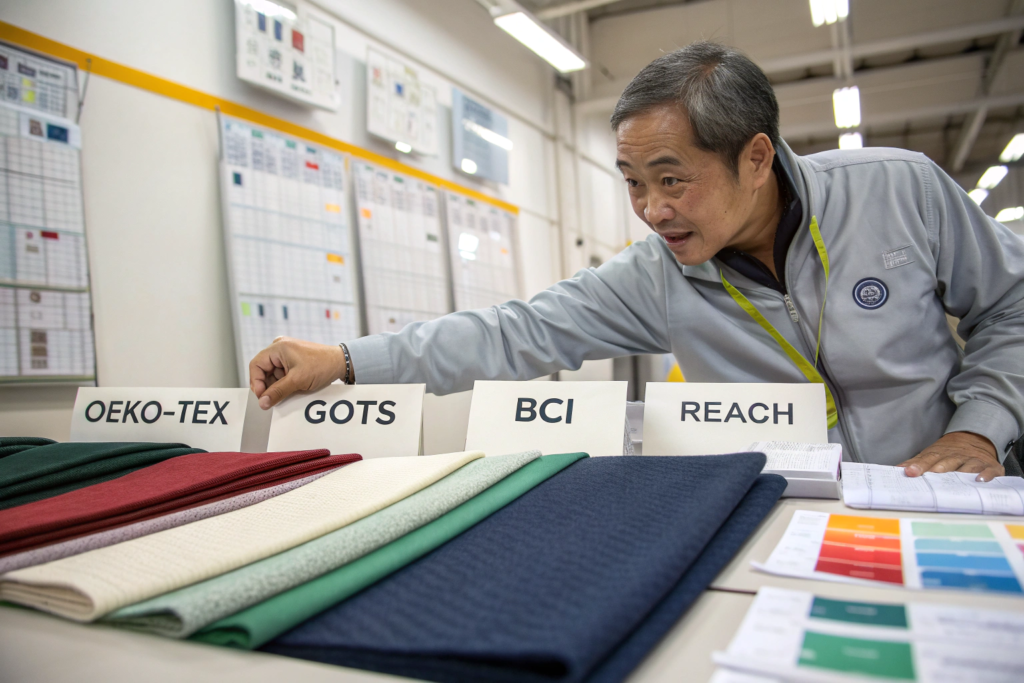
The most common fabric certifications are OEKO-TEX Standard 100, GOTS (Global Organic Textile Standard), BCI (Better Cotton Initiative), and REACH compliance. OEKO-TEX certifies that the fabric is free from harmful substances. GOTS certifies organic content and ethical production. BCI certifies sustainable cotton sourcing. REACH certifies compliance with EU chemical regulations. For the New York client, we explained each certification. They needed OEKO-TEX for their children's wear. For baby clothing, OEKO-TEX is essential. For organic apparel, GOTS is required. For sustainable basics, BCI is common. For EU markets, REACH is mandatory.
What Does OEKO-TEX Standard 100 Certify?
OEKO-TEX Standard 100 certifies that the fabric has been tested for harmful substances. This includes:
- Formaldehyde
- Heavy metals (lead, cadmium, mercury)
- Pesticides
- Chlorinated phenols
- Phthalates
- Allergenic dyes
For a children's wear client, OEKO-TEX certification is non-negotiable. The fabric must be safe for sensitive skin.
What Does GOTS Certify?
GOTS (Global Organic Textile Standard) certifies:
- Organic fiber content (minimum 70% for "organic" label, 95% for "organic" label)
- No toxic chemicals in processing
- Environmental management
- Social compliance (worker rights, no child labor)
For a sustainable brand, GOTS is the gold standard. It covers both the fabric and the production process.
What Are the Risks of Not Checking Certifications During Sampling?
The risks are real. I remember a client from Chicago. They did not check certifications during sampling. They trusted the supplier. The bulk arrived. The fabric failed a random test. The client had to destroy the entire order.
The risks of not checking certifications during sampling include receiving non-compliant fabric, failing customer audits, damaging your brand reputation, and facing legal penalties. For the Chicago client, the cost of destroying the order was $50,000. The cost of the lost sales was even higher. For retailers, many require certification documentation before they will accept products. If you cannot provide it, you lose the account. For online brands, a customer complaint about a chemical smell or skin reaction can lead to negative reviews and account suspension. Checking certifications during sampling prevents all of this.
How Do Fake Certificates Enter the Supply Chain?
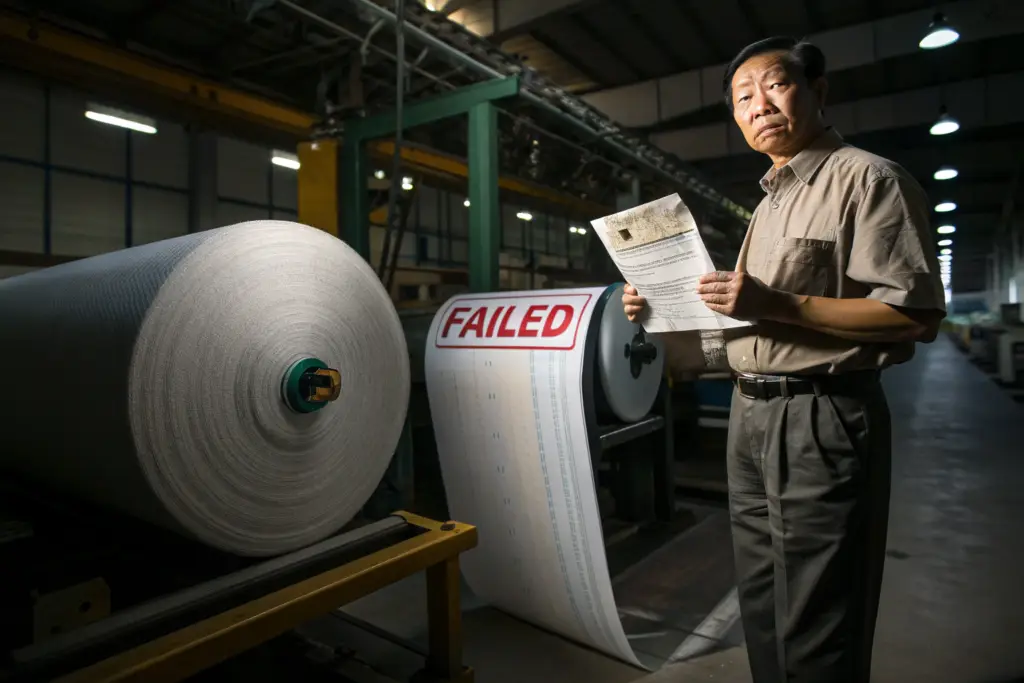
Fake certificates are created by dishonest suppliers. They copy a real certificate. They change the supplier name. They change the date. Without verification, the buyer may never know. For a denim client, they received a fake OEKO-TEX certificate. The fabric contained harmful dyes. They discovered it only after a customer had a reaction.
What Are the Legal Consequences of Non-Compliant Fabric?
Legal consequences vary by country. In the EU, selling non-REACH compliant products can result in fines and product recalls. In the US, selling products with prohibited chemicals can lead to CPSC penalties. For a sportswear client, they faced a $100,000 fine for importing fabric with restricted phthalates. A simple certificate check during sampling would have prevented it.
How Do You Verify Fabric Certifications During Sampling?
Verification is not difficult. I remember a client from Boston. They received a certificate. They assumed it was real. They did not verify it. It was fake.
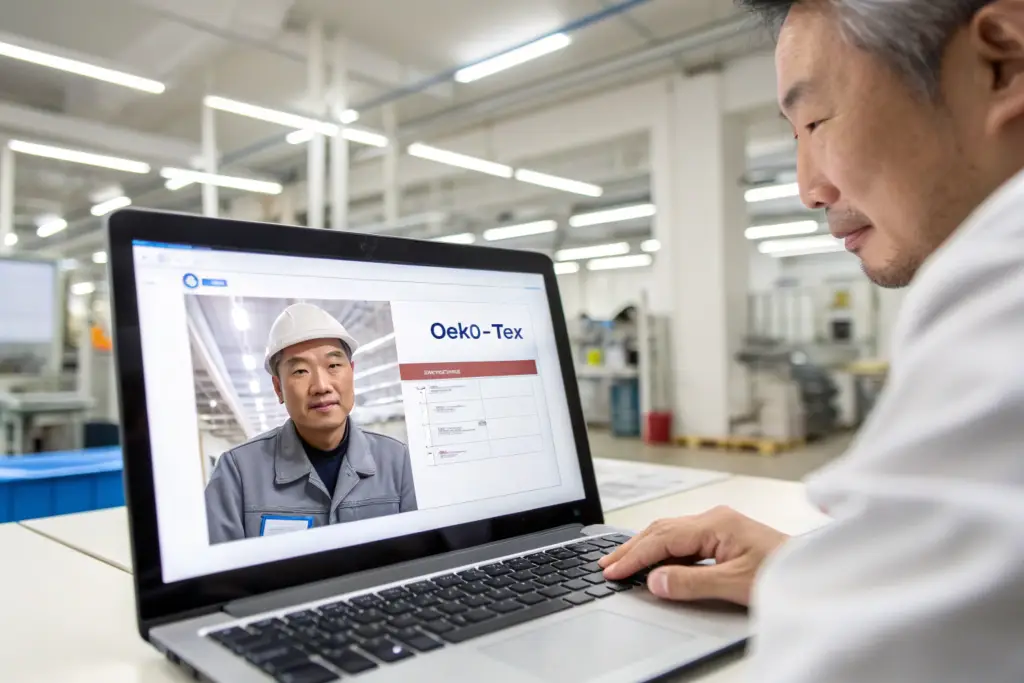
To verify a fabric certification, take the certificate number and go to the issuing body's website. Enter the number. Check that the supplier name matches. Check that the certificate is valid (not expired). For the Boston client, we now verify every certificate. For OEKO-TEX, we use their online verification tool. For GOTS, we check the public database. For BCI, we request the supplier's BCI license number and verify with BCI. For REACH, we request a REACH declaration and test reports for SVHCs.
We also request test reports. A certificate is a summary. A test report has the raw data. We review the test report to confirm that the fabric was actually tested.
What Information Do You Need to Verify a Certificate?
To verify a certificate, you need:
- Certificate number
- Issuing body (e.g., OEKO-TEX, Control Union, Ecocert)
- Supplier name as it appears on the certificate
- Validity dates
- Scope of certification (which products are covered)
For a GOTS client, we also need the scope certificate. It lists which production stages are certified.
How Do You Match Certificates to Specific Fabric Lots?
Certificates are often for a general fabric type, not a specific lot. We require that the certificate covers the specific fabric we are sampling. We also request a test report for the actual lot. For a denim client, we tested the sample fabric in our own lab for restricted substances. This provided an extra layer of verification.
How Do You Incorporate Certification Checks into Your Sample Process?
Certification checks should be built into your sample process. I remember a client from Seattle. They checked certifications at the end of production. It was too late. The fabric was already cut.
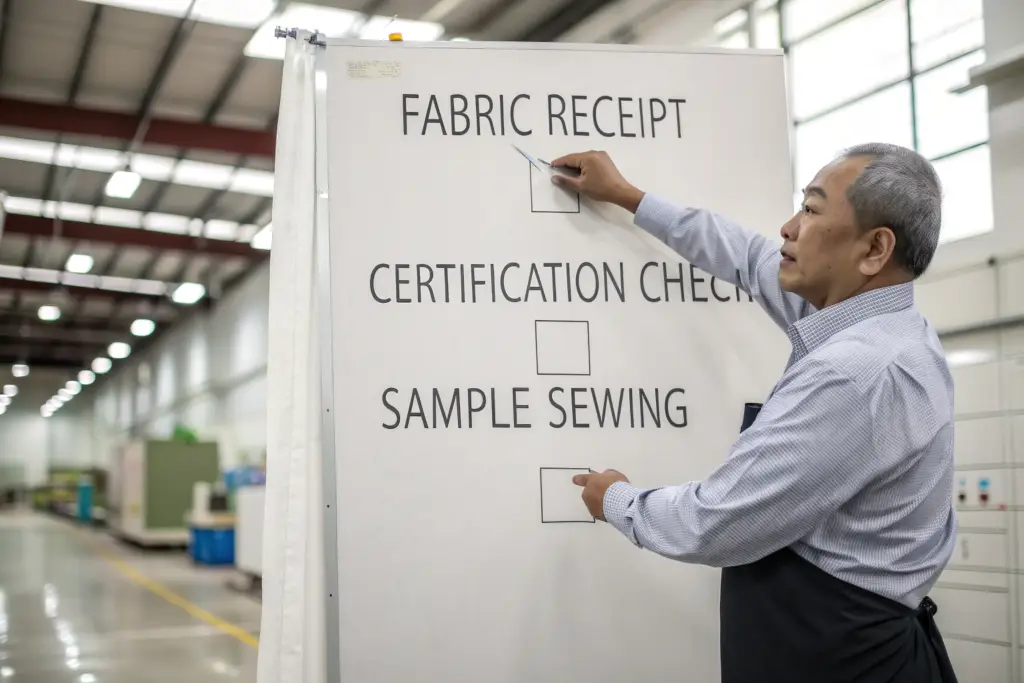
Incorporate certification checks at the fabric receipt stage of sampling. Before the sample is sewn, verify the certificates. If the fabric does not have the required certifications, reject it and request a new fabric. For the Seattle client, we now have a step in our sample process: "Day 1: Fabric arrives. Day 2: Certificates verified. Day 3: Sample sewing begins." For large brands, we maintain a database of approved fabrics and their certificates. For emerging brands, we guide them through the verification process. The cost of rejecting a sample fabric is small. The cost of rejecting bulk fabric is large.
At What Stage Should Certifications Be Checked?
Certifications should be checked at:
- Fabric sourcing: request certificates before ordering
- Fabric receipt: verify certificates before cutting
- Sample stage: include certificates with sample submission
- Pre-production: verify certificates for production fabric
For a sportswear client, we check at fabric receipt for sampling and again at pre-production. Fabric lots can vary.
What Do You Do If a Certificate Is Invalid?
If a certificate is invalid, stop. Do not use the fabric. Contact the supplier. Request a valid certificate or a new fabric. For a children's wear client, we received a fabric with an expired OEKO-TEX certificate. The supplier provided a new certificate within 3 days. The sample was delayed by 3 days. That is better than producing with uncertified fabric.
Conclusion
Fabric certifications are checked during sampling to ensure compliance, protect your brand, and build customer trust. Certifications like OEKO-TEX, GOTS, BCI, and REACH must be verified. Fake certificates are common. Verification is easy: go to the issuing body's website and enter the certificate number. Incorporate certification checks into your sample process at the fabric receipt stage.
At Shanghai Fumao, we verify every fabric certification during sampling. We have a database of approved certificates. We request test reports. We reject non-compliant fabrics. We protect our clients from risk.
Let us help you with your fabric certification checks. Contact our Business Director, Elaine, directly at elaine@fumaoclothing.com. Send us your certification requirements. We will verify certificates during sampling.