You are planning your 2026 men's wear collection. You have to make decisions now. Fabric is being booked. Production slots are being reserved. You place a big bet on a style. You hope it sells. But you are not sure. Will the trend hold for six more months? Will your customers like what you choose? The fear of missing out on a hot style is real. The fear of being stuck with unsold inventory is even bigger.
To predict which men's wear styles will sell out in 2026, you need to combine three layers of insight: hard consumer search data from platforms like Google and Pinterest, early signals from cultural events and streetwear communities, and your own brand's unique customer data. No single source is enough. The most accurate prediction comes from triangulating these different inputs into a clear, actionable product development brief.
We have been manufacturing menswear for over a decade. We work with brands that sell out every season. We also work with brands that struggle with excess inventory. The difference is not luck. It is a systematic approach to prediction. We see which requests come in early. We see which fabrics run out first. We see which styles get re-ordered before the first batch is even shipped. These patterns are not random. They are signals you can learn to read.
How to Use Search and Social Data to Spot Early Men's Wear Trends?
The internet is your crystal ball. It is not perfect. But it shows you what people are curious about. They search for things before they buy them. They save pins before they shop. They watch videos of outfits they want to copy. This data is public. You just need to know where to look and how to interpret it.
What Google search data reveals about men's wear demand?
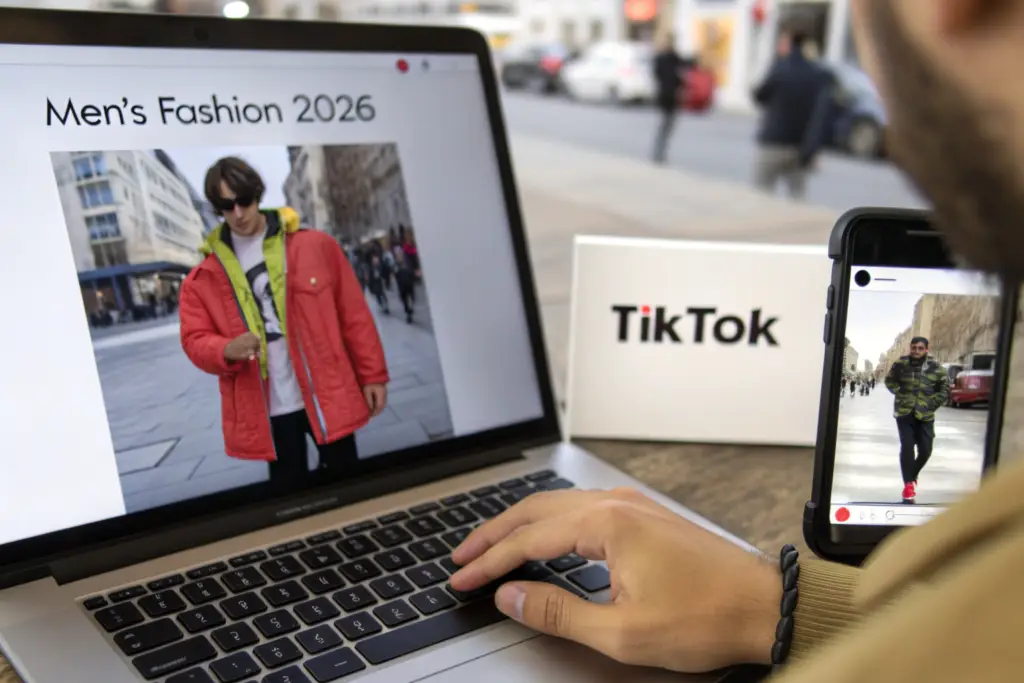
Google is where intent turns into action. When someone searches for "linen camp collar shirt," they are close to buying. You can use tools like Google Trends to see if interest is growing. You can see which regions are driving the interest. You can compare terms. Is "pleated trousers" growing faster than "straight leg jeans"? This tells you where to place your bet.
For example, last year we noticed a client from California kept asking about a specific type of "heavyweight cotton hoodie." We checked Google Trends. We saw searches for "heavyweight hoodie" had increased 35% year-over-year in the US. We shared this data with the client. They increased their order quantity. They sold out in three weeks. The data was not a secret. But they had not looked at it.
You should also look at Google Shopping insights. This shows you which products are getting clicks. It shows you price ranges that are popular. A style might be trending. But if the average click price is $40, and your target retail is $120, you are in a different space. The data helps you position your product correctly.
Another tool is to look at related search queries. When you search for "men's trench coat," Google shows you related terms people also search for. If you see "men's trench coat oversized" growing faster than "men's trench coat classic," you have a clear design direction. You can make your product match what people are already seeking.
How to read TikTok and Instagram for early style signals?
Social media is not just for entertainment. It is a real-time trend lab. TikTok is especially powerful. Styles appear there months before they hit the stores. You need to watch the creators, not just the brands. Look at what regular guys are wearing in their videos. Look at the comments. People ask "where did you get that shirt?" That is demand.
A specific example from our own work: in early 2025, we saw a trend on TikTok. Young men were wearing "rugby shirts" with white jeans. It was a specific 90s revival look. We saw it on a few influencers in New York and London. We mentioned it to one of our brand clients. They were skeptical. But we had data from TikTok's Creative Center showing "rugby shirt" content views were up 200% in 60 days. They decided to do a small test run. That test run sold out in 48 hours. They are now planning a full collection around that style for 2026.
Instagram is different. It is more polished. But it is still useful. Look at the "Explore" page. Look at the accounts of key streetwear stores like Kith or END.. The styles they feature heavily are often the ones that will move to the mainstream. Also, look at the "saved" count on posts. High saves mean people are bookmarking that look. They intend to buy something similar.
You can use social listening tools to track keywords. But even a simple manual process works. Spend 30 minutes a day. Look at the same 20-30 creators. Note what they wear. Note what gets engagement. Do this for a month. Patterns will emerge. You will see a specific silhouette, color, or fabric appearing again and again.
What Cultural and Consumer Behavior Shifts Will Define Men's Wear in 2026?
Trends do not come from nowhere. They come from cultural shifts. What is happening in music, film, and politics affects what men want to wear. The economy matters too. In a recession, people buy classic pieces that last. In a boom, they experiment with bold colors and silhouettes. 2026 will be shaped by a few key forces that are already visible today.
Why is comfort-driven tailoring the next big category?
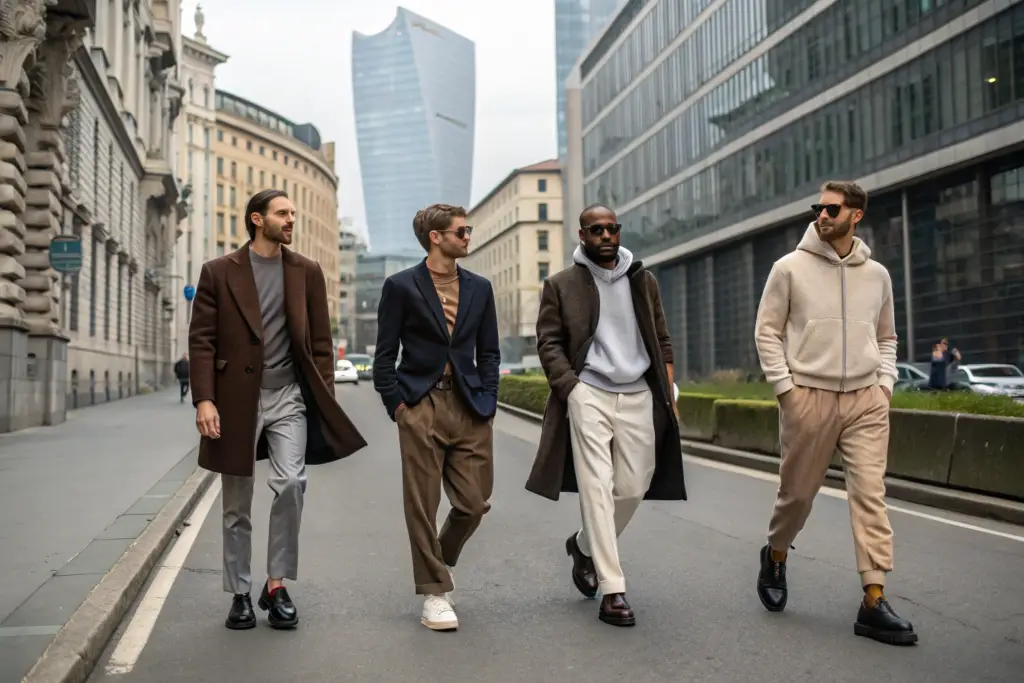
The line between casual and formal is gone. Men do not want to wear a stiff suit. But they also do not want to look like they just left the gym. They want something in between. This is "comfort-driven tailoring." Think of a blazer made from knit fabric. Think of trousers with an elastic waistband but a tailored look. Think of a dress shirt with a soft, non-iron cotton that feels like a t-shirt.
This shift started during the pandemic. But it is not going away. Data from The NPD Group shows that men's tailored clothing is growing again. But the growth is in "unstructured" and "comfort" categories. The old rigid suits are declining. The new hybrid pieces are rising.
We saw this clearly with a client from Chicago. They came to us in 2024. They wanted a "performance dress shirt." It had to look formal but feel like athletic wear. We worked with a mill to develop a fabric with 4-way stretch and a moisture-wicking finish. The shirt looked like a classic Oxford. But it felt like a jersey. They launched it in early 2025. The reorder rate was double their average. For 2026, they are expanding the concept into blazers and trousers. The demand is real.
If you are planning for 2026, you should look at innovative performance fabrics from mills like The Woolmark Company. Fabrics that combine natural fibers with technical properties will dominate. A merino wool t-shirt that can be worn for a hike and to dinner. A cotton chino with a water-repellent finish. These are the building blocks of comfort-driven tailoring.
How do sustainability claims affect buying decisions now?
Sustainability is no longer a nice-to-have. For a segment of men's wear buyers, it is a deciding factor. But the conversation has changed. It is not just about "organic cotton" anymore. Consumers are more skeptical. They want proof. They want transparency. They want to know the story behind the garment. This is especially true for Gen Z and younger Millennials.
A recent study by McKinsey & Company found that over 60% of consumers are willing to pay more for sustainable products. But they also feel brands do not provide enough information. A vague "eco-friendly" label is not enough. They want to know the factory name. They want to see certifications.
We have a client in Seattle who built their entire brand on this concept. They sell only men's basics. But they provide a QR code on every garment tag. That code links to a page with the factory name, the country of origin for the fabric, and the Global Organic Textile Standard (GOTS) certification. They are not the cheapest. But they sell out consistently. Their customers trust them.
For 2026, you should think about how to communicate your supply chain. If you use recycled polyester, say which mill it came from. If you use organic cotton, show the certification. If you manufacture with a partner like Shanghai Fumao, mention that your production uses water recycling and solar power. This level of detail builds trust. And trust leads to sell-outs.
How to Validate Trends Against Your Own Brand's Customer Data?
Trends are useful. But they are general. Your customers are specific. A trend that sells out in New York might sit on the rack in Nashville. Your own sales data is your most valuable prediction tool. You have a direct line to your customer's preferences. You need to analyze it carefully. You need to look for patterns that are unique to your brand.
What can past sell-out data teach me about future demand?
Your past best-sellers are a map. They tell you what your customer wants. But you need to dig deeper. Do not just look at which style sold the most. Look at the details. What was the fabric? What was the color? What was the price point? What was the fit? Often, the winning combination is not obvious.
For example, one of our clients is a menswear brand in Texas. They sell a lot of western-inspired shirts. They looked at their data and saw their best-selling shirt was always a specific shade of "dusty blue." Not black. Not white. Dusty blue. They also saw that shirts with "snap buttons" sold 3x faster than shirts with standard buttons. For 2026, they are doubling down on dusty blue snap shirts. They are also expanding the color into jackets and pants. They are not guessing. They are following the data their own customers created.
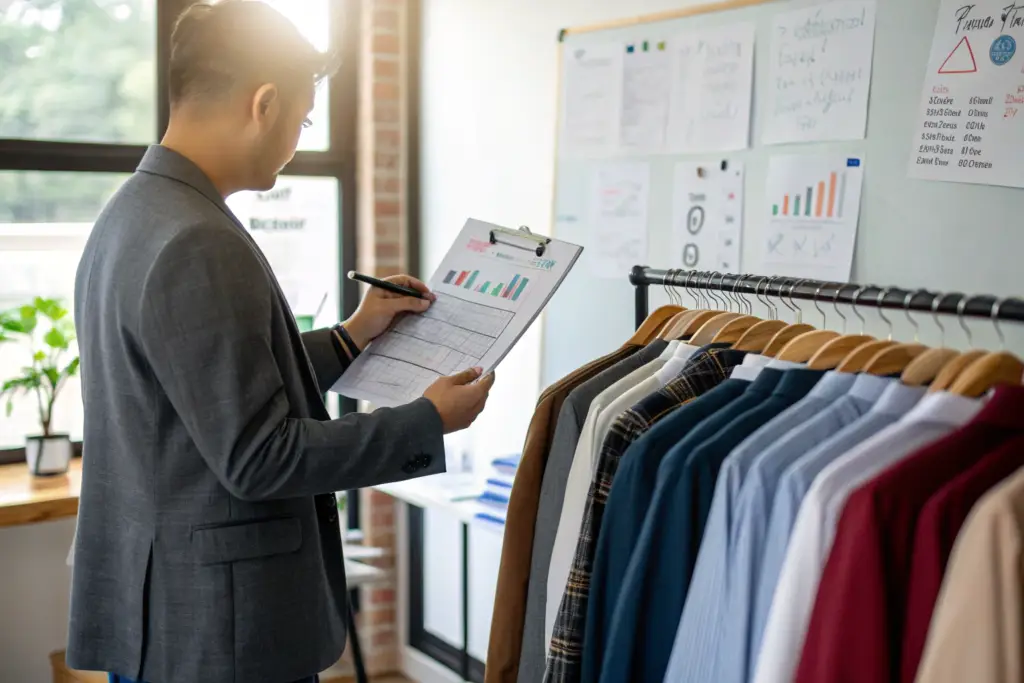
You should build a product performance dashboard. This can be a simple spreadsheet. Track each style you sell. Track the sell-through rate. Track the return rate. Track the margin. Then look for clusters. Which fabrics have the highest sell-through? Which silhouettes have the lowest return rate? These are your safe bets for 2026.
Another powerful piece of data is "pre-order" behavior. If you offer pre-orders, watch which styles get the most early commitments. This is a direct vote from your customers. Last year, a client in Denver offered pre-orders for their winter jackets. A specific "quilted field jacket" got 5x more pre-orders than any other style. They placed a larger production order based on that signal. That style became their number one seller for the season.
How to use customer feedback to refine your product mix?
Sales data tells you what people bought. Feedback tells you why they bought it. And why they did not. You need to listen to your customers. Read your reviews. Read your emails. Look at your social media comments. Customers often tell you exactly what they want. You just have to pay attention.
We had a client in Portland. They sold a popular hoodie. But they kept getting the same comment in reviews. "Love the hoodie, wish it had a zippered pocket on the sleeve." This was not a trend they saw in any trend report. It was specific to their customer base. They listened. They redesigned the hoodie for the next season with the zippered sleeve pocket. The updated version sold out 40% faster than the original. The pocket became a signature feature of their brand.
You can also use customer surveys to ask direct questions. Do not just ask "what do you want?" Ask about specific details. Do you prefer a slimmer or a relaxed fit? Do you prefer metal or plastic zippers? Do you prefer a chest pocket or no chest pocket? These micro-details are what make a product a hit or a miss.
Another method is to create a "customer advisory board." Invite 10-20 of your best customers to a private group. Show them early samples. Ask for their opinions. They will give you honest feedback. And they will become your biggest advocates when the product launches. They feel invested in the success of the style.
How to Work with Your Manufacturer to Predict and Capture Demand?
Your factory is not just a supplier. They are a source of intelligence. They work with multiple brands. They see patterns across the industry. They know which fabrics are being booked heavily. They know which styles are being reordered. If you have a good relationship, they will share this information with you. This can give you an edge over competitors who are not as close to the source.
Why is early fabric booking a critical signal for 2026 trends?
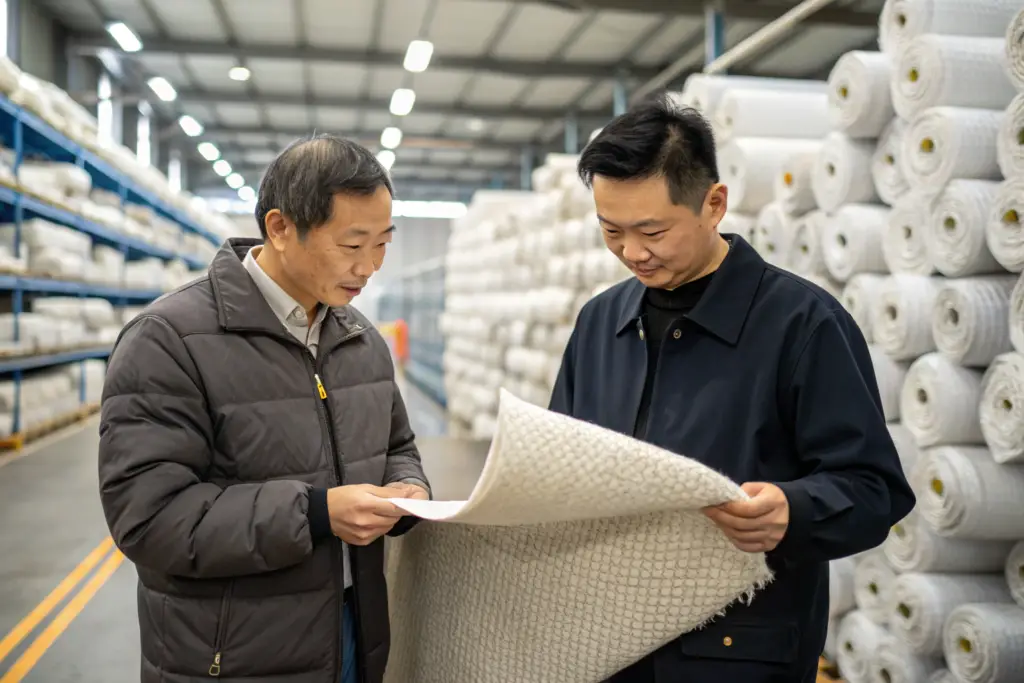
Fabric mills have their own view of the future. They release seasonal collections. They show new weaves, new finishes, and new colors. The fabrics that get booked first are a signal. They are the ones the big brands are betting on. You can use this as a validation for your own trend research.
We work with several Italian and Japanese mills. They show us their new developments 12-18 months before the season. When a specific fabric starts getting heavy bookings from multiple major brands, we take notice. For 2026, we are seeing a massive interest in "textured wovens." Think of slubby linens, seersucker, and basketweave cottons. We are also seeing a shift away from ultra-lightweight fabrics to more substantial, mid-weight fabrics. This matches the trend towards comfort-driven tailoring that is built to last.
Last year, we had a client who wanted to make a line of men's shorts. They wanted to use a basic cotton twill. We suggested they look at a textured "slub cotton" that was being heavily booked by a major European brand. The client took our advice. Their shorts stood out on the shelf. They sold out in six weeks. The basic twill shorts from their competitors did not perform as well. The fabric choice was a competitive advantage.
You should ask your factory partner to share mill trend reports. Companies like Première Vision publish seasonal trend books. These are based on actual orders from the top fashion houses. They are not guesswork. They are a consensus view of the industry. If your factory has access to these reports, use them. They are a powerful input to your prediction process.
How to build flexibility into your production plan?
Prediction is never perfect. You will make some wrong bets. The key is to build a production plan that allows you to react. Do not book 100% of your production capacity with one set of styles. Leave room for a "quick turn" order. This is an order that can be produced and shipped in 60 days or less. This allows you to chase a trend that emerges closer to the season.
At Shanghai Fumao, we help our clients build this flexibility. We offer a "quick response" production model. We reserve a portion of our production lines for smaller, faster orders. The cost per unit is slightly higher. But the ability to capture a trend that is already hot is worth it. You avoid the risk of betting big on a trend that fades.
A client in Miami used this model last year. They saw a specific "camp collar shirt" blowing up on Instagram in March. They did not have it in their main collection. They came to us with a small order for 500 units. We delivered in 45 days. They launched it in May. It sold out in two weeks. They placed a second order for 2,000 units. That second order arrived in July. The trend was still going. They captured the peak of the demand without the risk of holding inventory for months.
You should discuss minimum order quantities (MOQs) with your factory. Find a partner that offers tiered MOQs. A high MOQ for your core styles that you are confident in. A low MOQ for test styles that you want to validate. This structure protects you from over-investing in a trend that does not materialize. It also gives you the agility to move quickly when you see a signal.
Conclusion
Predicting which men's wear styles will sell out in 2026 is not about having a secret formula. It is about building a system. You gather signals from search data, social media, and cultural shifts. You validate those signals against your own customer data and feedback. You then work with a manufacturing partner who can provide early intelligence and production flexibility.
The brands that sell out consistently are not the ones with the best luck. They are the ones with the best information flow. They know what their customers are searching for. They see what influencers are wearing. They analyze their own sales patterns. They listen to feedback. And they build a supply chain that can respond to that information quickly.
At Shanghai Fumao, we see ourselves as part of your information system. We share what we see across our client base. We show you which fabrics are being booked. We help you test new styles with smaller quantities. We have built our production model to support brands that want to predict trends, not just react to them.
If you are planning your 2026 men's wear collection and want a manufacturing partner who can help you capture the right trends with the right production strategy, we would love to talk. You can reach our Business Director, Elaine, at elaine@fumaoclothing.com. Let us build a plan together that helps you sell out next season.