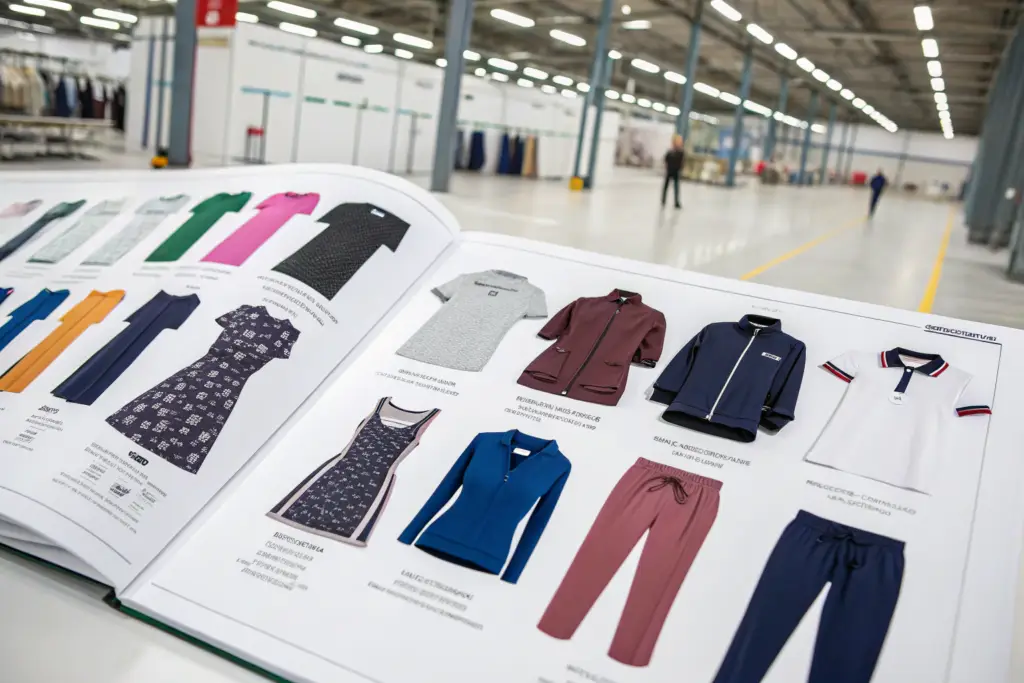
I have worked with hundreds of brands over the years. Some brands work with five different factories for five different product categories. Others work with one factory for everything. The brands that consolidate with one reliable partner often move faster, spend less, and maintain better quality.
Building a diverse clothing catalog using a single reliable factory is not only possible but often optimal. The key is finding a factory with multi-category capabilities, vertical integration, dedicated production lines for different garment types, and a collaborative approach to product development. One factory can produce your woven shirts, knit t-shirts, tailored jackets, and activewear if that factory has invested in the right equipment, trained the right teams, and built the right supply chain relationships. Consolidation reduces vendor management complexity, improves quality consistency, simplifies communication, and often lowers total cost.
At Shanghai Fumao, we are exactly this kind of factory. We produce woven garments, knitwear, outerwear, and activewear under one roof. I have seen how this model helps brands grow faster. This guide explains how to build your diverse catalog with one reliable partner.
What capabilities should you look for in a single factory partner?
Not every factory can produce every type of garment. You need a factory that has invested in the breadth of capabilities your catalog requires.
How does multi-category equipment matter?
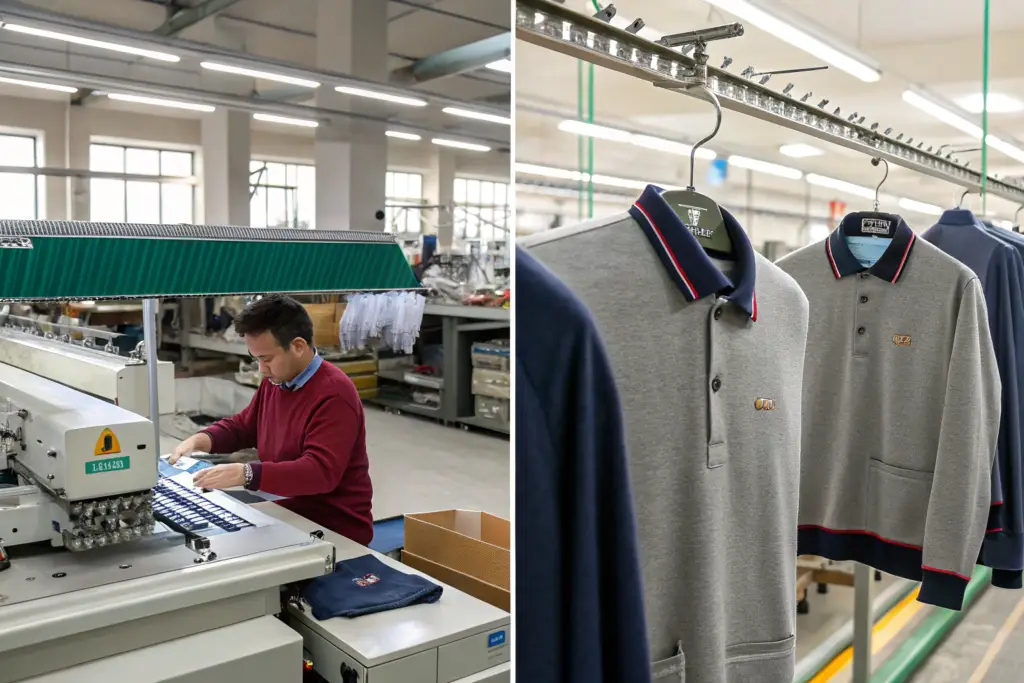
Different garment types require different machines. Woven shirts need collar formers and placket machines. Knit t-shirts need overlock and coverstitch machines. Jackets need heavy-duty machines and specialized pressing equipment.
I had a client from New York who wanted to produce woven shirts, knit polos, and lightweight jackets from one factory. He found a factory that claimed to do everything. When he visited, he saw the factory had only basic machines. They subcontracted the jackets to another factory. Quality was inconsistent.
When he came to us, he saw our dedicated lines. One line with shirt-making machines. One line with knit machines. One line with jacket equipment. He could see the capability with his own eyes.
Here is what multi-category equipment looks like:
| Garment Category | Required Equipment | Why It Matters |
|---|---|---|
| Woven shirts | Collar formers, placket machines, buttonholers | Precision for tailored details |
| Knit t-shirts | Overlock, coverstitch, flatlock | Stretch handling, soft seams |
| Woven trousers | Pocket setters, waistband machines | Structure and durability |
| Jackets and outerwear | Heavy-duty machines, sleeve setters | Strength for thicker fabrics |
| Activewear | Flatlock machines, stretch handling | Movement and comfort |
| Denim | Heavy-duty chain stitch, rivet setters | Durability for heavy fabric |
A client from Boston told me: "I visited five factories before I found one that had all the machines for my full collection. The others would have needed to subcontract. That added risk."
How does fabric sourcing capability affect catalog diversity?
A factory that can source a wide range of fabrics is essential for a diverse catalog. Woven fabrics come from different mills than knits. Performance fabrics come from specialized suppliers.
I had a client from Chicago who wanted to produce cotton t-shirts, silk blouses, and performance activewear from one factory. His previous factory could only source basic cotton. They struggled with silk. They had no relationships with performance fabric mills.
Our sourcing team works with mills across all categories. We have cotton suppliers. We have silk suppliers. We have performance fabric suppliers. We can source the right fabric for every garment type.
Here is what fabric sourcing capability enables:
| Fabric Category | Sourcing Relationships Needed | Impact on Catalog |
|---|---|---|
| Basic cottons | Commodity mills | Core essentials |
| Specialty wovens | Mills with unique weaves | Fashion-forward styles |
| Performance knits | Technical fabric specialists | Activewear and athleisure |
| Luxury fabrics | Premium Italian, Japanese mills | High-end collection |
| Sustainable fabrics | Organic, recycled specialists | Eco-friendly line |
A client from Seattle told me: "My factory sources everything. I do not need to find a separate fabric supplier for each category. That saves me months of work."
How does technical expertise across categories matter?
Different garment types require different technical skills. Woven shirts require precision in collars and cuffs. Knitwear requires understanding of stretch and recovery. Jackets require construction knowledge for structure.
I had a client from Denver who wanted to add outerwear to his catalog. He had been making knitwear with his factory for years. He was nervous about adding jackets. We assigned his jackets to a line with experienced jacket makers. The team had made jackets for decades. His outerwear launched with zero quality issues.
Here is how technical expertise spans categories:
| Garment Category | Technical Expertise Required | How Factories Build It |
|---|---|---|
| Woven shirts | Collar construction, placket finishing | Dedicated shirt makers, specialized machines |
| Knit t-shirts | Stretch control, neckline finishing | Experienced knit operators |
| Woven trousers | Pocket setting, waistband construction | Trouser specialists |
| Jackets | Lining, interlining, shoulder construction | Tailoring experts |
| Activewear | Flatlock seams, moisture-wicking | Performance garment specialists |
| Denim | Chain stitch, rivet setting, washing | Denim specialists |
A client from Portland told me: "My factory has different teams for different categories. The shirt team only makes shirts. The jacket team only makes jackets. Each team is an expert in their category."
How do you develop diverse products with one factory over time?
Building a diverse catalog does not happen overnight. It happens over time. The right factory grows with you, adding categories as you add products.
How do you start with core categories and expand?
Start with what your factory does best. Build trust. Prove quality. Then expand into new categories.
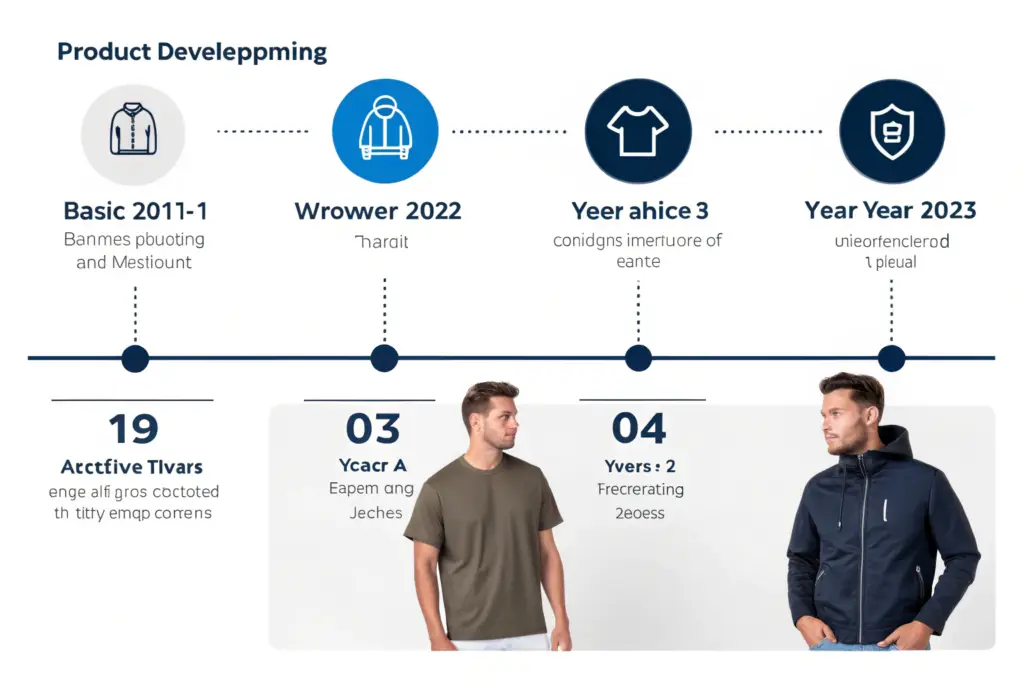
I had a client from Los Angeles who started with basic knit t-shirts. That was our core strength. The first collection was good. He placed reorders. After six months, he asked about woven shirts. We assigned his shirts to our shirt line. The quality was excellent. After a year, he asked about jackets. We introduced his jackets. His catalog grew category by category.
Here is a growth path:
| Phase | Categories | What to Validate |
|---|---|---|
| Phase 1 (months 1-6) | 1-2 core categories | Quality, communication, delivery |
| Phase 2 (months 6-12) | Add 1-2 related categories | Factory's category expertise |
| Phase 3 (months 12-24) | Add new categories | Expanded capability, consistency |
| Phase 4 (24+ months) | Full catalog | All categories, predictable quality |
A client from Texas told me: "I started with polos. After six months, I added button-downs. After a year, I added jackets. I never changed factories. My catalog grew with one partner."
How does sample development for new categories work?
When adding a new category, start with samples. Do not go straight to bulk production. The sample process validates the factory's capability for that category.
I had a client from Miami who wanted to add activewear to her catalog. She had never made activewear with us. We made three rounds of samples. The first sample had fit issues. The second was better. The third was perfect. She approved the third sample. The bulk production was smooth.
Here is the sample development process for new categories:
| Step | Activity | Timeline | Purpose |
|---|---|---|---|
| 1 | Initial sample | 2-3 weeks | Validate basic construction |
| 2 | Revised sample | 1-2 weeks | Address fit and detail issues |
| 3 | Pre-production sample | 1-2 weeks | Final verification before bulk |
| 4 | Bulk production | 3-6 weeks | Production after approval |
A client from Chicago told me: "I do not rush the sample process when adding a new category. Taking extra time on samples saves time on bulk production."
How do you transfer knowledge between categories?
Knowledge from one category can inform another. A factory that makes many categories learns techniques that transfer. This benefits your entire catalog.
I had a client from New York who made tailored jackets. The jacket team developed a technique for a specific shoulder construction. Later, we applied that technique to his structured blouses. The blouses had better shape. The knowledge transferred across categories.
Here is how knowledge transfers:
| Source Category | Technique | Benefiting Categories |
|---|---|---|
| Tailored jackets | Shoulder construction | Blouses, structured dresses |
| Knit t-shirts | Neckline finishing | All knit garments |
| Woven shirts | Collar construction | Blouses, shirts |
| Activewear | Stretch management | All knit garments |
| Denim | Wash techniques | Casual trousers, jackets |
A client from Seattle told me: "My factory's jacket team taught the shirt team a new seam finish. Now my shirts have better construction. The cross-pollination is valuable."
What are the advantages of consolidating with one factory?
Working with one factory for your entire catalog creates advantages that working with multiple factories cannot match.
How does communication simplify with one factory?
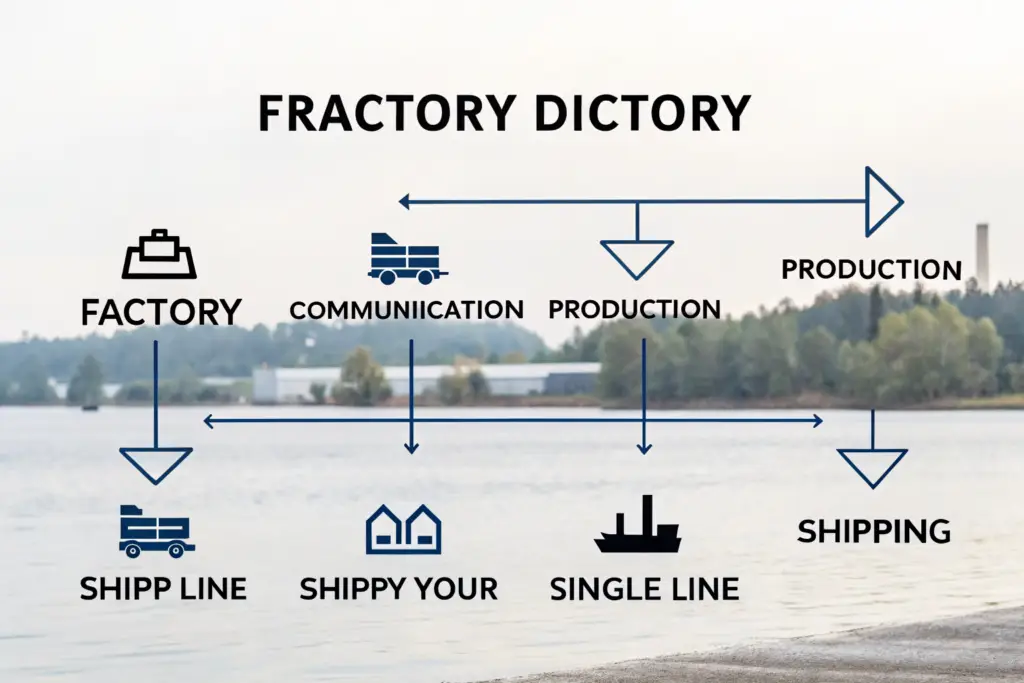
One factory means one contact person. One set of processes. One way of working. This reduces complexity and miscommunication.
I had a client from Boston who previously worked with four factories. He had four contacts. Four different tech pack formats. Four different quality standards. Four different payment terms. He spent half his time managing factories. When he consolidated with us, his time on factory management dropped by 80%.
Here is how communication simplifies:
| Aspect | Multiple Factories | One Factory |
|---|---|---|
| Contacts | 4-10 people | 1-2 people |
| Tech pack formats | Multiple, need adaptation | One format, consistent |
| Quality standards | Vary by factory | Consistent across categories |
| Payment terms | Different for each | One set of terms |
| Production updates | Need to check each | One system, all categories |
A client from Denver told me: "I used to have a spreadsheet with four factory contacts. Now I have one person. I email her for everything. It is so much simpler."
How does quality consistency improve with one factory?
When one factory makes all your products, quality standards are consistent. The same QC team inspects your shirts, your jackets, and your activewear.
I had a client from Chicago who previously had different quality levels across his catalog. His shirts from one factory were good. His jackets from another were inconsistent. When he consolidated with us, his quality became consistent across all categories. His customers noticed the improvement.
Here is how quality consistency improves:
| Aspect | Multiple Factories | One Factory |
|---|---|---|
| Quality standards | Vary by factory | Consistent AQL across all |
| QC team | Different teams | Same QC, same standards |
| Defect rates | Variable | Predictable across categories |
| Customer experience | Inconsistent | Consistent brand experience |
A client from Portland told me: "My customers know what to expect now. Every product meets the same standard. That builds trust."
How does shipping consolidation save money?
When one factory makes all your products, you can consolidate shipments. One container with shirts, jackets, and trousers costs less than three separate containers from three factories.
I had a client from Los Angeles who shipped from three different factories. Each shipment was partial container LCL. His per-carton shipping cost was high. When he consolidated with us, we combined all his products into one container. His shipping cost dropped by 35%.
Here is how shipping consolidation saves:
| Scenario | Number of Shipments | Per-Unit Shipping Cost |
|---|---|---|
| 3 factories, 3 shipments | 3 LCL shipments | High |
| 1 factory, consolidated | 1 FCL shipment | Low to medium |
| 1 factory, full container | 1 FCL, full | Lowest |
A client from New York told me: "I used to pay $12 per carton for shipping. Now I pay $6. The savings pay for my samples for the year."
How does payment and cash flow simplify?
One factory means one payment process. One deposit. One balance. One set of payment terms. This simplifies cash flow management.
I had a client from Seattle who managed payments to three factories. Each had different deposit percentages. Each had different payment terms. His accounts payable was a mess. When he consolidated with us, he had one deposit, one balance, one payment schedule. His cash flow became predictable.
Here is how payment simplifies:
| Aspect | Multiple Factories | One Factory |
|---|---|---|
| Deposit payments | Multiple, different timing | One deposit |
| Balance payments | Multiple, different due dates | One balance |
| Payment terms | Different for each | Consistent terms |
| Accounts payable | Complex, easy to miss | Simple, easy to manage |
A client from Boston told me: "I used to spend hours managing payments. Now it is one wire transfer. Done."
What challenges come with single-factory consolidation and how do you overcome them?
Consolidating with one factory has advantages. But it also requires active management. You need to manage risk and maintain leverage.
How do you avoid becoming too dependent on one factory?
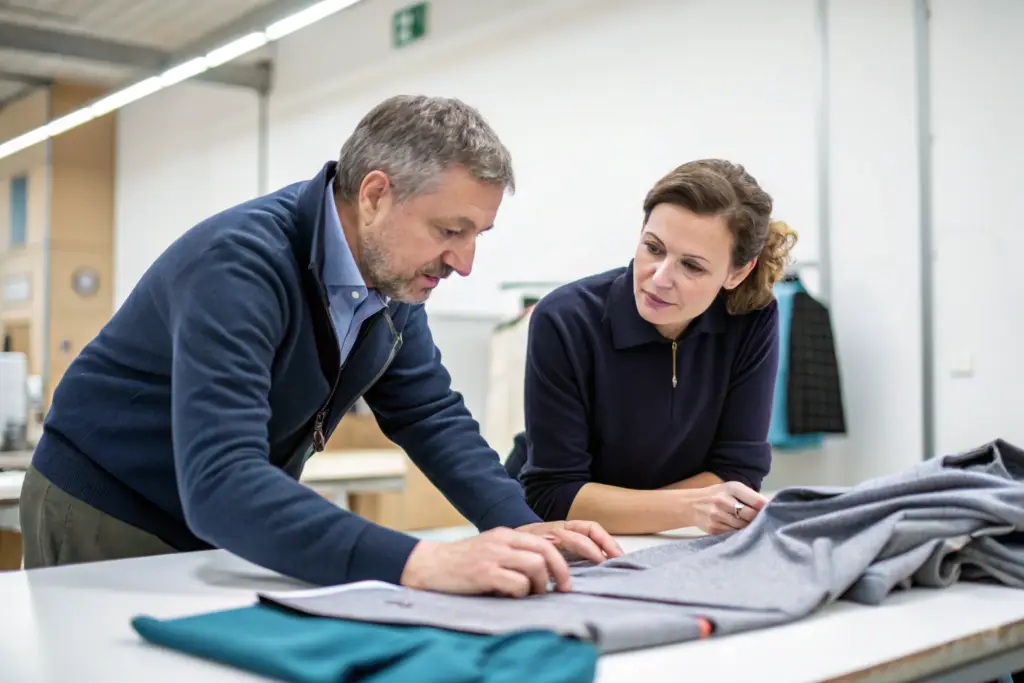
Dependence is a risk. You mitigate it through communication, transparency, and mutual commitment. You also maintain awareness of alternatives.
I had a client from Texas who consolidated his entire catalog with us. He did not worry about dependence. He visited regularly. He knew our capacity. He knew our team. He had a relationship, not just a transaction. He also maintained relationships with two backup factories, just in case.
Here is how to manage dependence:
| Strategy | How It Works | Benefit |
|---|---|---|
| Regular visits | See operations firsthand | Build relationship, understand capacity |
| Backup suppliers | Maintain relationships with 1-2 alternatives | Have options if needed |
| Long-term planning | Share forecasts, commit volume | Factory prioritizes you |
| Transparent communication | Open about concerns | Problems addressed early |
A client from Chicago told me: "I trust my factory. But I also have two backups. I have not needed them. But I feel secure knowing they are there."
How do you ensure pricing remains competitive?
One factory should give you volume leverage. Use your consolidated volume to negotiate better pricing. But also benchmark against the market periodically.
I had a client from New York who consolidated his volume with us. His total order volume doubled. We gave him better pricing. He also checked prices from other factories once a year. His market checks confirmed our pricing was fair. He stayed with us.
Here is how to ensure competitive pricing:
| Strategy | How It Works | Frequency |
|---|---|---|
| Volume negotiation | Use consolidated volume for better rates | Annually |
| Market benchmarking | Get quotes from other factories | Annually |
| Cost transparency | Ask factory to share cost breakdown | When prices change |
| Long-term commitment | Offer volume commitment for price stability | Annually or bi-annually |
A client from Denver told me: "I check the market once a year. My factory knows this. They keep their pricing fair. I stay with them."
How do you manage new category development?
Adding new categories requires time and patience. Start with samples. Do not expect perfection on the first bulk order.
I had a client from Miami who wanted to add activewear to his catalog. We made three sample rounds. The first round was not good. He was frustrated. I explained that activewear is different than his woven shirts. We needed to learn the category. The third sample was excellent. The bulk production was smooth.
Here is how to manage new category development:
| Step | Approach | Timeline |
|---|---|---|
| 1 | Set realistic expectations | Before starting |
| 2 | Multiple sample rounds | 2-4 rounds |
| 3 | Small pilot bulk first | 50-100 pieces |
| 4 | Scale after success | Next season |
A client from Seattle told me: "I learned to be patient with new categories. The first samples may not be perfect. The investment in samples pays off in bulk quality."
Conclusion
Building a diverse clothing catalog with a single reliable factory is not only possible. It is often the best path for brands that want to grow efficiently. One factory with multi-category capabilities gives you consistent quality, simplified communication, consolidated shipping, and simpler cash flow.
The key is finding the right factory. Look for multi-category equipment. Look for diverse fabric sourcing capability. Look for technical expertise across categories. Look for a factory that has invested in different production lines for different garment types.
Then grow with that factory. Start with core categories. Build trust. Prove quality. Expand category by category. Use the sample process to validate new categories. Let knowledge transfer across categories to improve all your products.
Manage the risks. Maintain backup relationships. Benchmark pricing periodically. Be patient with new category development.
At Shanghai Fumao, we have built our factory to serve brands that want a single partner for their diverse catalog. We have woven shirt lines, knit lines, jacket lines, and activewear lines. We source fabrics across all categories. Our teams have decades of experience across garment types. We are structured to help you grow.
If you want to consolidate your catalog with one factory that can handle all your categories, I invite you to reach out. Contact our Business Director, Elaine. She will discuss your product range. She will show you our capabilities across categories. She will help you build a growth plan. You can email her at strong>elaine@fumaoclothing.com</strong.
Let us be your single partner for your diverse catalog.