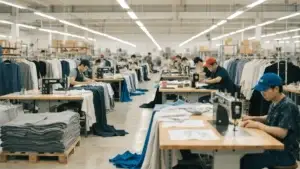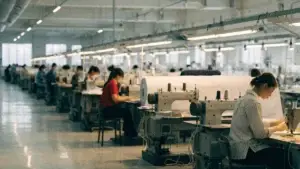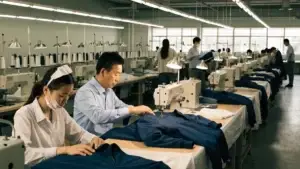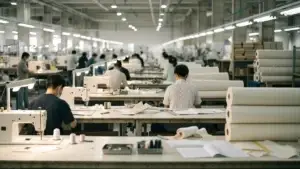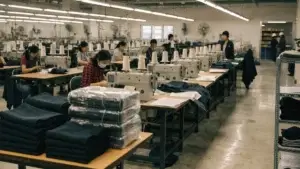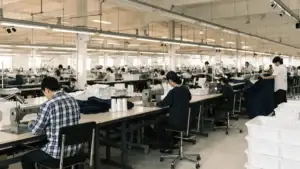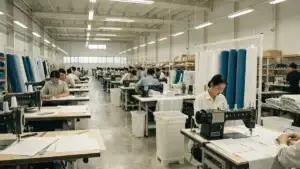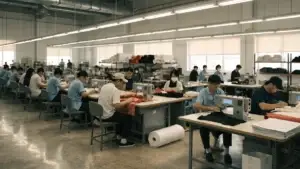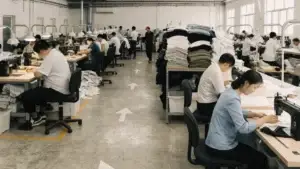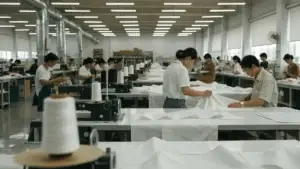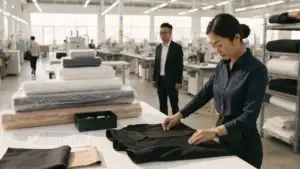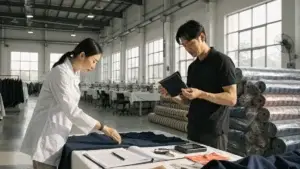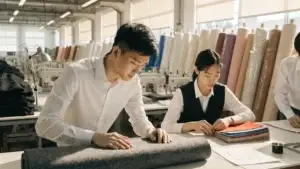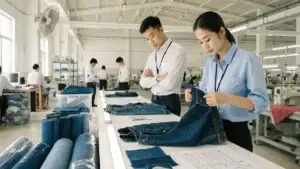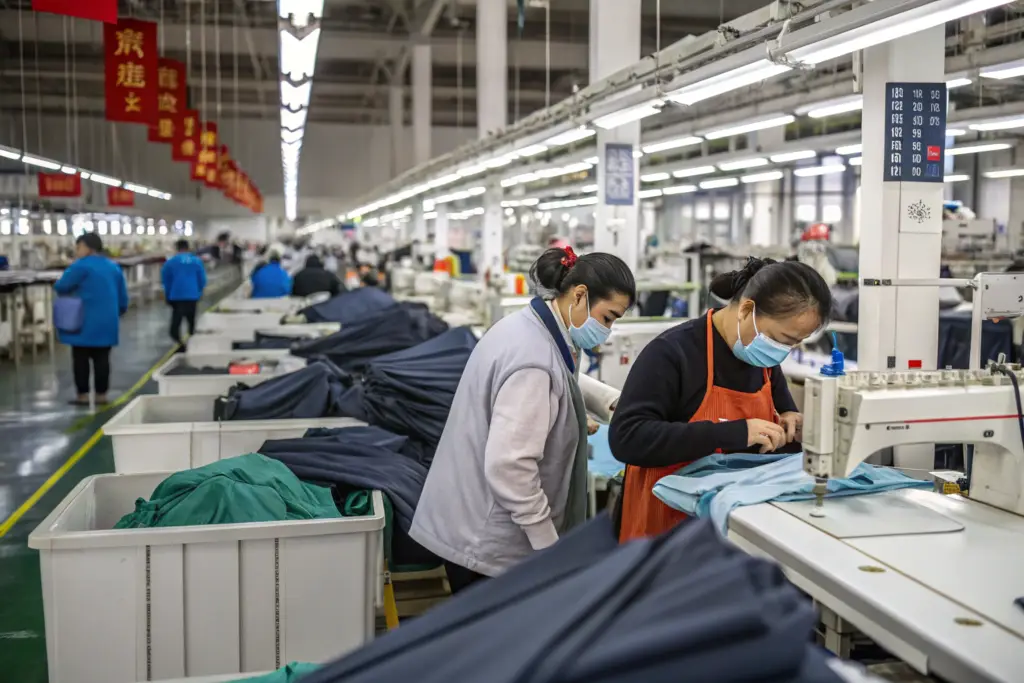
I have spent fifteen years in Chinese manufacturing. I have visited factories across Guangdong, Zhejiang, and Jiangsu. I have seen the difference between a factory that can handle a simple t-shirt and one that can execute a fully lined wool coat with hand-finished details.
Chinese manufacturing hubs are ideal for complex garment designs because of their unique combination of deep technical expertise, vertical integration, specialized machinery, skilled labor force, and supply chain density. In cities like Guangzhou, Shanghai, and Hangzhou, you can source every component—from specialty fabrics to custom buttons—within hours. The concentration of experienced pattern makers, sample technicians, and production managers who have spent decades mastering complex construction creates an ecosystem where challenging designs become routine production.
At Shanghai Fumao, we are part of this ecosystem. I have seen how the infrastructure in Chinese manufacturing hubs enables brands to execute designs that would be impossible or prohibitively expensive elsewhere. This guide explains why China remains the preferred destination for complex garment production.
What technical infrastructure supports complex garment production?
Complex garments require specialized equipment and skilled operators. Chinese manufacturing hubs have invested decades in building this infrastructure.
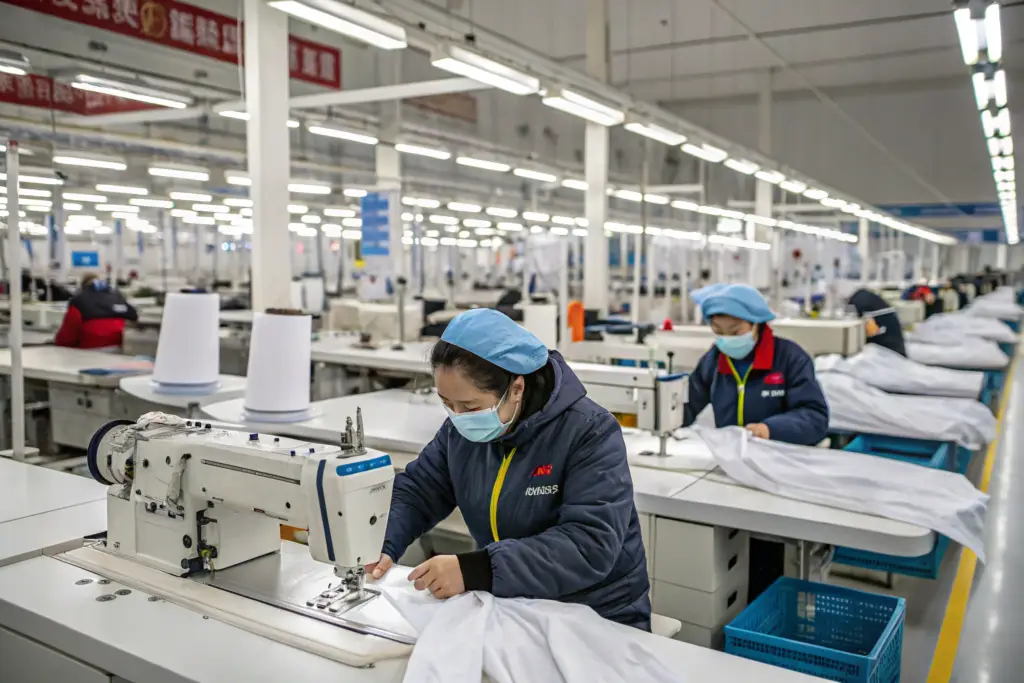
How does the concentration of specialized machinery enable complexity?
Different garments require different machines. A simple t-shirt needs a basic overlock machine. A tailored jacket needs a specialized machine for every step—buttonhole machines, pocket setters, collar formers, and sleeve presses.
In a Chinese manufacturing hub, these machines are not rare. They are standard. Factories invest in specialized equipment because the volume justifies it.
I remember a client from New York who wanted a men's shirt with a specific type of pleat on the back yoke. His previous factory in another country told him it was too complex. They did not have the equipment. We have the machine for that specific pleat. It is a standard attachment on our shirt line.
Here are specialized machines common in Chinese manufacturing hubs:
| Machine Type | Complex Garment Application | Found in Manufacturing Hubs |
|---|---|---|
| Automatic pocket setter | Shirt pockets, jacket pockets | Guangzhou, Shanghai, Ningbo |
| Buttonhole machine | Tailored jackets, dress shirts | Widespread across all hubs |
| Collar forming machine | Dress shirt collars, polo collars | Shanghai, Jiangsu |
| Sleeve setting machine | Jacket sleeves, structured garments | Guangdong, Zhejiang |
| Placket machine | Dress shirt front plackets | Shanghai, Ningbo |
| Pleating machine | Skirt pleats, dress details | Guangzhou, Hangzhou |
| Embroidery machine | Complex logo, decorative details | Widespread |
A client from Boston wanted a dress with 12 separate pattern pieces and three types of seams. Her previous factory in another country struggled. The sewing operators were not familiar with the seam types. In China, we have operators who specialize in each seam type. The dress became a standard production item.
How does vertical integration streamline complex production?
Vertical integration means a factory controls multiple steps of production. Some Chinese factories have in-house fabric mills, trim suppliers, and finishing facilities. This reduces lead times and quality variation.
At Shanghai Fumao, we do not have our own fabric mill. But we are located within one hour of dozens of mills. When a client needs a specific fabric for a complex design, we can visit the mill, select the fabric, and have it delivered within days.
A client from Seattle designed a jacket that required a specific wool blend with a unique weave. The fabric was not standard. In her previous sourcing country, finding that fabric would have taken months. In China, we found three mills that could produce it. We selected the best sample. The fabric was in production within two weeks.
Here is how vertical integration helps complex designs:
| Integration Level | Benefit for Complex Designs |
|---|---|
| In-house pattern making | Quick iterations, precise fit |
| In-house sample room | Rapid sampling, design refinement |
| In-house fabric sourcing | Access to specialty materials |
| In-house trim supply | Matching buttons, zippers, threads |
| In-house finishing | Quality control, consistent presentation |
A client from Chicago told me: "In China, I can go from design sketch to finished sample in two weeks. That is impossible anywhere else."
What labor skills make complex designs possible?
Machinery is important. But skilled labor is the difference between a complex design that works and one that fails. Chinese manufacturing hubs have a deep pool of experienced workers.
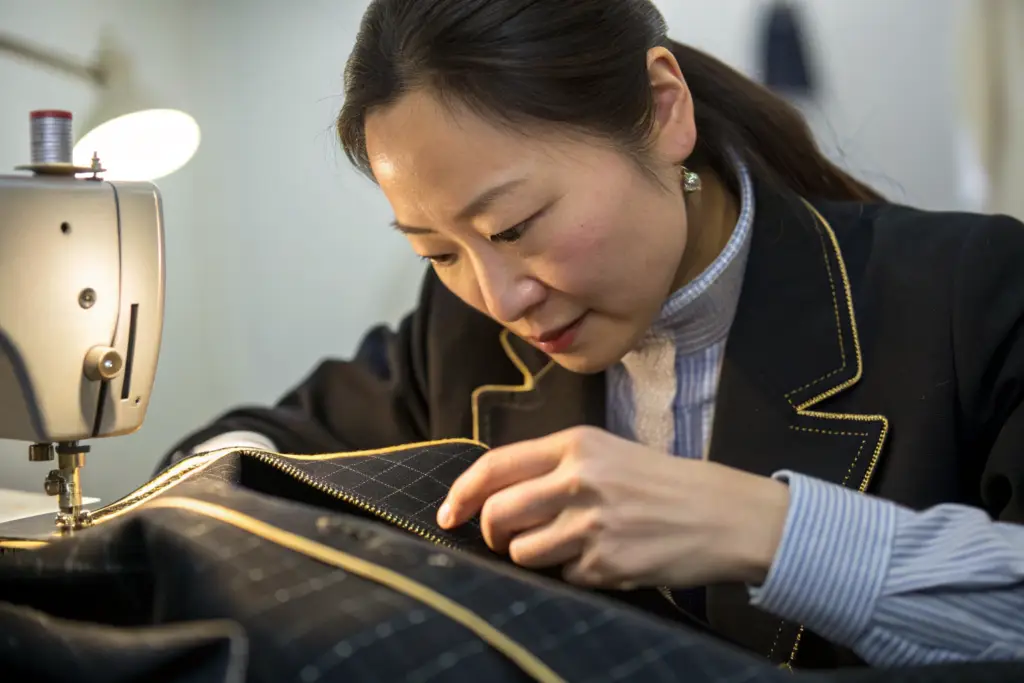
Why does experience with complex construction matter?
Complex garments require more than technical knowledge. They require intuition. An experienced worker knows how fabric will behave under the needle. They know when to adjust tension. They know how to ease fabric around a curve.
I have a client from Los Angeles who makes tailored blazers. The blazer has a specific shape in the shoulder. It requires a technique called "padding" to create the structure. This is a skill that takes years to develop.
In his previous factory, the workers did not have this skill. The shoulders were flat. The blazer looked cheap. In our factory, we have workers who have been padding shoulders for twenty years. The blazers look like they came from a luxury house.
Here are skills that enable complex construction:
| Skill | Complex Application | Where It Is Found |
|---|---|---|
| Pattern making | Complex grading, fit correction | Shanghai, Guangzhou |
| Draping | Structured dresses, unique silhouettes | Hangzhou, Shanghai |
| Tailoring | Jackets, coats, structured garments | Jiangsu, Zhejiang |
| Leather sewing | Leather jackets, leather details | Guangdong |
| Beading and embroidery | Evening wear, luxury details | Guangzhou, Hangzhou |
| Hand finishing | High-end garments, couture details | Scattered, but available |
A client from Denver wanted a dress with hand-sewn beadwork. She had sourced from a country where beading was common. But the quality was inconsistent. We found a beading specialist in Guangzhou who had worked with European luxury brands. The beadwork was perfect.
How does the apprentice system preserve technical skills?
In Chinese manufacturing hubs, skills are passed down through generations. Young workers learn from experienced masters. This preserves techniques that are disappearing in other countries.
I started as an apprentice twenty years ago. I learned pattern making from a master who had been in the industry for forty years. He taught me things that are not written in books. He taught me how to read fabric. He taught me how to correct a fit issue by looking at a garment on a body.
Today, my pattern makers are teaching the next generation. The knowledge stays in the hub. It does not leave when one worker retires.
Here is how the apprentice system supports complexity:
| Apprentice Stage | Skills Developed | Timeline |
|---|---|---|
| Beginner | Basic machine operation, simple seams | 6-12 months |
| Intermediate | Complex seams, garment assembly | 1-3 years |
| Advanced | Specialized techniques, problem-solving | 3-5 years |
| Master | Pattern making, fitting, training others | 5-10+ years |
A client from New York asked me: "How do you train workers for my complex jacket?" I told him: "We do not train them. They come with the skills. The training happened over years before they joined us."
How does supply chain density enable complex design execution?
A complex design is more than a garment. It is a collection of components. The fabric. The lining. The interlining. The buttons. The zippers. The thread. The labels. In Chinese manufacturing hubs, all of these components are available within a short distance.
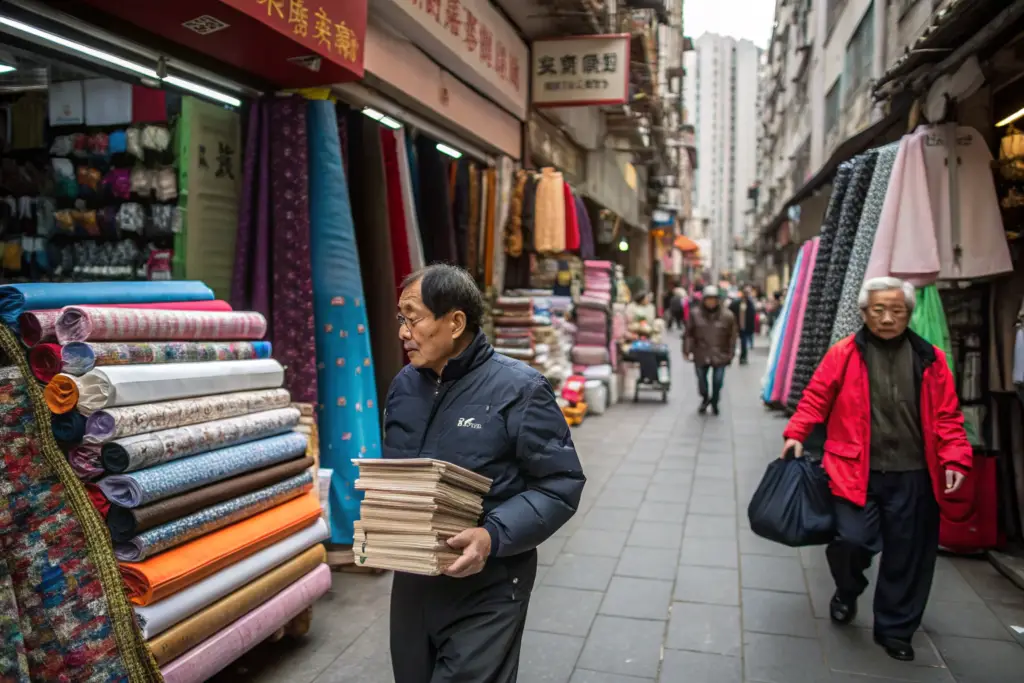
What does "everything within one hour" mean for complex designs?
In Guangzhou, Shanghai, or Hangzhou, you can find any material you need within one hour. This density allows rapid sampling and production.
I had a client from Texas who designed a jacket with a specific type of Japanese zipper. The zipper was not available in his previous sourcing country. He had to order it from Japan, wait six weeks, then ship it to the factory. The process took months.
In China, we have distributors who stock Japanese zippers. I sent a worker to the market. He returned with samples in two hours. We approved the zipper. Production started within days.
Here is what is available within one hour of major Chinese manufacturing hubs:
| Material Type | Availability | Lead Time |
|---|---|---|
| Basic fabrics (cotton, poly, blends) | Immediate, multiple suppliers | Same day |
| Specialty fabrics (silk, wool, linen) | Within 1-3 days | 1-3 days |
| Imported fabrics (Italian, Japanese) | Major hubs have stock | Same day to 1 week |
| Buttons and trims | Immediate, thousands of options | Same day |
| Zippers (YKK, SBS, etc.) | Immediate, all types | Same day |
| Labels and packaging | Immediate, custom available | 3-7 days |
| Interlining and fusibles | Immediate, all weights | Same day |
A client from Boston needed to match a specific shade of blue thread for her denim collection. In her previous country, she would have waited weeks for a sample. In China, she visited the thread market. She held the thread samples against her fabric. She selected the match in one afternoon.
How does rapid sampling accelerate complex design development?
Complex designs require multiple samples. Each sample reveals issues. The pattern needs adjustment. The fabric behaves differently than expected. The construction needs refinement. In Chinese manufacturing hubs, sampling is fast because all resources are close.
A client from Portland designed a dress with a complex asymmetric seam. The first sample had issues. The seam did not lay flat. We adjusted the pattern. The second sample was better. The third sample was perfect. We completed three samples in three weeks.
In a less dense manufacturing environment, each sample would take weeks. The materials would need to be ordered. The pattern adjustments would be communicated slowly. The development would take months.
Here is a sample development timeline comparison:
| Activity | Chinese Manufacturing Hub | Other Sourcing Country |
|---|---|---|
| Pattern making | 2-3 days | 5-7 days |
| Fabric sourcing | 1-2 days | 7-14 days |
| Sample sewing | 3-5 days | 7-10 days |
| Fitting and adjustment | 1-2 days | 3-5 days |
| Total per sample | 7-12 days | 22-36 days |
A client from Seattle told me: "In China, I can develop a complex style in the time it takes my other suppliers to give me a price quote."
What quality control systems ensure complex designs are executed correctly?
Complex designs require complex quality control. The systems in Chinese manufacturing hubs have evolved to handle this complexity.
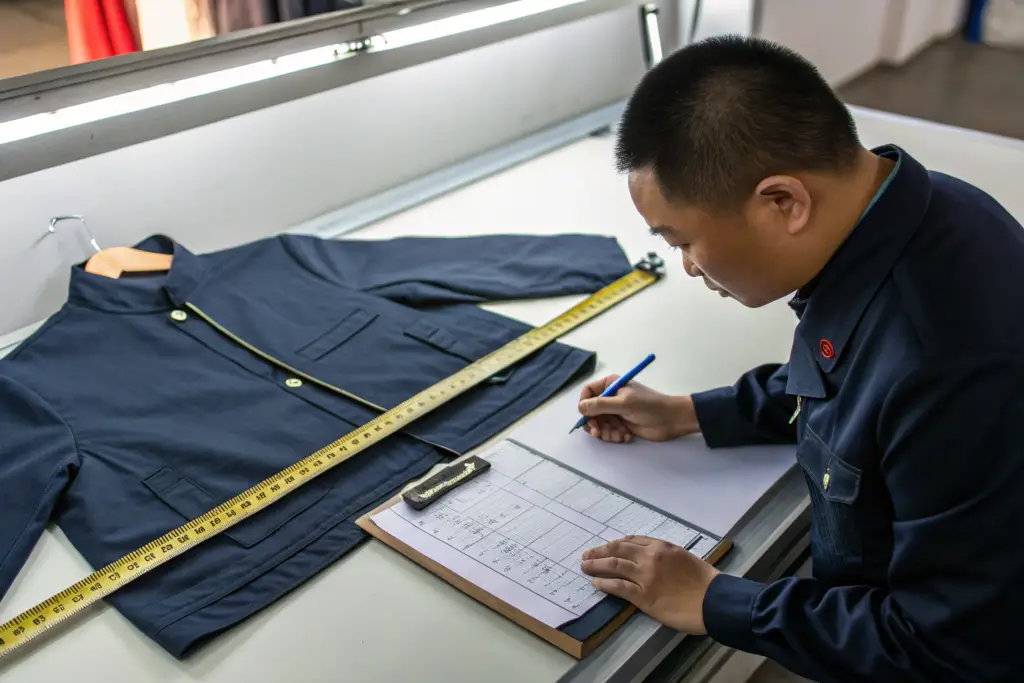
How does in-line inspection catch issues early?
In-line inspection means checking quality during production, not after. For complex designs, this is essential. A problem caught early can be fixed. A problem caught after completion may require scrapping the garment.
I had a client from Chicago who made a jacket with a complicated collar. The collar had multiple layers of interlining and precise stitching. Our in-line inspector checked the collars as they were made. She found that one operator was not aligning the interlining correctly. We corrected the operator immediately. The rest of the run was perfect.
Here is how in-line inspection works for complex designs:
| Production Stage | What Is Inspected | Why It Matters |
|---|---|---|
| Fabric inspection | Weight, color, shrinkage, flaws | Prevents material issues |
| Cutting inspection | Pattern alignment, size accuracy | Ensures pieces fit together |
| Component inspection | Collars, cuffs, pockets before assembly | Catches issues early |
| Assembly inspection | Seams, fit, construction during sewing | Allows corrections in process |
| Finishing inspection | Pressing, trimming, final details | Ensures presentation quality |
A client from Boston told me: "My previous factory only checked at the end. I received 500 jackets with the same collar problem. Your in-line inspection caught it after 20 jackets."
How does the scale of quality control resources help?
Chinese manufacturing hubs have a large pool of quality control professionals. Third-party inspection companies like SGS, Intertek, and Bureau Veritas have major operations in these hubs. This creates competition and drives quality standards.
At Shanghai Fumao, we use both in-house QC and third-party inspections. Our clients can request any level of inspection. They know the resources are available.
Here are quality control resources available:
| QC Resource | Availability | Benefit |
|---|---|---|
| In-house QC | Standard in most factories | Continuous inspection |
| Third-party inspection | SGS, Intertek, BV offices in every hub | Independent verification |
| Laboratory testing | Fabric testing, colorfastness, shrinkage | Scientific validation |
| Fit models | Professional fit models available | Accurate fit verification |
| AQL standards | Widely understood and applied | Consistent quality measurement |
A client from New York told me: "In some countries, third-party inspection is a logistical challenge. In China, it is routine. I can schedule an SGS inspection with one email."
Conclusion
Chinese manufacturing hubs are not the cheapest option for simple garments. For complex designs, they are the best option. The combination of specialized machinery, skilled labor, vertical integration, supply chain density, and quality control systems creates an environment where complex designs become achievable.
The machinery exists because the volume justifies it. The skilled labor exists because generations of workers have built careers in garment manufacturing. The supply chain density exists because decades of development have created ecosystems where every component is available. The quality control systems exist because global brands have demanded them.
I have seen brands try to move complex production to lower-cost countries. Many have returned. They found that the skills, infrastructure, and ecosystem do not exist elsewhere at the same level. The cost savings were eaten by quality issues, development delays, and production failures.
At Shanghai Fumao, we are part of this ecosystem. We invest in specialized machinery. We hire and train skilled workers. We maintain relationships with fabric mills and trim suppliers. We use rigorous quality control systems. We do this because our clients demand complex designs, and we deliver them.
If you have a complex design that you want to produce at scale, I invite you to reach out. Contact our Business Director, Elaine. She will discuss your design requirements. She will show you examples of complex garments we have produced. She will help you understand how we can bring your vision to life. You can email her at strong>elaine@fumaoclothing.com</strong.
Let us show you what Chinese manufacturing can do for your complex designs.