I have been in apparel manufacturing for over fifteen years. I have lived through factory shutdowns, shipping container shortages, and raw material price spikes. Each disruption taught me the same lesson: preparation separates brands that survive from brands that disappear.
Preparing your apparel business for 2026 supply chain disruptions requires a multi-pronged strategy: diversify your sourcing across multiple countries and factories, build strategic inventory buffers for critical materials and best-selling styles, establish direct relationships with factories instead of relying on agents, implement digital tracking systems for real-time visibility, develop flexible production capabilities that allow quick style changes, and maintain open communication with suppliers about potential risks. The brands that thrive in disruption are the ones that plan for it before it happens.
At Shanghai Fumao, we have worked with brands that navigated past disruptions successfully. We have also seen brands that were caught unprepared. This guide will help you build a supply chain that can handle whatever 2026 brings.
What are the projected supply chain risks for 2026?
Forecasting disruptions is not fortune telling. It is understanding patterns. The risks for 2026 are visible now. Smart brands are already planning for them.
What geopolitical factors could disrupt sourcing?
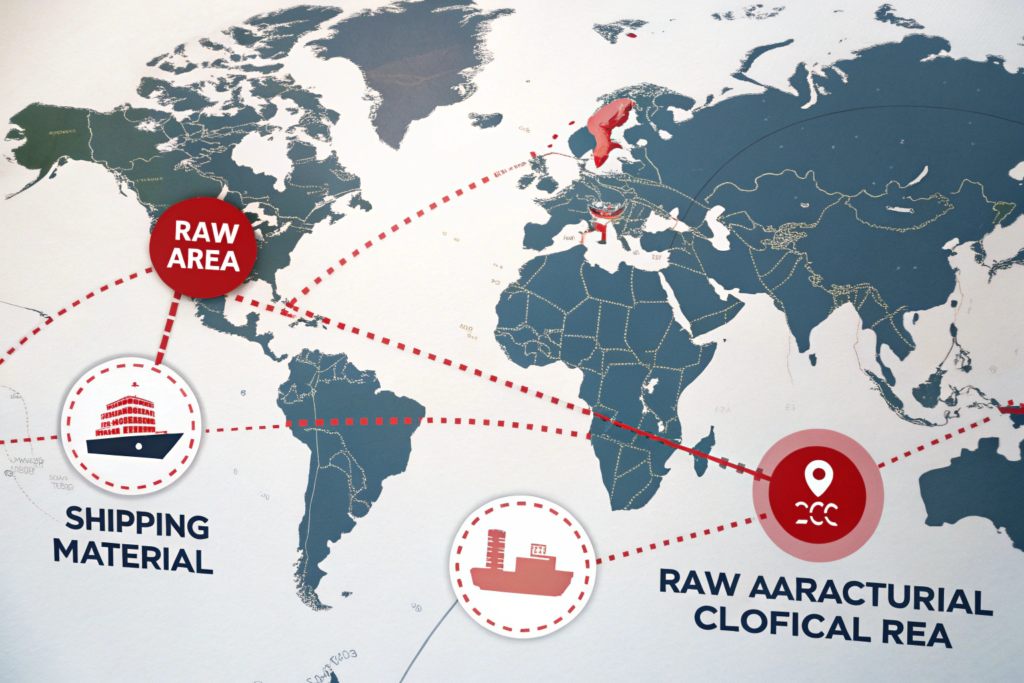
Geopolitical tensions affect trade routes, tariffs, and manufacturing stability. The relationship between major economies will continue to shape apparel sourcing.
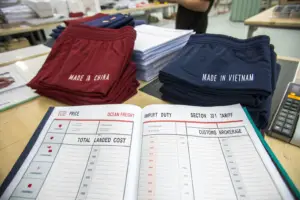
I saw this firsthand when tariff changes hit a client from New York. He sourced all his production from one country. When tariffs increased by 15%, his costs jumped overnight. His margins disappeared. He had no alternative sourcing. He lost money on two seasons before he could shift production.
Here are geopolitical factors to monitor:
| Risk Factor | Potential Impact | Timeline |
|---|---|---|
| Tariff changes | Increased costs, reduced margins | Can happen with policy changes |
| Trade agreements | New barriers or opportunities | Negotiated over months to years |
| Regional instability | Factory closures, shipping delays | Unpredictable, often sudden |
| Export restrictions | Limits on raw materials or finished goods | Can be implemented quickly |
A client from Chicago now sources from three countries. When one country faces tariff changes, she shifts volume to the others. She told me: "I pay a little more for diversification. But I sleep better at night."
How do raw material shortages impact production?
Fabric and trim shortages create delays. Cotton, wool, and synthetic fibers all face supply constraints. When raw materials are scarce, prices rise and lead times extend.
During the cotton price spike two years ago, I had a client from Los Angeles who was caught off guard. He had not pre-booked his fabric. When he tried to order, the price had increased by 40%. His margins were destroyed.
Here are raw material risks for 2026:
| Material | Potential Risk | Mitigation Strategy |
|---|---|---|
| Cotton | Weather impacts, reduced acreage | Book early, consider alternatives |
| Wool | Supply constraints, price volatility | Build inventory, blend with other fibers |
| Polyester | Petrochemical price sensitivity | Diversify suppliers, monitor oil prices |
| Specialty fibers | Limited producers, long lead times | Maintain safety stock |
At Shanghai Fumao, we track raw material markets for our clients. When we see a price trend or potential shortage, we alert them early. They can order before prices spike.
What shipping and logistics challenges are expected?
Shipping remains volatile. Container availability, port congestion, and freight rates can change rapidly. A shipment that takes 25 days today could take 45 days tomorrow.
A client from Boston had a holiday collection shipped by sea. The container was delayed at port for three weeks. His goods arrived after Black Friday. He lost the holiday season. He now ships key collections by air or builds in extra time for sea freight.
Here are shipping risks to plan for:
| Risk Factor | Impact | Planning Buffer |
|---|---|---|
| Port congestion | 2-6 week delays | Add 3-4 weeks to sea freight timeline |
| Container shortages | Higher costs, delayed bookings | Book freight 4-6 weeks ahead |
| Carrier capacity | Limited space, rolling shipments | Use multiple freight forwarders |
| Fuel costs | Increased freight rates | Build cost buffer into pricing |
A client from Seattle now adds a 30-day buffer to all sea freight timelines. She told me: "If the shipment arrives early, I have time to prepare. If it arrives late, I still hit my launch date."
How do you diversify sourcing without increasing complexity?
Diversification is smart. But adding more suppliers adds complexity. The key is to build a system that manages complexity while reducing risk.
How many suppliers should you work with?
There is a balance. Too few suppliers creates risk. Too many suppliers creates chaos. I recommend a tiered approach.
A client from Denver learned this balance. She had one supplier for everything. When that supplier had a quality issue, her entire collection was delayed. She then added five suppliers. Managing them became a full-time job. Now she works with three: one primary, one secondary, and one for specialized products.
Here is a tiered supplier strategy:
| Supplier Tier | Role | Percentage of Volume |
|---|---|---|
| Primary supplier | Core styles, high volume | 50-70% |
| Secondary supplier | Backup for primary, complementary styles | 20-30% |
| Specialized suppliers | Niche products, technical garments | 10-20% |
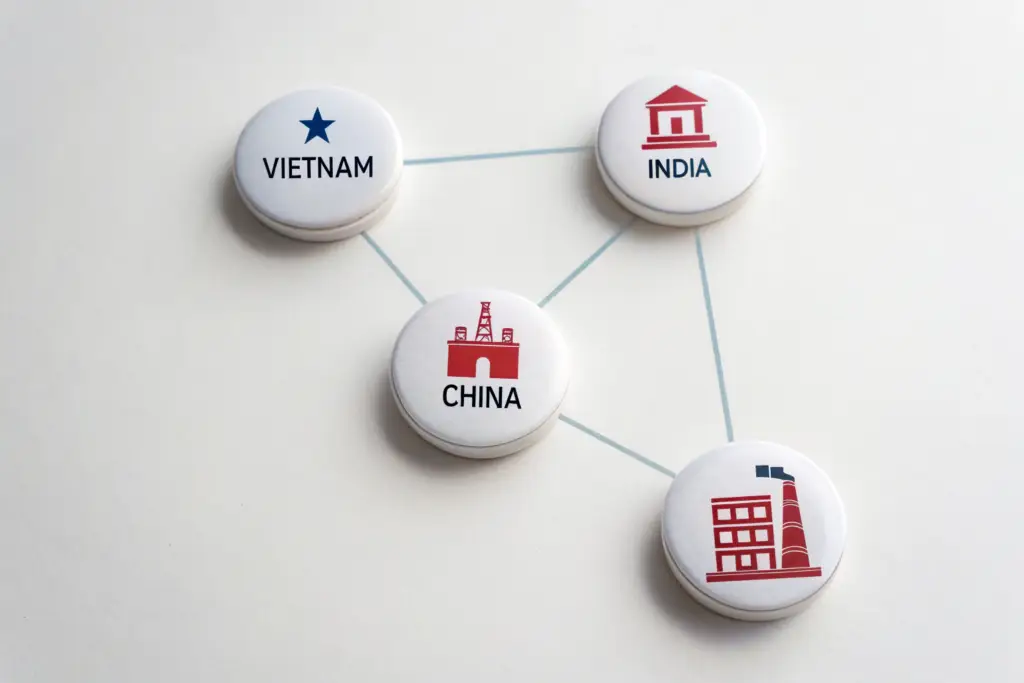
A client from Texas uses this model. His primary factory in Vietnam makes his core collection. His secondary factory in China makes backup quantities and new styles. A specialized supplier in India makes his custom knitwear. He has redundancy without complexity.
How do you qualify new suppliers before you need them?
The worst time to find a new supplier is when you need one urgently. Qualify suppliers when you are not under pressure.
I had a client from Miami who waited until his primary factory had a fire to look for alternatives. He was desperate. He chose a supplier quickly. The quality was poor. He lost money and time.
Here is how to qualify suppliers in advance:
| Qualification Step | What to Verify | When to Do |
|---|---|---|
| Initial research | Online presence, reviews, certifications | 6-12 months before need |
| Sample order | Quality, communication, timing | 4-8 months before need |
| Small production run | Full process, payment terms, logistics | 2-4 months before need |
| Regular communication | Responsiveness, transparency | Ongoing |
A client from Portland qualified three backup suppliers last year. She placed small sample orders with each. She now has relationships ready. If her primary factory faces disruption, she can shift volume within weeks.
How do you standardize processes across suppliers?
Different suppliers have different systems. Standardizing how you work reduces confusion and maintains quality.
A client from Chicago had two factories making the same style. The fit was different. The quality was different. Customers noticed. She created a master tech pack and sent it to both factories. She required both to use the same fabric sources. The quality became consistent.
Here is how to standardize across suppliers:
| Standard Element | What to Standardize | Why |
|---|---|---|
| Tech pack format | Same layout, same detail level | Reduces errors, easier comparison |
| Fabric sources | Approved mills for all suppliers | Ensures consistent materials |
| Quality standards | Same AQL levels, same inspection points | Maintains consistent quality |
| Communication protocol | Same contact points, same update schedule | Reduces confusion |
| Payment terms | Similar terms across suppliers | Simplifies cash flow management |
At Shanghai Fumao, we work with brands who have multiple suppliers. We provide the same tech pack format, same quality standards, and same communication protocols they use with their other factories. This makes us easy to integrate into their system.
What inventory strategies protect against disruption?
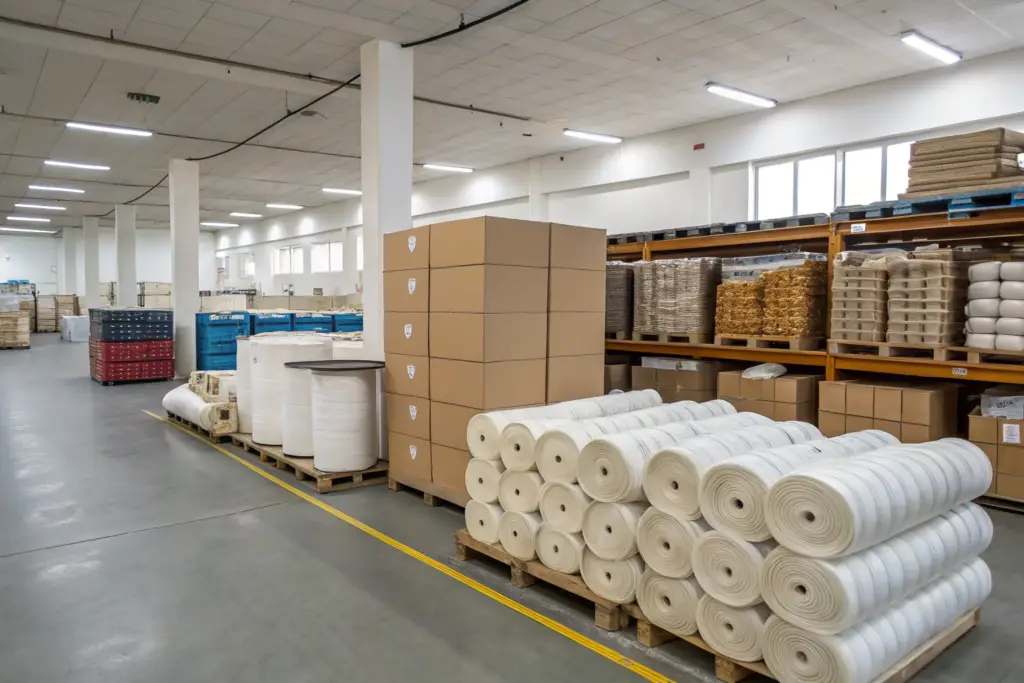
Inventory is expensive. But no inventory is more expensive when disruption hits. Strategic inventory placement protects your business.
What materials should you hold as safety stock?
Not all materials need safety stock. Focus on long-lead items and critical components.
A client from New York learned this after a zipper shortage. Her custom zippers had a 60-day lead time. When the supplier had a delay, her entire production stopped. She now holds 3 months of custom zipper inventory.
Here is a safety stock framework:
| Material Type | Lead Time | Safety Stock Recommendation |
|---|---|---|
| Custom fabric | 60-90 days | 2-3 months of forecasted usage |
| Stock fabric | 30-45 days | 1-2 months of forecasted usage |
| Custom trims | 45-60 days | 2-3 months of forecasted usage |
| Stock trims | 15-30 days | 1 month of forecasted usage |
| Labels and packaging | 30-45 days | 2 months of forecasted usage |
A client from Boston holds safety stock for her best-selling styles only. For new styles, she orders fabric just in time. This balances risk and cash flow.
How does the "golden batch" concept protect reorders?
The golden batch is a small quantity of fabric and trims held back from the initial production run. When you need to reorder a style, you have matching materials ready.
I introduced this concept to a client from Seattle after his first reorder went wrong. The original fabric was discontinued. The new fabric was close but not the same. His customers noticed. Now, when he produces a new style, he orders extra fabric and holds it. When he reorders, the materials match exactly.
Here is how golden batch works:
| Step | Action | Benefit |
|---|---|---|
| 1 | Order 10-20% extra fabric and trims | Covers quality issues, future reorders |
| 2 | Store materials with clear labeling | Easy to locate when needed |
| 3 | Use for quality replacements first | Minimizes waste |
| 4 | Hold remaining for reorders | Ensures material consistency |
| 5 | Rotate stock for seasonal colors | Prevents aging inventory |
A client from Texas told me: "The golden batch cost me a little more upfront. But it saved me from reorder headaches three times last year."
How do you balance inventory cost with risk?
Inventory ties up cash. Too much inventory is expensive. Too little inventory is risky. The balance depends on your business model.
A client from Los Angeles with fast fashion model keeps low inventory. She accepts some risk because her styles change quickly. A client from Chicago with classic styles keeps higher inventory. His styles sell for years. The inventory is an investment.
Here is a risk-based inventory approach:
| Business Model | Inventory Approach | Rationale |
|---|---|---|
| Fast fashion | Low safety stock, quick reordering | Styles change, cash flow priority |
| Core basics | Moderate safety stock, golden batch | Consistent demand, style longevity |
| Seasonal collections | Pre-booked materials, limited safety stock | Seasonal nature, clear end date |
| Luxury heritage | Higher safety stock, material reserves | Long product life, consistency matters |
At Shanghai Fumao, we help clients develop inventory strategies based on their business model. We hold some clients' safety stock in our warehouse. This reduces their storage cost while ensuring materials are ready.
How does technology improve supply chain visibility?
Visibility is power. When you can see problems coming, you can solve them before they become crises. Technology gives you that visibility.

What real-time tracking tools should you use?
Real-time tracking covers production and shipping. You should know where your materials are, where your garments are, and when they will arrive.
A client from Denver started using a shared production tracking system with us. She can see when her fabric arrives, when cutting starts, when sewing begins, and when quality control finishes. She told me: "I used to email every week asking for updates. Now I check the system. I have all the information I need."
Here are visibility tools to implement:
| Tool Type | What It Tracks | Benefit |
|---|---|---|
| Production dashboard | Fabric arrival, cutting, sewing, QC | Real-time production visibility |
| Shipment tracking | Container location, customs status | Real-time logistics visibility |
| Inventory system | Fabric stock, trim stock, finished goods | Visibility into available materials |
| Supplier portal | Supplier performance, order status | Centralized supplier communication |
A client from Seattle uses a simple spreadsheet shared with her factories. Each factory updates production status weekly. She has visibility across five suppliers without complex software.
How do you use data to predict and prevent disruptions?
Data from past disruptions helps predict future ones. Track your supplier performance, shipping times, and material costs. Look for patterns.
I worked with a client from Boston who tracked her suppliers' on-time delivery rates. She noticed one supplier's performance dropping over three months. She asked questions. The supplier was having internal issues. She shifted some volume before the issues affected her orders.
Here is data to track for disruption prediction:
| Data Point | What to Track | How to Use |
|---|---|---|
| Supplier on-time rate | Percentage of orders delivered on time | Identify declining performance early |
| Shipping transit times | Actual vs. expected delivery dates | Build accurate buffers |
| Material lead times | Time from order to receipt | Adjust ordering schedules |
| Quality defect rates | Percentage of defective products | Identify quality deterioration |
| Price trends | Raw material and freight costs | Anticipate cost increases |
At Shanghai Fumao, we share production data with our clients. They see the same information we see. When there is a potential delay, they know immediately.
Conclusion
Supply chain disruptions are not a matter of if. They are a matter of when. The brands that survive and thrive in 2026 will be the ones that prepare now.
Start with diversification. Work with multiple suppliers across different regions. Qualify backup suppliers before you need them. Standardize your processes so you can shift volume without losing quality.
Build strategic inventory. Hold safety stock for critical materials and best-selling styles. Use the golden batch concept to protect reorders. Balance inventory cost against the cost of disruption.
Invest in visibility. Use tracking tools to see your supply chain in real time. Track data to predict problems before they happen. Share information with your suppliers so you are working from the same facts.
At Shanghai Fumao, we are committed to helping our clients navigate disruption. We diversify our own supply chain so we can deliver consistently. We invest in technology so our clients have visibility. We communicate openly about risks and opportunities.
If you want to build a supply chain that can handle 2026 and beyond, I invite you to work with us. Contact our Business Director, Elaine. She will discuss your current sourcing strategy. She will help you identify gaps and opportunities. She will show you how we can be part of your resilient supply chain. You can reach her at strong>elaine@fumaoclothing.com.
Let us prepare for 2026 together.