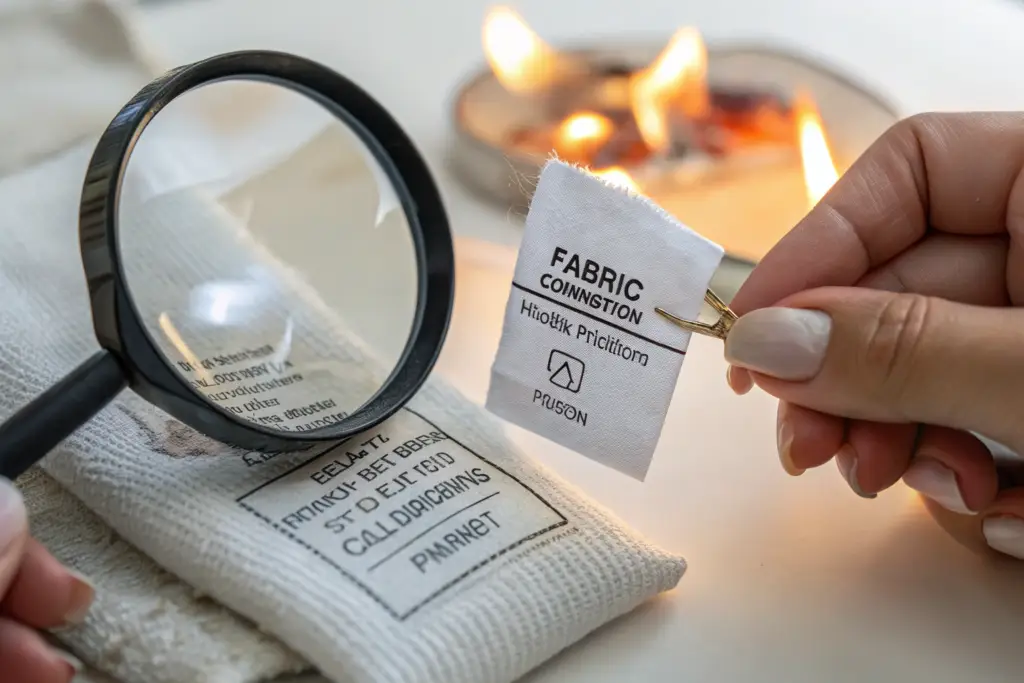
I have been in garment manufacturing for over fifteen years. I have seen fabric labels that lie. I have watched brands build collections on false promises about materials.
Fake fabric composition labels misrepresent fiber content, often claiming higher percentages of expensive natural fibers like cotton or wool while delivering cheaper synthetics. You can spot these fakes through simple burn tests that reveal fiber behavior, water absorption tests that show natural versus synthetic performance, microscopic inspection of fiber structure, and professional lab testing for definitive proof. The cost of catching a fake label before production is small. The cost of discovering it after shipping thousands of garments is devastating.
At Shanghai Fumao, we test every fabric batch before production. We do not trust labels. We trust science. This guide will show you how to protect yourself from fabric fraud.
What are the most common types of fabric composition fraud?
Fabric fraud takes many forms. Some are subtle. Some are blatant. Knowing what to look for helps you avoid the most common traps.
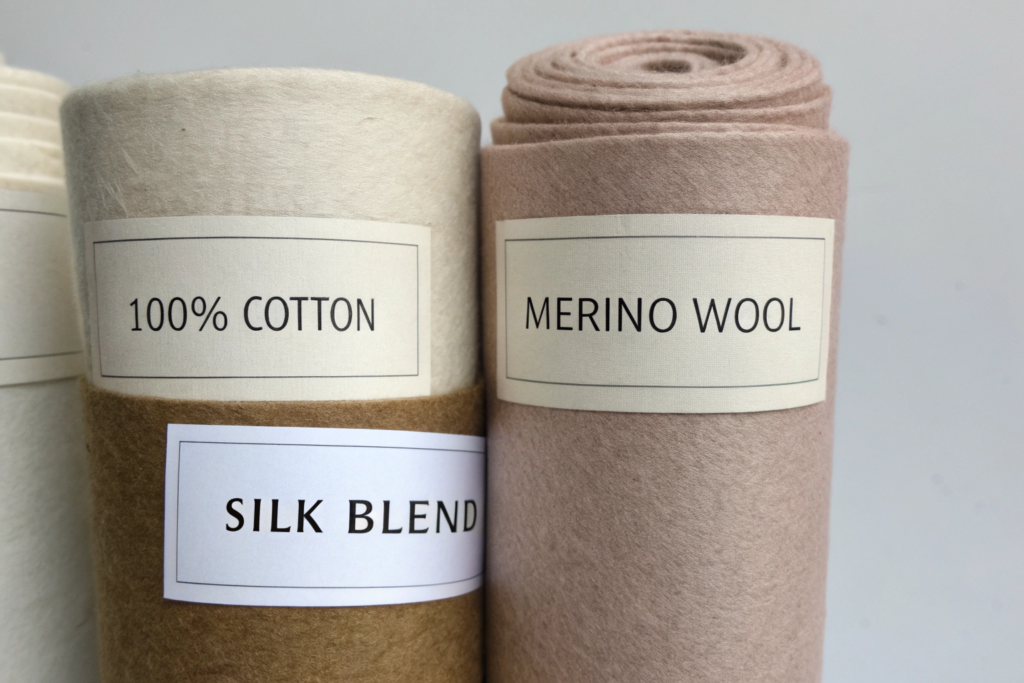
How do suppliers misrepresent cotton and polyester blends?
Cotton is more expensive than polyester. A label that says "80% cotton, 20% polyester" might really be "60% cotton, 40% polyester" or worse. The supplier saves money. Your customer gets a product that does not perform as promised.
I remember a client from Los Angeles. She ordered a collection of t-shirts. The label said 100% cotton. She trusted the supplier. After the first wash, the shirts shrank unevenly. They felt different than her samples. She sent a sample to a lab. The test came back: 70% cotton, 30% polyester. The supplier had switched the fabric after sample approval.
She was stuck with 2,000 t-shirts that were not what she sold to her customers. She had to discount them heavily. She lost $15,000 on that order.
Here are common cotton-polyester fraud patterns:
| Claimed Content | Actual Content | How to Spot |
|---|---|---|
| 100% cotton | 70-80% cotton, 20-30% polyester | Burn test shows polyester residue |
| 95% cotton, 5% spandex | 85% cotton, 15% spandex | Stretch recovery is different |
| Pima cotton or long-staple | Regular cotton | Fiber length test under microscope |
| Organic cotton | Conventional cotton | Lab certification required |
The difference in material cost between 100% cotton and 70/30 cotton-poly can be $1-2 per yard. On 3,000 yards, that is $3,000-6,000 in extra profit for a dishonest supplier. You pay for quality but receive something else.
How do suppliers fake high-value natural fibers?
Wool, cashmere, silk, and linen are expensive. They are often replaced with cheaper alternatives or blends.
A client from New York ordered wool-blend coats. The label said 70% wool, 30% polyester. The price reflected that quality. When the coats arrived, they felt different. They were heavier. They did not breathe like wool. She burned a small thread. The smell was not wool. It was acrylic.
Lab testing confirmed: 40% wool, 30% acrylic, 30% polyester. The supplier had used cheap acrylic to replace expensive wool.
Here are high-value fiber fraud patterns:
| Claimed Fiber | Common Substitutes | Cost Difference per Yard |
|---|---|---|
| Merino wool | Regular wool or acrylic blends | $5-15 |
| Cashmere | Wool blends with low cashmere content | $20-50 |
| Silk | Rayon or polyester satin | $10-30 |
| Linen | Cotton or rayon blends | $3-8 |
| Modal or Tencel | Regular rayon | $2-5 |
The fraud is not always 100% replacement. Sometimes it is dilution. A label might say "5% cashmere" when the actual content is 1% cashmere and 4% something else. The consumer cannot tell. The brand pays a premium for a feature that is barely there.
What simple tests can you perform to verify fabric composition?
You do not need a lab for initial testing. Simple tests at your desk can reveal most fabric fraud. I use these tests every week when we receive new fabric shipments.
How does the burn test reveal fiber content?
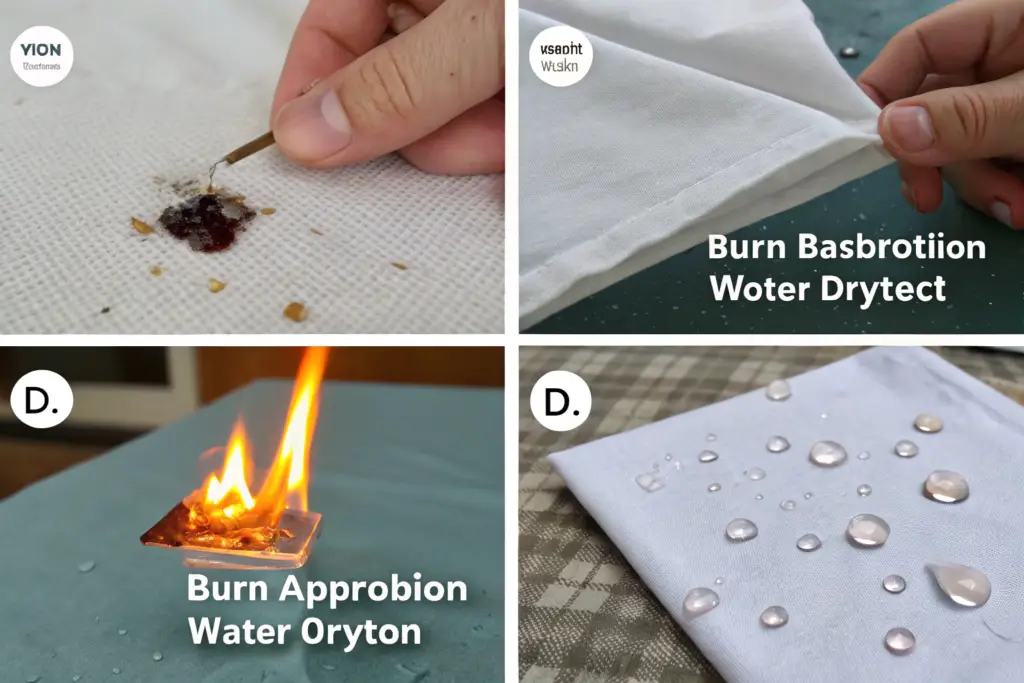
The burn test is the most reliable quick test. Different fibers burn differently. They smell different. They leave different residue.
I trained my quality control team on burn tests. When we receive a new fabric roll, we pull a small thread. We burn it. We watch. We smell. We feel the ash. This catches problems before we cut thousands of pieces.
A few years ago, we received a shipment of fabric labeled as 100% cotton. My QC team did a burn test. The fabric melted. Cotton does not melt. It chars and smells like burning paper. This fabric melted and smelled like plastic. It was polyester. We rejected the entire shipment.
Here is a burn test guide:
| Fiber | Flame Behavior | Smell | Ash/Residue |
|---|---|---|---|
| Cotton | Burns quickly, steady flame | Burning paper | Soft gray ash |
| Linen | Burns quickly, steady flame | Burning paper | Soft gray ash |
| Wool | Burns slowly, sputters | Burning hair | Black, crisp bead that crumbles |
| Silk | Burns slowly, sputters | Burning hair | Black, crisp bead |
| Polyester | Melts, shrinks from flame | Sweet, chemical smell | Hard plastic bead |
| Nylon | Melts, shrinks from flame | Celery or plastic smell | Hard tan bead |
| Acrylic | Melts, burns quickly | Chemical, fishy smell | Hard black bead |
| Rayon | Burns quickly like cotton | Burning paper | Soft ash, burns completely |
If you see melting instead of burning, the fabric contains synthetics. If the ash is a hard bead instead of soft ash, the fabric contains synthetics. The smell is also a strong indicator.
How do water and chemical tests confirm fiber content?
Water absorption and chemical tests give you more information. Natural fibers absorb water. Synthetics repel water.
A client from Chicago received a shipment of "cotton" t-shirts. The fabric felt slightly different. She did a simple water test. She dropped water on the fabric. The water beaded up and sat on the surface. Real cotton absorbs water quickly. This fabric was polyester.
Here are simple water and chemical tests:
| Test | Natural Fiber Result | Synthetic Fiber Result |
|---|---|---|
| Water absorption | Water absorbs quickly, darkens fabric | Water beads up, sits on surface |
| Wet strength | Cotton weaker when wet | Polyester stronger when wet |
| Bleach test (for cotton) | Cotton dissolves in strong bleach | Polyester remains intact |
| Acetone test | Natural fibers unaffected | Some synthetics dissolve or soften |
For the bleach test, use caution. Take a small thread. Put it in household bleach. Cotton will dissolve within 30 minutes. Polyester will remain. This is a definitive test for cotton versus polyester.
For wool, the bleach test is different. Wool dissolves in bleach but takes longer. You can also use a small amount of hair bleach or depilatory cream. Wool dissolves. Synthetics do not.
These tests are not perfect for blends. But they tell you if the dominant fiber is natural or synthetic. If a label says 100% cotton and the fabric melts or repels water, you know there is a problem.
What professional testing methods provide definitive proof?
Simple tests catch obvious fraud. But for definitive proof, you need a lab. Professional testing gives you legal protection. It gives you evidence you can use to reject shipments or recover costs.
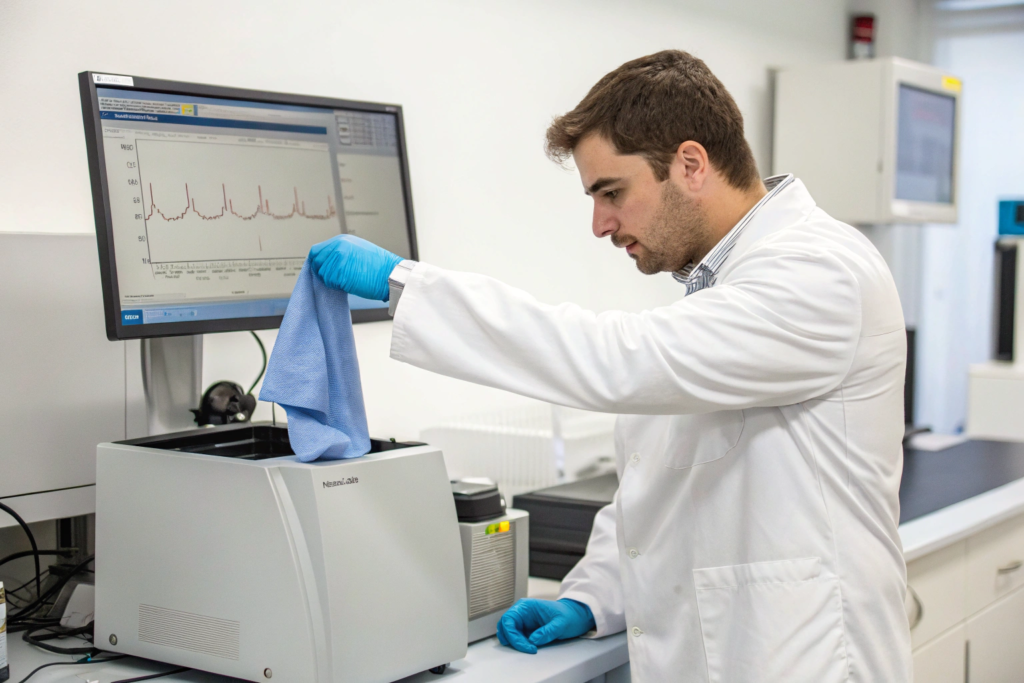
What is microscopic fiber analysis and when should you use it?
Microscopic analysis looks at the actual shape of fibers. Cotton fibers have a twisted ribbon shape. Wool fibers have scales. Polyester fibers are smooth and uniform.
I had a client from Seattle who imported high-end sweaters. The label said "100% cashmere". The sweaters felt soft, but something was off. We sent a sample to a lab for microscopic analysis. The lab report showed: the fibers were a blend of cashmere, wool, and acrylic. The cashmere content was only 30%, not 100%.
The client had paid a premium for cashmere. He received a blend. The lab report gave him the evidence he needed to demand a refund from his supplier.
Here are fiber characteristics under microscope:
| Fiber | Microscopic Appearance |
|---|---|
| Cotton | Twisted ribbon shape, irregular |
| Linen | Bamboo-like segments, nodes |
| Wool | Scaly surface, overlapping scales |
| Cashmere | Fine, smooth scales, less defined than wool |
| Silk | Smooth, triangular cross-section |
| Polyester | Smooth, uniform, no surface texture |
| Rayon | Smooth with striations along length |
Microscopic analysis is especially useful for blends. A lab can count fibers and give you approximate percentages. This is the standard for legal disputes over fabric composition.
How do chemical testing methods determine exact fiber percentages?
Chemical testing dissolves specific fibers. This gives you exact percentages. It is the most accurate method.
A client from Boston ordered a large quantity of cotton-polyester blend fabric. The label said 70% cotton, 30% polyester. He wanted to be sure. We sent a sample to an ISO-certified lab. They did chemical testing. The result was 62% cotton, 38% polyester. The difference was enough to affect the fabric's breathability and feel.
He confronted the supplier with the lab report. The supplier admitted to using a cheaper blend. The client got a price adjustment that saved him $4,500 on the order.
Here are common chemical testing methods:
| Test Method | What It Measures | Accuracy |
|---|---|---|
| Dissolution in sulfuric acid | Cotton percentage in cotton-poly blends | ±1-2% |
| Dissolution in formic acid | Nylon percentage | ±1-2% |
| Dissolution in acetone | Acrylic percentage | ±1-2% |
| Dissolution in 75% sulfuric | Wool percentage in wool-poly blends | ±1-2% |
| Near-infrared spectroscopy | Quick scanning of fiber content | ±3-5% for screening |
The cost for professional lab testing is $50-200 per sample. This is a small price for verification on a large fabric order. At Shanghai Fumao, we use third-party labs for all new fabric sources. We also keep in-house testing equipment for quick checks.
What documentation and certifications should you request from suppliers?
Paperwork is not a guarantee of honesty. But the right documentation creates a paper trail. It gives you leverage. It separates serious suppliers from casual fraudsters.
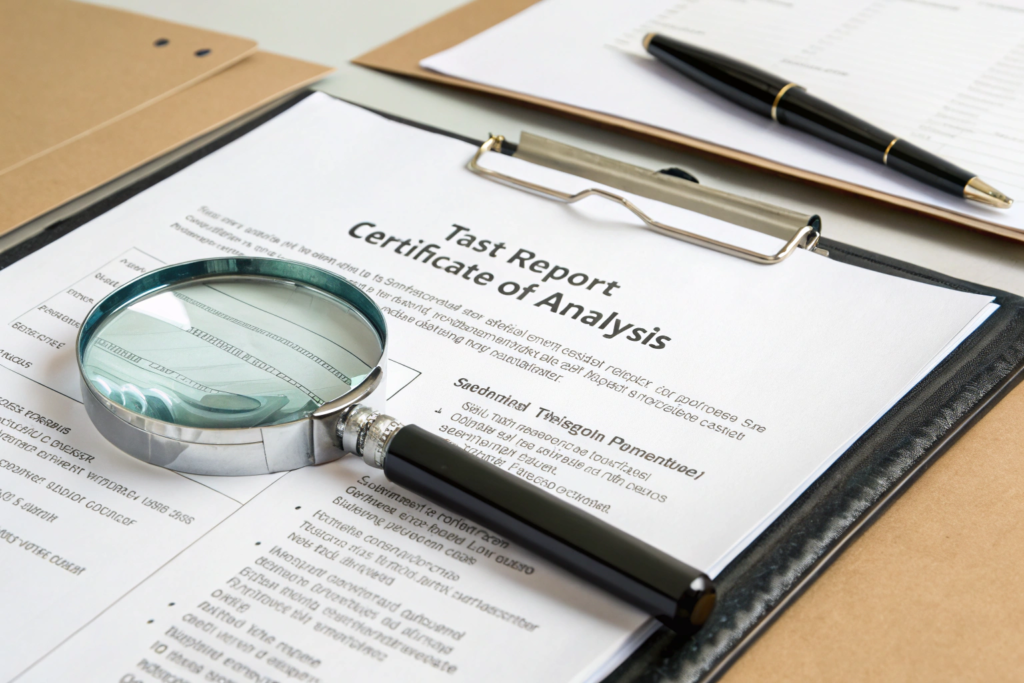
What fabric test reports should you ask for?
A reputable factory will have test reports from third-party labs. These reports should match the fabric they are selling you.
I tell my clients to ask for test reports before ordering bulk fabric. If a supplier hesitates to share reports, that is a red flag. Good suppliers are proud of their testing.
Here are key documents to request:
| Document Type | What It Shows | Who Issues |
|---|---|---|
| Fiber composition test report | Exact percentages of each fiber | ISO-certified lab like SGS, Intertek, Bureau Veritas |
| Fabric weight certificate | Weight per square meter or yard | Mill or testing lab |
| Colorfastness test report | Resistance to washing, light, rubbing | Testing lab |
| Shrinkage test report | Percentage of shrinkage after wash | Testing lab |
| Certificate of origin | Where the fabric was manufactured | Chamber of commerce or manufacturer |
For imported fabric, ask for the mill's test report. For fabric sourced by your factory, ask for the report from the factory's supplier. A good factory will provide this without hesitation.
What supplier certifications indicate reliability?
Certifications are not a guarantee of quality. But they show that a supplier is willing to be audited. They show a commitment to standards.
A client from Texas was choosing between two fabric suppliers. One had OEKO-TEX certification and BSCI audit reports. The other had no certifications. She chose the certified supplier. Two years later, she has had no fabric quality issues.
Here are certifications that matter:
| Certification | What It Covers | Why It Matters |
|---|---|---|
| OEKO-TEX Standard 100 | Harmful substances in textiles | Ensures fabric is safe for skin contact |
| GOTS (Global Organic Textile Standard) | Organic fiber content and processing | Verifies organic claims |
| ISO 9001 | Quality management system | Shows systematic quality control |
| BSCI or SMETA | Social compliance and ethics | Indicates responsible manufacturing |
| Recycled Claim Standard | Recycled content verification | Validates sustainability claims |
When a supplier has these certifications, they have been audited by third parties. Their claims have been verified. This reduces the risk of fraud.
At Shanghai Fumao, we maintain OEKO-TEX, BSCI, and ISO certifications. We provide these to clients. We also share test reports from our fabric suppliers. We believe in transparency because it builds trust.
Conclusion
Fake fabric composition labels are a real problem in wholesale apparel. Dishonest suppliers save money by substituting cheaper fibers. You pay for quality. You receive something else. Your customers experience a product that does not perform as promised.
But you do not have to be a victim. Simple tests at your desk can catch most fraud. The burn test is your first line of defense. Cotton burns and smells like paper. Polyester melts and smells like chemicals. Water absorption tests reveal natural versus synthetic behavior. These tests take minutes and cost nothing.
For definitive proof, use professional lab testing. Microscopic analysis and chemical dissolution give you exact percentages. These tests cost $50-200. They are worth every dollar on large fabric orders. They give you evidence to reject bad fabric or demand price adjustments.
Documentation matters. Ask for test reports before you buy. Work with suppliers who have certifications. These papers are not guarantees, but they show a commitment to standards.
At Shanghai Fumao, we test every fabric batch. We do burn tests on the receiving dock. We send samples to labs for verification. We share test reports with our clients. We do not guess about what is in our fabrics. We know.
If you are sourcing fabric or finished garments and want a partner who verifies materials before production, I invite you to work with us. Contact our Business Director, Elaine. She will walk you through our quality control process. She will share our test reports. She will help you protect your brand from fabric fraud. You can reach her at elaine@fumaoclothing.com.
Let us help you build your collection on materials you can trust.