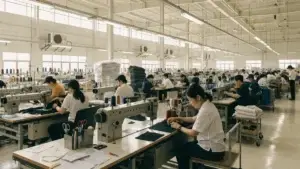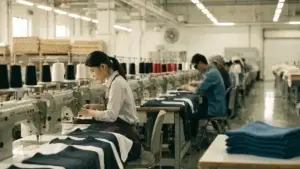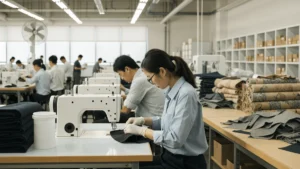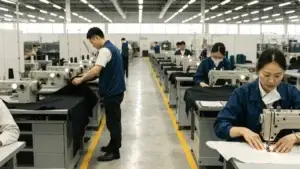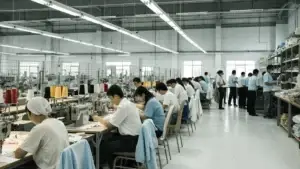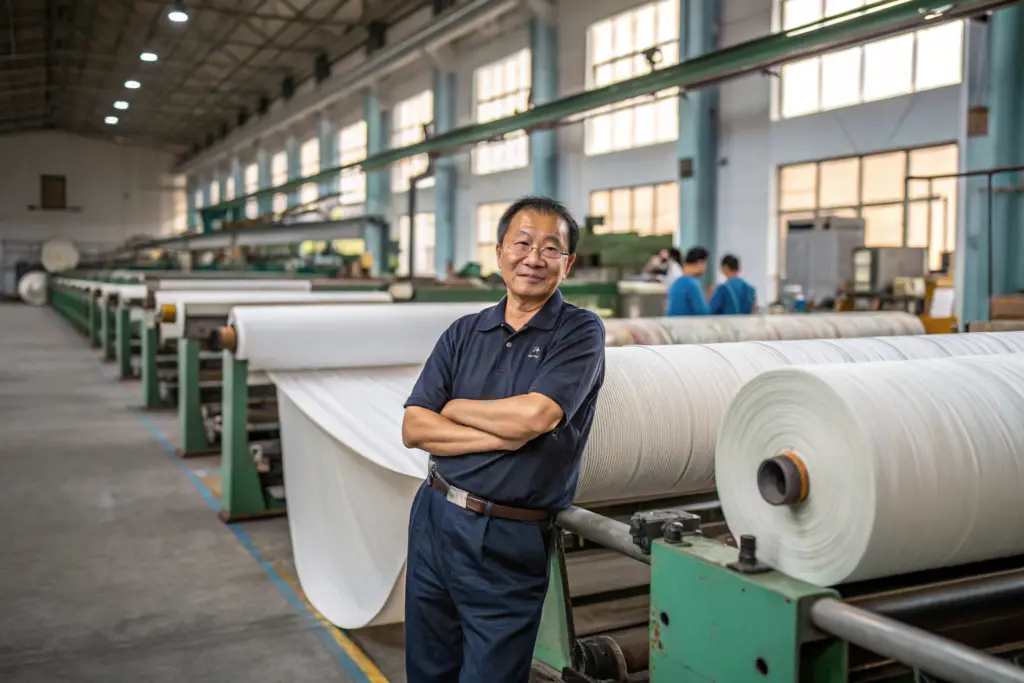
You have experienced this. You approve a style. You place the order. The factory orders fabric from a mill. The mill delays. The fabric arrives late. The production is delayed. Your shipment misses the season. Or worse, the fabric arrives but it is the wrong color. The mill made a mistake. The factory cannot fix it because they do not control the fabric. You are stuck. I have seen this scenario play out countless times in my 20 years of manufacturing. The common thread is always the same: the factory did not control their fabric supply.
Based on our experience producing millions of garments, working with a manufacturer that has in-house fabric supply is one of the most important decisions you can make. It gives you control over quality, timing, and cost. For example, last year we worked with a brand from Los Angeles. They had been using a factory that sourced fabric from multiple mills. Every season, there were delays. Every season, there were quality issues. They switched to us. We have our own fabric weaving and knitting capabilities. We control the entire process. The first order with us was delivered on time. The quality was consistent. The brand saved 15% on fabric costs because we eliminated the middleman. That is the power of vertical integration.
So, why does in-house fabric supply matter? Let me break it down. I will explain the advantages. I will share real examples from our operation. And I will show you how this capability protects your brand.
How Does In-House Fabric Supply Improve Quality Control?
Quality starts with the fabric. If the fabric is bad, the garment is bad. I learned this with a client from New York. They were using a factory that bought fabric from a trading company. The trading company bought from a mill. The mill had inconsistent quality. The fabric had defects. The factory sewed the garments anyway. The client received a shipment with holes, color variations, and weak seams. They lost customers.
A manufacturer with in-house fabric supply controls quality from fiber to finished garment. They test the incoming fiber. They monitor the spinning. They inspect the weaving or knitting. They test the dyeing. They inspect the finished fabric before it goes to cutting. For the New York client, we brought them to our mill. They saw the testing lab. They saw the fabric inspection machines. They saw how we reject any fabric that does not meet standards. The client now works exclusively with us. They know that every batch of fabric is tested before it reaches the cutting table. For premium apparel, this level of control is essential. A small color variation can ruin a collection. In-house control prevents this.
We also maintain traceability. We know which mill produced the fiber. We know which machines spun the yarn. We know which looms wove the fabric. If there is an issue, we trace it back immediately.
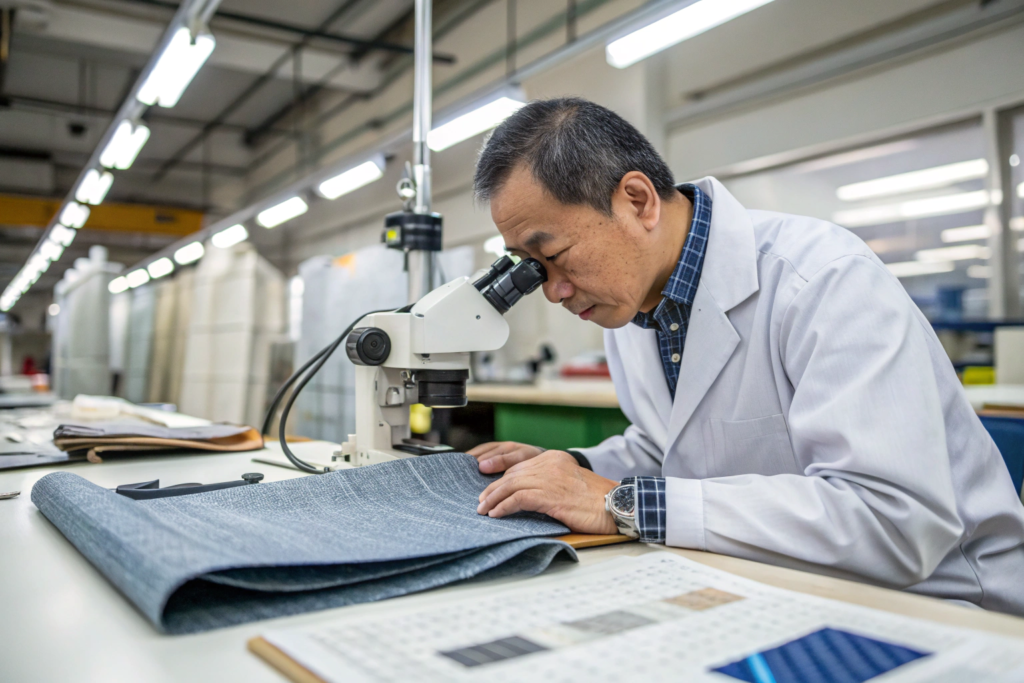
How Does Vertical Integration Eliminate Fabric Defects?
Fabric defects come from many sources. Poor fiber quality. Inconsistent spinning. Loom problems. Dyeing errors. When a factory buys fabric from an external mill, they see the fabric only when it arrives. Defects are already there. With in-house supply, we catch defects early. We test the fiber before spinning. We inspect the yarn before weaving. We check the greige fabric before dyeing. We test the finished fabric before cutting. For a denim client, we caught a weaving defect at the loom. The fabric had a broken pick. We stopped the loom. We fixed the issue. The fabric was perfect. If we had bought this fabric from an external mill, the defect would have been in the finished goods.
What Testing Standards Do We Apply to In-House Fabrics?
We apply rigorous testing at every stage. We test fiber length and strength. We test yarn evenness. We test fabric tensile strength. We test tear strength. We test colorfastness to washing, light, and rubbing. We test shrinkage. We test pilling. For a workwear client, we test every batch of canvas for tear strength. The standard is 10 pounds. Our fabric consistently tests at 15 pounds. This gives the client confidence that their workwear will last.
How Does In-House Fabric Supply Improve Lead Times?
Time is money. Delays cost sales. I remember a client from Chicago. They had a holiday collection. The factory ordered fabric from a mill. The mill was busy. They delayed the fabric by six weeks. The factory could not start production. The client missed the holiday window. They lost over $100,000 in sales.
A manufacturer with in-house fabric supply controls the timeline. They do not wait for external mills. They schedule production based on your needs. For the Chicago client, we now weave their fabric in our own mill. We control the schedule. When they need fabric, we produce it. The lead time for fabric went from 12 weeks to 4 weeks. The client can now respond to market trends faster. For fast fashion, this speed is critical. A trend appears. The brand needs product in 8 weeks. With external fabric sourcing, that is nearly impossible. With in-house supply, it is achievable. We also maintain fabric inventory. For core styles, we keep greige fabric in stock. When an order comes, we dye it to the client's color. This cuts lead time by half.
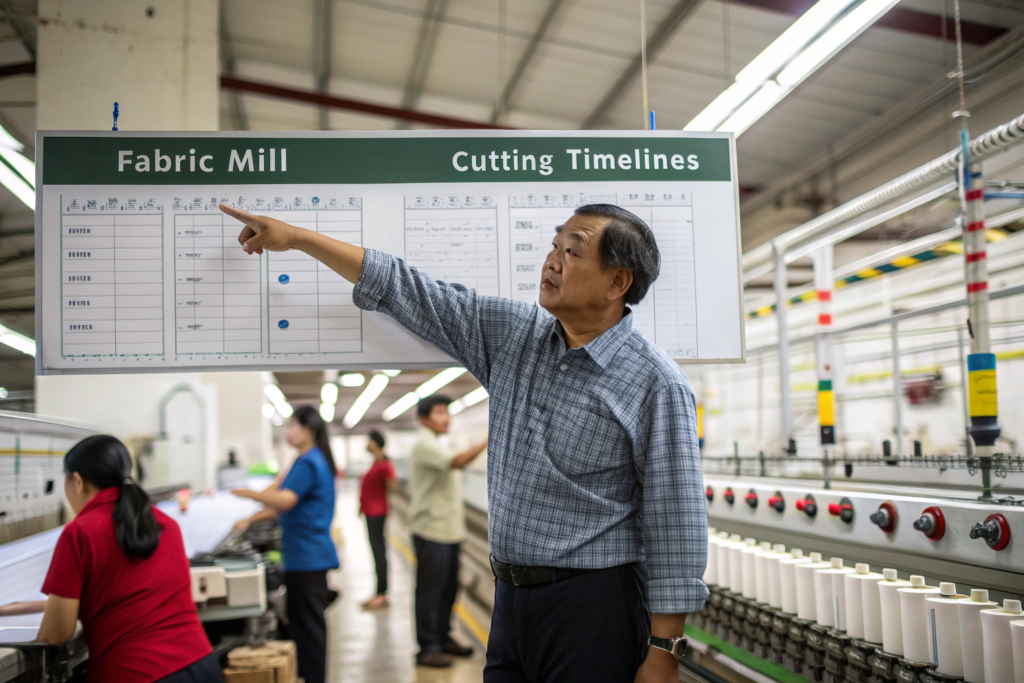
How Does Eliminating External Suppliers Reduce Lead Time?
External suppliers add time. You wait for the mill to process your order. You wait for shipping. You wait for customs clearance. Each step adds days or weeks. In-house supply eliminates these steps. The fabric is made on-site. It moves from weaving to dyeing to cutting in hours, not weeks. For a t-shirt client, we reduced fabric lead time from 8 weeks to 2 weeks. The client can now reorder best-sellers quickly. They never run out of stock.
What Is the Impact of Fabric Inventory on Production Speed?
Fabric inventory is a buffer. When we have greige fabric in stock, we can start production immediately. The client does not wait for the mill to produce the base fabric. For a basics client, we stock 50,000 meters of their core fabric. When they place an order, we dye it to their color and start cutting within days. Their lead time is 3 weeks instead of 12 weeks. This allows them to compete with faster competitors.
How Does In-House Fabric Supply Reduce Costs?
Cost is always a consideration. But cost is not just the price per yard. It is the total cost of getting fabric to the cutting table. I remember a client from Denver. They were buying fabric from a trading company. The price was low. But the fabric had defects. They had to buy extra to cover waste. They had to pay for shipping. They had to pay customs duties. The total cost was higher than they realized.
A manufacturer with in-house fabric supply eliminates middlemen. They buy fiber directly. They control the manufacturing process. They reduce waste. For the Denver client, we analyzed their total fabric cost. The external fabric cost was $5.00 per yard. But they had 8% waste from defects. Their total cost was $5.40 per yard. Our in-house fabric cost was $5.20 per yard with 2% waste. The total cost was $5.30 per yard. They saved $0.10 per yard. On 50,000 yards, that is $5,000. For high-volume basics, these savings add up quickly.
We also save on logistics. Fabric moves from our mill to our sewing factory. There is no shipping cost. There are no customs duties. There is no waiting.
How Does Eliminating Middlemen Reduce Fabric Costs?
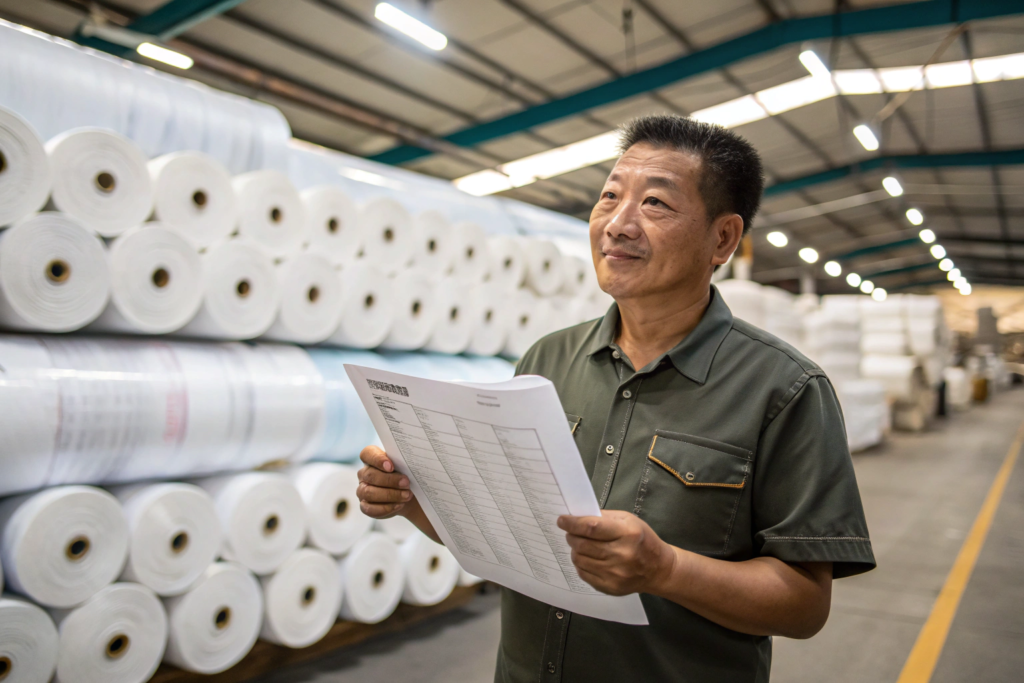
Middlemen add markup. A trading company buys from a mill. They add their margin. They sell to a factory. The factory adds their margin. With in-house supply, there is only one margin. For a denim client, we eliminated two middlemen. The fabric cost dropped by 18%. The client's margin improved significantly.
What Are the Hidden Costs of External Fabric Sourcing?
External fabric sourcing has hidden costs. Shipping costs. Customs duties. Broker fees. Waste from defects. Storage costs. Quality control costs. For a workwear client, we calculated the hidden costs. They were adding 12% to the fabric price. By switching to our in-house fabric, they eliminated these costs. Their total production cost dropped by 8%.
How Does In-House Fabric Supply Enable Customization and Innovation?
Standard fabrics are limiting. They work for basic products. But what if you want something different? A unique texture. A custom color. A special finish. I remember a client from San Francisco. They wanted a specific fabric for their activewear line. It needed four-way stretch, moisture-wicking, and UV protection. They could not find it from standard mills. They came to us.
A manufacturer with in-house fabric supply can develop custom fabrics. They control the yarns, the construction, the dyeing, and the finishing. For the San Francisco client, we developed a custom fabric. We selected a nylon-spandex blend. We engineered a four-way stretch weave. We added a moisture-wicking finish. We added a UV protection finish. The fabric was exactly what they needed. The client launched their activewear line. It sold out. For performance apparel, custom fabric development is a competitive advantage. Off-the-shelf fabrics cannot deliver the same performance. We also develop exclusive fabrics for clients. These fabrics cannot be copied by competitors. This gives the brand a unique product.
How Do You Develop Custom Fabrics with In-House Capabilities?
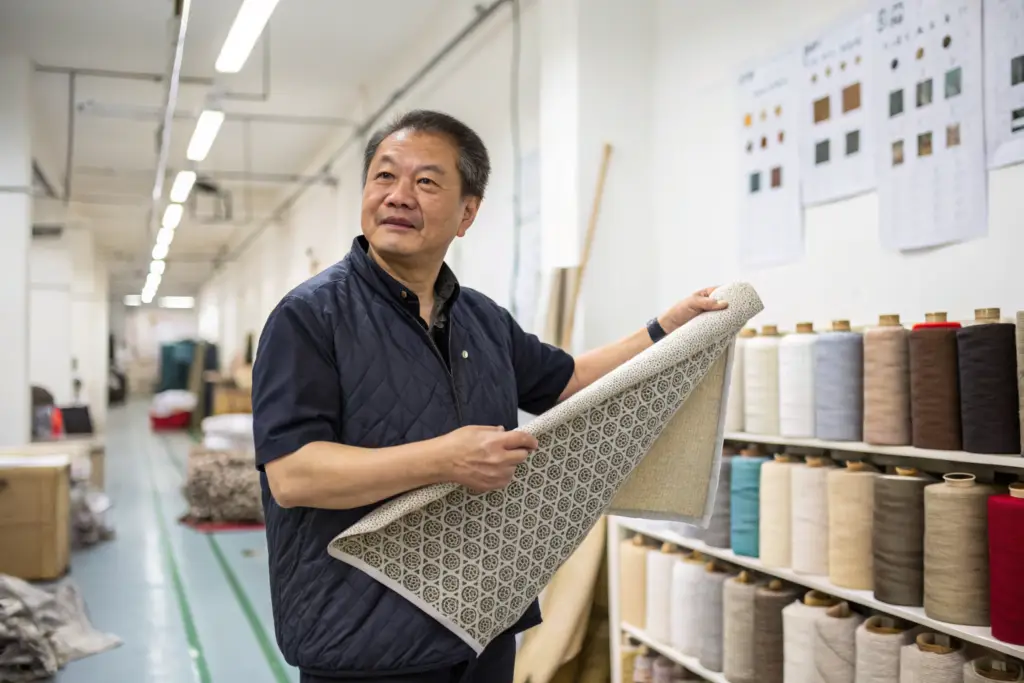
Custom fabric development starts with the yarn. We select fibers based on the desired properties. We then engineer the weave or knit. We create a sample. We test it. We refine it. The process takes time. But the result is a fabric that is perfectly suited to the product. For a luxury client, we developed a custom silk-cotton blend. The fabric had the softness of silk and the breathability of cotton. It was exclusive to the client. Their competitors could not copy it.
What Is the Minimum Order Quantity for Custom Fabrics?
Custom fabrics require larger minimums because they are made specifically for you. With in-house supply, we can offer lower minimums than external mills. For a boutique client, we developed a custom fabric with a 500-meter minimum. An external mill would have required 3,000 meters. The client could not have afforded the larger minimum. In-house capability made the project possible.
Conclusion
Working with a clothing manufacturer that has in-house fabric supply changes your business. It gives you control over quality. You catch defects early. You ensure consistency. It gives you control over timing. You reduce lead times. You respond to the market faster. It gives you control over cost. You eliminate middlemen. You reduce waste. It gives you control over customization. You develop unique fabrics. You create products your competitors cannot copy.
At Shanghai Fumao, we have in-house fabric supply. We weave and knit our own fabrics. We dye and finish them. We control every step from fiber to finished garment. This is not common in the industry. But it is what allows us to deliver consistent quality, reliable timing, competitive pricing, and custom solutions.
We invite you to experience the difference. Contact our Business Director, Elaine, directly at elaine@fumaoclothing.com. Let us show you how in-house fabric supply can transform your production.