You have been here before. You receive a sample. It is perfect. The fabric feels right. The stitching is clean. The fit is exactly what you wanted. You approve production. Weeks later, the bulk order arrives. You open the carton. The first piece looks different. The fabric feels slightly off. The color is not quite the same. The stitching is not as clean. You check another piece. Same issue. You check ten pieces. Some are okay. Some are not. You wonder what happened. The sample was perfect. Why is the bulk not the same? I have seen this frustration many times in my 20 years of manufacturing.
Based on our experience producing millions of garments, samples can predict bulk quality, but only if the sample process is done correctly. A single sample is not enough. You need to understand the different types of samples and what each one tells you. For example, last year we worked with a brand from Boston. They approved a sample. But they did not know it was a hand-made sample. The bulk production used different machines and different operators. The quality was not the same. They were unhappy. We started over. We created a new development sample, a pre-production sample, and a production sample. Each stage caught different issues. By the time we reached bulk, the quality was consistent. The brand received exactly what they expected. That is the power of a proper sample process.
So, can samples predict bulk quality? Yes, but only if you know what to look for and how to use each sample stage. Let me walk you through the different types of samples. I will explain what each one can tell you. I will show you the gaps where issues can appear. And I will give you the tools to ensure your bulk matches your sample.
What Are the Different Types of Samples and What Do They Tell You?
Not all samples are the same. I learned this early in my career. A client approved a sample. They thought it was a production sample. It was actually a development sample. The development sample was made by our most skilled pattern maker. It was sewn slowly with extra care. The bulk production was sewn by regular operators on production machines. The quality was different. The client was angry. But they did not know the difference.
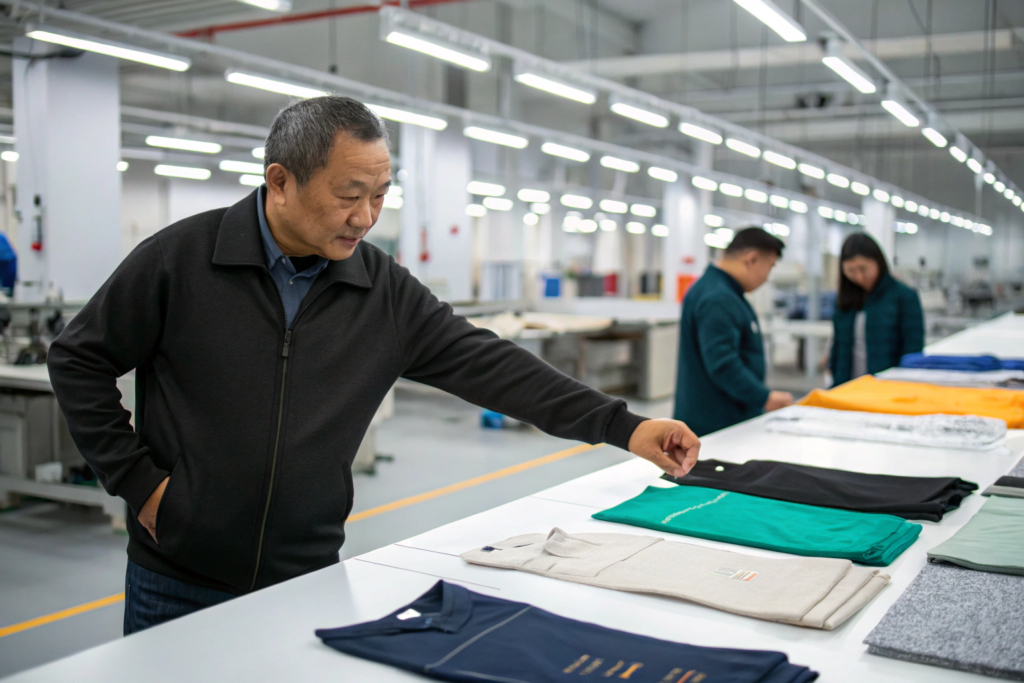
There are four main types of samples: development samples, fit samples, pre-production samples, and production samples. Development samples show design concept and fabric selection. They are often hand-made. Fit samples test sizing and proportions. They are made with production methods. Pre-production samples are made exactly as bulk will be made. They use production machines, production operators, and production processes. Production samples are taken from the first batch of bulk production. For the Boston brand, we created a sample matrix. The development sample showed the design. The fit sample refined the sizing. The pre-production sample validated the production process. The production sample confirmed the first batch. Each sample had a purpose. The brand knew what they were approving at each stage. For premium apparel, we require a pre-production sample for every style. This is the best predictor of bulk quality.
We also provide detailed documentation with each sample. We note the fabric lot, the thread type, the machine settings. This creates a record that we can replicate in bulk.
What Is a Pre-Production Sample and Why Is It Critical?
A pre-production sample, or PP sample, is made exactly as the bulk order will be made. It uses the same fabric from the same production lot. It uses the same trims. It is sewn on the same machines by the same operators who will sew the bulk. It is the closest predictor of bulk quality. For a denim client, we made a PP sample before every production run. The first PP sample had a slight color variation. The client rejected it. We adjusted the wash process. The second PP sample matched the standard. We then proceeded to bulk. The bulk matched the PP sample. The client had confidence because they had seen the exact product before production started.
How Does a Production Sample Differ from a Pre-Production Sample?
A production sample is taken from the first batch of the actual bulk production. It is not made separately. It is pulled from the first 100 pieces off the line. This sample confirms that the bulk matches the PP sample. For a t-shirt client, we pull a production sample at the start of every run. We measure it. We inspect it. We compare it to the PP sample. If there is any deviation, we stop production and correct it. This catch at the beginning prevents thousands of defective pieces.
What Are the Gaps Between Samples and Bulk Production?
Even with a good sample process, gaps can appear. I remember a client from Seattle. They approved a PP sample. The bulk started. The first 500 pieces looked good. Then the quality dropped. The fabric started to pucker at the seams. We stopped production. We investigated. We found that the sewing machine settings had drifted. The tension was off. The sample was made on a perfectly calibrated machine. The bulk machines needed constant monitoring.
The gaps between samples and bulk production come from three areas: production scale, operator variation, and process drift. A sample is made by one operator on one machine. Bulk production uses many operators on many machines. Small variations add up. For the Seattle client, we implemented a new quality control process. We checked the first piece from every machine. We checked every 50 pieces after that. We caught the tension issue early. We recalibrated. The rest of the production was consistent. For workwear, we use standardized work instructions. Every operator follows the same steps. This reduces variation. We also use machine attachments and guides. These eliminate operator skill differences.
Fabric is another gap. The sample uses a small piece of fabric from a roll. Bulk uses hundreds of rolls. Each roll can vary slightly. We test every roll before cutting.
How Does Production Scale Create Variation?
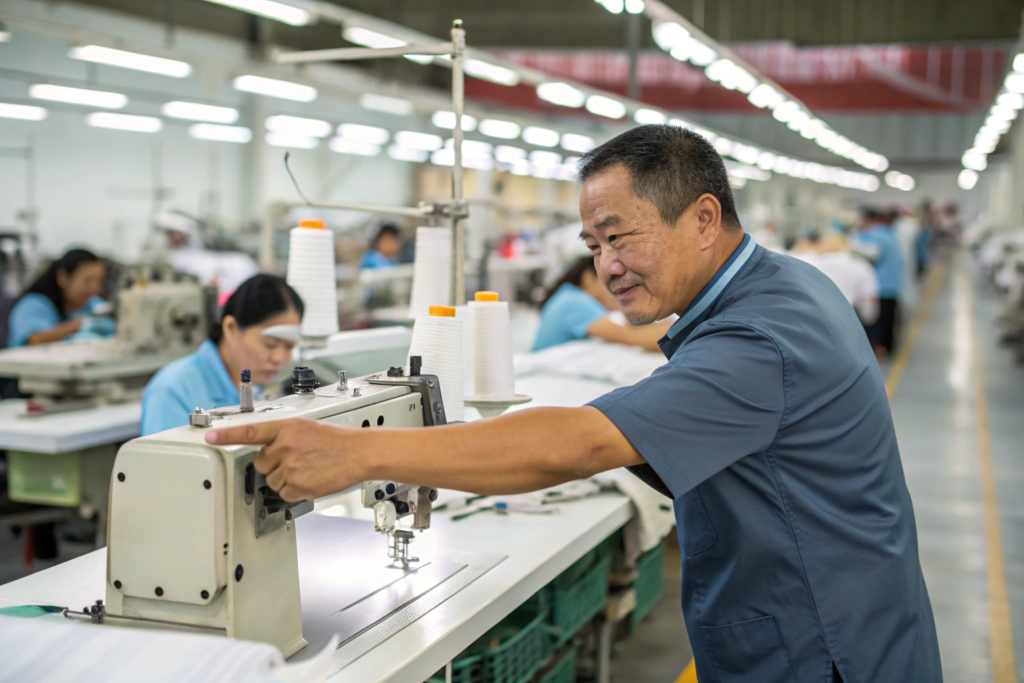
Scale creates variation because you move from one operator to many. One operator can maintain consistent tension. Twenty operators may have slight differences. We reduce this by using standardized work. Each operator has the same workstation setup. They use the same thread tension settings. They follow the same sequence. For a shirting client, we set up a dedicated line for their shirts. The same operators worked on their styles every day. They became experts. The variation was minimal. The client's bulk matched the sample perfectly.
What Is Process Drift and How Do You Control It?
Process drift is when machines and operators slowly move away from the standard. Tension can drift. Pressing temperatures can drift. Cutting alignment can drift. We control drift with constant monitoring. Our quality control team checks the first piece from each operator. They check random pieces throughout the run. They use checklists. For a denim client, we check the wash every 50 pieces. The wash process can drift as chemicals are used. We test the color. We adjust the process. This ensures the 5,000th piece looks like the 1st piece.
How Do You Ensure Bulk Production Matches Approved Samples?
Approving a sample is not the end. It is the beginning. I learned this with a client from Denver. They approved the sample. They assumed the bulk would match. They did not visit the factory. They did not ask for updates. When the bulk arrived, there were issues. The client blamed us. But they had not participated in the quality control process.
Ensuring bulk matches samples requires active participation. You need to approve the pre-production sample. You need to approve the fabric and trim submissions. You need to review in-line inspection reports. You need to approve the production sample. For the Denver client, we implemented a new protocol. They now approve the fabric lab dip. They approve the trim card. They approve the PP sample. They receive in-line inspection reports every week. They approve the production sample before we ship. The client is now confident that bulk matches sample. For large orders, we also offer third-party inspection. The inspector checks the goods at the factory before shipment. This provides an independent verification.
What Is the Role of In-Line Inspection in Maintaining Quality?
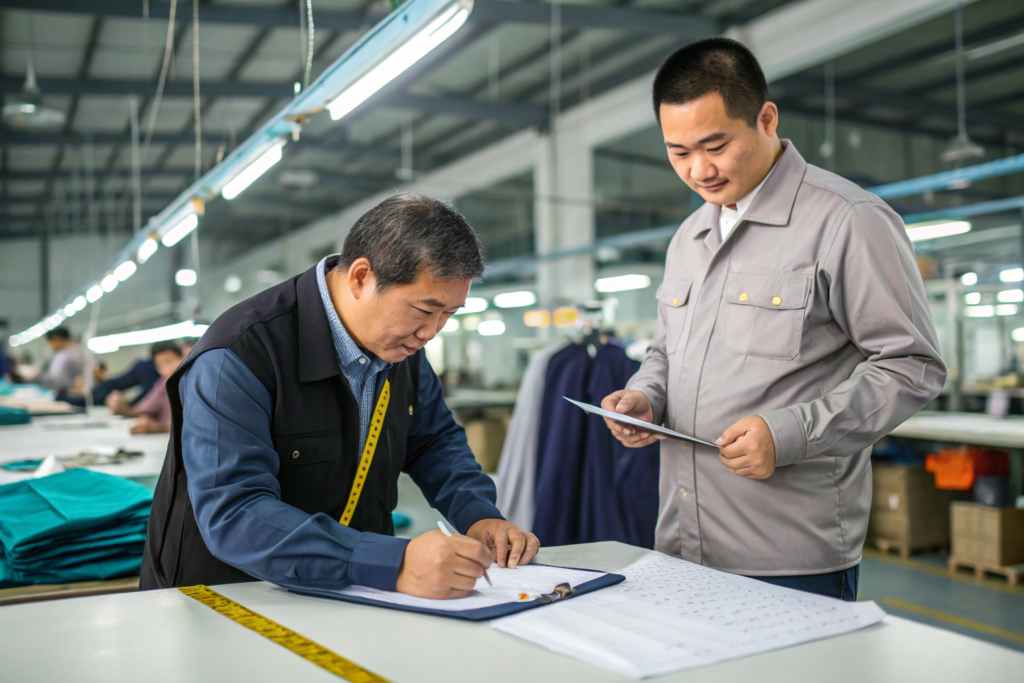
In-line inspection happens during production, not after. It catches issues early. Our inspectors check the first piece from each operator. They check the first piece from each machine. They check every 50 pieces. They measure key points. They check for defects. For a sportswear client, we caught a sewing issue after the first 20 pieces. The tension was off. We stopped production. We recalibrated. We fixed the 20 pieces. If we had waited until the end, 2,000 pieces would have been defective. In-line inspection saved the order.
How Do You Use Reference Samples to Ensure Consistency?
A reference sample is the standard. We keep the approved PP sample in a dedicated area. Our QC team uses it to compare bulk pieces. They check the color. They check the stitching. They check the measurements. For a denim client, we keep a reference sample for each wash. The wash process can vary. The QC team compares each batch to the reference. If the color is off, the batch is rejected. The reference sample is the anchor. Without it, you are guessing.
What Red Flags Indicate That Bulk Quality May Deviate from Samples?
Sometimes, the signs are there. You just need to see them. I remember a client from Chicago. They received a PP sample. It was good. But the fabric submission had slight color variations. The client approved it anyway. The bulk had significant color variation. The client was upset. They had missed the red flag.
Red flags include inconsistent fabric submissions, multiple trim changes, rushed production schedules, and lack of in-line inspection reports. If you see these, stop and investigate. For the Chicago client, we now flag any fabric variation. If the fabric lot does not match the sample, we do not proceed. We work with the mill to correct it. For workwear, we also flag trim substitutions. A different zipper may look similar. But it may perform differently. We require approval for any trim change.
Rushed production is another red flag. When schedules are compressed, corners get cut. We advise clients to build buffer time into their schedules.
What Fabric Issues Indicate Future Quality Problems?
Fabric issues are the most common red flag. Look for inconsistent dye lots. If the fabric rolls have different shades, the garments will not match. Look for high shrinkage rates. If the fabric shrinks more than expected, the fit will change. Look for low tear strength. If the fabric tears easily, the garment will fail. For a shirting client, we flagged a fabric lot with inconsistent width. Some rolls were 58 inches. Some were 60 inches. The cutting markers would not fit. We rejected the fabric. The mill replaced it. The bulk quality was consistent.
How Do Production Schedule Changes Affect Quality?
Schedule changes create pressure. If a production run is rushed, operators may skip steps. They may not change needles frequently. They may not check tension regularly. Quality drops. For a fashion client, we had a compressed schedule. We worked overtime to meet it. But we maintained our quality checks. We did not skip steps. The quality was good. The client understood that rushing has limits. They now build more time into their schedules.
Conclusion
Samples can predict bulk quality. But only if you use the right sample process. Development samples show the concept. Fit samples test the proportions. Pre-production samples validate the production process. Production samples confirm the first batch. Each stage catches different issues. The gaps between samples and bulk come from production scale, operator variation, and process drift. You control these with in-line inspection and reference samples. And you watch for red flags like fabric inconsistencies and rushed schedules.
At Shanghai Fumao, we have been helping brands bridge the gap between samples and bulk for over 20 years. We have a structured sample process. We have rigorous in-line inspection. We maintain reference samples for every order. We communicate openly about issues. Our goal is to deliver bulk production that matches your approved sample.
Let us help you with your next production. Contact our Business Director, Elaine, directly at elaine@fumaoclothing.com. Ask about our sample process. We will show you how we ensure consistency from sample to bulk.