You are a clothing distributor. You buy from suppliers. You sell to retailers or direct to consumers. Your margin depends on your ability to manage costs. But there is a problem. Your costs keep creeping up. Fabric prices fluctuate. Labor rates change. Shipping costs go up and down. Your customers want lower prices. Your suppliers want higher margins. You are caught in the middle. I have worked with distributors for over 20 years. I have seen the successful ones. I have seen the ones that struggle. The difference is not luck. It is how they budget.
Based on our experience working with distributors across North America, successful clothing distributors treat budgeting as a strategic tool, not just an accounting exercise. They plan for volatility. They build relationships with suppliers. They optimize their product mix. They manage cash flow carefully. For example, last year we worked with a distributor in Texas. They were struggling with margins. Their costs were unpredictable. We helped them implement a quarterly budgeting process. They started ordering fabric in bulk to lock in prices. They consolidated orders to reduce shipping costs. They increased their order quantities for core styles to get better per-unit pricing. Their margin improved by 8% in one year. That is the result of strategic budgeting.
So, what are the budgeting secrets that successful clothing distributors use? Let me share what I have learned from working with the best in the business. I will give you practical strategies. I will show you where to focus your attention. And I will help you build a budget that works.
How Do You Plan for Price Volatility in Raw Materials?
Raw material prices are volatile. Cotton can go up 30% in a season. Polyester prices follow oil prices. I remember a distributor from Atlanta. They had a fixed budget for their spring collection. They placed orders based on current fabric prices. By the time production started, cotton prices had jumped 25%. The factory had to pass on the increase. The distributor's margin was crushed. They lost money on the entire collection.
Successful distributors plan for price volatility. They do not assume prices will stay the same. They build buffer into their budgets. They lock in prices early with purchase orders. They work with suppliers who offer price protection. For the Atlanta distributor, we now do quarterly price reviews. We forecast fabric costs for the next six months. We build a 10% contingency into the budget. If prices stay stable, the contingency becomes extra margin. If prices rise, we are covered. For cotton-based products, we monitor the cotton futures market. We advise clients when to buy. We lock in fabric prices when the market is favorable. This protects them from sudden increases. For a denim distributor, we locked in denim prices for the entire year. The client paid a small premium for the guarantee. When cotton prices spiked mid-year, they were protected. Their competitors had to raise prices. They kept their prices stable. They gained market share.
We also help clients diversify their fabric sources. If one mill is affected by a price spike, we can source from another. This flexibility is built into our sourcing strategy.
How Do You Build a Contingency for Raw Material Fluctuations?
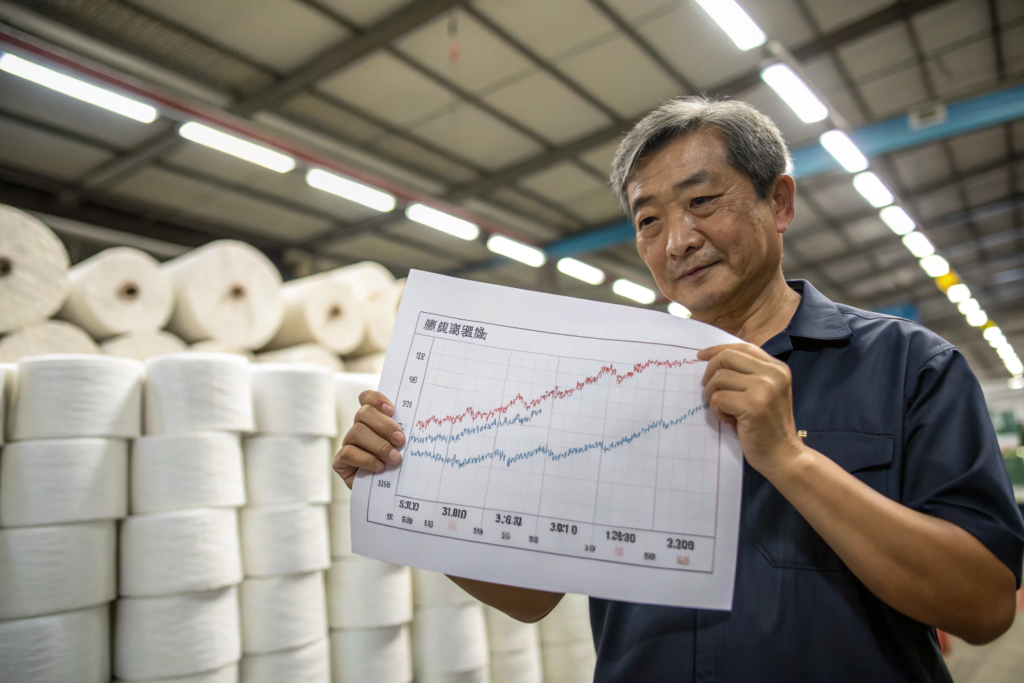
A contingency is a buffer in your budget. We recommend a 10% to 15% contingency for raw materials. This is not a cost. It is protection. If prices rise, you use the contingency. If prices stay stable, you have extra margin. For a workwear distributor, we built a 12% contingency into their fabric budget. The year was volatile. Cotton prices went up 18%. The contingency covered 12% of the increase. The client absorbed the remaining 6% with a small margin reduction. Without the contingency, they would have lost money. For a high-volume distributor, we use a rolling budget. We review prices every month. We adjust the contingency based on market conditions. This keeps the budget realistic.
What Is the Best Way to Lock in Fabric Prices with Suppliers?
Locking in prices requires commitment. You need to place firm orders. You need to pay deposits. We work with clients to forecast their needs. We combine orders across styles to reach mill minimums. We then issue purchase orders to the mill. The mill guarantees the price for the duration of the order. For a t-shirt distributor, we locked in prices for 500,000 meters of jersey. The client paid a 30% deposit. The mill held the price for 12 months. When cotton prices rose, the client was protected. The savings were substantial. We also use price protection agreements. Some mills offer a clause that if prices drop, the client gets the lower price. If prices rise, the mill absorbs the increase. This costs a small premium. But it provides peace of mind.
How Do You Optimize Your Product Mix for Better Margins?
Not all products are equal. Some have high margins. Some have low margins. Some are stable. Some are volatile. I remember a distributor from Chicago. They sold a wide range of products. But they did not track margins by category. They thought all products were profitable. When we analyzed their sales, we found that 20% of their products were losing money. They were subsidizing these with the profits from other products.
Successful distributors optimize their product mix. They identify high-margin, high-volume products. They focus on these. They reduce or eliminate low-margin products. They balance their portfolio with stable basics and higher-risk fashion items. For the Chicago distributor, we did a margin analysis. We found that their basic t-shirts had a 40% margin. Their fashion tops had a 25% margin. Their promotional items had a 10% margin. They reduced the promotional items by 50%. They increased the basic t-shirt volume by 30%. Their overall margin improved by 6%. For basics distributors, we recommend a 70% basics, 30% fashion mix. The basics provide stable cash flow. The fashion items provide higher potential returns but also higher risk. This balance works well.
We also help clients analyze their product costs. A simple change in trim or packaging can turn a low-margin item into a high-margin item.

How Do You Identify Your Most Profitable Products?
You need data. Track the cost and selling price for each product. Calculate the margin percentage and the margin dollars. Sort by margin dollars. The top 20% of products likely generate 80% of your profit. Focus on these. For a denim distributor, we analyzed their product line. The top 20% of styles generated 75% of their profit. These were core fits in core washes. The bottom 50% of styles generated only 5% of profit. They were experimental styles with low volume. The distributor reduced the experimental styles. They invested more in marketing the core styles. Their profit increased by 12% the next year.
What Is the Right Balance Between Basics and Fashion Items?
Basics are stable. They sell consistently. They have predictable margins. Fashion items are volatile. They can have high margins if they hit the trend. They can be disasters if they miss. We recommend a 70/30 split for most distributors. 70% basics, 30% fashion. For a workwear distributor, the split is 90/10. Their customers buy the same styles year after year. Fashion is less important. For a high-fashion distributor, the split may be 50/50. They take more risk for higher potential returns. The key is to know your market. Do not copy another distributor's mix. Build the mix that fits your customers.
How Do You Manage Cash Flow Across the Order Cycle?
Cash flow is the lifeblood of distribution. You need money to pay deposits. You need money to pay for production. You need money to hold inventory. You get paid when you sell. The time gap between paying and getting paid can be months. I remember a distributor from Miami. They had a great season. They sold out of their spring collection. But they could not pay for the fall production because their cash was tied up in inventory that had not yet sold. They had to take expensive financing.
Successful distributors manage cash flow carefully. They negotiate payment terms with suppliers. They collect deposits from customers. They align their payment schedule with their sales cycle. They use financing strategically. For the Miami distributor, we restructured their payment terms. We moved from a 30% deposit and 70% before shipment to a 20% deposit, 30% at production start, and 50% after shipment. This spread out their cash outflow. They also started collecting 50% deposits from their key customers. This brought cash in earlier. Their cash flow improved. They no longer needed expensive short-term loans. For large distributors, we offer open account terms after a period of consistent orders. This allows them to pay after they have sold the goods. This is a significant cash flow benefit.
We also help clients plan their order timing. Staggering orders prevents large cash outflows all at once.

What Payment Terms Should You Negotiate with Suppliers?
Payment terms vary by supplier and relationship. Standard terms are 30% deposit, 70% before shipment. For new relationships, this is typical. For established relationships, we offer 30% deposit, 70% after shipment on open account. For high-volume distributors, we offer 20% deposit, 80% after shipment with 30-day terms. The key is to match the payment schedule to your cash flow. If you have slow-paying customers, you need slower-paying suppliers. For a fashion distributor, we offered extended terms. They paid 20% deposit. The balance was due 60 days after shipment. This aligned with their customer payment cycles. They could sell the goods before they had to pay for them. This is a major advantage.
How Do You Align Customer Deposits with Supplier Payments?
Customer deposits are free cash. Use them to pay supplier deposits. This reduces your cash need. For a uniform distributor, we helped them implement a deposit system. They required 50% deposit from customers for custom orders. They used this to pay the 30% deposit to the factory. The remaining 20% covered early production costs. When the goods were ready, the customer paid the final 50%. This covered the balance to the factory. The distributor's cash outlay was minimal. They scaled their business without needing a large cash reserve.
How Do You Build Long-Term Supplier Relationships That Benefit Your Budget?
Price is not the only factor. Relationships matter. I have seen distributors chase the lowest price. They switch suppliers every season. They get a good deal once. Then the supplier raises prices. The quality fluctuates. The delivery is unreliable. They spend time and money managing new relationships. The successful distributors do the opposite.
Successful distributors build long-term relationships with a small number of trusted suppliers. They commit to volume. They pay on time. They communicate openly. In return, they get better pricing, priority production, and flexibility. For a long-term client, we have worked together for over 10 years. They get our best pricing. They get priority on production lines. When they need a rush order, we make it happen. When they have a cash flow issue, we offer flexible terms. This relationship is worth more than a 2% price discount from a new supplier. For a new distributor, we recommend starting with one or two suppliers. Build the relationship. Prove your reliability. Then you earn better terms. We also share market intelligence with our long-term clients. We tell them when prices are going up. We advise them to buy early. This helps their budgeting.

What Are the Benefits of Consolidating Your Supplier Base?
Fewer suppliers mean less management time. It means better volume pricing. It means deeper relationships. For a denim distributor, we consolidated their denim sourcing to one mill. The mill gave them a 5% volume discount. They also got priority on production slots. When denim was in short supply, they still got their orders. Their competitors had to wait. This is a competitive advantage. Consolidation also simplifies quality control. We know the mill's processes. We trust their quality. There are fewer surprises.
How Do You Leverage Volume and Consistency for Better Pricing?
Volume is leverage. Consistency is trust. A supplier will give better pricing to a client who orders consistently. They do not have to retool for new clients. They can plan their production. For a t-shirt distributor, we consolidated their orders into quarterly shipments. Instead of ordering 10,000 units every month, they ordered 30,000 units every quarter. The per-unit cost dropped by 8%. The mill appreciated the predictable volume. They gave the distributor priority pricing. Consistency also builds trust. When a supplier knows you will pay on time and order regularly, they are more willing to offer favorable terms.
Conclusion
Budgeting for successful clothing distribution is not just about controlling costs. It is about planning for volatility. It is about optimizing your product mix. It is about managing cash flow. It is about building supplier relationships. These are the secrets that successful distributors use.
We have shared how to plan for raw material price fluctuations. We have shown how to identify your most profitable products. We have explained how to manage cash flow across the order cycle. And we have demonstrated the value of long-term supplier relationships.
At Shanghai Fumao, we have worked with distributors for over 20 years. We understand your challenges. We know what it takes to succeed. We are not just a supplier. We are a partner. We offer consistent quality. We offer reliable delivery. We offer flexible terms. We help you build a budget that works.
Let us help you with your next collection. Contact our Business Director, Elaine, directly at elaine@fumaoclothing.com. Tell us about your business. We will help you build a budgeting strategy that works.