You have a budget. You have a vision for your product. But somewhere between the two, things go wrong. The sample is perfect. The bulk production is not. Or the production meets the spec, but the cost is higher than expected. Or you try to cut costs, and the quality suffers. Your customers notice. Your brand reputation takes a hit. I have seen this cycle repeat with many clients over my 20 years in manufacturing. The problem is not the budget. The problem is not the quality. The problem is the disconnect between them.
Based on our experience producing millions of garments for North American and European brands, I have learned that aligning budget with quality requires transparency, planning, and trade-offs. You cannot have premium quality at a budget price. But you can achieve the right quality for your target price by making informed choices. For example, last year we worked with a startup brand from Austin. They had a fixed budget of $25 per garment. They wanted a premium feel. We sat down together. We reviewed their tech pack. We identified areas where we could optimize. We kept the high-quality fabric. That was non-negotiable for them. We simplified the construction by reducing unnecessary topstitching. We changed the packaging from a rigid box to a soft-touch poly bag. The final garment hit the $25 target. The quality was excellent. The brand launched successfully. That is the result of aligning budget with quality through intentional choices.
So, how do you ensure your budget aligns with your final product quality? Let me walk you through the process. I will share the questions you need to ask. I will show you where to invest and where to save. And I will give you real examples of how we help our clients find the balance.
What Questions Should You Ask Before Setting Your Budget?
Before you set a budget, you need to understand what you are asking for. I remember a client from Chicago. He wanted a "premium" hoodie. His budget was $15. He did not know what "premium" meant in fabric weight, construction, or finishing. He just knew the price he wanted to pay. We had to walk him through the options.
Before setting a budget, ask these questions: What is the target retail price? What are the key quality features that customers expect? What are the non-negotiables for your brand? What are the trade-offs you are willing to make? For the Chicago client, we asked these questions. He wanted a hoodie that felt soft and lasted. He did not need complex pockets or heavy zippers. We recommended a 400 GSM French terry fabric. It was soft and substantial. We used a simple kangaroo pocket instead of a zippered pocket. We used a standard drawstring hood instead of a lined hood. The final hoodie cost $14.50. It met his quality expectations. He sold it at a $45 retail price. The margin was healthy. For premium basics, we always start with these questions. We need to know what the brand stands for. We need to know what the customer expects. This guides our material and construction choices.
We also ask about order quantity. Larger orders have lower per-unit costs. Smaller orders have higher per-unit costs. This is simple math. But many brands overlook it.

How Do Target Retail Price and Margin Goals Affect Production Budget?
Your production budget should be driven by your target retail price and desired margin. A common rule is that production cost should be 20% to 30% of the retail price for direct-to-consumer brands. For wholesale brands, production cost should be 40% to 50% of the wholesale price. For a direct-to-consumer client, their retail price was $80. Their target production cost was $20. That gave them a 75% margin. They wanted a high-quality shirt. We hit $19.50 by using a premium fabric but simplifying the trim. For a wholesale client, their wholesale price was $30. Their target production cost was $15. We used a mid-tier fabric and standard construction. The shirt was good quality for the price. The margin worked for the retailer and the brand.
What Are Your Brand's Non-Negotiable Quality Features?
Every brand has non-negotiables. For some, it is the fabric. They want organic cotton or specific blends. For others, it is the fit. They need specific grading or construction. For others, it is the finishing. They need flat seams or special labels. We ask clients to list their non-negotiables before we start. For a sustainable brand client, organic cotton was non-negotiable. They would not compromise on that. We built the budget around that fabric. We suggested savings in other areas. We used a simpler pocket construction. We used standard thread instead of specialty thread. The final garment met their sustainability goals and their budget. If we had not known their non-negotiables, we might have suggested a cheaper fabric. That would have been a mistake.
Where Should You Invest in Your Production Budget?
Not all parts of a garment are equal. Some areas deserve more investment. Others can be simplified. I learned this with a client from Seattle. They made outdoor apparel. They wanted to invest heavily in the outer fabric. That made sense. The outer fabric protects the wearer from wind and rain. They wanted to save on the lining. That also made sense. The lining does not face the elements. We allocated the budget accordingly.
Invest in the areas that the customer touches and sees. This is typically the fabric, the fit, and the visible details. For outdoor apparel, invest in the shell fabric. It protects against the elements. For fashion apparel, invest in the fabric and the silhouette. These are what the customer notices. For workwear, invest in durability. This is what the end user values. For the Seattle outdoor client, we put 60% of the material budget into the shell fabric. We used a high-quality nylon with DWR coating. We put 20% into the insulation. We put 10% into the lining. We put 10% into trims like zippers and cord locks. The jacket performed well. The customer felt the quality. For premium denim, we invest in the fabric and the finishing. The denim itself is high-quality. The wash and the hardware are premium. These are what the customer sees and feels.
We also invest in fit. A garment that fits well looks expensive, even if the fabric is mid-tier. A garment that fits poorly looks cheap, even if the fabric is premium.
Why Is Fabric the Most Important Investment in Your Garment?
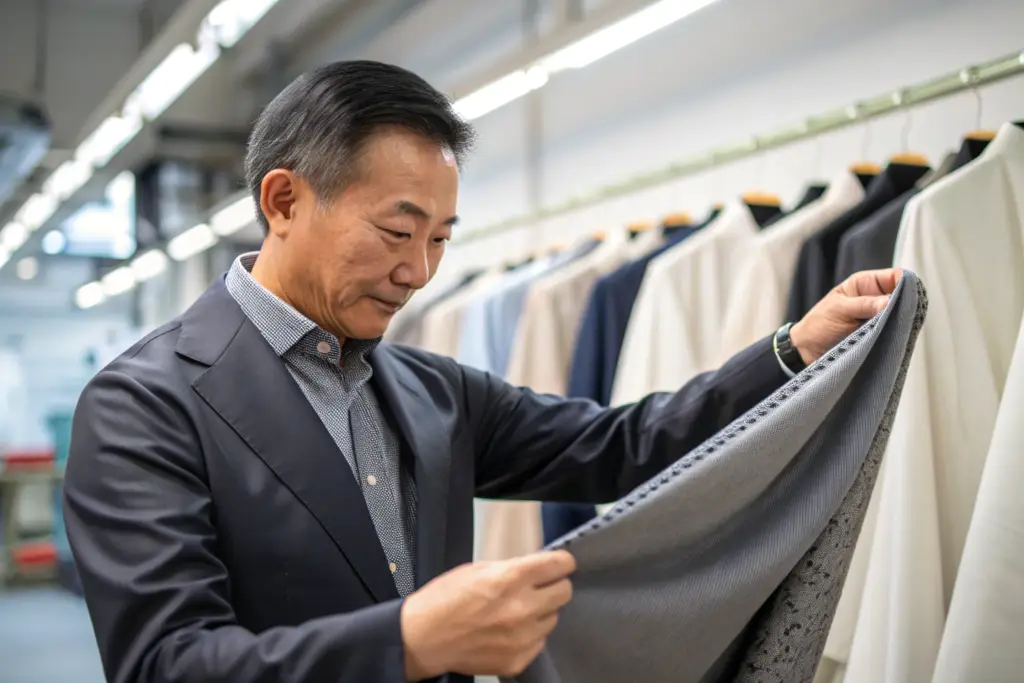
Fabric is what the customer feels first. It determines the drape, the comfort, and the durability. A high-quality fabric elevates the entire garment. A low-quality fabric can ruin even the best construction. For a t-shirt client, we invested in a 100% ring-spun combed cotton. The fabric was soft and substantial. The client could have used a cheaper open-end cotton. But the feel would have been rough. The t-shirts would have pilled. The customer would not have bought again. The extra $2 per unit in fabric cost was worth it. The client sold over 50,000 units. The repeat purchase rate was high. The fabric investment paid off.
Which Construction Details Provide the Best Value?
Some construction details provide high value for low cost. Others provide low value for high cost. We help clients identify the best value details. A well-placed pocket adds perceived value. It costs little to add. A flat-felled seam adds durability and a clean look. It costs a bit more. But it is worth it for workwear and shirts. A decorative topstitch adds a premium look. It costs labor time. But it can elevate a simple garment. For a women's blouse client, we added a single row of topstitching on the collar and cuffs. The cost was $0.30 per unit. The blouse looked much more expensive. The client sold it at a $75 retail price. The topstitching was a small investment with a big return.
Where Can You Save Without Sacrificing Quality?
Saving money does not mean sacrificing quality. It means being smart about where you spend. I remember a client from Denver. She wanted to reduce her production cost. She thought she had to use cheaper fabric. We showed her other options. We simplified the pocket construction. We reduced the number of label attachments. We changed the packaging. She saved 12% without touching the fabric.
You can save money on hidden details that do not affect the customer's experience. These include internal seam finishes, excessive label attachments, complex packaging, and over-engineered construction. For the Denver client, we changed the internal seam finish from a flatlock to a standard overlock. The flatlock was visible on the inside but not the outside. The customer never saw it. We saved $0.40 per unit. We combined two labels into one. We saved $0.15 per unit. We switched from a rigid box to a poly bag. We saved $1.20 per unit. The total savings were $1.75 per unit. The fabric stayed the same. The garment looked and felt the same to the customer. For basic t-shirts, we use simple neck taping. It is functional. It is not visible. It costs less than a complex neck band. The customer does not know the difference.
We also save on trim where possible. A standard zipper performs as well as a branded zipper for many applications. The branded zipper costs more. Unless the brand wants the logo visible, we recommend standard.
What Internal Details Can You Simplify Without Affecting Outer Quality?
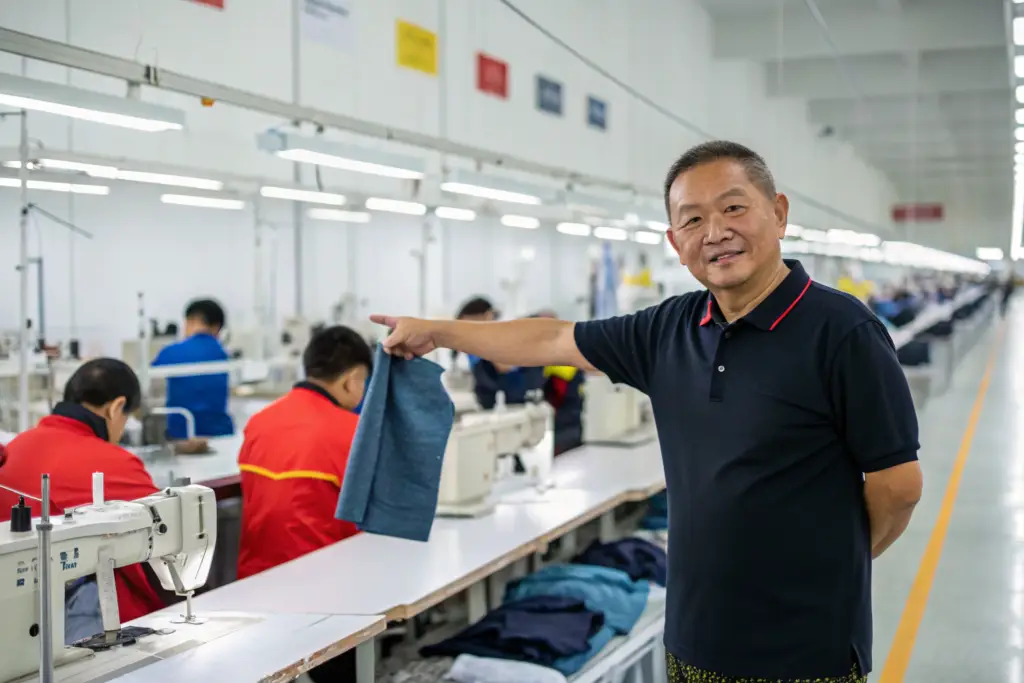
Internal details are hidden. They do not need to be over-engineered. Seam finishes can be simplified. A standard overlock is sufficient for most garments. A flatlock or French seam is not necessary unless the garment is worn inside out. Interfacing can be reduced. Not every area needs heavy interfacing. We use lighter interfacing on hidden areas. This saves cost without affecting the outer structure. For a shirt client, we simplified the internal placket construction. The placket was hidden under the button stand. The customer never saw it. We saved $0.25 per shirt. The outer look was unchanged. The client was happy.
How Can Packaging Choices Save Money Without Affecting Product Quality?
Packaging is often over-designed. A rigid box with custom inserts looks great. But it costs money. If your product is sold online, the packaging is seen for a few seconds. A good quality poly bag with a branded sticker can be sufficient. For a direct-to-consumer client, we switched from a rigid box to a poly bag with a tissue paper wrap. The unboxing experience was still pleasant. The cost dropped by $2.00 per unit. The client used the savings to improve the fabric. The product was better. The customer was happier. For multi-pack items, we combine packaging. A single box for three shirts costs less than three individual boxes. The customer still receives a quality product. The cost is lower.
How Do You Communicate Budget and Quality Expectations to Your Factory?
Communication is the bridge between budget and quality. If you do not tell your factory what you need, they cannot deliver it. I remember a client from New York. He gave us a tech pack and a target price. He did not tell us his quality priorities. We built to the price. He was unhappy with the quality. He assumed we knew what he wanted. We did not. We had to start over.
To align budget with quality, you must communicate your priorities clearly. Share your target retail price and margin goals. Share your non-negotiables. Share where you are willing to compromise. A good factory will work with you to find the balance. For the New York client, we started over. He told us his priorities. The fabric was number one. The fit was number two. Everything else was flexible. We built a new sample. We used the fabric he wanted. We refined the fit. We simplified the internal construction. The new garment hit his budget. He was happy. For all our clients, we use a cost breakdown sheet. It shows the fabric cost, trim cost, labor cost, and overhead. We walk through it together. The client sees where the money goes. They can make informed decisions.
We also provide samples at different price points. We show the client what they get at $15, $18, and $22. They can see the difference. They can choose the level that fits their brand.
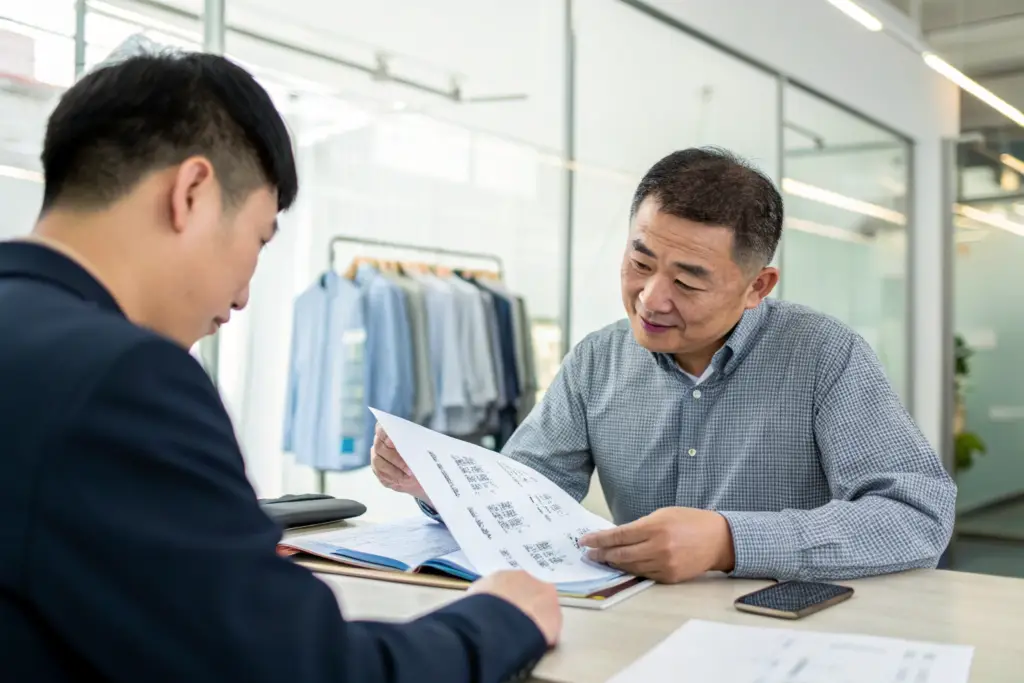
Share everything. Share your tech pack with all specifications. Share your target price. Share your order quantity. Share your quality expectations. Share your brand story. The more we know, the better we can help. For a sustainable activewear client, they shared their commitment to eco-friendly materials. We sourced recycled fabrics. We used eco-friendly packaging. The cost was higher. But it aligned with their brand. If they had not shared this, we would have sourced standard materials. They would have been unhappy. We also need to know your timeline. Rush orders cost more. If you plan ahead, we can save you money.
How Do You Handle Trade-Offs When Budget and Quality Conflict?
Sometimes budget and quality conflict. You want a premium fabric. But you cannot afford it. You want complex construction. But it pushes the price too high. When this happens, we present options. Option A: the original spec at the original price. Option B: a modified spec with a different fabric at a lower price. Option C: the original fabric with simplified construction at a lower price. We let the client choose. For a denim client, they wanted Japanese selvedge denim. The fabric cost was high. We showed them options. Option A was the Japanese denim with standard construction. Option B was a domestic denim with premium construction. Option C was the Japanese denim with simplified construction. They chose Option C. They got the fabric they wanted. They accepted the simplified construction. The jeans looked great. The cost worked.
Conclusion
Aligning your budget with your final product quality is not about finding the cheapest option. It is about making intentional choices. You need to know your priorities. You need to know where to invest. You need to know where you can save. And you need to communicate these choices clearly to your factory.
We have shared the questions to ask before setting your budget. We have shown where to invest for the best return. We have identified areas where you can save without sacrificing quality. And we have demonstrated how to communicate with your factory to achieve alignment.
At Shanghai Fumao, we have been helping brands balance budget and quality for over 20 years. We are transparent about costs. We provide options. We work with you to find the right balance for your brand. Let us help you with your next production. Contact our Business Director, Elaine, directly at elaine@fumaoclothing.com. Tell us your budget and your quality goals. We will help you achieve both.