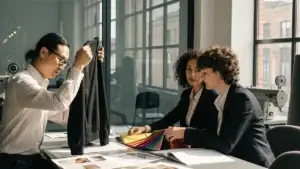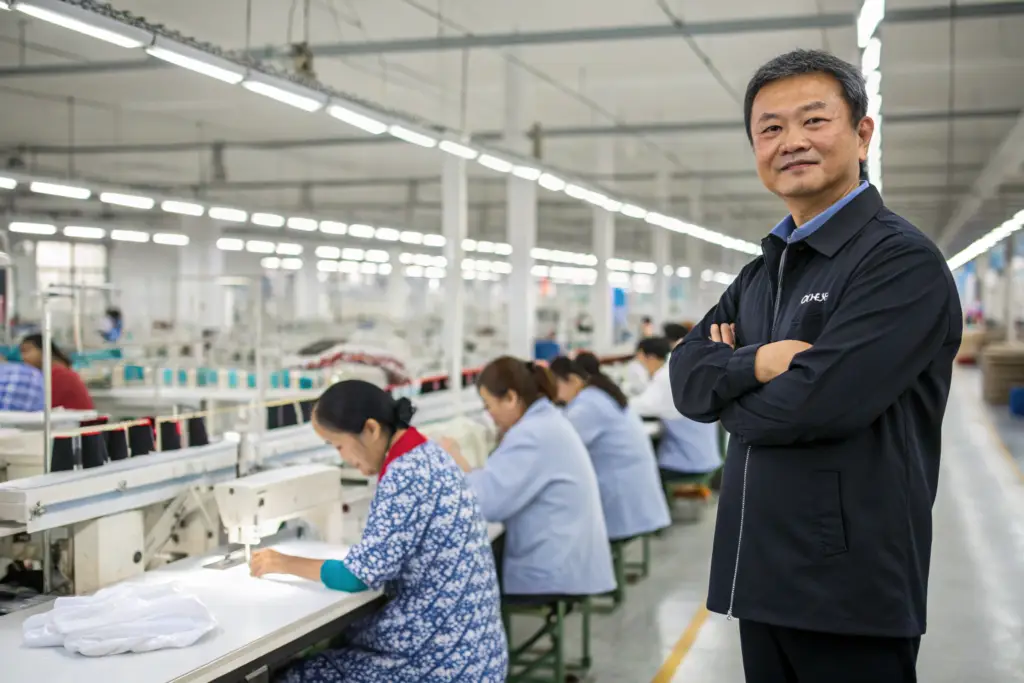
You have been in this situation. You quote a price for a women's blouse. Your client compares it to a men's shirt from another supplier. They ask why the women's garment costs more. The fabrics look similar. The size seems comparable. But the numbers do not match. You struggle to explain. Or maybe you are the buyer. You receive two quotes. One for men's trousers. One for women's trousers. The women's version is higher. You wonder if the factory is taking advantage. I have seen this confusion many times. In my 20 years of manufacturing apparel, I have learned that the cost differences between men's and women's wear are real. They are rooted in the manufacturing process. They are not arbitrary.
Based on my experience running a factory with five production lines, the cost differences between men's and women's wear come down to four main factors: pattern complexity, construction techniques, fabric selection, and order volume. Women's garments typically involve more darts, more curves, and more fitting points. This increases labor time. Women's fabrics often include more delicate materials like silks or laces. These require slower sewing speeds and special handling. Men's garments usually have simpler patterns and straighter seams. They can be produced faster. For example, last year we produced a men's button-down shirt and a women's blouse for two different clients. Both used similar cotton fabric. The men's shirt took 22 minutes of sewing time per unit. The women's blouse took 34 minutes. The pattern had darts, a curved hem, and a more complex collar. The labor cost was 55% higher. The client understood once we walked them through the process. They adjusted their retail pricing accordingly.
So, what exactly drives these cost differences? Let me break it down by the key areas of production. I will share real examples from our factory. I will show you why women's wear often costs more to make. And I will explain how to manage these costs without sacrificing quality.
How Do Pattern Complexity and Fit Drive Cost Differences?
You look at a men's shirt and a women's blouse. They seem similar. Both have sleeves. Both have a collar. Both close with buttons. But inside the factory, they are completely different. I remember a client from Boston. She was launching a women's shirt line. She asked why her production cost was higher than her friend's men's shirt line. The fabric was the same. The order quantity was similar. I invited her to our factory. I showed her the pattern room. She saw the difference immediately.
Women's garments require more pattern pieces and more fitting points than men's garments. A men's shirt typically has 8 to 10 pattern pieces. The shapes are straight. The seams are simple. A women's blouse can have 15 to 20 pattern pieces. It includes darts for the bust, curved seams for the waist, and often a more complex collar. Each additional piece adds cutting time, sewing time, and matching time. The pattern maker must spend more hours developing the fit. For a men's trouser, we use 5 to 6 pattern pieces. For a women's trouser with a curved waistband and contour fit, we use 8 to 10 pieces. The difference in pattern making time alone can be 2 to 3 hours per style. Multiply that by 10 styles in a collection. The cost adds up. We had a client from Seattle who wanted to reduce costs on their women's line. We reviewed their patterns. We found they were using 18 pieces for a simple dress. We simplified the design. We reduced it to 12 pieces without changing the look. The sewing time dropped by 15%. The client saved $2.50 per unit.
Fit is another factor. Men's bodies have fewer variations. The fit points are shoulders, chest, waist, and hips. Women's bodies have more complexity. The bust, waist, and hip ratios vary more. A women's garment needs more fitting adjustments. This means more sample rounds. More pattern corrections. More time from our pattern makers. All of this adds to the development cost.
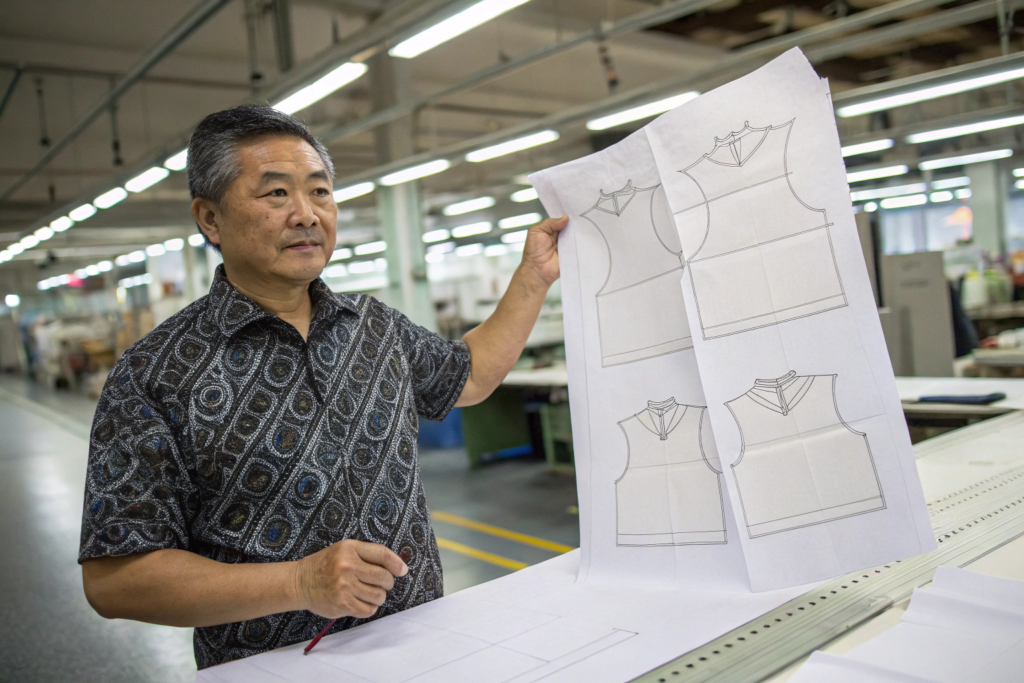
Why Do Women's Garments Require More Pattern Pieces?
The female form has more curves. A women's blouse needs darts to shape the fabric around the bust. It needs waist shaping to create a flattering silhouette. It often has princess seams that run from the shoulder to the hem. These seams create shape without darts. But they add more pieces. A men's shirt has a straight front and back. The side seams are straight. The shoulder line is simple. For a women's tailored jacket, we use up to 25 pattern pieces. This includes multiple panels for the front, back, sleeves, collar, lining, and interfacing. For a men's suit jacket, we use 15 to 18 pieces. The women's version takes 30% more cutting time. It takes 40% more sewing time. The client pays for that time. But they also get a garment that fits properly. One of our clients, a New York-based womenswear brand, tried to simplify their patterns to save cost. They removed the bust darts from a blouse. The blouse looked boxy. It did not sell. They learned that the extra cost was worth it. The darts created the shape their customers wanted.
How Does Fit Testing Differ Between Men's and Women's Wear?
Fit testing is more intensive for women's wear. For a men's shirt, we typically test on one body type. The measurements are standardized. For a women's blouse, we test on multiple body types. We use fit models with different bust sizes. We test on a size 4 with a B cup. We test on a size 8 with a C cup. We make sure the garment fits across the range. This takes more sample rounds. For a recent women's dress project, we went through four fit rounds. The client wanted a perfect fit across sizes 0 to 14. Each round required new samples. Each round required pattern adjustments. The development cost was higher. But the final product had a great fit. The brand's return rate was only 3%. Their previous collection had a 12% return rate. The extra investment in fit testing paid off. For a men's denim line, we did two fit rounds. The fit was standard. The process was faster. The development cost was lower.
How Do Construction Techniques Affect Labor Costs?
Labor is the biggest variable cost in garment manufacturing. The time a sewer spends on a garment directly impacts the price. I have seen brands assume that all garments take the same time to make. That is not true. A few years ago, a client from Chicago asked us to produce a men's polo shirt and a women's knit dress. Both used similar pique fabric. The polo took 15 minutes of sewing time. The dress took 28 minutes. The dress had a curved hem, set-in sleeves, and a zipper. The polo had a simple placket and a flat knit collar. The client was surprised. They had not considered the construction differences.
Women's garments typically involve more complex construction techniques that increase labor time. These include set-in sleeves instead of raglan sleeves, curved hems instead of straight hems, zippers instead of buttons, and lining instead of single-layer construction. Each of these techniques adds minutes to the sewing time. For a men's casual shirt, the average sewing time is 18 to 22 minutes. For a women's blouse with similar fabric, the average time is 28 to 35 minutes. The difference is 10 to 15 minutes per garment. At $15 per hour labor cost, that is $2.50 to $3.75 extra per unit. For an order of 5,000 units, that is $12,500 to $18,750 in additional labor cost. This is not a markup. This is real time spent on the machine. We had a client from Texas who wanted to reduce their women's wear costs. We analyzed their styles. We found that many had unnecessary complexity. One dress had a curved hem that required hand-stitching. The style was beautiful. But the labor cost was high. We suggested a machine-finished curved hem. The look was similar. The labor time dropped by 8 minutes per unit. The client saved $2.00 per unit on that style.
Construction techniques also affect training time. Simple men's styles can be taught to new operators quickly. Complex women's styles require experienced operators. Experienced operators earn higher wages. This adds another layer to the cost difference.
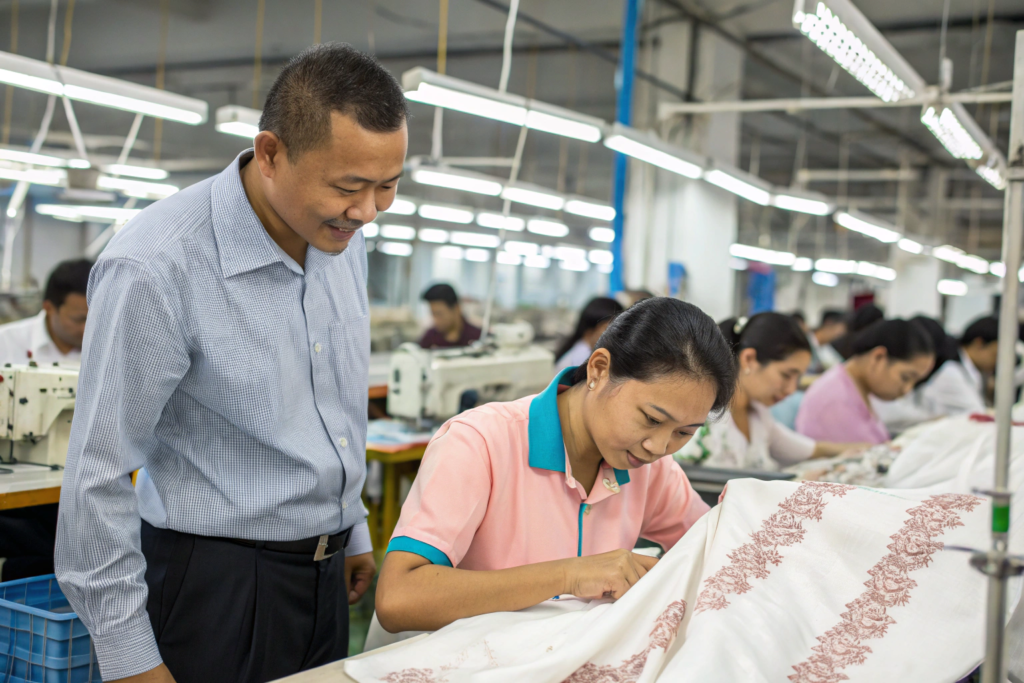
What Sewing Techniques Add the Most Time to Women's Garments?
Several techniques consistently add time. First, set-in sleeves. These require the sewer to ease the sleeve cap into the armhole. This is a skilled operation. It takes 3 to 4 minutes per sleeve. Men's garments often use raglan sleeves or simpler sleeve attachments. Second, zipper insertion. A centered zipper takes 2 to 3 minutes. An invisible zipper takes 4 to 5 minutes. Men's garments rarely have zippers on tops. They use buttons. Buttonholes take time, but they are automated. Third, lining. A lined jacket or dress requires assembling the outer shell and the lining separately. Then joining them at the hem and sleeves. This can add 10 to 15 minutes to a garment. For a women's tailored blazer, the total sewing time can exceed 60 minutes. For a men's blazer, it is typically 45 to 50 minutes. The difference is the complexity of the women's fit and the additional shaping. Fourth, curved hems. A straight hem can be done with a simple folder attachment on a machine. A curved hem requires a skilled operator to guide the fabric. This adds 1 to 2 minutes per hem.
How Does Automation Impact Men's vs. Women's Wear Production?
Automation helps reduce labor costs. But it works better on simple, straight seams. Men's garments are more automation-friendly. We use automated machines for men's shirt collars. We use automated pocket setters for men's trousers. These machines do in seconds what would take minutes by hand. Women's garments are harder to automate. The curved seams and complex shapes do not work well with standard automated equipment. For example, we have an automated machine for setting patch pockets on men's shirts. It takes 15 seconds per pocket. For a women's blouse with a curved patch pocket, the machine cannot do it. An operator must do it by hand. It takes 90 seconds per pocket. That is a 500% increase in time. We are investing in new automation for women's wear. But the technology is not as advanced. The curves and variability make it difficult. Until then, women's wear will continue to rely more on skilled manual labor. This is a cost that brands must account for.
How Do Fabric Choices and Sizing Impact Material Costs?
Fabric is the largest material cost in garment production. The type of fabric and how it is used determines a significant portion of the final price. I have seen brands assume that men's and women's fabrics cost the same. That is not always true. A few years ago, a client from Los Angeles was comparing a men's cotton shirt and a women's silk blouse. The silk fabric cost three times more per yard than the cotton. The client was frustrated. They wanted to understand why women's garments used more expensive materials.
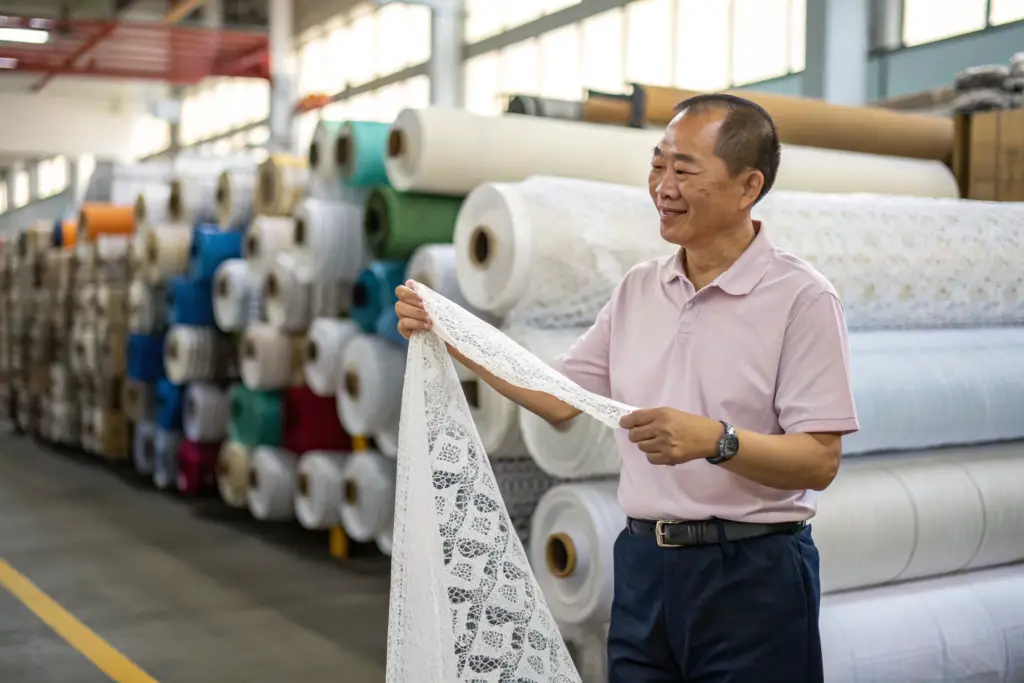
Women's wear often uses more expensive fabrics and more fabric per garment than men's wear. Women's fabrics include silks, laces, chiffons, and specialty knits. These materials cost more per yard than standard men's fabrics like cotton poplin or twill. Additionally, women's garments often require more fabric due to pattern layout inefficiencies. A men's shirt pattern can be nested tightly on the cutting table. The pieces are rectangular and fit together efficiently. A women's blouse pattern has curved pieces that create more waste. The fabric yield is lower. For a men's shirt, we typically use 1.6 yards of fabric per unit. For a women's blouse of similar size, we use 1.9 to 2.1 yards. The combination of higher fabric cost and higher fabric consumption can make the material cost for women's wear 40% to 60% higher than comparable men's wear. We worked with a client from San Francisco who wanted to reduce fabric costs on their women's line. We analyzed their pattern layouts. We found they were using a 1-way fabric layout. This wasted 12% of the fabric. We switched to a 2-way layout where possible. We also nested the patterns more efficiently. The fabric consumption dropped by 8%. The client saved $1.50 per unit across their collection.
Sizing also affects material cost. Men's sizing has a narrower range. Sizes small to extra large have a predictable size curve. Women's sizing has a wider range. It includes petite, regular, and plus sizes. The plus sizes use significantly more fabric. This increases the average fabric cost per unit.
Why Are Women's Fabrics Often More Expensive?
Several factors drive fabric costs higher for women's wear. First, fiber content. Women's garments use more natural fibers like silk, linen, and high-quality cotton. These fibers cost more than standard cotton or polyester blends. Second, finishing. Women's fabrics often have special finishes like softening, wrinkle resistance, or special dyes. These finishes add cost. Third, width. Many women's fabrics are produced in narrower widths. This reduces the yield and increases cost. For a women's lace dress, the fabric cost can be $15 to $25 per yard. For a men's cotton shirt, the fabric cost is $3 to $6 per yard. The difference is significant. One of our clients, a New York womenswear brand, wanted to use a specific Italian silk for their blouse collection. The fabric cost was $28 per yard. We advised them to consider a high-quality polyester satin as an alternative. The look was similar. The cost was $7 per yard. They tested both. Their customers could not tell the difference. They switched to the alternative. They saved $21 per unit on fabric alone. This allowed them to hit their target retail price.
How Does Pattern Layout Differ Between Men's and Women's Wear?
Pattern layout efficiency is a hidden cost driver. In our cutting room, we lay out multiple layers of fabric. We place the pattern pieces on top. We cut through all layers at once. The goal is to fit as many pieces as possible on the fabric width. Men's garment patterns are geometric. The pieces are rectangles and squares. They fit together like Tetris blocks. Waste is minimal. Women's garment patterns are organic. They have curves, angles, and irregular shapes. They leave gaps between pieces. Waste is higher. For a men's shirt, our marker efficiency is typically 85% to 90%. This means 85% to 90% of the fabric is used. For a women's blouse, marker efficiency is often 75% to 80%. The 10% difference in efficiency adds up. On a 2,000-unit order, that extra waste could be 400 yards of fabric. At $5 per yard, that is $2,000 in additional material cost. We use specialized software to optimize our markers. For women's wear, we also consider using wider fabric widths. This can improve efficiency. We work with our clients to select fabric widths that match their pattern shapes. This small change can reduce waste by 5% to 8%.
How Do Order Volumes and Product Lifecycles Affect Pricing?
Volume matters. It affects every part of the production process. I have seen brands order 10,000 units of a men's basic shirt. They order 1,500 units of a women's fashion blouse. The pricing is different. The brand asks why. They think the factory is charging more for women's wear. The reality is that volume drives efficiency. A few years ago, a client from Atlanta placed two orders with us. One was for 8,000 men's polo shirts. The other was for 1,200 women's knit tops. Both used similar fabric. The men's polo cost $8.50 per unit. The women's top cost $11.20 per unit. The client was concerned. We explained the volume difference.
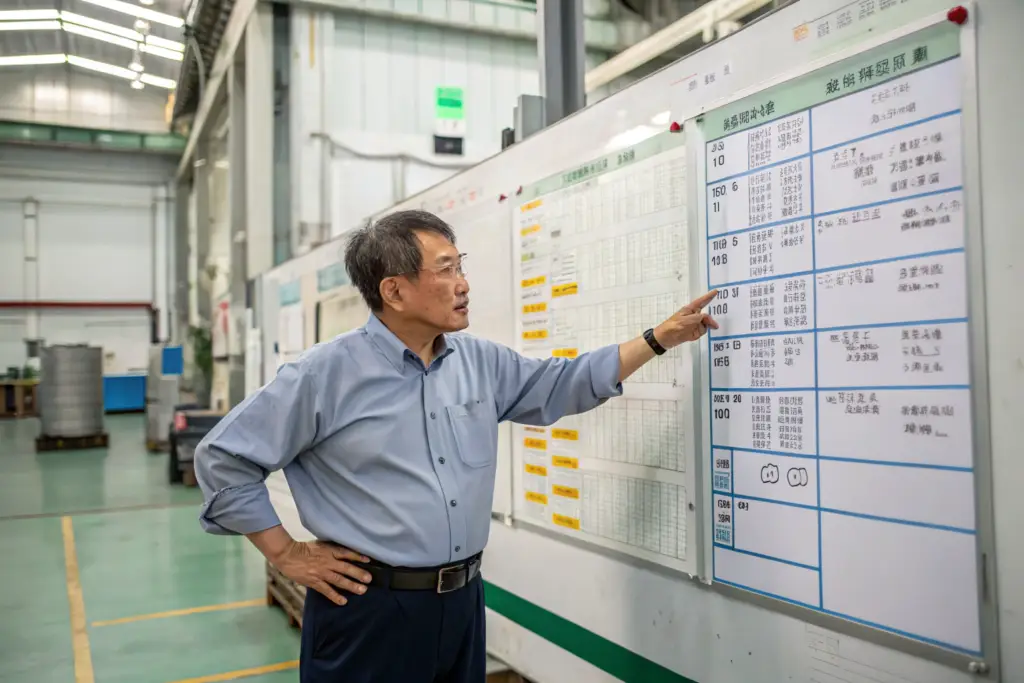
Order volumes for men's wear are typically larger than for women's wear. This allows for longer production runs and better economies of scale. Men's fashion changes slowly. Basic styles like the white button-down shirt or the classic chino can be produced year after year. Women's fashion changes quickly. Styles have shorter lifecycles. Orders are smaller and more frequent. The setup time for a production line is the same whether you run 500 units or 5,000 units. The setup cost is spread over fewer units for small orders. This increases the per-unit cost. For a men's basic shirt with an annual order of 20,000 units, we can run the line for weeks. The operators become highly efficient. For a women's fashion blouse with an order of 2,000 units, we run for a few days. Then we switch to a different style. The changeover takes time. The operators never reach peak efficiency. The cost per unit is higher. We worked with a client from Denver who wanted to reduce costs on their women's line. They consolidated their styles. Instead of 15 styles at 500 units each, they did 5 styles at 1,500 units each. The per-unit cost dropped by 18%. The styles were more focused. They sold better. The client was happy.
Product lifecycle also affects pricing. Men's wear basics have predictable demand. We can plan raw material purchases months in advance. We can buy fabric in bulk. This reduces material costs. Women's fashion has unpredictable demand. We cannot commit to large fabric purchases. We buy smaller quantities. We pay higher prices. This cost is passed to the client.
Why Do Men's Wear Orders Typically Have Higher Volumes?
Men's wear is driven by basics. A man's wardrobe includes white shirts, blue shirts, khaki pants, and dark jeans. These styles change slowly. Brands can order large quantities with confidence. The styles will sell for multiple seasons. Women's wear is driven by trends. A specific silhouette may only be popular for one season. Brands order smaller quantities to reduce risk. They do not want to be stuck with unsold inventory. For a men's basic shirt program, we often see orders of 10,000 to 50,000 units per style. For a women's fashion blouse, orders are often 500 to 3,000 units. The difference in volume directly impacts pricing. The fixed costs of pattern making, sample development, and production setup are the same. Spread over 10,000 units, they add $0.50 per unit. Spread over 500 units, they add $10.00 per unit. This is not a women's wear markup. It is simple math. We encourage our women's wear clients to plan capsule collections. Focus on fewer styles with deeper quantities. This improves margins for both the brand and the factory.
How Do Shorter Lifecycles Impact Women's Wear Production?
Short lifecycles create pressure in the supply chain. Women's fashion collections change every 3 to 4 months. This means we are constantly setting up new styles. Each new style requires pattern development, sample making, and production line setup. This takes time and labor. Men's wear collections change every 6 to 12 months. There are fewer transitions. The factory can run longer, more efficient production cycles. For a women's fast fashion brand, we might run 50 different styles in a single season. Each style has its own pattern, its own fabric, its own production setup. The overhead is high. The per-unit cost reflects this. For a men's basics brand, we might run 10 styles across the year. The overhead is lower. The per-unit cost is lower. We work with our women's wear clients to plan their production calendar. We try to group similar styles together. We run them in sequence to minimize changeover time. This helps reduce the cost impact of short lifecycles.
Conclusion
The cost differences between men's and women's wear are real. They are driven by pattern complexity, construction techniques, fabric choices, and order volumes. Women's garments require more pattern pieces. They involve more complex sewing techniques. They often use more expensive fabrics with lower yield. And they are typically produced in smaller quantities with shorter lifecycles. Each of these factors adds cost.
This is not about gender pricing. It is about the reality of manufacturing. A women's blouse with darts, curved seams, and delicate fabric takes more time to make than a men's shirt with straight seams and simple construction. A women's fashion order of 500 units costs more per unit to produce than a men's basics order of 10,000 units. These are manufacturing facts.
At Shanghai Fumao, we have been producing both men's and women's apparel for over 20 years. We understand the differences. We know how to manage them. We help our clients make informed decisions. We show them where the costs go. We offer alternatives. We simplify patterns where possible. We optimize fabric layouts. We consolidate orders to improve volume. We do this to help our clients achieve their price targets without sacrificing quality.
If you are sourcing men's or women's apparel, we can help. We will walk you through the cost drivers. We will be transparent about pricing. We will work with you to find the best balance of cost, quality, and design.
Contact our Business Director, Elaine, directly at elaine@fumaoclothing.com. Tell us about your collection. We will give you an honest breakdown of the costs. Let us show you how a true manufacturing partnership works.