You design a beautiful children's dress. It looks amazing on the model. But then, a mother buys it. Her child wears it to school. By lunchtime, the buttons are loose. By afternoon, the fabric has a small tear. The mother is frustrated. She will not buy from that brand again. This is a common problem. Many apparel brands focus on style for kids' clothes. They forget the most important user: the child. Kids are not miniature adults. They run, they climb, they spill, they grow. Practicality is not a bonus feature. It is the core requirement.
Based on our 15 years of manufacturing children's wear for North American and European brands, I have learned that practical kids' clothing comes down to four key areas: durability for active play, easy care for parents, safety in every component, and smart sizing for growth. We do not just sew clothes. We engineer them to survive childhood. For example, last year we worked with a Canadian brand that had high return rates due to knee tears on their kids' pants. We analyzed the issue and switched to a reinforced double-layer knee panel using a more durable fabric blend. We also changed the stitching pattern. The returns dropped by 55% in the next season. The parents noticed the difference. The brand's repeat purchase rate increased significantly.
So, what specific details make a garment truly practical for kids? Let me walk you through the construction choices, material selections, and design elements that separate a simple children's garment from one that parents will love and buy again. These are the details we focus on every day in our factory.
How Do You Choose Fabrics That Survive Active Play?
Kids move constantly. They run, they fall, they slide on their knees. A fabric that works for an adult blouse will fail on a child's pants. I remember a brand owner from Texas. She was frustrated. Her line of cotton leggings looked great. But after three washes, the fabric pilled badly. After a week of play, the knees had thin spots. She was losing customers. She came to us for a solution. We needed to rethink the fabric choice completely.
The key to durable kids' wear is selecting fabrics with the right fiber composition, construction, and weight for the intended use. We do not use the same material for a toddler's play pant that we use for a special occasion dress. For active wear, we prioritize fabrics with a higher tensile strength. We often recommend a blend of cotton with a small percentage of polyester or elastane. This gives the fabric recovery. It resists pilling. It holds its shape. For a California-based kids' activewear brand, we developed a custom cotton-spandex blend. The fabric had a weight of 240 GSM instead of their previous 180 GSM. The difference was immediate. Their customers started leaving reviews about how the clothes lasted through multiple kids. That is real value.
Fabric choice also depends on the age group. A baby's onesie needs different properties than a school-aged child's hoodie. We always ask our clients about the intended use. We then match the fabric to the activity level. This is not guesswork. It is based on testing and experience.
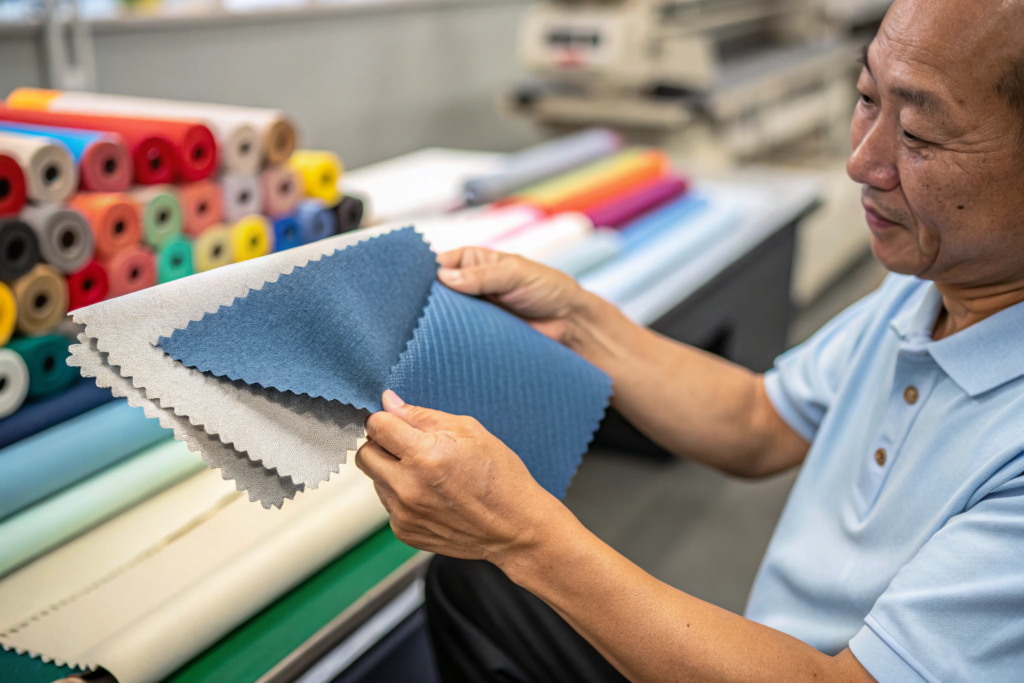
What Fabric Weights and Weaves Resist Tearing Best?
Tearing happens when fabric is thin or the weave is loose. For kids' clothes, we recommend a minimum weight for key areas. For pants, we rarely go below 220 GSM for cotton jersey. For woven shorts and trousers, we use a twill weave. Twill has a diagonal rib. This structure naturally resists tearing. A plain weave is weaker. We also look at the fabric's tear strength test results. Our quality control lab tests every batch of fabric we use for kids' wear. We check the bursting strength. We check the seam slippage. A few years ago, a client from New York wanted a lightweight linen blend for summer kids' shorts. The style was beautiful. But our lab tests showed the fabric had low tear strength. We shared the data with the client. We offered an alternative: a linen-cotton blend with a slightly tighter weave and higher weight. The client was hesitant at first. We made samples of both. They tested them with their own team. The alternative fabric was clearly more durable. They went with our recommendation. The shorts sold well all summer with minimal returns. The client trusted our judgment after that.
Why Are Blends Often Better Than 100% Cotton for Kids?
100% cotton feels soft. Parents love it. But for active kids, it has limitations. Cotton absorbs moisture and stays wet. It wrinkles easily. It can shrink. It can pill. Blends solve these problems. A cotton-polyester blend resists wrinkles. It dries faster. It holds color better after many washes. A cotton-spandex blend adds stretch. This is crucial for kids who are constantly moving. The stretch also means the garment fits longer. The child can grow into it a bit. For a toddler's t-shirt, we often use a 95% cotton, 5% elastane blend. It feels soft. But it moves with the child. It does not lose its shape after being pulled on and off. We also use modal or lyocell blends for a softer hand feel. These fibers are derived from wood pulp. They are naturally breathable. They drape well. They are also more sustainable. For a European kids' brand, we developed a t-shirt using a cotton-modal blend. The fabric was softer than their previous 100% cotton option. It also resisted fading after repeated washing. The brand marketed this as a premium, longer-lasting product. Their customers were willing to pay a higher price. They understood the value.
What Safety Features Should Every Kids' Garment Include?
Safety is non-negotiable. One loose button can become a choking hazard. One poorly designed drawstring can get caught on playground equipment. I heard a story from a distributor in the Midwest. His supplier sent a shipment of kids' hoodies with long, uncovered drawstrings. The distributor did not know the safety risks. A child's hoodie string got caught on a slide. The child was injured. The lawsuit that followed was devastating. The brand and the distributor both suffered. This is not a risk any responsible company can take.
Safety in kids' clothing starts with understanding and complying with international standards like CPSIA in the U.S. and EN 14682 in Europe. We treat these regulations as the minimum, not the target. We go beyond. For example, we do not just use safety-approved snaps. We test every batch for pull strength. We do not just avoid drawstrings in certain sizes. We educate our clients on why the regulation exists. Last year, a new brand asked us to produce hoodies for children aged 4 to 7 with decorative drawstrings. We explained the regulations. We showed them the alternatives: functional elastic with a hidden adjustment or no drawstring at all. They appreciated the guidance. We redesigned the hood together. The final product was safer. And the brand avoided a potential liability.
Safety is not an afterthought. It is built into our design and production process from the start. We review every tech pack for potential safety issues. We check components. We check construction. We want our clients to feel confident that their products are safe for the children who wear them.
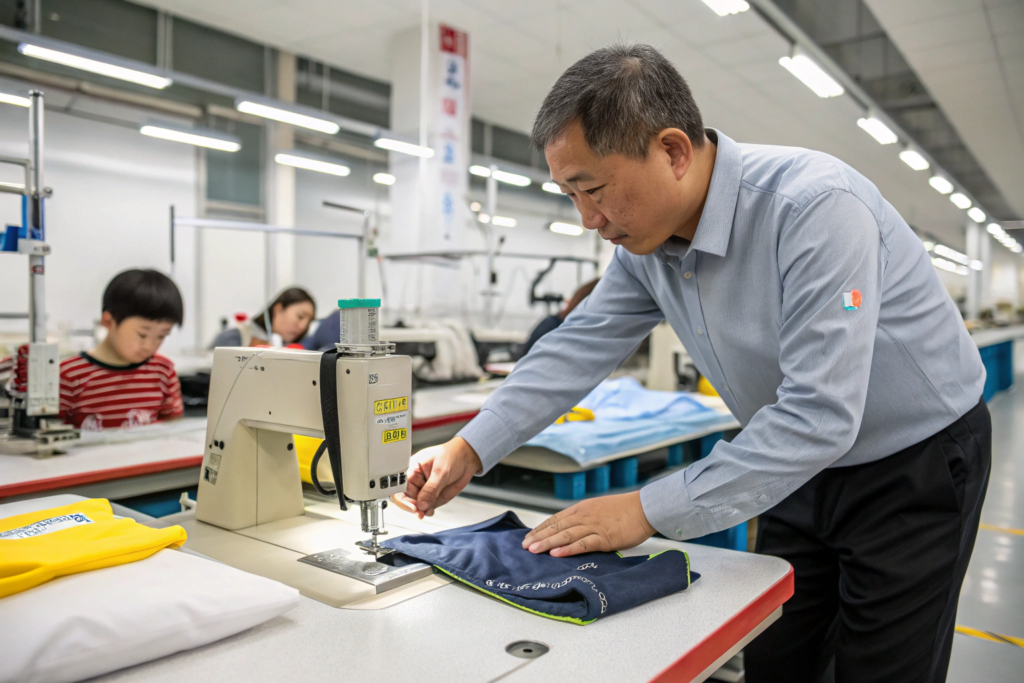
How Do We Test Buttons, Snaps, and Zippers for Safety?
Small parts are the biggest risk. A button, a snap, a decorative emblem. If it comes off, a young child can swallow it. We take this very seriously. We use specialized equipment to test pull strength. We test every batch of components before we sew them onto garments. Our standards exceed the requirements. For a snap on a baby's onesie, we test it at 70 Newtons of force. This is much higher than the standard. We also test for lead content. We only source zippers from certified suppliers. We use zipper pulls that are designed to stay attached. For a children's outerwear line we produced for a Canadian brand, we conducted a full component audit. We tested every button, every snap, every zipper. We provided a detailed report to the brand. They used this report to show their retail buyers. It gave them credibility. It showed they were a responsible supplier. We also visually inspect each garment. Our quality control team checks every button attachment. They look for loose threads. They look for any component that might be a potential hazard. This is painstaking work. But it is essential.
Why Are Drawstring Regulations Critical for Kids' Outerwear?
Drawstrings on hoods and necks are banned for children's sizes 2T to 12 in the U.S. and many other countries. The reason is strangulation risk. A drawstring can get caught on a car door, a slide, or a school bus railing. The child can be pulled and strangled. This is not a theoretical risk. There have been documented deaths. As a manufacturer, we have a responsibility to inform our clients. We never produce a garment with a neck or hood drawstring for these age groups. For waist drawstrings, we follow strict rules. They must be short. They must be secured at the back so they cannot be pulled out. We always ask clients: does this detail need to be a functional drawstring? Often, an elastic waist with a fixed decorative cord is a safer alternative. We had a client from the UK. They wanted a hoodie with a long, decorative cord. We explained the EU regulation. They were surprised. They had not known. We worked together to redesign the hood. We used a small, internal elastic adjuster hidden inside the hood seam. The look was clean. The hood was functional. And the product was safe. The client was grateful. They now consult us on safety for all their kids' designs.
How Can Design Details Make Parents' Lives Easier?
Parents are busy. They are tired. They are dressing squirming toddlers. They are dealing with diaper changes in cramped public restrooms. A garment that looks great but is hard to put on or take off will be abandoned. It will sit in the drawer. The parent will reach for the easier option. I remember a father telling me at a trade show: "I don't buy anything with more than three buttons for my three-year-old. It's just not worth the fight." That stuck with me.
Practical design for kids' clothes means thinking like a parent, not just a designer. We add features that solve real problems. For a baby line, we use envelope necklines. These stretch wide so you can pull the onesie down over the shoulders. This is for diaper blowouts. You do not have to pull the mess over the baby's head. For toddlers, we use reinforced knee patches. We use elastic waistbands that are wide and comfortable. For a children's pajama line from a Boston brand, we added a two-way zipper. It zips from the top down or from the bottom up. This makes middle-of-the-night diaper changes so much easier. The brand's customer reviews specifically mentioned this feature. Parents loved it.
The details that make a parent's life easier are often small. But they have a huge impact on the user experience. We encourage our clients to think through every step of the garment's lifecycle. From getting it on, to wearing it, to washing it, to passing it down to another child.
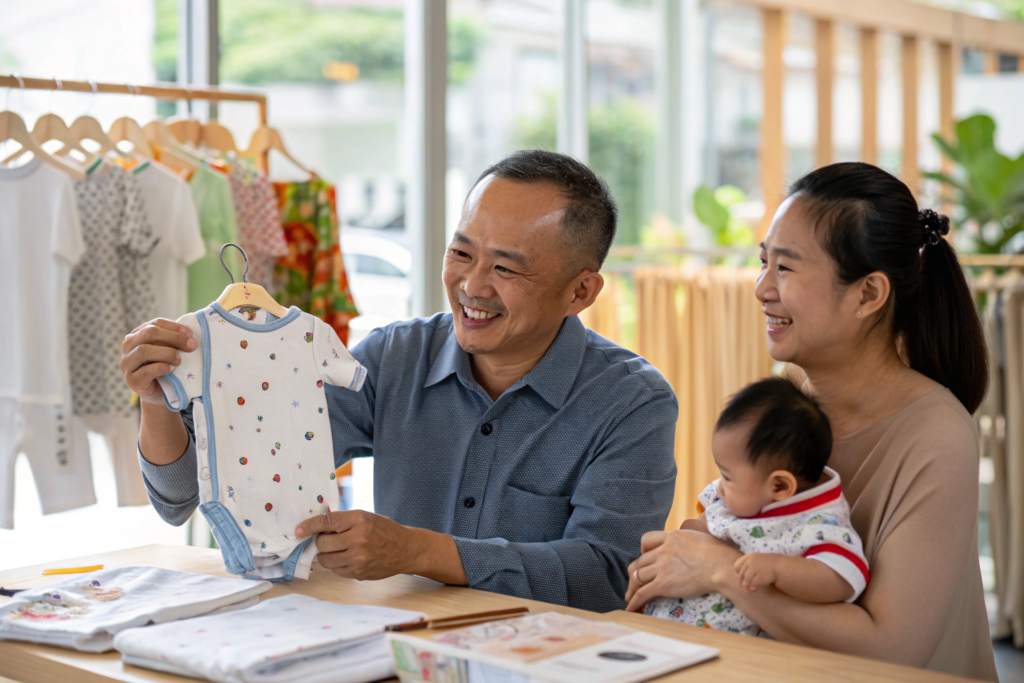
What Closure Systems Work Best for Different Age Groups?
One size does not fit all when it comes to closures. For newborns, snaps are best. But not just any snaps. We use metal snaps that are secure but easy to open. We position them for easy access. For onesies, we use snaps that go down the front and between the legs. We avoid snaps on the back. They are uncomfortable when the baby lies down. For infants and toddlers, we move to zippers. A front zipper with a protective flap at the top is standard. The flap prevents the zipper pull from touching the child's chin. The two-way zipper I mentioned is a game-changer. For a client's toddler line, we also used magnetic closures on a jacket. These are easy for small hands to manage. The child can put the jacket on themselves. This builds confidence. For older kids, we use buttons. But we reinforce the button attachments. We use shank buttons for jackets. They are more durable. For a school uniform client, we used heavy-duty snaps on polo shirts. The kids could open and close them easily. But they stayed closed during the day. The school and the parents appreciated this practical choice.
How Do We Add Growth Features to Extend Garment Lifespan?
Kids grow fast. A garment that fits in September might be too small by November. Parents appreciate features that extend the usable life. We add growth features to many of our designs. For pants, we use adjustable elastic waistbands with internal buttons. This allows the waist to expand as the child grows. For sleeves on jackets and shirts, we design a deep hem. It can be let out as the child's arms get longer. For a children's outdoor brand, we added a snap system on their rain pants. The bottom hem could be snapped to three different lengths. The pants grew with the child. The brand marketed this as "two seasons in one pant." It was a huge selling point. We also use fold-over cuffs on baby pants. They can be worn long or folded up. This gives a few extra months of wear. These features require a bit more planning and cost. But they create value. They make the parent feel like they are making a smart investment. That leads to brand loyalty.
What Makes Kids' Clothes Easy to Wash and Maintain?
Parents do not have time for special care instructions. They throw clothes in the washing machine with the rest of the family's laundry. They use regular detergent. They sometimes use a dryer. If a garment shrinks, fades, or falls apart after a few washes, the parent blames the brand. They will not buy it again. I have seen great designs fail because the fabric or construction could not handle a standard home laundry cycle.
We engineer every garment we make to withstand repeated home laundering. This means pre-shrinking fabrics, using colorfast dyes, and selecting trims that do not degrade in heat or detergent. For a large order of kids' t-shirts for a U.S. mass retailer, we conducted our own wash tests. We washed samples 20 times. We measured shrinkage. We checked for color bleeding. We looked for seam puckering. The retailer had their own standards. But we set our bar higher. When their audit team tested random samples, they all passed easily. Our reputation for quality was reinforced. The retailer gave us more orders. This is the result of taking laundry durability seriously.
Easy care is not an accident. It is a result of specific choices in fabric selection, garment construction, and finishing processes. We advise our clients on these choices. We want their customers to have a positive experience from the first wear to the fiftieth wash.
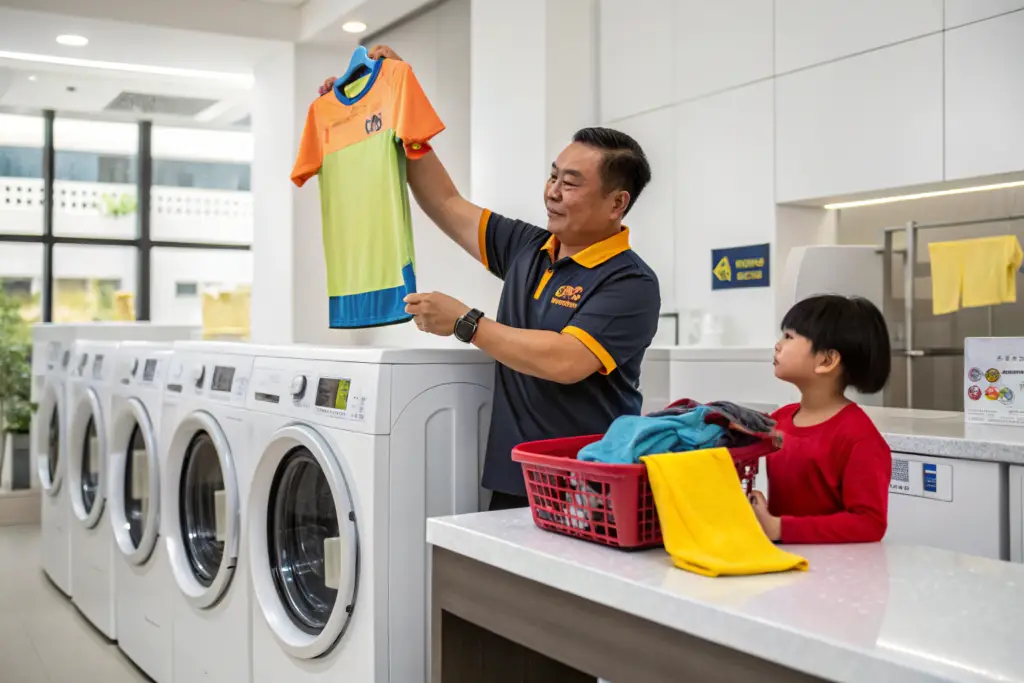
How Do We Pre-Treat Fabrics to Minimize Shrinkage?
Shrinkage is a major complaint. A shirt fits perfectly out of the package. After one wash, it is too short. This happens when the fabric is not properly pre-treated. At our factory, we have a strict protocol. All knitted fabrics are pre-shrunk before cutting. We use a steam shrinking machine. This relaxes the fibers. The fabric is then laid flat for 24 hours to stabilize. We also test the shrinkage rate for every batch. We target less than 3% shrinkage for cotton knits. For woven fabrics, we do a cold water pre-wash for certain clients. This is more costly. But for premium brands, it is worth it. A client from Australia had a problem with their previous supplier. Their linen-cotton shirts for kids were shrinking a full size after the first wash. The returns were high. We proposed a pre-wash treatment. It added a small cost. But the shrinkage dropped to under 2%. The client's returns decreased by over 60% in the next season. They made up the cost in customer satisfaction. They have used us for all their kids' woven garments since then.
What Finishing Processes Prevent Color Fading?
Color fading makes clothes look old and worn out quickly. This is especially noticeable with bright colors and dark washes. We use several techniques to prevent fading. First, we use reactive dyes. These bond chemically with the fibers. They are more colorfast than direct dyes. Second, we use a special fixing agent in the final rinse. This locks the color in. Third, we test for crocking. This is the transfer of color from wet fabric to another surface. We rub the fabric with a white cloth under pressure. We check for color transfer. For a European brand's line of brightly colored kids' hoodies, we ran extensive colorfastness tests. We tested against water, perspiration, and light. The client was concerned about the red hoodie fading. We ran a 40-hour lightfastness test. The red held strong. The brand used this data in their marketing. They told parents that the colors would stay bright wash after wash. This built trust. We also advise clients to avoid certain fabric blends for deep, saturated colors if the end use is heavy wear. Sometimes a slightly different fiber blend will hold color better. We guide them to the best option based on their design goals and practical needs.
Conclusion
Creating practical kids' clothes is a specialized skill. It requires understanding the unique demands of young users and their parents. It is not enough to scale down adult designs. You need to think about durability, safety, convenience, and easy care. These are the details that turn a one-time purchase into a loyal customer relationship.
We have shared our experience with fabric selection that survives playgrounds. We have explained our rigorous safety testing for every small component. We have discussed design features like two-way zippers and adjustable hems that make parents' lives easier. And we have outlined the finishing processes that ensure clothes look good wash after wash. These are not add-ons. They are the foundation of a successful kids' apparel line.
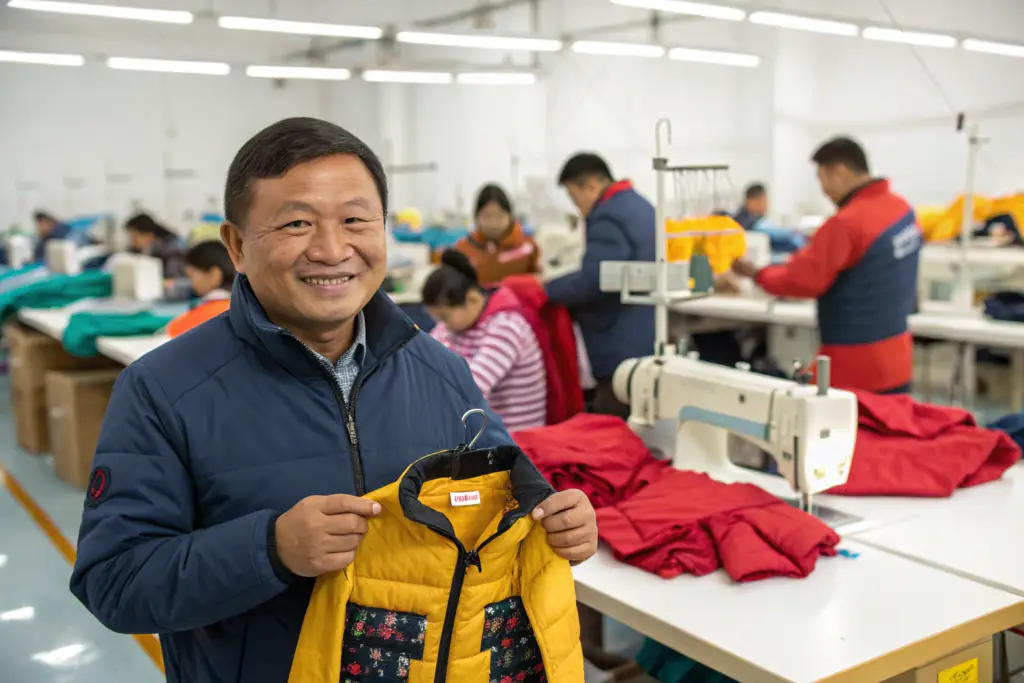
At Shanghai Fumao, we have been manufacturing children's wear for over 15 years. We have five dedicated production lines. We work with brands across North America and Europe. We know the standards. We know the parents. We know the kids. We are committed to producing garments that meet your design vision while exceeding practical expectations.
We invite you to partner with us for your next kids' collection. Let us apply our expertise to your designs. We will help you avoid the common pitfalls. We will ensure your clothes are safe, durable, and easy to care for. Your customers will notice the difference. And they will come back for more.
Contact our Business Director, Elaine, directly at elaine@fumaoclothing.com. Let us start a conversation about how we can bring your practical, beautiful kids' wear to market.