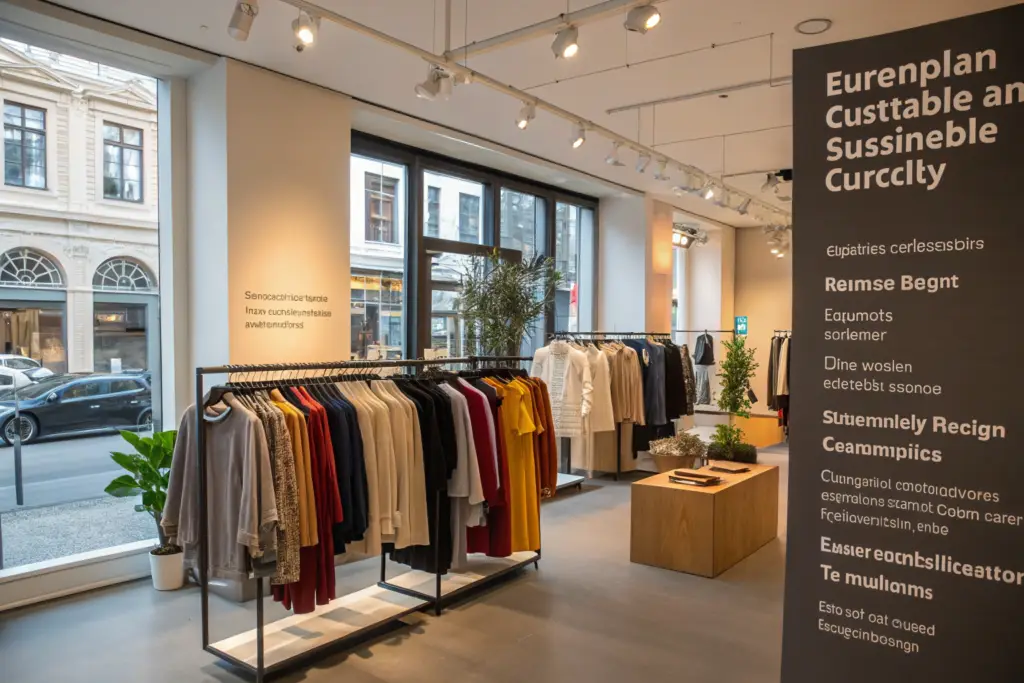
I've been shipping clothes to Europe for over fifteen years. The market there is different from America. European buyers care about different things. They ask different questions. They reject styles that sell well in the US and embrace things that American buyers don't understand. I learned this the hard way with my first European client. I sent them samples that our American clients loved. They sent them back with polite but firm feedback: too loud, too logo-heavy, not sustainable enough. I had to completely rethink how we approach the European market. Now, after working with brands in London, Berlin, Milan, and Paris, I've seen clear patterns emerge. The trends driving sales in Europe aren't just about fashion. They're about values.
European customized apparel sales are being driven by three interconnected trends: radical sustainability and circularity, minimalist design with maximalist quality, and technical innovation that serves both performance and environmental goals. European buyers want clothes that tell a story of responsibility, craftsmanship, and purpose.
At Shanghai Fumao, we've adapted our product development specifically for European clients. We've built relationships with certified sustainable mills. We've trained our team on European sizing and fit preferences. We've learned what "quality" means to a buyer in Copenhagen versus a buyer in Munich. Let me walk you through what's actually selling and why.
What does sustainability really mean for European apparel buyers?
Sustainability in Europe isn't a marketing buzzword. It's a business requirement. I've sat through meetings where European buyers spend more time discussing our environmental certifications than our prices. They ask about our water usage. They ask about our fabric suppliers. They ask about our workers' wages. They want to see proof, not promises.
Last year, a Swedish brand canceled an order because we couldn't provide the specific traceability documentation they required for a recycled polyester fabric. The fabric was recycled. But we couldn't prove exactly which post-consumer waste it came from. They walked away. That was a painful lesson. Now we only work with mills that can provide full chain-of-custody documentation.
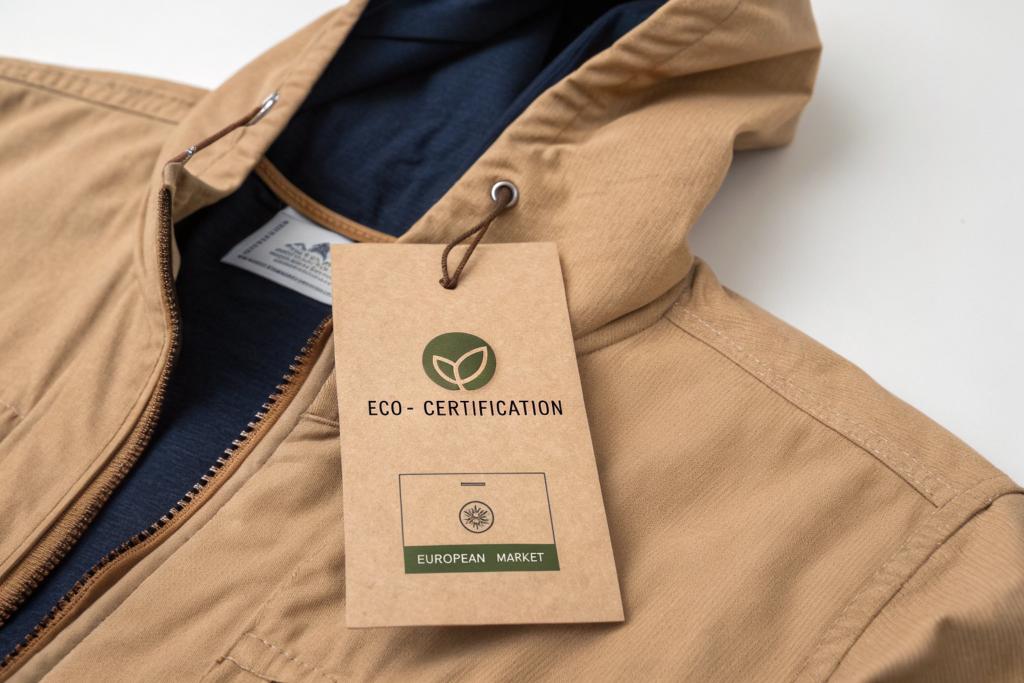
Which eco-certifications do European buyers actually require?
The list is growing, but the non-negotiables are becoming clear. GOTS (Global Organic Textile Standard) is essential for organic cotton. Buyers in Germany and Scandinavia won't touch organic cotton without it. For recycled materials, GRS (Global Recycled Standard) is the benchmark. For overall environmental management, OEKO-TEX STeP is increasingly required by larger European brands. And for carbon footprint data, the Higg Index is becoming standard. A client from Amsterdam recently asked us to provide Higg Index data for every fabric we proposed for their spring line. We had to reject two of their favorite fabrics because our mills couldn't provide the data. According to the European Environment Agency's report on textile consumption, 78% of European consumers consider environmental impact when buying clothes, and brands are responding with stricter sourcing requirements. If you don't have these certifications, you're locked out of most of the market.
How is the circular economy changing custom apparel design?
European brands are designing for the end of a garment's life, not just its first sale. They ask questions we never heard ten years ago: Can this fabric be recycled? Can these buttons be removed easily for recycling? Can we use a single fiber type to make recycling easier? A Danish streetwear brand we work with now designs all their pieces with mono-materials. Their entire collection uses only cotton or only polyester, never blends. That means the garments can be recycled into new fiber at the end of their life. They also use buttons made from corozo nut instead of plastic. It's biodegradable and looks like ivory. According to the Ellen MacArthur Foundation's work on circular fashion, designing for circularity could unlock $500 billion in value by 2030. European brands are ahead of this curve. They're not just selling clothes. They're selling a system where clothes don't become waste.
Why is minimalist design dominating European customized apparel?
Walk through the shopping districts in Milan or Paris. You'll see windows full of clothes that look simple at first glance. No huge logos. No loud prints. No extreme silhouettes. But look closer and you'll see the difference. The fabric is extraordinary. The stitching is perfect. The fit is precise. European minimalism isn't about boring clothes. It's about letting quality speak for itself.
I learned this from a client in Zurich. He sent us a design for a plain white t-shirt. It looked like a basic tee. But his spec sheet was four pages long. He specified the exact cotton fiber length. The exact thread count. The exact stitch density. The exact neck rib thickness. He wasn't buying a t-shirt. He was buying a canvas for exceptional quality.
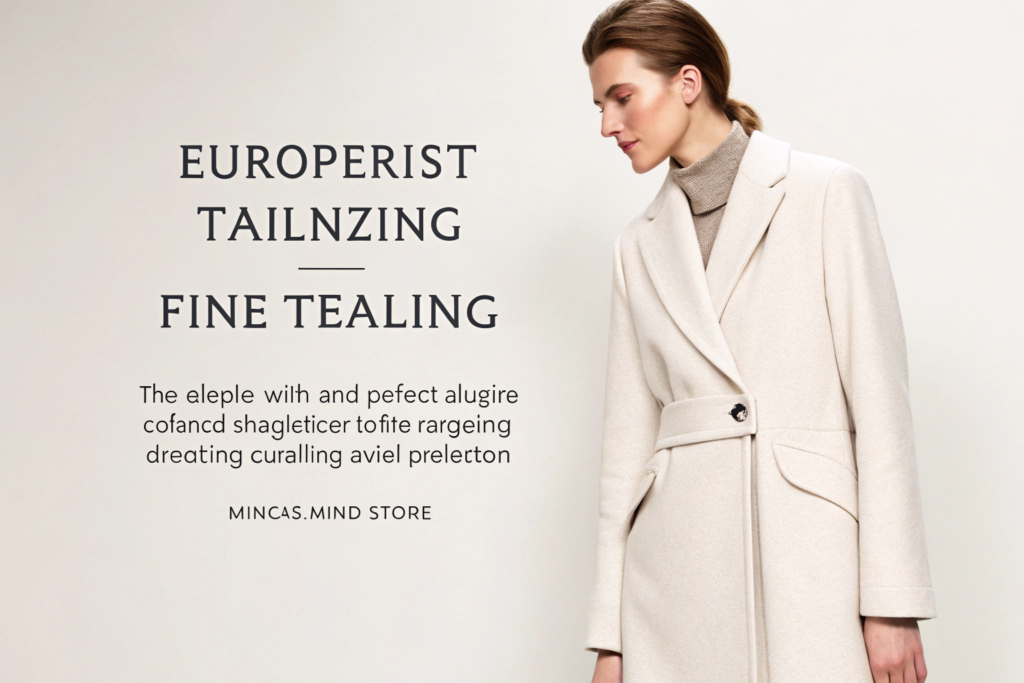
What defines European minimalism in garment design?
European minimalism is about subtraction with purpose. You remove everything unnecessary, then perfect what remains. Silhouettes are clean and architectural. Colors are neutral: black, white, navy, beige, olive, and grey dominate. Logos are small or absent entirely. The focus is on proportion, texture, and construction. A client from Barcelona designs women's trousers with no visible pockets, no belt loops, no embellishment. But the cut is so precise that they flatter every body type. The fabric is a wool-cashmere blend that drapes perfectly. Women pay €300 for these trousers and feel they're worth it. According to Vogue Business's analysis of European fashion trends, quiet luxury and minimalist design have driven 40% of the growth in the premium segment over the last two years. The clothes don't shout. They whisper.
How do European buyers approach fabric selection differently?
European buyers obsess over hand feel. They want to touch the fabric before they approve it. They talk about "drape" and "bounce" and "body." They reject fabrics that look good in photos but feel cheap in person. They prioritize natural fibers: wool, cashmere, linen, high-quality cotton. But they're also open to innovative synthetics if the performance justifies it. A client from Lyon, the heart of French silk country, ordered thousands of meters of a specific viscose blend because it had the drape of silk but the durability of synthetic. She found it after months of searching. She sent us five rounds of lab tests before approving production. According to Textile World's European market report, European buyers spend 30% more time on fabric selection than their American counterparts. They know that fabric is 80% of the garment's success.
What technical innovations are European brands demanding?
Europeans love technology when it serves a purpose. They're not interested in gadgetry for its own sake. But they embrace innovations that make clothes perform better, last longer, or harm the environment less. The technical trends I'm seeing from European clients are practical, not flashy.
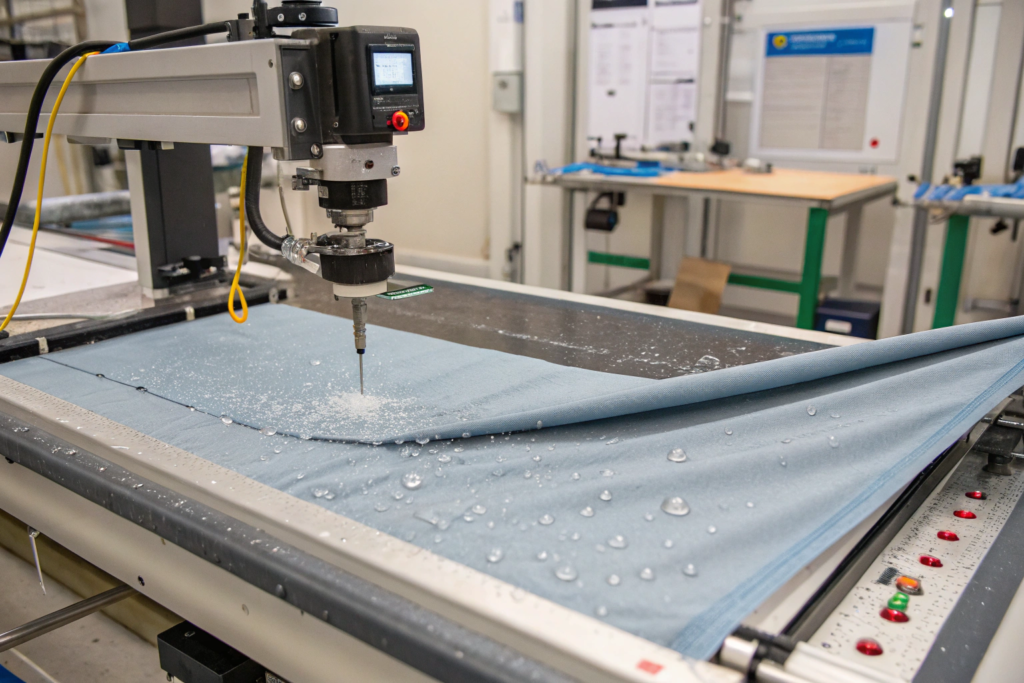
A client from the UK asked us to develop a waterproof jacket using a new membrane technology that contains no PFAS chemicals. PFAS are the "forever chemicals" used in traditional waterproofing, and they're being regulated heavily in Europe. We spent six months testing alternatives. We finally found a solution that worked. The jacket launched last season and sold out in three weeks.
What performance features matter most in European activewear?
European activewear buyers want gear that performs in variable conditions. The weather in Europe changes fast. A morning run in Berlin can start cold and rainy and end sunny and warm. So they need clothes that breathe, repel water, and regulate temperature. They also care deeply about freedom of movement. European activewear tends to be more fitted than American, so stretch and recovery are critical. A client from Munich designs running tights for serious athletes. They specify a fabric with 20% stretch in both directions and 98% recovery after 50 washes. We test every batch to those standards. According to Sportswear International's European market analysis, demand for PFAS-free waterproofing has increased 300% in the last two years as regulations tighten. The technology exists now. The brands that adopt it first are winning.
How is smart textile technology being used in European fashion?
Smart textiles are finally moving from science fiction to commercial reality. But European brands are using them subtly. A client from Stockholm makes winter coats with integrated heating elements powered by a small rechargeable battery. You can't see the technology. The coat looks like a normal wool coat. But step outside at -10°C and you stay warm. Another client from Italy makes dress shirts with permanent antimicrobial treatment. The shirts don't smell after a day of wear. You can wear them multiple times between washes, saving water and extending the garment's life. According to IDTechEx's report on smart textiles, the European market for functional textiles is growing at 15% annually. But the key is invisibility. European consumers don't want clothes that look technological. They want clothes that are technological without looking like it.
How do European sizing and fit preferences differ from other markets?
This is where many non-European brands fail. They assume European bodies are the same as American bodies. They're not. European sizing is different. European fit preferences are different. European proportions are different. I've seen beautiful collections fail because they didn't account for these differences.
A client from Los Angeles sent us patterns that worked perfectly for their American customers. When we made samples for their new European distributor, nothing fit right. The shoulders were too wide. The torsos were too long. The armscyes were too low. We had to redraft every pattern from scratch based on European body measurement data.
What are the key differences in European versus American sizing?
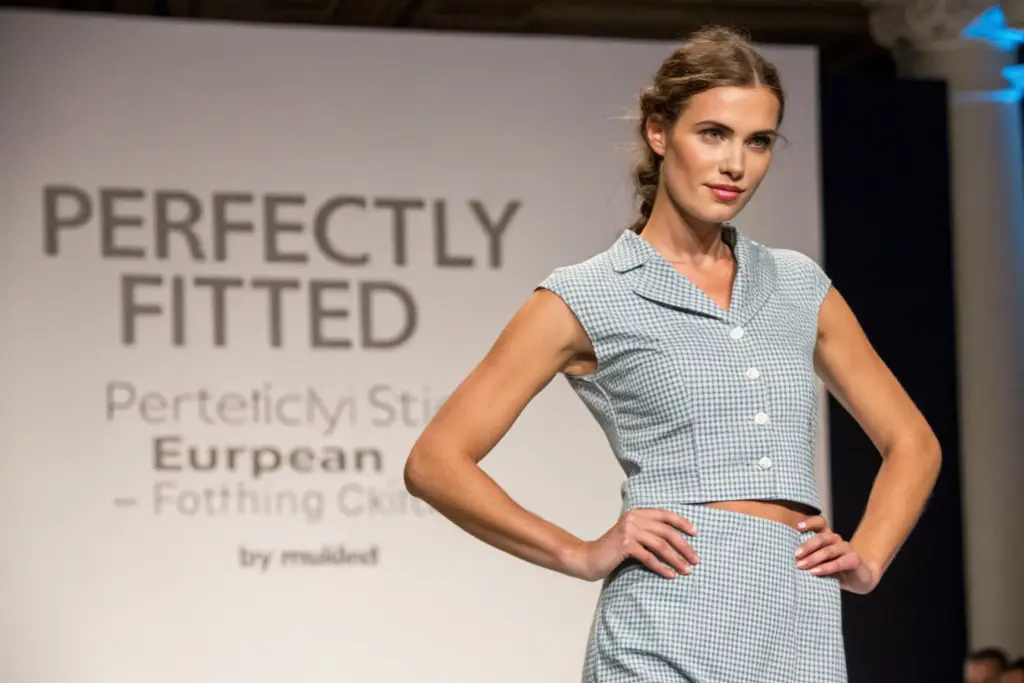
European sizing runs smaller for the same nominal size. A European size 40 is roughly equivalent to a US size 6-8, but the proportions are different. European fit tends to be narrower through the shoulders and chest, with a closer fit through the torso. Armholes are typically higher and sleeves narrower. Lengths are often shorter in the body but can be longer in the sleeves. European women generally prefer a more fitted silhouette than American women. According to ISO 8559-1:2017, the international standard for body measurement, there are significant proportional differences between Northern European, Southern European, and North American body types. Northern Europeans tend to have longer torsos and longer limbs. Southern Europeans tend to have broader shoulders relative to their height. If you're selling across Europe, you may need multiple fits for different regions.
How do I develop patterns that work for European customers?
Start with good data. Don't guess. Use anthropometric data from European sources. We work with our European clients to develop size charts based on their actual customer measurements. For one client, we analyzed return data from their first European season. We saw that sleeves were consistently too short for their Dutch customers and too long for their Italian customers. We developed two different sleeve lengths for the same body sizes. Returns dropped by 35%. Another client invested in a European fit model. They flew her to our facility in China for a three-day fitting session. We adjusted every pattern to her proportions. That collection had the lowest return rate in their history. According to ResearchGate's study on cross-cultural apparel fit, investing in market-specific fit development reduces returns by up to 40% and increases customer satisfaction scores by 25%. It's expensive upfront. It pays for itself in the first season.
Conclusion
The European customized apparel market is rewarding but demanding. Success requires understanding what European buyers truly value: sustainability that's real and documented, minimalist design that lets quality speak, technical innovation that serves practical needs, and fit that respects European body types and preferences. These aren't optional extras. They're the price of entry.
At Shanghai Fumao, we've invested heavily in serving European clients well. We maintain relationships with certified sustainable mills across Asia and Europe. We've trained our design and pattern-making teams on European aesthetics and fit preferences. We've built testing capabilities for the technical specifications European brands require. We've learned the hard lessons so our clients don't have to.
If you're ready to bring your brand to Europe or expand your presence there, let's talk. Contact our Business Director, Elaine, directly at elaine@fumaoclothing.com. Tell her about your vision for the European market. She'll connect you with our team members who specialize in European production. We'll review your designs, discuss your target countries, and help you develop a collection that meets European expectations from the very first sample. Your brand deserves to succeed in Europe. Let us help you make it happen.