I’ve shipped millions of pieces of children’s clothing over the last two decades. Some orders made everyone happy. Others created problems that cost brands money, time, and even their reputation. Kids’ wear is different from adult apparel. The stakes are higher. The safety rules are stricter. The fit expectations are completely unique. I’ve watched experienced adult clothing brands crash hard when they tried to apply the same thinking to children’s collections. The mistakes are predictable. And they’re almost all avoidable.
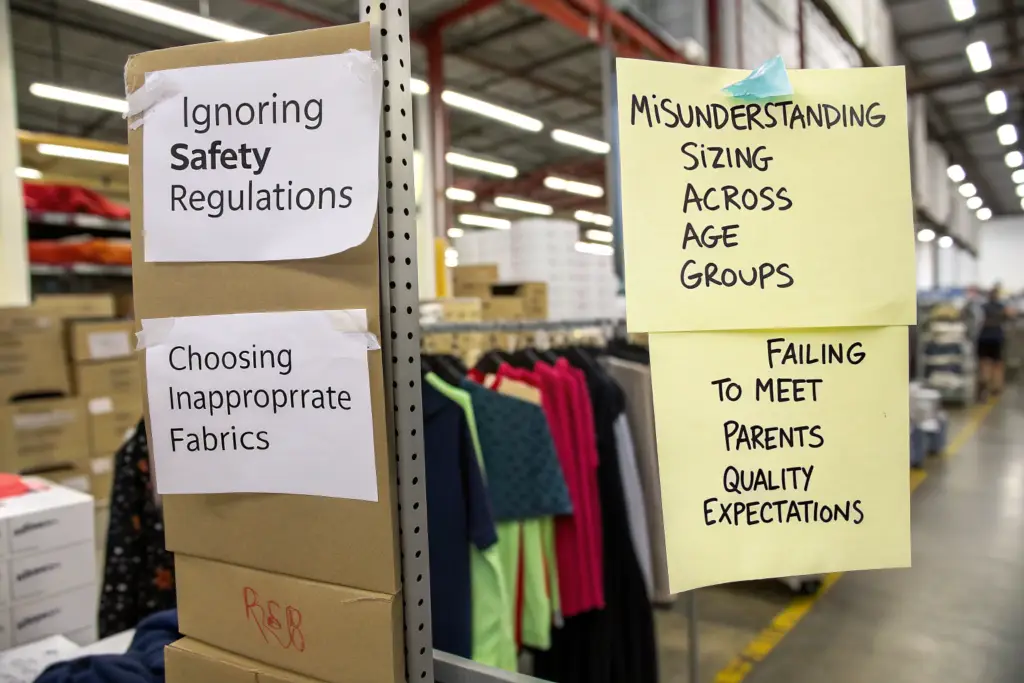
The most common mistakes in wholesale kids’ wear ordering stem from treating it like adult apparel. They include ignoring safety regulations, misunderstanding sizing across age groups, choosing fabrics that don’t survive childhood, and failing to account for the unique quality expectations of parents buying for their children.
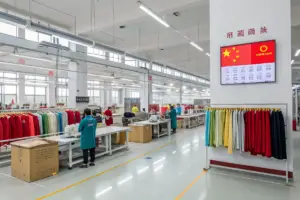
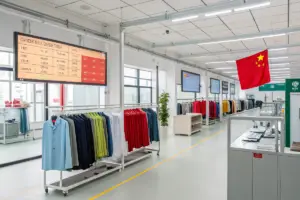
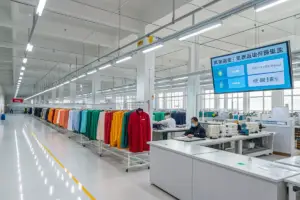
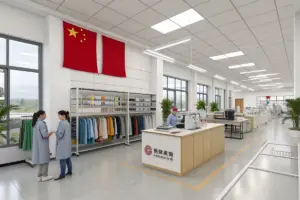
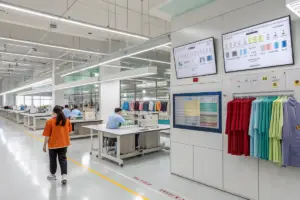
At Shanghai Fumao, we’ve dedicated one of our production lines specifically to kids’ wear because the requirements are so specialized. We’ve learned these lessons alongside our clients. Let me walk you through what I’ve seen go wrong, and more importantly, how you can get it right the first time.
What safety regulations do buyers miss with children’s clothing?
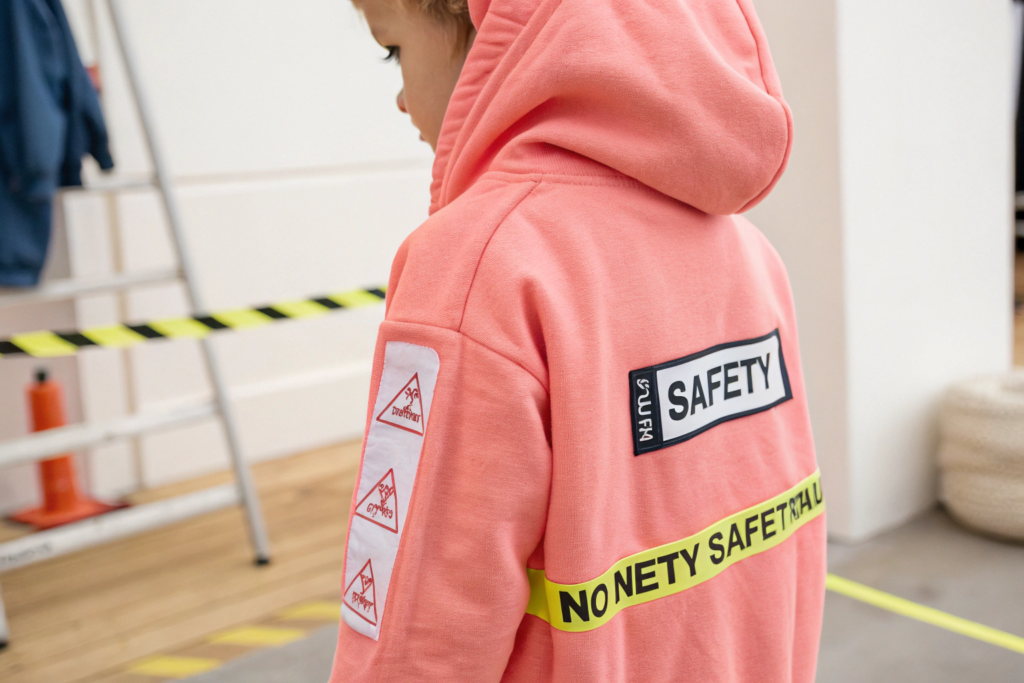
I had a client from Boston a few years back. They designed a beautiful line of toddler hoodies. The style was perfect. The fabric was soft. They were ready to place a big order. Then I asked a simple question: "What’s your drawstring plan?" They looked confused. They hadn’t thought about it. That’s when I explained that in the United States, hoodie drawstrings in children’s sizes 2T to 12 are essentially banned because kids get them caught on playground equipment and strangle. We had to redesign the entire line. That mistake would have cost them a recall if we hadn’t caught it.
Safety isn’t optional in kids’ wear. It’s the law. And the laws are different in every market. If you’re selling in the US, you’re dealing with the Consumer Product Safety Improvement Act. If you’re selling in Europe, it’s EN 14682. These regulations cover everything from drawstring lengths to the flammability of fabrics to the lead content in zippers and snaps.
How do CPSIA requirements affect my kids’ wear production?
The CPSIA is comprehensive. It requires third-party testing for lead and phthalates in children’s products. It mandates tracking labels. It sets strict limits on small parts that could become choking hazards. I remember a client who sourced beautiful wooden buttons for a line of infant cardigans. They looked perfect. But when we tested them, the finish contained lead above the legal limit. We had to source different buttons and retest. That added three weeks and cost the client an extra $2,000 in testing fees. According to the Consumer Product Safety Commission’s CPSIA guidance, any children’s product designed for children 12 and under must comply with these lead limits. The testing isn’t optional. It’s baked into the cost of doing business. Smart buyers budget for it and build testing time into their production schedules.
What are the rules about drawstrings and small parts in kids’ clothes?
Let me be specific about drawstrings. Federal regulations basically say: no drawstrings at the hood or neck area of children’s upper outerwear in sizes 2T through 12. None. At the waist or bottom, drawstrings must be shorter and must be fixed so they can’t pull out completely. Buttons and snaps must be securely attached. We use a button pull test on every production run. A machine tries to pull the button off with a specific force. If it comes off, the whole batch fails. Zipper pulls have to be designed so they can’t detach easily. One of our clients learned this the hard way when their shipment was held at customs because the zipper pulls on their toddler jackets were too long and could potentially be chewed off. We had to ship replacement parts by air freight. The ASTM F1816 standard for drawstrings on children’s clothing is the benchmark we use. It’s not complicated, but you have to know it exists.
Why is kids’ wear sizing so difficult to get right?
Sizing in children’s clothing is a nightmare. An adult size small is an adult size small. But a 12-month size from one brand is completely different from a 12-month size from another brand. A two-year-old child could be wearing 18-month clothes, 24-month clothes, or 2T depending on their build. Parents buy based on what they know fits their child, not what the tag says. If your sizing is off, you lose that customer forever.
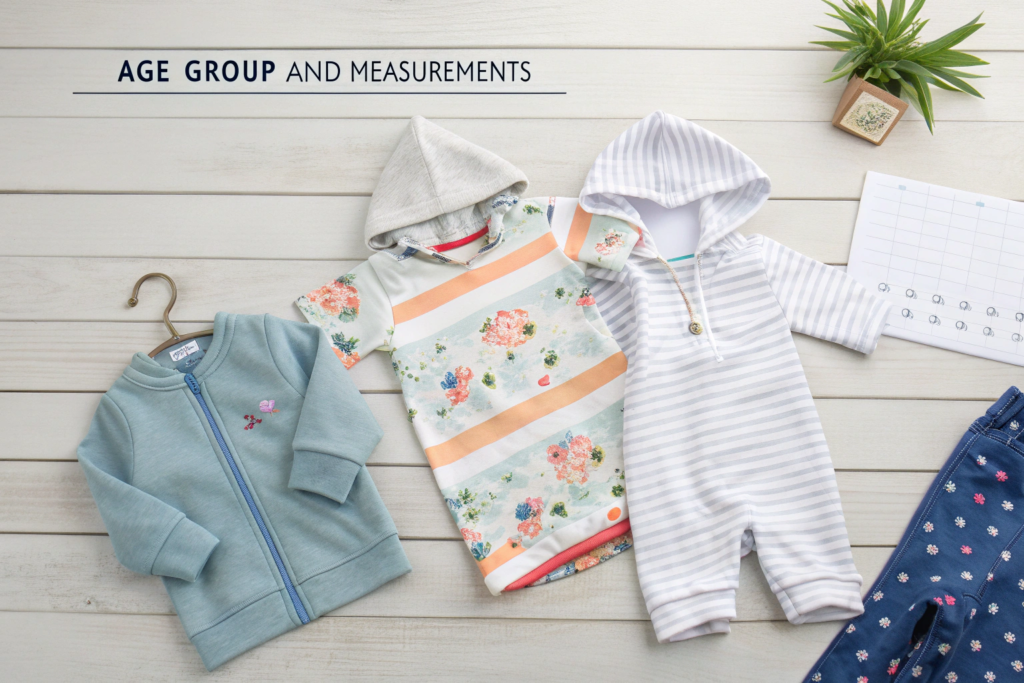
We deal with this constantly. The key is to build your size chart based on actual body measurements, not just age labels. An 18-month size should have specific chest, waist, hip, and inseam measurements. You need to decide if you’re designing for an average 18-month-old or if you’re running slim or generous. Both are fine. But you have to be consistent.
What’s the difference between infant, toddler, and youth sizing?
This is where brands get confused. Infant sizing, usually up to 24 months, assumes the child is wearing a diaper. The seat of the pants is wider. The rise is longer. The proportions are completely different from toddler sizing, which starts around 2T. Toddlers are potty training or trained. Their bodies are leaner. Their legs are longer relative to their torsos. Youth sizing, starting around 4 or 5, moves toward more adult-like proportions but scaled down. I worked with a brand that designed a pair of shorts for 3T using the same block they used for their adult shorts. The waist fit fine, but the shorts were so tight in the seat that a toddler in a diaper couldn’t wear them. They had to scrap that style. The ASTM D4910 standard for infant and toddler sizing provides a baseline, but you really need to understand your target customer’s actual body shape.
How do I create a size chart that reduces returns?
Returns kill margins in kids’ wear. Parents buy online, guess the size, get it wrong, and send it back. You eat the shipping both ways. The garment might not be resalable. A good size chart is your best defense. We help our clients build size charts based on real data from their target market. Do you sell primarily to American parents? We use anthropometric data from the CDC on average children’s measurements. Do you sell to a specific demographic? We can adjust. One of our clients specializes in swimwear for competitive young swimmers. Those kids are leaner than average. We adjusted their size chart to have narrower chests and longer torsos. Their return rate dropped from 22% to 9% in one season. According to research on apparel sizing and consumer returns, inconsistent sizing is the leading cause of returns in children’s online apparel. Your size chart needs to be on every product page, in every email, and printed on your hang tags.
What fabric choices fail in children’s clothing?
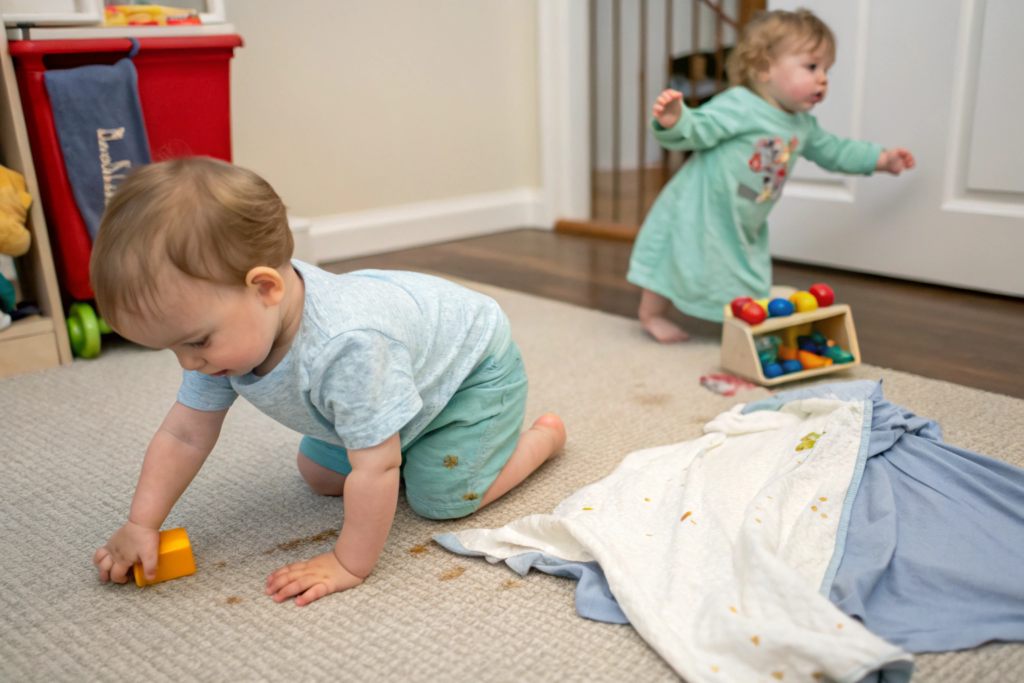
Children are hard on clothes. They crawl. They climb. They spill things. They wipe their faces on their sleeves. A fabric that works beautifully for a blouse worn to an office will fall apart after three washes in a toddler’s wardrobe. I’ve seen beautiful organic cotton dresses shrink so badly they became unwearable. I’ve seen bamboo blends pill after one trip through the dryer. I’ve seen cheap polyester hold stains permanently.
The best kids’ wear fabrics balance softness with durability and easy care. Parents don’t want to hand wash. They don’t want to iron. They want to throw it in the machine with everything else and have it come out looking fine.
Which fabrics are most durable for active children?
Cotton blends are your friend here. A cotton-polyester blend gives you the softness of cotton with the durability and wrinkle resistance of polyester. For items like pants and jackets, adding a small percentage of elastane (2-5%) gives stretch that helps the garment move with the child and hold its shape. Denim is always popular, but we use a slightly lighter weight for kids than adults. 10-12 ounce denim works well. It’s durable but not too stiff. For activewear, polyester-spandex blends perform best. They wick moisture, stretch, and bounce back. One of our clients makes gymnastics leotards for kids. They use a specific 85/15 polyester-spandex blend that holds up to thousands of stretches and washes. The Textile Exchange Preferred Fiber Matrix is a great resource for understanding which fibers perform best for specific end uses.
How do I choose fabric that’s soft but also safe?
Softness matters because kids have sensitive skin. But softness can’t come at the expense of safety. Flame retardancy is a legal requirement for children’s sleepwear. You can’t just use any soft fleece. It has to be treated or inherently flame resistant. We use a specialized polyester fleece for sleepwear that meets CPSC flammability requirements without chemical treatments. For everyday wear, look for fabrics with a low friction coefficient. Brushed cottons, combed cottons, and modal blends all feel soft against skin. Avoid fabrics with rough textures or loose weaves that could catch tiny fingers. And always, always test for dye migration and crocking. You don’t want the dye from a bright red jacket rubbing off on a child’s skin or on their car seat. The OEKO-TEX Standard 100 certification is our benchmark for fabric safety. It tests for hundreds of harmful substances and gives you confidence that your fabric is safe for the most sensitive skin.
How do quality expectations differ for kids’ versus adults’ clothing?
Parents are the toughest customers in apparel. They will accept imperfections in their own clothes that they would never tolerate in their children’s clothes. A slightly crooked seam on a man’s work shirt? He might not notice. The same flaw on a child’s Easter dress? The mother returns it immediately and posts a photo on social media. I’ve learned this lesson many times.
The emotional component is real. Parents buy clothes for their children as an expression of love. When those clothes fail, it feels personal. Your quality standards for kids’ wear need to be higher than for any other category.
What stitching and construction standards matter most?
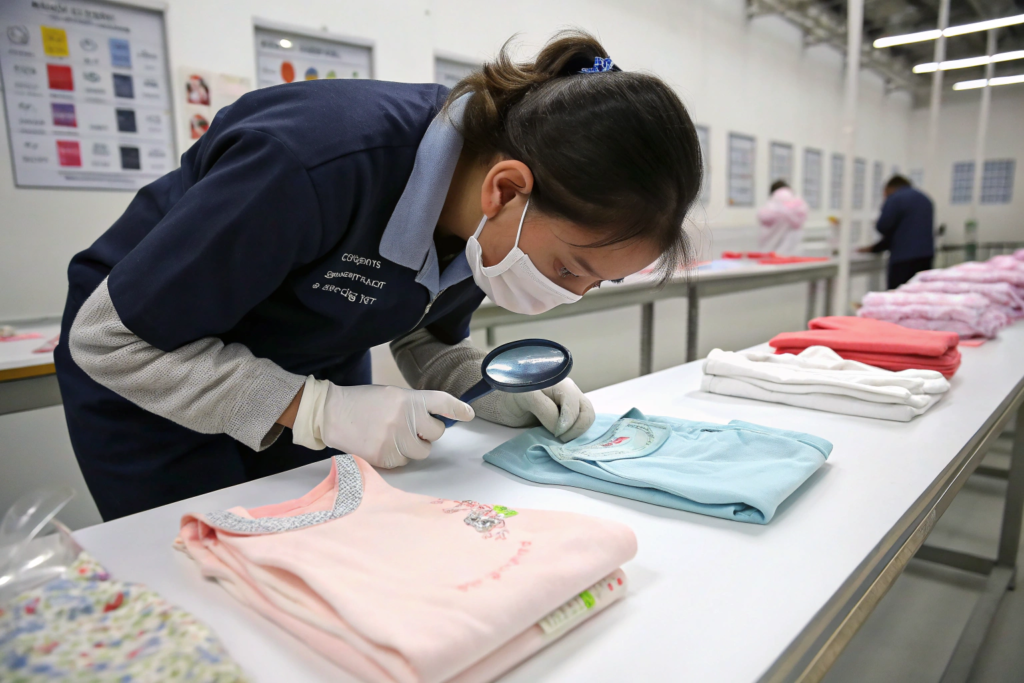
Reinforced seams are non-negotiable. Kids pull on their clothes to get dressed. They catch them on playground equipment. They squat and stretch. Stress points like shoulder seams, crotch seams, and pocket attachments need extra reinforcement. We use a chain stitch on high-stress seams because it has more give than a lock stitch. We bartack pocket corners. We use wider seam allowances (1/2 inch instead of 3/8 inch) so there’s room for letting out if needed. One of our clients sent back a sample because the hem on a pair of toddler pants was only 1/4 inch deep. They said, "My son will trip on that when he outgrows the length and I try to let it down." They were right. We changed it. The Federal Trade Commission’s guides for textile care labeling also matter here. Your care instructions need to be accurate. If you say "machine wash cold" but the garment can’t survive that, you’re setting yourself up for returns.
Hardware failure is a huge source of returns in kids’ wear. Snaps pop off. Zippers jam. Buttons fall off and become choking hazards. We test every piece of hardware before we use it in production. For snaps, we use a machine that applies 15 pounds of pull force. If it detaches, we reject that batch. For zippers, we test 500 cycles. If it jams or the pull breaks, we reject it. For buttons, we use the same pull test and also test for breakage. One of our clients wanted mother-of-pearl buttons on a line of toddler shirts. They’re beautiful. But they’re also brittle. We showed them that 3% of the buttons cracked during the buttonhole process. They switched to a high-quality plastic button that looked almost identical. Zero cracking. The ASTM D2061 standard for zipper testing is what we follow. It’s not exciting, but it prevents returns.
Conclusion
Kids’ wear is a rewarding category. Parents are loyal to brands that make their lives easier and their children happier. But the mistakes are costly. Safety regulations can stop your shipment at the border. Sizing confusion drives returns that destroy your margins. Wrong fabric choices create unhappy customers who never come back. Inconsistent quality damages your reputation in a market where trust is everything.
At Shanghai Fumao, we’ve made these mistakes so you don’t have to. We’ve built a production line specifically for kids’ wear because we understand the unique requirements. We know the CPSIA inside and out. We’ve developed size charts based on real American children’s measurements. We’ve tested hundreds of fabrics to find the ones that survive childhood. We’ve trained our quality control team to inspect kids’ clothes with the scrutiny parents expect.
If you’re planning a kids’ wear collection, let’s talk. Contact our Business Director, Elaine, directly at elaine@fumaoclothing.com. She’ll connect you with our kids’ wear specialist. We’ll review your designs, discuss your target market, and help you avoid the common pitfalls before you place your order. Your brand deserves to succeed in children’s apparel. Let us help you get it right the first time.