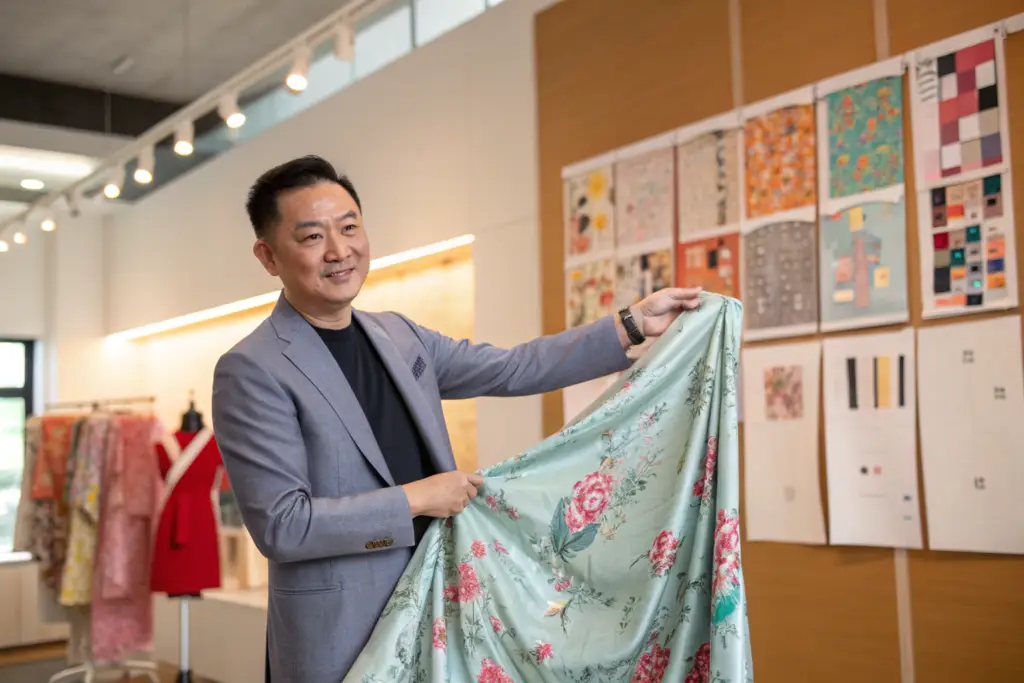
Have you ever tried to source a delicate silk blouse from a factory that only makes basic t-shirts? The sample comes back stiff and boxy. The drape is all wrong. The delicate fabric puckers at the seams. Women's wear is about fluidity, fit, and feeling. It requires a different kind of expertise than menswear or basics.
Yes, full package manufacturing is often better for women's wear fashion because it requires a higher level of collaboration and technical skill. Women's wear involves more varied fabrics (silks, viscose, lace), more complex fits (darts, curves, draping), and more detailed trims (delicate buttons, special zippers). A full-package partner brings pattern-making expertise, fabric knowledge, and sampling agility to turn your fashion vision into a reality that actually fits and flatters a woman's body.
I'm the owner of Shanghai Fumao. While we are known for our expertise in complex wovens for menswear, we have also spent 15 years mastering the art of women's wear. From flowing dresses to tailored blouses, we understand the nuances. Let me walk you through why full package is not just good, but essential, for women's fashion.
How Does Women's Wear Fit Differ From Menswear?
A client from Los Angeles once sent us a design for a fitted sheath dress. It looked simple. But the first sample was all wrong. It pulled across the bust. It gaped at the armhole. It wrinkled at the hips. We realized the pattern was based on a standard block that didn't account for curves. We started over. We drafted a new block with the right bust dart and hip curve. The second sample was perfect.
Women's bodies have more curves and more variation than men's. Fit is everything. A women's wear pattern must account for the bust, the waist, and the hip, and the relationship between them. A standard "size 8" block from one factory might fit completely differently than another. Full-package manufacturing allows you to develop your own "fit block" that matches your target customer, ensuring consistency across your entire collection.
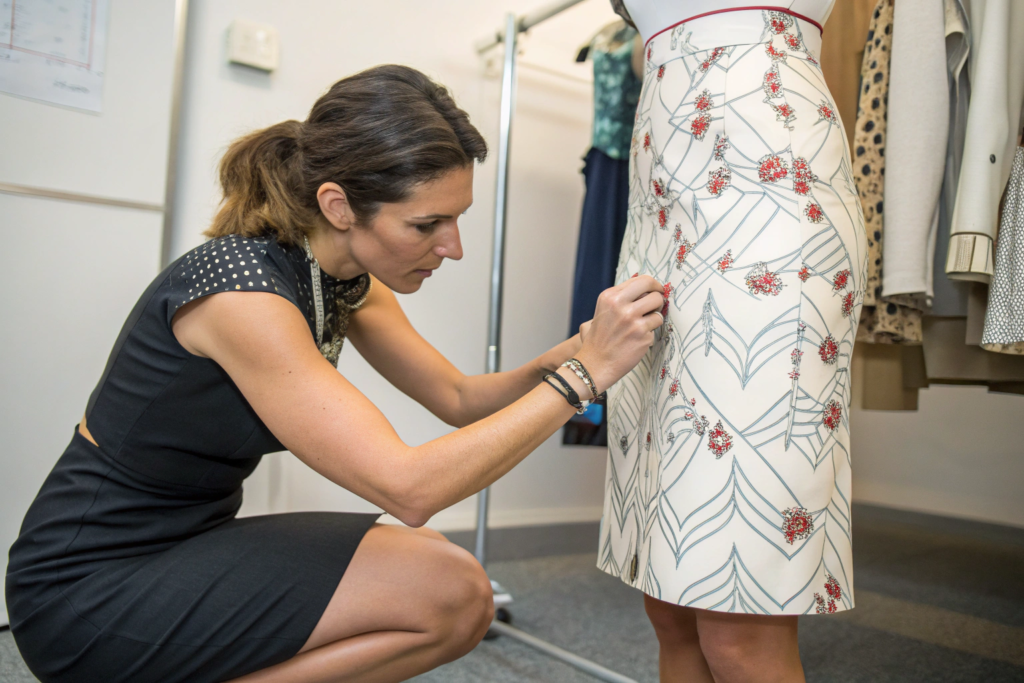
Let's talk about the technical challenges of women's wear fit. First, the bust. A fitted garment needs a bust dart to create shape. The placement and depth of that dart are critical. Too high, and it looks odd. Too low, and the fabric pulls. For a client in New York making silk blouses, we spent a lot of time on the bust dart. We moved it 1 cm lower. It made the blouse drape perfectly over the bust instead of pulling tight. Second, the waist and hip. The difference between the waist measurement and the hip measurement can be significant. The pattern must flare out gracefully from waist to hip. If the angle is wrong, the skirt or dress will have "drag lines" – wrinkles pointing to the tight spot. We use a fitting form that matches our client's target measurements. We pin, we adjust, we re-cut. Third, shoulder slope. Women's shoulders can be more sloping than men's. A pattern cut for a standard shoulder might gape at the neck. We adjust the shoulder slope for each style. For a client in Chicago who makes tailored jackets for women, we developed a special "soft shoulder" block that accommodates a more sloping shoulder without padding. It became her signature style.
How Do You Handle Different Body Types?
Your brand might target a specific body type. Maybe you design for petite women, or for plus-size women, or for athletic builds. Full-package allows you to develop blocks for these specific markets. We don't just grade up from a size 8. For plus sizes, the proportions change. The bust point might be lower. The waist might be less defined. The hip curve might be different. We can create a separate block for your plus-size range based on industry data or on a sample garment you provide. For a client in Texas who launched a plus-size activewear line, we developed a block with a higher rise in the leggings and a wider waistband for comfort. It was a huge success because it was designed for her customer, not just scaled up from a straight size.
What About Drape And Fluid Fabrics?
Women's wear often uses fluid fabrics like viscose, rayon, silk, and jersey. These fabrics behave differently than stiff wovens. They need to be cut and sewn with care. The pattern must account for the fabric's "bias" (the diagonal grain) which has the most stretch and drape. For a client in Miami who makes flowy maxi dresses, we cut the skirt panels on the bias. It made the dress hug the hips and then flare out beautifully. We also use special handling techniques. Fluid fabrics can stretch out of shape during sewing. We use "stay stitching" to stabilize curves. We use a walking foot on the sewing machine to prevent the layers from shifting. Full-package means we understand these techniques. We don't just sew the fabric; we collaborate with it.
How Does Full Package Handle Complex Women's Wear Details?
A client from Boston once brought us a design for a wedding guest dress. It had a lace bodice, a silk crepe skirt, and a delicate satin bow at the waist. It was three different materials in one garment. We had to coordinate the lace cutting, the silk sewing, and the bow attachment. It was complex, but we loved the challenge. The final dress was stunning.
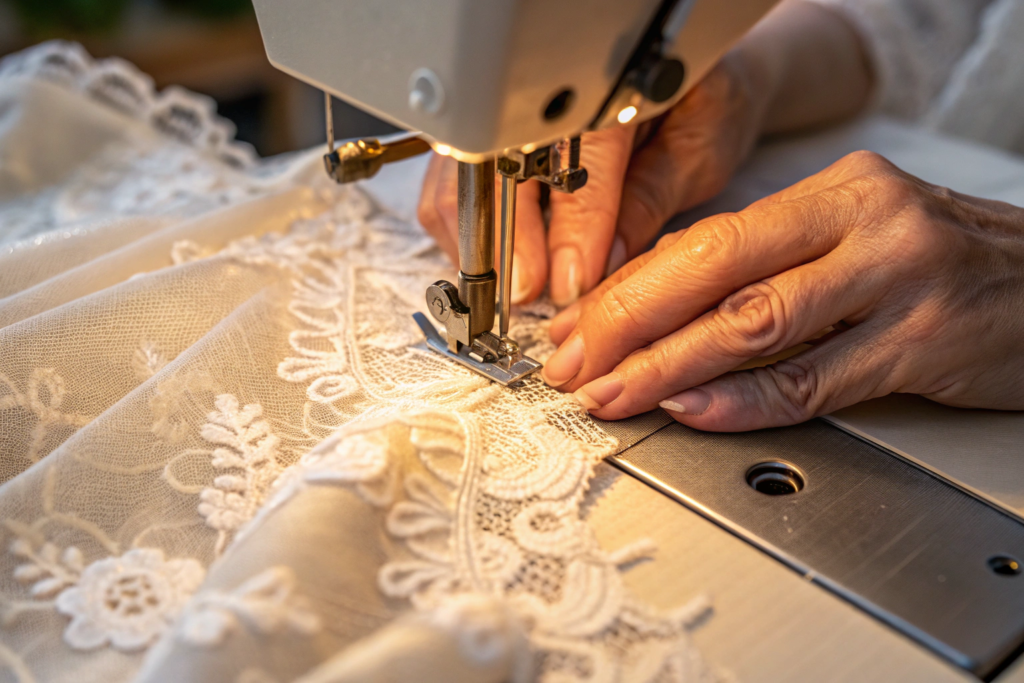
Women's wear is famous for its details: ruffles, pleats, lace, embroidery, delicate buttons, and special trims. Full-package manufacturing means we have the specialized machines and the skilled operators to handle these details. We have machines for gathering ruffles, for pleating, for attaching lace. We have embroiderers who can digitize your logo or a decorative motif. We have trim specialists who can source the perfect vintage-style button.
Let's explore some common women's wear details. Ruffles and Gathers: These create volume and softness. We use a special "ruffler" attachment on the sewing machine that creates even gathers automatically. For a client in Seattle who makes children's dresses, we use this for all her skirt ruffles. It's fast and consistent. Pleats: Knife pleats, box pleats, accordion pleats. We have a pleating machine, or we send fabric to a specialist pleater. For a client in New York who makes pleated skirts, we send the fabric to a pleating house that uses heat and pressure to create permanent pleats. We then sew the skirt panels together. Lace and Sheer Fabrics: These require special handling. They need a finer needle to avoid snagging. The seams need to be finished delicately. For a client in Los Angeles who makes lingerie, we use a special "French seam" on sheer fabrics. It encloses the raw edge for a clean, professional finish. Beading and Embroidery: We have partners who specialize in hand-beading and machine embroidery. For a client in Chicago who makes evening wear, we worked with an embroidery house to create a beautiful floral motif on a jacket. It was a labor of love, but the result was a high-ticket item.
How Do You Source Delicate Trims?
Trims for women's wear are often more varied and delicate. Think of special buttons, ribbons, lace trims, and decorative cords. We have a network of suppliers for these items. We can source vintage-style buttons from specialized factories. We can find ribbons from mills in Zhejiang. We can source lace from suppliers in Guangdong. We manage the sourcing, the quality, and the lead times. For a client in Denver who makes boho-chic dresses, we source tassel trims and embroidered ribbons. We ensure they match the color and quality of the garment. We also manage the minimums. Sometimes a special trim has a high MOQ. We can help you find a similar alternative with lower minimums, or we can help you commit to a quantity that makes sense for your collection.
What About Prints And Patterns?
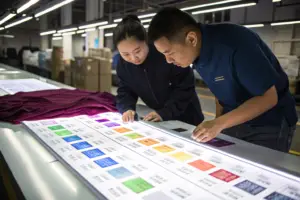
Printed fabrics are huge in women's wear. Full package helps you manage the complexity of prints. First, we help you with the artwork. You send us your print design (a repeat pattern). We work with the mill to create a "rotary screen" or "digital print" file. Second, we manage the strike-off. The mill prints a small sample of the fabric for your approval. You check the colors and the registration. Third, we manage the bulk printing. During production, we check that the print is sharp and the colors are consistent. For a client in Miami who had a custom floral print, we did three rounds of strike-offs. The first was too bright. The second was too dull. The third was perfect. The final dresses were beautiful. We also help with "placement prints" – where a specific motif needs to be placed in a specific spot, like a large flower on the front of a t-shirt. This requires extra care in cutting. We have computerized cutters that can recognize registration marks and cut each piece to ensure the motif is perfectly placed.
How Does Full Package Handle The Speed Of Women's Fashion?
A client from New York once told me, "In women's wear, if you miss the season, you miss the sale." She was right. Women's fashion moves fast. Trends change. If your spring collection arrives in June, it's dead stock. You need a partner who can move quickly and hit tight deadlines.
Women's fashion operates on a relentless seasonal calendar. Full-package manufacturing can help you meet these deadlines through efficient sampling, reliable fabric sourcing, and flexible production scheduling. We understand the urgency. We work to compress timelines where possible, without sacrificing quality. We help you plan backward from your drop date to ensure your goods arrive on time.
Let's look at the typical fashion calendar. For a Spring/Summer collection that needs to be in stores in February, you might need to finalize designs in August of the previous year, approve samples in September, order fabric in October, produce in November/December, and ship in January. It's a tight schedule. Any delay in sampling or fabric can push the whole timeline. Full package helps by integrating all these steps. We don't wait for you to finish one step before starting the next. We can start sourcing fabric while you are still approving samples (using a "reference fabric" of similar weight). We can book production line slots in advance. We communicate constantly so you know where you stand. For a client in Los Angeles who was launching a "see now, buy now" collection, we compressed the timeline from 120 days to 70 days. It was intense, but we did it. We worked weekends. We expedited fabric. The collection hit the market right as the trend peaked.

How Do You Handle Fast Fashion Vs. Premium Fashion?
We work with both. Fast fashion requires speed and cost-efficiency. We use stock fabrics, simplified trims, and efficient production lines. The goal is to get a trendy item to market quickly before the trend fades. Premium fashion requires meticulous attention to detail, higher-quality fabrics, and more complex construction. The timeline might be longer, but the result is a garment that lasts. We adapt our approach to your brand's positioning. For a fast-fashion client in New York, we can turn a sample around in 5 days and bulk in 4 weeks. For a premium client in Boston, we might spend 4 weeks just on sampling to get the fit perfect. We are flexible. We match our process to your needs.
What Is The Role Of Pre-Orders In Women's Wear?
Many women's wear brands now use pre-orders. They show the collection, take orders, and then produce. This reduces inventory risk. Full package is ideal for pre-order models. We can produce in smaller batches based on the actual demand. We can do a "first drop" of 300 pieces, see how they sell, and then do a "re-stock" run of another 500. This requires a factory that is flexible and responsive. We have clients who do this. They track their sales in real-time and send us re-order requests. We can often slot these re-orders into our production schedule within a few weeks. It's a partnership that adapts to the market.
How Does Fumao Approach Women's Wear Development?
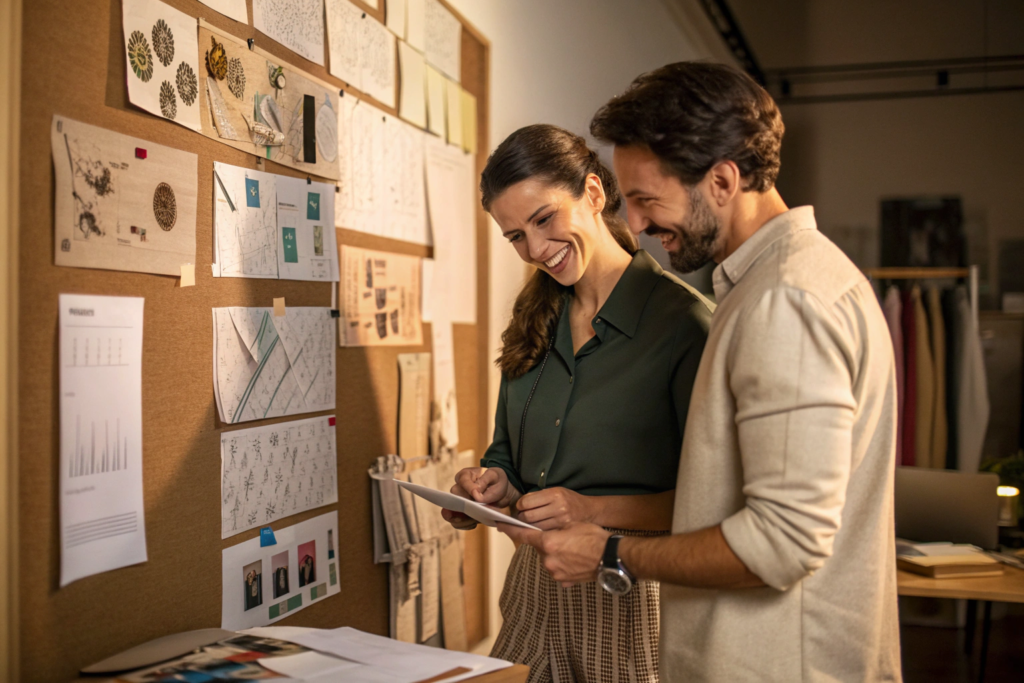
A client from Chicago once brought us a mood board instead of a tech pack. It had photos of vintage dresses, flowers, and colors. She said, "This is the feeling I want." We didn't laugh. We worked with her. We interpreted her vision. We suggested fabrics that matched the mood. We sketched styles. We made samples. She loved the result.
Our approach to women's wear development is collaborative. We start with your vision. We help you translate it into a technical reality. We offer suggestions on fabric, fit, and construction based on our experience. We are not just order-takers. We are partners in the creative process, helping you avoid common pitfalls and elevate your designs.
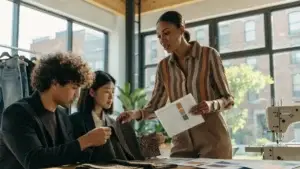
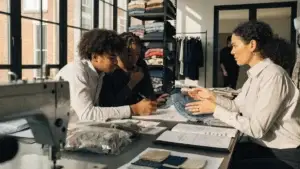
Let's walk through our development process. Step 1: Discovery. You share your inspiration, your sketches, your target customer. We discuss your budget and timeline. Step 2: Fabric Sourcing. We pull fabrics that match your vision. We consider the drape, the weight, the color, and the cost. We send you swatches. Step 3: Pattern and Sample. We draft the pattern based on your design and the chosen fabric. We make a first sample. We send you photos. We discuss any issues. Step 4: Fit Session. If possible, you or a fit model tries the sample. We mark adjustments. We do a second sample. Step 5: Tech Pack Creation. We document all the final specs, creating a tech pack that we both approve. Step 6: Production. We source the bulk fabric, manage trims, and schedule production. Throughout this process, we are in constant communication. We use video calls to show you the fit. We send photos of every step. You are part of the team.
How Do You Help New Women's Wear Brands?
New brands are our passion. We love helping designers launch their dreams. We know that new brands often have smaller budgets and smaller quantities. We work with them. We help them choose fabrics that are affordable but still beautiful. We help them simplify designs to reduce cost without losing the aesthetic. We guide them on minimums. A new brand might only need 200 pieces per style. We can do that. We have a special program for startups. We offer discounted sampling and flexible MOQs because we believe in growing together. One of our clients started with a single style of dress, 300 pieces. She sold out. She ordered 600. Then 1,200. Last year, she ordered 10,000 pieces across 15 styles. We were there from the beginning. We helped her choose her signature fabric. We helped her perfect her fit. Her success is our success.
What Is The "Fumao Fit" For Women's Wear?
Just as we have a "Fumao Fit" for menswear, we have developed expertise in women's proportions. Over 15 years, we have fitted thousands of garments on Western women's bodies. We understand that an American size 6 is not the same as a Chinese size 6. We have blocks calibrated for the US market. We know how to adjust for a fuller bust, a narrower waist, or a more prominent hip. When you come to us, you are not starting from zero. You are building on years of fit data. We use this knowledge to suggest improvements. "The armhole might be a bit tight for a US size 12. Let's lower it by 1 cm." "The bust dart might be too high for your target age group. Let's lower it." These small adjustments make a huge difference in how the garment sells. For a client in Seattle who makes blouses for professional women, we developed a fit that was comfortable in the bust but still tailored. It became her best-seller because it actually fit real women.
Conclusion
Is full package better for women's wear fashion? Absolutely. Women's wear demands a deeper understanding of fit for a curved body. It requires expertise in handling fluid, delicate, and varied fabrics. It involves complex details like ruffles, lace, and intricate trims. And it operates on a fast-paced seasonal calendar where timing is everything. A full-package partner brings all of this together: the technical skill, the creative collaboration, and the operational efficiency to turn your fashion vision into a beautiful, well-fitting garment that reaches the market on time.
At Shanghai Fumao, we have spent 15 years mastering the art of women's wear. We have the pattern makers who understand darts and drape. We have the sewers who can handle silk and lace. We have the sourcing network for beautiful fabrics and trims. And we have the flexibility to work with brands of all sizes, from startups launching their first collection to established names scaling up.
If you have a vision for a women's wear collection, let's bring it to life together. Contact our Business Director, Elaine, directly at elaine@fumaoclothing.com. Tell her about your designs, your customer, and your dreams. Let's create something beautiful.