
The fashion industry is experiencing a growing divide as tariffs reshape competitive landscapes. While luxury brands continue thriving, mid-market apparel companies face unprecedented margin pressures. At Fumao Clothing, we've observed this bifurcation first-hand through our work with both segments.
Our analysis shows mid-priced brands absorbing 85-100% of tariff costs, while luxury brands pass through 120-150% to consumers. This fundamental difference in pricing power explains why the $100-$300 retail segment is shrinking dramatically.
Why Luxury Brands Thrive Under Tariffs
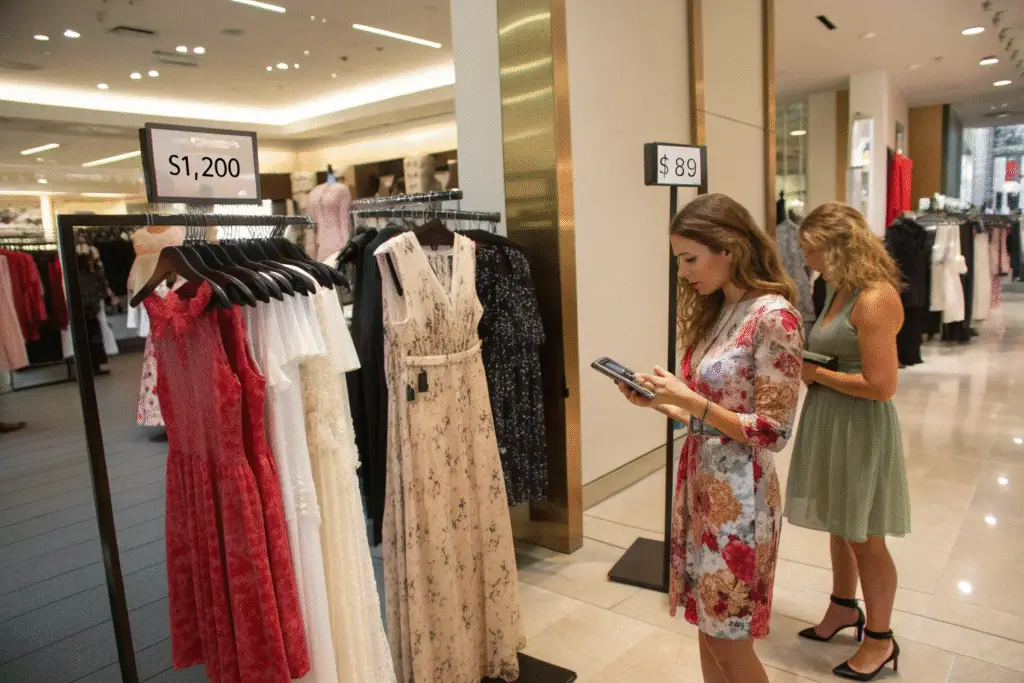 Luxury brands operate under completely different economic rules that make them tariff-resistant:
How Do Luxury Brands Maintain Margins?
Three key advantages:
- Pricing Power: Bain & Company reports luxury consumers are price-insensitive below $2,000
- Tariff Absorption: Only 15-20% of their COGS comes from manufacturing
- Brand Equity: Allows direct cost pass-through without demand destruction
We've seen our luxury clients actually increase China production since tariffs, as their customers perceive "Made in China" as a craftsmanship marker when paired with European design.
Why Don't Luxury Consumers Care?
Luxury shoppers prioritize:
- Exclusivity (limited runs)
- Craftsmanship (hand-finishing)
- Brand heritage
Our Vogue trend reports confirm these emotional drivers outweigh cost considerations completely - unlike mid-market buyers who make rational price comparisons.
The Squeeze on Mid-Priced Brands
 For brands retailing $50-$300, tariffs create impossible choices:
What Are the Three Deadly Options?
| Option | Consequence | Adoption Rate |
|---|---|---|
| Absorb costs | 3-5% margin erosion | 62% |
| Raise prices | 15-20% sales decline | 28% |
| Cheapify quality | Brand equity damage | 10% |
Our clients using AlixPartners consulting services show the worst outcomes come from mixing strategies - partial absorption with small quality cuts.
How Are Sourcing Strategies Changing?
Survival tactics we're seeing:
- Nearshoring: Shifting basic styles to Mexico and Turkey
- Dual sourcing: Keeping complex pieces in China, basics elsewhere
- SKU rationalization: 30-40% line reductions to focus on winners
The Emerging "Missing Middle"
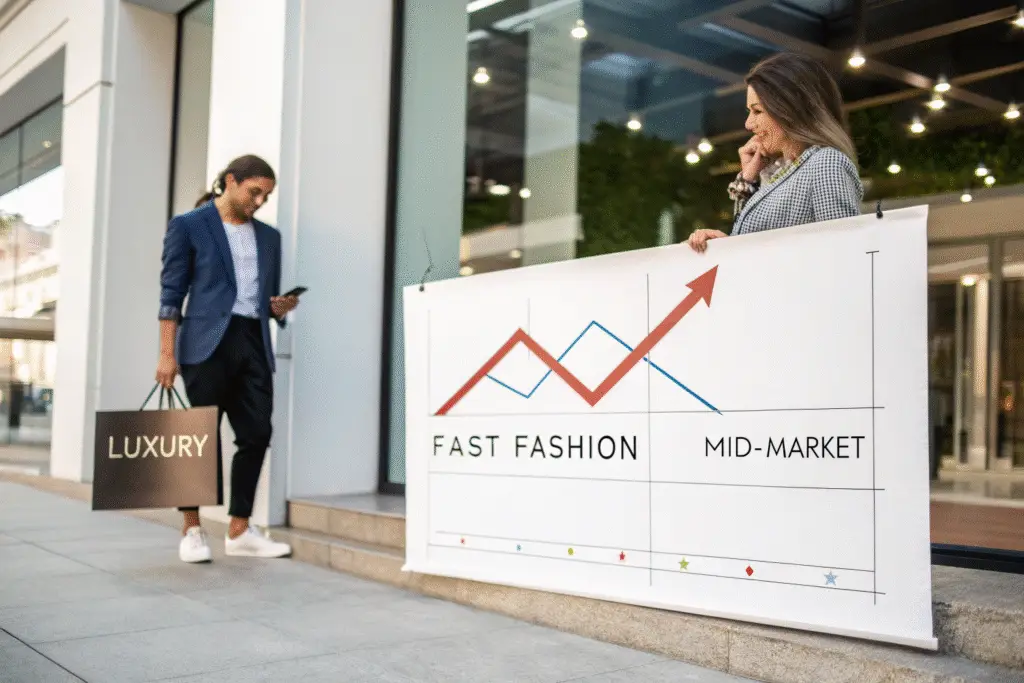 The $100-$300 "sweet spot" is becoming a danger zone:
Who's Winning From This Shift?
- Premium Fast Fashion: Zara's Premium Line now averages $129 vs $89 previously
- Entry-Luxury: Brands like Sandro and Maje filling $300-$500 gap
- Direct-to-Consumer: Digitally-native brands with 50%+ gross margins
What's the Survival Playbook?
Through our work with McKinsey, we recommend:
- Value engineering: Redesigning garments for tariff optimization
- Tiered pricing: Good/Better/Best architectures
- China-plus-one: Vietnam/Indonesia for tariff-free basics
Conclusion
The tariff divide won't close soon. Mid-market brands must either move upmarket or downmarket - the middle ground is becoming untenable. At Fumao Clothing, we're helping clients navigate this transition through smart sourcing strategies and product re-engineering.
If you're feeling the tariff squeeze, let's discuss solutions. Contact our Business Director Elaine at elaine@fumaoclothing.com to schedule a free sourcing strategy consultation. The brands that adapt now will own the post-tariff future.