About eight years ago, I took a call from a CEO who had just launched a menswear brand. He had a beautiful website, strong investor backing, and a clear vision. He had one question for me. "What is your price per unit for a classic chino short?" I gave him a rough estimate based on the limited information he had provided. He thanked me and hung up. He called back six months later, frustrated. He had chosen a factory based on that single question, the price. The shorts that arrived were poorly constructed, the fabric was lighter than specified, and the waistbands twisted after three washes. He had saved a dollar per unit on the FOB price and lost tens of thousands of dollars in returns, lost customers, and a damaged brand reputation. He told me, "I asked the wrong question. I should have asked how you make sure the shorts are right, not how much you charge to make them."
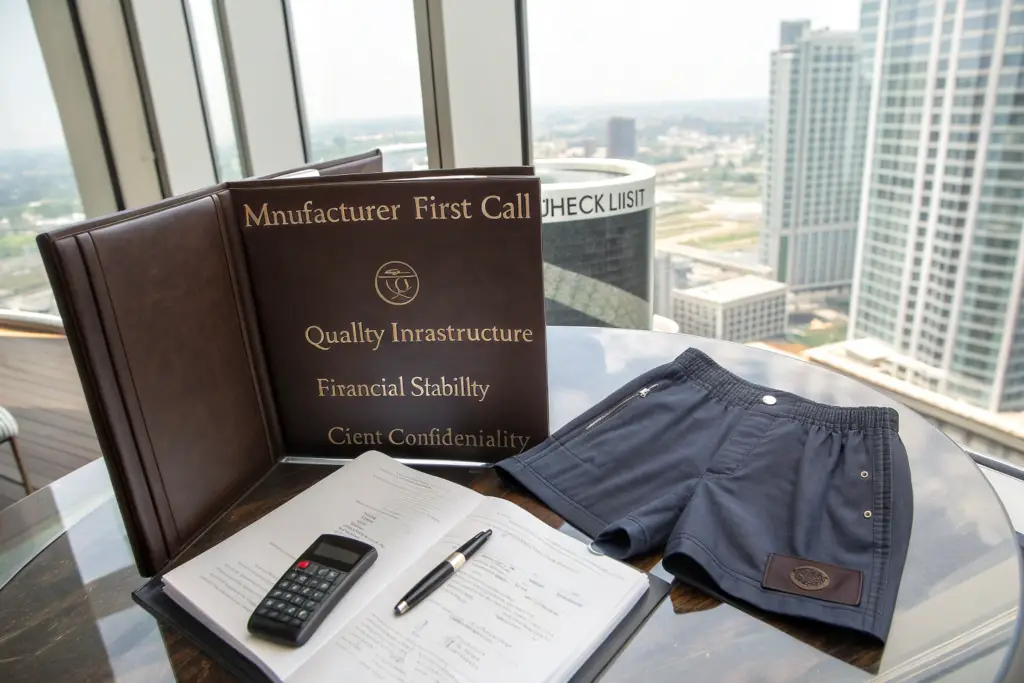
The questions a CEO should ask a potential shorts manufacturer on a first call are not about price, minimum order quantities, or delivery timelines, but rather are diagnostic questions that probe the factory's quality management systems, its production capabilities and capacity, its financial stability, and its approach to communication and problem resolution, with the goal of determining whether the factory is a strategically aligned, operationally competent, and financially stable long-term partner, not just a vendor for a single order.
At Shanghai Fumao, I have taken hundreds of first calls from brand CEOs. I can tell within the first five minutes whether the caller is a professional who understands manufacturing or an amateur who is about to make an expensive mistake. The difference is not in the caller's experience. It is in the questions they ask. Let me share the questions that the most successful CEOs ask.
What Questions Reveal the Factory's Quality Management System?
The factory that can produce one beautiful sample is common. The factory that can produce ten thousand pairs of shorts, each identical to the sample, is rare. The difference between these two factories is the quality management system. The system is the set of documented processes, inspection points, and corrective action protocols that ensure consistency across a large production run. A CEO who does not ask about the quality system is betting that the factory's sample-making skill translates to its bulk production capability. That bet is frequently lost.
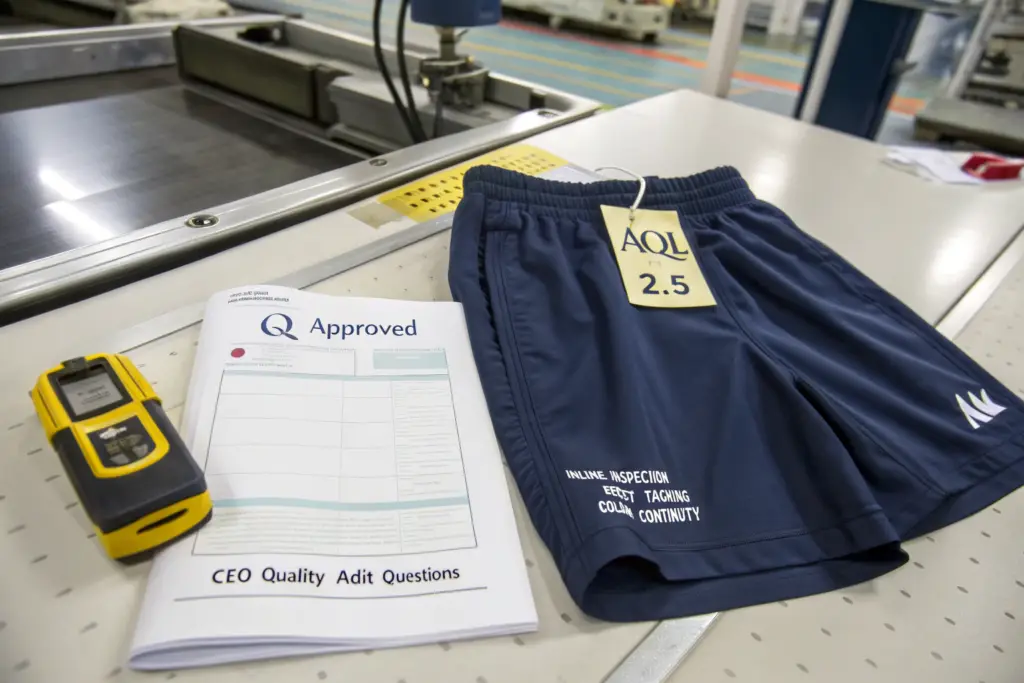
The quality-focused questions a CEO should ask include: "Can you walk me through your quality control process from fabric inspection through final audit, and where are your inline inspection stations located on the production line?" "What AQL level do you use for final inspection, and how do you handle a shipment that fails?" "Do you have a current third-party audit, such as BSCI or SEDEX, and can I verify it independently on the certifier's public platform?" and "How do you ensure color consistency across different production lots and between different fabric components such as the shell, pocketing, and waistband lining?"
Why Should You Ask About Inline Inspection Specifically?
Most factories will say they have quality control. What they mean is they have a final inspection, a person who checks the finished shorts before they are packed. A final inspection catches defects after the garment is complete. Correcting the defect requires opening the garment, re-sewing, and re-pressing, a costly and time-consuming process.
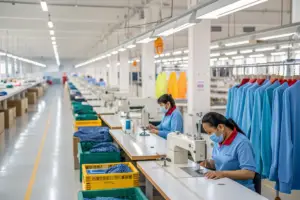
Inline inspection catches defects where they are created, at the sewing station, while the garment is still being assembled. The pocket inspector checks the pocket before it is attached. The waistband inspector checks the waistband before the side seams are closed. The correction takes seconds, not minutes. A factory that has invested in inline inspection has made a fundamental commitment to quality as a process, not a checkpoint. Asking about inline inspection reveals whether the factory has made this commitment. This inline quality control in garment manufacturing question separates process-driven factories from inspection-dependent factories.
What Does the Answer to "How Do You Handle a Failed Inspection?" Reveal?
A factory that hesitates, deflects, or claims that a failed inspection has never happened is either inexperienced or dishonest. Every factory that produces at volume has experienced a failed inspection. The question is not whether it has happened. The question is what happened next.
A quality factory will describe a clear, documented process. The shipment is placed on hold. The defect is analyzed to identify the root cause. The entire lot is re-inspected, and defective units are reworked or replaced. The corrected lot is submitted for re-inspection. The root cause analysis feeds back into the production process to prevent recurrence. This answer demonstrates that the factory treats quality failures as systemic problems to be solved, not as embarrassing incidents to be hidden. This corrective action process in garment quality management transparency is a strong positive signal.
What Questions Test the Factory's Production Capacity and Specialization?
A CEO needs to know whether the factory can handle her business. "Can handle" means three things. The factory has enough total capacity to produce her order volume without displacing existing clients or causing delays. The factory has the specific machinery, the specific skills, and the specific experience to produce her specific type of short, not just any garment. And the factory allocates capacity in a way that is predictable, transparent, and fair. A factory that cannot answer these questions clearly is a factory where her order will be at risk.
The production capability questions a CEO should ask include: "What is your current total monthly capacity in units, what is your current utilization rate, and how would my order fit into your production schedule without displacing your existing clients?" "What percentage of your current production is shorts versus other garment categories, and can you show me a dedicated shorts production line?" and "What specific machinery and operator skills do you have for the particular construction details of my short, such as a contoured waistband, a button fly, or pattern matching at the side seams?"
Why Should You Ask About Current Utilization, Not Just Total Capacity?
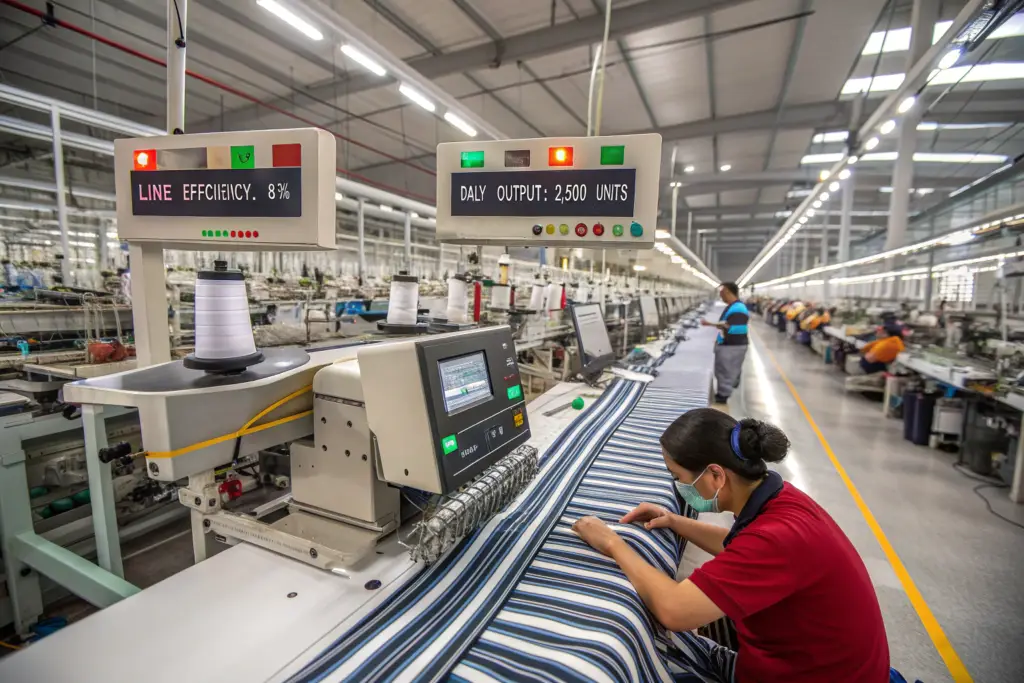
A factory may have a total capacity of 100,000 units per month. If it is currently producing 95,000 units per month for existing clients, its available capacity is 5,000 units. A CEO who places an order for 20,000 units without asking about utilization has just learned that her order cannot be produced on time, or that her order will displace an existing client's order, which means her order will be the one displaced when the next new client arrives.
Asking about utilization reveals whether the factory has room for the order. A factory that is operating at 85% utilization has comfortable capacity to absorb a new client. A factory that is operating at 98% utilization is at risk of delays from any minor disruption. A factory that is evasive about its utilization rate is likely overcommitted. This factory capacity and production planning question is a direct probe of the factory's ability to deliver on time.
How Does Specialization Affect Production Quality and Efficiency?
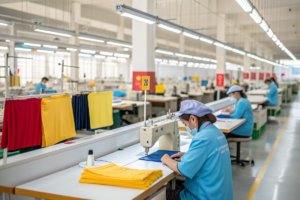
A factory that produces shorts, jackets, dresses, and children's wear on the same lines is a generalist. The operators switch between garment types, each with different construction techniques, different fabric behaviors, and different quality standards. The learning curve is reset with each switch. Efficiency and quality suffer.
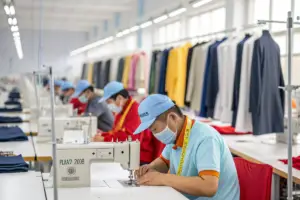
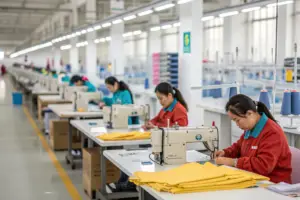
A factory that dedicates specific production lines to shorts has operators who sew shorts every day, all day. They have mastered the specific techniques, the waistband attachment, the fly construction, the pocket bag insertion, that are unique to shorts. Their speed and quality on shorts are significantly higher than a generalist operator's. Asking about specialization reveals whether the factory has invested in the focused capability that produces consistent quality at scale. This specialization vs generalization in garment manufacturing is a key indicator of manufacturing maturity.
What Questions Uncover the Factory's Business Stability and Ethics?
The quality of the shorts matters only if the factory is still in business when the order is complete. A CEO who does not ask about the factory's business stability is making an unsecured loan to the factory in the form of a deposit. She is betting that the factory will survive, that it will honor its commitments, and that it will be reachable if something goes wrong. These bets are not always won. The factory's business practices, its financial model, and its ethical commitments are as important to the success of the order as its sewing skills.
The business stability questions a CEO should ask include: "What are your standard payment terms, and specifically, how is the deposit structured and what happens to my deposit if the factory is unable to complete the order?" "Can you provide a reference from a current client with a similar program size, and can I contact that reference directly?" and "What is your policy on subcontracting, and specifically, do you subcontract any portion of the production process, including cutting, sewing, finishing, or packing, to any third party?"

Why Is the Deposit Structure a Direct Probe of Financial Stability?
A factory that demands a 50% or 70% deposit upfront is using the client's money to finance the production. The factory may not have sufficient working capital to purchase the fabric and trims without the client's deposit. This is a red flag. It means the factory is financially fragile. If the factory encounters a cash flow problem, the client's deposit is at risk.
A factory that requests a 30% deposit, with the balance due against a passed inspection or against the bill of lading, is financing the production primarily from its own working capital. The deposit covers the raw material cost. The factory's own capital covers the labor and the overhead. This is a sign of financial stability. The factory is not dependent on client deposits to operate. This trade finance and supplier financial risk question reveals more about the factory's financial health than any direct question about revenue or profit, which the factory may not answer honestly or at all.
What Does the Subcontracting Answer Reveal About Control and Transparency?
Subcontracting is the practice of sending some or all of the production to another factory, often a smaller, less equipped, less compliant facility. The client believes her shorts are being made in the factory she audited. They are being made somewhere else, by workers she has never seen, under conditions she has not verified.
Asking directly about subcontracting puts the factory on notice that the CEO is aware of the practice and will not tolerate it without disclosure. A factory that admits to subcontracting and describes a controlled, transparent process for managing subcontractor quality may be acceptable, provided the subcontractor is also audited. A factory that denies subcontracting but hesitates or is evasive is a significant risk. A factory that states clearly and confidently that all production is done in-house, and that subcontracting is not practiced, is providing a strong positive signal. This subcontracting risk in apparel manufacturing is one of the most important transparency questions a CEO can ask.
How Should the CEO Evaluate the Factory's Communication and Problem-Solving Culture?
Problems occur in every production run. Fabric arrives late. A dye lot is slightly off. A sewing machine breaks. The difference between a good factory and a bad factory is not whether problems occur. It is how the factory communicates about problems, when it communicates about them, and how it solves them. A CEO who does not assess the factory's communication culture is making a blind bet that problems will be handled well.
The communication and problem-solving questions a CEO should ask include: "Can you describe a specific production problem that occurred on a recent order, when you informed the client, and how you resolved it?" "What is your standard communication protocol during production, specifically, how often do you provide updates, what information do those updates include, and who is my primary point of contact?" and "If a quality issue is identified after the goods have shipped, what is your warranty or claims process, and can you provide an example of a claim you have handled?"
Why Is a Specific Problem Story More Revealing Than a Generic Promise?
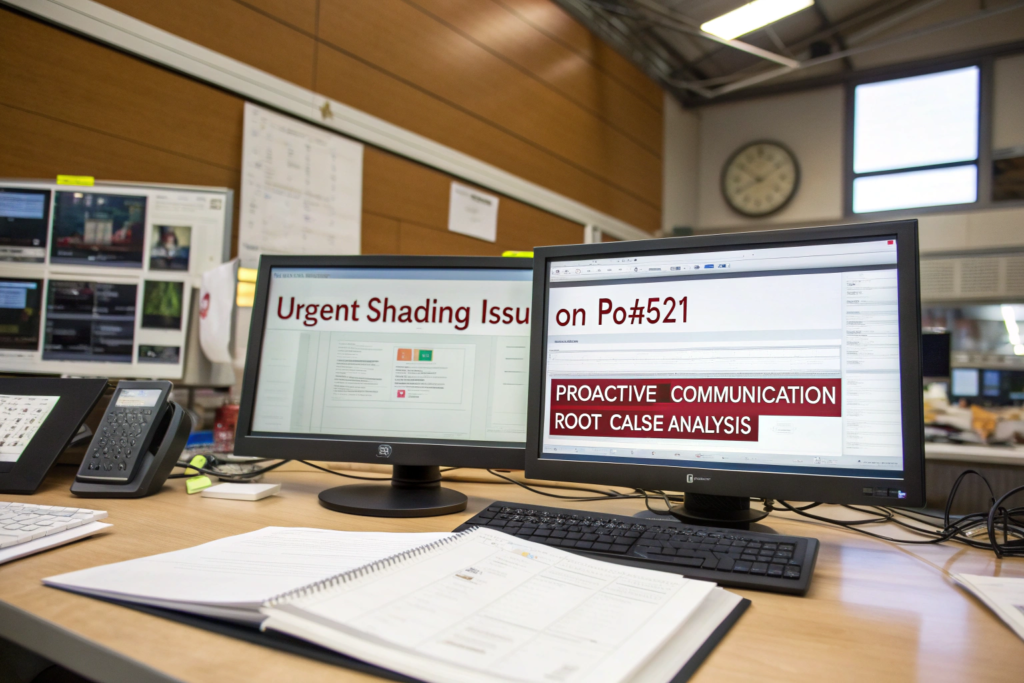
A generic promise, "We always communicate proactively," is meaningless. Every factory says this. A specific story about a real problem that occurred, when the factory noticed it, how quickly it informed the client, what options it presented, and how the resolution was achieved, reveals the factory's actual behavior under pressure.
The CEO should listen for the key elements of a healthy problem-solving culture. The factory noticed the problem and informed the client immediately, not after it had worsened. The factory presented a proposed solution, not just a description of the problem. The factory took responsibility, even if the root cause was with a supplier. The factory followed up to ensure the solution worked. This supplier problem-solving and communication assessment approach reveals the factory's true communication culture.
What Should the Communication Protocol Guarantee in Writing?
The communication protocol should not be a vague verbal agreement. It should be specific. The frequency of updates, weekly is standard for active production. The content of updates, percentage complete, any issues encountered, the current estimated ship date. The primary contact person, with a backup. The communication channel, email is standard for documentation purposes. The response time commitment, within 24 hours during business days.
This level of specificity provides a framework for accountability. If the weekly update does not arrive, the CEO knows she has a right to ask why. If the primary contact is unresponsive, she knows she can escalate to the backup. The protocol should be documented in writing, ideally in the purchase order or the supply agreement. This supplier communication plan is a basic requirement for a professional manufacturing relationship. At Shanghai Fumao, we provide every client with a written communication protocol at the start of the engagement.
Conclusion
The questions a CEO asks a potential shorts manufacturer on a first call determine the quality of the information she receives, and the quality of the information determines the quality of the decision she makes. Asking about price alone produces a price quote. Asking about the quality management system, the production specialization, the financial stability, and the communication culture produces a comprehensive assessment of the factory's capability and reliability.
The most successful CEOs I have worked with ask questions that are specific, probing, and diagnostic. They ask about inline inspection, not just "do you have quality control." They ask about utilization rate, not just "what is your capacity." They ask for a specific problem story, not just "do you communicate well." They ask about subcontracting and deposit structure, not just "what are your terms." Their questions signal that they are experienced, informed, and unwilling to accept vague assurances. The factory's answers, or its evasions, provide the data they need to make a sound sourcing decision.
At Shanghai Fumao, I welcome these questions. A CEO who asks them is a CEO I want to work with, because she is serious about quality, serious about partnership, and serious about building a brand that lasts. If you are a CEO evaluating manufacturing partners for your classic shorts program, and you want to experience what a factory that answers these questions confidently and transparently feels like, contact our Business Director, Elaine, at elaine@fumaoclothing.com. Let's have the conversation that goes deeper than price.