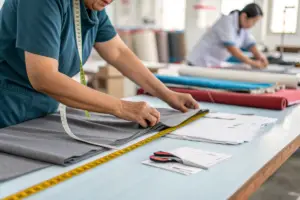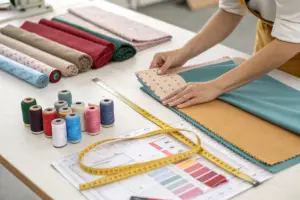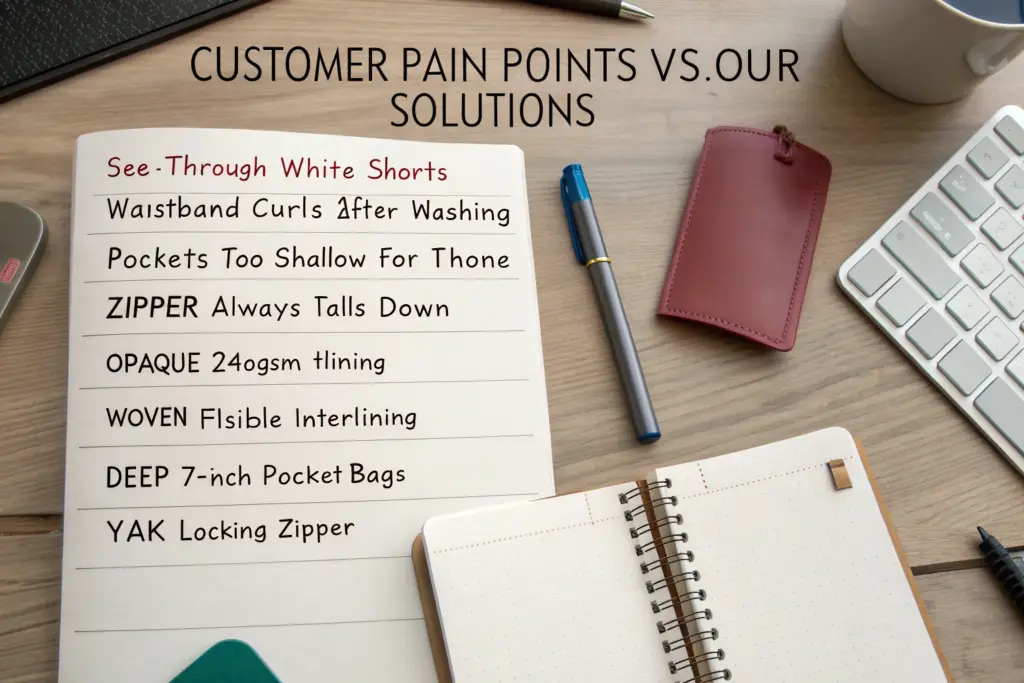
About five years ago, I sat in on a sales call between one of our brand clients and a boutique buyer in Texas. The brand owner presented his classic shorts line the way most brand owners do. He talked about the fabric weight, the stitch density, the enzyme wash, and the YKK zipper. The buyer nodded politely, asked about the wholesale price, and said she would think about it. The meeting was flat. Afterward, I asked the brand owner a question. "Did you ask her what frustrates her about the shorts she currently stocks?" He had not. I suggested he call her back and try a different approach. He called, asked the question, and listened for ten minutes while she described the returns she was getting. Shorts that shrunk in the wash. Waistbands that twisted. White shorts that were see-through. He called me back afterward, excited. He had repositioned his entire pitch around her specific pain points, and she had placed a trial order. The product was the same. The conversation was different.
Selling a classic shorts line effectively requires shifting the sales conversation from a presentation of product features to a diagnosis of customer pain points, identifying the specific frustrations that the buyer and their end consumer experience with competing shorts, positioning your product's features as targeted solutions to those frustrations, and using the language of problem resolution rather than the language of specification, because a buyer who feels understood and whose problems are being solved is far more likely to purchase than a buyer who is simply being informed.
At Shanghai Fumao, I work with brand owners every day who are trying to sell their shorts lines to retailers. I have observed hundreds of buyer interactions, and I have learned that the most effective salespeople are not the ones with the best product knowledge. They are the ones with the best question-asking skills. Let me walk you through how to identify, categorize, and sell against the specific pain points that drive classic shorts purchasing decisions.
What Are the Most Common Fit and Sizing Frustrations for Shorts Buyers?
The single largest category of customer complaints about shorts is fit. The waist gaps at the back. The thigh is too tight. The rise is too low and exposes the lower back when sitting. The sizing is inconsistent across colors within the same brand. These are not minor inconveniences. They are the reason a customer returns a pair of shorts, leaves a negative review, and never buys from the brand again. A salesperson who understands these specific frustrations and can explain how their product solves them is not selling shorts. They are selling peace of mind.
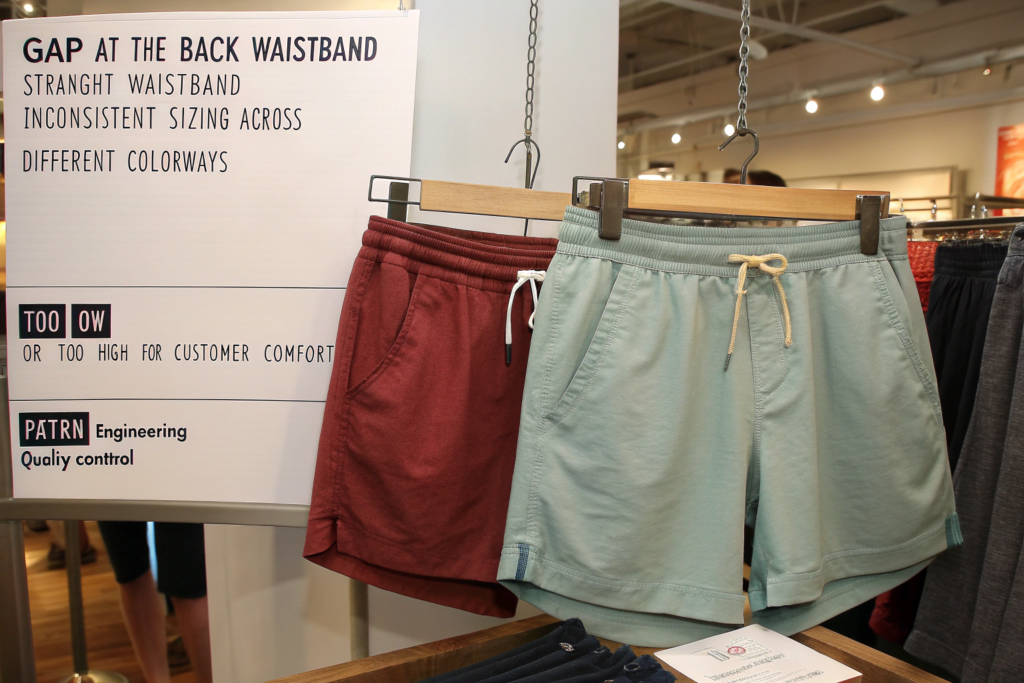
The most common fit and sizing pain points that drive shorts purchasing decisions are the waistband gap at the back, caused by a straight waistband that does not follow the natural curve of the body, the inconsistent sizing across different colorways of the same style, caused by variations in fabric shrinkage during dyeing that are not compensated for in the cutting pattern, and the rise that is too low or too high for the customer's body type and comfort preference, each of which can be addressed through specific pattern engineering and quality control measures that become powerful selling points.
How Can a Contoured Waistband Solve the Back Gap Problem?
The back gap is the space between the waistband and the lower back that appears when a customer with a curved lower spine wears a pair of shorts with a straight waistband. The straight waistband is a straight strip of fabric. The body is curved. The mismatch produces a gap.
The solution is a contoured waistband, sometimes called a shaped waistband. The waistband is cut on a curve that follows the natural contour of the body, narrower at the top and wider at the bottom, or curved along its length to match the shape of the waist and hip. The curve eliminates the gap because the waistband now matches the body it is designed to fit. A salesperson explaining this to a buyer does not need to describe the pattern-making process. They can say, "Our shorts have a contoured waistband, which means the waistband follows the curve of the body rather than being a straight strip. No gap at the back. Your customers will not need to size down to get the waist to fit and then complain that the hips are too tight." This contoured waistband pattern making detail directly addresses a frustration that almost every shorts buyer has experienced.
Why Should You Proactively Address Sizing Consistency Across Colors?
A customer buys a pair of shorts in navy, size 32. The fit is perfect. She buys the same short in olive, same size, same brand. The olive pair is tighter. She returns it, frustrated. The cause is differential shrinkage. The olive dye formulation requires a different dyeing temperature or duration than the navy dye, and the fabric shrinks more during the dyeing process. If the cutting pattern is not adjusted to compensate, the olive shorts will be smaller.
A brand that proactively addresses this issue in its sales presentation gains credibility with the buyer. The salesperson can say, "We know that different colors can fit differently due to dyeing processes. That is why our factory tests the shrinkage of every dye lot and adjusts the cutting pattern accordingly. Your customer who buys the navy and the olive will get the same fit." This level of transparency about a known industry problem and its solution is disarming and persuasive. This dye lot shrinkage variation issue is rarely discussed but universally experienced.
How Do Fabric Failures Create Pain Points That Your Product Can Solve?
The fabric is the foundation of the short. When the fabric fails, the entire garment fails. The customer experiences pilling, those rough little balls of fiber that appear on the surface after a few washes. The color fades, or worse, transfers onto the customer's car seat or handbag. The fabric shrinks, and the shorts no longer fit. These failures are not random. They are the result of specific, measurable fabric properties that can be tested and specified. A brand that can demonstrate that its fabric has been tested against these specific failures has a powerful sales argument.
The most damaging fabric-related customer pain points are pilling, which occurs when short, weak fibers work their way to the fabric surface and form tangled balls, color fading and crocking, where dye transfers from the fabric onto other surfaces or fades unevenly, and shrinkage, where the garment permanently reduces in size after washing, each of which can be prevented by specifying measurable fabric standards, testing the fabric before cutting, and communicating the test results to the buyer as evidence of quality.
How Can You Use Pilling Resistance Data as a Sales Tool?
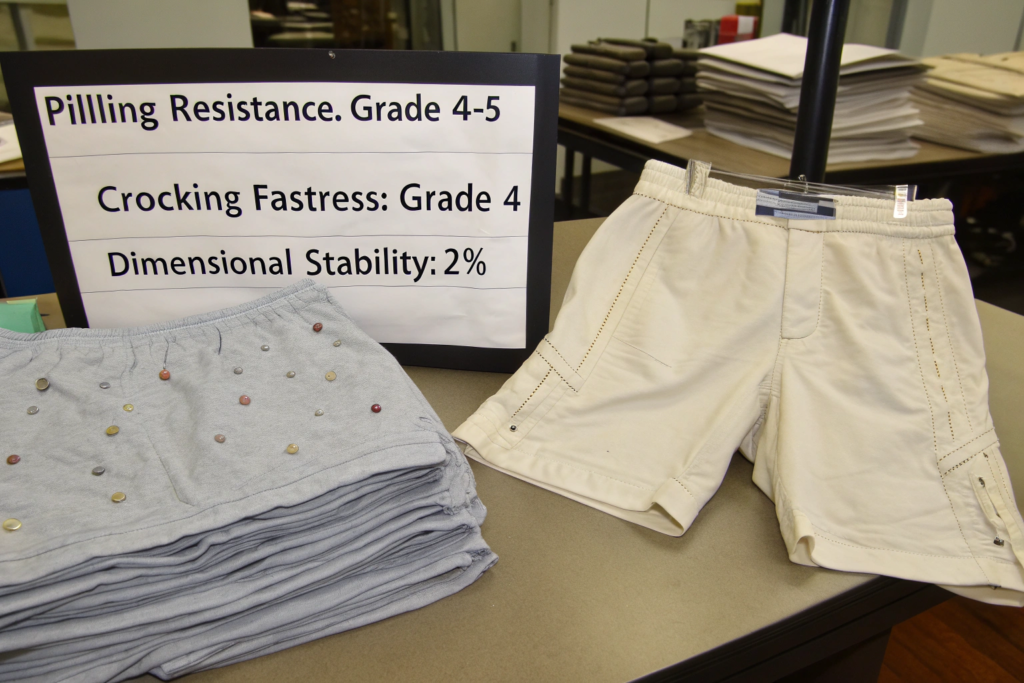
Pilling is caused by the abrasion of the fabric surface during wear and washing. Short, weak fibers are pulled to the surface, and the friction tangles them into pills. The pilling resistance of a fabric is measured using the Martindale abrasion test, which rubs the fabric against a standard abrasive for a specified number of cycles and then compares the pilled surface against a standard rating scale from 1 to 5.
A fabric with a pilling rating of 4 or 5 after 2,000 cycles will not pill in normal consumer use. A salesperson presenting a shorts line can include a simple, visual demonstration. A fabric swatch that has been tested to 2,000 cycles, showing a smooth, clean surface next to a swatch of a generic fabric that has pilled severely after the same test. The visual is more powerful than any verbal description. The salesperson says, "Our fabric is tested to a pilling resistance of grade 4. This is what it looks like after simulated wear and washing equivalent to two years of use." The buyer sees the difference. The pain point of customer returns due to pilling is resolved before the buyer even voices it. This pilling resistance testing standards evidence-based selling approach builds credibility that no amount of marketing language can match.
Why Should You Explain Colorfastness in Terms of Customer Experience?
A customer wears a pair of dark indigo shorts on a hot day. She sits on a white leather car seat. She stands up. The seat is blue. The shorts have crocked. The customer is furious. This is a specific, vivid, and highly emotional pain point. The buyer has heard this story from her own customers. She has processed the returns and issued the refunds.
A brand that can look a buyer in the eye and say, "Our indigo shorts have a wet crocking fastness rating of grade 4, which means the dye will not transfer onto car seats or handbags under normal conditions," is speaking directly to a lived trauma. The technical specification is translated into a customer experience outcome. The buyer does not need to understand the AATCC 8 test method. She needs to know that her customers will not call her store, angry about a ruined car seat. This colorfastness to crocking explained approach connects the factory test to the consumer's life.
What Specific Construction Defects Drive Customer Returns and Negative Reviews?
When a customer returns a pair of shorts, she does not write "The seam puckered due to incorrect thread tension." She writes "Poor quality, fell apart after one wash." The defect is specific. The complaint is general. The brand pays the price for the general complaint, in the form of a returned product, a lost customer, and a negative review that influences future buyers. A salesperson who understands the specific construction defects that generate the general complaints can address the buyer's fear at its source.
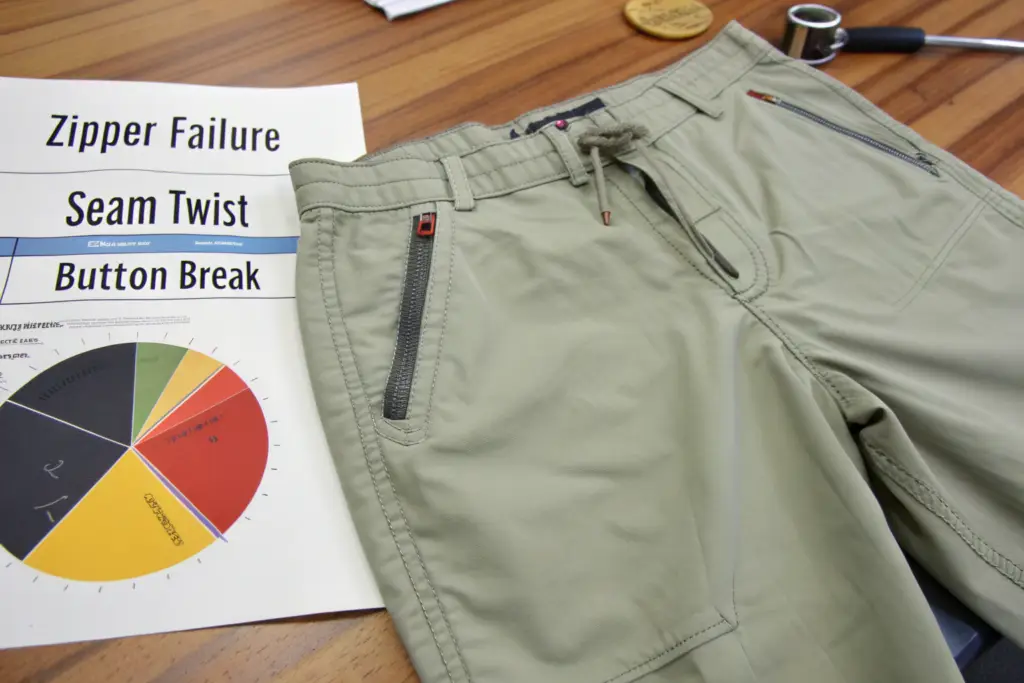
The construction defects that most frequently generate customer returns and negative reviews are zipper failures, where the slider jams, detaches from the tape, or spontaneously unzips due to a non-locking slider mechanism, seam twisting, where the side seam rotates from its proper position to the front of the leg after washing due to fabric torque that was not accounted for in the cutting, and button detachment, where the waistband button cracks or falls off due to a low-quality button material or incorrect attachment method, each of which can be definitively prevented through specific hardware and construction specifications.
How Can You Address the Fear of a Zipper Failure?
A zipper failure is the most catastrophic single defect a short can experience. A broken zipper renders the entire garment unwearable. The customer cannot put the shorts on. The emotional response is not disappointment. It is anger. The short is useless. The buyer who has experienced a batch of shorts with high zipper failure rates is deeply sensitized to this issue.
The salesperson can address this fear by showing the exact zipper. Holding a YKK locking zipper in hand, demonstrating the locking mechanism by pulling the slider down without lifting the pull tab, showing that it does not move. Then showing the same test on a non-locking generic zipper, which slides down easily under tension. The demonstration takes five seconds. The message is permanent. The buyer understands that this zipper will not spontaneously unzip because the locking mechanism physically prevents it. The YKK zipper locking mechanism is a specific, demonstrable solution to a specific, feared problem.
Why Is Seam Twist a Hidden but Frequent Quality Complaint?
Seam twist is the phenomenon where a side seam, which should run straight down the side of the leg, rotates toward the front or back of the leg after washing. The defect is caused by the natural torque in the cotton yarns, which is released during washing and causes the fabric to skew. If the fabric is not properly finished and set before cutting, and if the pattern pieces are not cut in the correct orientation relative to the fabric grain, the finished garment will twist.
The customer who experiences seam twist does not know the technical cause. She knows the shorts look crooked and cheap. She returns them. The buyer who has processed these returns knows the complaint. The salesperson who says, "Our fabric is skew-tested before cutting, and all pattern pieces are cut on-grain. Our seams stay where they are supposed to stay," is providing a specific, technical solution to a problem the buyer may not have been able to articulate. This seam twist in woven garments issue is a mark of manufacturing sophistication.
How Should You Structure a Sales Conversation Around Pain Points?
Knowing the pain points is the foundation. Structuring the sales conversation to draw out those pain points and then address them is the skill. The traditional sales approach is to present the product. "Here are our shorts. This is the fabric. This is the price." The pain point approach is to diagnose the problem. "What frustrates you about the shorts you currently stock? What are your most common return reasons?" The difference in buyer engagement between these two approaches is dramatic.
An effective pain point sales conversation follows a three-part structure: the diagnostic phase, where the salesperson asks open-ended questions about the buyer's frustrations with their current shorts assortment, listens more than they talk, and takes notes; the solution mapping phase, where the salesperson connects each frustration the buyer has expressed to a specific feature of their shorts line, using the language the buyer used rather than technical jargon; and the evidence phase, where the salesperson provides a demonstration, a test report, or a physical sample that proves the solution is real, leaving the buyer feeling understood and confident rather than pitched and skeptical.
What Open-Ended Questions Best Reveal Buyer Pain Points?
The quality of the salesperson's questions determines the quality of the conversation. Closed-ended questions, "Do you have any issues with quality?" yield closed-ended answers, "No, not really." The salesperson learns nothing. The buyer remains guarded.
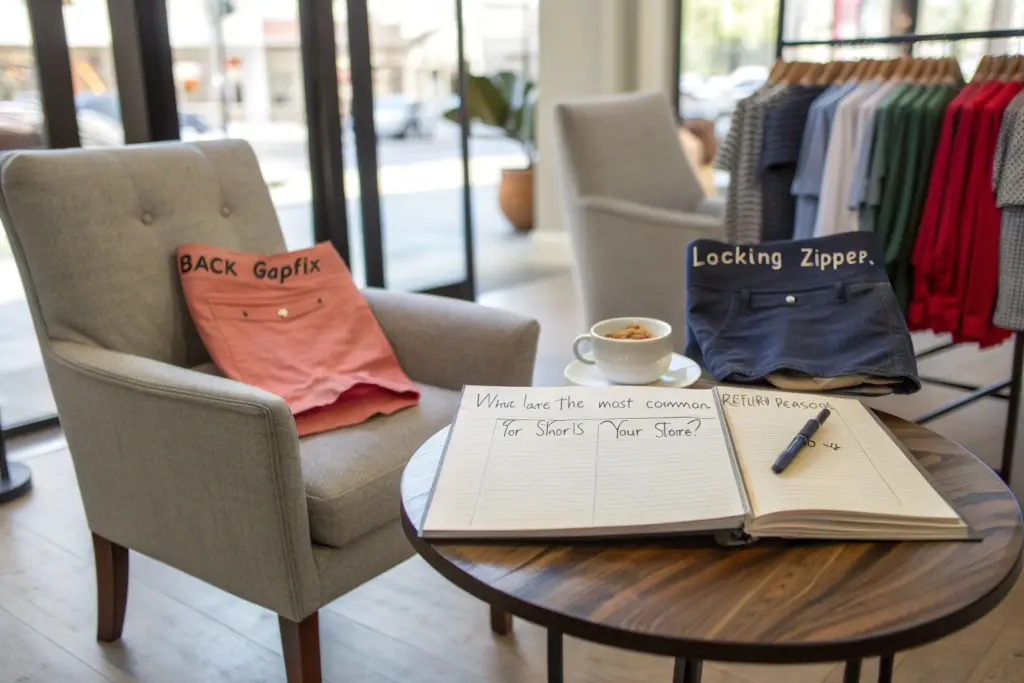
Open-ended questions invite the buyer to talk. "What are the most common reasons customers return shorts to your store?" "When a customer complains about fit, what specific issues do they mention?" "Have you ever had a batch of shorts where the color transferred onto other clothing?" "What would your ideal shorts supplier do differently from your current suppliers?" These questions ask for stories, not yes or no answers. The buyer tells the story of the customer who returned the indigo shorts that ruined a car seat. The story contains the pain point. The salesperson listens, takes notes, and then maps the solution. "The indigo transfer issue you described is caused by poor wet crocking fastness. Our indigo shorts are tested to grade 4 wet crocking. The dye will not transfer onto car seats." The solution is connected to the buyer's specific, lived experience. This consultative selling questions approach transforms the salesperson from a vendor into an advisor.
How Do You Demonstrate Solutions Rather Than Just Stating Them?
A verbal claim is easily dismissed. "Our shorts are high quality." Every salesperson says that. A demonstration is believed. The salesperson hands the buyer two fabric swatches. One is an untreated cotton twill. One is an enzyme-washed cotton twill from their shorts. "Feel the difference." The buyer's fingertips make the argument more persuasively than any words.
The salesperson opens a zipper on a competitor's short and a zipper on their short. "Try pulling down on both sliders without lifting the tab." The buyer feels the locking mechanism engage on one and the non-locking slider slide down on the other. The demonstration of a pain point solution, the waistband gap, the pilling, the zipper failure, creates a memory that a verbal description cannot. These demonstrations should be prepared in advance and practiced. They should be quick, specific, and directly connected to a pain point the buyer has expressed. This product demonstration sales techniques approach turns abstract quality claims into concrete, tactile experiences.
Conclusion
Selling a classic shorts line more effectively is not about having a better product. It is about having a better conversation. The better conversation starts with listening, not talking. It starts with asking the buyer what frustrates her, what her customers complain about, what makes her hesitate to reorder a style that sold well on paper. The answers to these questions are the pain points. The pain points are the sales opportunities.
The salesperson who can hear a buyer describe the waistband gap problem, pull out a pair of shorts, and say, "This waistband is contoured to the curve of the body. No gap. Your customers will not need to size down," is not selling a feature. They are solving a problem. The salesperson who can hear a buyer describe a batch of shorts that pilled after three washes, hand over a lab test report showing a grade 4 pilling resistance, and say, "This is what our fabric looks like after simulated wear equivalent to two years," is providing evidence, not making a claim.
At Shanghai Fumao, we help our brand partners build the product features and the testing evidence that support this kind of selling. We provide the lab reports, the fabric swatches, and the technical specifications that turn a sales claim into a demonstrable fact. If you want to equip your sales team with the product and the proof to sell against customer pain points, contact our Business Director, Elaine, at elaine@fumaoclothing.com. Let's build a shorts line that solves the problems your buyers are actually talking about.