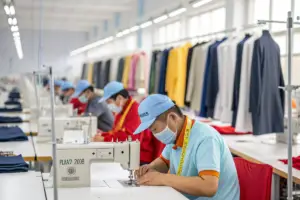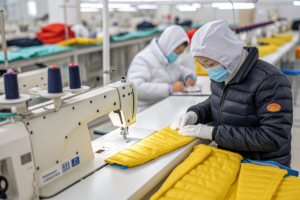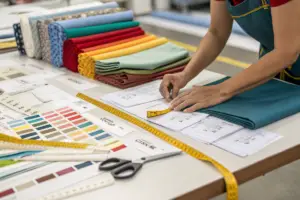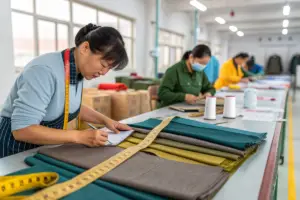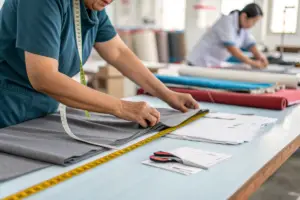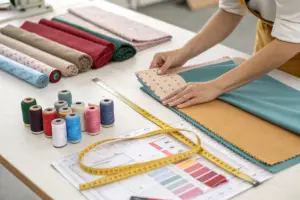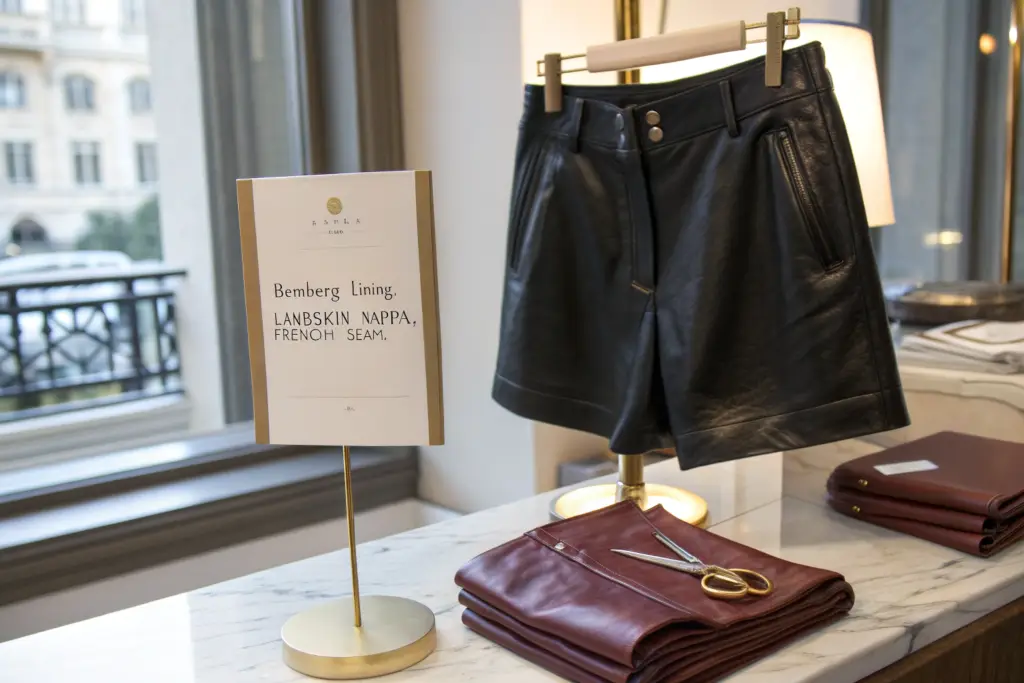
Three months ago, I received an inquiry from a luxury brand buyer in Milan. She was looking for a factory that could produce classic leather shorts with a specific set of requirements. The leather had to be lambskin nappa, not cowhide. The lining had to be Bemberg cupro, not polyester. The seams had to be French seamed internally, not overlocked. The waistband had to be hand-finished with a pick stitch. The minimum order was small, 150 units across three sizes. This was not a fast-fashion brand testing a trend. This was a luxury house planning a core collection piece for Spring 2026. The buyer knew exactly what she wanted, and she was having difficulty finding a factory that could execute every detail correctly.
Classic leather shorts remain a scouted luxury item for 2026, but the category has evolved significantly from its previous iterations, with buyers now seeking extremely specific material and construction specifications that separate genuine luxury from mass-premium imitations, including lambskin or goat leather instead of cowhide, Bemberg cupro linings instead of polyester satin, French-seamed internal finishing instead of overlocked edges, and hand-finished details such as pick stitching and hand-painted edge finishing, all of which require a factory with specialized leather garment expertise rather than general apparel manufacturing capability.
At Shanghai Fumao, I have worked with leather garment specialists for many years. Leather shorts occupy a unique position in the apparel market. They are too expensive and too specialized for mass-market brands. They are too fashion-forward for traditional leather garment houses that focus on jackets and trousers. This positioning, niche, high-end, and technically demanding, makes them a persistent but difficult category for luxury buyers to source. Let me walk you through what is happening in this category and what buyers are actually looking for.
What Material Specifications Define a Luxury Leather Short in 2026?
The material is the defining characteristic of a luxury leather short. The difference between a pair of leather shorts that retails for $400 and a pair that retails for $1,200 is, more than anything else, the leather itself. The skin type, the tannage, the finishing, the thickness, and the hand feel all contribute to a sensory experience that the luxury consumer is paying for. A buyer scouting for leather shorts in 2026 is not simply asking for "genuine leather." She is specifying the exact leather type, and she expects the factory to understand why that specification matters.
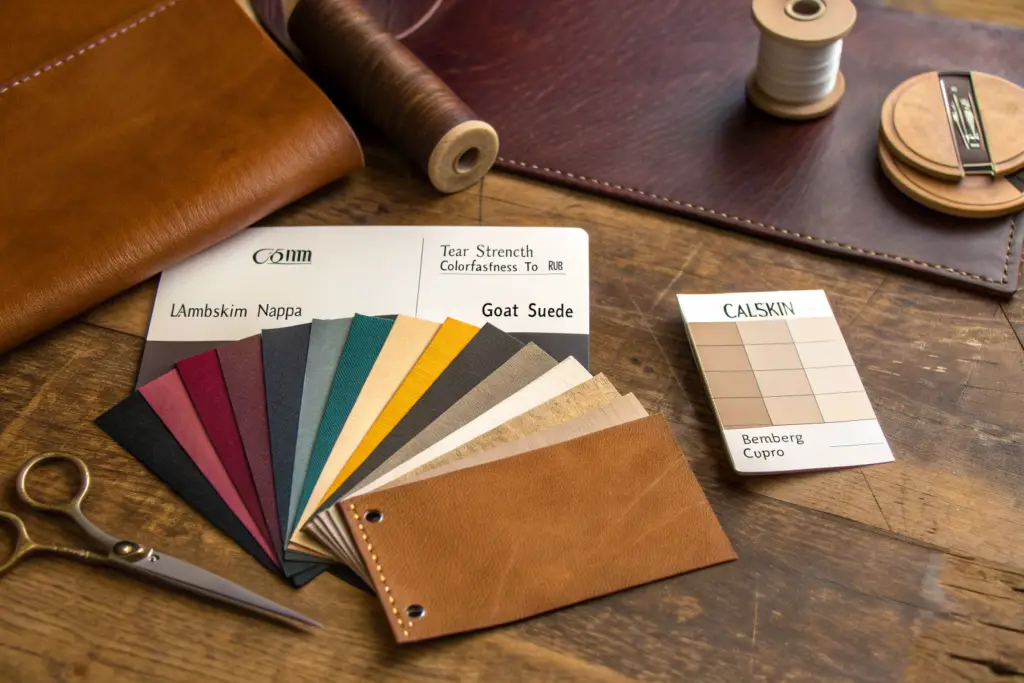
The material specifications that define a luxury leather short in 2026 are the leather type and origin, with lambskin nappa and goat suede being the preferred choices for their soft hand feel, light weight, and elegant drape, the tannage, with chrome-free and vegetable-tanned leathers gaining preference among sustainability-conscious luxury brands, the thickness, typically between 0.5 and 0.8 millimeters for a garment that is structured enough to hold a tailored shape but soft enough to drape comfortably, and the lining material, with Bemberg cupro, a regenerated cellulose fiber made from cotton linter, being the gold standard for luxury leather garments due to its breathability, anti-static properties, and soft hand feel.
Why Is Lambskin Preferred Over Cowhide for Luxury Shorts?
Cowhide is the workhorse leather of the industry. It is thick, durable, and relatively inexpensive. It is ideal for jackets, belts, and upholstery. It is too heavy, too stiff, and too rough in hand feel for a luxury short. A cowhide short feels like a converted work garment. It does not drape. It does not move with the body. It wears the wearer.
Lambskin is fundamentally different. The fiber structure of lambskin is finer and more uniform than cowhide. The skin is thinner, typically 0.5 to 0.7 millimeters compared to 0.9 to 1.4 millimeters for cowhide. The hand feel is soft, supple, and almost fabric-like. A lambskin short drapes with a fluidity that approaches a heavy silk or a fine wool. It moves with the body. It can be tailored into a fitted silhouette without creating stiff, angular lines. This difference in material performance is why lambskin commands a significantly higher price per square foot. This lambskin vs cowhide leather properties distinction is fundamental to the luxury leather category. At Shanghai Fumao, we source lambskin from tanneries that specialize in garment-weight leathers.
What Role Does the Lining Play in the Luxury Perception?
The lining is the interior of the short, the material that touches the wearer's skin. In a cheap leather short, the lining is polyester satin. Polyester does not breathe. It traps heat and moisture against the skin. It creates static cling. It feels synthetic and clammy. The luxury consumer who pays $1,200 for a pair of shorts will not tolerate a polyester lining.
Bemberg cupro is the standard for luxury leather garment linings. Cupro is made from cotton linter, the fine, short fibers that adhere to the cotton seed after ginning. These fibers are dissolved and regenerated into a continuous filament fiber through a process similar to viscose production, but with a finer, more silk-like result. Bemberg breathes. It wicks moisture. It is anti-static. It has a cool, smooth hand feel that is comparable to silk but more durable and easier to care for. The cost of Bemberg lining is approximately five to eight times the cost of polyester satin. The luxury consumer may not know the name Bemberg, but she feels the difference immediately. This Bemberg cupro lining properties material choice is one of the invisible signals of genuine luxury.
What Construction Techniques Separate Luxury Leather Shorts from Mass-Produced?
The construction of a leather garment is fundamentally different from the construction of a woven fabric garment. Leather cannot be treated like a textile. Once a needle punctures leather, the hole is permanent. There is no unraveling of yarns, but there is also no forgiveness. A misplaced stitch leaves a permanent scar. The seam allowances cannot be pressed open with an iron. They must be glued, taped, or topstitched flat. The edges must be finished, not with an overlock stitch, but with paint, wax, or a turned edge. These construction requirements demand specialized machinery, specialized operator skills, and a fundamentally different approach to garment assembly.
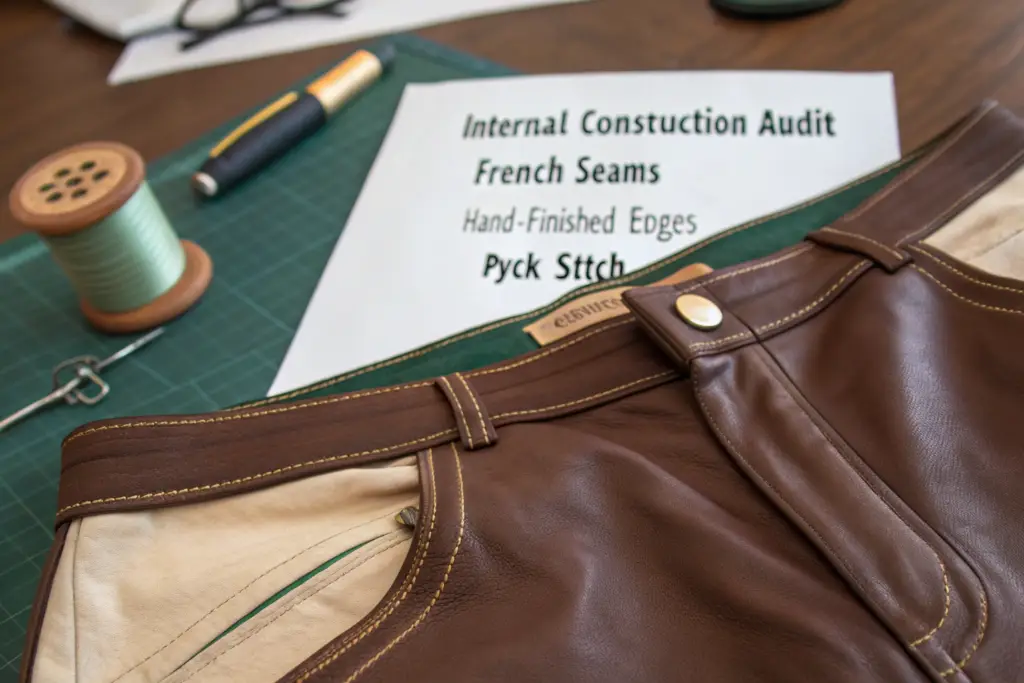
The construction techniques that separate a luxury leather short from a mass-produced imitation are the seam construction, which in a luxury garment uses French seams or turned-edge seams that fully enclose the raw leather edge rather than leaving it exposed and overlocked, the edge finishing, where the cut edges of the leather are hand-painted with a flexible edge paint that seals the edge and provides a smooth, polished appearance, the topstitching and decorative stitching, which uses a longer stitch length and a heavier thread than fabric sewing and is often executed on a cylinder-arm machine that allows access to tight curves, and the waistband and hem finishing, which in a true luxury garment involves a hand-finished pick stitch and a precisely turned and glued edge.
Why Is French Seaming the Internal Standard for Luxury Leather?
A standard overlocked seam on a woven garment leaves a visible line of thread wrapping around the raw edge of the fabric. On leather, an overlocked seam is visually offensive. The perforations from the overlock needle create a row of permanent holes along the seam allowance. The edge is raw and unfinished. The appearance is industrial, not luxurious.
A French seam on a leather garment encloses the raw edge entirely. The two leather panels are first sewn with a narrow seam, right sides together. The seam allowance is trimmed, glued flat, and then the panels are turned and sewn again, enclosing the raw edge within a clean, finished seam. The result is a seam with no visible raw edge, no perforations, and a clean, refined interior. This is the standard for luxury leather garment construction. It requires a skilled operator, a specialized cylinder-arm sewing machine, and significantly more time than a standard overlocked seam. This leather seam construction techniques is one of the clearest indicators of a genuine luxury garment.
How Does Edge Painting Contribute to the Luxury Aesthetic?
The cut edge of a piece of leather is rough, fibrous, and absorbent. Left unfinished, it will absorb moisture, darken, and fray over time. In a mass-produced leather garment, the edges are left raw or covered with a folded binding. In a luxury leather garment, the edges are hand-painted.
Edge painting is a multi-step process. The raw edge is first sanded smooth. A flexible, elastic edge paint, color-matched to the leather, is applied in thin layers. Each layer is allowed to dry, then sanded smooth before the next layer is applied. Three to four layers are typical for a high-quality finish. The result is a smooth, sealed, slightly glossy edge that feels like a continuation of the leather surface. The process is time-consuming and requires skill. It cannot be automated. The hand of the artisan is visible in the result. This leather edge finishing techniques is a hallmark of luxury leather goods, from handbags to garments.
What Are the Minimum Order Quantity Realities for Leather Shorts?
Leather shorts are not a volume category. The material cost is high. The production complexity is high. The market demand is limited to a specific, high-end consumer segment. These realities shape the manufacturing economics. A brand accustomed to ordering 3,000 pairs of cotton chino shorts will be shocked by the minimum order quantities and the per-unit costs of a leather short program. The expectations must be recalibrated.
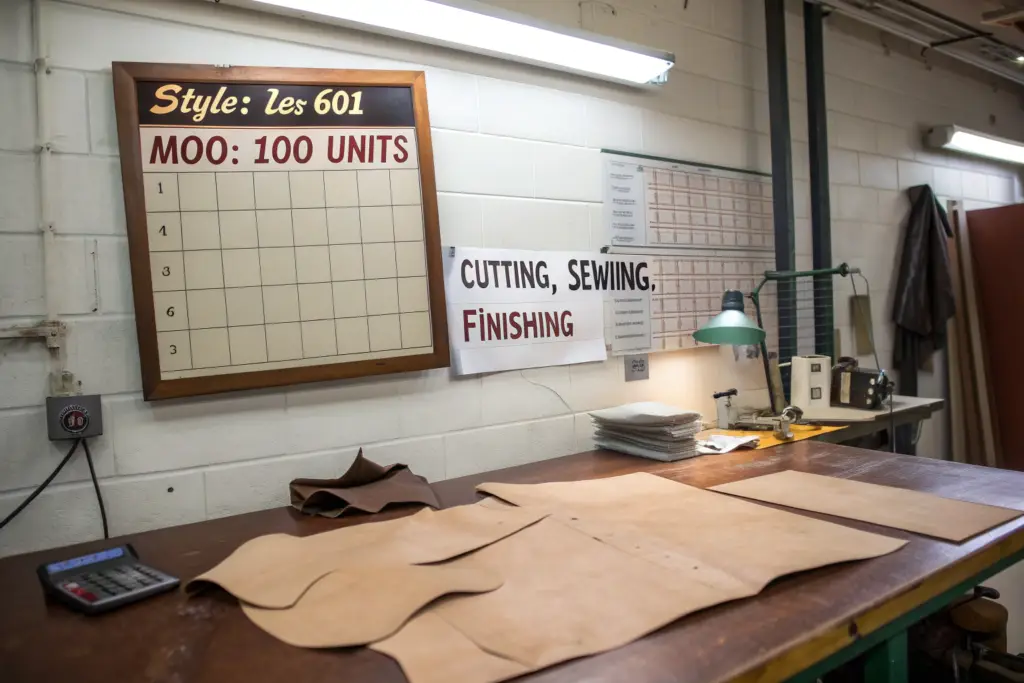
The minimum order quantity realities for luxury leather shorts are driven primarily by the leather hide purchasing requirement, with tanneries typically requiring a minimum purchase of 50 to 100 hides per color, each hide yielding approximately one to two pairs of shorts depending on the hide size and the pattern efficiency, resulting in practical MOQs of 50 to 100 units per style per color, significantly lower than the MOQs for woven garments but with a much higher per-unit cost, while the specialized labor requirements for leather garment construction mean that production capacity is limited and lead times are longer than for fabric garments.
Why Are Leather MOQs Lower in Units but Higher in Cost?
The MOQ for a leather short program is constrained not by the factory's willingness to produce small quantities, but by the leather tannery's minimum order. A tannery produces a specific color of lambskin in a batch. The batch size is determined by the dyeing drum capacity. The tannery will not produce a batch smaller than the minimum, typically 50 to 100 hides.
Each hide yields a limited number of shorts. The yield depends on the hide size, the pattern size, and the amount of waste from natural flaws and irregular edges. A lambskin hide typically yields one to two pairs of shorts. A batch of 50 hides therefore produces approximately 50 to 100 pairs of shorts. This is the natural MOQ for a leather short program. The factory can produce fewer units, but the buyer must still purchase the full batch of hides, and the unused hides become the buyer's inventory for future orders. The unit cost is driven by the hide price, which for premium lambskin can be $8 to $15 per square foot, plus the specialized labor, which is significantly more expensive per hour than standard garment sewing labor. This leather hide purchasing minimums reality shapes the economics of the category.
How Do Leather Short Lead Times Differ from Woven Garment Lead Times?
A cotton chino short can be produced in four to six weeks from fabric receipt to shipment. A leather short requires significantly more time. The leather must be ordered from the tannery, which may have a production lead time of four to eight weeks for a specific color. The leather must be received, inspected, and conditioned. The cutting process is slower because each hide must be inspected for flaws and the pattern pieces positioned to avoid them. The sewing process is slower because leather cannot be rushed through a machine the way fabric can. The finishing process, the edge painting and the final inspection, is labor-intensive.
The total lead time for a leather short program, from order confirmation to shipment, is typically twelve to sixteen weeks. This extended timeline must be factored into the buyer's planning. A brand ordering in January will receive goods in April or May, in time for a summer launch but not for an immediate delivery. This leather garment production lead time reality is a structural feature of the category.
How Should Luxury Brands Position Leather Shorts in Their 2026 Collection?
A luxury brand placing leather shorts in its 2026 collection faces a marketing challenge. The leather short carries associations with previous trend cycles, particularly the 2010s era when leather shorts were a fast-fashion trend item, often cheaply made and worn as a statement piece. The 2026 luxury leather short must be positioned as something entirely different, a wardrobe investment piece, a quiet luxury staple, a garment defined by its material and construction quality rather than its trendiness.
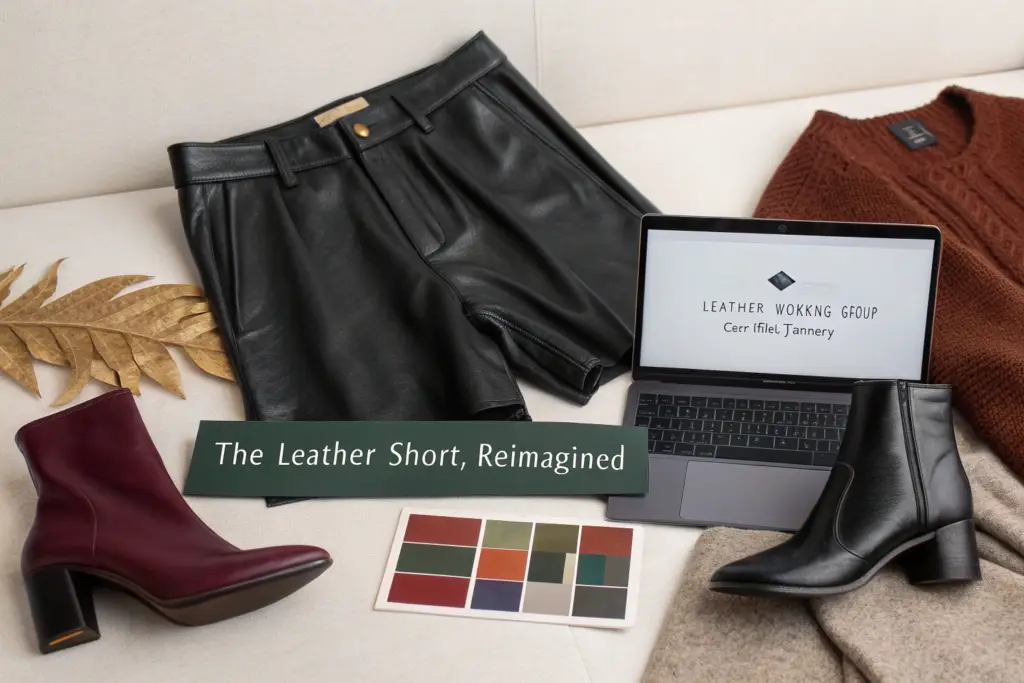
Luxury brands should position leather shorts in their 2026 collections as a timeless investment piece within the quiet luxury movement, emphasizing the natural material, the artisanal construction, and the sustainability credentials of chrome-free or vegetable-tanned leather from Leather Working Group certified tanneries, styling them as a versatile wardrobe foundation that pairs as easily with a cashmere sweater and boots for fall as with a silk camisole and sandals for summer, and communicating the garment's value through detailed product storytelling about the leather origin, the tannery, and the construction techniques rather than through trend-driven marketing language.
How Does the "Quiet Luxury" Movement Support Leather Short Sales?
The quiet luxury trend, which gained cultural momentum in 2023 and 2024, emphasizes quality, craftsmanship, and understatement over logos, branding, and conspicuous consumption. The movement favors natural materials, artisanal production, and garments that reveal their value through touch and wear rather than through visible branding.
A well-made pair of leather shorts fits perfectly within this framework. The value is in the lambskin, in the Bemberg lining, in the hand-painted edges, in the French seams. None of these features are visible from across a room. All of them are felt by the wearer. The quiet luxury consumer is educated about materials and construction. She seeks out garments that are made properly, that will last, and that are produced with respect for the material and the maker. The marketing for leather shorts in this context should focus on provenance, process, and material, not on trend or statement. This quiet luxury fashion trend alignment provides a natural positioning for the category in 2026.
What Sustainability Credentials Matter for Leather in 2026?
The luxury consumer's relationship with leather is evolving. Leather is a natural, durable, and biodegradable material, which aligns with sustainability values. But leather production, specifically the tanning process and the livestock industry, has environmental impacts that the consumer is increasingly aware of and concerned about.
The luxury brand positioning leather shorts in 2026 must address these concerns proactively. The leather should be sourced from a tannery certified by the Leather Working Group, which audits tanneries for environmental compliance in water usage, waste management, and chemical handling. The tannage should be chrome-free or vegetable-tanned, eliminating the use of chromium salts that are the primary environmental concern in leather tanning. The brand should be prepared to communicate the specific tannery, the specific tannage, and the specific environmental certifications. This Leather Working Group certification and chrome-free leather tanning transparency is the standard for credible luxury leather in 2026. At Shanghai Fumao, we source leather exclusively from LWG-certified tanneries and can provide the full chain of custody documentation.
Conclusion
Classic leather shorts remain a scouted luxury item for 2026, but the buyer expectations have shifted significantly. The category has moved away from trend-driven, fast-fashion associations and toward the quiet luxury paradigm, where the value of the garment is communicated through material quality, construction integrity, and sustainability credentials rather than through visual branding or trend positioning.
The buyers scouting for leather shorts in 2026 are specifying lambskin nappa, not cowhide. They are specifying Bemberg cupro linings, not polyester. They are specifying French seams, not overlocked edges. They are specifying hand-painted edge finishes, not raw cut edges. They are specifying Leather Working Group certified tanneries and chrome-free tannage. These specifications require a factory with genuine leather garment expertise, and the number of factories worldwide that can meet all of these specifications at luxury quality levels is limited.
If you are a luxury brand or a premium contemporary brand scouting for a manufacturing partner who can execute classic leather shorts to these specifications, we are ready to help. At Shanghai Fumao, we have the leather sourcing relationships, the specialized production capability, and the understanding of luxury construction standards that this category demands. Contact our Business Director, Elaine, at elaine@fumaoclothing.com. Let's discuss how we can bring your leather short design to life, from hide to finished garment.