About a decade ago, I made a costly mistake. A brand client asked me to develop a pair of shorts with an elasticated, drawstring waistband, a soft, garment-dyed finish, and a relaxed, drop-crotch silhouette. It was 2016. The style had been appearing in streetwear lookbooks and on a few influential Instagram accounts. The client was convinced it was the next permanent category. I invested in developing the pattern, sourcing the fabric, and setting up the production line. The first order sold reasonably well. The second order was smaller. By the third season, the style was dead. The client had confused a micro-trend with a permanent category shift. I lost time and money on a pattern and a production setup that had no lasting demand. The experience taught me that the difference between a trend and a permanent style is not a matter of opinion. It is a matter of evidence, and the evidence is trackable if you know what to look for.
Tracking the lifecycle of a trend to determine whether a classic shorts style is permanent requires monitoring a specific set of quantitative and qualitative signals over a period of at least eighteen to twenty-four months, including Google Trends search volume data to distinguish a sustained plateau from a temporary spike, multi-season sell-through data from retail and e-commerce partners, the adoption behavior of mass-market retailers and private label programs which signals market saturation and permanence, and the integration of the style into the core assortment of foundational brands in the category, with a style being considered permanent when it survives at least three consecutive selling seasons at stable or growing volume without promotional dependency.
At Shanghai Fumao, I now evaluate every new style request through this framework before I invest in development. The framework has saved me from chasing dozens of dead-end trends and has helped me identify the genuine permanents early. Let me walk you through the exact signals and how to read them.
What Data Sources Provide Objective Evidence of Trend Longevity?
The most common error in trend evaluation is relying on subjective impression. "I am seeing this style everywhere." "My friends are wearing it." "It is all over my Instagram feed." Subjective impression is influenced by the observer's personal algorithm, social circle, and confirmation bias. Objective data is not influenced by these factors. It tells the truth, even when the truth is uncomfortable. The CEO or brand owner who makes inventory decisions based on objective data will occasionally miss a fast, fleeting trend, but will almost never be stuck with a warehouse full of dead styles.
The objective data sources that provide reliable evidence of a trend's staying power are Google Trends search volume data, which tracks the actual search behavior of consumers over time and distinguishes a sustained plateau from a temporary spike, multi-season sell-through data from the brand's own e-commerce and wholesale partners, which reveals whether the style is growing, stable, or declining without promotional support, and social media save and share data, particularly from Pinterest, which measures purchase intent and active planning behavior rather than passive liking, with the combination of these three sources providing a triangulated view that is far more reliable than any single source.

How Does Google Trends Differentiate a Fad from a Permanent Shift?
Google Trends is a public, free tool that shows the relative search volume for any term over time. A search for "chino shorts" shows a predictable pattern. The volume peaks every May and June, drops in the winter, and peaks again the following May. This is a permanent, seasonal category. The pattern repeats year after year with stable or slightly growing peak volumes.
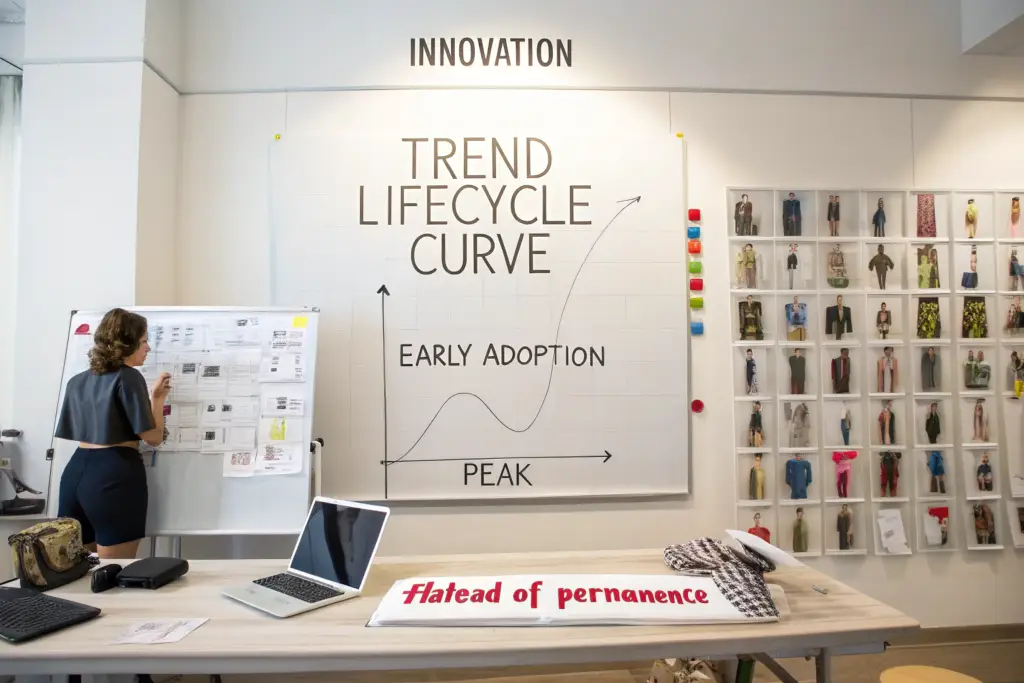
A search for a trend-driven term, "drop-crotch shorts," shows a different pattern. The volume spikes sharply, often driven by a celebrity sighting or a viral social media moment, and then collapses, often within six to twelve months. The volume never returns to the peak. The style was a fad. The distinction between these two patterns is visible in the Google Trends chart within eighteen months of the style's emergence. A style that sustains its search volume through two seasonal cycles, with each peak matching or exceeding the previous peak, is behaving like a permanent category. This Google Trends for fashion demand forecasting use is one of the most accessible and underutilized tools in trend analysis.
What Sell-Through Metric Reveals True Demand Versus Promotional Manipulation?
Sell-through rate is the percentage of units sold relative to the number of units purchased. A 70% sell-through rate at full price is a sign of genuine, healthy demand. A 70% sell-through rate achieved through a 40% markdown is a sign of inflated demand. The units moved, but they moved at a reduced margin.
To evaluate a style's permanence, track the full-price sell-through rate over multiple seasons. Is the style selling at full price early in the season, or is it only moving when the discounts are applied? Is the full-price sell-through rate improving season over season, suggesting the style is building a genuine customer base, or is it declining, suggesting the early adopters have moved on? A style that consistently achieves a full-price sell-through rate above 60% for three consecutive seasons, without increasing promotional support, is demonstrating the demand characteristics of a permanent category. This retail sell-through rate analysis is the internal financial evidence that complements the external search data.
How Do You Interpret the Adoption Signals from Retailers and Competitors?
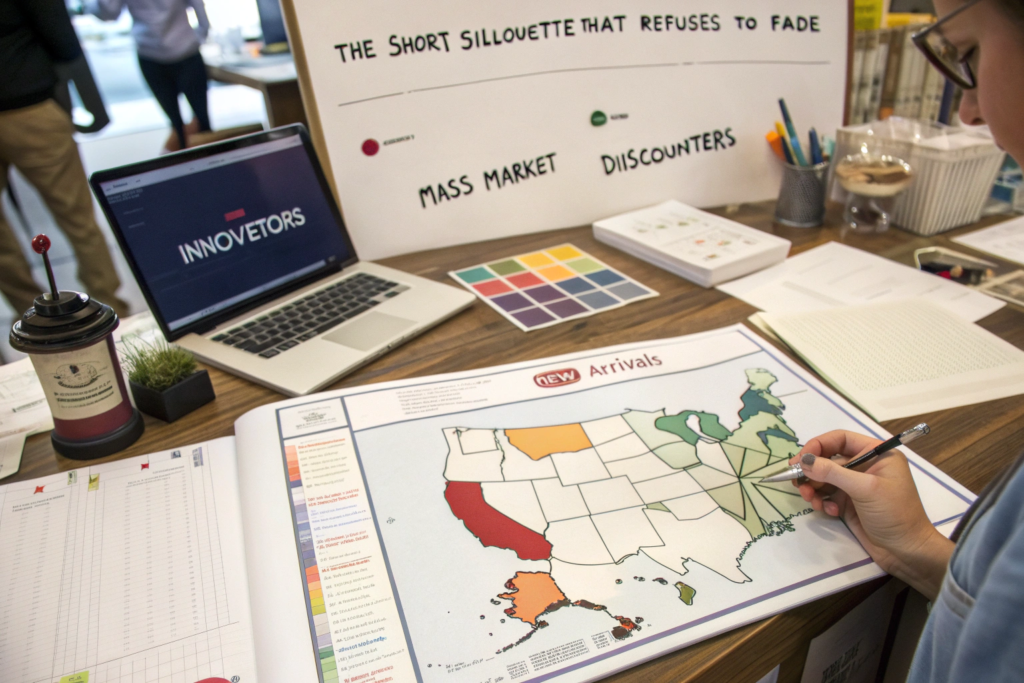
A style does not become permanent until it is adopted by the mass market. The early adopters, the boutique brands, the streetwear labels, and the high-fashion designers, are the innovators. They create the trend. But their adoption does not make the trend permanent. It makes the trend visible. Permanence is confirmed when the style moves from the innovators to the mass-market retailers, and specifically when it appears in the private label programs of major department stores and big-box retailers. These companies do not gamble on trends. They sell to the broad middle of the market. If they are stocking the style, the style has reached the plateau of permanence.
The key adoption signals that indicate a classic shorts style is becoming permanent are the appearance of the style in the private label or in-house brand programs of major department stores such as Nordstrom, Macy's, or Target, which indicates that professional buying teams with access to extensive sales data have validated the style's long-term demand, the inclusion of the style in the core basic replenishment programs of major retailers rather than in their seasonal fashion collections, which indicates the style is being treated as a staple, and the continued stocking of the style by mass-market retailers for at least three consecutive seasons, which indicates the style is generating repeat purchases from consumers, not just novelty purchases from early adopters.
Why Is Private Label Adoption the Definitive Signal of Permanence?
A department store's private label program is its bet on what the broad market wants. The private label buyer is not chasing trends. Her job is to develop products that will sell in large volumes, at stable prices, to a wide range of customers. She has access to the store's complete sales data. She can see exactly what is selling, to whom, and at what margin.
When a private label program introduces a new shorts silhouette, it is because the data shows that the silhouette is no longer a niche trend. It has crossed over into mass demand. The private label buyer is not guessing. She is responding to data that the outside observer cannot see. The appearance of a style in a major private label program is the strongest external signal that the style has reached the plateau of permanence. This private label product development strategy insight is one of the most reliable trend indicators available.
How Do Replenishment Programs Differ from Seasonal Fashion Buys?
A seasonal fashion buy is a one-time order. The buyer purchases a quantity of the style for the current season, sells through it, and moves on to the next season's newness. The style may or may not be reordered. The buy is a bet on a trend.
A replenishment program is an ongoing commitment. The buyer plans the style as a core basic, with a target in-stock rate of 95% or higher. When inventory drops below a reorder point, a new order is placed. The style is available to the customer year-round or season after season. The retailer is treating the style as a staple, like the basic t-shirt or the classic jean. A style that moves from a seasonal buy to a replenishment program has achieved permanence. This retail replenishment vs seasonal buying distinction is the operational evidence of the style's status.
What Role Do Fabric Mills and Supply Chains Play in Confirming a Trend?
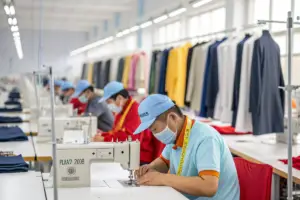
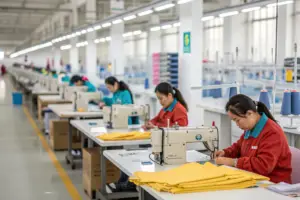
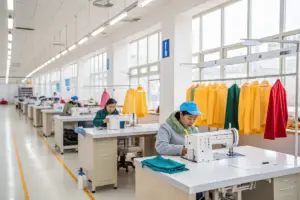
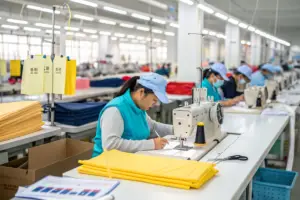
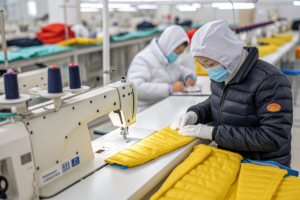
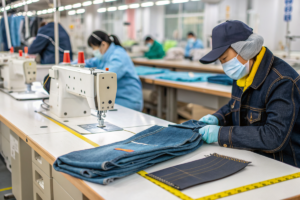
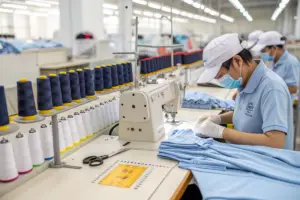
The most reliable early signal of a trend's permanence is not visible to the consumer. It is not visible to the brand owner who is reading fashion magazines. It is visible only to the factory and the fabric mill. The mill knows which fabrics are being reordered, in increasing volumes, by multiple brands, over multiple seasons. The factory knows which patterns are being run repeatedly, which production lines are being dedicated to a specific style, and which styles are generating the most consistent volume. This upstream data is the earliest, most accurate predictor of a style's long-term viability.
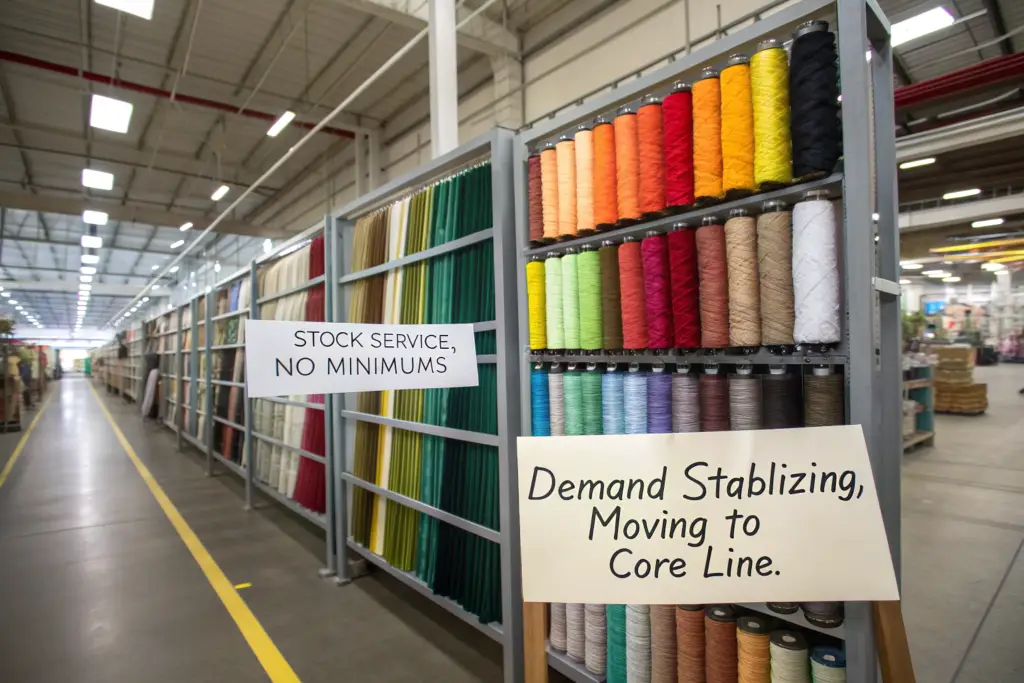
The supply chain signals that confirm a trend is becoming permanent are the fabric mill's decision to move a specific fabric from a custom development item with high minimums to a stock service program with low minimums and available in a full color range, which indicates that demand for the fabric has reached a level sufficient to justify continuous production, the factory's observation that the same pattern and construction specifications are being requested by multiple, unrelated brands, which indicates the style is diffusing across the market rather than being driven by a single influential brand, and the increasing availability and decreasing lead times of the specialized trims and components required for the style, which indicates that the supply base is investing in capacity to meet sustained demand.
Why Is a Mill's "Stock Service" Decision a Powerful Signal?
When a fabric is new and trend-driven, the mill produces it on a custom basis. The minimum order quantity is high, typically 1,000 to 3,000 meters per color. The lead time is long. The mill is not willing to invest in producing the fabric for inventory because it does not know if the demand will persist.
When a fabric moves to a stock service program, the mill has decided that the demand is stable, predictable, and large enough to justify continuous production. The mill produces the fabric in advance of orders, holds it in inventory, and offers it with low minimums and fast delivery. This decision is not made lightly. It is based on the mill's order book, which shows sustained, multi-brand demand for the fabric. The mill's stock service decision is a bet that the trend is now a permanent category. The brand owner who sees this signal can have high confidence in the style's longevity. This fabric mill stock service and trend validation is a powerful, underutilized source of trend intelligence.
A style that is driven by a single influential brand may be a brand phenomenon, not a market phenomenon. The brand's customers are buying the style because they are loyal to the brand, not because they are committed to the style. When the brand moves on, the style disappears.
A style that is being adopted by multiple, unrelated brands, a minimalist brand in New York, a coastal lifestyle brand in California, a department store private label, and a European contemporary brand, is a market phenomenon. The style is meeting a genuine, broad-based consumer need. No single brand's decision to drop the style will affect its overall market presence. The factory that observes this multi-brand adoption from its unique vantage point, seeing the same pattern and specifications arrive from different clients in different markets, has a front-row seat to the emergence of a permanent category. This market diffusion of fashion trends pattern is the structural evidence of permanence.
How Should Brands Adjust Their Product Strategy Based on Trend Lifecycle Analysis?
Knowing that a style is permanent is only half of the battle. The other half is adjusting the brand's product strategy to capture the value of that permanence. A permanent style should be managed differently from a trend-driven style. The inventory commitment should be larger and more consistent. The pricing strategy should be based on long-term margin optimization, not short-term trend capture. The design resource allocation should shift from constant newness to refinement and expansion of the core.
Brands should manage a confirmed permanent shorts style as a core category asset by transitioning it from a seasonal buy to a replenishment model with consistent in-stock availability, investing in expanding the style into a range of fabrics and colorways that serve different seasons and use cases, allocating product development resources to refining the fit, the construction details, and the material quality of the permanent style rather than constantly developing new silhouettes, and pricing the style at a stable, value-based price point that builds long-term customer trust and repeat purchasing rather than extracting maximum margin from a short-term trend peak.

When Should a Style Be Transitioned to a Replenishment Model?
A style should be transitioned to a replenishment model when it has demonstrated three consecutive seasons of full-price sell-through rates above the brand average, with stable or growing demand, and without promotional dependency. This is the quantitative threshold.
The transition means the brand commits to keeping the style in stock. It establishes a reorder point and a reorder quantity. When inventory drops to the reorder point, a new production order is placed automatically, without waiting for a seasonal buying decision. The style is always available to the customer. This consistency builds customer trust. The customer who buys the style this summer knows she can buy it again next summer. She becomes a repeat purchaser. This replenishment planning for core products is the operational foundation of a permanent style strategy.
How Should Resources Be Allocated Between Core Refinement and New Development?
A brand that treats a permanent style as a finished product is missing the value of permanence. A permanent style should be continuously refined. The fit can be improved based on customer feedback and returns data. The fabric can be upgraded as better materials become available. The construction details can be refined based on wear testing and quality data. The color range can be expanded seasonally to keep the style fresh while maintaining its core identity.
This refinement work requires dedicated resources, a pattern maker, a fabric sourcer, a quality analyst. These resources should be allocated from the new development budget. The brand that shifts resources from chasing the next trend to perfecting its core permanent styles builds a product moat that is difficult for competitors to cross. This core product refinement vs new product development resource allocation strategy is the difference between a brand that is constantly reinventing itself and a brand that builds lasting, defensible value.
Conclusion
Knowing when a classic shorts style is permanent, not just a passing trend, is a matter of evidence, not intuition. The evidence comes from multiple independent sources. Google Trends reveals whether consumer search interest is forming a sustained plateau or a temporary spike. Multi-season sell-through data reveals whether the style is generating genuine full-price demand or moving only on promotion. Retailer adoption, particularly by mass-market private label programs, reveals whether the style has crossed over from early adopter trend to broad consumer staple. Supply chain signals, the mill's stock service decision, and the factory's observation of multi-brand adoption, provide the earliest and most reliable confirmation of permanence.
A brand that tracks these signals systematically can identify a permanent style within eighteen to twenty-four months of its emergence, invest in it confidently, and build it into a long-term revenue driver. The brand that relies on subjective impression will repeatedly confuse fads for permanent shifts, invest too heavily in the wrong styles, and miss the window on the right ones.
At Shanghai Fumao, we help our brand partners read these supply-side signals. We share what we are seeing across our order book, which styles are generating consistent, multi-brand demand, and which are fading. If you want a manufacturing partner who can help you separate the permanents from the passing fads, contact our Business Director, Elaine, at elaine@fumaoclothing.com. Let's build your core together.