You are planning your next sustainable collection. You are tired of the same "eco-friendly" marketing claims that every brand is making. You want to do something truly different, something that has a genuine, authentic story. You have heard the terms upcycling and deadstock , and you have seen some incredible, one-of-a-kind pieces. But you wonder, "Is this a real, scalable trend, or just a niche for art students? Can I build a business on this?" A pioneering sustainable designer told me, "Using deadstock and upcycled materials stopped being a limitation and became my superpower. My customers don't just buy a dress; they buy a story of rescue and reinvention. It's the ultimate differentiator."
Upcycling and deadstock fabrics have become a major trend in sustainable apparel because they perfectly address the modern consumer's desire for authenticity, uniqueness, and tangible environmental action. They move beyond vague "eco-friendly" claims and tell a powerful, verifiable story. The key drivers are: 1) Radical Product Differentiation and Storytelling (each piece has a unique history that cannot be replicated by mass-market competitors), 2) A Tangible Solution to the Industry's Massive Waste Problem (directly diverting textiles from landfills), and 3) Alignment with the "Slow Fashion" and Artisan Value System (valuing craftsmanship and limited editions over volume). It is the future of a meaningful fashion business.
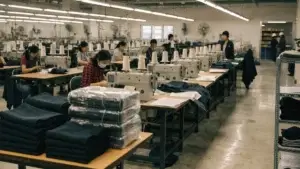
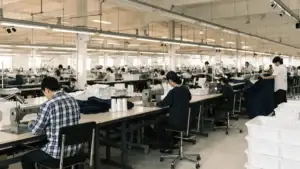
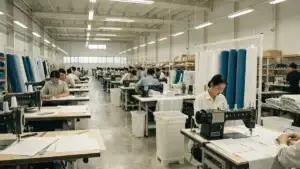
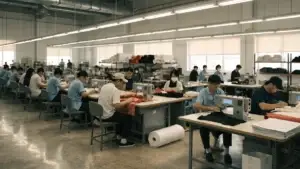
At Shanghai Fumao, we are passionate partners for B2B brands working with these unique materials. Our CMT (Cut, Make, Trim) model and our flexible production lines are specifically designed to handle the challenges of small-batch, one-of-a-kind, and non-standard fabrics. Let me explain why this trend has exploded and how it can be the foundation of an incredibly compelling and profitable brand.
How Does "Rescuing" Materials Create an Uncopyable Brand Story?
In a market flooded with sameness, how does a brand truly stand out? The answer increasingly is not just a unique design, but a unique material story. A garment made from deadstock or upcycled materials has an inherent, authentic narrative that a product made from virgin, mass-produced fabric simply cannot replicate. It is a story of rescue, of creativity, and of intentionality. This story is an uncopyable marketing asset.
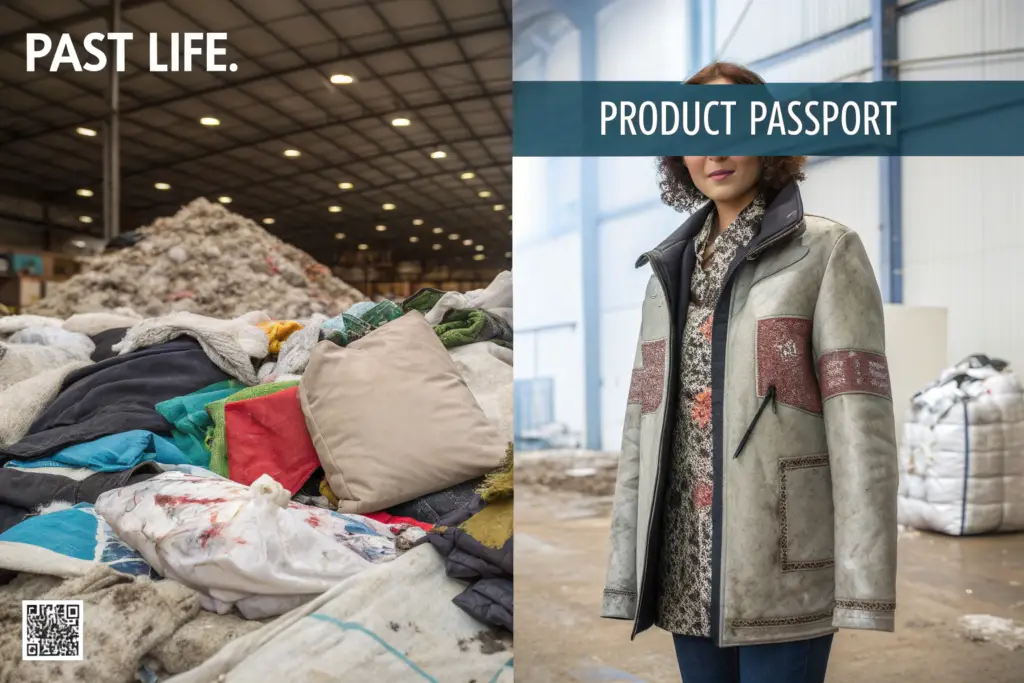
Upcycling creates an uncopyable brand story rooted in authenticity. A garment is not just a product; it is a "rescue." Each piece has a provenance—the vintage silk kimono it was once part of, or the deadstock roll from a shuttered Italian mill. This narrative of discovery and transformation is incredibly compelling to the modern, story-hungry consumer. It allows a brand to offer something no mass-market competitor can: a product with a soul and a unique history.
A women's wear brand we work with in a CMT capacity has built her entire brand identity around this concept. Every season, she sources incredible deadstock silks from jobbers in Italy. She designs limited-edition collections around the specific fabrics she finds. Her marketing is not about the dress itself; it is about the fabric's story—a floral print from a shuttered 1970s fashion house, or a roll of silk from a family-run mill that had been forgotten in a warehouse for decades. Her customers are obsessed. They are not just buying a dress; they are buying a piece of fashion history. This is the power of a material-driven brand narrative .
Why Is a "Rescued" Fabric Story More Powerful Than a "Made with Recycled Polyester" Claim?
A "recycled polyester" claim, while positive, is abstract. The story of a specific deadstock fabric is personal, tangible, and romantic. It creates an emotional connection that a generic sustainability claim cannot match. It gives the customer a story to tell when they wear the garment. This kind of word-of-mouth, narrative-driven marketing is priceless. This is the essence of authentic brand building .
How Does This Scarcity Model Drive Customer Urgency and Reduce Inventory Risk?
Deadstock and upcycled materials are, by their very nature, available in limited, unpredictable quantities. This forces a beautiful business model: the limited-edition drop. You find enough fabric for 50 dresses. You make 50 dresses. You market them as "Once They're Gone, They're Gone." This creates incredible urgency, rewards early purchasers, and virtually eliminates your inventory risk. You sell out. This is the opposite of the risky, mass-production model. This is the financial discipline of the limited-edition CMT model .
How Does This Trend Provide a Tangible Solution to Fashion's Waste Crisis?
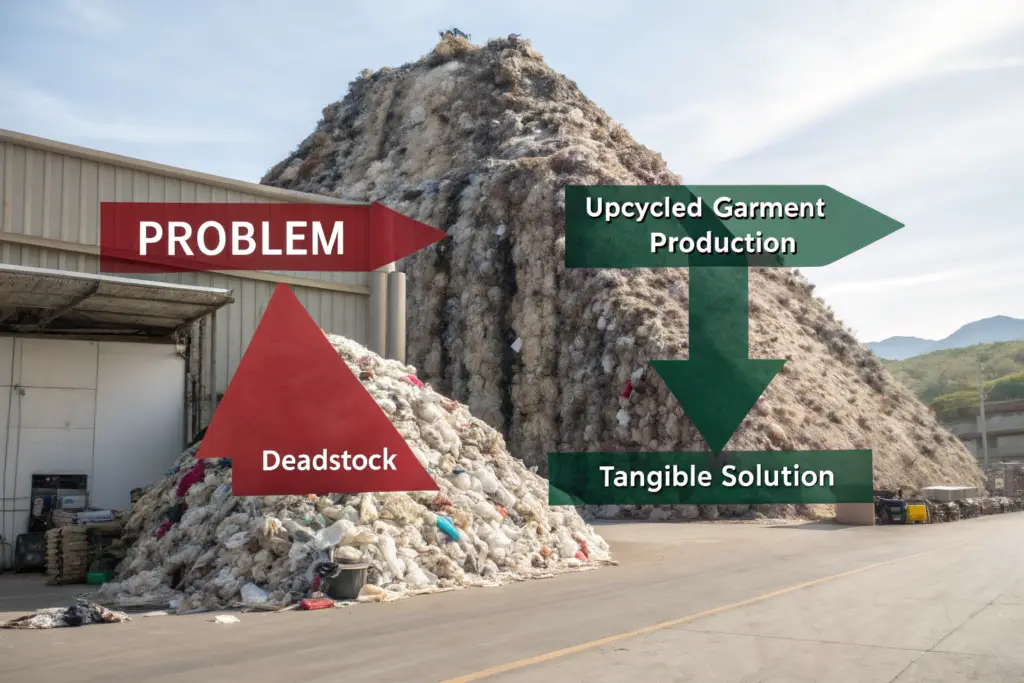
The scale of the fashion industry's waste is staggering. Millions of tons of textiles end up in landfills every year, and countless more yards of perfectly good, unused fabric sit in warehouses, forgotten. The upcycling and deadstock trend is not just a stylistic choice; it is a direct, tangible action against this massive environmental problem. It makes the abstract concept of "sustainability" visible and real for the consumer.
Upcycling and deadstock provide a tangible solution to textile waste by directly intercepting materials before they become pollution. Using deadstock means putting perfectly good, unused fabric to its intended use, often for the first time. Upcycling transforms post-consumer or post-industrial waste into high-value products. This diverts materials from landfills and dramatically reduces the demand for new, virgin resource extraction. It is a visible, understandable, and impactful form of environmental action.
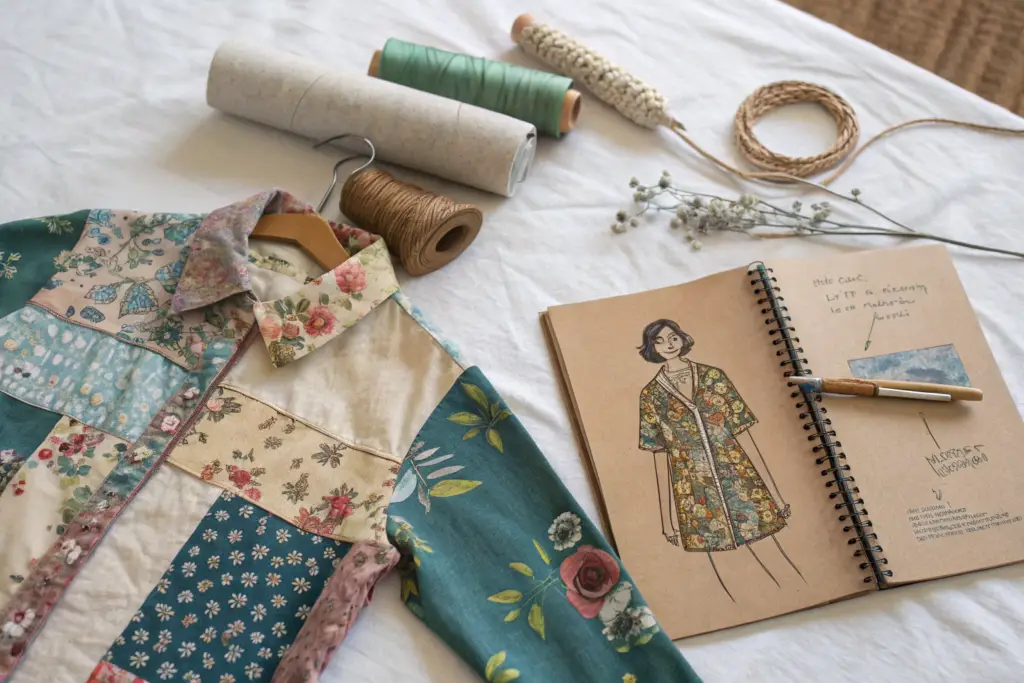
A brand we work with makes beautiful, patchworked jackets entirely from reclaimed denim and workwear. They partner with collection networks to source their raw materials. Every garment is a unique collage. Their customers are passionate about the mission. They know that by buying this jacket, they are directly participating in diverting waste from landfills. This "activism through purchase" is a powerful driver of loyalty. The brand has built a community around a shared value. This is the power of a mission-driven sustainable business model .
What Is the Difference Between "Pre-Consumer" and "Post-Consumer" Waste?
This is a key distinction in the upcycling world.
- Pre-Consumer Waste (Deadstock): Unused, often first-quality fabric leftover from mills, garment factories, or brands. It was never turned into a product or sold to a consumer. It is often in pristine condition.
- Post-Consumer Waste: Materials that have already been used by a consumer and discarded, like old clothing or household textiles.
Both are valid and valuable feedstocks for upcycling, but they require different sourcing and processing strategies. We can work with both in our specialty material CMT services .
How Does This Model Challenge the "Take-Make-Dispose" Linear Economy?
The traditional fashion model is linear: you take raw materials, make a product, and the consumer eventually disposes of it. Upcycling and deadstock are fundamentally circular . They keep materials in use, at their highest possible value, for as long as possible. They are a direct, practical challenge to the wasteful linear system. This is the core philosophy of a circular fashion economy .
How Does CMT Manufacturing Enable a Business Model Based on Upcycled Materials?
The traditional, high-volume Full-Package manufacturing model is fundamentally incompatible with the world of upcycled and deadstock materials. These fabrics are unpredictable, available in small quantities, and often require special handling. The CMT (Cut, Make, Trim) model, where the brand provides the unique materials and the factory provides flexible, expert labor, is the essential manufacturing backbone for this entire trend. It is the engine that makes this business model possible.
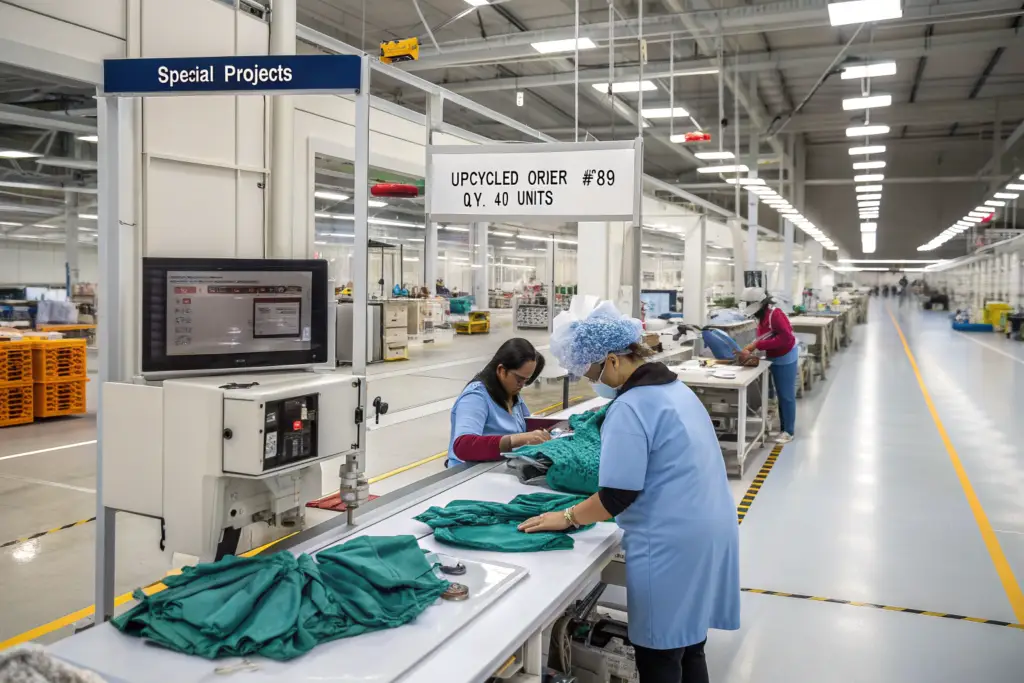
CMT is the essential manufacturing model for upcycled brands because it provides the flexibility and specialized handling these unique materials require. The brand sources the unpredictable, small-batch deadstock or reclaimed textiles. A flexible CMT factory, with its modular production cells and skilled artisans, can then expertly handle these varied, non-standard materials. The factory's low MOQs and quick changeovers align perfectly with the limited-edition nature of the product. This partnership is the foundation of a viable, scalable upcycled business.
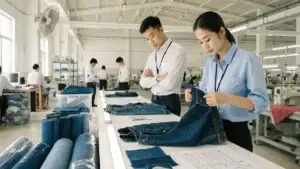
A designer who works with us uses our CMT model for her entire line of upcycled denim jackets. She sources vintage jeans and workwear from rag houses. She ships us these varied, worn-in materials. Our modular cell team, skilled in handling diverse and non-standard fabrics, carefully deconstructs and recuts them into her unique jacket designs. This would be impossible in a standard Full-Package factory. Our flexible CMT model is what brings her creative vision to life. This is the core of our partnership with sustainable brands .
How Do Flexible, Low-MOQ Production Lines Enable the Limited-Edition Model?
If you only have enough deadstock silk for 25 dresses, you need a factory that will accept a 25-unit order. Our Modular Production Cells, with their low MOQs and quick changeovers, are purpose-built for this. Traditional high-volume lines cannot do it. This flexibility is the critical enabler of the upcycled business model. This is the power of our small-batch CMT production .
How Does Our Incoming Inspection Adapt to the Unpredictability of Deadstock Fabrics?
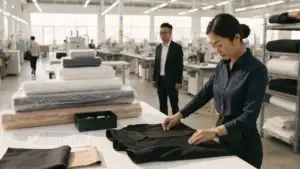
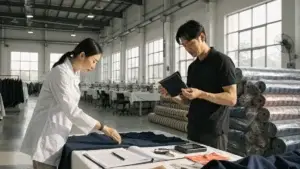
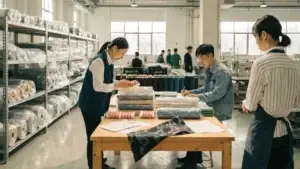
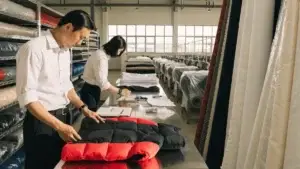
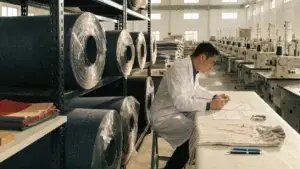
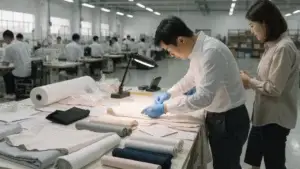
Deadstock is not always in perfect condition. Our Incoming Inspection process is even more critical here. We meticulously inspect every roll or piece of client-supplied deadstock for hidden flaws, stains, or inconsistencies. We document these thoroughly and work with the designer to strategize how to cut around them for maximum yield. This extra level of care is essential for maximizing the value of these unique, limited materials. This is a key part of our specialty material handling .
How Does Fumao's Flexible Model Empower the Upcycled and Deadstock Movement?
The upcycled and deadstock movement is not just a trend; it is the future of a more creative, responsible, and waste-free fashion industry. We are deeply committed to being the manufacturing partner that makes this future possible. Our entire flexible model is designed to empower the designers and brands who are re-imagining what clothing can be.
Fumao's flexible model empowers the upcycled movement by providing the specialized, low-MOQ manufacturing that these unique materials demand. We are not a factory that requires massive, standardized yardage. We are a creative manufacturing partner that embraces the beautiful unpredictability of deadstock and reclaimed textiles. Our agile lines, our skilled sewers, and our collaborative approach provide the reliable, high-quality execution that allows sustainable brands to scale their vision.
A brand founder who launched an entirely deadstock-based collection told us, "Finding Fumao was the breakthrough. You were the only factory that didn't laugh when I said I had 40 yards of this fabric and 60 yards of another. You saw the opportunity, not the problem. You made my crazy, sustainable dream a real, profitable business." That is our mission. We are the engine that powers the new wave of creative, sustainable fashion. This is the commitment of our sustainable manufacturing partnership .

How Do We Help Brands Source and Manage the Logistics of Deadstock?
While the creative sourcing is the brand's domain, we can support with logistics. We can receive small, varied shipments from multiple sources. We provide the rigorous Incoming Inspection needed to assess each unique batch. We can advise on buffer stock strategies for unpredictable materials. We are a stable, reliable logistics and manufacturing hub for a complex, non-standard supply chain. This is the value of our full-service CMT support .
How Does Our Approach Protect the Unique Value Proposition of an Upcycled Brand?
We understand that the value is in the uniqueness. We will never mix up your rare finds. Our rigorous material labeling and tracking systems ensure that every piece of your precious deadstock is used for its intended design. We protect the integrity of your limited-edition story by ensuring that your 50-yard roll of vintage silk results in exactly the right number of dresses, with no mysterious "waste." We are the guardians of your brand's narrative. This is our commitment to brand protection .
Conclusion
Upcycling and deadstock fabrics are a major trend because they represent a profound and necessary shift in the values of the fashion industry. They move us from a culture of mass-produced sameness to one of unique storytelling, and from a linear, wasteful system to a circular, creative one. They allow brands to build an authentic, differentiated, and deeply meaningful connection with their customers.
At Shanghai Fumao, we are the manufacturing partner that makes this vision possible. Our flexible CMT model, our skilled artisans, and our deep respect for unique materials provide the essential foundation for brands that are building the future of fashion, one rescued fabric at a time.
If you are ready to build a brand around the beauty of upcycled and deadstock materials, let's talk. Our Business Director, Elaine, can discuss how our flexible manufacturing can bring your vision to life. Please email Elaine at: elaine@fumaoclothing.com.