The U.S. apparel manufacturing scene is thriving—especially among brands focused on quality, sustainability, and small-batch production. But who are the real players behind the made-in-USA label?
The top garment manufacturers in the USA include full-package factories, private label partners, and sustainable production leaders known for their flexibility, quality, and innovation.
Here’s a look at the most reliable clothing makers across the U.S. and what makes them stand out.
What are the top 10 companies in the apparel industry
Some manufacturers do more than just sew garments—they power entire fashion ecosystems. These U.S. leaders shape the future of apparel through production, design, and ethical practices.
Top U.S. apparel manufacturers include ARGYLE Haus, The Evans Group, Indie Source, Suuchi Inc., and Good Clothing Company—alongside legacy giants like Gildan and Hanesbrands.
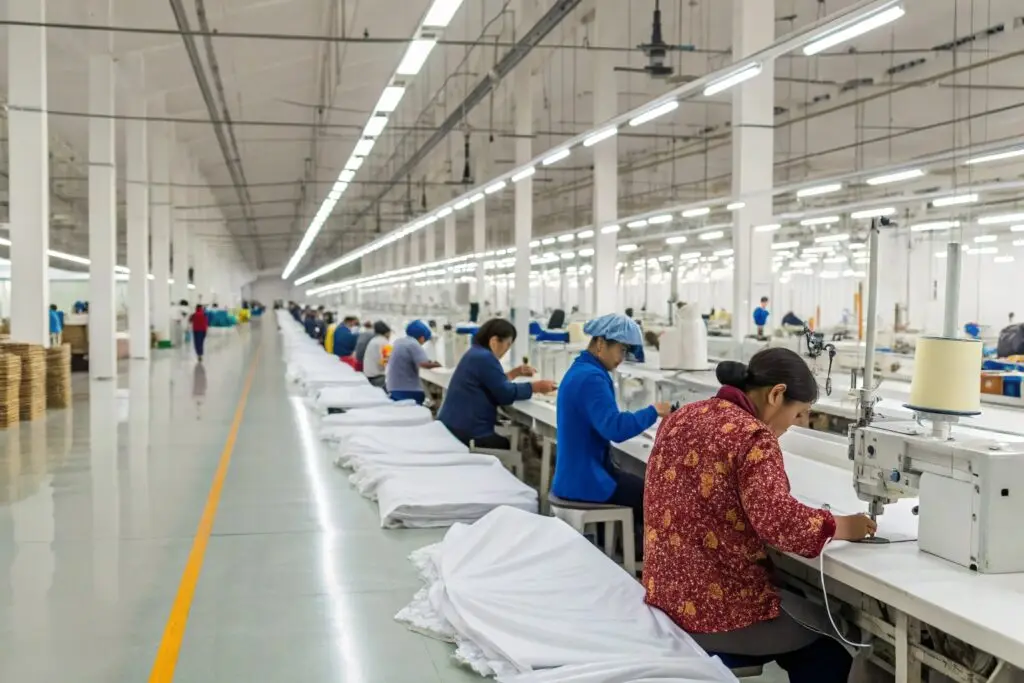
Leading companies in U.S. apparel manufacturing
| Company Name | Location | Known For |
|---|---|---|
| ARGYLE Haus | California | Full-package development, menswear |
| Indie Source | Los Angeles | Fashion DTC brands, product development |
| The Evans Group (TEG) | California | Zero-MOQ designer production |
| Good Clothing Company | Massachusetts | Sustainable small batch, ethical labor |
| Stylus Apparel | North Carolina | Private label streetwear and basics |
| Suuchi Inc. | New Jersey | Tech-powered supply chain, made-to-order |
| Portland Garment Factory | Oregon | Creative prototyping, sustainability |
| Lefty Production Co. | Los Angeles | Trend-driven sampling and branding |
| LA Fashion District Factories | California | Diverse local manufacturers in LA |
| L.C. King Manufacturing | Tennessee | Heritage workwear, family-owned since 1913 |
These companies serve both startup brands and established retailers looking to bring manufacturing closer to home.
How many clothing manufacturers are there in the US
The U.S. once led the world in garment production. While that shifted offshore in past decades, recent years have seen a strong domestic comeback.
There are currently over 6,000 registered clothing manufacturers in the United States, ranging from small-batch artisan shops to large-scale industrial suppliers.
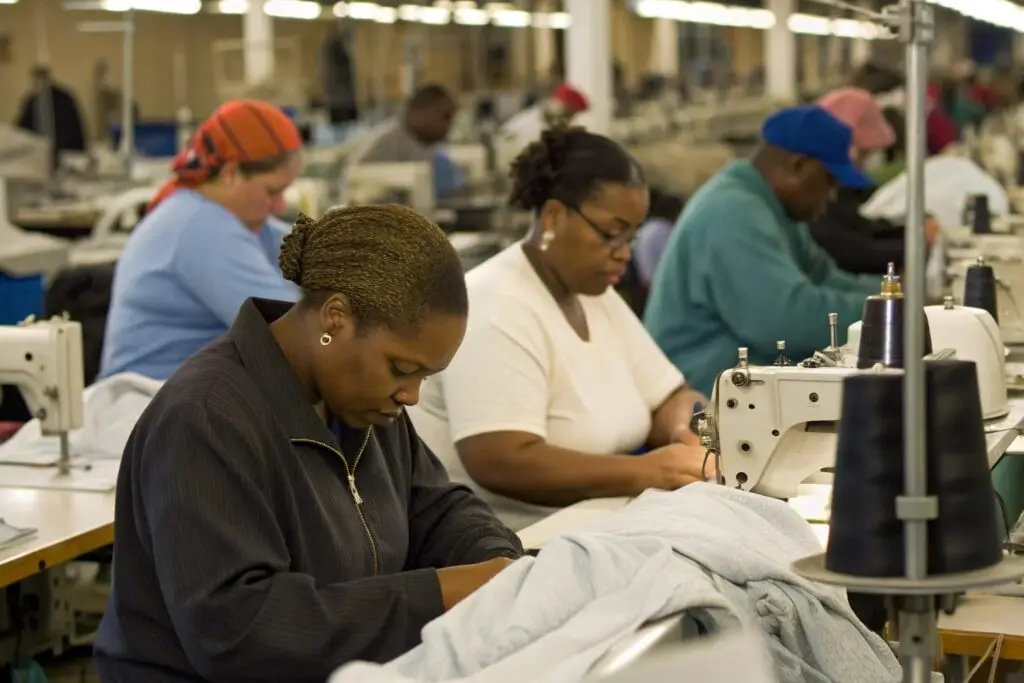
U.S. apparel manufacturing1 by the numbers
- ~6,100 facilities across 50 states
- Concentrated in California, New York, North Carolina, and Texas
- Employs over 95,000 people2 in sewing, patternmaking, and logistics
- Includes cut and sew3, knitting, printing, and finishing services
| Region | Specialty |
|---|---|
| West Coast (CA, OR) | DTC, fashion-forward, small batch |
| Northeast (NY, MA) | Luxury, tailoring, sample development |
| Southeast (NC, TN) | Knits, blanks, private label basics |
| Midwest | Denim, uniforms, athletic apparel |
This growing ecosystem supports everything from eco startups to premium brands.
What is the biggest clothing company in the US
While many manufacturers support niche brands, one company still dominates American apparel by scale.
The biggest clothing company in the U.S. by revenue is VF Corporation, which owns brands like Vans, The North Face, Dickies, and Timberland.
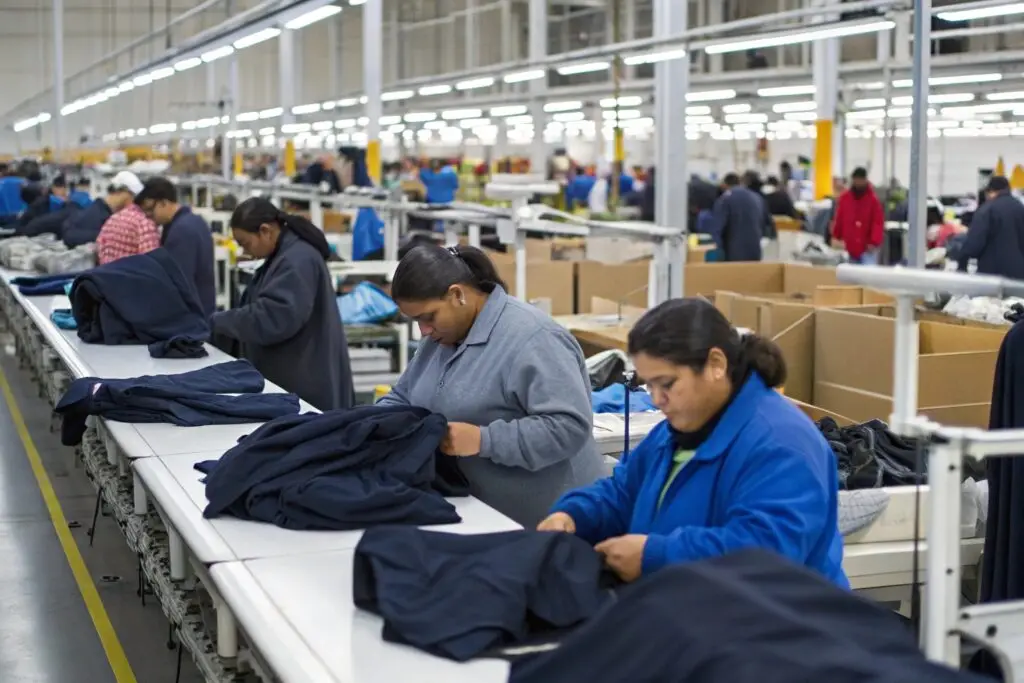
VF Corporation at a glance
| Metric | Details |
|---|---|
| HQ Location | Denver, Colorado |
| Major Brands4 | Vans, TNF, Dickies, Supreme |
| Annual Revenue5 | Over $10 billion |
| Manufacturing Footprint6 | Global + limited U.S. operations |
| Founded | 1899 |
While VF’s production is largely global, many of its workwear lines still source or finish garments in the U.S.
Other top players
- Hanesbrands Inc. – Owns Hanes, Champion, ComfortWash
- Gildan Activewear – Massive T-shirt and blank apparel producer
- Ralph Lauren Corp. – Made-in-USA segments for luxury and polos
- Nike (U.S. HQ) – American design with overseas manufacturing
These companies shape trends, pricing, and production standards globally—even if not all their garments are made on U.S. soil.
How big is the clothing industry in the US
From fast fashion to outdoor gear, the U.S. clothing industry is one of the world’s largest and most complex.
The U.S. clothing industry is worth over $370 billion in annual retail sales, with domestic manufacturing contributing around $10–15 billion of that total.
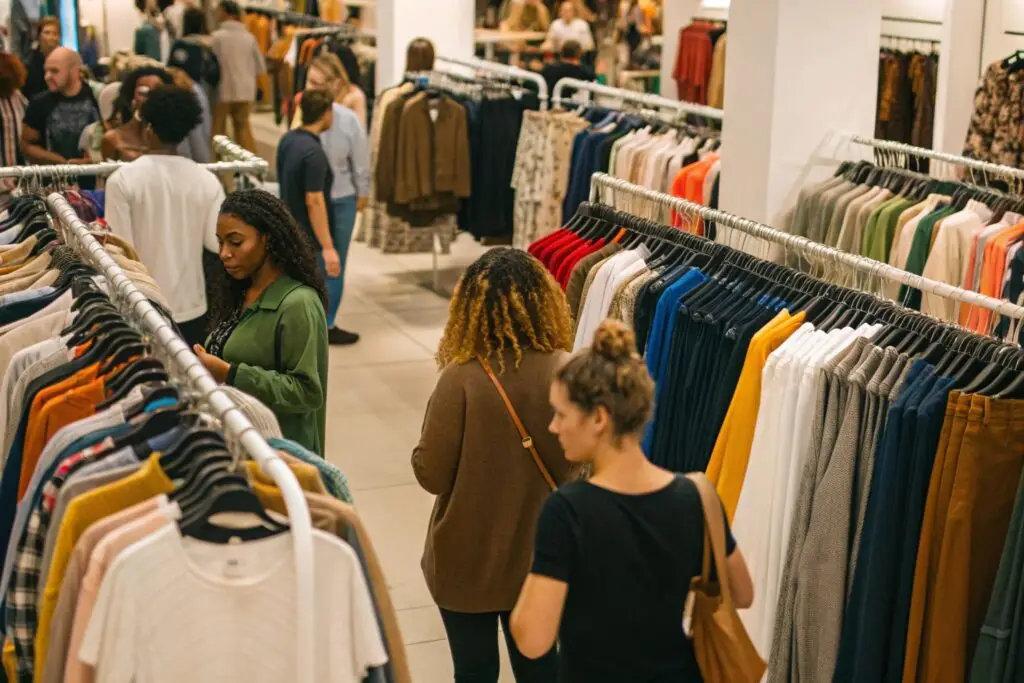
Industry highlights
| Metric | Value |
|---|---|
| Total U.S. apparel market | $370B+ in 2024 |
| Domestic manufacturing | $12–15B in output value |
| Annual consumption | ~65 garments per person |
| Online apparel share | 40–45% of total sales |
| Employment | Over 1.1 million in related fields |
The rise of e-commerce7, personalization, and sustainability8 has reshaped the U.S. fashion economy, giving rise to more small-batch and local production.
Growth areas
- Athleisure and performance apparel
- Ethical fashion and slow fashion
- Made-in-USA branding for quality-conscious shoppers
- Custom, on-demand manufacturing powered by tech
U.S. clothing brands that embrace flexibility and domestic partnerships are thriving in this fast-changing space.
Conclusion
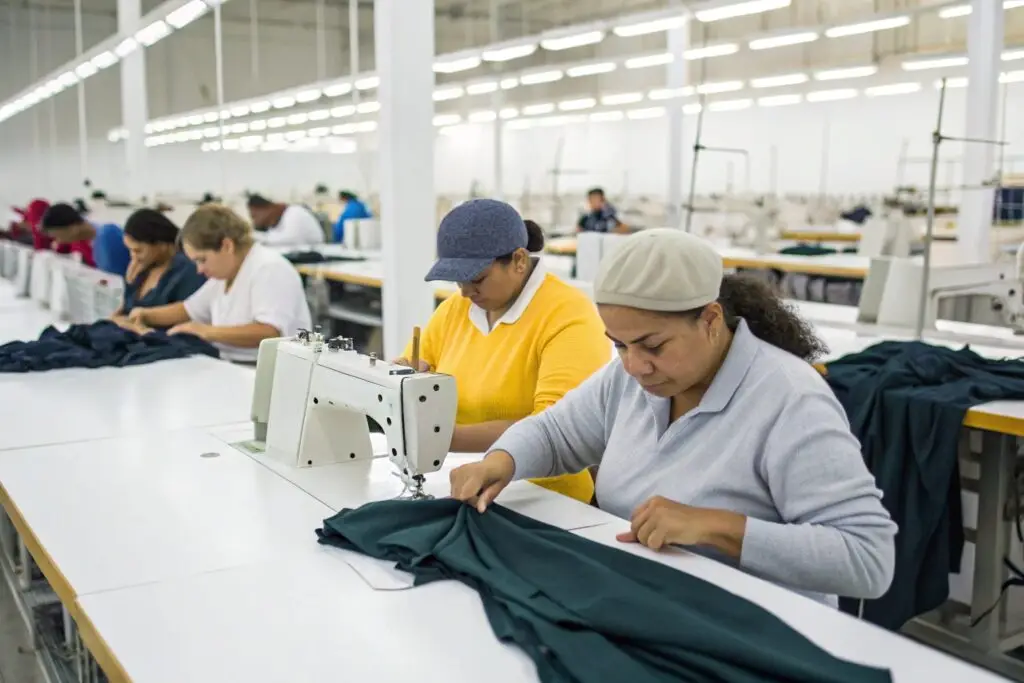
From powerhouse factories to agile cut-and-sew shops, U.S. garment manufacturers continue to play a key role in global apparel. Whether you need small-batch samples or scalable wholesale production, American manufacturers offer quality, speed, and ethical peace of mind.
-
Explore this link to understand the evolving landscape of apparel manufacturing and its impact on the economy and environment. ↩
-
Discover the significance of employment in the apparel sector and its role in the U.S. job market by checking this resource. ↩
-
Learn about the cut and sew process, a crucial aspect of apparel manufacturing, and its importance in garment production. ↩
-
Discovering VF’s major brands helps understand its market influence and product diversity in the apparel industry. ↩
-
Understanding VF Corporation’s annual revenue can provide insights into its market position and financial health. ↩
-
Exploring VF’s manufacturing footprint reveals its global operations and sourcing strategies, crucial for industry analysis. ↩
-
Explore this link to understand how e-commerce is transforming the fashion landscape and driving sales. ↩
-
Discover insights on sustainability’s role in fashion, shaping consumer choices and brand strategies. ↩