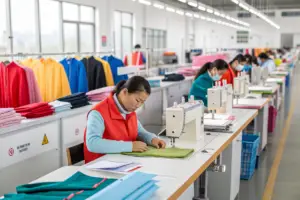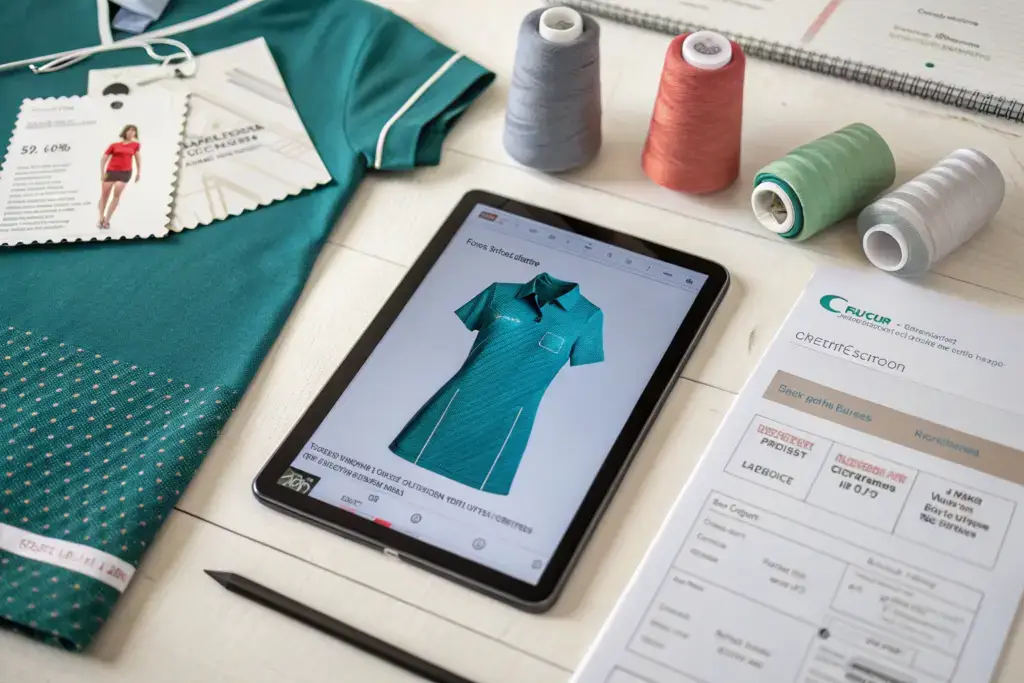
Two seasons ago, a client launched a women's golf dress line with what they thought was OEKO-TEX certified fabric. After production, they discovered their fabric supplier's certificate had expired six months prior, and the final dresses could not be legally labeled as certified. The result was a $50,000 loss in inventory value and a delayed launch. This critical mistake highlights that sourcing certified fabrics is a process, not just a purchase order.
Sourcing OEKO-TEX certified fabrics for golf dress designs requires a dual-verification strategy: first, sourcing from certified mills with valid, in-scope certificates for the specific fabric; and second, partnering with a manufacturer who manages the certification of the final garment, ensuring that all processes—from cutting and sewing to embroidery—maintain compliance.
It's a supply chain ecosystem, not a single ingredient. For brands designing performance-driven golf dresses, the fabric is the foundation, but the entire construction must be certified. Let's map out the actionable steps to secure a truly compliant supply chain.
What Are the First Steps in Finding Certified Fabric Mills?
The journey begins long before you sketch a design. Your starting point must be identifying and vetting fabric mills that don't just sell certified fabric, but have a robust system for it. Many large mills in China, Taiwan, and Korea have dedicated OEKO-TEX certified production lines.
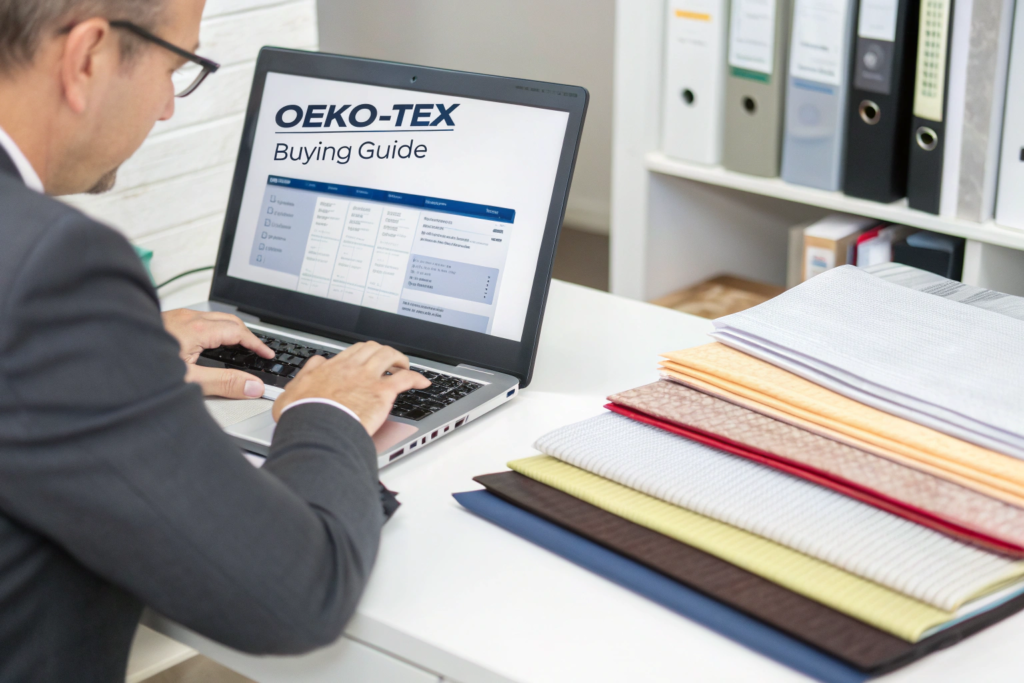
First, utilize the OEKO-TEX certification database, "OEKO-TEX® Buying Guide," which is publicly searchable. You can search by company name, product type, or certificate number. However, be specific: search for terms like "knitted polyester fabric" or "stretch woven fabric" to find relevant suppliers. Second, leverage your manufacturer's network. A seasoned apparel manufacturer like Shanghai Fumao has pre-vetted relationships with certified mills. We maintain a library of approved fabric samples and their corresponding, current certificates. This dramatically de-risks your search.
When you contact a mill, your first question should not be about price or MOQ, but: "Can you provide the valid OEKO-TEX STANDARD 100 certificate for this specific fabric reference, and is it Class II?"
How to Vet a Fabric Mill's Certificate Authenticity and Scope?
A certificate is a dynamic document. Your vetting checklist must include:
- Validity Date: Is it current (issued within the last year)?
- Certificate Holder: Does the name exactly match the mill selling you the fabric?
- Product Description: Does it precisely describe the fabric (composition, weight, construction) you are ordering? A certificate for "Polyester Knit" is too vague; it should specify "100% Polyester, 150gsm, Single Jersey."
- Product Class: For golf dresses (direct and prolonged skin contact), it must be Class II.
- Testing Institute: Note which OEKO-TEX member institute (e.g., Hohenstein, TESTEX) issued it for verification.
Always cross-check the certificate number in the public database. Furthermore, request a "Scope Letter" or "Transaction Certificate" for your specific purchase order. This document, issued by the certification body, links your bulk order to the master certificate and is gold-standard proof for your own due diligence and potential customs needs.
Why is In-House Lab Testing a Critical Second Step?
Even with a valid mill certificate, prudent brands and manufacturers conduct their own spot testing. We integrate this into our quality assurance protocol. For every new fabric roll from a mill, we take a swatch and subject it to a basic suite of tests (like formaldehyde content and pH value) using in-house equipment or a partnered local lab. This "trust but verify" approach caught an issue for us last year where a fabric batch passed the mill's annual audit but showed borderline-high pH from a new dye lot, which we corrected before cutting.
How Does the Manufacturing Process Affect Final Garment Certification?
This is the most common point of failure. A certified fabric does not guarantee a certified dress. The manufacturing process can introduce non-compliant elements.
The final, sewn garment must be certified as a whole product. This means every component added during manufacturing must also be certified: the sewing thread, the interlining, the elastic, the care labels, and any zippers or buttons (or they must be tested as part of the final assembly). Furthermore, the processes in the factory—such as washing, printing, or embroidery—must use only approved chemicals and methods.
What Should You Look for in a Certified Manufacturer?
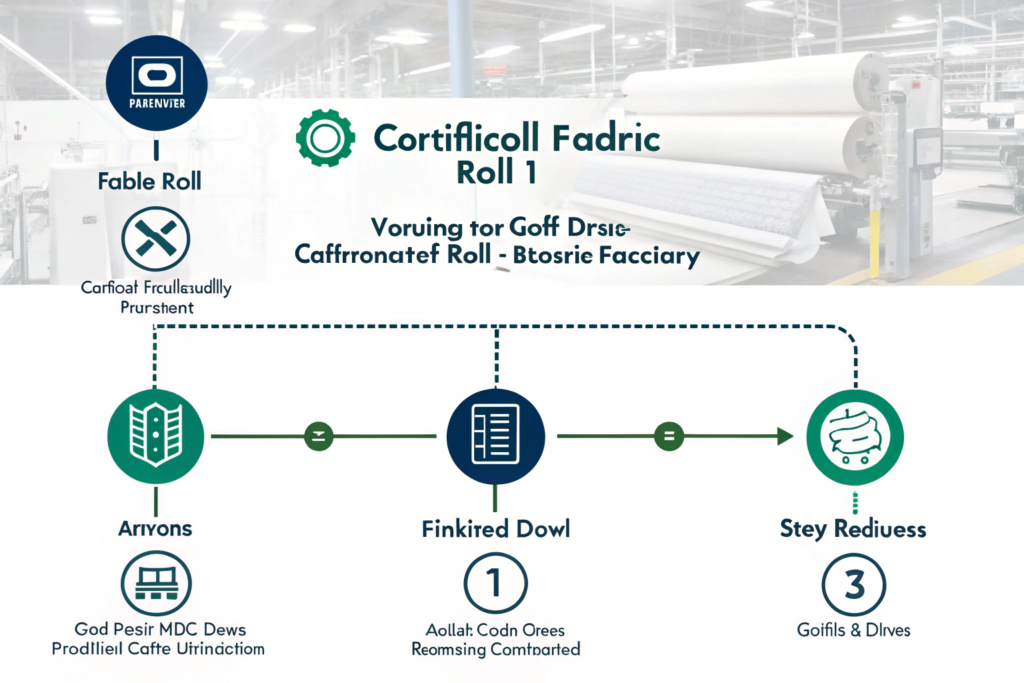
Your manufacturing partner must hold their own OEKO-TEX STeP or STANDARD 100 certificate for garment manufacturing. This certifies their facility's environmental and chemical management practices. During your factory audit, ask to see:
- Their chemical inventory list and MSDS (Material Safety Data Sheets) for all auxiliaries.
- Their system for segregating certified and non-certified materials.
- Their procedure for submitting finished garments for certification.
- Examples of previous certificates issued for finished garments.
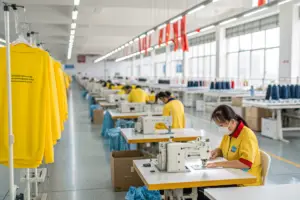
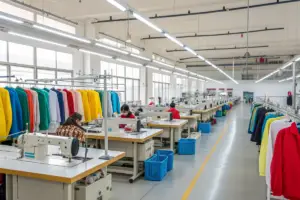
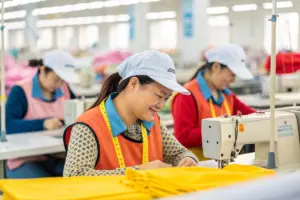
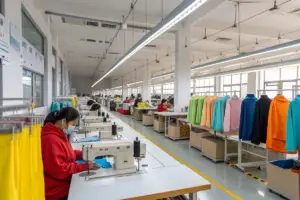
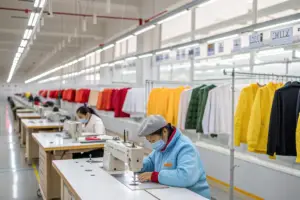
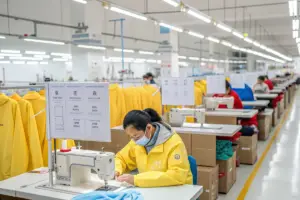
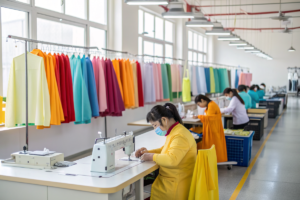
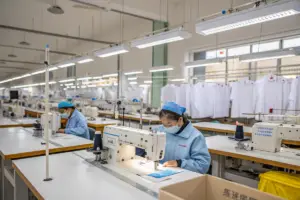
A true partner like our facility at Shanghai Fumao operates a "clean production" line for certified orders, where every input is controlled and documented from the moment the fabric enters until the dress is packed.
How to Handle Trims, Embellishments, and Dyeing?
This is where complexity rises. For golf dresses, consider:
- Performance Trims: Moisture-wicking mesh panels or elasticated bands must be sourced as certified components.
- Sublimation Printing: The dyes and papers used in all-over-print designs must be certified. We work with pre-approved printing partners whose materials and processes are included in our certification scope.
- Embroidery: As covered in a previous article, this requires certified thread and backing. The embroidery unit must be part of the factory's certified processes or be an external certified supplier.
The rule is simple: if it becomes part of the final garment, it must be part of the certification scope. Planning this during the product development phase is essential to avoid last-minute compromises.
What Are the Cost and Lead Time Implications?
Sourcing certified fabrics and manufacturing adds both cost and time, but they are investments in marketability and risk reduction.
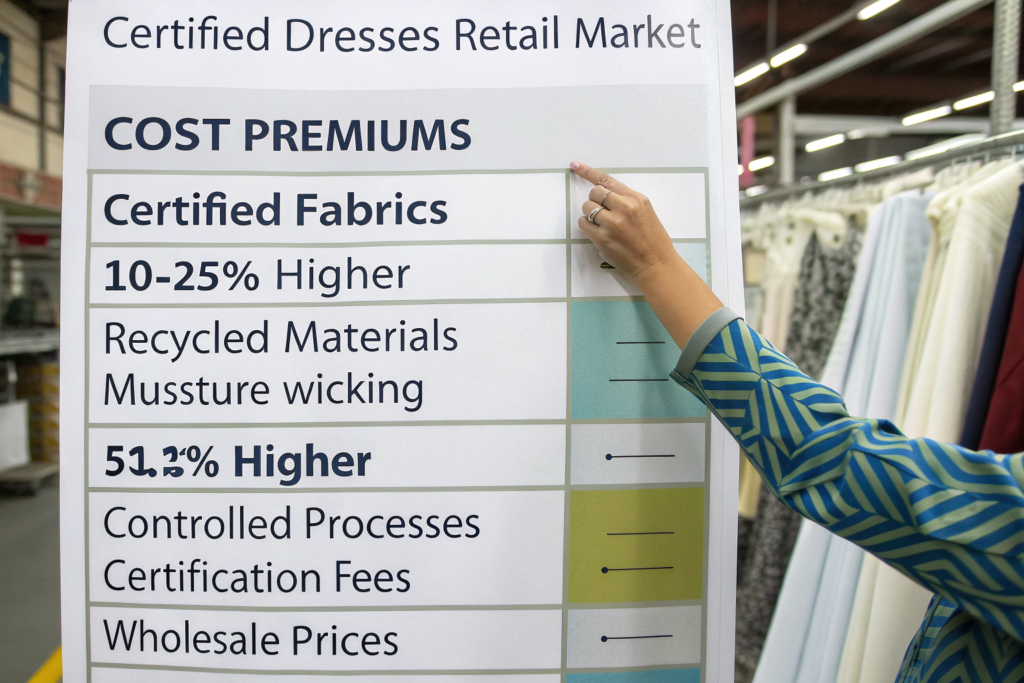
Cost premiums typically range from 10-25% for certified fabrics, depending on the complexity (e.g., a certified recycled polyester with moisture-wicking treatment costs more than a basic certified polyester). Manufacturing costs are also 5-15% higher due to controlled processes, segregated production, and certification fees. However, this should be factored into your wholesale price, as the end-market for certified dresses supports a significant premium (often 30-50% at retail).
Lead times are extended. Sourcing certified fabrics may take 2-4 weeks longer due to stricter mill schedules and potential testing. The final garment certification process itself can add 3-6 weeks after production, as samples must be sent to an OEKO-TEX institute lab. Therefore, your critical path timeline must start earlier.
How to Optimize Cost and Timeline?
- Standardize Fabrics: Work with your manufacturer to select 2-3 core certified fabrics for your collection. Bulk purchasing across styles and seasons reduces cost and ensures availability.
- Integrate Development: Involve your manufacturer from the sketch stage. We can advise on which design elements (e.g., specific trims, prints) are most cost and time-effective to certify.
- Batch Certification: If producing multiple dress styles in the same certified fabric and factory, they can often be grouped under one certificate application, reducing per-style cost and administrative time.
Conclusion
Sourcing OEKO-TEX certified fabrics for golf dress designs is a meticulous, multi-stage process that extends from the spinning mill to the sewing floor. Success depends on verifying every link in the chain: the fabric mill's valid certificate, the manufacturer's certified and controlled production system, and the compliance of every added component.
The brand's role is to conduct diligent partner selection and allow adequate time and budget for this rigorous process. The reward is a product with unparalleled safety credentials, superior quality, and a compelling story that commands a premium in the marketplace.
At Shanghai Fumao, we streamline this complex journey. We offer a curated selection of certified performance fabrics, manage the entire compliant manufacturing process in our audited facility, and handle the final product certification logistics. Let us be your turnkey solution for creating golf dresses that are as responsible as they are beautiful. To start developing your certified collection, contact Business Director Elaine at elaine@fumaoclothing.com.