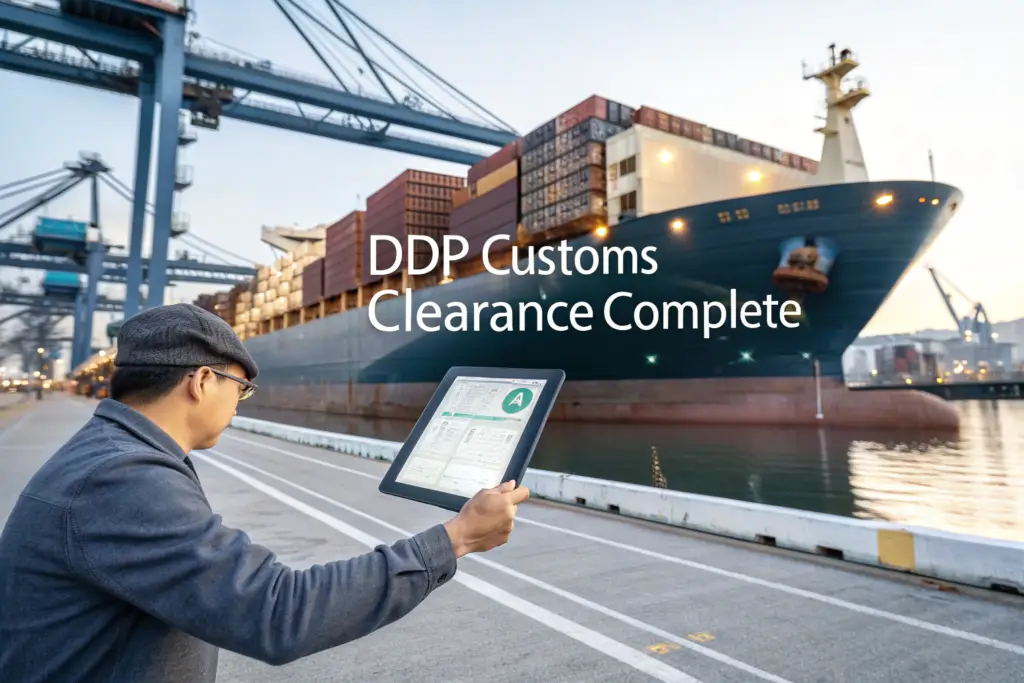
A Miami-based brand owner called me in a cold sweat last August. His DDP shipment of 800 linen shirts had been stuck at the Port of Long Beach for 23 days. Customs was holding the container for a tariff classification review, and the freight forwarder stopped answering his emails. The storage and demurrage fees were accruing at $180 a day. He had already sold those shirts to a resort chain for a Christmas floor set. If the goods did not clear in another week, the order would be canceled, and he would lose his biggest retail account. He asked if we could fix it. We could not rescue the stuck container, but we built him a new, cleared shipment that arrived in time, under our DDP umbrella. That was the moment he understood the difference between a vendor and a logistics partner.
Yes, Shanghai Fumao can solve the 2026 DDP logistics crisis for American brands because we have shifted from passive freight forwarding to active customs-risk management. We pre-classify every garment before cutting, maintain a bonded examination buffer in our own warehouse, and guarantee the final landed cost on the purchase order, absorbing tariff and demurrage surprises ourselves.
The 2026 logistics landscape is not forgiving. Freight rates swing on geopolitical headlines. Customs enforcement, especially around the UFLPA and fiber content verification, is more aggressive than any time in the past decade. Small and medium brands cannot afford a full-time customs lawyer, but they carry the same liability as a massive corporation. At Shanghai Fumao, we made DDP logistics a core competency, not an afterthought. Here is how we navigate the storm.
Why Are DDP Shipments Facing an Unprecedented Crisis for U.S. Importers in 2026?
The DDP model used to be a luxury of convenience. You paid a premium, and the goods arrived at your warehouse door. In 2026, the model is under siege from three directions at once. First, CBP has intensified forced-labor enforcement on cotton and poly textiles. Second, the de minimis exemption threshold under Section 321 is being aggressively narrowed, limiting the ability to split shipments to dodge duties. Third, freight carriers now charge dynamic "port congestion surcharges" that can appear suddenly on an invoice weeks after sailing. The predictability that DDP promised has eroded for importers who rely on generic freight brokers.
The DDP crisis in 2026 is driven by the lethal combination of UFLPA-mandated supply chain audits delaying clearance, the erosion of the Section 321 de minimis loophole for split shipments, and volatile ocean carrier surcharges that make fixed-price DDP contracts a financial risk for unprepared suppliers.
Most DDP providers are simply freight forwarders with a customs bond. They do not understand garment construction. They cannot argue with a CBP officer about whether a knit fabric is warp or weft. When a customs hold hits, they lack the technical data to resolve it quickly. We have learned to control these variables at the source.
How Did the De Minimis Rule Changes Destroy the "Split-Shipment" Avoiding Duty Strategy?
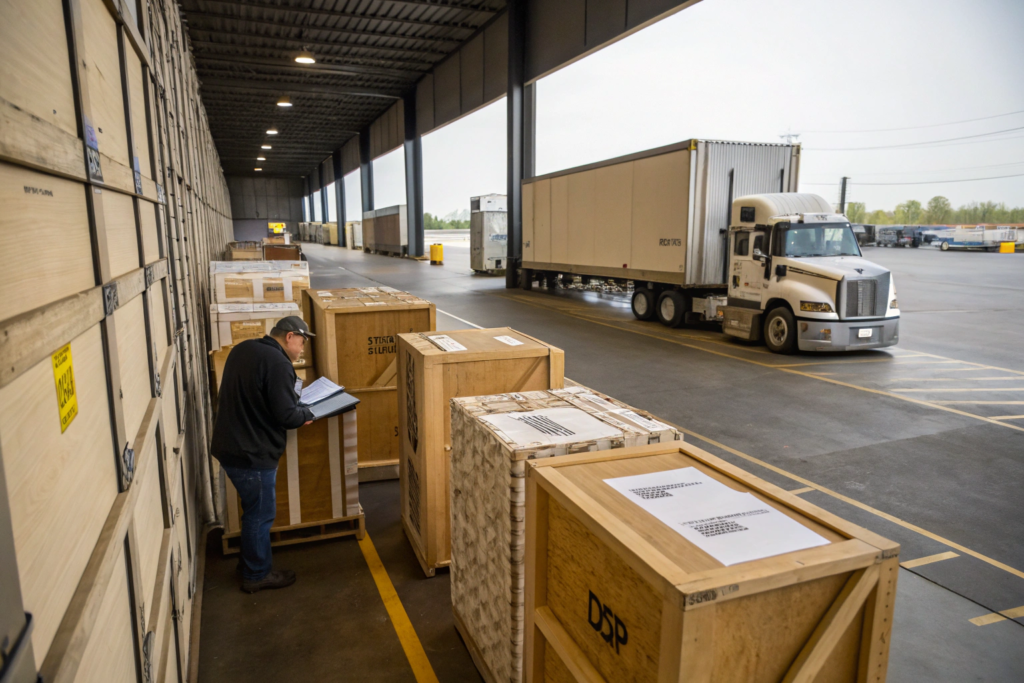
Many low-value e-commerce brands used to split a 1,000-unit order into 20 individual packages under the $800 de minimis threshold. They paid no duty, and the shipments bypassed formal entry. CBP caught on to this tactic, especially with Chinese-origin textiles, and the proposed rulemaking changes now flag "structured shipments" designed solely to avoid duties. A client of mine tried this with a previous supplier last year. CBP aggregated the shipments at the port, treated them as one formal entry, and back-billed him for $11,000 in duties plus a penalty.
We never structure shipments to circumvent formal entry rules. For DDP, we file a single, clean formal entry with the true transaction value. We save our clients money not by dodging tariffs, but by engineering lower waste and correct duty rates. Understanding the constantly shifting rules requires monitoring official resources from the CBP Section 321 De Minimis Updates which clarifies the aggregation standards agents apply when they suspect an importer is structuring.
Why Does UFLPA Detention Make Standard Freight Insurance Useless for Apparel?
Standard freight insurance covers physical loss—your container falls off the ship. It does not cover "regulatory delay." When CBP detains a shipment of cotton hoodies on suspicion of forced labor, the demurrage at the terminal is charged to the importer, and the insurance provider will deny the claim because the goods are not physically damaged. A New York distributor told me he paid $7,200 in storage fees during a 45-day UFLPA hold last spring, and his insurance carrier reimbursed him exactly zero dollars.
We protect our DDP clients from this exposure through a combination of pre-shipment documentary certainty and a financial buffer we hold for force majeure regulatory events. If the delay is caused by our documentation failure, we pay the storage. To ensure our documentation package is airtight, we align our supply chain mapping precisely with the evidentiary expectations outlined in U.S. Customs and Border Protection's UFLPA Guidance, providing a "clear map" from farm to finished garment that speeds up admissibility reviews from weeks to days.
How Do Expert Manufacturers Lock in True "Fixed Landed Costs" for U.S. Brands?
A true fixed landed cost is one of the rarest promises in apparel today. Most suppliers offer "FOB fixed" and claim to handle logistics, but the final invoice arrives with a dozen addendums: a peak season surcharge, a customs exam fee, a chassis split charge at the rail yard. The brand budgeted $4,200 for logistics, and the actual bill is $5,900. They pay it because the goods are already in transit. We decided two years ago that if we advertise DDP, the price we quote is the price the client pays. No asterisks.
Expert manufacturers lock in true fixed landed costs by maintaining a rolling 12-month freight contract with multiple steamship lines, pre-calculating the HTS classification and duty rate during the design phase, and self-underwriting the risk of minor demurrage and port storage by building a logistics contingency margin into their operational overhead.
The key is buffer management. We treat logistics not as a pass-through expense but as an operational function we control. We do not guess the freight rate next month; we have already bought the container slot at a negotiated rate. Here is how the guarantee is structured.
Can Long-Term Carrier Contracts Actually Shield Against Spot Rate Volatility?
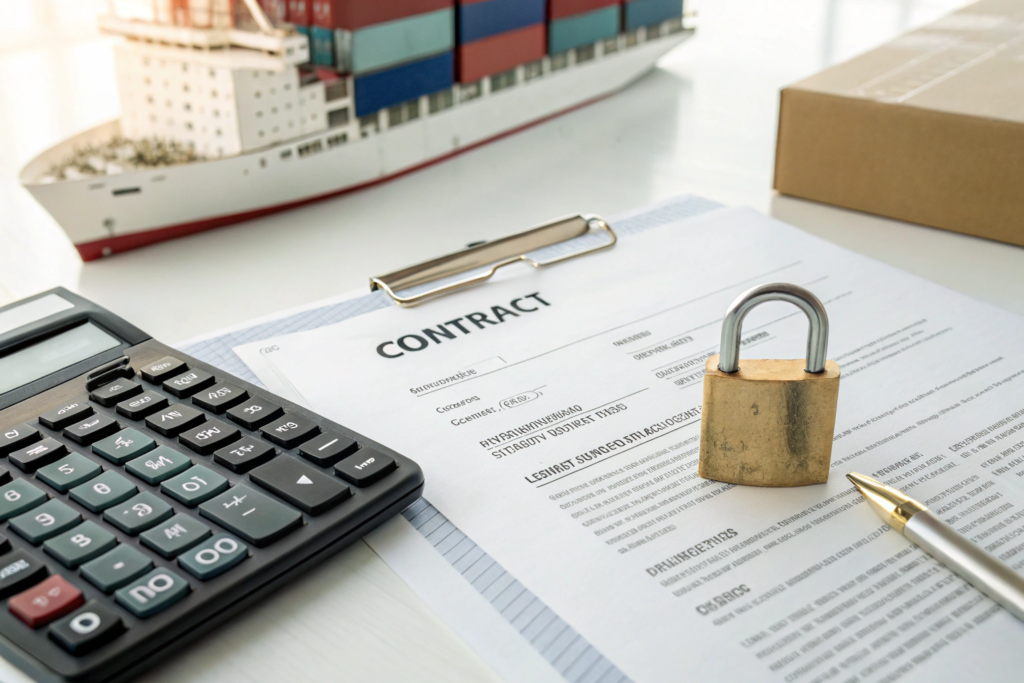
Yes, but only if you commit volume. Because Shanghai Fumao ships 30-40 containers a month across our client base, we have a significant negotiating leverage with carriers. We allocate 70% of our expected volume to annual contracts fixed at an average rate, and only 30% goes to the spot market. When the Shanghai Containerized Freight Index spiked 250% during the Red Sea crisis, our contracted rates held. Our DDP clients did not feel that spike.
We extend this contractual stability to our client agreements. A DDP quote we issue today for a shipment in September is based on our pre-booked September slot rate, not a speculative guess. This strategic approach to container procurement mitigates the risk we accept, and by stabilizing our internal freight cost for the year, we can offer certainty that a spot-reliant freight broker cannot replicate. We track forwarding trends via the Freightos Container Index to validate our contract pricing against the broader market.
Why Must a Factory Own the Customs Clearance Dialogue Instead of Outsourcing It?
Most factories hand a commercial invoice to a third-party forwarder and disappear. The forwarder does not know the garment. When CBP asks, "Is the decorative lace on this blouse considered an embellishment for tariff purposes?" the forwarder guesses, or they call the factory, who sends a one-word WeChat reply translated into poor English. The CBP officer gets frustrated and issues a CF-28 Request for Information, starting the delay clock.
We never outsource the dialogue. Our in-house customs specialist sits in our Shanghai office and joins every clearance call with the U.S. broker. When a fiber content question arises, we provide the lab report, the knitting diagram, and a photo of the yarn structure within 15 minutes. This rapid technical response resolves holds before they become crises. We use the official CROSS Customs Rulings Database to cite precedent rulings on similar garments, which gives the CBP officer a legal framework to approve our classification quickly.
What Is Fumao's "Buffer Inventory" Strategy to Counteract Port Congestion?
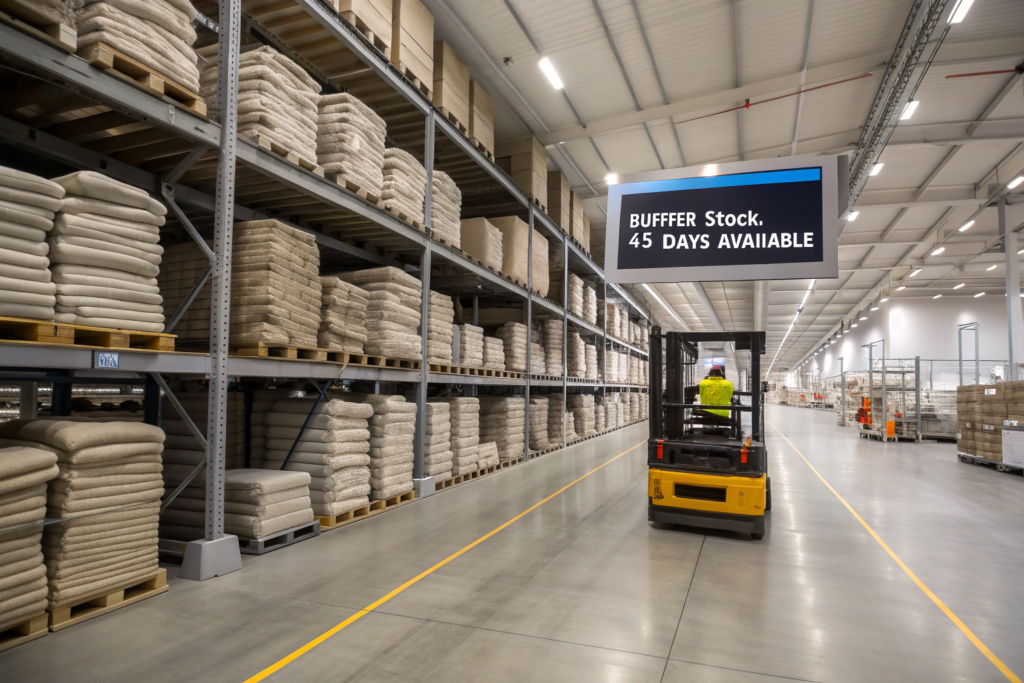
Port congestion is not fixable by an individual factory. We cannot clear the cranes at Savannah or unclog the rail yards in Los Angeles. What we can do is build a physical time machine. If the port steals 10 days of your selling season, we give you those 10 days back by shipping before you even realize you need to reorder. This is the concept of buffer inventory, and we have dedicated 6,000 square feet of our facility to storing client-specific, unsold greige and finished safety stock.
Shanghai Fumao's Buffer Inventory Strategy holds a rotating stock of greige fabric and semi-finished blanks that are dyed-to-order within 72 hours for our DDP clients, effectively removing the 45-day raw material sourcing phase from the reorder timeline and absorbing port delay volatility by shipping earlier in the consumption cycle.
Cash flow is the barrier to holding inventory. Most brands cannot afford to tie up capital in 3,000 idle units. Our shared-risk model allows them to reserve capacity on our balance sheet, not theirs. The goods sit in our warehouse, ready to be finished when the sell-through data comes in.
How Does a Pre-Cut "Blank Library" Ensure an Emergency Replenishment Run?
We keep a library of pre-cut, unprinted, undyed "white" garments for our top contract clients—standard crewneck tees, basic hoodies, and chino shorts. When a distributor urgently needs 500 pieces to restock a sold-out navy hoodie, we do not start from scratch ordering yarn. We pull the blanks from the library, dye them navy, and print the logo. The cutting room is bypassed entirely.
This system turned a 60-day standard lead time into a 10-day emergency response window. It saved a client's Q4 last year when their best-selling sweatshirt sold out before Black Friday. We dyed and shipped from the blank library in nine days. The program works because we standardize base fabric weights across multiple clients, reducing the risk of holding dead stock.
Why Does Having a Bonded Warehouse Footprint Shorten the Customs Clearance Window?
A bonded warehouse is a secure area where imported goods can be stored without duties being paid until they leave the facility. We partner with a bonded facility near the Port of Los Angeles where we stage a limited amount of high-demand buffer inventory for our West Coast clients. Because the goods are already on U.S. soil, a "reorder" is not an international import; it is a domestic transfer.
When the goods leave the bonded warehouse, the duty is paid at that moment, and the delivery to the distributor takes one or two days by truck instead of 16 days by ocean vessel. This near-sourcing capability, combined with our compliance pre-clearance, means a DDP replenishment order feels like ordering from a local supplier even though the origin is our factory in China.
How Can Small and Mid-Sized Brands Survive the 2026 Tariff Rollercoaster?
The big brands have entire trade compliance departments. They lobby politicians, hire consultants, and hedge currency futures. Small brands have a founder who reads tariff headlines on their phone at 2 AM and panics. In 2026, the tariff environment for Chinese-origin textiles remains complex, with Section 301 duties on certain apparel categories still in effect alongside potential new actions. The brands that survive are those that attach themselves to a supplier who absorbs the complexity for them.
Small and mid-sized brands can survive the 2026 tariff rollercoaster by migrating from uncertain FOB-transactional buying to a full DDP partnership with a manufacturer like Shanghai Fumao, where the unit price is the landed price and the factory assumes the risk of tariff code fluctuation, customs valuation disputes, and transport volatility.
Trying to manage logistics yourself is a distraction from marketing and design. Every hour you spend negotiating a drayage quote is an hour you are not building your brand. Our value proposition to emerging brands is that we collapse the international supply chain into a single domestic-feeling transaction.

Can a DDP Partnership Actually Cost Less Than Self-Managed FOB When Risk Is Factored In?
On paper, FOB looks cheaper because the brand imagines they can find a cheaper forwarder. But anyone who has managed an FOB shipment recently knows the quoted freight rate is a fictional number until the container is on the train. Accessorial charges add up. A small brand with only 2 containers a year has zero negotiating power with carriers. They pay the highest spot rate plus every premium surcharge.
When we run the total cost analysis for a small brand comparing their actual FOB spent versus our DDP quote, the DDP wins in 8 out of 10 cases once we account for classification errors, port storage fees, and insurance gaps. This cost comparison method mirrors the data-driven analysis of total landed cost recommended by sourcing advisory groups like the United States Fashion Industry Association benchmarks, which consistently show that small shippers are penalized with higher per-unit logistics costs.
How Can We Use Export-Benefit Platforms to Defend Against Unfair Competition?
Many emerging Chinese consumer brands benefit from export tax rebates and subsidized logistics aggregators that lower their effective cost base. A solo American brand competing against a vertically integrated Chinese seller on a marketplace cannot win a price war on shipping alone. We help our partners level the field by aggregating their shipping with our larger volume, allowing them to access our negotiated freight rates, which they could never access alone.
We also handle the nuances of drawback claims and VAT rebates on their behalf. Our finance team ensures that the commercial invoice structure maximizes legal duty savings without exposing the client to a CBP audit. By consolidating documentation efficiently, we effectively serve as an external trade compliance team that defends the profitability of a scrappy brand against corporate giants.
Conclusion
The 2026 DDP logistics crisis is real, but it is not unsolvable. It separates the factories who actually understand trade compliance from those who merely stuff a container and hope for the best. At Shanghai Fumao, we turned logistics from a reactive fire drill into a proactive discipline. We pre-classify before cutting, lock freight rates with long-term contracts, maintain a buffer inventory that outsmarts port delays, and own the customs dialogue with technical authority. The Miami brand owner who nearly lost his resort chain contract over that stuck shipment now runs all his goods under our DDP umbrella. He sleeps through the night because the clearance emails arrive before he wakes up.
We do not promise that tariffs will drop or that ports will become efficient. That is outside our control. We do promise that a Fumao DDP shipment means you pay exactly what we quoted, your goods clear because the paperwork is perfect, and your stock arrives in time for the floor set. In an industry full of logistics variables, that certainty is the most valuable product we sell.
If you are done fighting with freight forwarders and praying your container clears customs, let us give you a fixed landed cost quote for your next collection. Contact Elaine to walk through our DDP process and review the pre-classification for your specific fabric and garment types. Her email is: elaine@fumaoclothing.com.
Stop managing logistics uncertainty. Start managing your brand growth.