
I once lost a client because of an email I did not send. It was 2019. We were producing a run of 5,000 men's shirts for a brand in New York. The fabric arrived at our factory three days late. Not a disaster. We adjusted the cutting schedule. We planned to work overtime on Saturday to catch up. The revised ship date would only slip by one day. In my head, I had solved the problem. So I did not email the client. I did not want to bother him with a small, internal adjustment. Friday afternoon, his email arrived. "Where is my tracking number?" I explained the situation. He was furious. Not because of the one-day delay. Because he had promised his retail buyer that the goods would arrive on a specific truck. He had already scheduled warehouse labor. He had made commitments based on my silence. He found a new factory for his next order.
Regular factory communication is the secret to avoiding shipment delays because delays themselves are rarely the real problem. The real problem is the surprise of the delay. When a brand owner is blindsided by bad news at the last minute, they cannot adjust their downstream plans. They lose trust. They lose money. Proactive, structured communication from the factory transforms a delay from a crisis into a manageable adjustment. It allows the brand to reset expectations with their own customers, rebook freight, and protect their reputation.
At Shanghai Fumao, we learned this lesson the hard way years ago. Today, we have a formal communication protocol that every client receives before we cut a single yard of fabric. It is not about flooding your inbox with unnecessary updates. It is about delivering the right information at the right time so there are zero surprises when the ship date arrives. Let me explain exactly how this works and why it is the single most important factor in a smooth production experience.
What Communication Breakdowns Most Often Cause Production Delays?
Before we talk about solutions, we need to diagnose the disease. In my experience, shipment delays are rarely caused by a single, catastrophic event like a machine exploding or a typhoon hitting the port. Those things happen, but they are rare. The vast majority of delays are caused by a slow, silent accumulation of small communication failures that compound over the eight to twelve weeks of a production cycle.
These breakdowns almost always happen at the seams of the process. The handoff points where information must travel from one person to another, often across time zones and language barriers. Let's identify the three most common failure points and how they quietly push your ship date back.

Why Does Delayed Approval On Trims Stall The Entire Line?
Trims are the small things: labels, hang tags, zippers, buttons. In the grand scheme of a garment, they seem minor. In the production timeline, they are major choke points. The sewing line cannot finish a garment without the neck label. The packing department cannot seal a poly bag without the hang tag.
Here is a scenario that plays out in factories every single week. The factory sends an email on Monday morning Shanghai time: "Please approve the strike-off for the woven label. See attached PDF." It is Sunday night in New York. The brand owner sees the email but thinks, "I will look at this tomorrow." Tomorrow comes. Other fires need fighting. The label approval email slips to Wednesday. The brand owner finally looks at the PDF. The font for the care symbols looks a bit small. They reply asking for a revision.
The factory receives the revision request on Thursday morning. The label supplier needs three days to weave a new strike-off. The new strike-off is ready the following Tuesday. It gets emailed. The cycle repeats. What should have been a 48-hour approval process has now consumed two full weeks. And here is the critical point: the factory production line does not stop and wait. The line keeps moving, sewing other parts of the garment. But the garment cannot be finished. It piles up in a buffer zone, waiting for that tiny piece of woven polyester.
By the time the label is finally approved and shipped to the factory, the original ship date is a distant memory. The brand owner is angry. They say, "The factory delayed my order." The factory says, "We waited two weeks for your approval." Both are technically correct. The failure was not in manufacturing. The failure was in the communication loop.
How Does Unclear Fabric Approval Lead To Cutting Room Bottlenecks?
Fabric is the foundation of the garment. If the fabric is wrong, everything is wrong. The approval process for bulk fabric is a high-stakes moment. The brand owner receives a "bulk fabric swatch" or a "lab dip" for color approval. They must compare it to their standard and say "Yes, proceed with cutting."
The breakdown happens when the approval is vague or conditional. A brand owner might reply: "Color looks good, but the hand feel is a bit stiff. Please proceed but try to soften it in the wash." This note is a nightmare for a factory production manager. "Proceed but try to soften it" is not an instruction. It is a wish. If we proceed with cutting 5,000 yards of fabric, and the customer ultimately rejects the finished garments because the hand feel is still too stiff, we have a disaster.
The correct response from the brand owner should be: "Do not cut. Send a new hand feel sample after a softener wash." Or: "Color approved. Hand feel is acceptable as is. You may proceed with cutting."
I have seen a cutting room sit idle for three days while the factory manager and the brand owner exchange five emails trying to clarify what "a bit softer" actually means. During those three days, the sewing lines are not being fed. The ship date slips. Clear, binary communication—"Approved" or "Not Approved"—is the only way to keep the cutting knives moving. At our factory, we train our merchandisers to never accept a "yes, but" approval. We push back and ask for a definitive yes or no. It might seem strict, but it saves weeks on the back end.
How Should A Factory Structure Its Weekly Production Updates?
A good factory communication system is not a stream of random WhatsApp messages and forwarded emails. It is a structured, predictable, and consistent flow of information. The brand owner should know exactly what they will hear from the factory, when they will hear it, and what information that update will contain. This predictability is what allows them to plan their own business operations.
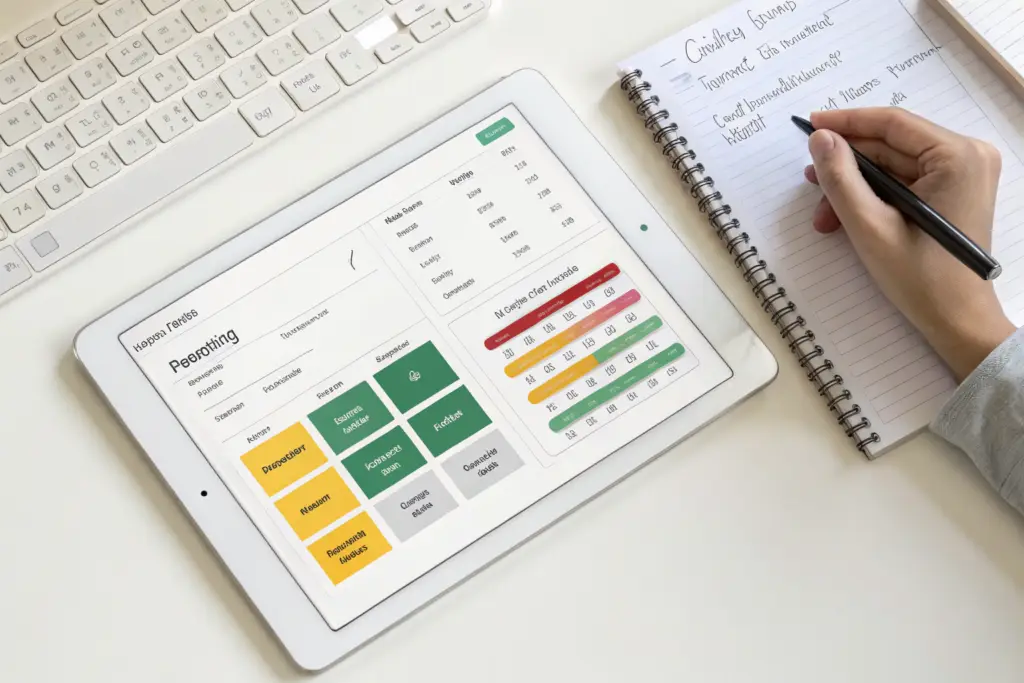
At Shanghai Fumao, we have developed a standardized weekly update format that we use for all our wholesale partners. It is simple, visual, and takes our merchandisers less than 15 minutes to prepare. But it saves our clients hours of anxiety and follow-up emails. Let me share the exact framework we use.
What Critical Milestones Should A Weekly Report Include?
A vague update like "Production is going well" is useless. It tells the brand owner nothing. A useful weekly report shows progress against the plan. It shows where the order is right now compared to where it was supposed to be according to the original production schedule.
Our weekly report includes these specific line items for every active style in production:
| Milestone | Planned Completion Date | Actual / Forecast Date | Status |
|---|---|---|---|
| Fabric In-House | March 1 | March 1 | Green (On Track) |
| Cutting Complete | March 5 | March 6 | Yellow (1 Day Delay) |
| Sewing Started | March 6 | March 7 | Yellow (1 Day Delay) |
| Sewing 50% Complete | March 12 | Forecast March 13 | Yellow |
| Finishing / Trim Attach | March 15 | Forecast March 16 | Yellow |
| Final Inspection | March 18 | Forecast March 19 | Yellow |
| Ready to Ship (Ex-Factory) | March 20 | Forecast March 21 | Yellow |
Look at this example. The order is showing a one-day delay across the board. A brand owner looking at this report can see immediately that the ship date is likely to slip by one day. They have three weeks of advance notice. They can email their freight forwarder and adjust the booking. They can tell their warehouse team the goods will arrive on Tuesday instead of Monday. There is no surprise. There is no angry phone call.
This level of transparency requires the factory to have a good internal tracking system. We use a shared cloud-based production board that our floor supervisors update daily. The weekly report is just a snapshot of that live data. Brands that work with us often tell me that this single report is more valuable than a slightly lower unit price from another factory. The peace of mind it provides is worth real money.
When Should A Factory Escalate A Potential Delay To The Client?
This is the most important judgment call in factory communication. Escalate too early, and you cry wolf. You create unnecessary stress for the client over a problem you could have solved internally. Escalate too late, and you blindside them. You rob them of the chance to mitigate the damage.
Our internal rule at Shanghai Fumao is this: We escalate any issue that has a greater than 50% chance of impacting the confirmed ex-factory date by more than three business days. We do not wait until the delay is a certainty. We notify the client when the risk becomes material.
The escalation follows a specific format. We use what I call the "Situation-Impact-Options" framework.
- Situation: "The zipper shipment from YKK has been delayed by customs at the port. It was scheduled to arrive March 10. It is now estimated to arrive March 13."
- Impact: "This will push our finishing start date by three days. The current forecasted ex-factory date will shift from March 20 to March 23."
- Options: "Option A: We proceed with the current schedule and ship March 23. Option B: We investigate air freighting the zippers from a YKK warehouse in another location. This would cost an estimated $450 but could recover the original ship date. Please advise how you would like to proceed."
This framework does three things. First, it shows the client we are on top of the problem. Second, it quantifies the impact so they can make a business decision. Third, it gives them agency. They are not just a victim of the delay. They have a choice. Do they value the original ship date more than the $450 expedite fee? For a brand with a strict retail delivery window, the $450 is a no-brainer. For a brand with a flexible warehouse, they might save the money and accept the three-day slip. The key is that they make the choice, not the factory.
Why Do Proactive Fabric And Trim Updates Prevent Last-Minute Surprises?
Most shipment delays have their root cause weeks before the sewing machines even start. They originate in the supply chain of raw materials. The fabric mill in one province. The zipper factory in another. The printing house for the hang tags. If the factory is not proactively tracking and communicating the status of these incoming components, the brand owner is flying blind.
The most frustrating call a brand owner can receive is on the day production was supposed to start. "We cannot cut because the fabric has not arrived." This should never be a surprise. The fabric was ordered six weeks ago. The factory should have been tracking its progress and communicating any slippage all along the way. Here is how proactive updates on fabric and trims eliminate these last-minute shocks.
How Do Visual Updates On Fabric Greige Goods Build Trust?
"Greige goods" is the industry term for raw, unfinished fabric straight off the loom or knitting machine. It is the blank canvas before dyeing and finishing. A sophisticated factory tracks their greige goods orders with the mill just as closely as the brand owner tracks the finished garment.
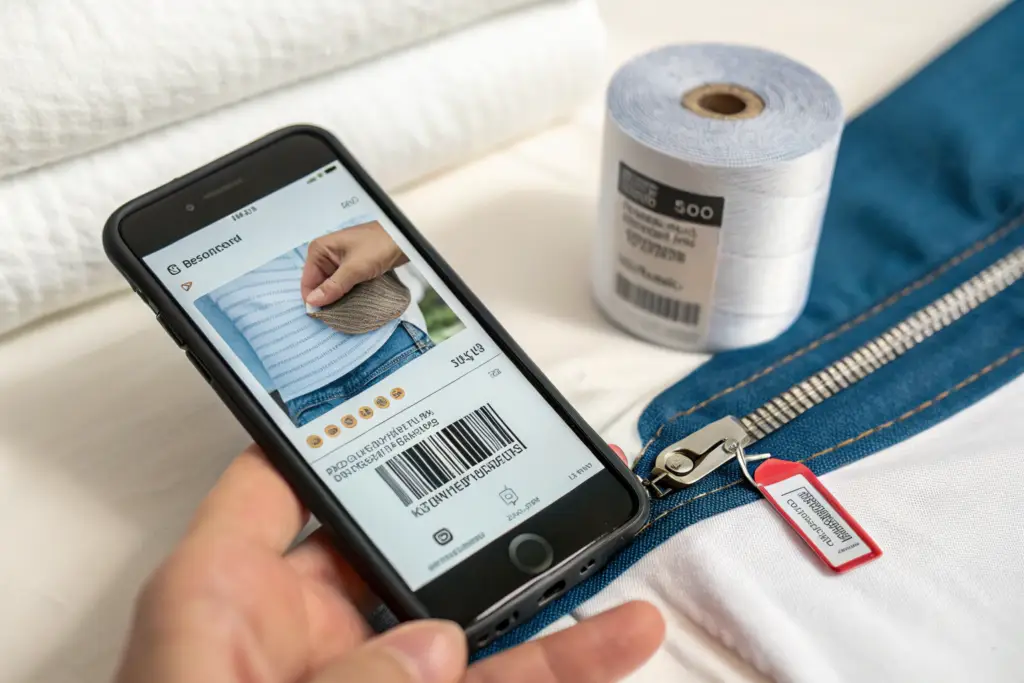
A simple, powerful communication tool we use is a "Greige Goods Arrival Photo." When the truckload of raw fabric rolls arrives at our warehouse, our warehouse manager snaps a photo with his phone. The photo shows the rolls stacked on the pallet, with the mill's barcode sticker clearly visible. We send this photo to the client with a one-line message: "Your greige fabric for Style #XYZ has arrived at our facility. Moving to dye house next."
This takes ten seconds. But for the brand owner, it is a massive relief. They have visual proof that the largest, most critical component of their order physically exists and is under our control. It moves the order from an abstract concept to a tangible reality.
Last year, a mill we work with had a mechanical breakdown on a specific knitting machine. It affected a specialty rib fabric for a client's sweater order. Because we were tracking the greige goods production schedule closely, we knew about the breakdown within 24 hours. We immediately notified the client that the fabric delivery would be delayed by five days. We also proposed a solution: we could use an alternative, very similar rib structure from a sister mill that was available immediately. The client approved the switch. We sent a new hand feel sample by express courier. The overall production delay was only two days. Without that proactive tracking and communication, we would have discovered the problem two weeks later when the original fabric failed to show up. The delay would have been three weeks, not two days.
Can Sharing Trim Tracking Numbers Reduce Client Anxiety?
Trims are small and easy to lose. A box of custom buttons can get stuck in a local courier depot for a week, and nobody notices until the sewing line runs out of buttons. The solution is simple: share the tracking number.
When we order trims from our suppliers, we request a waybill or tracking number. We enter this into our production file. In our weekly update to the client, we include a simple line: "Trim Status: Zippers (Tracking #123456) in transit, ETA March 5."
This might seem like overkill. Why does the brand owner need to know the zipper tracking number? They do not need to track it themselves. But knowing that we are tracking it, and that we have the data at our fingertips, provides a level of assurance that is rare in this industry. It signals competence. It signals that the small details are not being overlooked.
I remember a conversation with a new client who had been burned by a previous factory. He asked me, "How do I know you actually ordered the fabric?" I could have just said, "Trust me." Instead, I forwarded him the email confirmation from the mill with the purchase order number and the scheduled delivery date. I also sent him a photo of the wire transfer receipt for the deposit. His response was immediate. "Wow. No factory has ever shown me that before. Thank you." That simple act of transparency set the tone for our entire relationship. He knew he was dealing with a partner who had nothing to hide.
What Role Does The Post-Production Debrief Play In Future On-Time Delivery?
The shipment has left the factory. The tracking number is in the brand owner's inbox. The natural instinct is to close the file and move on to the next order. This is a mistake. The period immediately after shipment is the most valuable window for improving future performance. A structured post-production debrief turns the lessons of one order into a better process for the next one.
At Shanghai Fumao, we do not consider an order complete until we have held a brief internal review and sent a summary to the client. This practice has systematically reduced our on-time delivery issues year after year. Here is what we look for and how it helps.

How Does Analyzing Bottleneck Data Improve Future Schedules?
Every order has a bottleneck. It is the single step in the process that took longer than planned and constrained everything else. Sometimes it is fabric approval. Sometimes it is a complex embroidery operation. Sometimes it is a delay in receiving the final packaging from the client.
During the debrief, we identify the bottleneck with data, not opinion. We look at the actual time stamps from our production tracking system. We ask: "Where did this order sit and wait?" The answer is usually clear. One of our clients consistently had orders delayed by two to three days because their hang tag artwork approval took a week longer than we had scheduled in the timeline.
We brought this data to the client during a quarterly review call. We did not blame them. We simply stated the fact: "The hang tag approval is the longest pole in the tent. If we can shorten that, we can reliably ship your orders three days faster." The client was initially defensive. Then they looked at the data. They realized their internal marketing team was treating hang tag approvals as a low-priority task that could wait until the end of the week. They changed their internal process. They assigned a specific person to approve hang tags within 24 hours of receipt. The next order shipped three days early. The bottleneck was eliminated.
This is the power of a data-driven debrief. It removes emotion and focuses on process. The factory and the brand become a team solving a shared problem. The Theory of Constraints teaches us that improving the bottleneck is the only way to improve the overall system. We apply this principle to every order we ship.
Why Is It Important To Document Agreed Process Changes?
Memory is unreliable. You and I might agree on a call that "next time, we will send the lab dips for color approval two weeks earlier." Six months later, when the next order is in development, neither of us remembers that conversation. The same delay happens again.
We document all agreed process changes in a shared document we call the "Client Playbook." It is a simple Google Doc or Notion page that lives with the client's account file. It contains notes like:
- Color Approval: Client prefers to receive lab dips via FedEx physical swatch, not digital photo. Allow 5 business days for approval.
- Fit Comments: Client always requests +0.5 inch length on size Large and above for this specific knit block.
- Packing: Client requires cartons to be under 22kg for their specific 3PL warehouse.
Before we start development on a new season, our merchandiser reviews the Client Playbook. We proactively apply the lessons from the last order. We do not wait for the client to remind us. This simple act of institutional memory saves countless hours of rework and prevents the same communication failures from repeating. For the client, it feels like magic. It feels like the factory just "gets" them. In reality, it is just good documentation. At Shanghai Fumao, our goal is to make every order smoother than the last. The post-production debrief and the Client Playbook are the tools that make that possible.
Conclusion
Regular, structured communication between a brand and its factory is not a courtesy. It is a strategic asset that directly impacts on-time delivery and profitability. The most common causes of shipment delays are not catastrophic events, but the slow drip of small communication failures. Delayed approvals on trims, vague fabric sign-offs, and a lack of visibility into the raw material supply chain all compound over the weeks of a production cycle. By the time the ship date arrives, the delay feels like a surprise, but its seeds were planted long before.
A professional factory communication protocol eliminates these surprises. It replaces vague assurances with specific, data-driven weekly updates that show progress against the original plan. It escalates potential issues early, using a clear framework that gives the brand owner options and agency. It provides visual proof of material arrivals and shares tracking numbers for critical trims. And it uses the post-production debrief to turn the lessons of one order into a smoother process for the next.
At Shanghai Fumao, we have built our entire client service model around this philosophy of proactive transparency. We know that a delayed shipment, communicated early and managed collaboratively, can be a minor inconvenience. A delayed shipment communicated at the last minute is a relationship-ending event. We choose the former.
If you are tired of the anxiety that comes with not knowing what is happening with your production, let's talk about a better way. Our Business Director, Elaine, can walk you through our communication protocols and show you exactly how we keep our partners informed at every stage. Reach out to her directly at elaine@fumaoclothing.com. Let's make sure your next shipment arrives exactly when you expect it.