Let's be honest about the last few years. You have ridden the wave of soaring demand. You have survived the trough of inventory gluts. You have watched shipping costs multiply by five and then crash. You have seen your carefully planned production calendar shredded by a lockdown in Shanghai or a strike threat in Los Angeles. You feel like you are steering a speedboat through a hurricane while blindfolded. The old way of doing things—placing one big order six months in advance and hoping for the best—that way is dead.
Building a highly responsive apparel supply chain in a volatile market requires a strategic shift from "Just-in-Case" bulk inventory to "Just-in-Time" visibility and flexibility. This means diversifying fabric storage through greige reservation, shortening the decision-making window by compressing sampling lead times, and utilizing DDP shipping partners who absorb port congestion risk rather than passing it on to your warehouse calendar.
I run Shanghai Fumao. I have spent the last few years not just making clothes, but managing chaos. I have learned that the brands that survive volatility are not the ones with the cheapest unit cost. They are the ones with the most responsive pipelines. Let's walk through the specific changes you need to make to your sourcing strategy so you can sleep at night, even when the market is on fire.
Why Is the Traditional "One Big PO" Model Failing in Today's Market?
You remember the old days. You went to a trade show in January. You placed one big purchase order for 5,000 units. You received the goods in July. You sold them through the fall. That model worked when freight cost $2,000 a container and the customer just wanted what was on the rack. Today, that model is a liability. By the time your 5,000 units land, the consumer's taste has moved on. Or worse, your competitor just dropped a similar style at 40% off because they are drowning in inventory.
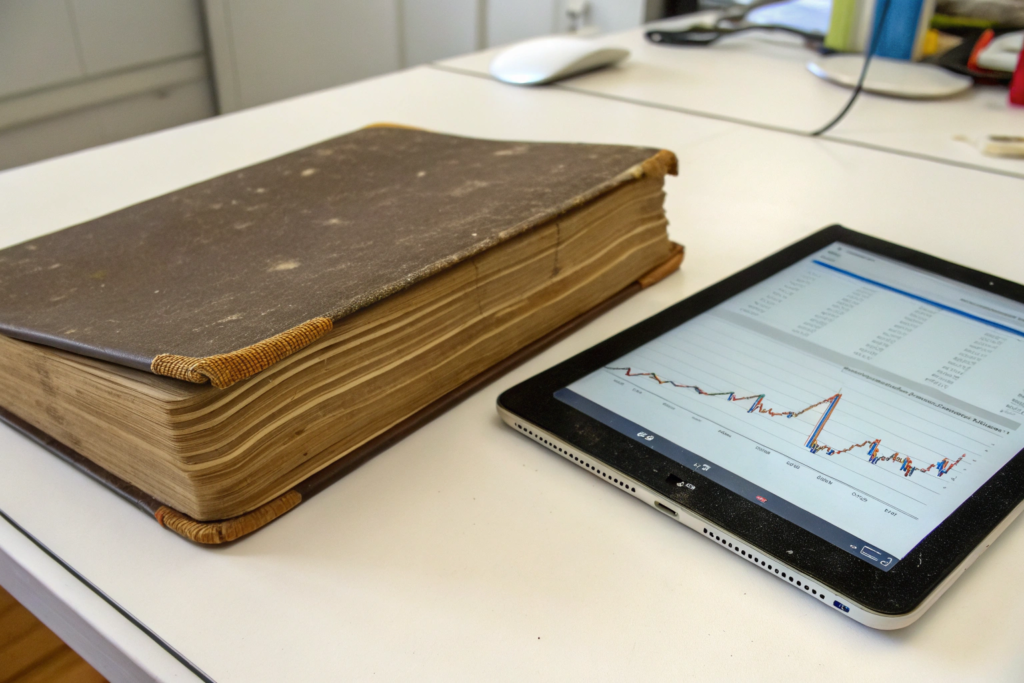
The "One Big PO" model fails today because it amplifies the Bullwhip Effect, where small fluctuations in consumer demand lead to massive overcorrections in factory orders. It locks up cash in goods that take 4-6 months to land, creating a massive exposure to three unpredictable variables: Ocean Freight Spot Rates, Port Congestion Fees, and Shifting Consumer Sentiment driven by social media trends.
How Does the Bullwhip Effect Wipe Out Margins on Basic Inventory?
Let me explain the Bullwhip Effect with a real story from 2023. A client of mine, a mid-sized brand in Chicago, sold men's flannel shirts. In September 2022, they had a good month. Sales were up 15% over forecast. They got excited. They projected that growth forward and placed a PO for 10,000 units for Fall 2023 delivery.
What they didn't see was that every other brand in their category did the same thing. The retailers were overstocked. The consumer had already bought their flannel shirt for the year. When their 10,000 units arrived in August 2023, the market was saturated. They couldn't sell through at full price. They had to mark them down by 50% just to clear warehouse space. They lost money on a best-selling style.
The Bullwhip Effect is this: The retailer buys a little extra. The brand buys a lot extra. The factory buys a massive amount of extra fabric. Everyone is reacting to a small signal at the cash register and overcompensating.
Here is the data we track internally to avoid this trap:
| Signal | Traditional Reaction | Bullwhip Result | Responsive Alternative |
|---|---|---|---|
| Sales +10% vs Forecast | Increase Next PO by 25% | Overstock, Deep Discounts | Hold PO flat, expedite fabric readiness |
| Sales -10% vs Forecast | Cancel 50% of next PO | Factory relationship damage, liability claims | Delay shipment 2 weeks, swap to core colors |
| Freight Rate Drops 50% | Rush to ship everything | Port congestion, demurrage fees | Maintain schedule, secure lower long-term rate |
The fix is to stop treating the factory like a vending machine where you push a button and get shirts in 6 months. You need a system where you can adjust the flow, not just the volume. This requires supply chain visibility that most brands don't ask for.
Why Is Tying Up Capital in 6-Month Lead Times a Competitive Disadvantage?
Cash is oxygen for a clothing brand. When your money is sitting in a container on a ship in the Pacific, you can't breathe. You can't buy ads. You can't pay influencers. You can't react to a new color trend because your open-to-buy budget is literally floating on water.
Let's look at the math of a $100,000 PO with 6-month lead time.
- Month 1: 30% Deposit to factory ($30,000). Gone.
- Month 2-5: You are waiting. You have a hole in your cash flow statement.
- Month 6: Goods arrive. You pay the balance ($70,000) plus duties ($15,000).
- Month 7: Goods are received at the 3PL. You start selling.
You have carried that cost for half a year before you saw a single dollar of revenue. Meanwhile, a competitor using a responsive model might have placed a smaller $30,000 order, sold through it in 2 months, and re-ordered based on actual data. They turned their inventory 3 times while you turned it once. Their Return on Invested Capital (ROIC) is exponentially higher.
We see this with our clients who use Greige Reservation at Shanghai Fumao. Instead of paying for finished goods upfront, they pay a small fee to reserve the raw, un-dyed fabric. That fabric sits in our warehouse with their name on it. When they get a read on the market, they release the fabric for dyeing and cutting. The cash outlay is smaller. The time from decision to delivery is compressed to 4-5 weeks instead of 20 weeks. This is how you stay liquid in a market where the cost of borrowing is high.
How Can Nearshoring and China-Plus-One Strategies De-Risk Your Calendar?
For years, the advice was simple: Go to China. Then it was: Get out of China, go to Vietnam. Now the conversation is more nuanced. Tariffs are a moving target. Shipping routes are disrupted. The smart money is not betting on one country. It is building a portfolio of supply. You do not need to move your whole production. You just need a Plan B that activates when Plan A hits a snag.
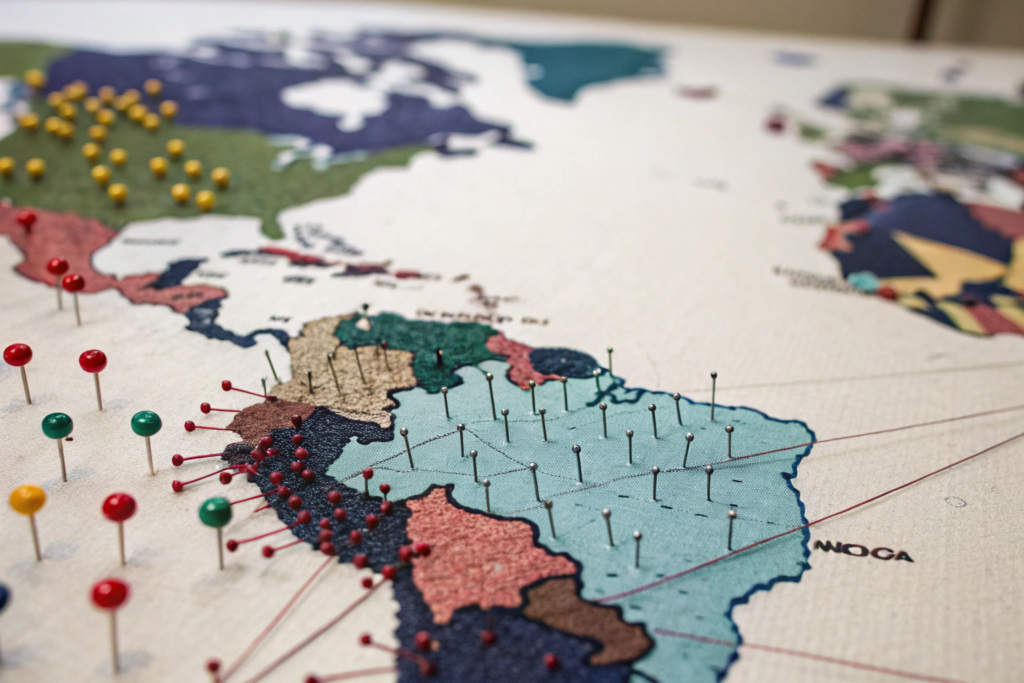
A China-Plus-One or Nearshoring strategy de-risks your calendar by providing geographic redundancy. While China remains unmatched for fabric variety, trim complexity, and speed of development, having a secondary partner in Vietnam, India, or Mexico allows you to route basic, high-volume replenishment orders away from tariff exposure or port congestion bottlenecks affecting the primary manufacturing hub.
What Categories Actually Make Sense to Move to Mexico or Central America?
Let's be realistic. You are not moving your intricate printed dresses with custom buttons to Mexico. The supply chain for those trims does not exist there yet. The fabric options are limited. The skill set for complex cut-and-sew is still developing.
But there are categories where Nearshoring is a game-changer, especially if you are a U.S.-based brand.
Best Candidates for Nearshoring:
- Basic Fleece Hoodies and Sweatpants: The construction is simple. The fabric is commodity. The tariff on these items from China can be significant (up to 15-20% depending on the HTS code). Producing these in Mexico or Honduras can cut land transit time from 5 weeks (ocean) to 5 days (truck).
- Heavyweight T-Shirts: If your brand is built on a standard 6oz tee, this is a replenishment item. You know you will need 2,000 units a month. Setting up a pipeline in the Western Hemisphere smooths out cash flow and avoids Lunar New Year shutdowns.
I spoke with a brand owner from Austin last month. He keeps his fashion-forward, embellished denim jackets in China because the wash houses in Xintang are world-class and the custom hardware is easier. But he moved his core "Blank Canvas" cotton twill pants to a partner in Guatemala. He told me, "It costs about 12% more to make them there. But I save 18% on the duty and I get them in 10 days instead of 45. When a wholesale account calls on Tuesday needing 200 units for a weekend event, I can actually fulfill it." That is the agility premium.
Here is a comparison of how we help clients split their production mix:
| Category | Primary Location | Secondary Location | Why This Split? |
|---|---|---|---|
| Fashion Tops (Complex) | China (Shanghai) | Vietnam (HCMC) | China for speed/trims; Vietnam for basic styles tariff relief |
| Denim Bottoms | China (Xintang) | Mexico (Torreon) | China for wash innovation; Mexico for replenishment speed |
| Outerwear | China | Vietnam | Vietnam is increasingly competitive on simple puffers/rainwear |
| Knit Sweaters | China | India | India offers unique cotton/linen blends and lower labor cost for handwork |
Does a Diversified Supplier Base Actually Reduce Lead Time Volatility?
This is the paradox. Managing two factories is more work than managing one. The communication overhead is higher. The quality standards require more auditing. But in a volatile market, redundancy is not a cost. It is insurance.
If you have 100% of your production in one region and that region has a power curtailment (like China did in 2021) or a political protest that closes roads, you are 100% out of business. Your calendar stops. If you have 70% in China and 30% in Vietnam, and China has a hiccup, you can often shift some of that 30% allocation to cover the gap temporarily.
The key is to Centralize Development. You do not want to be sending tech packs to five different factories and getting five different fits back. You want one partner—like our team at Shanghai Fumao—who acts as the Hub. We handle the pattern making, the grading, and the initial sampling. Once the style is "locked," we can push the bulk production files to the partner factory in Vietnam or Mexico. This ensures that the fit and quality are consistent across all locations. You get the benefit of a diversified supply base without the headache of managing multiple vendor relationships from scratch.
What Role Does Technology Play in Compressing the Supply Chain?
You are probably tired of hearing about "AI" and "Blockchain" solving all problems. I am too. But there is a specific layer of technology that actually makes a difference in the day-to-day responsiveness of a factory. It is not about replacing humans. It is about removing the Latency. Latency is the time it takes for information to travel from your brain to the factory floor. In the old days, that was email attachments, misread comments, and physical shipping of samples. Today, it can be real-time.
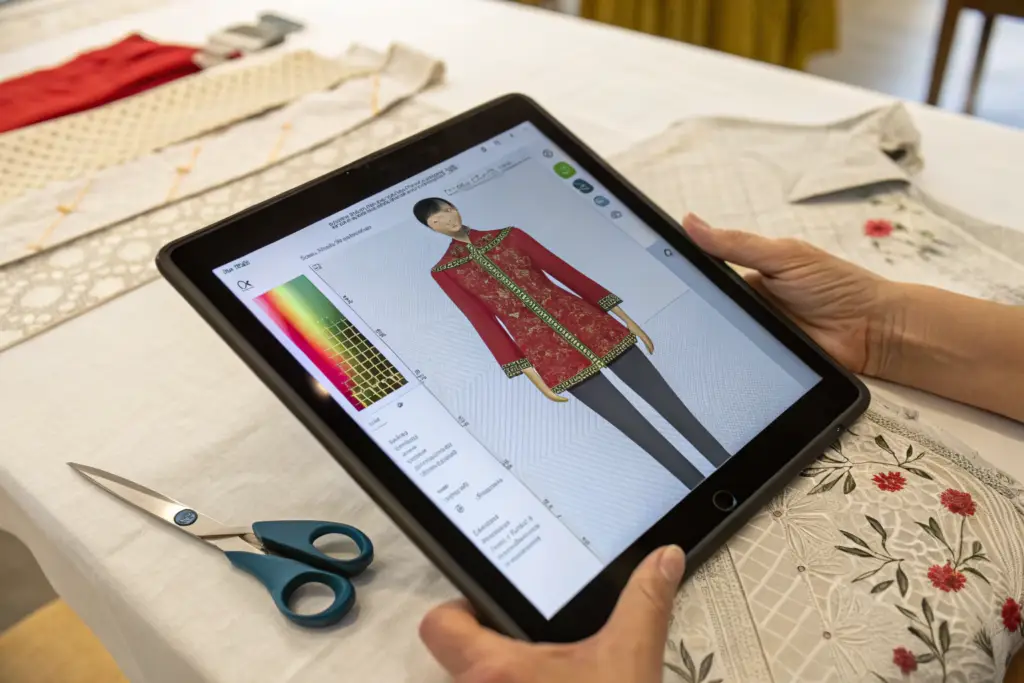
Technology compresses the apparel supply chain primarily through 3D Digital Sampling for fit approval and Product Lifecycle Management (PLM) software for tracking. 3D sampling eliminates 2-3 physical sample rounds, saving 4-6 weeks of development time. PLM software provides a single source of truth for tech packs, preventing the costly errors that happen when a factory sews from Version 4 of a spec sheet while the brand is looking at Version 6.
How Much Time Does 3D Sampling Really Save on Fit Approvals?
I was skeptical of 3D sampling for a long time. I thought it was a gimmick for sneaker brands. Then we had a client with a complex women's dress that had a tricky twist detail on the bodice. We did the first sample physically. It took 10 days. The twist was too high. We did a second sample. 10 days. The twist was too low.
Frustrated, we uploaded the pattern file to a 3D software called Browzwear. We dropped the digital fabric swatch on the pattern. We could see the tension of the twist immediately on the screen. We adjusted the pattern by 2cm, checked the 3D drape, and sent the revised pattern to the cutting room. The next physical sample was 98% perfect.
Here is the time comparison we track in our development room:
| Stage | Traditional Process | 3D-Enabled Process |
|---|---|---|
| First Pattern & Proto | 10-14 Days | 10-14 Days (Physical still needed for initial drape) |
| First Fit Correction | 10 Days (Physical Sample 2) | 2 Hours (Digital Adjustment) |
| Second Fit Correction | 10 Days (Physical Sample 3) | 2 Hours (Digital Adjustment) |
| Final PP Sample | 10 Days | 10 Days (Physical sign-off) |
| Total Development Time | 40-44 Days | 20-22 Days |
That is three weeks saved. In a volatile market, three weeks is the difference between catching a trend and being late. It also saves on DHL courier fees. Shipping physical samples back and forth for a 6-piece collection can cost $300-$500 in express fees. That cost is eliminated. More importantly, the environmental impact of shipping air freight samples is reduced. This aligns with the sustainability goals that are becoming non-negotiable for retailers.
Can PLM Software Prevent the "Wrong Tech Pack" Nightmare?
You know this pain. You send an Excel tech pack. You make a change to the sleeve length. You email "Tech Pack_v4_FINAL_USE THIS ONE.xlsx". The factory downloads it. But they had already printed "Tech Pack_v3.xlsx" and given it to the cutting master. Two weeks later, you get a photo of a shirt with sleeves 2 inches too short.
This is a communication breakdown that costs thousands of dollars in lost fabric and labor. It is a massive source of inefficiency and delayed shipments.
PLM (Product Lifecycle Management) software solves this by creating a single, cloud-based file. There is only one tech pack. When we update the spec, the factory sees the update instantly. There is no confusion about which file is current.
We started using a simple PLM system two years ago for our key clients. The reduction in "tech pack errors" was immediate. We saw a drop in re-cut requests by over 40%. When a factory worker scans a barcode on the cutting ticket, the tablet pulls up the current spec sheet from the cloud. They see the correct measurement tolerance. They see the correct stitch type.
This is not fancy AI. This is just good data hygiene. And it directly contributes to a responsive supply chain. If you don't have to stop production for a week to re-cut because of a wrong spec, you just gained a week of lead time.
Why Are Flexible Payment Terms and DDP Logistics Critical for Stability?
Cash is tight. You need the factory to start cutting fabric, but you don't have the 30% deposit this week. Or, you have the deposit, but you are terrified that if the container gets stuck in customs, you will be hit with a $2,000 bill you didn't budget for. In a volatile market, financial friction is just as damaging as physical friction. The way you pay and the way the goods move are the foundations of a stable, responsive relationship.
Flexible payment terms and DDP logistics provide critical stability by aligning the factory's incentives with the brand's success. Instead of adversarial "pay upfront and pray" terms, a responsive partnership might involve 20% deposit to start, 30% upon inspection, and 50% before shipment. DDP (Delivered Duty Paid) shifts the risk of freight rate spikes and customs delays from the brand (who cannot control them) to the factory/logistics provider (who can influence them).

How Does a Letter of Credit vs. Open Account Impact Production Speed?
Most small to mid-sized brands use T/T (Telegraphic Transfer) . They wire 30% upfront, and 70% before shipment. This creates a cash crunch at the most stressful part of the process.
There are two other options that can dramatically smooth out your cash flow and speed up production starts:
- Open Account (Net 30/60): This is rare for new relationships. But after we have done 2-3 successful orders with a client, we may offer this. It means we start production with no deposit. The brand pays 30-60 days after receiving the goods. This frees up their cash for marketing and operations. It shows an enormous amount of trust from the factory. It is the ultimate sign of a true partnership.
- Letter of Credit (L/C) at Sight: This is a bank instrument. Your bank guarantees payment. This allows us to purchase fabric and start cutting immediately because we know the bank will pay us as soon as we show the Bill of Lading. It removes the "cash flow wait" from the equation.
I recall a situation with a client from Florida who was launching a new activewear line. Their funds were tight. They were approved for a Small Business L/C from their bank. They sent us the L/C draft. We were able to order the specific nylon/spandex fabric that same week. If we had waited for their wire transfer to clear, it would have been a 10-day delay. That 10 days would have pushed their launch past the January fitness rush. The L/C gave us the confidence to move at their speed, not the bank's speed.
Why Does DDP Remove the Anxiety of Port Congestion Surcharges?
We touched on this earlier, but it bears repeating in the context of building a responsive chain. Volatility in ocean freight is the number one killer of brand budgets.
If you agree to FOB (Free on Board) Shanghai, the price is fixed. But the journey is not. When the ship docks in Long Beach and there is a Congestion Surcharge of $1,500 or a Chassis Fee shortage, that bill comes to you. You have no choice but to pay it. You budgeted $3,000 for freight. You just spent $4,500. That $1,500 comes out of your profit.
When we ship DDP (Delivered Duty Paid), we quote you a landed price. If the port is a mess and we have to pay $1,500 extra to get the container out, we pay that. Because we are moving thousands of containers a year, we have leverage with the truckers and brokers. We can mitigate those costs better than a single brand can. But the agreement stands: The price you signed off on is the price you pay.
This certainty allows you to plan. You know that when the goods hit your door, there is no surprise invoice. This is the definition of a stable, responsive supply chain. You are not reacting to a surprise bill. You are executing a plan.
We moved a long-term partner of ours—a Seattle-based outdoor brand—from FOB to DDP last year. The owner told me, "I used to dread the email from the freight forwarder. It was always bad news. Now, I don't even think about the shipment until it arrives." That mental space is valuable. It allows you to focus on selling, not on logistics fire drills.
At Shanghai Fumao, we structure our DDP offering precisely for this reason. We want our clients building brands, not managing supply chain exceptions.
Conclusion
Building a highly responsive apparel supply chain in a volatile market is not about predicting the future. It is about creating a system that bends without breaking. You started this article feeling the weight of uncertainty—the fear of the next tariff, the next port strike, the next viral trend that makes your inventory obsolete. Now you have a blueprint for a different way of working.
We dismantled the old "One Big PO" model and exposed how it amplifies the Bullwhip Effect, locking your cash in a slow-moving pipeline. We explored the strategic value of a China-Plus-One approach, not as a full exit from China's unparalleled ecosystem, but as a geographic hedge against regional disruptions. We saw how practical technology like 3D sampling and PLM software can carve weeks out of the development calendar, compressing time without compressing quality. And we underscored the financial and logistical stability that comes from flexible payment terms and DDP shipping.
The goal is no longer to have the cheapest factory. The goal is to have the smartest partnership. A partnership where fabric is reserved before the trend hits. Where samples are approved in hours, not weeks. Where cash flow is managed so you can pivot mid-season. And where the shipment arrives on time without a ransom note of surcharges.
This is the kind of supply chain we build at Shanghai Fumao. It is designed for the reality of today's market—chaotic, fast, and unforgiving of rigid planning.
If you are ready to move from a fragile supply chain to a resilient one, I invite you to start a conversation. We can look at your current calendar and find the hidden weeks of delay. We can structure a payment and shipping plan that gives you back control.
Please reach out to our Business Director, Elaine. She is the expert in aligning brand needs with factory capabilities. You can email her directly at elaine@fumaoclothing.com. Let's build a supply chain that can handle whatever the market throws at it with Shanghai Fumao.