
You are scrolling through your industry news feed. You see a headline: "Popular Sustainable Brand Investigated for Sweatshop Labor." The brand's name is being dragged through the mud. Their customers are outraged. Their retailers are cancelling orders. You feel a chill. You think, "That could have been me. Am I really sure about my factory? Do I have the proof I need to defend my brand?" A shaken brand owner told me, "I used to think audits were just expensive pieces of paper. Then a competitor got destroyed by a labor scandal. I realized those 'pieces of paper' are the only thing standing between my brand and a catastrophic reputational collapse."
Strict factory compliance audits protect your clothing brand reputation by providing a verifiable, third-party defense against the most dangerous accusations in the apparel industry: unethical labor practices, unsafe working conditions, and false environmental claims. They are not just a moral choice; they are a critical risk management and brand protection tool. In an age of radical transparency and social media activism, a clean audit from a reputable body like SMETA or BSCI is the essential proof you need to show that your supply chain is responsible. Without it, your brand is dangerously vulnerable.
At Shanghai Fumao, we view our rigorous, independently verified compliance audits as a core part of our B2B value proposition. We invest in them because we know they are essential for our partners' peace of mind and market access. Let me explain exactly how these audits act as a shield for your brand's integrity and why they are a non-negotiable requirement for any serious apparel business.
What Is the Direct Link Between a Sweatshop Scandal and Your Brand's Sales?
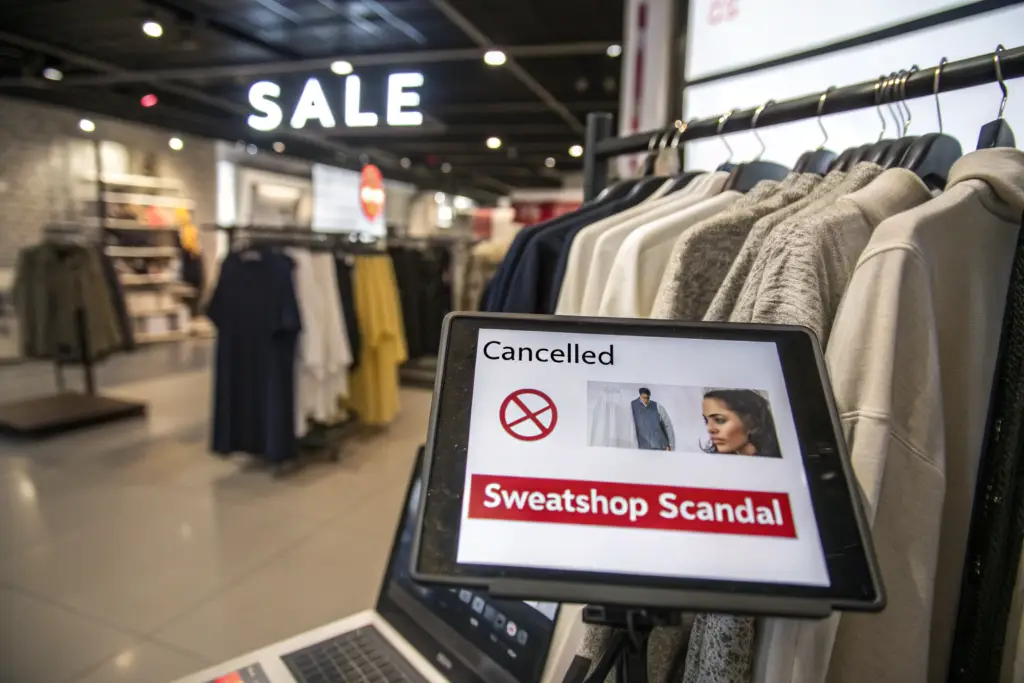
In the age of social media and conscious consumerism, your supply chain is your brand story. Consumers, especially Millennials and Gen Z, are not just buying a product; they are buying into a set of values. A single, well-documented exposé about unethical labor practices or environmental violations in your supply chain can trigger a viral firestorm that destroys years of carefully built brand equity. The financial consequences are immediate and severe.
The link between a sweatshop scandal and your brand's sales is direct and devastating. Consumers will boycott your products. Wholesale buyers will cancel purchase orders and drop your line. Major retailers, who have strict vendor compliance programs, will blacklist your brand instantly. The lost sales, the cost of managing the PR crisis, and the long-term damage to your brand's reputation can be an existential threat to a business. A clean, verifiable audit is your insurance policy against this catastrophic risk.
I recall a distributor of a well-known activewear brand whose sales plummeted overnight after a labor rights organization released a detailed report about conditions in one of their supplier factories in another country. The brand had not done their own independent due diligence. They had relied on the factory's word. They were guilty by association. Their retail partners issued massive chargebacks. Their social media was flooded with outrage. It took them years and a fortune in PR to rebuild a fraction of the trust they lost. This is the brutal reality of a supply chain scandal. This is why we make our ethical compliance transparent and verifiable.
How Do Major Retailers Use Compliance Audits in Their Vendor Onboarding?
If you aspire to sell your private label collection to a Nordstrom, a REI, or a major online retailer, a social compliance audit is not optional. It is a prerequisite. Their vendor onboarding portals will require you to upload your factory's audit report, often directly linked to a platform like Sedex. They will check the audit date, the scope, and the findings. If you cannot provide a clean, current audit, the conversation stops. Your beautiful garment will never see their sales floor. This is the hard reality of modern retail. This is why our SMETA 4-Pillar audit is so critical for our partners.
How Can an Audit Be Your Best Defense in a Social Media Crisis?
Imagine a baseless or exaggerated accusation appears on social media. A clean, third-party verified audit is your immediate, powerful, and public defense. You can respond within minutes: "We take these accusations seriously. Our long-term manufacturing partner, Fumao, is SMETA 4-Pillar audited. You can view their live audit on the Sedex platform here: [link]." This factual, transparent response instantly neutralizes the rumor, protects your reputation, and positions your brand as proactive and responsible. Without an audit, you have no defense.
How Do Audits Mitigate the Specific Risks of the "UFLPA" and Forced Labor?
The regulatory landscape has shifted dramatically. The Uyghur Forced Labor Prevention Act (UFLPA) in the United States has created a "rebuttable presumption" that any goods from certain regions are made with forced labor. The burden of proof is on the importer to prove their supply chain is clean. This is not a marketing issue; it is a legal and existential risk. A simple supplier declaration is no longer enough. You need a verifiable, audited supply chain.
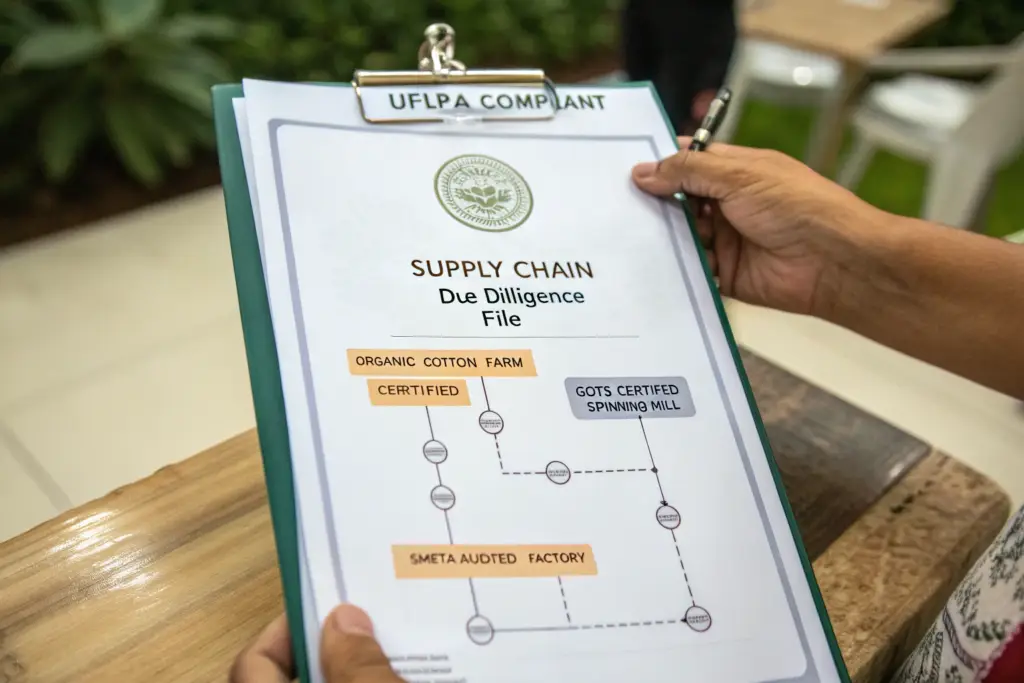
Strict compliance audits mitigate the specific risks of the UFLPA and forced labor by providing the verifiable, documented evidence that CBP (Customs and Border Protection) requires. A SMETA or BSCI audit, which verifies labor practices through worker interviews and payroll checks, provides strong evidence of ethical employment. When combined with GOTS or GRS chain-of-custody audits for your materials, you can build a comprehensive "Due Diligence File" that demonstrates your supply chain is free from forced labor. This is the new standard for legal compliance in the US market.
A brand we work with had a shipment of cotton garments detained by CBP under UFLPA. Because we had a current, clean SMETA audit, and because they had the GOTS Transaction Certificates for their fabric, they were able to provide a complete due diligence package within 48 hours. The shipment was released. They were prepared. Another brand, using an unaudited supplier, had their goods seized and destroyed. The difference was a verified, auditable supply chain. This is the new reality of importing into the US. This is the value of our audited and transparent supply chain .
What Is the "Rebuttable Presumption" Under the UFLPA?
It means that CBP assumes any goods from certain regions are made with forced labor. It is not up to CBP to prove a violation. It is up to you, the importer, to provide "clear and convincing evidence" that your goods are clean. A social compliance audit is a critical piece of that evidence. This is a fundamental shift in legal liability. This is a key part of our brand protection services .
How Do Transaction Certificates (TCs) Combine with Social Audits for Full Protection?
A SMETA audit proves the people making your clothes are treated fairly. A GOTS or GRS Transaction Certificate (TC) proves the cotton in your garment is organic or the polyester is recycled. Together, they provide a complete, verifiable story of both social and environmental integrity. This is the "Full Package" of compliance that sophisticated retailers and regulators now demand. This is our commitment to holistic compliance .
How Does the Audit Process Itself Improve Your Supply Chain Stability?
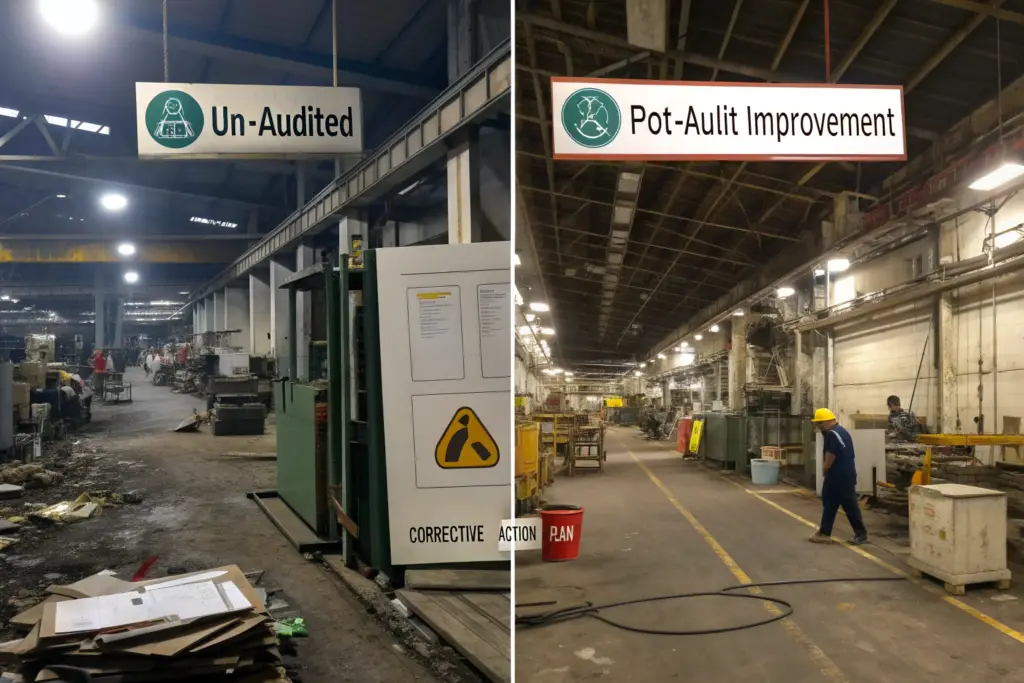
A compliance audit is not just a static certificate on a wall. It is a dynamic process of inspection, feedback, and continuous improvement. A good audit uncovers issues—a blocked fire exit, inconsistent overtime records, a need for better PPE—and requires a formal Corrective Action Plan (CAP) . The factory must fix these issues to maintain their certification. This active process creates a safer, more efficient, and more stable manufacturing environment, which directly benefits your business.
The audit process itself improves supply chain stability by forcing continuous improvement. The findings from a SMETA or BSCI audit require the factory to implement Corrective Action Plans (CAPs). This leads to a safer, more organized workplace, which increases efficiency and reduces accidents. It leads to fairer and more transparent labor practices, which reduces worker turnover. A stable, experienced workforce produces higher, more consistent quality with fewer errors. The audit is not just a check; it is an engine for a better factory, which leads to a more reliable supply chain for your brand.
A brand we work with noticed a significant improvement in the consistency of their orders and a drop in quality errors after we implemented CAPs from our annual SMETA audit. The link was clear: a safer, happier, and more stable workforce simply produces better work. The audit process helped us create a better factory, which directly benefited their business. This is the often-overlooked operational value of a strong compliance program. This is the core of our commitment to continuous improvement .
Why Is Low Worker Turnover a Sign of Both Ethics and Quality?
High turnover is a sign of a stressed, unhappy workforce and poor management. It leads to a constant cycle of training new, inexperienced sewers, which inevitably results in more quality errors. A factory with a stable, long-tenured workforce is both an ethical factory and a higher-quality factory. A SMETA audit checks turnover rates. This is a powerful, indirect quality indicator. This is part of our quality-through-ethics philosophy .
How Does a Safe Factory Translate to a More Reliable Production Schedule?
A factory with blocked exits and poor electrical wiring is a factory at risk of a major disruption—a fire, a serious accident, a government shutdown. A safe, compliant factory is a stable, predictable factory. It is less likely to experience sudden, catastrophic interruptions that could delay your shipment. Compliance is a form of operational risk management.
How Does Fumao's Proactive Compliance Culture De-Risk Your Entire Supply Chain?
We do not view compliance as a burden or a one-time event. We view it as a core strategic advantage and a fundamental part of our B2B service. Our proactive investment in rigorous, independently verified audits is a direct investment in the safety, security, and reputation of our partners' brands. We take on the complexity and cost of compliance so that you can focus on building your business with confidence.
Fumao's proactive compliance culture de-risks your supply chain by providing a verified, transparent, and continuously improving ethical foundation. We do not just pass audits; we use them as a tool for ongoing improvement. We provide our partners with direct access to our Sedex profile, our certifications, and our audit history. This transparency gives you the proof you need to defend your brand against accusations, satisfy retailer requirements, and build an authentic, trustworthy story with your customers.
A new brand partner told us, "Your compliance package was a key reason we chose you. You didn't just send a PDF; you gave us a live link to your Sedex profile and walked us through your CAPs. We knew we were partnering with a factory that was as serious about ethics as we are. It's a weight off our shoulders." That is our goal. To provide the transparent, verifiable ethical foundation that allows our partners to build their brands with complete integrity. This is the foundation of a trusted B2B partnership .
How Do We Make Our Audit History Transparent and Accessible to Partners?
We provide our Sedex Reference Number (ZC:...) , which allows our partners to view our live, unedited SMETA audit report directly on the Sedex platform. We also provide our GOTS and OEKO-TEX license numbers for independent database verification. We make our compliance a matter of public, verifiable record. This is the standard of our radical transparency .
How Can a Partner Use Our Compliance in Their Own Marketing?
We provide you with the assets and the permission to tell the story. You can state on your website: "Our garments are manufactured by our trusted partners at Fumao, a SMETA 4-Pillar audited, ethically certified facility in Shanghai." You can share photos of our clean, safe factory floor. This authenticated story of ethical production is a powerful differentiator and a trust-builder with the modern consumer. This is the value of a co-branded ethical story .
Conclusion
Strict factory compliance audits are the essential, non-negotiable shield for your clothing brand's reputation in the modern world. They are your defense against viral scandal, your ticket to major retail partnerships, your best compliance with new trade laws, and a powerful tool for building an authentic, trustworthy brand story. They are an investment in your right to operate.
At Shanghai Fumao, we have built our entire manufacturing operation on a foundation of verified ethical and environmental compliance. We provide our B2B partners with the transparent, auditable proof they need to build their brands with confidence and integrity. We protect your name as fiercely as we protect our own.
If you are ready to build a brand on a foundation of verified compliance and radical transparency, let's talk. Our Business Director, Elaine, can provide you with access to our full compliance documentation. Please email Elaine at: elaine@fumaoclothing.com.