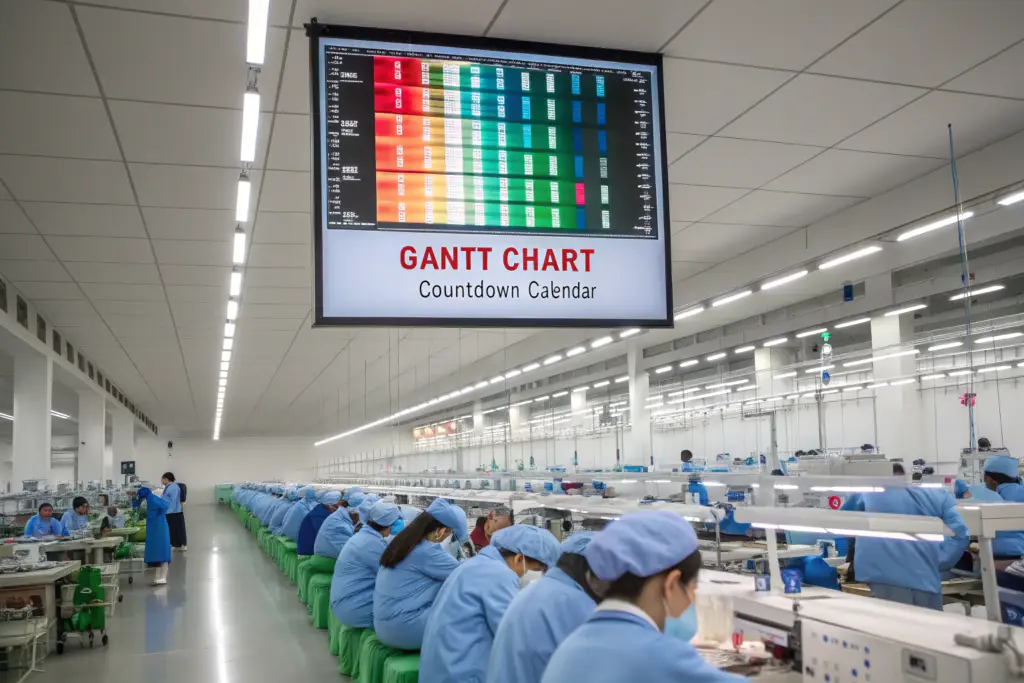
You just got off a call with your sales rep. They promised delivery by August 15th. You planned your entire marketing campaign around that date. You booked the photoshoot. You scheduled the email blast. Now it is August 10th, and the tracking number still says "Label Created." You are refreshing your inbox every five minutes. The panic is real. This is not just a late shipment. This is a missed selling season. For a brand owner, time is inventory. And right now, your inventory is sitting in limbo somewhere between Shanghai and Long Beach.
Aligning your clothing brand release schedule with factory timelines requires you to reverse-engineer your calendar from the desired in-stock date, adding realistic buffers for each phase: fabric sourcing (4-6 weeks), sampling (3-4 weeks), bulk production (4-8 weeks), and ocean freight with DDP clearance (5-6 weeks). You must factor in Chinese National Holidays and treat the factory's "ship date" as a moving target until the goods pass export inspection.
I am the owner of Shanghai Fumao. I have seen the calendar crunch from both sides. I have seen brands miss Black Friday because they didn't know about the October Golden Week shutdown. I have also seen brands launch flawlessly because they treated their factory like a partner, not just a vendor. Let me walk you through how to take control of the timeline so you are not just hoping for the best.
Why Do Factory Production Timelines Always Seem to Slip for Fashion Brands?
You send a purchase order in June for an October delivery. The factory confirms. You think you are set. Then September rolls around. You ask for an update. "Sorry, delay. Fabric mill is backed up." Or, "We had a power curtailment." Or, simply, radio silence. It feels personal. It is not. It is the nature of a supply chain that is still catching its breath after the pandemic. But understanding why the timeline slips is the first step to stopping it from slipping.
Factory timelines slip primarily because of three factors outside the sewing room's control: upstream textile mill delays for greige fabric and dyeing, underestimation of sampling and approval loops between brand and factory, and congestion at the port of export. A common oversight is the "Golden Week" shutdown in China, which effectively erases 10 days of October productivity and creates a month-long backlog.
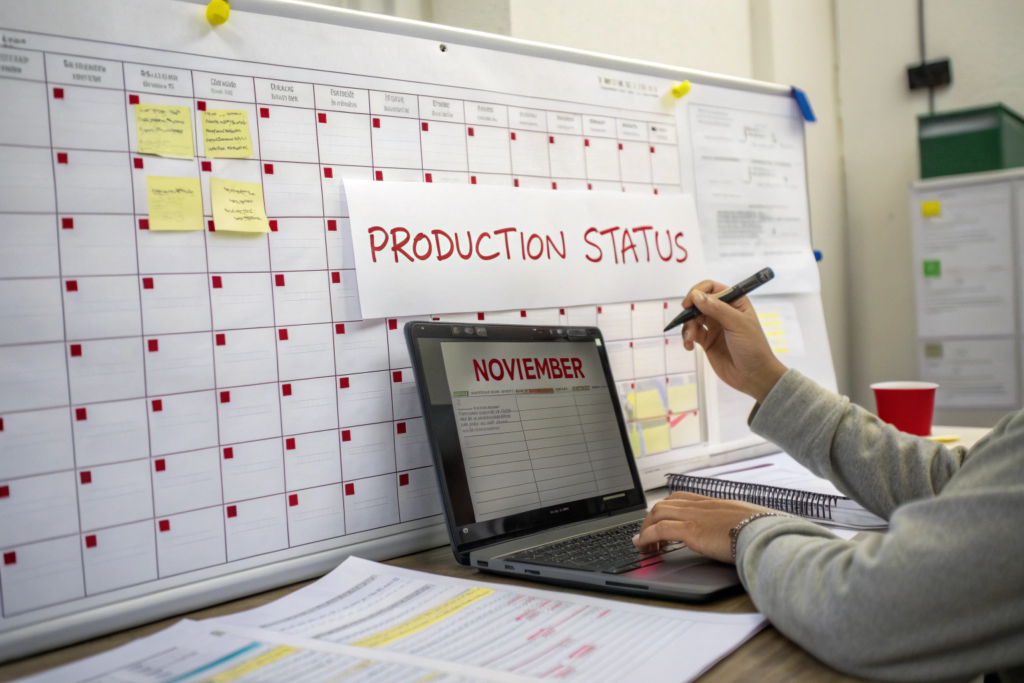
Is the Delay Really in Sewing or Is It Hidden in the Fabric Mill's Queue?
This is the number one misconception I hear from brand owners. They picture a factory floor full of idle machines waiting for their order. They think, "Why can't they just sew faster?" The truth is, the sewing is the fastest part of the process.
The bottleneck is almost always Wet Processing. That is the industry term for dyeing and finishing the fabric. You cannot just walk into a dye house and say "Color my 500 yards of cotton jersey light blue today." The dye house runs large batches. They need to fill a dyeing vessel that holds maybe 500kg or 1000kg. If your order is only 300kg, you wait until they have another 200kg order that uses a similar color so they can schedule a vessel clean-out.
Here is a specific example. Last year, a client from Denver had a beautiful winter collection planned. They needed a specific shade of "Glacier Blue" fleece. We placed the fabric order in July for August delivery. The mill said 30 days. But the dye house was running a massive batch of navy blue for a workwear brand. They didn't want to stop and clean the machines for our light blue batch because cleaning takes 4-6 hours and uses a lot of water and chemicals. So they waited until they had enough light color orders to justify the color changeover. That wait added 18 days to our timeline.
The lesson? You cannot just ask "When is the ship date?" You must ask "What is the Greige Fabric availability and Dyeing Schedule?" If the factory cannot give you a specific date for the fabric to enter the dye bath, their final ship date is just a guess.
How Do Chinese National Holidays Like CNY and Golden Week Disrupt Your Launch?
If you do not have these dates burned into your memory, you will get burned. I am serious. The Western calendar and the Chinese manufacturing calendar are two different worlds.
-
Chinese New Year (CNY / Spring Festival): This is not a long weekend. This is a full stop. Factories close for 2-4 weeks. But the disruption is longer. Workers leave early. They come back late. The month before CNY is a frantic rush to ship everything out before the closure. The month after CNY is a slow ramp-up as new workers are hired and trained. Rule of thumb: Do not expect any reliable production movement from mid-January to late February.
-
Golden Week (October 1-7): This is the fall trap. Brands want goods for Black Friday. They think shipping in late September is safe. But the week of October 1st, everything stops. Customs offices. Trucking companies. Factories. If your goods are not on a boat by September 28th, they are sitting in a warehouse for a week.
We had a situation with a Los Angeles streetwear brand. They approved a pre-production sample on September 28th. They thought production would start immediately. The factory said "OK." But what the factory meant was "OK, we start on October 8th." That 10-day gap pushed the shipment from an early November arrival to a late November arrival. They missed the first two weeks of holiday shopping. The brand owner was furious. But it was entirely avoidable with a simple calendar check.
Here is a quick reference table for planning around 2026:
| Holiday Period | 2026 Date Range | Impact on Factory Timeline | Recommended Action for U.S. Buyers |
|---|---|---|---|
| Chinese New Year | Feb 17 - Mar 4 (approx) | Complete Shutdown + 2-week recovery | Do not schedule critical production for Jan/Feb. Ship BEFORE Jan 15 or AFTER Mar 15. |
| Qingming Festival | April 4-6 | Minor 1-2 day delay | Minimal impact, just account for weekend shifts. |
| Dragon Boat Festival | June 20-22 | Minor 1-2 day delay | Minimal impact. |
| Golden Week | Oct 1-7 | Major 1-week port/office shutdown | Ensure goods clear China customs before Sept 28. Critical for Q4 Holiday stock. |
What Is the Exact Reverse Timeline Formula from Store Launch to PO Placement?
You have a target drop date. Maybe it is a Spring Break launch on March 1st. Maybe it is a Fall pre-order on August 15th. You are currently staring at a blank screen trying to figure out when you need to pull the trigger. You cannot just guess. You need a formula. You need a timeline that works backward from the moment the customer clicks "Add to Cart" to the moment you sign the Purchase Order.
The exact reverse timeline formula is: Target In-Stock Date (e.g., Aug 1) minus 5 weeks Ocean Freight/DDP = Ship Date (June 25). Minus 8 weeks Bulk Production = PP Sample Approval (May 1). Minus 4 weeks Sampling/Fit = Fabric Order Deadline (April 1). Minus 4 weeks Fabric Sourcing = Design Lock Date (March 1). This means for a Fall delivery, your design and fabric decisions must be finalized in early Spring.
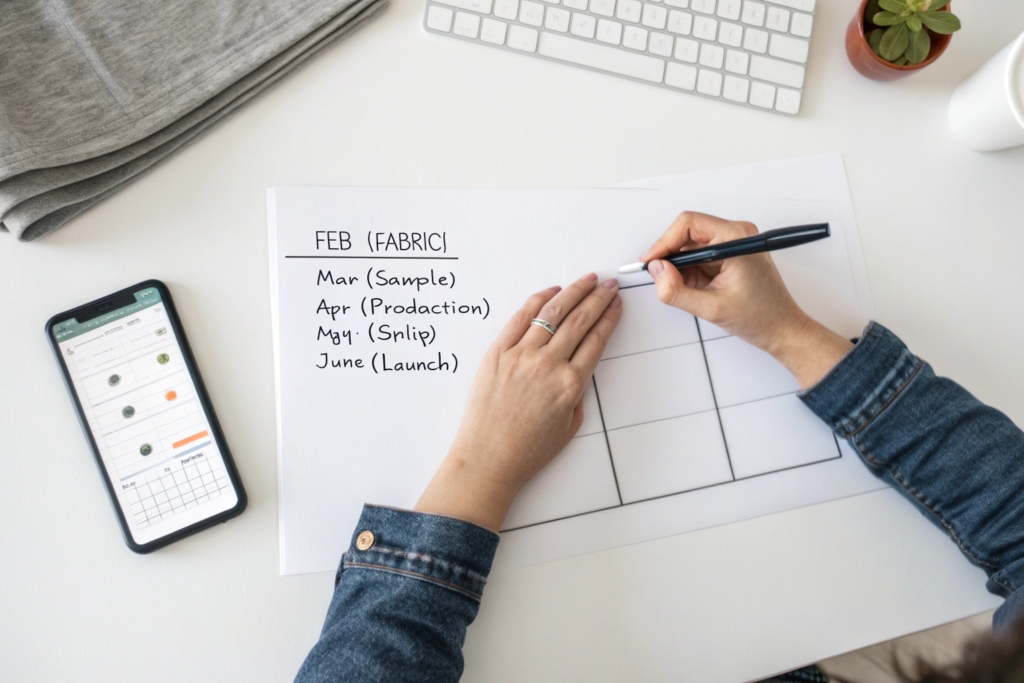
When Should You Actually Lock Fabric and Trims for a Spring/Summer Line?
Let's walk through a real-world scenario using a Spring/Summer 2027 collection. Most small brands think about Spring in January. That is too late. By January, the factories are focused on Chinese New Year. If you need goods in U.S. warehouses by February 15, 2027 for a March 1st launch, let's reverse engineer it with the specific timelines we use at Shanghai Fumao.
Step 1: Ocean Freight & DDP Clearance (5 Weeks)
We are shipping from Shanghai to Los Angeles. Transit time is roughly 18-22 days. Then you have 3-5 days for customs clearance and 3-5 days for drayage to your warehouse. We always pad this to 5 weeks minimum.
- Ship Date Deadline: January 10, 2027. (Goods must be on the water before CNY preparations begin).
Step 2: Bulk Production (7-8 Weeks)
You are making cut-and-sew knitwear. 500 units per style. Cutting, sewing, washing, pressing, packing. That takes time. Especially in November/December when factories are rushing to finish orders before the year ends.
- Production Start Date: November 15, 2026.
- PP Sample Approval: November 10, 2026.
Step 3: Sampling & Fitting (4 Weeks)
You need the factory to make a Pre-Production (PP) Sample using the actual bulk fabric. This is the sample you sign off on.
- Fabric Arrival at Factory: October 15, 2026.
Step 4: Fabric Sourcing & Dyeing (6 Weeks)
This is the longest lead time variable. The mill needs to make the greige and dye it.
- Fabric PO Placed: September 1, 2026.
Step 5: Design Lock & Development (4-6 Weeks)
Before you order fabric, you need to know what you are making.
- Finalize Tech Pack & Colors: August 1, 2026.
The Hard Truth: For a product to land in February 2027, you are locking fabric in September 2026. That is six months of lead time. This is not a slow factory. This is the reality of global supply chain logistics. The brands that win are the ones who accept this reality and plan backward from it.
How Many Weeks Should You Buffer for Sample Approval Loops?
"I'll just look at the photo and approve it." If I had a dollar for every time I heard that and then saw the brand owner panic when the bulk order arrived "off," I would have a lot of dollars.
The sample stage is not a formality. It is your last chance to catch errors. And it takes time. You are on U.S. time. The factory is on China time. You send comments at 4 PM Tuesday. They read them at 8 AM Wednesday. They make changes Thursday. They ship the revised sample Friday. You get it Tuesday. That is a full week cycle for ONE round of changes.
Here is a realistic buffer for different stages:
| Sample Type | Purpose | Realistic Turnaround (Including Shipping) | Risk of Skipping? |
|---|---|---|---|
| Proto Sample | Check initial shape/design | 3 Weeks | High (Fit will be wrong) |
| Fit Sample | Adjust measurements | 2 Weeks per round | Very High (Sizing returns) |
| Lab Dip Approval | Color matching | 2 Weeks | High (Color mismatch between top and bottom) |
| PP Sample | Final seal of approval | 2-3 Weeks | Extreme (Bulk production based on unapproved spec) |
You need to build at least 2 rounds of fit comments into your calendar. Do not budget 1 week. Budget 4 weeks total for the sampling loop. And please, do not approve a Lab Dip from a photo on WhatsApp. Light temperature changes the color. A spectrophotometer reading is the only way to know if that blue is really your blue.
How Can Small Batch Production Help You Test the Market Without Blowing Lead Times?
You have a great idea for a new style. But you are not 100% sure it will sell. Ordering 1,000 units feels like a gamble. If it flops, you are stuck with 800 units in deadstock. That cash is tied up. That storage space is full. But the factory says MOQ is 300 pieces per color. You feel stuck between taking a huge risk or playing it safe with the same old basics. There is a middle ground. It is called small batch production.
Small batch production allows you to test market demand with lower inventory risk, but it requires a different approach to factory alignment. You cannot expect 7-day turns on small runs. You must align with the factory's "down time" between large orders or utilize specialized "mini-line" setups. While the per-unit cost is 15-25% higher, the savings in warehousing and markdowns on failed styles often outweigh the premium.
Does Low MOQ Production Actually Cost More in the Long Run?
Let's break this down with real numbers. This is a conversation I have constantly with emerging brands.
Option A: Bulk Production
- Quantity: 500 Hoodies (1 color)
- Cost Per Unit (FOB): $12.50
- Total Cost: $6,250
- Risk: If 200 units don't sell, you lose $2,500 in cash + storage fees.
Option B: Small Batch Production
- Quantity: 100 Hoodies (1 color)
- Cost Per Unit (FOB): $15.50 (Higher because of fabric cutting waste and machine setup time)
- Total Cost: $1,550
- Risk: If it doesn't sell, you lose $1,550 max.
But here is the timeline twist. You cannot just call the factory and say "Make me 100 hoodies this week." Small batch orders are Fill-In Work. The factory uses them to keep the lines moving between the big 5,000-piece orders from major brands. If you want your 100 hoodies fast, you will pay a premium and maybe get bumped.
If you want your 100 hoodies cost-effective, you need to give the factory flexibility. You say: "I need these 100 units sometime between September 1 and October 1. Fit them in when you have a gap." This flexibility allows the factory manager to slot you in during a changeover, saving you money and keeping the relationship strong.
We have a client from Portland who does this perfectly. They order their core basics in bulk in January for year-round stock. But for their limited-edition artist collab hoodies, they use our small-batch service. They order 80-120 units. They sell out in two days. They pay a higher unit cost, but they have zero inventory carry cost and create insane hype through scarcity. The higher COGS is actually a marketing expense. And the factory appreciates the small, predictable orders that fill the production gaps.
How Do You Time a Test Run to Arrive Before Peak Season?
Timing a small batch for market testing is tricky. You want to test a Spring style in Spring. But if you follow the normal 6-month lead time, you are designing Spring in August of the previous year. You do not even know if that trend will still be hot in 6 months.
The solution for test runs is to Pre-Book Greige Fabric.
This is a pro-level move. You know you will want to do a small run of a summer camp shirt. You do not know the exact print yet. But you know it will be on a lightweight 100% cotton poplin.
Step 1: You pay for the greige (un-dyed) fabric now. This is maybe 30% of the fabric cost. It sits in the factory warehouse with your name on it.
Step 2: In January, you finalize the design and colors.
Step 3: The factory sends the already reserved greige to the dye house. This cuts 4 weeks off the lead time.
This allows you to place the bulk order in January for a March 15th delivery. That is just in time for the Spring break shopping window. You can test the style in real-time. If it sells out, you already have more greige reserved and can re-order for a May 1st restock.
| Strategy | Fabric Lead Time | Production Lead Time | Total Time to Market | Best For |
|---|---|---|---|---|
| Standard Order | 6 Weeks | 6 Weeks | 12+ Weeks | Core Collection, Year-Round Basics |
| Small Batch Fill-In | 6 Weeks (if no stock) | 4 Weeks | 10 Weeks | Testing new colors |
| Greige Reservation | 0 Weeks (Reserved) | 4 Weeks | 4-5 Weeks | Fast Trend Response, Test Runs |
This is how agile brands win. They use the factory's storage as their own strategic inventory.
Why Is DDP Shipping the Only Reliable Way to Plan a Launch Calendar?
You have a launch event on a Friday. You have 100 pre-orders to ship. The container was supposed to be at your 3PL on Monday. It is now Thursday, and the freight forwarder is asking for $1,200 in "exam fees" and "pier pass" charges before they will release the truck. You pay it because you have no choice. Your launch is now a disaster of refund requests and angry DMs. This is the hidden cost of FOB shipping. You think you saved money on the unit price, but you lost control of the calendar.
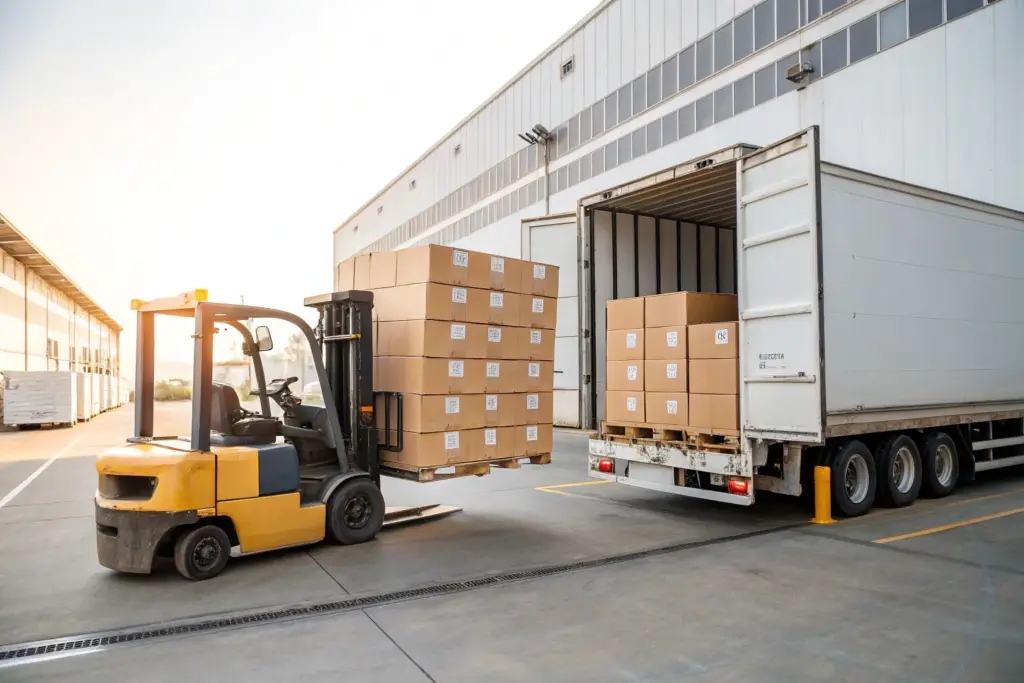
DDP (Delivered Duty Paid) shipping is the only reliable method for planning a launch calendar because it transfers the risk of customs delays, port congestion fees, and bonded warehouse storage from the buyer to the factory. Under DDP terms, the factory has a vested interest in clearing customs quickly and delivering on time because they are paying the storage and demurrage fees until the goods reach your door.
How Does DDP Prevent the "Black Hole" of Customs Clearance?
When you ship FOB (Free on Board), the factory's responsibility ends when the container crosses the ship's rail in Shanghai. After that, you are dealing with a U.S. customs broker you have never met. You are at the mercy of CBP (Customs and Border Protection). If they flag your container for an intensive exam (VACIS or tailgate exam), it can sit for 5-10 business days.
Who pays for that time? You do. You pay Demurrage (port storage) and Per Diem (container rental). And you have zero leverage to speed it up.
When we ship DDP with Shanghai Fumao, we use our own in-house logistics team and our contracted U.S. brokers. We have been shipping thousands of containers a year. We know the CBP paperwork inside and out. More importantly, because we are paying the port storage fees if it gets delayed, our team is on the phone with the port and the trucker every single hour to get that container moving.
I recall a situation in 2025 during the brief East Coast port strike scare. A client we work with in Boston had a container of outerwear sitting on a vessel outside New York. If they were on FOB terms, they would have been helpless. They would have watched the demurrage clock tick to thousands of dollars. Because we were on DDP, our logistics partner had already pre-cleared the entry and arranged for the chassis pool before the strike even hit. We diverted the truck to a different terminal gate as soon as it opened. The goods arrived 2 days late, not 2 weeks late. The client's launch went live on Instagram while other brands were posting "shipping delayed" apologies.
What Information Do You Need to Provide to Ensure Zero Customs Holds?
Even with DDP, you are not completely off the hook. You need to provide the factory with accurate information. If you mess this up, DDP becomes slow too. Customs delays often happen because the commercial invoice looks suspicious.
Here is what I need from a brand owner to guarantee a smooth DDP clearance:
- Accurate HTS Codes: Do not guess. If you tell me a women's silk blouse is a "cotton shirt" to save 2% duty, and CBP examines it, we get a penalty and a 30-day hold on all our future shipments. We use the first 6 digits of the HTS code matching exactly.
- Relationship Disclosure: Are you related to the factory owner? Did you buy materials and send them to the factory? (This is called "Assists"). Hiding this is a red flag.
- Realistic Unit Value: Customs knows the average price of a t-shirt. If you claim a jacket is worth $2.00 to lower the duty bill, you trigger a valuation alert.
We had a new client who was sourcing performance leggings. They gave us a fabric content of "80% Nylon 20% Spandex." The HTS code they provided was for cotton leggings. They had just copied it from an old Alibaba order. The day the container hit the port, it was flagged for a Manifest Hold. We had to send the fabric test report to the broker to prove the fiber content. That delay cost 4 days. It was 4 days of panic for the brand owner waiting for their influencer seeding packages to go out.
The DDP Promise: When you work with us on DDP, you give us the right info. We guarantee the landed cost and the delivery week. You focus on the creative. We focus on the calendar.
Conclusion
Aligning your brand's release schedule with factory timelines is not about hoping for the best. It is about engineering the calendar backward from the finish line. You started this article frustrated by missed seasons and shifting deadlines. Now you understand that the delay is rarely in the sewing room floor. It is buried in the textile mill queue, the dye house schedule, or the customs port. You have the knowledge now to ask the right questions: When does the fabric enter the dye bath? What is the Delta E on this lab dip?
We walked through the exact reverse timeline formula. You saw that for a February delivery, your fabric decisions need to be locked in September of the previous year. That six-month window is not a factory inefficiency. It is the speed of global logistics. We looked at small batch production as a way to inject agility into that long timeline, using greige reservation to cut lead times in half for test runs. And we confronted the hidden terror of FOB shipping, where a single customs hold can vaporize your launch week and your profit margin. DDP shipping emerged as the only rational choice for a brand that values predictability as much as price.
The relationship between a brand owner and a factory should not be a guessing game. It should be a partnership built on shared calendars and transparent communication. When you find a partner who understands that October 1st is Golden Week and not just another Tuesday, and who works backward with you to hit that March 1st launch, you stop being a vendor and become a priority.
You have the vision for the collection. You have the marketing plan. Let's make sure the inventory shows up on time to support it.
If you are tired of tracking down late shipments and want to build a calendar that actually works, I invite you to reach out. We specialize in DDP production planning that keeps American brands on schedule and on budget.
Please contact our Business Director, Elaine. She can help you build a reverse timeline for your next collection and explain exactly how our process removes the guesswork from the supply chain. You can email her directly at elaine@fumaoclothing.com. Let's get your next release scheduled with Shanghai Fumao.