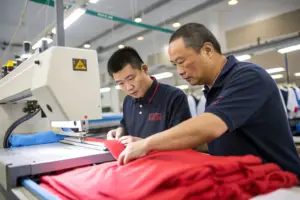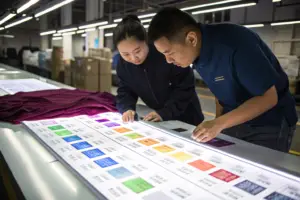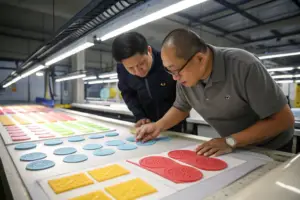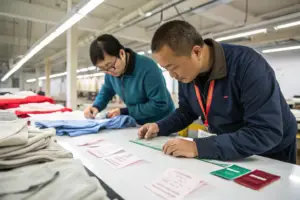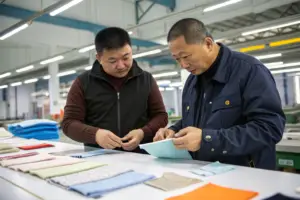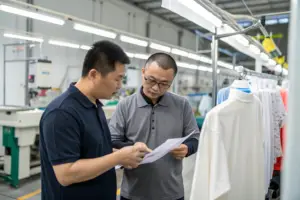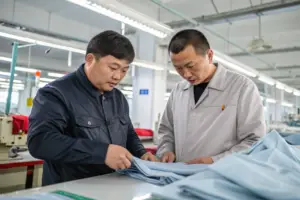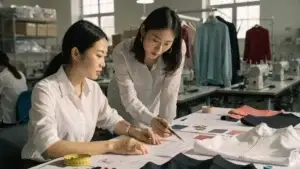
You run your finger along the inside seam of a garment. It feels smooth. You stretch the fabric. The stitches hold, and they don't "grin" or pop. You look at the topstitching on the collar. It is a perfect, unwavering line. This is not an accident. This is the result of a deeply embedded, rigorously maintained system of stitching quality. A brand owner told me, "I can tell everything I need to know about a factory by looking at a single seam. It tells me if they care."
Ensuring consistent stitching quality is a multi-layered discipline that goes far beyond a final inspection. It requires: 1) Standardized Machine Settings and Calibration (precise control of Stitches Per Inch and thread tension), 2) Proactive Operator Training and Skill Management (using a Skills Matrix to match the right person to the right task), and 3) Rigorous, Data-Driven In-Line Audits (catching and correcting stitch defects in real-time, before they become a batch problem).
At Shanghai Fumao, consistent stitching is the foundation of our reputation for top-tier quality. It is the most fundamental, and most visible, promise we make to our B2B partners. Let me take you inside our sewing floor and show you the specific systems, tools, and culture that ensure every seam, on every garment, is a testament to our craftsmanship.
How Do Standardized Machine Settings and SPI Control Ensure Uniformity?
A sewing machine is not a simple tool. It is a precision instrument. A fraction of a millimeter difference in a setting, a slight variation in thread tension, or a worn needle can mean the difference between a beautiful, durable seam and one that is weak, puckered, or crooked. The first line of defense for consistent stitching is ensuring every machine is a perfectly tuned, predictable instrument, and that they are all set to the exact same standards.
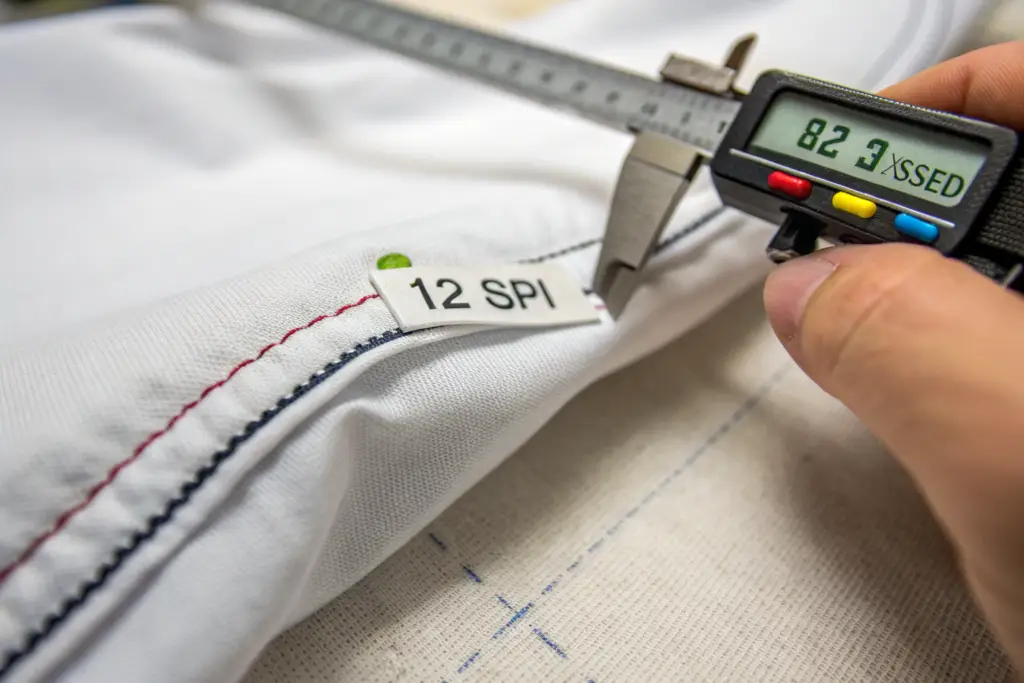
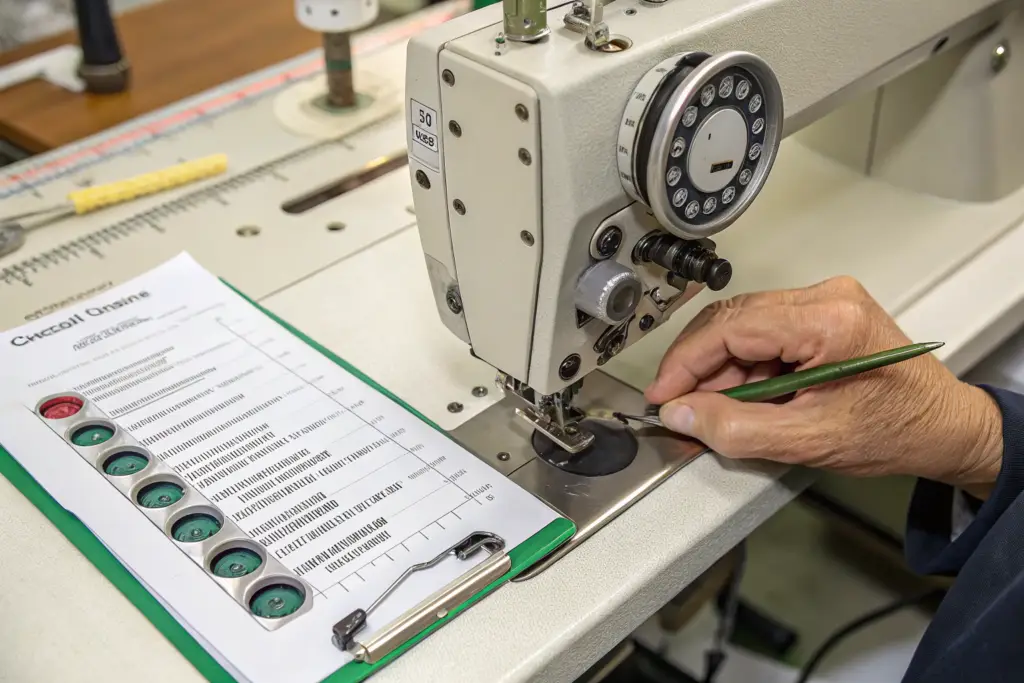
Consistent stitching starts with standardized machine settings. We specify the exact Stitches Per Inch (SPI) for every seam type (e.g., 12-14 SPI for main seams on woven shirts). Our mechanics use calibrated tension gauges to set thread tension, not just "feel." A daily machine checklist ensures needles are sharp, feed dogs are clean, and all settings match the approved Tech Pack and Sealed Sample. This removes machine variability as a cause of defects.
I recall a men's wear client who was struggling with inconsistent collar stitching on his oxford shirts from a previous factory. The stitch line was sometimes wavy, sometimes too close to the edge. The problem was traced to a lack of standardized machine settings and worn machine parts. At Fumao, we use digital stitch regulators and maintain a strict machine maintenance schedule . The SPI is locked in, and the edge guide is fixed. The result is a collar stitch that is perfectly parallel and consistent across 5,000 units. This is the foundation of a professional, premium look.
What Is the Ideal Stitches Per Inch (SPI) for Different Fabrics and Seams?
SPI (Stitches Per Inch) is the most critical numeric specification for stitching quality. There is no single "best" SPI. It depends on the fabric and the purpose of the seam.
- Delicate Fabrics (Silk, Tencel): 10-12 SPI. Too many stitches can perforate the delicate fibers.
- Standard Wovens (Cotton Shirting): 12-14 SPI. This provides a strong, clean, and refined seam.
- High-Stress Seams (Denim, Outerwear, Crotch Seams): 10-12 SPI with a heavier thread. Fewer, stronger stitches are better than many weak ones.
- Knits and Activewear: Safety Stitches are used instead of lockstitches, with SPI adjusted for the specific stretch.
Our Tech Packs always specify the required SPI for every seam. This is a non-negotiable part of our quality control process.
How Does Thread Tension Calibration Prevent Puckering and Looping?
Thread tension is the delicate balance between the needle thread and the bobbin thread. If the tension is too tight, the seam will pucker—the fabric will gather and ripple along the stitch line. If it is too loose, the seam will loop or "grin" —the threads will be visible and the seam will be weak. Our mechanics use a digital tension gauge to set the tension to a precise, repeatable standard for each specific fabric and thread combination. This is checked daily. This objective, data-driven approach eliminates the variability of a mechanic "feeling" the tension.
What Role Does Operator Skill and Training Play in Stitch Consistency?
A perfectly tuned machine is worthless in the hands of an unskilled operator. The human element is the most critical variable in achieving consistent stitching. The way an operator handles the fabric, guides it through the machine, and maintains a consistent pace directly determines the quality of the seam. A great factory invests heavily in its people, not just its equipment.
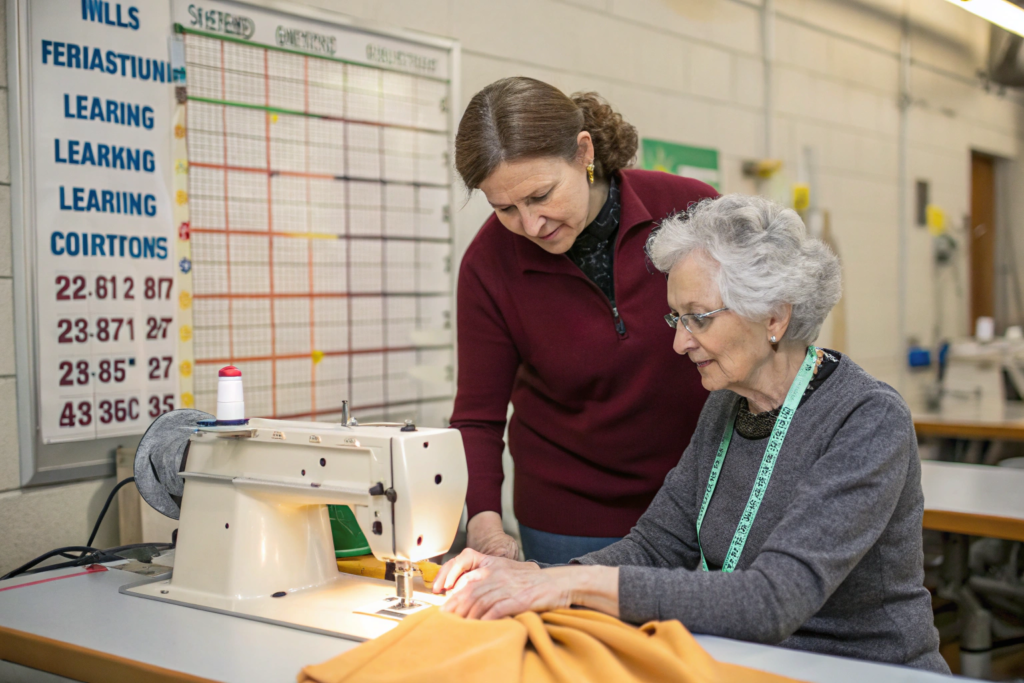
Operator skill is managed through a structured system of training and a "Skills Matrix." New operators undergo a formal training program before they are allowed to work on production goods. The Skills Matrix tracks every operator's certified proficiency on each machine type (single needle, overlock, coverstitch). For complex or high-value orders, only the most skilled (Level 3) operators are assigned to the critical seams, ensuring consistency and quality.
A women's wear brand that produces a complex bias-cut silk dress insists that only our Level 3 operators work on their orders. These are our most experienced seamstresses, who have a deep, intuitive understanding of how to handle slippery, delicate fabrics without stretching or distorting them. This is not an elitist policy. It is a strategic quality decision. The brand pays a slight premium for this dedicated labor, and their return rate for "seam puckering" is near zero. This is the value of a skilled, well-managed workforce. This is a key aspect of our flexible production lines and our commitment to rare style manufacturing.
What Is a "Skills Matrix" and How Is It Used in Production Planning?
A Skills Matrix is a visual chart that maps every operator's certified proficiency level (e.g., Level 1: Trainee, Level 2: Proficient, Level 3: Expert) on every machine type. Our production planner uses this matrix when scheduling work. If an order requires a critical, visible topstitch on a tailored jacket, the planner will look at the matrix and assign only Level 3 lockstitch operators to that specific task. This ensures that the most complex, high-value operations are performed by the most capable hands. It is a data-driven approach to workforce management .
How Does In-Line Training Address Common Operator Errors?
Even skilled operators can develop bad habits or face challenges with a new fabric. Our in-line QC inspectors are also trainers. If they see an operator consistently making the same minor error—for example, not back-tacking at the end of a seam—they do not just flag the defect. They stop and provide a 60-second coaching session. They show the operator the correct technique. This real-time, on-the-job training prevents small errors from becoming ingrained habits and causing widespread defects. It is a culture of continuous improvement.
How Do In-Line Audits and Data Tracking Prevent Batch Defects?
The most dangerous time for stitching quality is during a long, high-volume production run. A small, almost imperceptible issue—a needle becoming slightly dull, a thread tension drifting, an operator becoming fatigued—can cause a subtle defect that is repeated hundreds or thousands of times before anyone notices. Waiting until the end of the line to find this is a disaster. The key to consistency is catching these issues as they happen.
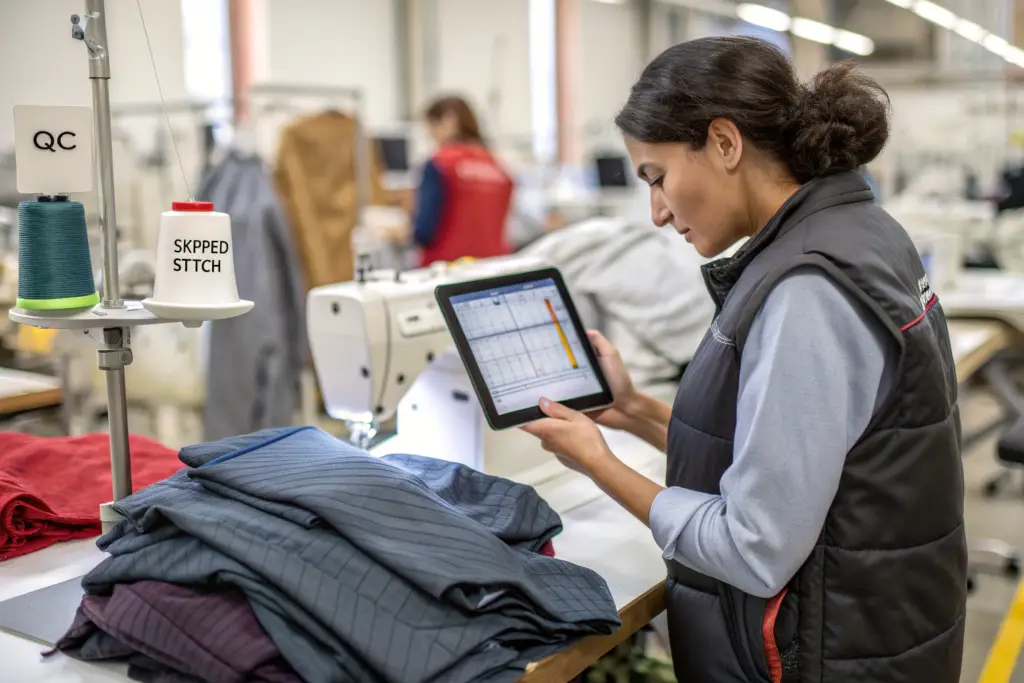
In-line audits are the real-time defense against batch defects. Our roving QC inspectors continuously pull random samples from the sewing line and inspect them against the Sealed Sample and spec sheet. They use tablets to record any defects, which feeds into a live dashboard. If a specific defect trend emerges—for example, three instances of "skipped stitch" in a single hour—the line is stopped immediately to investigate and fix the root cause before it affects hundreds of units.
I recall a situation with a large activewear order. Our in-line inspector noticed that the coverstitch hem on the leggings was starting to look slightly wavy. She flagged it immediately. The issue was traced to a worn needle that was snagging the spandex fibers. The needle was replaced in 30 seconds. The next 2,000 leggings had perfect, flat hems. Without that real-time intervention, we would have produced 2,000 defective units that would have required costly rework or been rejected. This is the tangible value of a robust in-line quality system .
What Are the Most Common Stitch Defects and Their Root Causes?
Our QC team is trained to instantly recognize these common issues and diagnose the cause:
- Skipped Stitches: Gaps in the seam. Cause: Dull or bent needle, incorrect needle size for the fabric, or improper threading.
- Puckered Seam: Fabric is gathered and wavy. Cause: Thread tension too tight, or operator pulling the fabric too hard.
- Seam Grinning: Stitches pull apart to reveal bare thread when stretched. Cause: Thread tension too loose, or wrong stitch type for a stretch fabric.
- Uneven Stitch Length: SPI varies along the seam. Cause: Operator feeding the fabric inconsistently, or machine feed dog malfunction.
How Is This Data Used for Continuous Improvement?
The defect data collected by our in-line inspectors is not just filed away. It is analyzed weekly by our production and QC managers. We look for trends. Is one particular line having more issues with skipped stitches? That triggers a maintenance check. Is a new fabric causing puckering? That triggers a review of our machine settings and operator training for that material. This data-driven continuous improvement loop is how we get better every single day. It is the engine of our quality culture.
How Is the "Sealed Sample" the Ultimate Reference for Stitching Quality?
All the machine settings, operator skills, and in-line audits are guided by one ultimate, physical standard: the Sealed Sample. This is the single, approved prototype that the brand owner has signed off on. It is not a digital photo. It is not a memory. It is the tangible, contractual definition of "correct." It is the anchor that prevents "quality drift" over the course of a long production run.
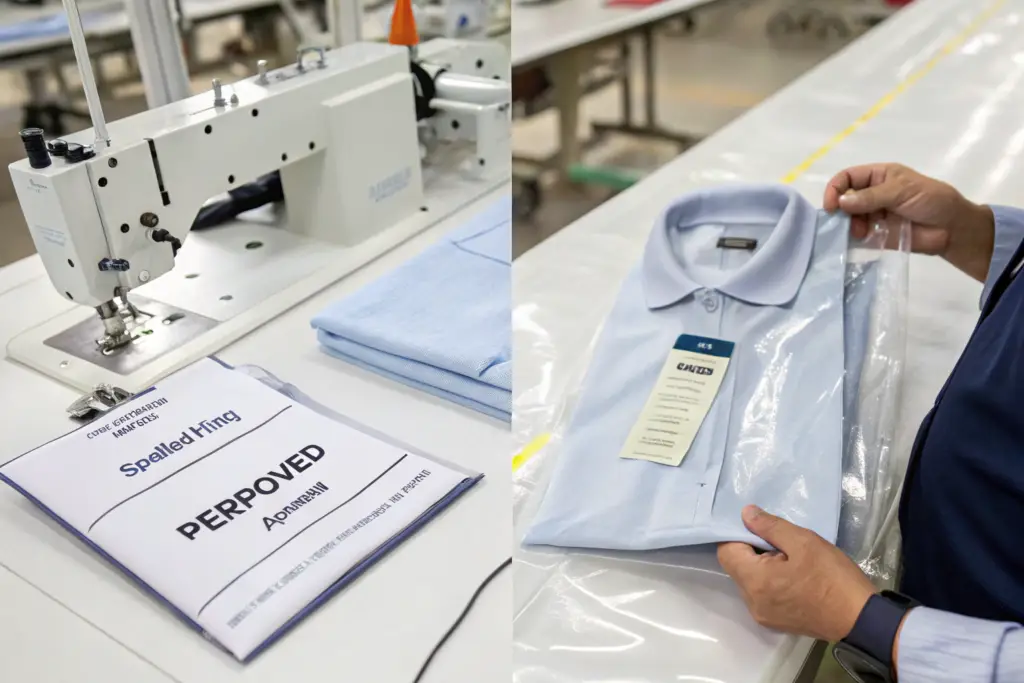
The Sealed Sample is the non-negotiable, physical reference standard for all stitching quality. It is kept on the production floor, not locked in an office. The line supervisor, the operators, and the QC inspectors use it for constant, side-by-side comparison. Every stitch line, every seam finish, and every construction detail on the bulk production must be a perfect match to the Sealed Sample. It is the ultimate tool for ensuring consistency from the first unit to the 5,000th.
When a new operator starts on a style, the supervisor walks them through the Sealed Sample. "This is the collar stitch. See the 1/4" edge and the 12 SPI? Your work must match this exactly." The Sealed Sample is not an abstract concept. It is a tangible, daily reference. It removes subjectivity and opinion. It is the single source of truth for what a "good" garment looks like. This is a cornerstone of our brand protection and quality promise.
How Does the Sealed Sample Prevent "Drift" in a Long Production Run?
"Drift" is the gradual, almost imperceptible change in quality that can happen over days or weeks of producing the same style. An operator might slowly start taking a slightly smaller seam allowance. A machine setting might drift slightly. Without a constant, physical anchor, these small changes accumulate, and the 5,000th unit can look noticeably different from the first. The Sealed Sample is the anchor. By comparing the current production to the sample daily, we catch and correct drift immediately.
What Happens If There Is a Discrepancy Between the Sealed Sample and the Tech Pack?
This is a critical moment of clarification. The Tech Pack is the blueprint. The Sealed Sample is the final, approved physical prototype. In a perfect world, they match exactly. If there is a discrepancy, we immediately flag it for the client. "The Tech Pack calls for a 1/4" topstitch, but the approved Sealed Sample has a 3/8" topstitch. Which is correct for bulk?" We never assume. We get written clarification. This rigorous adherence to the approved standard—whether it is the digital spec or the physical sample—is what prevents costly bulk production errors.
Conclusion
Consistent stitching quality is the most visible and tangible evidence of a factory's commitment to excellence. It is not achieved through luck or a single final inspection. It is the result of a disciplined, interconnected system. It is the perfectly tuned machine, the skilled and well-managed operator, the vigilant in-line inspector, and the unwavering physical standard of the Sealed Sample, all working in harmony.
At Shanghai Fumao, this system is the bedrock of our B2B partnerships. We know that every seam we sew is a promise to your customer. It is a promise of durability, of comfort, and of the quality that defines your brand. We engineer our entire production process to ensure that promise is kept, on every garment, every time.
If you are looking for a manufacturing partner where consistent, beautiful stitching is a non-negotiable standard, let's talk. Our Business Director, Elaine, can walk you through our quality control processes and share examples of our work. Please email Elaine at: elaine@fumaoclothing.com.