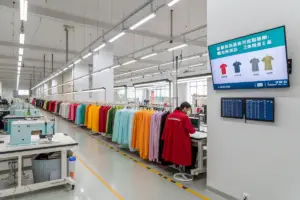
I was sitting in our conference room last January with a brand owner from New York. She had built a successful direct-to-consumer outerwear brand over five years. She was placing her largest order ever, 2,000 units across four summer coat styles, a $44,000 production order. She had negotiated payment terms with her previous factory that she thought were standard: 30% deposit, 70% before shipment. What she did not know was that her previous factory had been marking up the unit price by 6% to cover the cost of the payment structure without telling her. She was paying a hidden finance charge baked into the per-unit cost. When I quoted our standard payment terms and a unit price that was 8% lower than her previous factory, she thought I had made a mistake. I had not made a mistake. Our payment structure was transparent. Her previous factory’s payment structure was not. She saved $3,500 on that order by understanding payment terms. That conversation reinforced my belief that payment terms are not just a financial detail. They are a negotiation point that directly impacts the total cost of your order, and understanding them is as important as understanding fabric weights and seam constructions.
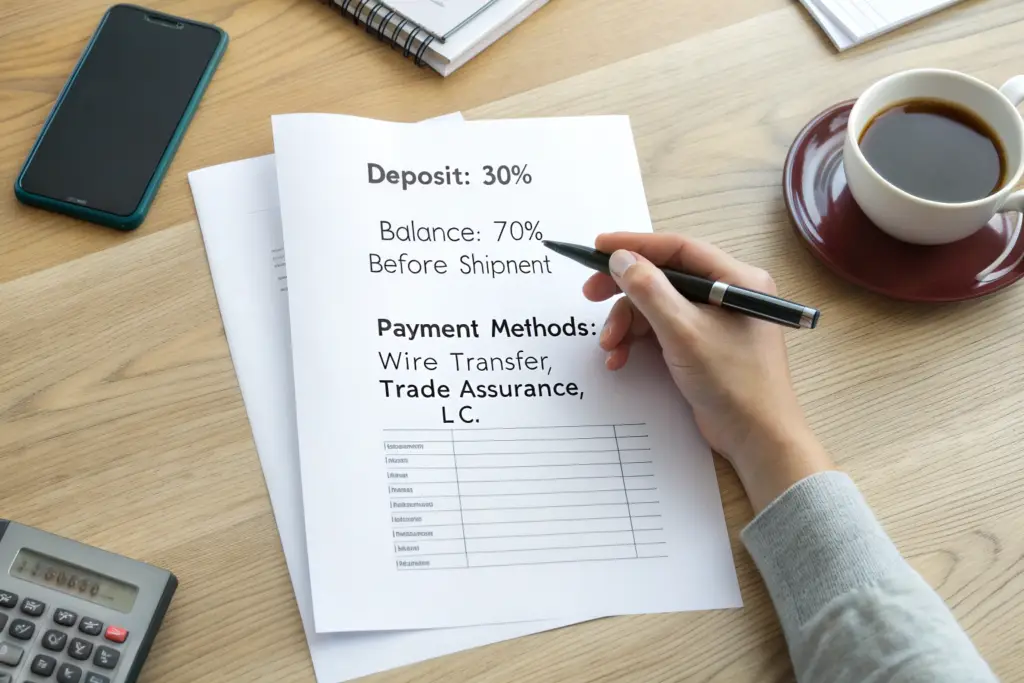
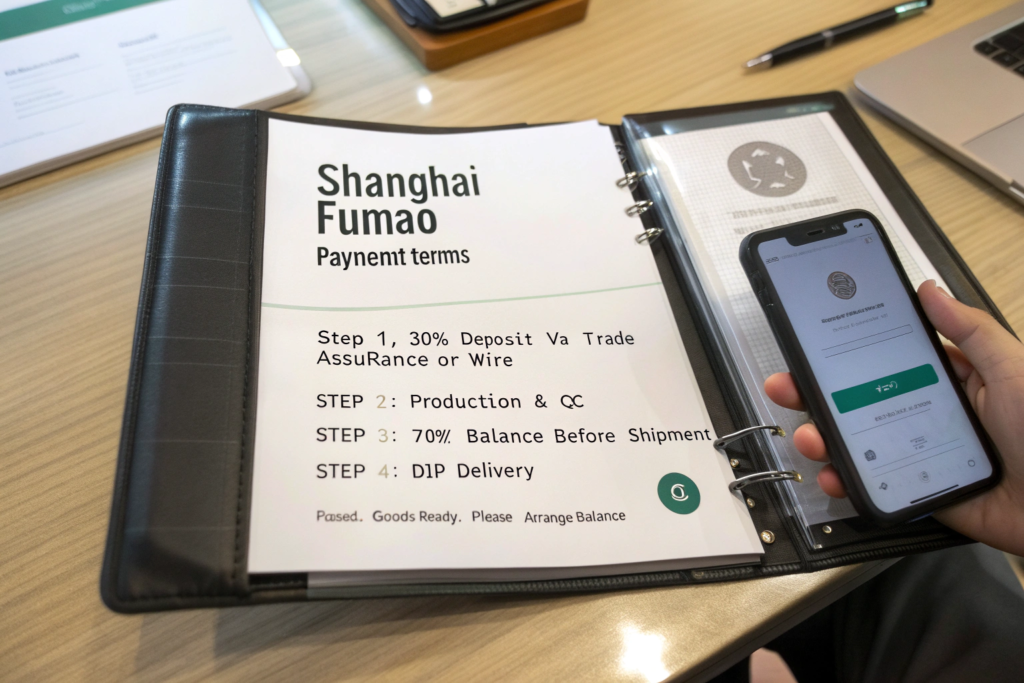
The standard payment terms for large summer coat orders from Chinese factories are a 30% deposit to confirm the order and initiate production, with the remaining 70% balance paid before shipment. This structure protects both parties: the factory receives working capital to purchase fabric and trims, and the buyer retains leverage until the goods are produced and inspected. Variations on this standard include 50% deposit and 50% before shipment for new relationships or custom fabric orders, 30% deposit with 70% paid against a scanned copy of the bill of lading for established relationships, and letter of credit at sight for very large orders above $100,000. Payment methods that provide buyer protection, such as Alibaba Trade Assurance, credit cards, and PayPal, add 3% to 5% to the transaction cost but are strongly recommended for first orders.
Payment terms are a reflection of trust, risk allocation, and cash flow management. The factory wants assurance that the buyer will not cancel the order after fabric is purchased. The buyer wants assurance that the factory will deliver quality goods before releasing the full payment. The payment structure is the negotiated balance between these two legitimate concerns. At Shanghai Fumao, I have structured payment terms for hundreds of brand partners at every stage of growth. Let me walk you through the standard options, the negotiation variables, and the strategies that protect both your money and your production timeline.
The Standard Payment Structure and What It Protects
The 30/70 payment structure, 30% deposit to start, 70% balance before shipment, is the industry standard for apparel manufacturing in China for a reason. It has evolved over decades of international trade as the equilibrium point that balances the factory’s need for working capital with the buyer’s need for quality assurance. The deposit covers the factory’s upfront costs. When a factory accepts a large summer coat order, the first costs are immediate. The fabric must be ordered from the mill. The trims, buttons, zippers, labels, must be ordered from suppliers. The pattern maker and the sample sewer must be allocated to the project. These costs are incurred weeks before the first production coat is sewn. The deposit provides the working capital to fund these upfront expenditures. Without a deposit, the factory is financing the buyer’s inventory with its own cash reserves. Most factories cannot or will not do this for a new buyer.
The 30% deposit is calculated on the total order value, including the FOB unit cost multiplied by the order quantity. For a large order of 1,000 summer coats at a unit cost of $22, the total order value is $22,000 and the deposit is $6,600. This deposit is due upon order confirmation and is non-refundable once fabric purchasing has begun. The 70% balance of $15,400 is due when production is complete, quality inspection has passed, and the goods are ready for shipment. The balance must be received and cleared in the factory’s bank account before the container is released to the freight forwarder.
The "before shipment" timing of the balance payment is the critical protection for the buyer. The buyer has the opportunity to inspect the goods, either personally, through a hired third-party inspector, or through the factory’s internal QC report with photographs, before releasing the balance. If the inspection reveals quality defects that the factory cannot or will not correct, the buyer can withhold the balance payment and negotiate a resolution. The balance payment is the buyer’s leverage. A factory that demands 100% payment upfront removes this leverage entirely. I do not recommend 100% upfront payment under any circumstances, even with a factory that has a strong reputation. Reputations can change. Financial difficulties can cause a previously reliable factory to cut corners. The balance payment leverage protects against this risk.
Why Do Factories Require a Deposit Before Starting Production?
The deposit requirement is driven by the fabric supply chain. When we receive an order, the first action is to order fabric from the mill. For a custom fabric order, the mill requires 100% payment before they begin weaving or dyeing. For a stock fabric order from our inventory, the fabric has already been purchased, but the deposit covers the replacement cost and the allocation of that inventory to the specific order. The trim suppliers, button makers, zipper manufacturers, and label weavers also require payment on order. The deposit is not profit for the factory. It is passed through to the upstream supply chain. A factory that does not require a deposit is either financing the order from its own cash reserves, which is unsustainable at scale and suggests the factory may have cash flow problems that could affect production, or the factory is not actually purchasing fabric and is planning to substitute cheaper materials later, or the factory is a trading company that is brokering the order to a subcontractor and does not have the same upfront cost exposure. In all three cases, the absence of a deposit requirement is a warning sign, not a benefit. The deposit aligns the buyer’s commitment with the factory’s financial exposure. The buyer has skin in the game. The factory knows the buyer is serious and will not cancel the order after fabric is purchased, leaving the factory with inventory it may not be able to resell. This mutual commitment is the foundation of a reliable manufacturing partnership.
What Happens If the Buyer Cancels After the Deposit Is Paid?
Cancellation after the deposit is paid and production has begun is a serious matter. The deposit is non-refundable once fabric has been purchased or cut. This is standard industry practice and should be clearly stated in the manufacturing agreement. The purpose of the deposit is to cover the factory’s sunk costs in the event of cancellation. If the cancellation occurs after fabric is purchased but before cutting, the deposit covers the fabric cost, and the fabric remains in the factory’s inventory. If the cancellation occurs after cutting has begun, the deposit covers the fabric cost and the cutting labor, and the cut panels are either stored for potential future use or scrapped. If the cancellation occurs after sewing has begun, the deposit covers fabric, cutting, and partial sewing labor. In most cases, the deposit is sufficient to cover the factory’s actual costs, and no additional payment is demanded from the buyer. If the cancellation occurs very late in production, when the order is substantially complete, the factory may seek to negotiate a partial payment for the finished goods. The buyer and factory should discuss a fair resolution based on the actual work completed. The key to avoiding disputes is a clear manufacturing agreement that specifies the cancellation policy at each stage of production. At Shanghai Fumao, our standard agreement includes a cancellation clause that states the deposit is non-refundable after fabric purchase, and that cancellation after cutting or sewing will be addressed through good-faith negotiation based on actual costs incurred. This clause has been invoked three times in our history. Each time, we reached a fair resolution with the buyer without legal escalation.
Payment Methods and Buyer Protection Mechanisms
The payment method you choose determines the level of protection you have if something goes wrong. A direct bank wire transfer is the lowest-cost method but offers the least buyer protection. Once the wire is sent, the funds are gone. You cannot reverse a wire transfer without the recipient’s cooperation. A credit card payment processed through a platform like Alibaba or PayPal offers chargeback protection but comes with higher transaction fees. A letter of credit offers the strongest protection for very large orders but is complex to set up and involves bank fees on both sides. The choice of payment method is a risk management decision that should be calibrated to the order size, the relationship history, and the buyer’s risk tolerance.
The four primary payment methods for large summer coat orders, ranked from lowest cost to highest protection, are: bank wire transfer or T/T, with a fee of $25 to $50 per transfer and no buyer protection once funds are sent, Alibaba Trade Assurance, with a fee of 3% to 5% paid by the supplier but typically incorporated into the unit price, offering buyer protection including on-time shipment guarantees and quality dispute resolution, PayPal or credit card, with a fee of 3.5% to 4.5% and buyer protection through chargeback rights, and letter of credit at sight, with bank fees of 0.5% to 1.5% of the order value and strong buyer protection through bank-guaranteed payment upon presentation of compliant shipping documents.
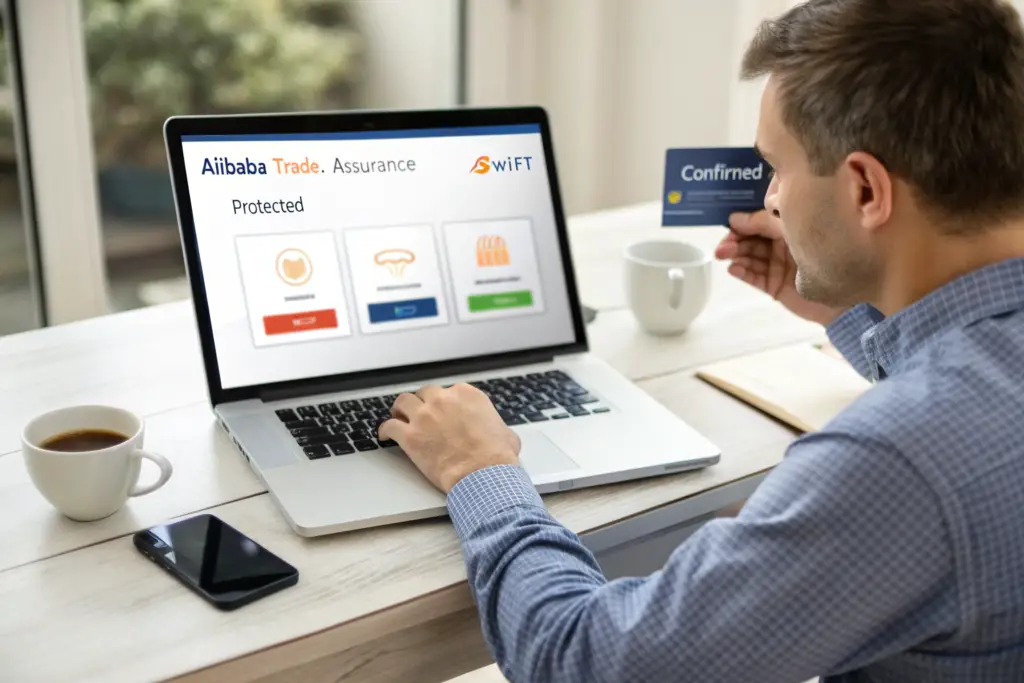
For a first order with a new factory, I strongly recommend using a protected payment method. Alibaba Trade Assurance is the most accessible option for orders up to the platform’s coverage limit. The buyer pays through the Alibaba platform. The funds are held in escrow. The factory does not receive the funds until the buyer confirms receipt of the goods. If the goods do not ship on time, or if the quality does not match the agreed specifications, the buyer can file a dispute, and Alibaba will mediate. The process is not perfect. Disputes take time, and Alibaba’s mediators do not have deep apparel expertise. But the existence of the dispute mechanism gives the buyer leverage that a direct wire transfer does not provide. For second and subsequent orders, after a successful first transaction, many buyers transition to direct wire transfer to save the platform fee. This is a reasonable progression. The trust established through the first successful order reduces the risk of the second. At Shanghai Fumao, we accept all four payment methods and do not pressure buyers to choose a particular method. We want the buyer to feel secure. A secure buyer places larger orders and builds a longer relationship.
How Does Alibaba Trade Assurance Actually Work for Apparel Orders?
Trade Assurance is a free service on the Alibaba platform that protects buyers from non-delivery and quality non-conformity. The process works as follows. The buyer and the supplier agree on the order details, including product specifications, quantity, unit price, total order value, production lead time, and shipping terms. The supplier creates a Trade Assurance order on Alibaba with these details. The buyer reviews and confirms the order. The buyer pays the deposit, typically 30%, through the Alibaba platform using wire transfer, credit card, or another supported method. The funds are held by Alibaba, not released to the supplier. The supplier begins production. When production is complete, the supplier uploads evidence, typically QC inspection photos or a third-party inspection report. The buyer pays the balance through the platform. The supplier ships the goods and uploads the shipping documents. The buyer receives the goods and inspects them. If the goods conform to the order specifications, the buyer confirms receipt, and the funds are released to the supplier. If the goods do not conform, or if the shipment is significantly delayed, the buyer files a dispute with Alibaba. Alibaba reviews the evidence from both parties and makes a determination. The dispute process typically takes 2 to 4 weeks. The key to successful Trade Assurance use is documenting the order specifications clearly in the Trade Assurance order. A vague description like "women’s summer coat" provides no basis for a quality dispute. A detailed description with fabric composition, measurements, construction details, and quality standards provides a clear benchmark for dispute resolution. We assist our Trade Assurance buyers in writing detailed order specifications that protect their interests.
What Is a Letter of Credit and When Should You Use One?
A letter of credit, or L/C, is a payment instrument issued by the buyer’s bank that guarantees payment to the supplier upon presentation of documents that strictly comply with the L/C terms. The process involves four parties: the buyer, the buyer’s bank, the supplier, and the supplier’s bank. The buyer applies for an L/C from their bank. The bank issues the L/C and sends it to the supplier’s bank. The supplier reviews the L/C terms, produces and ships the goods, and presents the required documents, typically the commercial invoice, packing list, bill of lading, and any required certificates, to their bank. The bank checks the documents against the L/C terms. If the documents comply, the bank pays the supplier. If the documents do not comply, the bank notifies the buyer, and the buyer can accept or reject the discrepancy. The L/C provides strong protection for both parties. The supplier is guaranteed payment if they present compliant documents, regardless of any dispute the buyer may have about the goods. The buyer is protected because the bank will not release payment unless the documents are correct, and the documents prove that the goods were shipped as specified. An L/C is appropriate for very large orders, typically above $100,000, where the financial exposure justifies the bank fees, and for transactions where the buyer and supplier have no prior relationship and both want institutional-grade protection. The complexity of an L/C should not be underestimated. The documents must be precisely correct. A single typographical error on the commercial invoice, a misspelling of the supplier’s name, can cause the bank to reject the documents and delay payment. We recommend that first-time L/C users work with a freight forwarder or a trade finance consultant who has experience with documentary collections.
Negotiating Payment Terms as Your Order Volume Grows
Payment terms are not static. They evolve as the relationship between the buyer and the factory matures. A factory that has successfully delivered five orders on time, with consistent quality, has earned a higher level of trust than a factory delivering its first order. A buyer who has paid promptly on every order has earned a higher level of trust than a buyer placing their first order. The payment terms can evolve to reflect this growing trust, benefiting both parties. The buyer gains improved cash flow. The factory gains a loyal, growing customer.
The typical evolution of payment terms for a growing brand partnership follows a predictable trajectory. Orders one and two are on a 30% deposit, 70% balance before shipment basis, the standard terms for a new relationship. Orders three through five can transition to 30% deposit, 70% balance paid against a scanned copy of the bill of lading, meaning the buyer pays when the goods are on the water rather than waiting for them to arrive. Orders six and beyond, for brands with a proven track record of prompt payment and consistent order volume, can negotiate 30% deposit with the 70% balance on net 15 or net 30 terms after shipment, essentially short-term supplier credit. Some very large, very established relationships may evolve to open account terms with no deposit, but this is rare in cross-border apparel manufacturing and requires years of demonstrated reliability.
The bill of lading milestone is particularly significant. A bill of lading is a document issued by the shipping line that proves the goods have been loaded onto the vessel. When a buyer pays against a copy of the bill of lading, they are paying before the goods arrive at the destination port. The buyer trusts that the goods are on the ship and that the factory has shipped what was agreed. The factory benefits from earlier cash flow, receiving payment approximately three to four weeks earlier than waiting for the buyer to receive and inspect the goods. The transition to bill of lading terms requires verified trust. We offer this transition after the third successful order with a brand partner who has a clean payment history and who has consistently provided positive feedback on our quality and delivery performance.

Can You Get Net 30 or Net 60 Terms from a Chinese Factory?
Net 30 or Net 60 terms, where the buyer pays 30 or 60 days after the goods are shipped or received, are supplier credit. The factory is financing the buyer’s inventory for 30 to 60 days. This is a significant extension of trust and a significant cash flow burden on the factory. Net terms are not standard in the Chinese apparel export industry. They are occasionally available for very large, very established buyer-supplier relationships where the order volumes are substantial and consistent, typically above $200,000 per year, the buyer has a long, unblemished payment history with the factory, the buyer is a well-known brand with strong financials that reduce the perceived credit risk, and the factory has sufficient cash reserves or access to credit to finance the receivable. For most small-to-medium brands, Net 30 terms are not realistic, especially in the first few years of the relationship. A more achievable goal is the bill of lading terms described above, which provides a similar cash flow benefit without requiring the factory to extend unsecured credit. The buyer pays when the goods ship, which is typically 30 days before the goods arrive. The buyer’s cash outlay is still earlier than Net 30, but the factory’s risk is lower because payment is received shortly after shipment. I advise brands to focus on transitioning to bill of lading terms as a realistic, valuable milestone rather than pushing for Net 30 terms that many factories will not offer or will only offer with a significant price increase to cover the credit risk.
How Does Order Frequency Affect Negotiating Leverage?
Order frequency is a powerful negotiating variable that many brands undervalue. A brand that places one large order per year has limited leverage. The factory values the order, but the factory knows that the revenue will not recur for another twelve months. A brand that places a consistent order every quarter, even if each order is moderate in size, has significantly more leverage. The factory can count on the recurring revenue stream. The factory can plan production capacity around the brand’s predictable order pattern. The factory is motivated to offer favorable terms to retain the recurring business. I have a brand partner who orders approximately 300 units every quarter, four orders per year, 1,200 units annually. Their order size is not large. Their order frequency gives them leverage. They transitioned to bill of lading payment terms after their fourth order. They now receive priority production scheduling because we know their order is coming and we can pre-position fabric. The quarterly order cadence creates a rhythm that benefits both parties. The brand has a reliable supply chain. We have a reliable revenue stream. If you are planning your summer coat sourcing strategy, consider placing smaller, more frequent orders rather than one large annual order. The frequency builds the relationship faster, demonstrates your reliability as a buyer, and gives you negotiating leverage for improved payment terms more quickly than a single large order would.
How We Structure Payments at Shanghai Fumao
I designed Shanghai Fumao’s payment terms to be transparent, fair, and adaptable to the brand partner’s stage of growth. We do not hide finance charges in the unit price. We do not offer deceptively low payment requirements that signal financial instability. We do not pressure buyers to abandon buyer protection mechanisms before they are ready. Our payment terms are a reflection of our business philosophy: we want long-term partnerships, not single-transaction deals.
Shanghai Fumao’s standard payment terms for large summer coat orders are 30% deposit to confirm the order, with the 70% balance paid before shipment. We accept wire transfer, Alibaba Trade Assurance, PayPal, credit card, and letter of credit. For Trade Assurance and PayPal/credit card payments, the platform fee of 3% to 5% is added to the invoice as a separate line item rather than being hidden in the unit price. The buyer can choose the payment method based on their fee tolerance and protection preference. For established partners with three or more successful orders, we offer balance payment against a copy of the bill of lading. We do not currently offer Net 30 terms as a standard option but will discuss them for partners with annual order volumes above $150,000 and an unblemished payment history over twelve months.
Transparency is the defining feature of our payment approach. The unit price we quote is the actual production cost plus our margin. The payment processing fee, if applicable, is a separate line item. The buyer can see exactly what they are paying for the product and what they are paying for the payment method. This transparency allows the buyer to make an informed trade-off. A buyer who values protection can pay the Trade Assurance fee. A buyer who values cost savings can pay by wire transfer. The choice is theirs, and the cost difference is clear. Many factories present a single price that includes the Trade Assurance fee whether the buyer uses Trade Assurance or not. The buyer who pays by wire transfer is unknowingly subsidizing the buyer who pays by Trade Assurance. Our transparent model eliminates this cross-subsidization.
Do You Offer Any Discounts for Early Payment or Large Deposits?
Yes, we offer a 2% discount on the total order value for buyers who pay 100% upfront by wire transfer. This discount reflects the reduced administrative cost, the elimination of collection risk, and the improved cash flow that full upfront payment provides. The 2% discount on a $44,000 order is $880, which is meaningful. The discount is only available to established partners with a history of successful orders. We do not offer the upfront payment discount to first-time buyers because we believe first-time buyers should retain the leverage of the balance payment until they have verified our quality and reliability through personal experience. We also offer a 1% discount on the balance payment for buyers who pay the balance within 48 hours of receiving the QC report and the payment request. The prompt payment discount encourages fast payment, which allows us to release the shipment immediately and avoid storage costs. These discounts are not advertised as negotiation tools. They are standard options presented to every qualifying partner.
What Happens If There Is a Quality Dispute After Payment?
A quality dispute after payment is the scenario every buyer fears. The goods are paid for. The goods are shipped. The goods arrive, and the quality is not what was agreed. The buyer’s leverage is significantly reduced because the factory already has the money. The resolution of a post-payment quality dispute depends entirely on the factory’s integrity and the strength of the buyer’s documentation. At Shanghai Fumao, we have a documented post-shipment quality dispute procedure. If a buyer notifies us of a quality issue within 14 days of receiving the goods and provides photographic evidence of the defect and a description of the affected quantity, we will investigate the issue. If the defect is determined to be our responsibility, we will offer compensation. The compensation options include a credit against the next order for the affected units, typically the most practical and common resolution, a partial refund for the affected units, or a remake of the affected units at our cost, with shipping at the buyer’s cost, for very large defect quantities. The key to successful dispute resolution is documentation. The buyer must provide clear evidence of the defect, the quantity affected, and the deviation from the agreed specification. A vague complaint of "the quality is not good" is not actionable. A specific complaint with photographs showing the defect compared to the approved sample, with a count of the affected units, is actionable. We strongly recommend that buyers conduct a receiving inspection immediately upon delivery and document any issues before the goods are distributed to retail or to end customers.
Conclusion
The payment terms for large summer coat orders from Chinese factories are a structured system that balances risk, cash flow, and trust between the buyer and the supplier. The 30% deposit, 70% balance before shipment structure is the industry standard for good reason. It provides the factory with working capital for upfront material costs and provides the buyer with leverage through the balance payment held until quality is verified. Payment methods with buyer protection, such as Alibaba Trade Assurance and letters of credit, add cost but provide a safety net for first-time buyers and large transactions. Payment terms evolve with the relationship, progressing from standard terms to bill of lading terms and, in rare cases, to Net terms as trust and order history accumulate.
The most important advice I can offer is to treat payment terms as a negotiation point, not as a take-it-or-leave-it condition. Ask your potential manufacturing partner about their payment options. Ask about the fees associated with each method. Ask about the milestones for graduating to more favorable terms. A factory that is transparent about payment, that explains the rationale behind the deposit requirement, and that offers flexibility as the relationship grows is a factory that operates with integrity. A factory that demands 100% upfront payment, that refuses to discuss buyer protection, or that hides payment fees in the unit price is a factory to avoid.
At Shanghai Fumao, our payment terms are designed to protect both parties while building toward a long-term partnership. We are transparent about our fees. We are flexible about payment methods. We reward loyal partners with improved terms as the relationship matures. We stand behind our product quality with a documented dispute resolution procedure. If you are planning a large summer coat order and want to discuss payment terms, unit pricing, and the total cost including payment processing and shipping, contact our Business Director, Elaine. She can provide a detailed quotation with multiple payment method options, a sample of our manufacturing agreement including the payment and cancellation clauses, and a timeline for transitioning to improved terms as our partnership grows. Email Elaine at: elaine@fumaoclothing.com.