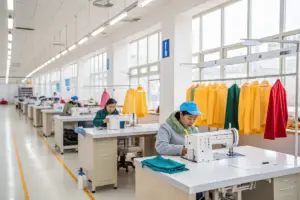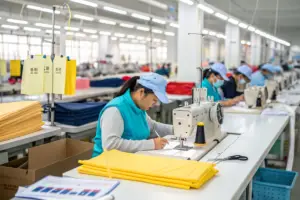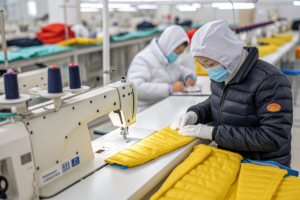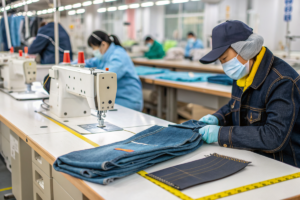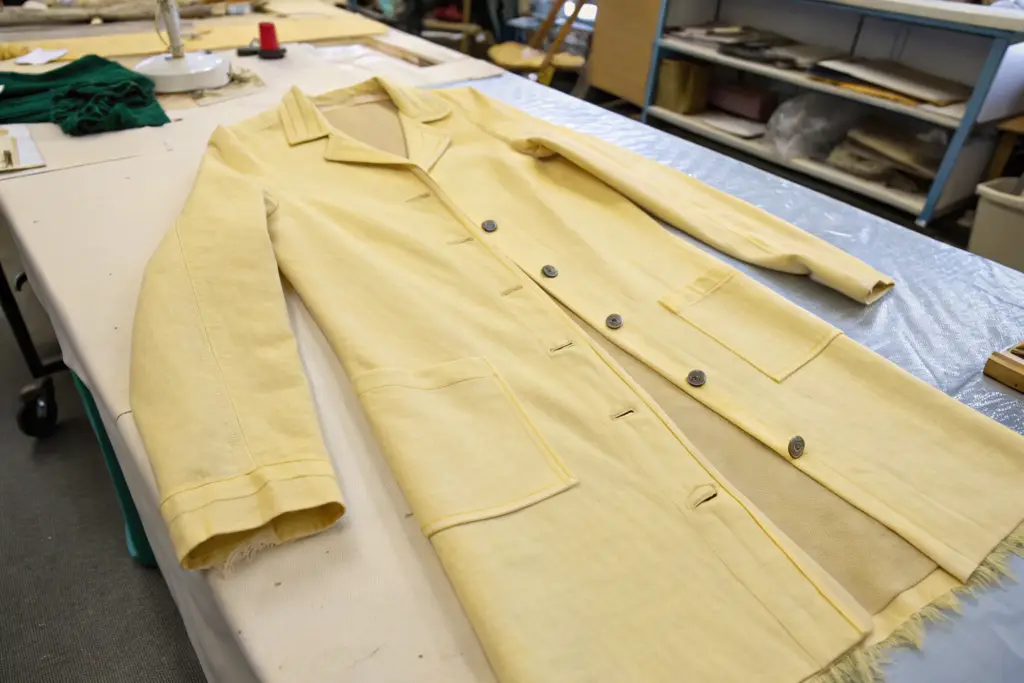
I was standing at our final inspection station three summers ago when a quality inspector held up a beautiful pastel yellow linen duster. The coat looked perfect from the front. The stitching was straight. The buttons were secure. The hem was even. Then she turned the coat inside out. The internal French seam on the left sleeve had a 4-centimeter section where the stitching had missed the fabric edge entirely. The raw edge was exposed and fraying. Another inspector might have missed it. Another factory might have shipped it. The brand owner would have received a return from a customer who discovered the defect on the second wear. That return would have cost the brand the margin on three sold coats. I did not ship that coat. We scrapped it, cut a replacement, and re-inspected the entire batch. That moment reinforced my belief that quality control is not a final checkpoint. It is a culture of inspection that must be embedded at every stage of production. For wholesale summer coats, where a single order can include multiple styles, multiple fabrics, and multiple sizes, the QC system must be comprehensive, category-aware, and unrelenting.
The essential quality control checks for wholesale summer coats are organized into four inspection gates: pre-production raw material testing, which verifies fabric weight, color fastness, shrinkage, and fiber content before cutting begins, in-line production inspection, which catches construction defects during the sewing process when they can still be corrected, final random inspection using the AQL 2.5 sampling standard, which assesses the finished garments against a detailed defect classification checklist, and pre-shipment packaging and labeling verification, which ensures carton configurations, barcode accuracy, and hangtag placement before the goods leave the factory.
Wholesale buyers have zero tolerance for quality inconsistency. A boutique owner who orders 24 coats and receives 2 with visible defects has an 8% defect rate. That is unacceptable. A chain retailer who distributes 500 coats across 20 stores will lose the confidence of every store manager who unpacks a defective unit. The brand's reputation with the wholesale account is damaged, often irreparably. At Shanghai Fumao, I have built our QC system to catch defects at the stage where they can be fixed, not at the stage where they can only be documented and regretted. Let me walk you through the four inspection gates that protect your brand and your wholesale relationships.
Pre-Production Testing: Catching Fabric Failures Before Cutting
The most expensive quality failure in summer coat production is a fabric failure discovered after the coats are sewn. If the fabric shrinks 5% in the first wash, every coat in the order is unsellable. If the fabric fades from soft sage to dull grey after two weeks of sunlight exposure, every coat will be returned. If the fabric pills into little balls of fiber after three wears, the wholesale buyer will cancel the reorder and demand a chargeback on the original shipment. These failures cannot be fixed. They are baked into the garment at the moment the fabric is cut. The only defense is pre-production testing that identifies substandard fabric before a single pattern piece is laid on the cutting table.
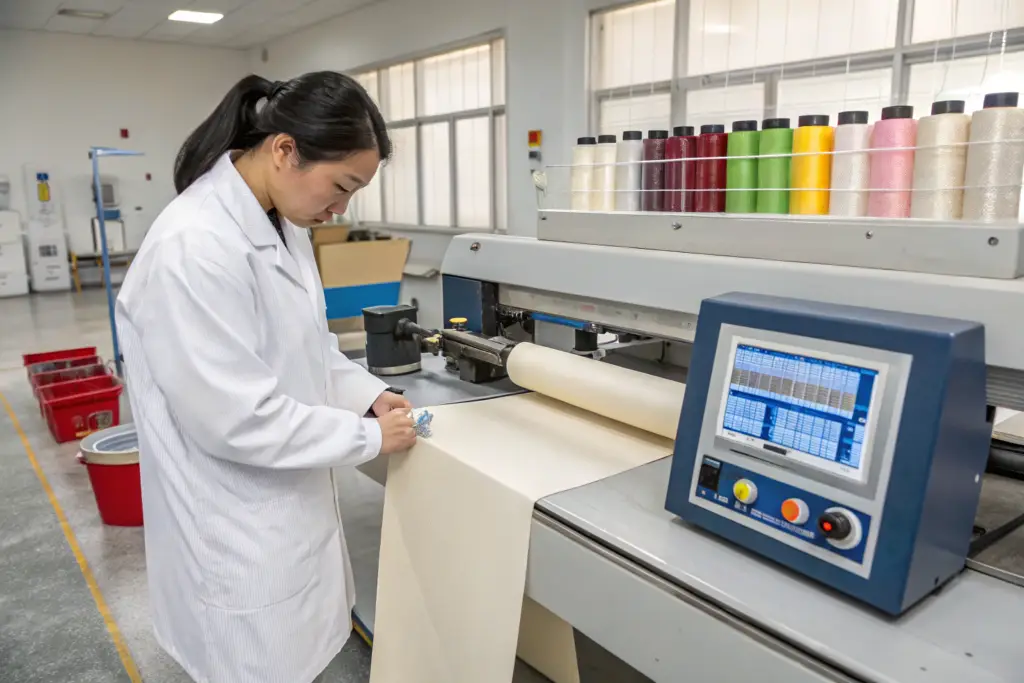
Every fabric lot used in wholesale summer coat production must pass five mandatory tests: dimensional stability or shrinkage tested to ISO 6330 with a maximum allowable shrinkage of 2% in length and width, color fastness to light tested to ISO 105-B02 with a minimum rating of 4 on the 8-point blue wool scale, color fastness to washing tested to ISO 105-C06 with a minimum rating of 4 for color change and 3-4 for staining, seam slippage tested to ISO 13936-2 with a maximum seam opening of 2 millimeters at 120 newtons of force, and pilling resistance tested to ISO 12945-2 using the Martindale method with a minimum rating of 3-4 after 2,000 rubs.
These are not optional tests for brands that care about their wholesale reputation. They are the minimum viable quality assurance. The total cost for the five-test panel is approximately $150 to $200 per fabric lot. A single customer return of a $120 summer coat, factoring in the outbound shipping, the return shipping, the inspection labor, and the lost margin on a garment that may not be resellable, costs the brand approximately $40 to $60. The test panel costs less than five returns. The math is simple. The test panel is cheaper than the alternative. I require these tests on every new fabric we develop and on every incoming bulk fabric lot we receive from our mills. A fabric lot that fails any single test is rejected and returned to the mill. We do not negotiate with test results. We do not accept a mill's promise that the next batch will be better. The test machine is the impartial judge, and its ruling is final.
Why Is Shrinkage Testing Especially Critical for Summer Coats Made from Natural Fibers?
Summer coats rely heavily on natural fibers like linen, cotton, and Tencel because these fibers breathe and feel cool against the skin. Natural fibers also shrink. Unlike polyester, which is dimensionally stable, a linen fabric can shrink 4% to 6% in the first wash if it was not properly pre-shrunk at the mill. A 4% shrinkage on a coat with a 90-centimeter body length means the coat loses 3.6 centimeters of length. The hem that was designed to hit at mid-thigh now hits at the upper thigh. The proportion is ruined. The coat looks like it was sewn in the wrong size. The customer does not think "this fabric shrank." The customer thinks "this coat is poorly made." The return follows. We pre-wash or steam-shrink all natural fiber fabrics before cutting. This process, called sanforization or compressive shrinkage, reduces the residual shrinkage to below 2%. We then test the pre-shrunk fabric to verify the result. A fabric that still shows 3% residual shrinkage is rejected or sent back for additional processing. This step adds time and cost to the pre-production phase. It is non-negotiable for wholesale orders where the brand cannot afford a 5% return rate from shrinkage-related complaints.
How Do You Verify That the Fabric Matches the Approved Swatch?
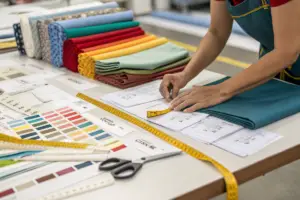
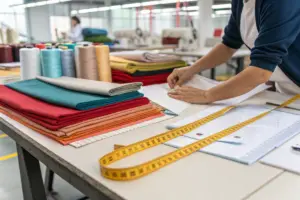
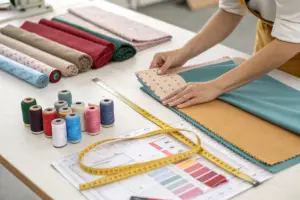
Color and hand feel are subjective. The brand owner approved a lab dip and a fabric swatch six months ago during the development phase. The bulk fabric that arrives at the factory must match that approved swatch exactly. A visual check under ambient factory lighting is not sufficient. Factory lighting varies. A fabric that looks like the approved swatch under fluorescent light may look completely different under natural daylight or under the warm LED lighting of a retail boutique. We verify color match using a lightbox with multiple standardized light sources: D65 artificial daylight, TL84 fluorescent store lighting, and A incandescent home lighting. The bulk fabric and the approved swatch are placed side by side in the lightbox and evaluated under all three light sources. A metameric match, meaning a match under one light source but a mismatch under another, is a fail. The fabric is rejected unless the brand owner specifically approves the metamerism after reviewing physical samples under multiple light conditions. Hand feel is evaluated by a senior technician who has handled the approved swatch and can detect differences in softness, crispness, or drape that a machine cannot measure. This is a human skill developed over years. Our head fabric technician has been evaluating hand feel for eighteen years. She can detect a 5% difference in softness by touch alone. Her evaluation is the final gate before fabric is released to the cutting room.
In-Line Production Inspection: Stopping Defects at the Source
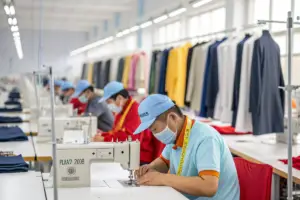
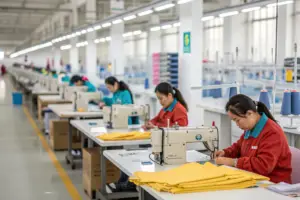
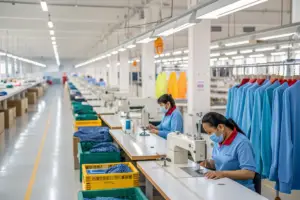
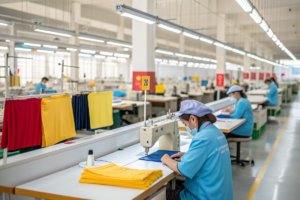
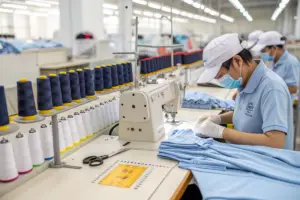
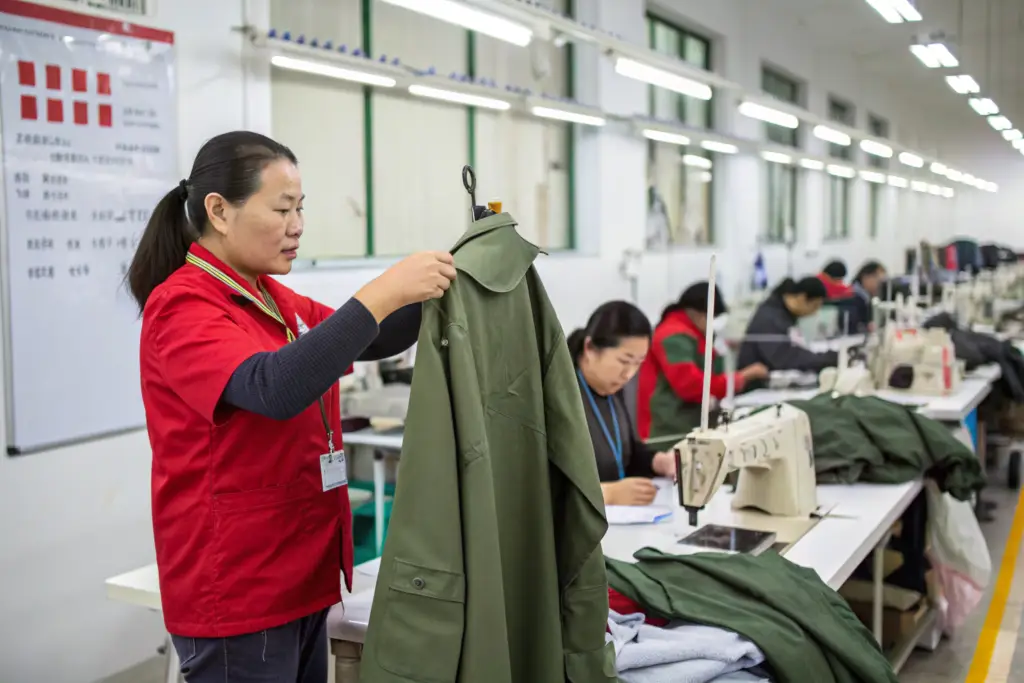
The final inspection at the end of production is a safety net. It catches defects that have already been sewn into finished garments. The in-line inspection is a prevention system. It catches defects as they are being created and corrects the process before more defective units are produced. The difference in cost and waste between these two approaches is dramatic. A defective seam caught by a final inspector on a finished coat results in a repair or a scrap. A defective seam caught by an in-line inspector at the sewing station results in a 30-second correction and a conversation with the operator that prevents the same error on the next 200 coats. The in-line inspection is the most valuable quality activity in the factory, and it is the activity most frequently skipped by factories that are rushing to meet a shipping deadline.
Our in-line inspection protocol for wholesale summer coats includes three mandatory checkpoints during the production run: a first-piece inspection where the first completed coat from each production line is fully inspected against the approved sample and the tech pack before the line continues sewing, a mid-morning and mid-afternoon roving inspection where a dedicated QC technician walks each production line and randomly pulls garments from operators' stations to check specific construction points, and an end-of-line inspection where 100% of garments are visually checked for major defects such as holes, stains, or severe misalignment before they proceed to finishing and pressing.
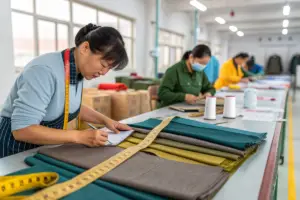
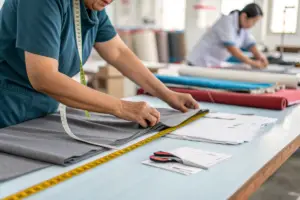
The first-piece inspection is the most critical of these three. When a production line starts sewing a new style or a new colorway, the first complete coat off the line is taken to the QC station. The inspector measures every dimension against the tech pack specification: chest width, body length, sleeve length, shoulder width, hem circumference. The inspector checks every construction point: collar attachment, sleeve setting, pocket placement, buttonhole alignment. The inspector compares the coat to the approved pre-production sample under standardized lighting. If any measurement deviates by more than the tolerance, typically 1 centimeter for body measurements and 0.5 centimeters for detail measurements, or if any construction point differs from the approved sample, the line is stopped. The pattern or the machine setting is adjusted. A new first piece is sewn and re-inspected. Only when the first piece passes all checks does the line proceed to bulk production. This gate prevents the nightmare scenario of producing 200 coats with a misaligned collar or a short sleeve and discovering the error at final inspection.
What Are the Most Common In-Line Defects in Summer Coat Production?
Summer coat production has a specific defect profile driven by the lightweight fabrics and the unlined or partially lined constructions common in the category. The most frequent in-line defect is seam puckering on lightweight woven fabrics. The thin material gathers and wrinkles along the stitch line instead of lying flat. Puckering is caused by excessive thread tension, incorrect needle size, or insufficient presser foot pressure for the fabric weight. It is immediately visible to an experienced inspector and can be corrected by adjusting the machine settings. The second most frequent defect is uneven topstitching on visible seams. Topstitching is a decorative and functional stitch line placed 5 to 6 millimeters from the seam edge. On a lightweight fabric, a wavy or inconsistent topstitching line is highly visible and looks amateurish. The operator must maintain a steady hand and a consistent fabric feed. A new operator or a rushed operator will produce wavy topstitching. In-line inspection catches this early and either retrains the operator or reassigns the task to a more experienced sewer. The third most frequent defect is misaligned pattern matching at the side seams of quilted coats or printed coats. The quilting lines or the print pattern must match across the side seam. A 2-millimeter misalignment is invisible to most customers. A 10-millimeter misalignment is obvious and makes the coat look cheap. The in-line inspector measures the alignment at the seam intersection and rejects units that exceed the tolerance.
How Do You Inspect Delicate Fabrics Like Chiffon During Production?
Chiffon and georgette require a completely different inspection approach than woven cotton or linen. These fabrics are so lightweight and slippery that they can be damaged by the inspection process itself if not handled correctly. The in-line inspector must not pull or stretch the fabric. A standard seam strength test, which applies force to the seam, will tear a chiffon French seam before it provides useful data. Instead, the inspector visually checks the seam at high magnification using a lighted magnifying lens. The stitch density is counted. A French seam on chiffon should have 12 to 14 stitches per 3 centimeters. A lower stitch count leaves gaps where the fabric edge can escape the seam enclosure. The seam allowance inside the French seam is measured with a transparent ruler to verify that it is fully enclosed with no raw edge protruding. The hem is checked for consistent roll width. A hand-rolled chiffon hem should be 2 to 3 millimeters wide with no visible overcast stitches on the face side. The inspection of delicate fabrics is slower, more careful, and more dependent on the inspector's experience and patience. We assign our most experienced QC technicians to the delicate fabrics line. Their inspection rate is half the rate of the structured wovens line because each garment requires more time and more attention. The cost of this slower inspection is built into our production pricing for chiffon and silk-blend garments. It is not an area where cost-cutting is acceptable.
Final Random Inspection: The AQL 2.5 Standard Explained
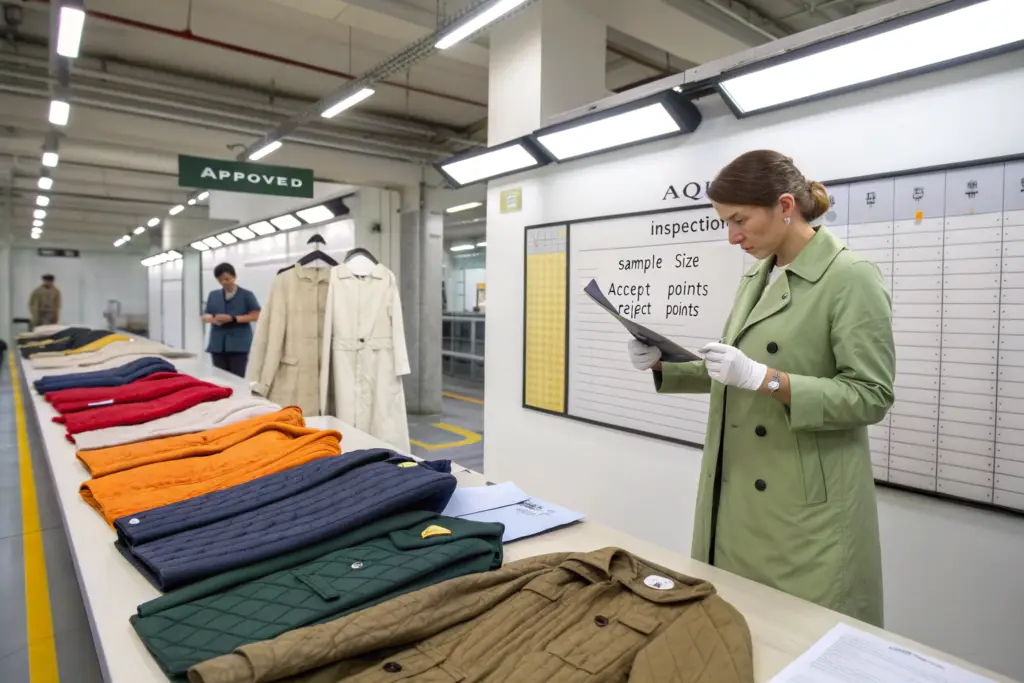
The final random inspection, often called the pre-shipment inspection or PSI, is the last quality gate before the goods are packed and shipped. It is conducted on finished, pressed, and packaged garments. The inspection uses a statistical sampling method called AQL, or Acceptable Quality Level, which determines how many units to inspect and how many defects are acceptable before the lot is rejected. The AQL system is an international standard defined by ISO 2859-1. It provides a consistent, defensible methodology for accepting or rejecting a production lot based on a random sample. The alternative is 100% inspection, which is prohibitively expensive and still not 100% effective, or zero inspection, which is a gamble that no wholesale brand should accept.
For wholesale summer coats, the standard AQL level is 2.5 for major defects and 4.0 for minor defects. This means that for a lot size of 500 units, the inspector randomly selects 50 units. If 3 or fewer major defects are found, the lot is accepted. If 4 or more major defects are found, the lot is rejected and must be 100% re-inspected and reworked. Minor defects follow a separate, less strict acceptance threshold. A major defect is any flaw that makes the garment unsellable at full price or likely to generate a customer return, such as a broken seam, a missing button, a visible stain, or a measurement outside tolerance. A minor defect is a flaw that is noticeable but would not typically cause a return, such as a loose thread, a slightly uneven stitch line, or a minor pressing crease.
The AQL inspection is a snapshot, not a guarantee. A sample of 50 units from a lot of 500 provides a 95% confidence level that the overall defect rate is within the AQL threshold. It does not guarantee that every unit in the lot is perfect. It does provide a statistically valid basis for accepting or rejecting the shipment. I recommend that every wholesale brand either send their own inspector to the factory for the PSI, hire a third-party inspection company such as SGS, Bureau Veritas, or AsiaInspection to conduct the PSI on their behalf, or rely on the factory's internal QC team only if the factory has a documented track record of honest, rigorous inspection and is willing to share detailed inspection reports with photos. At Shanghai Fumao, we conduct our own internal AQL 2.5 inspection on every order before packing, regardless of whether the brand has hired a third-party inspector. The internal inspection is our quality gate. The third-party inspection is the brand's verification of our quality gate. Both serve a purpose.
What Defect Classifications Apply Specifically to Summer Coats?
The defect classification system for summer coats must be tailored to the specific failure modes of lightweight, warm-weather outerwear. A general apparel defect list will miss issues that are specific to this product category. The most important summer coat-specific major defects are: seam slippage on loosely woven linen or chiffon fabrics, where the fabric pulls away from the stitching under light tension, shoulder seam twist, where the sleeve is set into the armhole at a rotated angle causing the coat to hang crookedly, collar gaping, where the collar stands away from the neck instead of lying flat, a common defect in unlined summer coats that lack the structure of a winter coat, belt loop misplacement or insecure attachment, a critical defect on belted trench coats where the belt loop is a functional stress point, lining static cling, where a synthetic lining clings to the wearer's clothing due to inadequate anti-static treatment, and sun sensitivity discoloration, a defect that may not be visible at inspection but emerges after the coat is exposed to sunlight, which is detected through the pre-production light fastness test discussed earlier. A specific minor defect category for summer coats is "pressing sheen," where a too-hot iron creates a shiny mark on matte fabric. This is especially visible on linen and cotton-linen blends. The presser must use the correct temperature setting and a pressing cloth. A pressing sheen cannot be removed. The affected panel must be replaced.
How Should You Handle a Failed AQL Inspection?
A failed AQL inspection is a crisis, but it is a manageable crisis if the contract and the relationship are structured correctly. The first step is to determine the nature and distribution of the defects. Are all the defects of the same type, suggesting a systematic production error? Or are the defects random and varied, suggesting sloppy overall workmanship? A systematic error, such as misaligned buttonholes on every inspected unit, can be corrected by adjusting the buttonhole machine and reworking the affected garments. A random scatter of defects across multiple categories suggests a breakdown in the entire QC process and may warrant a full re-inspection or even a rejection of the entire lot. The factory's response to the failed inspection reveals its character. A responsible factory will acknowledge the findings, present a corrective action plan with specific timelines, and absorb the cost of rework and re-inspection. A defensive factory will dispute the inspector's classifications, argue that the defects are within tolerance, and pressure you to accept the shipment as-is. A brand should never accept a shipment that has failed an AQL inspection without documented corrective action and a successful re-inspection. Accepting a failed lot signals to the factory that quality standards are negotiable. Every subsequent order will have worse quality because the factory has learned that you will accept substandard goods. The financial pain of delaying a shipment by two weeks for rework is less than the financial pain of a 10% return rate and the permanent loss of wholesale accounts.
Packaging, Labeling, and Final Shipment Verification
The quality control process does not end when the coat passes the AQL inspection. The final gate is the packaging and labeling verification. A perfectly sewn coat with an incorrect barcode, a missing hangtag, or a care label that does not match the garment fiber content is a defective product from the perspective of the wholesale buyer and the retail customer. The packaging verification ensures that the right coat is in the right polybag with the right labels, and that the cartons are packed correctly for efficient warehouse receiving.
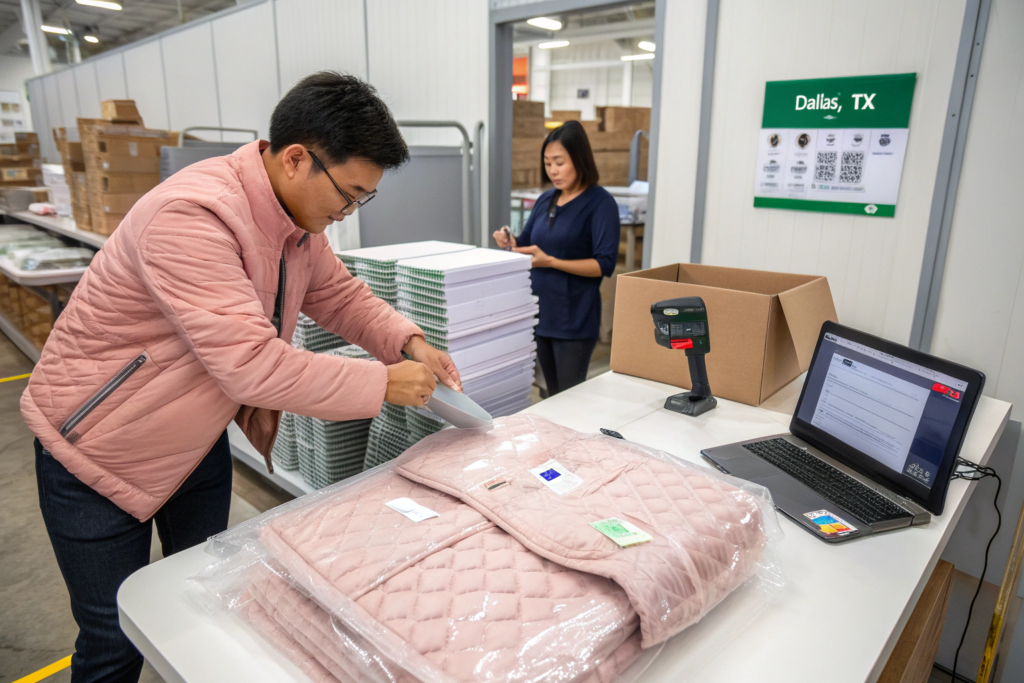
The packaging and labeling QC checklist for wholesale summer coats includes: barcode verification, where every unique SKU barcode is scanned and confirmed against the purchase order, hangtag attachment verification, where the correct branded hangtag is attached to the correct garment in the correct location, typically the left sleeve or the neck label, care label content verification, where the fiber content, country of origin, and care instructions on the sewn-in label are checked against the tech pack and the fabric test reports, polybag quality and seal integrity, where the polybag is checked for holes and the adhesive seal is tested for secure closure, and carton configuration verification, where the quantity per carton, the size assortment per carton, and the carton markings are checked against the packing list and the purchase order.
A barcode error is a disproportionately expensive defect. A coat with an incorrect barcode will be received into the wholesale buyer's warehouse as the wrong product. It will be shipped to a retail store or a direct customer as the wrong product. The customer will return it. The retailer will demand a return authorization. The brand will pay for the return shipping and issue a credit. The cost of the error cascade is $15 to $25 for a single mislabeled unit. The cost of scanning every barcode at the factory before packing is $0.02 per unit. The math is even more lopsided than the fabric testing math. We scan 100% of barcodes on wholesale orders. No exceptions.
Why Is Care Label Accuracy Legally Critical for US Wholesale?
The care label is not a marketing tool. It is a legally required disclosure regulated by the Federal Trade Commission under the Care Labeling Rule. The label must provide clear, accurate instructions for washing, drying, ironing, and bleaching the garment. A care label that says "machine wash warm" on a coat that shrinks 5% in warm water is a violation of federal law. The brand is liable, not the factory. The brand can be fined, and the wholesale buyer can demand a full refund for mislabeled goods. The care label content must be based on the actual test results of the production fabric, not on a generic assumption. If the pre-production shrinkage test showed 2% shrinkage in warm water, the care label should specify "machine wash cold" to provide a safety margin. If the light fastness test showed fading after 40 hours of light exposure, the care label should include "dry away from direct sunlight." These are not optional recommendations. They are the instructions that protect the garment from damage during consumer use. A brand that includes accurate, conservative care instructions reduces its return rate and protects itself from legal liability.
How Should Cartons Be Configured for Efficient Wholesale Distribution?
Carton configuration is a detail that affects the wholesale buyer's operational efficiency and their perception of your brand's professionalism. A carton packed with a random assortment of sizes and colors creates chaos in the buyer's warehouse. The receiving team must open every carton, sort the contents, and re-pack for store distribution. This labor cost is passed back to the brand in the form of chargebacks or reduced future orders. A well-configured carton is packed by style, color, and size, with the contents clearly marked on the exterior. The ideal configuration is a "pre-pack" where each carton contains a standardized size assortment ready for immediate store distribution. A typical pre-pack for a summer coat might contain 1 XS, 2 S, 2 M, 2 L, 1 XL. The retailer receives the carton, opens it, and puts the contents directly on the sales floor. No sorting. No counting. No re-packing. Pre-packs are the gold standard for wholesale. If the order quantity does not allow for perfect pre-packs, the carton should at minimum be packed solid by size and color, meaning one carton contains only one SKU in one size, and the carton is clearly marked with the SKU, color, size, and quantity. The carton itself must be a sturdy, double-wall corrugated box with a minimum bursting strength of 200 pounds per square inch for ocean freight. Summer coats are lightweight but bulky. A carton that collapses during shipping crushes the garments inside and creates permanent creases that cannot be pressed out without risking pressing sheen on delicate fabrics. We use only export-grade cartons for US wholesale shipments, and we pack each coat in an individual polybag with a silica gel packet to prevent moisture damage during ocean transit.
Conclusion
Quality control for wholesale summer coats is a four-gate system that begins before the fabric is cut and ends after the cartons are sealed. The pre-production testing gate stops bad fabric from becoming bad coats. The in-line inspection gate catches construction errors in real-time and prevents them from multiplying across the production run. The final AQL random inspection gate provides a statistically valid, defensible acceptance or rejection decision. The packaging and labeling verification gate ensures that the right product reaches the right customer with the right information.
A wholesale brand that relies on a single final inspection, or worse, trusts the factory's verbal assurance of quality without documented evidence, is playing a game it will eventually lose. The cost of returns, chargebacks, and lost wholesale accounts far exceeds the cost of a rigorous QC system. The factories that invest in QC infrastructure, in testing equipment, in trained inspectors, and in transparent reporting, are the factories that build lasting wholesale partnerships. The factories that skip these steps are the factories that disappear when the return requests start arriving.
At Shanghai Fumao, our four-gate QC system is the backbone of our wholesale production service. We test every fabric lot. We inspect every production line twice daily. We conduct internal AQL 2.5 inspections on every order and welcome third-party inspectors hired by our brand partners. We scan every barcode and verify every carton configuration before the container is sealed. We provide detailed QC reports with photos, test results, and inspection checklists to every wholesale client. We do this not because brands demand it, although they do, but because our business model depends on re-orders. A brand that receives a defective shipment does not re-order. A brand that receives a consistently perfect shipment re-orders for years.
If you are preparing a wholesale summer coat order and want to understand how our QC system would apply to your specific designs, or if you want to review sample QC reports and fabric test certificates before making a sourcing decision, contact our Business Director, Elaine. She can provide detailed documentation of our quality management system and arrange a video walkthrough of our testing laboratory and inspection stations. Email Elaine at: elaine@fumaoclothing.com.