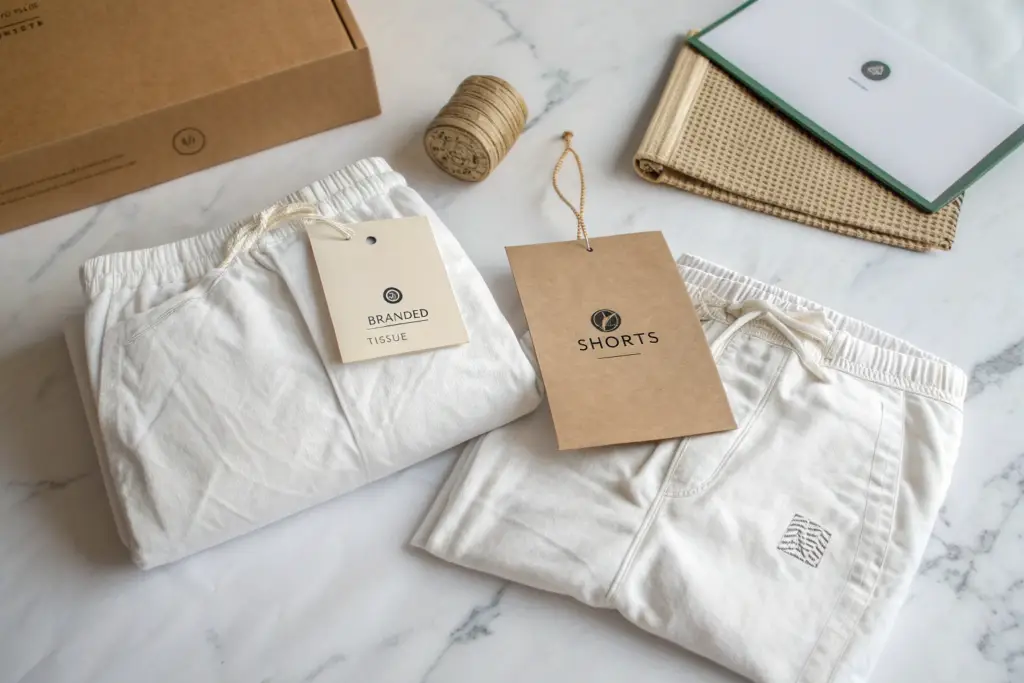
About five years ago, a brand owner came to me with an unusual request. He wanted to increase the wholesale price of his classic shorts by two dollars per unit. The shorts themselves were not changing. The fabric, the construction, and the fit were identical to the previous season. The only difference was the packaging. He had invested in a new hangtag, a thicker cardstock with a soft-touch matte finish and foil-stamped logo, a belly band made from recycled kraft paper with a subtle brand message printed on the inside, and a polybag that was slightly thicker and clearer than the standard version. He presented the upgraded shorts to his wholesale buyers alongside the previous season's version. The buyers unanimously chose the upgraded version and accepted the two-dollar price increase without negotiation. The packaging, which cost approximately thirty-five cents per unit, generated a two-dollar increase in wholesale price and a significant improvement in the brand's perceived value in the eyes of the retailer.
The packaging that adds perceived value to bulk classic shorts orders is packaging that communicates quality, intentionality, and brand identity at every touchpoint of the unboxing experience, from the polybag to the hangtag to the interior tissue, with the most effective elements being a premium, textured hangtag that serves as the primary visual and tactile brand statement, a branded belly band or tissue wrap that adds a layer of discovery to the unboxing, and a polybag that is clear, substantial, and cleanly sealed, all of which together add a marginal cost of $0.30 to $0.80 per unit while increasing the perceived wholesale value by $1.50 to $3.00 per unit.
At Shanghai Fumao, I help my brand partners select and source the packaging that will elevate their product in the eyes of the wholesale buyer and the end consumer. The packaging is not an afterthought. It is the first physical interaction the buyer has with the product. Let me walk you through the specific packaging elements that generate the highest return on investment.
How Does the Hangtag Function as the Primary Brand Communication Tool?
The hangtag is the only part of the packaging that the wholesale buyer and the retail customer both examine closely. The buyer picks up the short from the rack or the sample table. The first thing they touch, after the fabric, is the hangtag. The hangtag tells the buyer what the brand believes about its own product. A flimsy, cheaply printed paper hangtag attached with a plastic swift tack communicates that the brand views its shorts as a commodity. A thick, textured cardstock hangtag with a considered design, a quality print finish, and a soft cotton string attachment communicates that the brand views its shorts as a premium product.
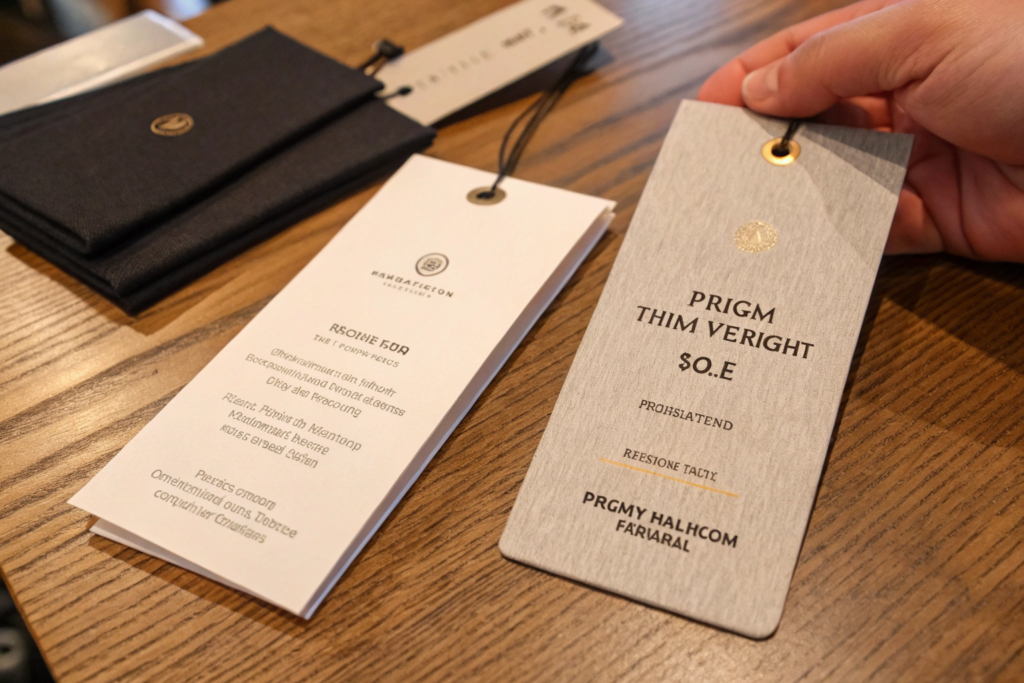
The hangtag is the single most important packaging investment for classic shorts because it serves as the primary vehicle for the brand's visual identity, communicating the brand's quality positioning at the critical moment when the buyer first touches the product, with the most effective hangtags using a heavier cardstock weight of at least 300 GSM, a tactile finish such as a soft-touch matte laminate or a textured uncoated stock, a premium print technique such as foil stamping, embossing, or letterpress for the brand logo, and a natural fiber attachment such as cotton string or a leather cord rather than a plastic swift tack.
What Paper Stock and Finish Communicate Quality to the Touch?
The human hand is sensitive to weight and texture. A hangtag printed on a lightweight 200 GSM paper feels insubstantial. It bends easily. It feels like a disposable ticket, not a brand statement. A hangtag printed on a 350 GSM or 400 GSM paper feels substantial. It has weight. It resists bending. It feels like an object that was designed and produced with care.
The finish is equally important. A standard glossy coating feels cheap and commercial. A soft-touch matte laminate feels velvety and luxurious. An uncoated, textured stock, a cotton paper or a kraft paper with a visible fiber, feels natural and artisanal. The choice of finish should align with the brand's identity. A minimalist, contemporary brand might choose the soft-touch matte. A heritage, workwear-inspired brand might choose the textured kraft. The key is that the finish is intentional and aligned with the brand's story. This hangtag design and material selection for apparel brands resource provides a comprehensive guide to hangtag materials and finishes.
Why Does the Attachment Method Matter as Much as the Hangtag Itself?
The attachment method is the most frequently overlooked detail of the hangtag, and it is one of the most telling. A plastic swift tack, the standard, clear plastic barb that pierces the garment and locks into a disc, is the cheapest and most common attachment method. It is also the one that communicates the lowest quality. It is difficult for the consumer to remove without scissors. It often leaves a small hole in the fabric. It feels industrial and disposable.
A cotton string, a leather cord, or a small metal safety pin communicates a completely different level of consideration. The cotton string is tied in a simple knot. The consumer can easily untie it without damaging the garment. The string itself is a small, tactile detail that reinforces the brand's commitment to natural materials and thoughtful design. A leather cord takes this a step further, adding a distinctive, premium touch. A small, branded metal safety pin is a functional, reusable object that the consumer may keep and use, extending the brand's presence beyond the initial purchase. This hangtag attachment methods for premium apparel explains the options and their cost implications.
What Role Does the Internal Packaging Play in the Unboxing Experience?
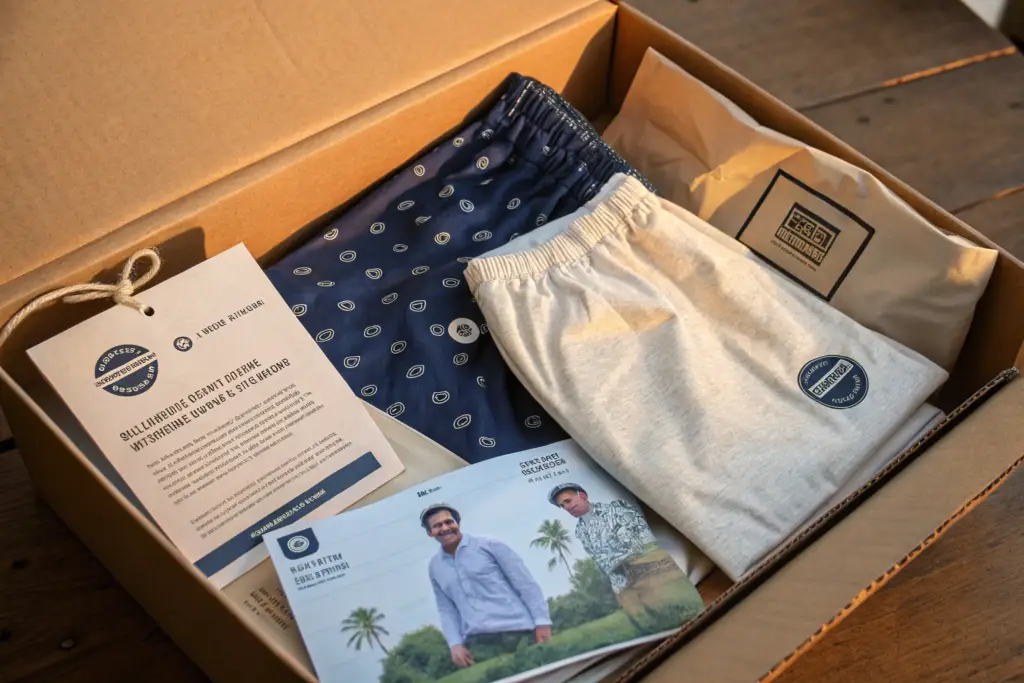
The wholesale buyer who opens the carton is not the end consumer. But that buyer is making a decision about whether to stock the product. The way the shorts are presented inside the carton influences that decision. Shorts that are simply folded and stacked in a polybag communicate efficiency and cost-consciousness. Shorts that are individually wrapped in branded tissue, sealed with a sticker, and accompanied by a small story card communicate care, quality, and a brand that understands the retail experience.
Internal packaging transforms the bulk wholesale carton from a purely functional shipping container into a brand experience that begins the moment the carton is opened, with the most effective elements being a branded tissue paper wrap or a recyclable kraft paper belly band that adds a tactile layer of discovery to the unboxing, a small, well-designed card that tells the product's story, the fabric's origin, or the brand's values, and a polybag that is thick, crystal clear, and free of wrinkles and printing errors, all of which communicate to the retailer that the brand is meticulous, premium, and worthy of prominent in-store placement.
How Does a Simple Tissue Wrap or Belly Band Change the Perception?
A pair of shorts that arrives in a plain, clear polybag is a commodity. The only thing the buyer sees is the product itself. There is no brand context. There is no surprise. There is no moment of discovery. A pair of shorts that is folded neatly, wrapped in a sheet of branded tissue paper, and sealed with a small logo sticker creates a moment of unboxing. The buyer unwraps the shorts. The experience is small but significant. The brand has invested in the presentation. The product feels more valuable.
A belly band, a simple strip of paper wrapped around the folded shorts, achieves a similar effect at a lower cost. The band holds the shorts in a neat, compact fold. It can be printed with the brand logo, a brand message, or a simple pattern. The band communicates that the brand has considered every detail, from the stitching on the waistband to the way the shorts are presented in the carton. This apparel packaging and unboxing experience for wholesale is a subtle but powerful driver of perceived value.
What Should a Product Story Card Communicate?
The story card is a small, printed card, typically the size of a business card or a postcard, that is tucked into the fold of the shorts or placed on top of the tissue wrap. It is an opportunity to communicate something that cannot be communicated by the product itself. The fabric's origin. The factory's certifications. The brand's commitment to ethical production. The design inspiration.
A story card that says, "This short is cut from a 240 GSM cotton twill, woven in a third-generation Italian mill, and sewn in our BSCI-certified partner factory in Shanghai," provides the buyer with information they can use to sell the product to their customer. The buyer can tell the story. The story adds value. The card costs pennies to print. The value it adds, in terms of the buyer's confidence and the consumer's willingness to pay a premium, is many times the cost. This product storytelling through packaging for fashion brands explains the power of narrative in packaging.
How Can Sustainable Packaging Align with Brand Values and Consumer Demand?
The wholesale buyer is not the only person who evaluates the packaging. The end consumer is increasingly evaluating packaging as part of the purchase decision. Plastic waste, particularly single-use plastic packaging, has become a significant consumer concern. A brand that ships its shorts in a standard, non-recyclable polybag, wrapped in plastic tape, with a plastic hangtag attachment and a plastic swift tack, is communicating a disregard for the environmental impact of its packaging. A brand that ships its shorts in compostable, recycled, or recyclable packaging, with minimal plastic and a clear sustainability message, is communicating a commitment to environmental responsibility that resonates with a growing segment of consumers.
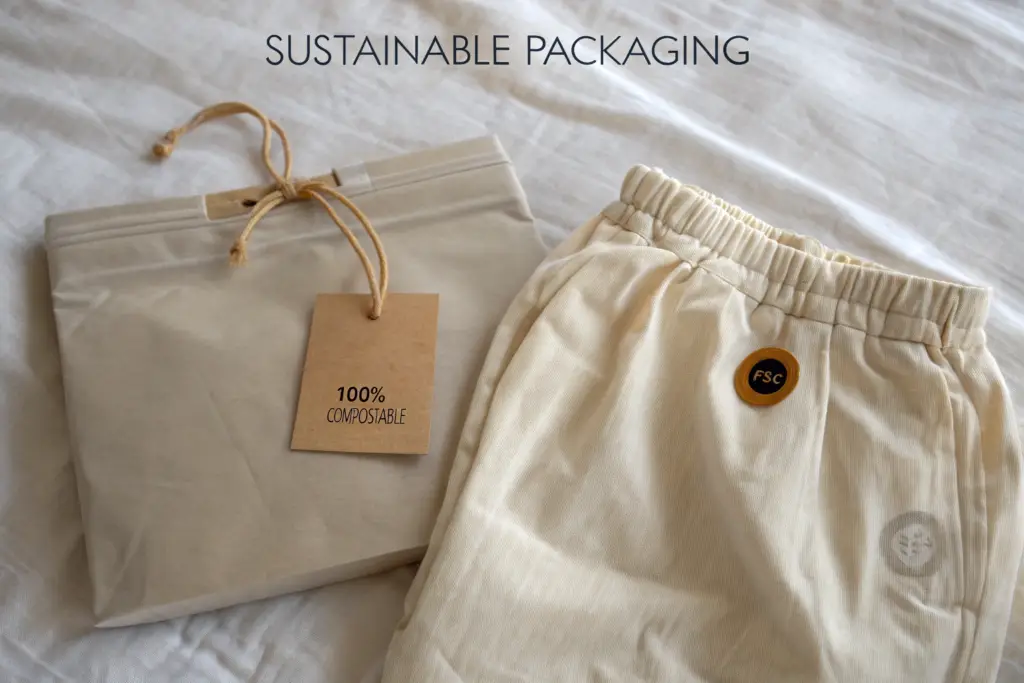
Sustainable packaging for classic shorts should focus on eliminating single-use plastics and replacing them with environmentally responsible alternatives, including replacing standard polybags with compostable PLA bags or recycled and recyclable LDPE bags, replacing plastic swift tacks with cotton string, hemp cord, or metal pins, using FSC-certified or recycled paper for hangtags and internal cards, and printing with soy-based or water-based inks, with the sustainability story communicated clearly on the packaging itself, because the consumer who cares about the environment is a consumer who will reward the brand that demonstrates its commitment through its packaging choices.
What Are the Practical Alternatives to Standard Plastic Polybags?
The standard polybag is made from virgin LDPE, low-density polyethylene. It is not biodegradable. It is technically recyclable, but most municipal recycling programs do not accept flexible plastic films. Most standard polybags end up in landfills. The sustainable alternatives are compostable PLA bags, made from plant-based materials such as cornstarch, which will break down in industrial composting facilities; recycled LDPE bags, made from post-consumer recycled plastic, which reduce the demand for virgin plastic; and recyclable paper-based alternatives, which can be recycled in standard curbside programs.
Each alternative has trade-offs in cost, clarity, and durability. PLA bags are more expensive and slightly cloudier than standard polybags. Recycled LDPE bags are comparable in performance and cost, with a slightly grey tint. The brand should select the alternative that aligns with its sustainability goals and its budget, and should clearly label the bag with the appropriate certification logo and disposal instructions. This sustainable packaging alternatives for apparel brands guide provides a detailed comparison of the available options.
How Should the Sustainability Story Be Communicated on the Packaging?
The sustainable packaging choice only adds value if the consumer understands it. A compostable PLA bag that looks identical to a standard polybag, with no labeling, is a missed opportunity. The consumer throws the bag in the trash, and the sustainability investment is wasted.
The packaging should clearly communicate its sustainability credentials. The polybag should be printed with a small message: "This bag is made from 100% recycled plastic. Please recycle." or "This bag is compostable. Please dispose in a compost bin." The hangtag should include a small sustainability icon or a brief statement. The product page on the brand's website should explain the packaging choices in detail. The goal is to ensure that the consumer who opens the package understands that the brand has made a deliberate, responsible choice, and that they know how to dispose of the packaging correctly. This communicating sustainability through packaging design resource explains how to effectively communicate sustainability credentials to the consumer.
Conclusion
The packaging that adds perceived value to bulk classic shorts orders is not the most expensive packaging. It is the most intentional packaging. The hangtag, with its weight, its texture, and its thoughtful attachment method, communicates the brand's quality positioning at the critical moment of first touch. The internal packaging, the tissue wrap, the belly band, and the story card, transforms the wholesale carton from a shipping container into a brand experience. The sustainable packaging choices, the compostable bag, the recycled paper, and the natural fiber attachments, communicate the brand's values to a consumer who increasingly demands environmental responsibility.
The total cost of these packaging upgrades is modest, typically $0.30 to $0.80 per unit. The return on that investment, in terms of higher wholesale pricing, increased buyer confidence, and stronger brand perception, is many multiples of the cost. The packaging is not an afterthought. It is a strategic investment that pays for itself.
At Shanghai Fumao, I help my brand partners select, source, and implement the packaging that will elevate their product and communicate their brand identity. If you are preparing a classic shorts order and want to ensure that your packaging communicates the quality of the product inside, contact our Business Director, Elaine, at elaine@fumaoclothing.com. Let's make sure the first thing your buyer touches is as impressive as the shorts themselves.