About ten years ago, I sat down with the owner of a multi-brand menswear wholesaler to review his annual sales data. He was convinced his business was driven by the seasonal fashion items, the printed shorts, the bold colors, and the trendy silhouettes that he spent weeks selecting at trade shows. We pulled the numbers. The truth was uncomfortable. The printed shorts, the ones he loved and agonized over, had a 52% sell-through rate at full price and a 35% gross margin after markdowns. The classic khaki short, the one he barely thought about because it reordered itself, had a 94% sell-through rate at full price and a 62% gross margin. It generated more total margin dollars than the entire seasonal fashion assortment combined. He had been treating his khaki shorts as the boring inventory he had to carry. They were, in fact, the profit engine of his entire business.
The classic khaki short is the unsung hero of a profitable wholesale catalog because it possesses a unique combination of structural economic advantages that no other product in the assortment can replicate: it is the highest-velocity replenishment item in menswear, generating consistent, predictable reorder revenue throughout the selling season without promotional discounting, it serves the broadest possible addressable market across age, region, and use occasion, and it carries the lowest inventory risk in the catalog because a khaki short that does not sell this season will sell next season, making it the financial foundation upon which the rest of the assortment is built.
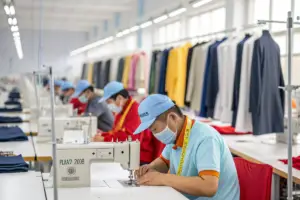
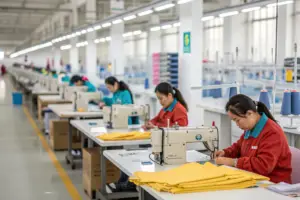
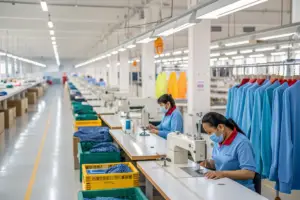
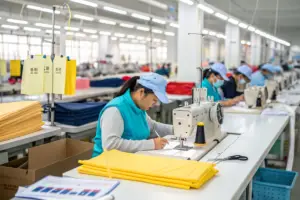
At Shanghai Fumao, I manufacture khaki shorts for brands and wholesalers who understand this dynamic. The khaki short is not glamorous. It does not generate social media buzz. It does not get featured in fashion editorials. It pays the bills. It funds the more creative, more exciting, and riskier parts of the assortment. Let me walk you through exactly why this humble garment is the most important product in a profitable wholesale catalog.
What Makes the Classic Khaki Short a Replenishment Powerhouse?
The most valuable product in a wholesale catalog is not the one that generates the biggest single order. It is the one that generates reorders. The seasonal fashion item is purchased once, by the retailer, in a quantity that they hope to sell through. If it sells well, they may or may not be able to reorder, depending on whether the factory still has the fabric and the capacity. If it sells poorly, it is marked down, and the retailer is reluctant to buy a similar item from the brand again. The classic khaki short operates on a completely different model. It is not purchased. It is replenished.
The classic khaki short functions as a replenishment item because it is a basic, non-seasonal commodity that the consumer purchases as a utility item, not a fashion item, meaning that demand is stable, predictable, and ongoing, allowing retailers to establish automatic reorder points and the wholesaler to plan production with a high degree of certainty, transforming the khaki short from a product that is sold into a product that flows continuously through the supply chain from the factory floor to the retail shelf, generating consistent, compounding revenue without the peaks and valleys of seasonal fashion.
How Does the Replenishment Model Differ from the Seasonal Buy Model?
A seasonal buy is a single transaction. The retailer places one purchase order before the season begins, receives the goods, sells through them, and moves on to the next season's newness. The wholesaler's revenue from that product is a single spike. The product may or may not be reordered next season, but the current season's revenue is a one-time event.
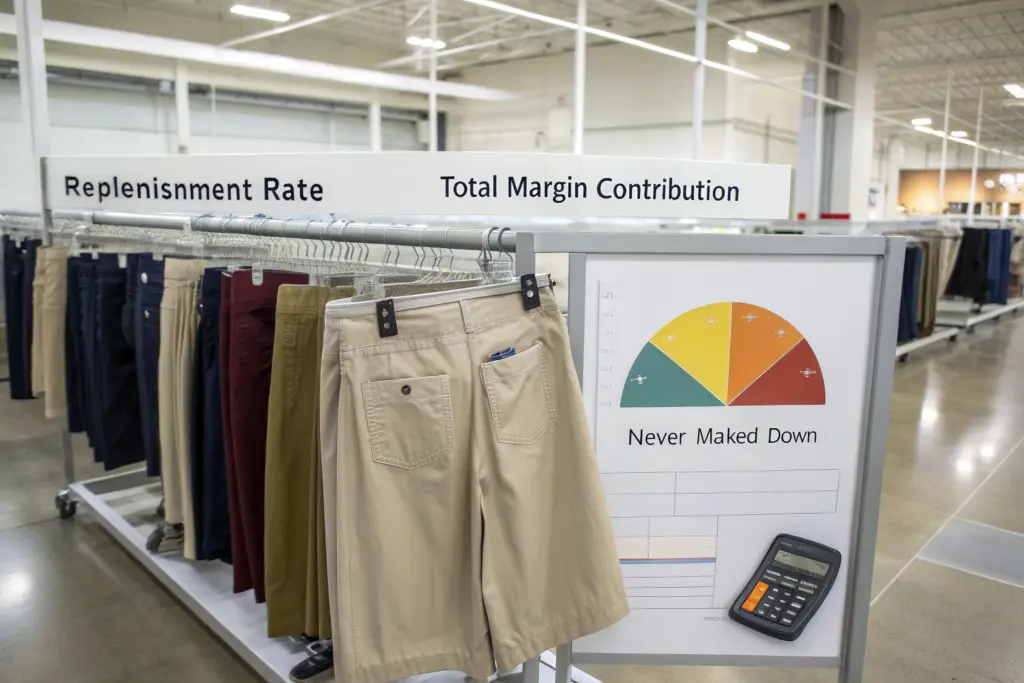
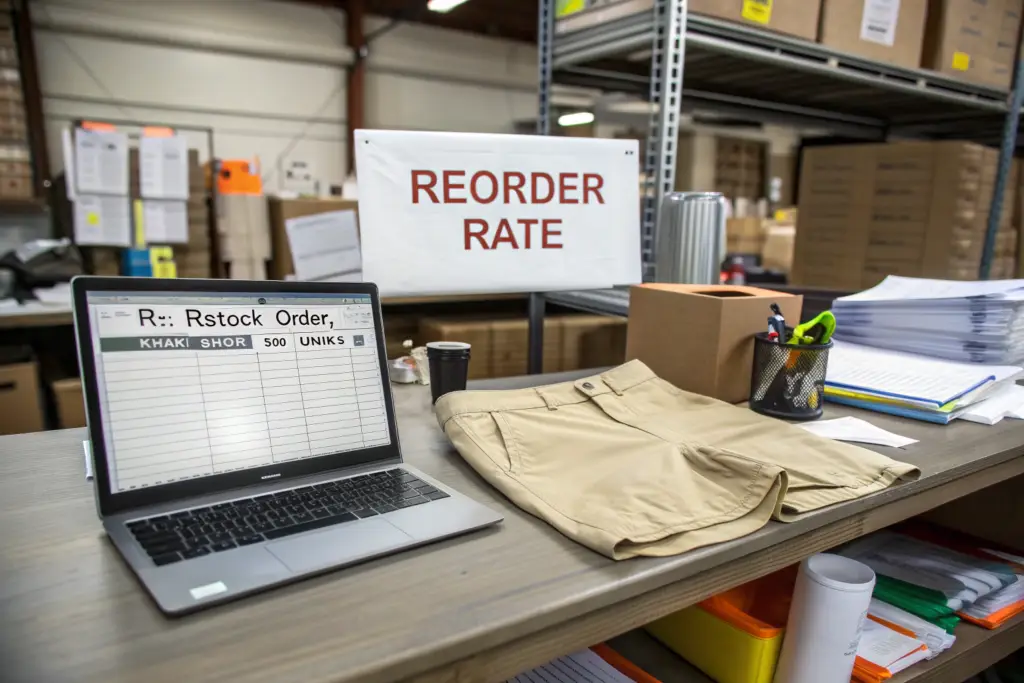
A replenishment model is an ongoing flow. The retailer establishes a target in-stock level for the khaki short. When inventory drops below the reorder point, a new purchase order is automatically triggered. The wholesaler ships the replenishment order. The retailer receives it and restocks the shelf. The cycle repeats continuously throughout the season and across seasons. The wholesaler's revenue from the khaki short is not a spike. It is a steady, predictable stream. The factory's production of the khaki short is not a single batch. It is a continuous flow. This retail replenishment vs seasonal buying distinction is the fundamental reason the khaki short is so much more profitable than the fashion item.
Why Does the Khaki Short Never Need to Be Discounted?
The fashion item is seasonal. The printed short that did not sell in July must be cleared in August. The retailer marks it down. The margin is compressed or eliminated. The khaki short is not seasonal. It is a basic utility item that sells consistently regardless of the month or the year. A khaki short that does not sell in July will sell in August, or September, or next March. There is no expiration date on a khaki short.
This absence of markdown pressure is the single greatest contributor to the khaki short's superior margin performance. The retailer who buys a fashion short for $25 wholesale and sells it at a 50% full-price sell-through must mark down the remaining 50%. The average selling price across the entire buy may be 20% to 30% below the original retail price. The gross margin is significantly lower than planned. The khaki short, with its 90%-plus full-price sell-through, achieves the planned gross margin in full. The margin that the retailer earns is the margin that the retailer planned. This predictability is invaluable in retail planning. This markdown avoidance in retail inventory management explains why basic items are the most profitable items in a retailer's assortment.
Why Does the Khaki Short Have the Broadest Addressable Market?
The khaki short is the only product in the classic shorts category that transcends age, region, and use occasion. The 25-year-old man in Austin wears khaki shorts. The 55-year-old man in Charleston wears khaki shorts. The 35-year-old man in Chicago wears khaki shorts during the four months of the year when it is warm enough. The khaki short is worn on the golf course, at the casual office, at the backyard barbecue, at the resort beach, and at the family dinner. No other short achieves this universality. The printed short is too fashion-forward for the older consumer. The cargo short is too casual for the office. The athletic short is too informal for the dinner. The khaki short works everywhere.
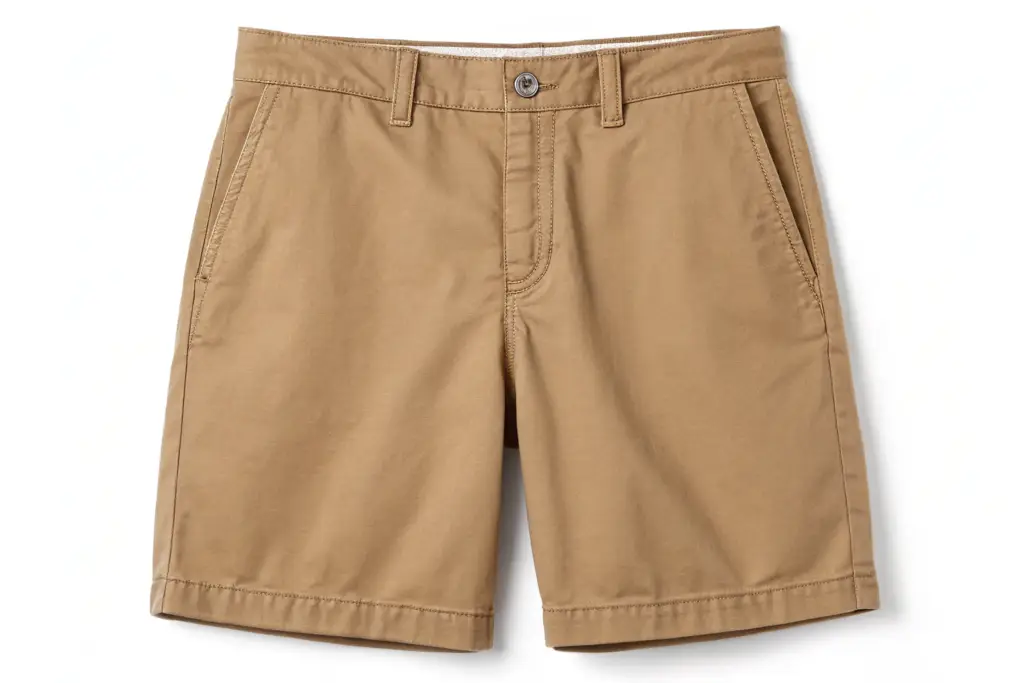
The classic khaki short achieves the broadest addressable market in the menswear category because its defining visual characteristic, the neutral, warm, earth-toned color that pairs effortlessly with every other color in the male wardrobe, eliminates the color-matching barrier that limits the versatility of navy, olive, or patterned shorts, while its simple, unembellished flat-front silhouette is universally accepted as appropriate across the full spectrum of social and professional contexts, from the country club to the casual workplace to the weekend errand, making it the single most versatile garment in the male wardrobe.
How Does the Color Khaki Itself Function as a Universal Neutral?
The color khaki, a warm, dusty, earth-toned beige, is the most versatile color in menswear. It pairs with every other color. A khaki short works with a white shirt, a navy shirt, a black shirt, a grey shirt, a green shirt, a pink shirt, a striped shirt, and a checked shirt. It works with a polo, an oxford, a linen button-down, and a simple crewneck tee. It works with brown shoes, black shoes, white sneakers, and leather sandals.
Navy shorts, the second most popular color, do not work with navy shirts. Olive shorts do not work with green shirts. Black shorts do not work with black shirts. Every other color has a matching limitation. Khaki has none. This color versatility is not a minor aesthetic preference. It is a significant commercial advantage. The consumer who buys a khaki short knows that he can wear it with any top he already owns. He does not need to purchase a specific shirt to match the shorts. The khaki short integrates seamlessly into his existing wardrobe. This color versatility in menswear basics is the secret to the khaki short's universal appeal.
What Use Occasions Does the Khaki Short Cover That Other Shorts Cannot?
The khaki short is a social chameleon. On the golf course, it is the standard uniform. In a casual office, it is acceptable where denim shorts or cargo shorts would be inappropriate. At a backyard barbecue, it is neither overdressed nor underdressed. At a resort beach, it transitions from the sand to the bar without a change.
No other short covers this range. The cargo short is unacceptable in the office and on the golf course. The athletic short is unacceptable at the restaurant. The printed short is too casual for many social settings. The khaki short is the only short that can credibly be worn in every casual and business-casual context. This versatility makes it the safest purchase for the consumer and the most reliable seller for the retailer. The retailer knows that every customer who walks through the door, regardless of his age, his style, or his lifestyle, is a potential buyer of the khaki short. This use case versatility in apparel retail is the foundation of the khaki short's volume.
How Should a Wholesale Catalog Be Structured Around This Core Item?
The wholesale catalog is not just a collection of products. It is a strategic document that communicates to the buyer how to allocate their open-to-buy budget. A catalog that presents twenty styles with equal visual weight communicates that all twenty styles are equally important. The buyer, lacking clear guidance, may allocate their budget across the styles in a way that does not maximize their profitability. A catalog that is structured around a clear core of khaki shorts, with the fashion items presented as supplementary accents, guides the buyer toward the assortment that will generate the highest return on their inventory investment.
A profitable wholesale catalog should be structured around the classic khaki short as the core item, with the catalog layout, the photography, and the ordering guidance all communicating that the khaki short should represent the largest allocation of the buyer's open-to-buy budget, typically 60% to 70% of the shorts assortment, with the seasonal fashion colors and patterns occupying a smaller, secondary role of 30% to 40%, and the catalog should include specific replenishment ordering information, such as the reorder lead time and the minimum reorder quantity, to facilitate the ongoing replenishment cycle that is the source of the khaki short's profitability.

What Visual Weight Should the Khaki Short Have in the Catalog Layout?
The khaki short should be the visual anchor of the catalog. It should occupy the largest photographs, the most prominent positions, and the opening spreads. The seasonal fashion items should be visually subordinate, presented as complementary additions to the core, not as replacements for it.
This visual hierarchy serves two purposes. It guides the buyer toward the product that will generate the most revenue and margin for their store. And it communicates the brand's identity. A brand that presents its khaki shorts as the foundation of its collection is a brand that understands the market and respects the buyer's business. A brand that buries its khaki shorts on a back page while featuring its seasonal prints on the cover is a brand that is more interested in its own creative expression than in the buyer's profitability. This wholesale catalog design and visual merchandising explains the principles of effective catalog layout.
How Should Ordering Information Encourage Replenishment Behavior?
The catalog should not just present the khaki short as a product to be purchased. It should present it as a program to be joined. The ordering pages should include the reorder lead time, typically 4 to 6 weeks for a standard replenishment order. The minimum reorder quantity should be clearly stated and should be reasonable, 100 to 200 units, not 1,000. The catalog should include a reorder form that the buyer can fax or email, separate from the seasonal order form, to facilitate the replenishment process.
The language of the catalog should reinforce the replenishment model. "The Classic Khaki Short. In stock year-round. Reorder any quantity, any time." This message tells the buyer that the khaki short is not a one-time purchase. It is a reliable, ongoing supply of a product that will sell consistently. This wholesale replenishment program management is the operational backbone of the khaki short's profitability.
Conclusion
The classic khaki short is the unsung hero of a profitable wholesale catalog. It is the product that generates the most reliable, highest-margin revenue for both the wholesaler and the retailer. It functions as a replenishment item, not a seasonal buy, providing a steady, predictable stream of reorder revenue throughout the year. It serves the broadest possible addressable market, appealing to men across age, region, and lifestyle, because its neutral color and simple silhouette are universally acceptable. And it carries the lowest inventory risk in the catalog, because a khaki short never needs to be marked down. It will sell this season, next season, and the season after that.
The wholesaler who understands the khaki short's role builds their catalog, their production planning, and their buyer relationships around this core item. The khaki short is not the exciting part of the collection. It is the part that pays for the exciting part. It is the engine that funds the riskier, more creative products. The brands and wholesalers who give the khaki short the prominence it deserves are the ones who build profitable, sustainable businesses.
At Shanghai Fumao, I manufacture khaki shorts in volume, in a range of weights and finishes, for brands and wholesalers who understand their value. If you are building or strengthening your wholesale shorts program and want a reliable, high-quality supply of the product that will anchor your catalog, contact our Business Director, Elaine, at elaine@fumaoclothing.com. Let's build your core.