About four years ago, a DTC brand owner came to me with a frustrating problem. His classic shorts were beautifully made. The fabric was a heavy cotton twill with an enzyme wash. The fit was excellent. The price was competitive. But his online store was not generating sales from search traffic. He was entirely dependent on paid ads. When I looked at his product pages, the problem was immediately obvious. His product descriptions were a single sentence. "Our classic chino shorts are made from high-quality cotton and feature a comfortable fit." That was it. No fabric weight. No inseam length. No construction details. No care instructions. No answers to the questions his customers were typing into Google. He had a great product and an invisible website.
Writing SEO-rich descriptions for classic shorts requires a structured approach that integrates high-intent, long-tail keywords naturally into a specific hierarchy of information, beginning with a compelling meta description that captures the click from the search results page, followed by a product description that leads with the most important specifications the consumer needs to make a purchase decision, fabric, fit, and key construction details, and that is layered with technical specifications, answering the specific, often unasked questions about sizing, care, and durability that Google's algorithm recognizes as indicators of content depth and relevance.
At Shanghai Fumao, I have helped many of my brand partners optimize their product pages for search. The principles are not complicated, but they are specific. The algorithm rewards content that answers the user's query comprehensively and authoritatively. A product page that does this will outrank a product page that does not, even if the latter has a larger advertising budget. Let me walk you through exactly how to build these pages.
How Do You Integrate High-Intent Keywords Without Keyword Stuffing?
The foundation of SEO-rich product description is keyword research. The brand must know what its target customer is typing into the search bar before it can write content that answers those queries. But the days of stuffing a product page with the same keyword repeated twenty times are long gone. Google's algorithm penalizes keyword stuffing and rewards natural, authoritative language that comprehensively addresses the user's search intent. The art is in integrating the keywords naturally into descriptive, helpful prose.
Integrating high-intent keywords into classic shorts product descriptions requires first identifying the specific search terms that buyers use when they are ready to purchase, terms such as "men's classic chino shorts," "7-inch inseam shorts," and "cotton twill shorts," and then weaving these terms naturally into the fabric of the product description, using the primary keyword in the product title and the H1 heading, using secondary keywords in the subheadings and the body text where they make grammatical and informational sense, and never forcing a keyword into a sentence where it reads unnaturally, as search engines now evaluate content based on topical depth and user engagement rather than simple keyword density.
What Is the Difference Between a Primary and a Secondary Keyword for Shorts?
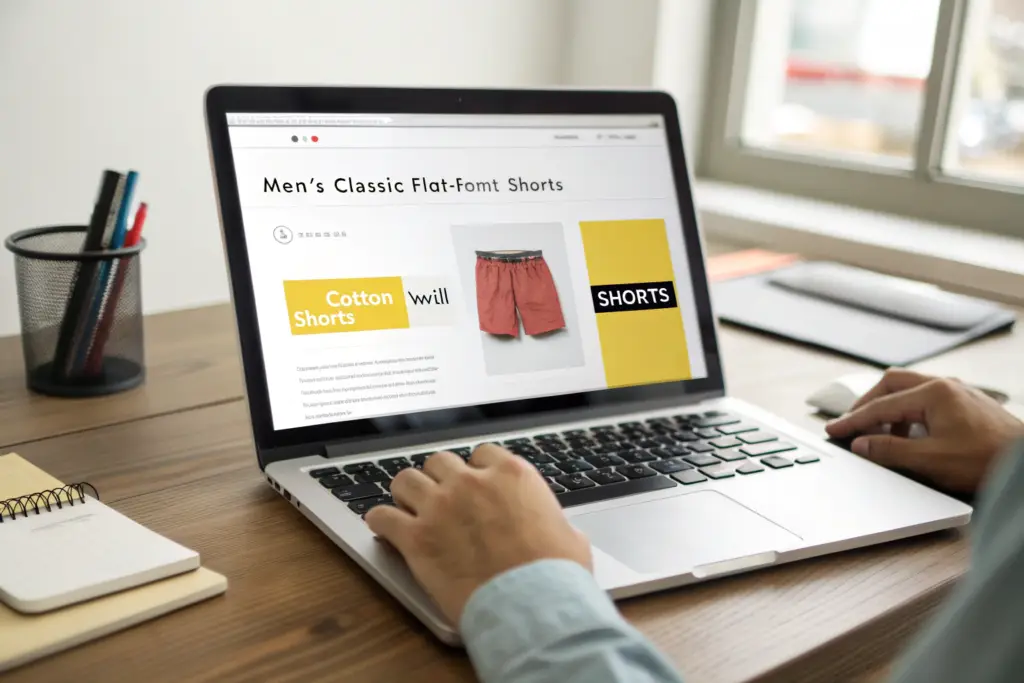
The primary keyword is the main term that defines the product. It is the term with the highest search volume and the clearest purchase intent. For a classic chino short, the primary keyword might be "men's classic chino shorts" or "cotton twill shorts for men." This keyword should appear in the most important on-page elements: the product title, the H1 heading, the URL slug, the meta description, and naturally within the first paragraph of the product description.
Secondary keywords are related terms that the customer might also search for. They are more specific, often long-tail, and they capture customers at different stages of the buying journey. Examples include "flat front shorts," "7-inch inseam shorts," "enzyme washed cotton shorts," "business casual shorts for men," and "summer shorts with zip fly." These secondary keywords should be integrated into the subheadings, the bullet points, and the body text where they naturally fit. They should not compete with the primary keyword for prominence. They support and expand the topical relevance of the page. This keyword research for e-commerce product pages guide provides a comprehensive framework for identifying and prioritizing keywords.
How Do You Structure a Product Page to Avoid Keyword Stuffing?
Keyword stuffing is the practice of repeating the same keyword unnaturally in an attempt to manipulate search rankings. An example would be: "Our men's classic shorts are the best classic shorts for men who want classic shorts. Buy our men's classic shorts today." This reads terribly, provides no useful information, and will be penalized by Google.
The correct approach is to structure the page so that keywords appear naturally within a logical flow of information. The product title contains the primary keyword. The H1 heading restates it naturally. The opening paragraph describes the product and its key benefits, incorporating the primary keyword once. The subsequent sections, each with a descriptive H2 heading, cover the fabric, the fit, the construction, and the care instructions, each incorporating relevant secondary keywords. The bullet points in the specifications section provide a dense but natural location for secondary keywords. The result is a page that is rich in relevant keywords but reads like a helpful, authoritative product description, not a robotically generated list of search terms. This on-page SEO for e-commerce product pages explains the best practices for structuring content.
What Product Specifications Must Be Present to Satisfy Search Algorithms?
Google's algorithm evaluates the depth and authority of a product page. A page that contains detailed, specific product specifications is evaluated as more authoritative and more helpful to the user than a page that contains only vague, generic marketing language. The algorithm cannot touch the fabric, but it can read the fabric weight. It cannot try on the shorts, but it can read the inseam length and the fit description. The brand that provides this level of detail in its product descriptions is rewarded with higher search rankings.
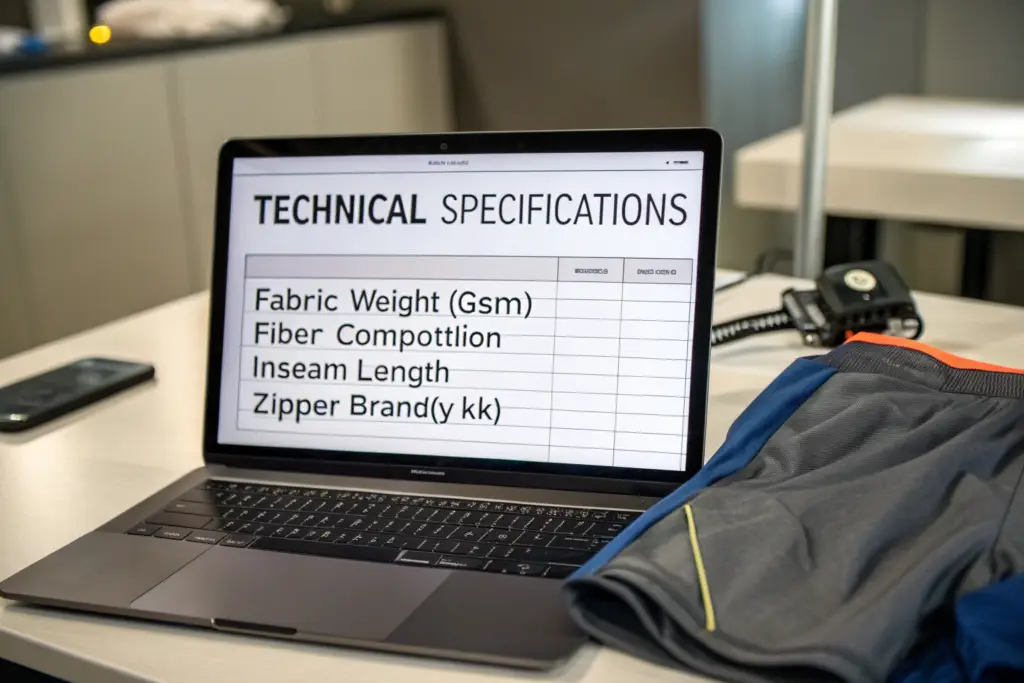
A product page for classic shorts must include a specific set of technical specifications to satisfy search algorithms and to provide the information that the consumer needs to make a purchase decision, including the fabric weight in GSM and the fiber composition, the specific inseam length and the fit description, the key construction details such as the zipper brand, the pocket configuration, and the waistband type, and the care instructions, with this information presented in a clearly structured format, a specifications table or a bulleted list, that is easily parsed by both the human reader and the search engine crawler.
Why Is the Inseam Length a Critical Data Point for Both SEO and Conversion?
The inseam length is one of the most frequently searched specifications for men's shorts. A consumer who knows he prefers a 7-inch inseam will often search directly for "7-inch inseam shorts." If the product page does not specify the inseam length, it will not appear in that search result, regardless of how well the rest of the page is optimized.
The inseam length is also a critical conversion factor. A consumer who cannot find the inseam length on the product page is likely to leave the page without purchasing. She does not want to buy a pair of shorts without knowing where the hem will fall on her leg. The inseam length should be stated clearly in the product description, in the specifications table, and, ideally, in the product title or the URL if it is a defining feature of the style. This product specification optimization for e-commerce practice directly improves both search rankings and conversion rates.
What Construction and Hardware Details Signal Quality to the Algorithm and the Customer?
The customer wants to know that the shorts are well-made. The search algorithm wants to know that the product page is comprehensive. Specific construction and hardware details serve both needs. The zipper brand, a YKK zipper, is a specific, searchable detail that signals quality to both the consumer and the algorithm. The pocket configuration, slash pockets, welt back pockets, and the waistband type, a contoured waistband with a button closure, provide specific, searchable information.
These details should be included in the product description and in the specifications table. They should be written in natural language, not just as a list of keywords. "The fly is secured with a YKK locking zipper, the global standard for durability and smooth operation" is a sentence that incorporates a keyword naturally while communicating quality to the customer. This construction details as SEO content for fashion e-commerce approach turns technical specifications into marketing content.
How Do You Write Meta Descriptions That Capture the Click from the SERP?
The meta description is the short text that appears below the product title on a search engine results page. It is not a direct ranking factor. Google does not use the meta description to determine where the page ranks. But the meta description is the single most important factor in determining whether the user clicks on the result or scrolls past it. A well-written meta description converts a search impression into a website visitor. A poorly written or absent meta description leaves the click to the competitor.
A high-performing meta description for a classic shorts product page is a concise, compelling summary of 150 to 160 characters that includes the primary keyword, communicates the key value proposition or the key differentiating feature of the product, such as the fabric, the fit, or a specific construction detail, and ends with a clear, action-oriented call to action, providing the searcher with exactly the information they need to decide to click on the result rather than the competitor's result.
What Is the Ideal Structure and Character Length for a Meta Description?
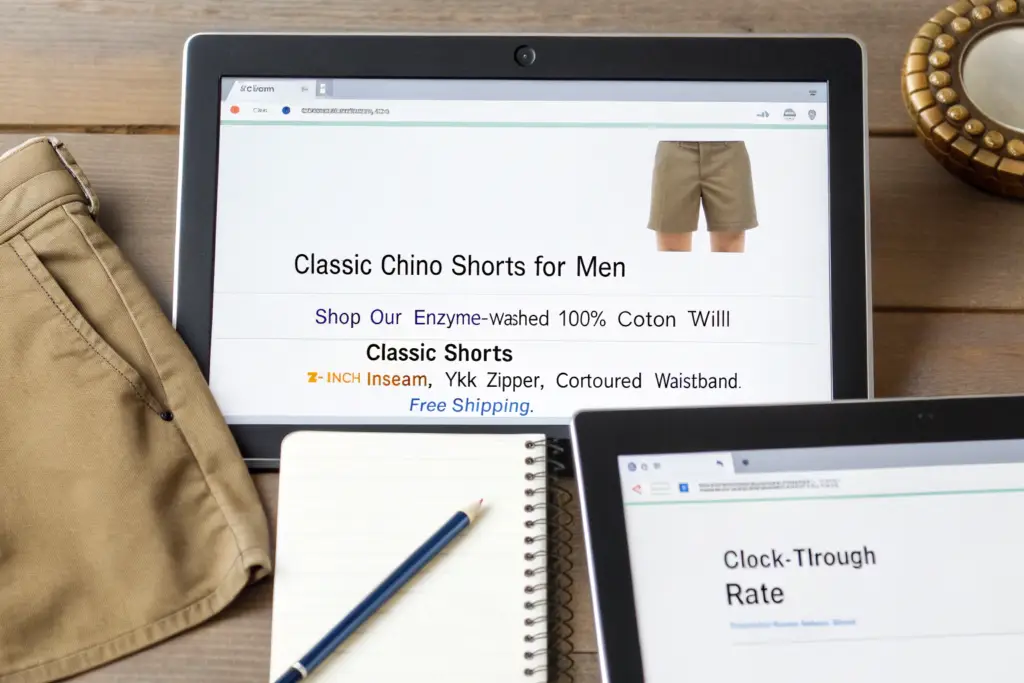
The ideal meta description is between 150 and 160 characters. Google typically truncates descriptions longer than 160 characters, cutting off the end of the sentence and leaving an incomplete, unprofessional appearance in the search results. The description should read as a complete, coherent sentence or two, not as a string of keywords.
The structure should follow a simple formula: product name, key differentiator, key specification, and call to action. For example: "Our classic chino shorts are cut from an enzyme-washed 240 GSM cotton twill for a soft, premium hand feel. Features a 7-inch inseam and a YKK zipper. Shop the fit." This is 158 characters. It includes the primary keyword, the key differentiator, the key specifications, and a call to action. It tells the searcher exactly what the product is and why they should click. This meta description best practices for e-commerce guide provides additional examples and formulas.
Should Every Product Page Have a Unique, Hand-Written Meta Description?
Yes, every product page should have a unique, hand-written meta description. A common mistake is to use a templated meta description across all product pages, changing only the product name. This results in duplicate or near-duplicate content, which Google may ignore or penalize.
Each product page offers a different product, with different features, different benefits, and different target keywords. The meta description should reflect those differences. The meta description for a khaki chino short should highlight the versatility and the classic color. The meta description for a performance stretch short should highlight the four-way stretch and the moisture wicking. Each meta description is a unique opportunity to communicate the specific value of that specific product to that specific searcher. This unique meta descriptions for e-commerce SEO explains why templated descriptions harm search performance.
Conclusion
Writing SEO-rich descriptions for an online store selling classic shorts is a discipline that combines keyword research, technical specification, and persuasive copywriting. The foundation is a clear understanding of what the customer is searching for, and a page structure that integrates those search terms naturally into descriptive, helpful prose. The product specifications, the fabric weight, the inseam length, and the construction details, must be present and prominent, serving both the customer's need for purchase-decision information and the search algorithm's demand for content depth. The meta description, while not a direct ranking factor, is the critical bridge between the search impression and the click, and it must be crafted with as much care as the product page itself.
The brand that invests in this discipline builds a product page that serves two masters, the search algorithm and the human customer, equally well. The algorithm rewards the page with high rankings. The customer rewards the page with clicks and conversions. The result is a sustainable, compounding source of organic traffic and sales that reduces the brand's dependence on paid advertising.
At Shanghai Fumao, I provide my brand partners with the technical specifications, the fabric data, and the construction details that form the raw material of great product descriptions. If you are building your online store and want to ensure your classic shorts pages are optimized for search and for conversion, contact our Business Director, Elaine, at elaine@fumaoclothing.com. Let's give your product the words it deserves.