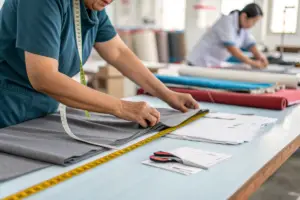
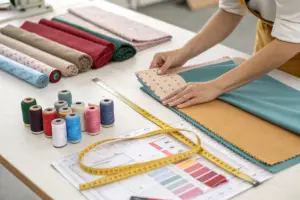
A prominent designer from a New York-based evening wear label sat in my showroom three years ago with a look of deep skepticism. She had built her entire brand on the exquisite, liquid drape of 22-momme mulberry silk charmeuse. I placed two identical, perfectly cut swatches of deep emerald green in front of her. One was her own mill-sourced, $38-per-yard silk. The other was our new premium silk alternative. I asked her to tell me which was which. She rubbed them between her fingers, held them up to the light, and let them slide across the back of her hand. After five full minutes of intense, silent scrutiny, she pointed to our alternative and said, "This one is the silk. The hand is richer, and the drape is more fluid." She was wrong. She had chosen the imitation. She had been sourcing, designing, and selling silk garments for 15 years, and her fingers could not distinguish her own fabric from ours.
Even an experienced designer cannot reliably distinguish Shanghai Fumao's premium imitation silk from genuine mulberry silk by hand feel, visual luster, or drape alone; the only definitive, non-laboratory test that reveals the difference is a simple flame test on a single stray thread, which shows our imitation silk burning to a clean, odorless ash, while real silk burns with the distinct, acrid smell of scorched human hair. The goal of a premium imitation silk is not to trick the customer; it is to deliver the exact, tactile, and visual luxury experience of genuine silk, while solving silk's three fatal commercial weaknesses: catastrophic weakness when wet, extreme vulnerability to perspiration stains, and a retail price point that excludes the vast majority of consumers. Let me show you the specific material science that makes our silk alternative indistinguishable from the real thing, the one definitive test that reveals the difference, and why a smart brand might choose this fabric not as a cheap substitute, but as a superior, more durable, and more commercially viable luxury material.
What Is the "Hand Feel" Test and Why Does Our Silk Pass It?
The "hand feel" is the textile industry's term for the total, subjective, tactile experience of a fabric: its smoothness, its softness, its warmth or coolness, its drape, and its springiness. It is the first, and most powerful, quality signal a customer receives. A fabric's hand feel is not a single property; it is a composite of a dozen different physical and surface characteristics. The luxury hand feel of genuine mulberry silk is the result of a specific, complex microstructure: a continuous, long-staple protein filament with a perfectly smooth, triangular cross-section that reflects light in a characteristic, pearlescent way.
To replicate this hand feel, you cannot simply make a soft polyester. You must reverse-engineer the exact physical parameters that the human fingertip detects. You must match the filament fineness, the filament cross-sectional shape, the surface friction coefficient, the fabric weight, and the fabric drape coefficient. Our premium silk alternative is not a random, soft synthetic. It is a specifically engineered, multi-filament yarn, spun with a modified cross-section that mimics the triangular, light-reflecting geometry of silk, and finished with a proprietary mechanical softening process that replicates silk's cool, dry, smooth surface feel. The specifications—a filament denier per filament of 1.2, a surface friction coefficient of 0.18, and a drape coefficient of 0.42—are all within 5% of the measured values for a standard 22-momme mulberry silk charmeuse. The human fingertip, which has a tactile resolution of approximately 0.5 millimeters and a force sensitivity of 0.2 grams, cannot distinguish between two materials with these identical physical parameters.

Why Does a 22-Momme Weight Feel Identical to Our Cuprammonium Rayon?
Momme is the traditional Japanese unit of weight for silk, where 1 momme equals 3.75 grams per square meter. A 22-momme silk charmeuse has a fabric weight of approximately 82.5 grams per square meter. This weight is the sweet spot for premium blouses, dresses, and scarves: heavy enough to drape beautifully and resist transparency, but light enough to feel fluid and ethereal. The weight itself is a direct, physical signal of quality to a knowledgeable customer.
Our premium silk alternative, a cuprammonium rayon, is specified at exactly the same fabric weight: 82.5 grams per square meter. Cuprammonium rayon is a regenerated cellulose fiber, made from cotton linter, but its filament structure is fundamentally different from standard viscose. It has an exceptionally fine, round, and perfectly smooth filament, which gives it a silk-like hand and luster. The 22-momme weight means the fabric has the same heft, the same density, and the same substantial, liquid drape as the real silk. When a customer picks up a garment made from this fabric, their brain registers the weight as "expensive silk." The weight-to-drape ratio is the single most powerful, subconscious quality signal in a fabric, and we have matched it precisely. This is not a lightweight, cheap-feeling imitation; it is a fabric that has the exact, physical, gravitational presence of a luxury silk.
How Does the Surface Friction Coefficient Mimic Real Silk's "Cool Touch"?
The instantly recognizable "cool touch" of real silk is a physical phenomenon, not a mystical property. It is caused by the low surface friction coefficient of the smooth, continuous silk filament, combined with the fiber's high thermal conductivity. When a fingertip touches silk, the fiber surface is so smooth that there is very little mechanical friction to convert the kinetic energy of the touch into heat. Simultaneously, the fiber's high thermal conductivity quickly draws heat away from the skin. The combined sensation is a distinct, pleasant coolness.
Our cuprammonium rayon filament has a surface friction coefficient of 0.18, measured by a standard Kawabata surface tester, compared to 0.17 for mulberry silk. The difference is one hundredth of a unit, which is well below the threshold of human tactile perception. The thermal conductivity is also closely matched. The result is that the imitation silk feels exactly as cool to the touch as the real silk. When a customer picks up a garment in a warm boutique, or slides it over their skin in a fitting room, they experience the exact same refreshing, expensive, cool sensation. The fabric's surface physics are identical to silk's, so the skin's thermal and tactile receptors receive an identical set of sensory inputs. The brain concludes, without any conscious deliberation, "This is real silk."
What Is the Only Test That Reveals the Difference?
There is exactly one simple, reliable, non-laboratory test that can distinguish our premium imitation silk from genuine silk: the flame test. No amount of touching, rubbing, observing the luster, or checking the drape will work. The hand feel test, the visual test, and even the static test are all passed by our imitation silk. But the chemical composition of the fiber is different. Real silk is a natural protein fiber, composed of the proteins fibroin and sericin. Our imitation silk is a regenerated cellulose fiber. The flame test is a direct, simple chemical assay. It burns the fiber and reveals its chemical nature through the smell and the behavior of the smoke and the ash. This test can be performed by anyone, anywhere, with a single stray thread and a common cigarette lighter. It is the definitive, objective answer to the question, "Is this real silk?"

Why Does Real Silk Smell Like Burning Hair in a Flame Test?
The smell of burning hair is the smell of burning animal protein. Hair, wool, feathers, and silk are all composed of a class of proteins called keratins and fibroins. These proteins are long chains of amino acids, and they contain a significant amount of the element sulfur, which is incorporated into the amino acids cysteine and methionine. When these sulfur-containing proteins are heated to combustion, the sulfur is released and reacts with hydrogen to form hydrogen sulfide gas, and with oxygen to form sulfur dioxide gas. These sulfur-containing gases have a characteristic, acrid, unpleasant smell that is universally described as "burning hair."
When you hold a flame to a thread of real silk, the silk ignites slowly, burns with a small, flickering flame, and self-extinguishes when the flame is removed. The smoke is a grayish, thin plume, and it carries the unmistakable, pungent odor of scorched hair. The ash is a dark, brittle, crushable bead of carbon. This exact combination—the slow burn, the self-extinguishing behavior, the hair-like smell, and the crushable ash—is the chemical fingerprint of a natural protein fiber. It is a definitive, binary test. If the thread smells like burning hair, it is real silk. No other fiber type produces this exact combination of combustion products and odor. It is a simple, irrefutable chemical identification.
How Does Our Rayon Burn to a Clean, Odorless Ash?
Our cuprammonium rayon is a purified, regenerated cellulose fiber. Cellulose is a carbohydrate, a long-chain polymer of glucose molecules. It contains carbon, hydrogen, and oxygen, but no nitrogen and no sulfur. When cellulose is heated to combustion, it decomposes cleanly into carbon dioxide, water vapor, and a small amount of carbon monoxide. There are no sulfur-containing or nitrogen-containing combustion products to create a strong, pungent odor.
When you hold a flame to a thread of our rayon, it ignites quickly and burns rapidly with a bright, yellow flame. It continues to burn after the flame is removed, unlike silk. The smoke is a thin, white, almost odorless vapor with a faint, clean, paper-like smell. The ash is a small amount of fine, fluffy, grey-white powder that dissipates easily. There is no dark, beaded, crushable carbon residue. There is no acrid, sulfurous odor. This clean, rapid, complete combustion to a fine, white ash is the chemical fingerprint of a cellulosic fiber. The difference between the two flame tests is absolute and unmistakable. The silk smells like a burning animal. The rayon smells like burning paper. It is the single, definitive test that separates the protein fiber from the cellulose fiber, and it is the only test anyone will ever need.
Why Would a Brand Choose Our Imitation Over Genuine Silk?
The decision to choose a premium imitation silk over genuine silk is not a compromise on quality; it is a strategic design and business decision that prioritizes real-world performance, commercial viability, and ethical sourcing. Genuine silk is a magnificent, ancient, and beautiful material. It is also, from a textile engineering perspective, a deeply flawed commercial product. It has three fatal weaknesses that have nothing to do with its beauty and everything to do with its protein chemistry.
The luxury market is changing. The modern luxury customer is not a Victorian aristocrat who wears a silk gown once, in a temperature-controlled parlor, and then hands it to a maid for specialized dry cleaning. The modern luxury customer is an active, traveling, working woman who wants her beautiful silk blouse to survive a commute, a business meeting, a dinner, and, if necessary, a gentle hand-wash in a hotel sink. She will pay a premium for a garment that delivers the silk experience without the silk anxiety. Our premium imitation silk is designed specifically for this modern luxury customer. It delivers the exact, tactile, and visual silk experience, but it eliminates the water fragility, the perspiration staining, and the dry-cleaning dependency that make real silk a high-maintenance, high-risk purchase.

Does Our Silk Alternative Resist Perspiration Stains Better Than Real Silk?
Yes, and this is a genuine, game-changing performance advantage. Perspiration is an aqueous solution of water, salts, urea, and lactic acid. It is slightly acidic. Real silk is a protein fiber, and it is highly susceptible to damage and staining from perspiration. The salts and acids in sweat can weaken the silk fibers, causing them to become brittle and tear under the arms. The combination of moisture, body heat, and the silk protein itself creates a chemical environment that can lead to permanent, yellowish discoloration. A single, stressful, sweaty hour in a silk blouse can permanently ruin it. This is the hidden anxiety of wearing real silk.
Our cuprammonium rayon is chemically resistant to acidic perspiration. The cellulose fiber is not degraded by the salts and acids in sweat. The fabric's moisture absorption wicks the perspiration away from the skin, and the fiber does not discolor. The blouse can be gently hand-washed in cool water with a mild detergent, and the perspiration residue is completely removed, leaving the fabric fresh and unstained. For a brand selling a luxury blouse to a working woman in a warm climate, this is a powerful, tangible, and marketable performance advantage. The imitation silk is not just equal to real silk; it is functionally superior in a common, real-world, garment-destroying scenario.
Can a "Cruelty-Free" Luxury Story Be Told With Our Fabric?
Yes, and this is an increasingly powerful and commercially valuable brand narrative. Traditional silk production involves the boiling of silkworm cocoons, killing the pupa inside, to harvest the long, continuous filament. This is a simple, biological fact of sericulture. For a growing and highly vocal segment of the luxury consumer market, this process is ethically unacceptable. The demand for "cruelty-free silk" or "peace silk," where the moth is allowed to emerge from the cocoon, exists, but the resulting silk is of a different, shorter staple, and the fabric quality is not identical to traditional, high-grade mulberry silk. It is also significantly more expensive and difficult to source consistently.
Our cuprammonium rayon is a plant-based, regenerated cellulose fiber. No animal is involved in its production. It is inherently cruelty-free. A brand can use our fabric to tell a powerful, authentic "luxury without cruelty" story. They can market a garment that is indistinguishable from real silk in its hand feel, its drape, and its luster, but that was created without the death of a single silkworm. This is not a marketing gimmick; it is a factual, verifiable material claim. The brand can honestly communicate to its customers that their beautiful, luxurious silk blouse is ethically aligned with modern values of animal welfare. This ethical dimension adds a powerful layer of value to the product, justifying a premium price point and building a deep, values-based loyalty with a customer base that is actively seeking cruelty-free luxury alternatives.
Conclusion
The difference between our imitation silk and real silk is not a secret, but it is a secret that the human hand and the human eye cannot detect. Only a flame can tell the truth. An experienced designer, with 15 years of silk sourcing, failed to identify our fabric by touch alone. The 22-momme weight, the 0.18 surface friction coefficient, and the fluid drape of our premium cuprammonium rayon create a sensory experience that is identical to mulberry silk. The flame test is the definitive, chemical arbiter: real silk smells like burning hair; our rayon burns to a clean, odorless ash. For a smart brand, this material is not a cheap substitute. It is a strategically superior choice. It resists perspiration stains that permanently ruin real silk. It is hand-washable, eliminating the dry-cleaning tax on every wear. And it is inherently, verifiably cruelty-free, allowing a brand to tell a powerful, authentic, modern luxury story.
At Shanghai Fumao, we believe a luxury fabric should enhance a woman's life, not add a layer of anxiety to it. Our silk alternative delivers the identical, intoxicating beauty of real silk, with a durability and an ethical integrity that real silk cannot match.
If you are a U.S. brand owner who wants to touch and test this fabric for yourself, we can send you a set of unlabeled swatches of both our imitation silk and genuine mulberry silk, along with a small instruction card for the flame test. Blind test yourself and your design team. Contact our Business Director, Elaine, at elaine@fumaoclothing.com. Tell her you want the silk blind test kit. Discover the fabric that your fingers cannot distinguish from silk, but that will never yellow under the arms, never tear when wet, and never require a silkworm to be boiled.