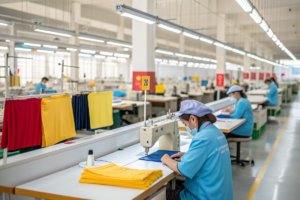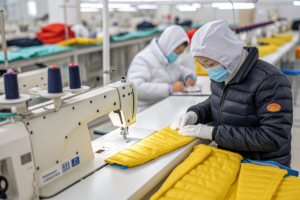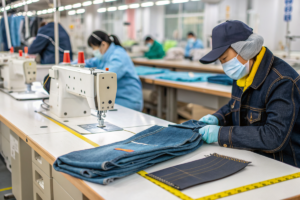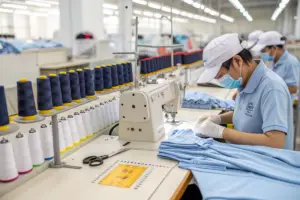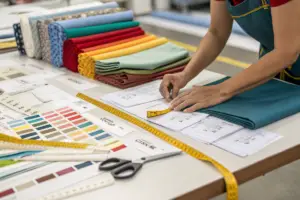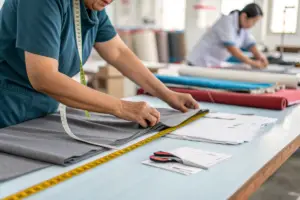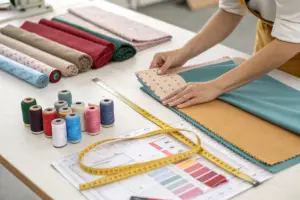
Five years ago, a New York menswear brand owner walked into a fabric negotiation with a Chinese project manager armed with only one tactic: "I need your best price." The project manager, an experienced professional who had managed textile sourcing for two decades, immediately recognized the approach as amateur. He gave the brand owner a polite 3% discount off the standard price list, the brand owner felt victorious, and the deal was closed. What the brand owner didn't know was that the mill's standard price list already included an 8% negotiation buffer, and by failing to ask specific technical questions about yarn count, dye lot minimums, and greige reservation terms, he had left 5% of the available margin on the table. Worse, he had negotiated no quality guarantees, no delivery penalty clause, and no exclusivity on his custom-developed seasonal colors.
To confidently negotiate bulk fabric sourcing with a Chinese apparel project manager, you must enter the conversation with a pre-prepared "Cost Driver Breakdown Sheet" that itemizes the raw yarn cost per kilogram, the knitting or weaving conversion cost per meter, the dyeing cost per kilogram including the specific dye formulation charge, and the finishing cost per meter, then ask targeted technical questions about each line item that demonstrate your understanding of textile cost engineering, simultaneously negotiating the total price while also securing the three non-price terms that determine long-term profitability: the greige reservation protocol, the dye lot minimum and shade band tolerance, and the delivery delay penalty clause tied to your production cut date.
At Shanghai Fumao, I sit on both sides of this negotiation. As a factory owner who sources fabric daily and as a partner who helps brand buyers structure their sourcing deals, I know exactly what the project manager across the table is thinking, what margins they have to protect, and what concessions they are secretly willing to make if the buyer asks the right technical questions.
Why Does a Detailed "Cost Driver Breakdown Sheet" Immediately Shift the Power Dynamic in Your Favor?
A Chicago-based activewear brand owner once began a fabric negotiation by email with a single sentence: "Your price is $4.80 per meter. Our target is $4.20. Can you meet it?" The project manager replied in fifteen minutes: "Sorry, our best price is $4.65." The negotiation was over in two emails, and the brand owner either accepted or walked away. He had no information, no leverage, and no ability to identify where the $0.60 difference was hiding. The project manager controlled the entire conversation because the brand owner had framed it as a battle of blunt price points rather than a collaborative forensic analysis of cost components.
A detailed Cost Driver Breakdown Sheet immediately shifts the power dynamic in your favor because it transforms the negotiation from a simple, binary "your price versus my budget" standoff into a forensic, line-by-line cost engineering conversation where you can identify the specific cost driver that is inflating the price—perhaps the dyeing cost is $0.30 above market because the mill is using an unnecessarily complex dye formulation for a basic solid color, or the knitting conversion cost includes a small-batch surcharge that can be eliminated by slightly increasing the order volume—and negotiate that specific line item down with a data-backed, technically informed argument.
A generic price challenge is easy for a project manager to dismiss. A specific, technically informed challenge to a single line item—"I'm seeing the market knitting conversion rate for 20s combed cotton single jersey at $0.72 per meter, not $0.85"—forces the project manager to justify their cost structure with data, and often reveals a legitimate cost reduction opportunity that both parties can agree on.
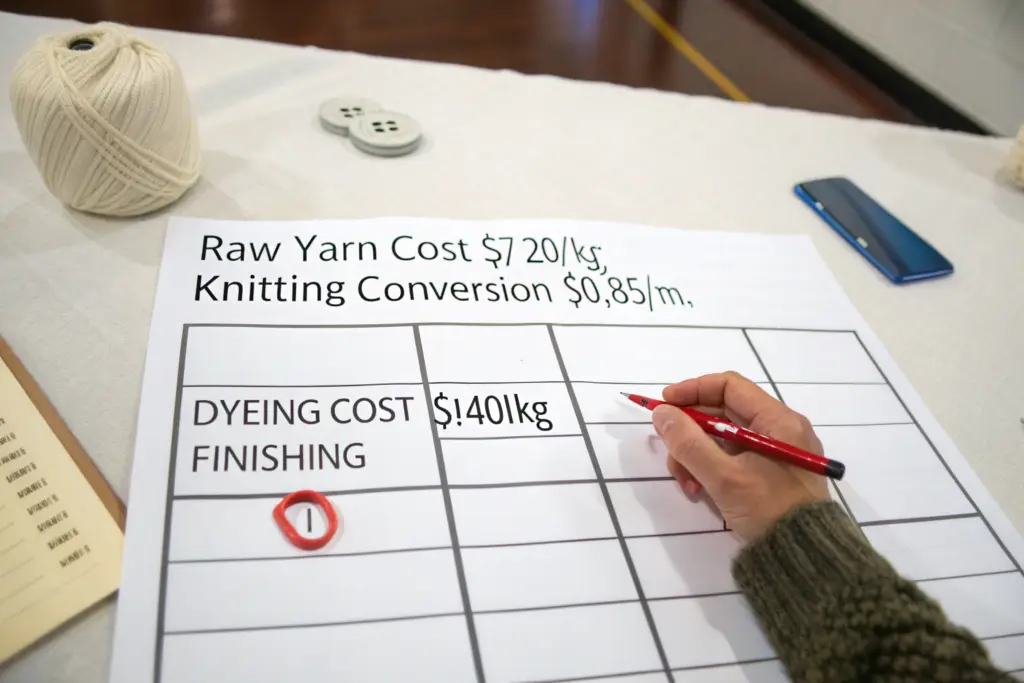
What Are the Four Universal Cost Components of Any Knitted Cotton Fabric, and What Is the Approximate Market Price Range for Each in 2026?
The four components are: Raw Yarn Cost (20s combed cotton yarn: $3.00-$3.80 per kilogram, depending on long-staple or standard quality), Knitting Conversion Cost ($0.65-$0.95 per meter for standard single jersey, depending on machine gauge and order volume), Dyeing Cost ($1.20-$1.80 per kilogram for a standard solid color reactive dye, higher for specialty colors or low-impact dyes), and Finishing Cost ($0.35-$0.60 per meter for standard compacting, softening, and inspection).
How Does a "Dye Formulation Complexity" Question Expose an Unnecessary $0.30 Per Meter Surcharge?
A basic solid navy color requires a simple, two-dye formulation. A complex heather grey requires multiple pre-dyed fiber blends. If your fabric is a solid navy and the dyeing cost line item is suspiciously high, asking "Is this a multi-step dye formulation for a solid color?" reveals whether the mill is overcharging or mistakenly applying a complex-color surcharge to a simple dye job.
How Do You Negotiate the "Greige Reservation Protocol" to Prevent a Fabric Shortage Mid-Production?
An Australian swimwear brand once negotiated an excellent fabric price—$3.10 per meter for a specialty nylon-spandex jersey—and felt triumphant. Six weeks later, when the factory attempted to purchase the fabric from the mill, the mill informed them that the specific nylon yarn had been sold to a larger European client, and the next production run was eight weeks away. The brand's entire production schedule collapsed. They had negotiated the price brilliantly but had completely neglected to negotiate the greige reservation.
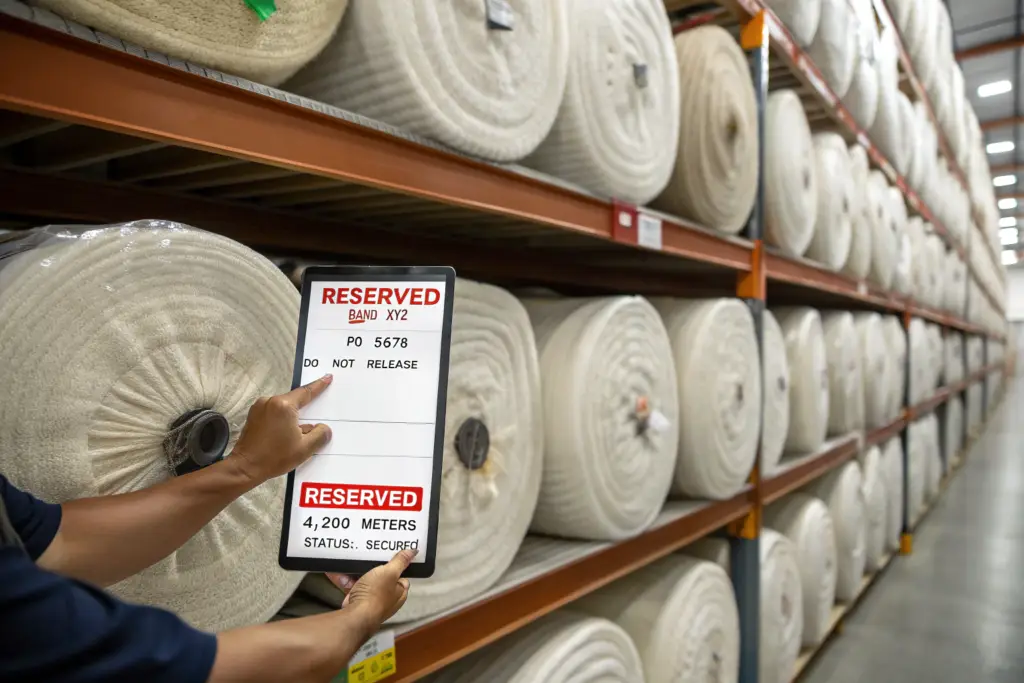
To negotiate the Greige Reservation Protocol, you must include in the fabric purchase contract a clause that states the mill will physically reserve and warehouse the specific required yardage of greige fabric under your purchase order number within five business days of the deposit payment, and that this reserved greige is contractually ring-fenced—it cannot be sold, transferred, or allocated to another client even if a higher-paying order arrives—ensuring that your raw material physically exists and is legally yours before the dyeing process even begins.
A great price on fabric that doesn't exist yet is a theoretical number. A fair price on fabric that is physically sitting in a warehouse with your name on it is a production guarantee.
What Specific Clause Language Prevents the Mill From Selling Your Reserved Greige to a Higher-Paying Rush Client?
The clause should read: "Upon receipt of the 30% deposit, the Mill shall physically segregate and label the Contracted Greige Yardage with the Buyer's Purchase Order number. This segregated greige is contractually allocated exclusively to the Buyer and shall not be sold, transferred, or utilized for any other client's order, regardless of any subsequent higher-price offer, for a period of up to 90 days."
How Does the "Five-Day Reservation Confirmation" Deadline Protect You From a Mill That Over-Promises Inventory?
The contract should require the mill to provide, within five business days of deposit receipt, a signed Greige Reservation Certificate with photographs of the reserved rolls, their unique barcode numbers, and the warehouse shelf location. If the certificate is not provided within five days, the deposit is fully refundable.
What Specific "Dye Lot Minimum and Shade Band" Terms Prevent a Massive Order From Arriving in Three Different Colors?
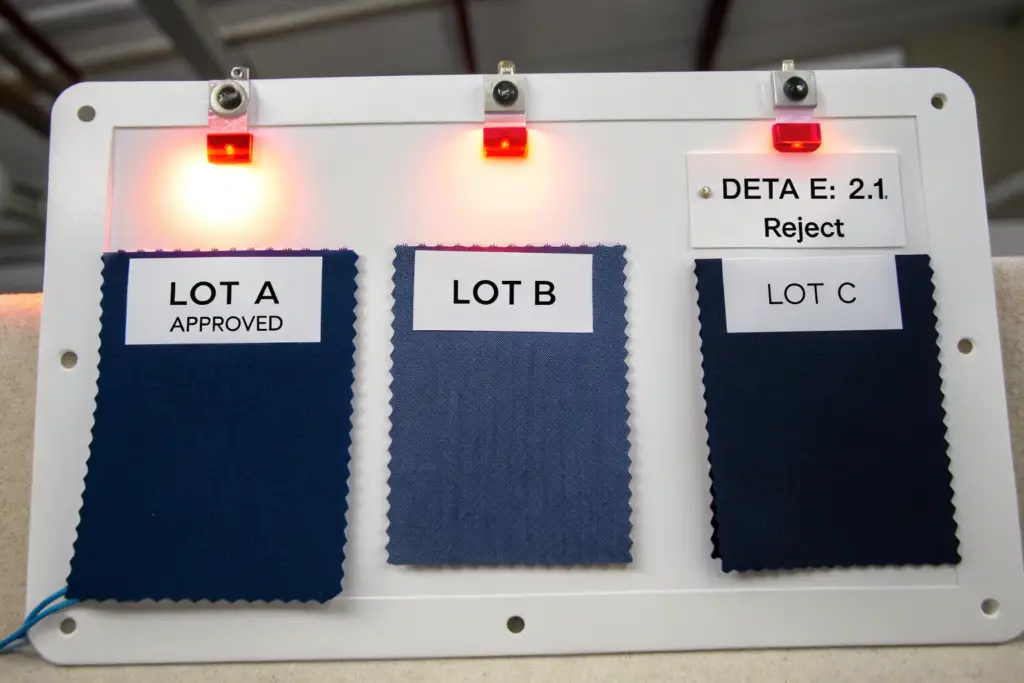
A Portland-based uniform brand once ordered 12,000 meters of a specific navy blue cotton twill. The mill, lacking a proper shade band agreement, dyed the fabric in three separate lots across three different weeks. Lot A was a perfect match to the approved lab dip. Lot B was subtly lighter, with a Delta-E of 1.8. Lot C was visibly different, with a purplish cast and a Delta-E of 2.8. The factory cut and sewed the trousers without separating the lots. The result was a shipment where a jacket made from Lot A fabric did not match the trousers made from Lot C fabric.
To negotiate the Dye Lot Minimum and Shade Band terms, the fabric contract must specify that the entire purchase order yardage will be dyed in a single, continuous dye lot whenever physically possible, and if a split across multiple lots is unavoidable, the maximum permissible shade variation between lots is a Delta-E of 1.0 or less, with each lot individually labeled and the cutting and sewing teams contractually required to segregate garments by dye lot to prevent mixed-shade shipments.
A single dye lot guarantees that every centimeter of fabric in the entire order was in the same dye bath at the same time, exposed to the identical temperature, chemical concentration, and cycle duration. A split lot introduces variation that must be measured, controlled, and segregated.
What Is the Physical Capacity Limit of an Industrial Dyeing Machine That Determines Whether a Single Lot Is Possible?
A standard industrial dyeing vessel can handle approximately 500-800 kilograms of fabric per cycle, depending on the fabric weight. For a 12,000-meter order of 250gsm cotton twill, the total fabric weight is approximately 4,500 kilograms, requiring six to nine dye cycles. A "single continuous lot" is achieved by running these cycles back-to-back with identical dye formulation and precise temperature curve replication.
How Does a "Shade Band" Sorting Protocol in the Cutting Room Prevent Mixed-Shade Garments?
If multiple dye lots are unavoidable, each lot is assigned a shade band number (Shade A, Shade B, Shade C). The cutting room cuts each lot separately and labels the cut panels with the shade band. The sewing line sews only matching shade band panels together. The final packaged units are labeled with the shade band, and wholesale shipments are segregated by shade.
How Do You Secure a "Delivery Delay Penalty" Clause That the Mill Actually Takes Seriously?
A Denver-based outdoor brand's fabric delivery was delayed by 21 days. The mill's project manager apologized profusely and offered a vague "discount on your next order" as compensation. The brand had no penalty clause in their contract. The "discount" on the next order turned out to be 2%, applied to a much smaller order, a total compensation of $380 for a delay that cost the brand a $35,000 wholesale contract.
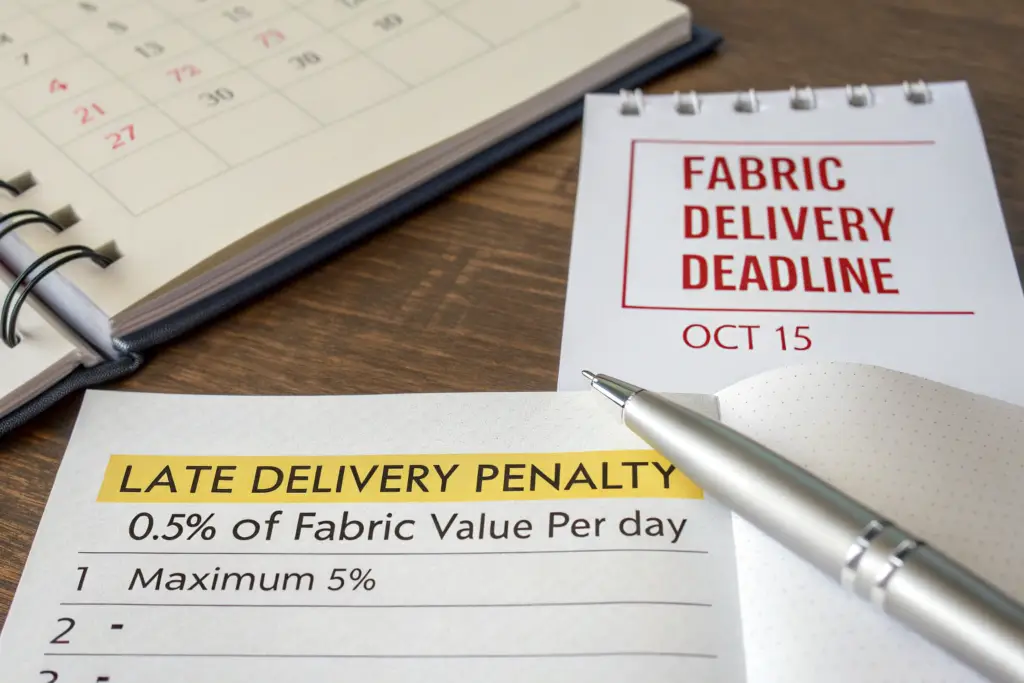
To secure a Delivery Delay Penalty clause that the mill actually takes seriously, the fabric supply contract must include a specific, self-executing Liquidated Damages clause that calculates a penalty of 0.5% of the delayed fabric's total invoice value per calendar day of delay beyond the contractually agreed delivery date, capped at a maximum of 5% of the invoice value, which is automatically deducted from the final balance payment without requiring the buyer to initiate a separate legal claim, creating a daily, compounding financial incentive for the mill to prioritize your order when production schedules become tight.
A vague "we'll make it right" promise has no enforcement mechanism. A daily, automatically deducting penalty that reduces the mill's final payment by a specific, visible amount every single day the fabric is late creates a powerful, urgent incentive to meet the deadline.
Why Is a "Self-Executing" Penalty Clause More Powerful Than a Clause That Requires Legal Action?
A self-executing clause states: "The Buyer shall deduct the accrued penalty amount from the final balance payment without requiring further notice or legal proceeding." The mill sees the deduction on the payment they receive. A clause that requires the buyer to "seek damages through arbitration" means the buyer must invest time and legal fees to recover the penalty, which the mill knows most buyers will not do for small amounts.
How Does the "0.5% Per Day, 5% Max" Formula Align With Actual Mill Margins to Ensure the Penalty Is Financially Painful but Not Ruinous?
A fabric mill's net margin on a bulk order is typically 8-15%. A 5% maximum penalty represents a significant portion of the mill's profit on that order—enough to be deeply painful and to change behavior—but not so large that the mill would rather breach the contract and lose the client entirely than pay the penalty.
Conclusion
Confidently negotiating bulk fabric sourcing with a Chinese project manager is not about speaking louder, bluffing harder, or demanding a "best price" with no technical justification. It is about entering the conversation with a structured, forensic understanding of the four cost drivers—yarn, knitting, dyeing, and finishing—and the three non-price terms that determine whether a great price actually results in great fabric delivered on time. The Cost Driver Breakdown Sheet gives you the technical language to challenge specific line items. The Greige Reservation Protocol ensures the raw material physically exists and is legally yours. The Dye Lot Minimum and Shade Band terms prevent the nightmare of a split-dye-lot shipment. The self-executing Delivery Delay Penalty clause gives the mill a daily financial reason to prioritize your deadline.
At Shanghai Fumao, I negotiate these terms with my fabric mill partners every single week. I know which cost drivers have flexibility and which are fixed by global cotton prices. I know which mills will accept a greige reservation clause and which will resist. I help my brand buyer partners structure their fabric sourcing agreements so that the price is fair, the quality is guaranteed, and the delivery date is enforceable.
If you are preparing to negotiate a bulk fabric order and you want a partner who can review the Cost Driver Breakdown, suggest specific contract clause language, and help you communicate with the mill's project manager in technically fluent terms, contact my Business Director, Elaine. She sources fabric daily and can share the exact clause templates we use to secure greige reservations, dye lot guarantees, and delivery penalties. Reach Elaine at: elaine@fumaoclothing.com. Negotiate with data, not just determination.