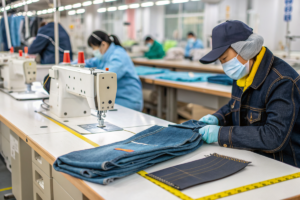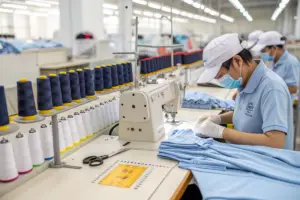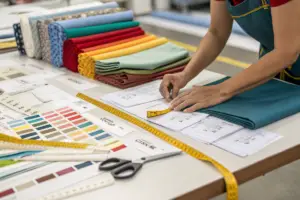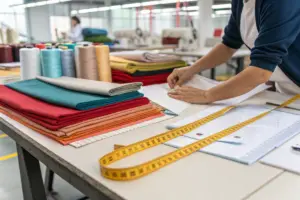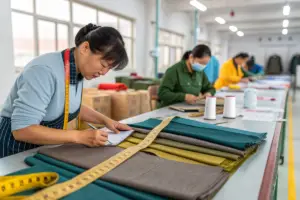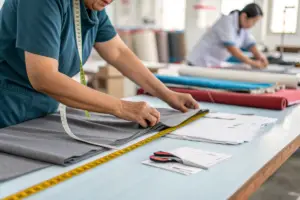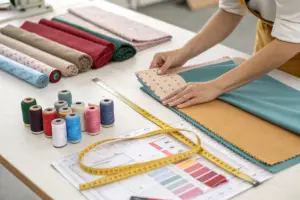
Four years ago, a Stockholm-based sustainable fashion brand placed a $90,000 order for "GOTS-certified organic cotton" hoodies with a factory they had sourced through an online B2B platform. The factory provided a GOTS certificate that looked authentic. The samples were beautiful. The bulk order arrived, and the brand owner, as part of her standard due diligence, sent a random hoodie to an independent textile testing laboratory in Germany. The lab report came back devastating: the fabric contained 18% conventional, non-organic cotton, and the dye contained a restricted azo compound above the legal limit. The GOTS certificate was a photocopy of another factory's expired certificate with the name crudely photoshopped. The brand lost their entire investment, their wholesale accounts in Norway and Denmark, and their credibility with their eco-conscious customer base. The organic fabric was not organic. The sustainable factory was not sustainable.
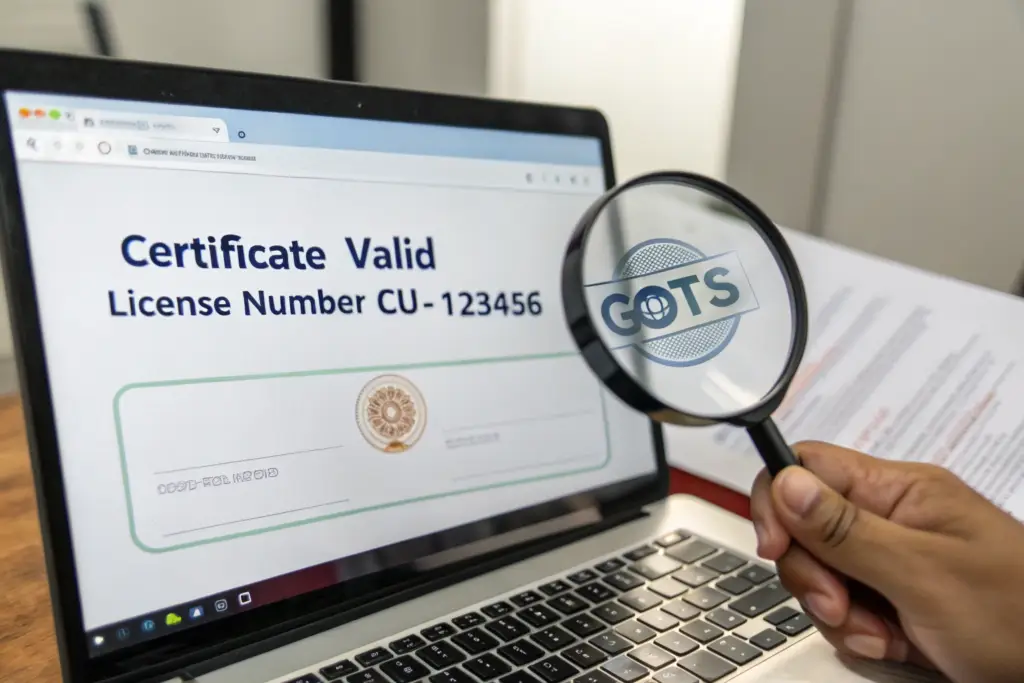
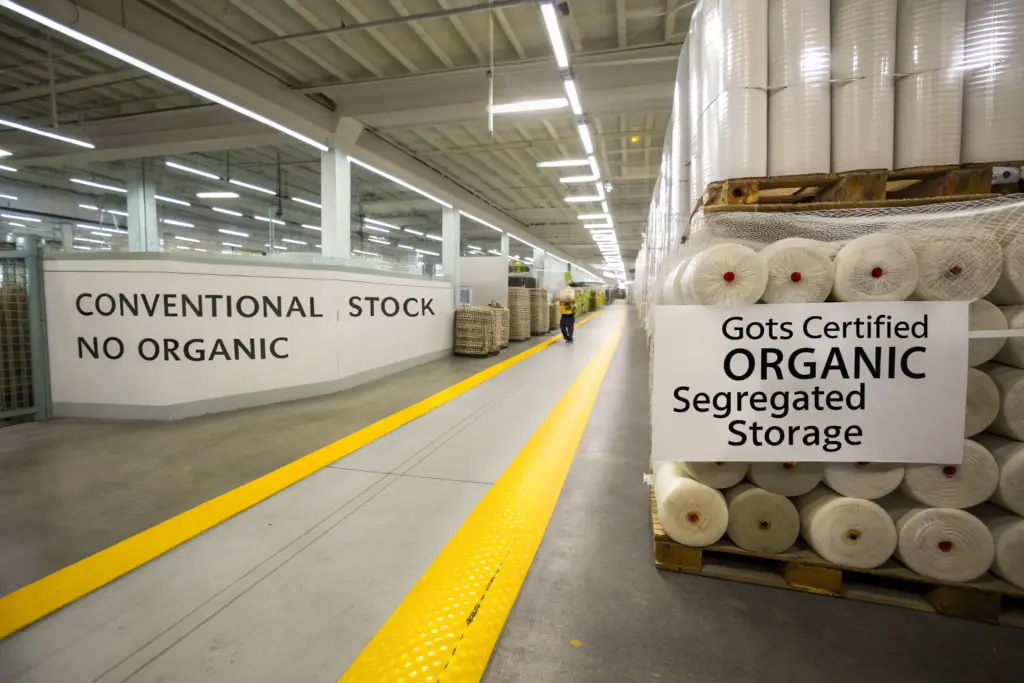
To source highly sustainable and organic fabrics directly from reliable Chinese clothing factories, you must bypass marketing claims entirely and instead demand a "Live Certificate Verification" during a real-time video call where the factory representative logs into the official GOTS or GRS public registry database and shows you the live, on-screen status of their specific license number, simultaneously requesting a Transaction Certificate (TC) that links the specific batch of organic yarn purchased to your specific purchase order number, and physically visiting or virtually inspecting the factory's segregated organic fabric storage area to confirm that certified organic rolls are physically separated from conventional stock.
At Shanghai Fumao, I learned very early that a PDF certificate is a promise. A live database verification, a batch-specific Transaction Certificate, and a physically segregated storage area are proof. My factory holds a valid, annually audited GOTS certification, and I invite every single sustainable brand partner to verify it live.
What Is the Exact, Unforgeable Difference Between a Real GOTS Certificate and a Photocopied Fake?
A Canadian eco-luxury brand once forwarded me a "GOTS certificate" from a competing factory they were evaluating. The certificate had the correct logo, the correct format, and a plausible license number. I searched the license number on the official GOTS public database during a video call with the brand owner. The database returned: "No results found." The license number belonged to a different company that had been decertified two years prior. The factory had simply copied the old number. The brand owner had been ready to wire a $35,000 deposit.
The exact, unforgeable difference between a real GOTS certificate and a photocopied fake is that a real certificate's unique license number returns a live, active status on the official Global Organic Textile Standard public database at www.global-standard.org, showing the exact legal entity name of the certified company, the specific scope of certification (which processing stages are approved), the valid-from and valid-until dates, and the name of the approved certification body such as Control Union or Ecocert, all of which must exactly match the factory's business license and the company name on the sales contract.
The GOTS database is the only source of truth. A certificate PDF is just a digital image that can be modified in five minutes with basic editing software. The live database entry cannot be edited by the factory.
How Does a "Scope Certificate" Differ From a "Transaction Certificate" in Proving a Specific Order Is Organic?
A Scope Certificate (SC) proves the factory is authorized to handle and process GOTS-certified organic textiles. A Transaction Certificate (TC) is issued for a specific, named batch of goods and proves that those specific goods were produced using GOTS-certified organic inputs. The TC includes an input-output mass balance calculation that shows exactly how many kilograms of certified organic yarn entered the factory and how many kilograms of finished garment exited, proving mathematically that no conventional fiber was substituted. I always provide the batch-specific TC to my brand buyers.
Why Must the Certification Body Name on the Certificate Match the Factory's Actual Audited Location?
GOTS certification bodies, such as Control Union or Ecocert, have specific regional offices that conduct audits. A factory in Shanghai should be audited by the China office of the certification body. If a certificate shows a factory in Jiangsu province but the auditing body's office is listed in a different continent, it is a red flag for a forged or purchased certificate.
How Do You Physically Verify That a Factory Segregates Organic Cotton From Conventional Stock?
An Australian organic children's wear brand once conducted a virtual factory tour with a prospective supplier. The factory proudly showed their GOTS certificate and a small, tidy rack of organic cotton rolls. The brand owner, skeptical and experienced, asked the factory manager to slowly pan the camera across the entire warehouse. The camera revealed, in the back corner, an open doorway connecting directly to a massive conventional cotton storage area with no physical barrier between the two spaces. Fiber dust, a known cross-contamination vector, could freely float between the organic and conventional stock.
To physically verify organic segregation, you must observe during a live video inspection a clear physical barrier—a solid wall, a floor-to-ceiling partition, or at minimum a sealed plastic curtain—separating the certified organic raw material storage area from the conventional storage area, with dedicated, color-coded shelving and clearly labeled bins, and dedicated, separately stored cutting tables and sewing machine attachments used exclusively for organic production to prevent fiber cross-contamination at every processing stage.
Cross-contamination is not just about intention. A single conventional cotton fiber landing on an organic cutting table, then being sewn into an organic garment, can cause that garment to fail a laboratory fiber composition test.
What Is a "Dedicated Cutting Table" Protocol and Why Does It Prevent 1% Conventional Fiber Detection?
A shared cutting table accumulates fiber dust from both organic and conventional fabrics in its microscopic surface grooves. If the table is not deep-cleaned with a high-powered vacuum and a tack cloth wipe-down between production runs, a lab test of the final organic garment can detect a 1-2% conventional cotton fiber presence.
How Does a "Color-Coded Production Ticket" System Visually Prevent Mixed-Fiber Sewing?
On my factory floor, every production ticket for an organic order is printed on green paper. Every production ticket for a conventional order is printed on white paper. A sewer picking up a bundle instantly knows, by the color of the paper, whether she is handling organic or conventional material.
What Recycled Polyester Certification Traps Do Buyers Fall Into With Ocean-Bound Plastic Claims?
A California-based activewear brand built their entire brand identity around the claim "Made from 100% Ocean-Bound Plastic." Their factory had provided a vague "recycled polyester certificate" from an obscure, unaccredited certification body. A consumer watchdog organization investigated the claim, traced the factory's raw material supply chain, and discovered that the plastic feedstock was not ocean-bound at all. It was standard post-industrial PET bottle flake from a standard municipal recycling facility. The brand was publicly exposed, lost three major wholesale accounts, and faced a class-action false advertising lawsuit.
The recycled polyester certification trap that buyers fall into is accepting a generic "Recycled Content" certificate from an unrecognized body instead of demanding a valid Global Recycled Standard (GRS) certificate from a Textile Exchange-accredited certification body, which specifically verifies the chain of custody from the specific source of recycled feedstock—proving whether it is truly post-consumer ocean-bound plastic, post-consumer household bottle waste, or merely post-industrial factory scrap—and requires a mass balance calculation that mathematically reconciles the kilogram input of recycled feedstock with the kilogram output of finished recycled fabric.
"Ocean-bound plastic" is a specific, defined term under certain certification schemes, referring to plastic collected within 50 kilometers of a coastline in a region with no formal waste management. Generic "recycled polyester" is usually post-consumer PET bottles. The two are not the same material stream, and the price difference is significant.
How Does a GRS Transaction Certificate Trace a Recycled Polyester Jacket Back to the Specific Recycling Facility?
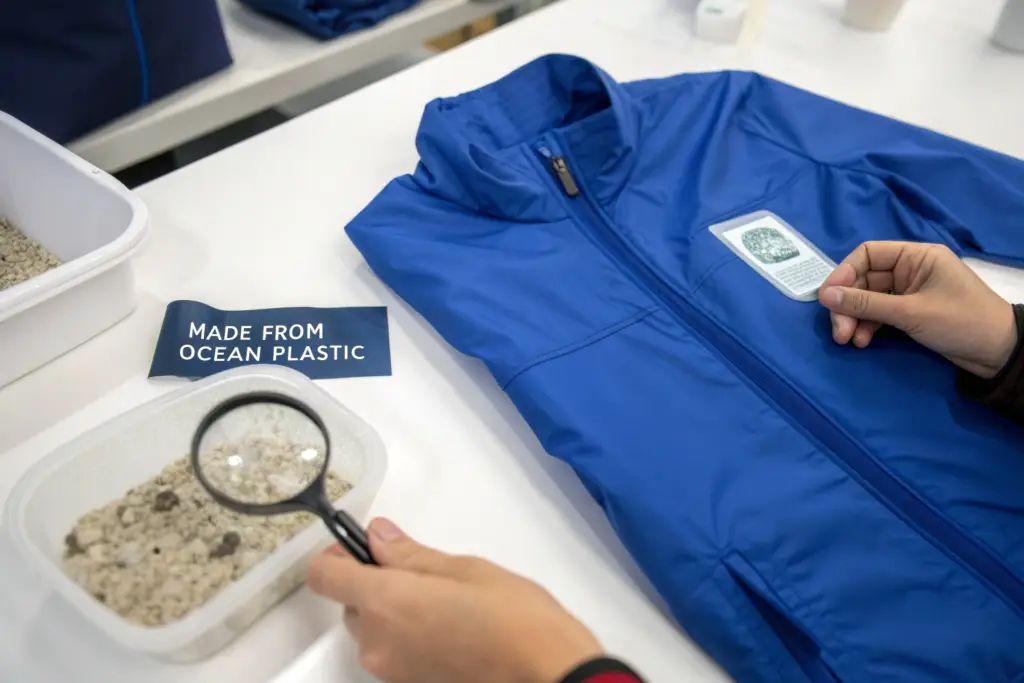
The GRS Transaction Certificate lists the specific name and address of the recycling facility that processed the plastic feedstock, the specific batch number of the recycled polyester chip, and the mass balance calculation. If the certificate lists a recycling facility that does not exist in public business registries, the claim is fraudulent.
Why Is "Post-Industrial" Recycled Content Less Valuable Than "Post-Consumer" Content for Sustainability Marketing?
Post-industrial recycled content is manufacturing scrap—fabric offcuts, yarn waste—that never reached a consumer. Using it is good waste reduction practice, but it does not remove plastic from the environment. Post-consumer recycled content is material that a consumer used, discarded, and would have entered a landfill or ocean if not recycled. Marketing claims should distinguish between these two streams.
How Does a Factory's In-House Wastewater Treatment System Prove Genuine Dyeing Sustainability?
A Dutch sustainable fashion foundation once audited a Chinese dye house that supplied fabric to several European eco-brands. The dye house had all the correct certificates on paper. During the physical audit, the auditor asked to walk to the back of the facility to see the wastewater discharge pipe. The pipe led directly to a local river, bypassing the treatment system entirely. The treatment system existed—it was real, functional, and certified—but the factory only turned it on during scheduled audits. At all other times, untreated, chemically laden dye wastewater flowed directly into the public waterway.
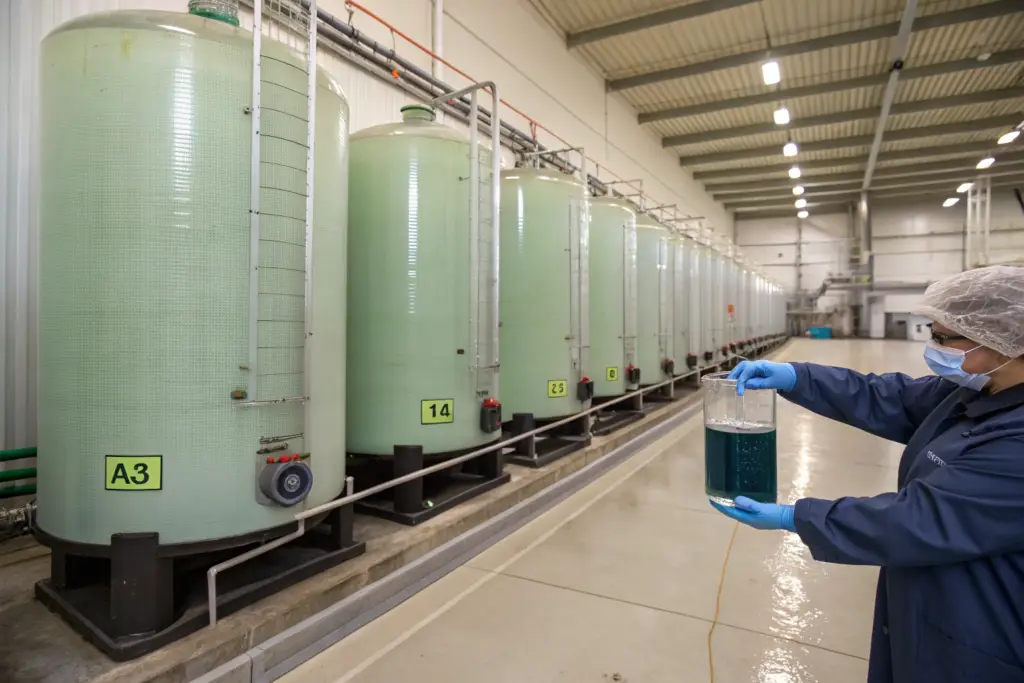
A factory's in-house wastewater treatment system proves genuine dyeing sustainability when a live, unscripted video inspection shows the treatment system physically operating during a production day, with a visible digital flow meter recording the volume of water being processed, an inline turbidity sensor displaying real-time water clarity readings below 10 NTU (Nephelometric Turbidity Units), and a signed, dated discharge permit from the local environmental protection bureau that matches the factory's legal address, all of which together demonstrate that the treatment system is operational during actual production and not just during pre-announced audits.
Certificates can be purchased. A live video of the treatment system in operation, on a randomly selected day, with visible meter readings, cannot be easily staged.
How Does a "Zero Liquid Discharge" System Close the Water Loop Completely?
A Zero Liquid Discharge (ZLD) system recovers and recycles essentially all wastewater from the dyeing process. The water is treated, purified through reverse osmosis membranes, and fed back into the dyeing machines. The residual salt and chemical sludge is crystallized and disposed of as solid waste. A ZLD system discharges no liquid effluent into the environment. I source our dyeing services from a partner that operates a ZLD system.
What Specific Water Quality Parameter Should a Brand Ask to See on a Live Video Meter Reading?
The parameter to request is the Chemical Oxygen Demand (COD) level of the treated effluent, measured in milligrams per liter. Untreated textile dye wastewater can have a COD of 1,000-3,000 mg/L. Properly treated water should have a COD below 80 mg/L. A live video showing a COD meter reading below 100 is strong evidence of genuine treatment.
Conclusion
Sourcing truly sustainable and organic fabrics from China is not a matter of reading a beautifully designed brand story on a factory's website. It is a forensic verification exercise. The GOTS certificate must be verified live on the official database, not accepted as a PDF. The organic cotton storage must be physically separated by a real barrier, visible on a live video walk-through. The recycled polyester claim must be backed by a GRS Transaction Certificate tracing the material back to a specific, verifiable recycling facility. The dye house wastewater treatment system must be filmed operating on a random Tuesday, with live meter readings showing Chemical Oxygen Demand levels below legal limits.
At Shanghai Fumao, I have built these verification structures into my factory because I understand that a sustainable brand's entire market value rests on the truth of these claims. One investigative journalist with a hidden camera can destroy a brand built over a decade. I welcome forensic scrutiny because my GOTS organic cotton is genuinely segregated, my GRS recycled polyester is traceable, and my dye house partner's treatment system discharges clean water.
If you are a sustainable brand owner who wants to source fabrics from a factory that can pass a live, unannounced virtual forensic audit, I invite you to test us. Contact my Business Director, Elaine. She can schedule a live video walk-through of our organic segregation area, show you our GOTS and GRS certificates live on the official databases, and introduce you to the dye house's water treatment engineer. Reach Elaine at: elaine@fumaoclothing.com. Source fabrics you can defend with data, not just marketing copy.