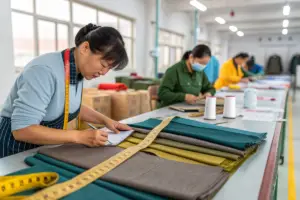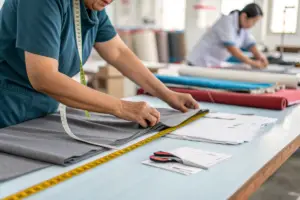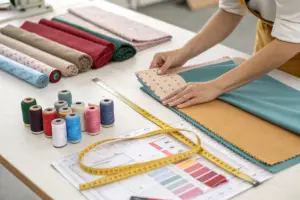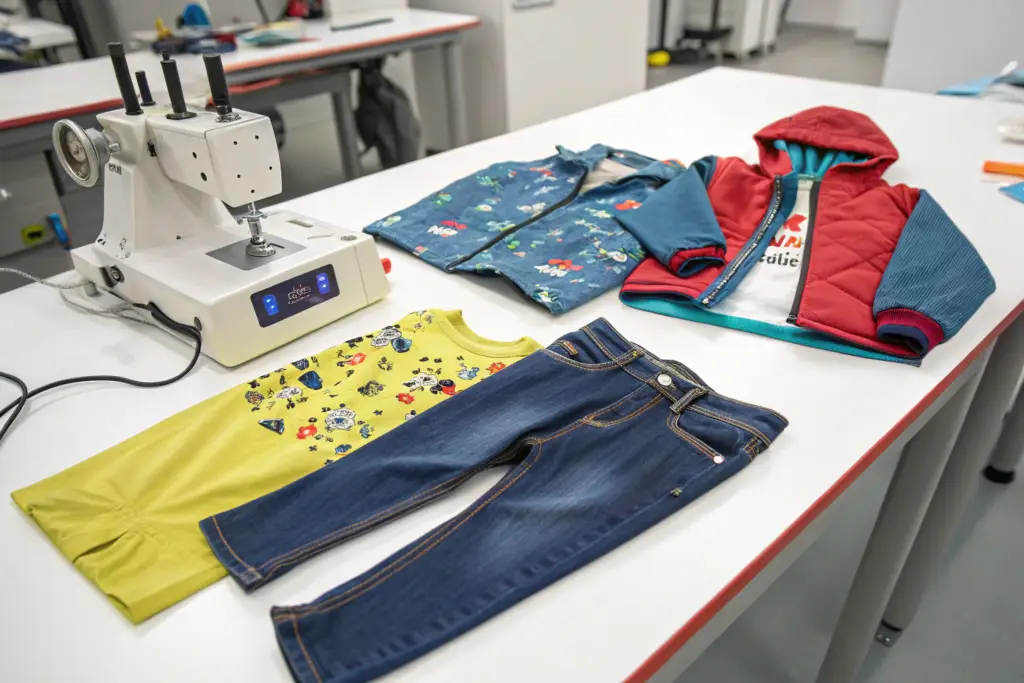
A children's wear brand owner from Melbourne once sent me a pair of toddler pants with the knees completely blown out after just six weeks of wear. The fabric was a soft, beautiful 180gsm organic cotton French terry. It felt luxurious on the rack, and parents loved the hand feel at the point of purchase. But a three-year-old does not care about hand feel. A three-year-old crawls on concrete, slides on grass, and uses their knees as a primary mode of transportation. The pants had failed catastrophically, and the brand's return rate on that single SKU hit 19%. The brand had selected fabric for the parent's first impression, not the child's actual life. This is the fundamental durability design error in kids' wear: confusing "soft at retail" with "survivable on a playground."
The absolute most highly durable fabrics for manufacturing wholesale kids' wear in 2026 are heavyweight 280-320gsm cotton-polyester reverse twill for bottoms requiring reinforced knee panels, Cordura-branded nylon-cotton ripstop blends for outerwear that must survive abrasion against asphalt and gravel, double-face interlock knit with high-stretch recovery at a minimum 220gsm for toddler leggings, and enzyme-washed 9-11oz cotton denim with at least 2% elastane for jeans that must maintain shape integrity through 50+ aggressive wash cycles without crotch blowout.
At Shanghai Fumao, I approach kids' wear fabric selection like a materials engineer selecting components for outdoor gear. A child's garment undergoes more physical stress in a single afternoon of play than an adult's blazer experiences in a decade of occasional wear. The fabric must be designed backward from the worst-case scenario: the knee drag across a brick driveway.
Why Are Polyester-Cotton Reverse Twill Blends Outperforming Pure Cotton for School Uniform Bottoms?
A UK school uniform wholesaler, supplying trousers to over 200 academies, switched his entire production to 100% cotton twill in 2023 as a "natural fiber" sustainability initiative. Twelve months later, the complaints and returns had bankrupted his customer service team. The cotton twill trousers were developing holes at the pocket corners, the seat seams were tearing under the stress of active children sitting cross-legged on hard classroom floors, and the knee areas were wearing thin into translucent patches. The natural fiber was sustainable for the planet but catastrophic for the product's usable life. The wholesaler lost three major academy contracts to a competitor using 65% polyester, 35% cotton reverse twill.
Polyester-cotton reverse twill blends outperform pure cotton for school uniform bottoms because the polyester fibers provide a tensile strength of 4.5-6.0 grams per denier versus cotton's 2.5-3.5 grams per denier, and the reverse twill weave structure places the longer, more abrasion-resistant float yarns on the exposed face of the fabric where the knee and seat friction occurs, while the combed cotton fibers on the internal face preserve a soft, non-irritating touch against the child's skin.
A school trouser is an industrial-grade textile product. It must survive 200 days of continuous wear per year, washing at 60°C to remove playground mud, and tumble drying at high heat because busy parents do not hang-dry uniforms.
How Does the Reverse Twill Weave Structure Physically Redirect Friction Away from the Yarn Core?
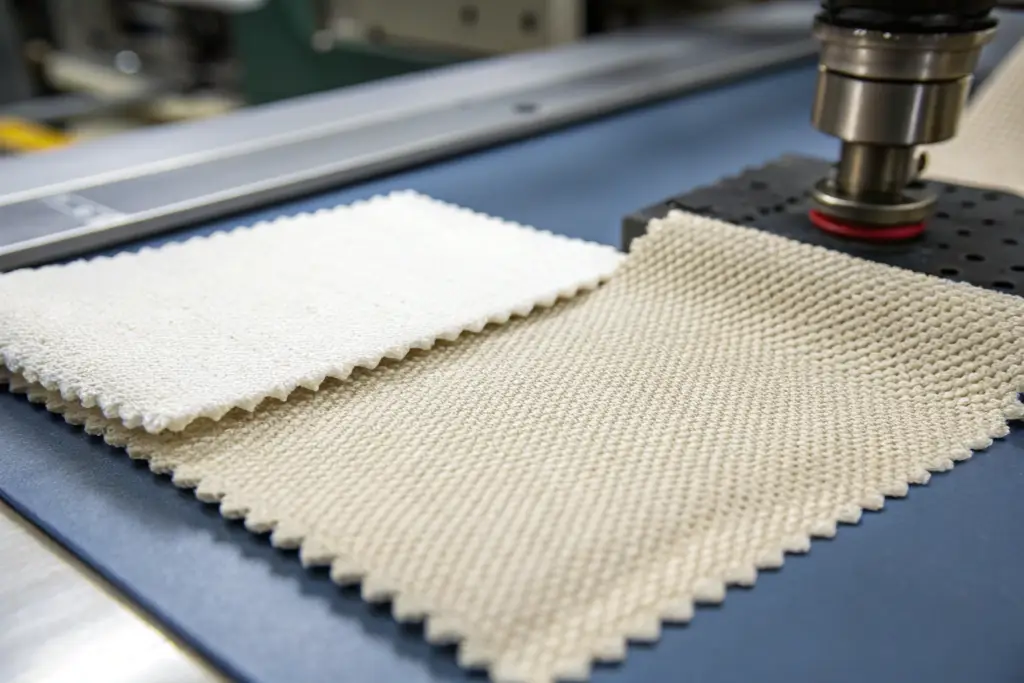
In a standard twill, the warp yarns float over multiple weft yarns on the fabric face. The raised diagonal ridges take the full force of abrasion, and once the crown of the ridge wears down, the inner yarn core is exposed and rapidly disintegrates. In a reverse twill, the weave is engineered so that the longer, more durable synthetic-blend yarns form the exposed face, while the shorter, softer cotton yarns sit predominantly on the back. The friction of a child sliding across a school playground floor is absorbed by the synthetic yarn surface, which has a much higher coefficient of abrasion resistance. I specify this weave specifically for the knee and seat panels on any kids' wear school uniform trouser.
What Is the Exact Martindale Abrasion Cycle Count That Separates a One-Season Trouser from a Two-Year Trouser?
The Martindale abrasion test measures how many rubbing cycles a fabric can withstand before a hole appears. A 100% cotton twill of around 250gsm often fails at 15,000-20,000 cycles. A 65/35 polyester-cotton reverse twill at 280gsm consistently achieves 35,000-45,000 cycles before the first thread rupture. For a wholesale contract with a school requiring a two-year uniform guarantee, I set the internal fabric specification at a minimum of 30,000 Martindale cycles. This number is printed directly on our fabric mill purchase contract.
Why Is Cordura Nylon-Cotton Ripstop the Undisputed Champion of Kids' Outdoor Outerwear?
A Canadian outdoor children's brand had a recurring nightmare: the forest school jacket returns. Their previous supplier used a standard polyester taffeta shell that tore open on the first contact with a tree branch during an outdoor education program. Parents were furious that a jacket marketed as "outdoor adventure wear" could not survive a single day in an actual forest. The brand switched to a fabric we developed using a Cordura-branded nylon-cotton ripstop blend, and the returns from physical shell damage dropped to near zero within a single season. The fabric upgrade added $2.80 to the FOB cost per jacket, but the warranty liability savings were far larger.
Cordura nylon-cotton ripstop is the undisputed champion of kids' outdoor outerwear because the Cordura-branded air-textured nylon 6,6 fiber provides an extraordinary tear strength exceeding 25 Newtons in the Elmendorf tear test, while the embedded ripstop grid of heavier denier yarns spaced every 5-8 millimeters acts as a physical tear-stop barrier, ensuring that even if the sharp edge of a rock or metal playground equipment penetrates the fabric surface, the resulting hole cannot propagate into a large, garment-destroying rip.
A ripstop fabric is not rip-proof. It is rip-contained. The grid geometry ensures that a localized puncture remains a small cosmetic hole, not a structural failure of the entire sleeve.
How Does Air-Textured Nylon Differ from Standard Nylon in a Child's Ski Jacket?
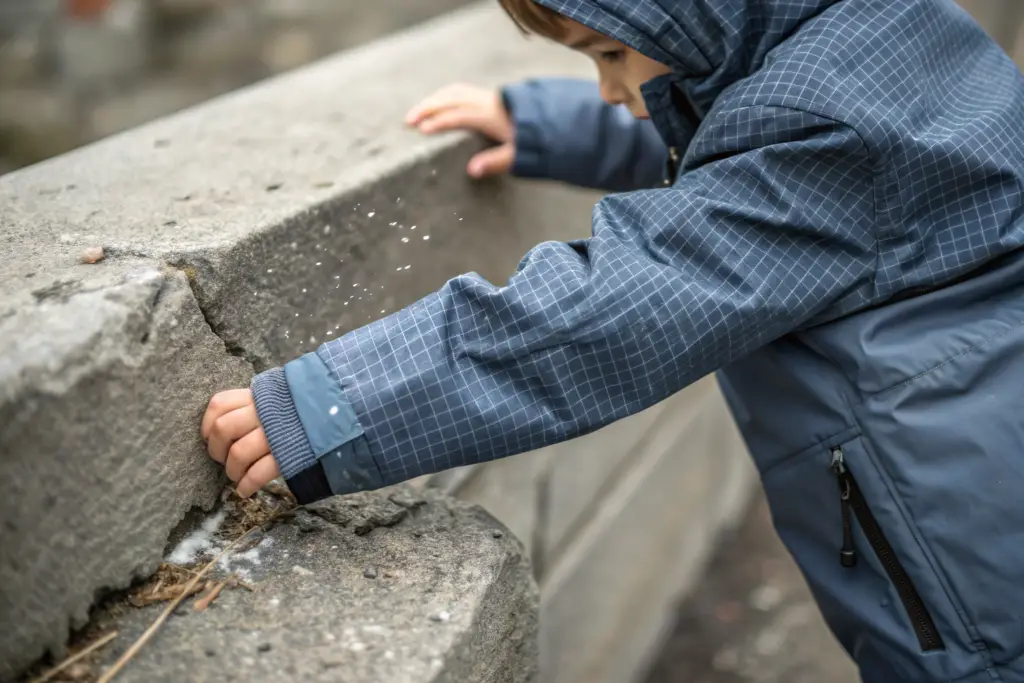
Standard nylon filament is smooth and slippery. Air-textured nylon is shot with high-pressure air during extrusion, creating a slightly roughened, spun-like surface. This texture change has two benefits for a kid's outerwear piece. First, the rougher surface reduces the loud, crinkly "swish" sound that makes some children refuse to wear the jacket. Second, the textured surface has a much higher tear propagation resistance because the micro-irregularities in the yarn disrupt the linear path of a tearing force. A tear that would zip through a smooth nylon filament is slowed and stopped by the chaotic micro-structure of the air-textured fiber.
What Is the "Rock and Gravel" Simulated Abrasion Test That Predicts Playground Survival?
Standard Martindale testing uses a smooth, woven wool abradant. This does not simulate the jagged, sharp surface of a gravel playground. I use a Wyzenbeek abrasion tester fitted with a custom rough-grit emery paper equivalent to coarse sandpaper, specifically 180-grit aluminum oxide. A standard nylon taffeta will abrade through to the backing within 8,000-10,000 double rubs. A Cordura ripstop consistently achieves 25,000-35,000 double rubs before significant visible wear. This test is the reason I confidently warranty our outerwear fabric for brand buyers whose garments go to outdoor education programs.
What Knit Fabric Construction Prevents Toddler Legging Knee Blowouts After Repeated Washing?
A New Zealand baby brand experienced a devastating pattern of returns that almost destroyed their online reputation. Their toddler leggings were selling beautifully, with a soft, brushed peach finish that photographed well. But after fifteen washes, the knees were developing multiple small holes, and the fabric surface was covered in unsightly pills. The fabric was a 180gsm single jersey knit with a heavily brushed inner face. The brushing process had weakened the yarn fibers by physically abrading them during finishing, and the single jersey structure had poor inherent tear strength. The beautiful first-wear experience had been achieved by sacrificing the fabric's fundamental structural integrity.
The knit fabric construction that prevents toddler legging knee blowouts is a double-face interlock knit at a minimum 220gsm weight, constructed from long-staple combed cotton wrapped around a continuous filament polyester core, with a Spandex content between 3-5% for stretch recovery, because the interlock structure's dual-layered, interlocking loops distribute tensile stress evenly across two yarn planes rather than concentrating it on the single plane of a jersey knit, while the filament polyester core provides a permanent, unbreakable internal skeleton that prevents the cotton fibers from fully tearing apart.
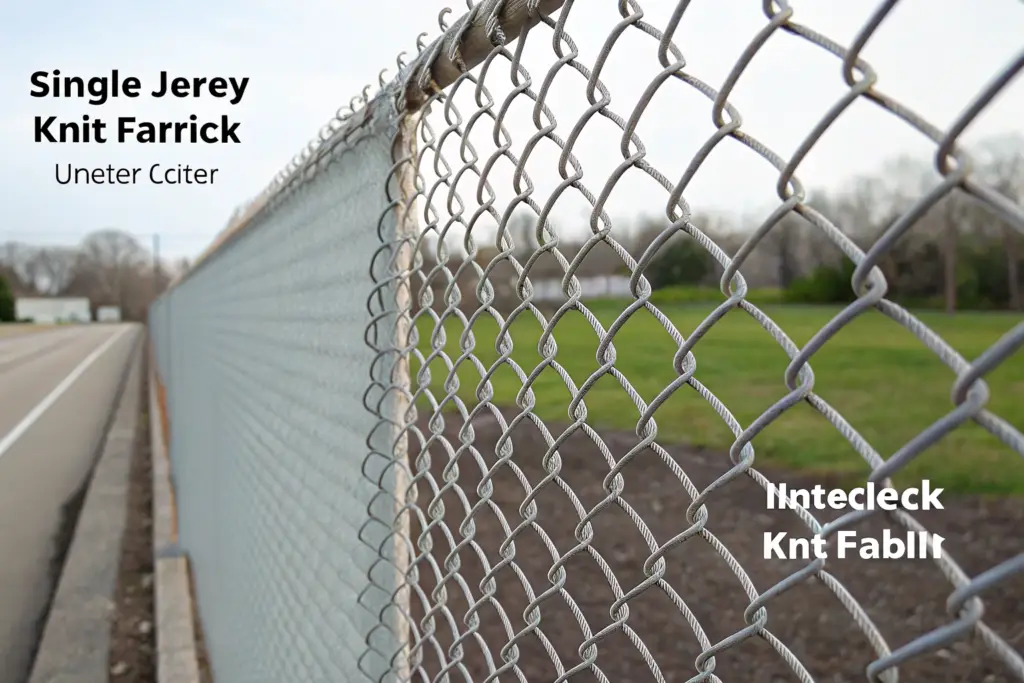
A single jersey knit is like a single layer of chain-link fence. An interlock knit is like two closely interwoven chain-link fences pressed together. The tensile force required to tear through both layers simultaneously is astronomically higher.
Why Does a Polyester-Core Cotton-Wrap Yarn Solve the "Soft vs. Strong" Paradox?
A 100% cotton yarn is soft but has limited tensile strength and loses significant strength when wet during washing. A 100% polyester filament yarn is incredibly strong but feels synthetic and clammy against a toddler's skin. A core-spun yarn solves this by extruding a fine, continuous filament polyester core and wrapping it completely with a soft, combed cotton outer layer during spinning. The cotton touches the skin and provides the soft, natural hand feel. The invisible polyester filament core provides the tensile backbone. When I develop leggings for a clothing manufacturer partner targeting the toddler market, this specific yarn is non-negotiable.
How Does the ASTM D4964 Stretch Recovery Test Predict a Legging's Lifetime Shape Retention?
A legging that bags out at the knee after an hour of crawling is a return waiting to happen. The ASTM D4964 test measures the percentage of recovery after a fabric is stretched to a specified extension and held for a set time. A quality interlock legging fabric should recover to within 95% of its original dimensions after 60 minutes of 30% extension. Fabric that recovers to only 85% will sag noticeably at the knees, creating a visual "worn out" appearance even if the fabric has no holes. I specify this 95% minimum on our fabric quality standard document.
How Do You Certify a Highly Durable Fabric Is Also Chemically Safe for Constant Child Skin Contact?
A Swedish children's wear importer once rejected an entire container of durable, beautifully constructed cargo pants. The pants had passed every physical durability test—the Martindale abrasion, the Elmendorf tear, the seam slippage. The fabric was a tough, 300gsm cotton-polyester canvas that would easily survive two years of hard use. But the chemical test revealed a formaldehyde level of 22 milligrams per kilogram, exceeding the 16 mg/kg limit for infant skin contact under the OEKO-TEX Appendix 6 standard. The excess formaldehyde was a residual from the durable-press finish that made the pants wrinkle-resistant. The pants were physically indestructible but chemically unsafe. The entire shipment was destroyed.
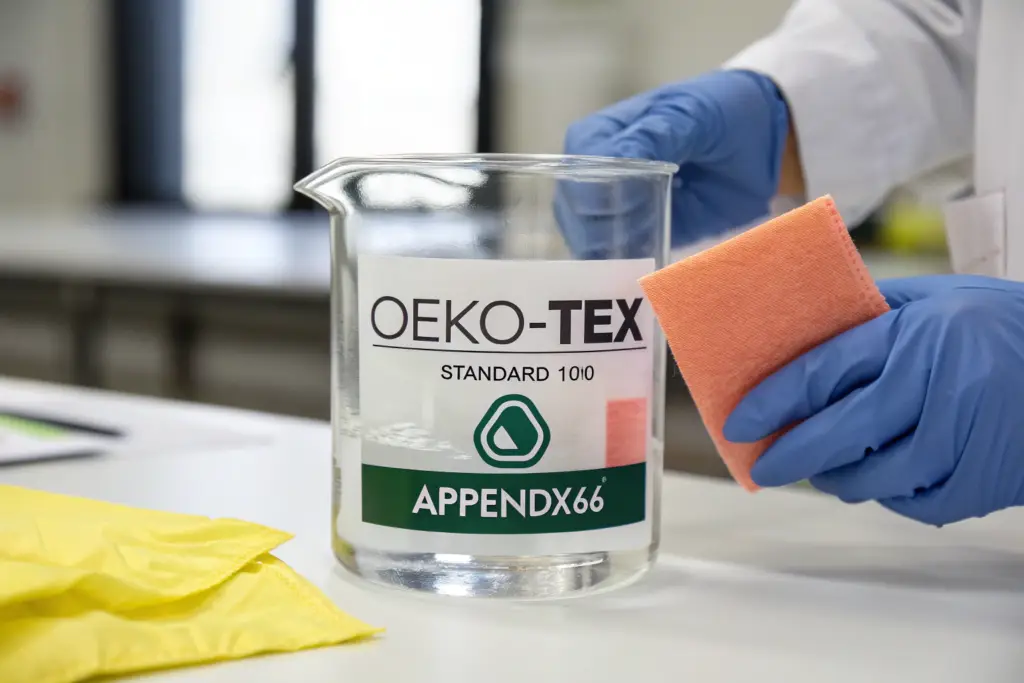
To certify a highly durable fabric is chemically safe for constant child skin contact, you must commission a test for the specific OEKO-TEX Standard 100 Appendix 6 standard from an accredited CPSC-accepted laboratory, which measures extractable heavy metals like lead and cadmium, formaldehyde content, allergenic disperse dyes, and phthalates used in any plastisol print or softener finish, and you must require this certificate for every dye lot, not just a single "factory master certificate," because chemical formulations can drift between production batches.
Physical durability and chemical safety must be engineered simultaneously. A durable-press finish that adds physical resilience but introduces a chemical hazard is a net-negative engineering choice for a child's garment.
How Does a "Saliva Simulant" Extraction Test Identify a Hidden Toxic Dye in a Toddler's T-Shirt?
Children mouth their clothing. They suck on sleeve cuffs and chew on collar points. The OEKO-TEX Appendix 6 test uses a specific hydrochloric acid solution that simulates the chemical environment of a child's stomach acid. This solution is applied to the fabric swatch under controlled temperature and time conditions. The extract is then analyzed for heavy metal migration and specific carcinogenic arylamines that could be released from poorly fixed azo dyes. A fabric that passes a standard sweat-simulation test might still fail the saliva-simulant test because the lower pH of the acid solution pulls different chemical compounds out of the dye.
Why Must a "Durable Water Repellent" Finish Be PFAS-Free for the European Kids' Wear Market?
A durable water repellent (DWR) finish makes a rain jacket bead water effectively, increasing its functional life. But the traditional C8 fluorocarbon DWR chemistry contains perfluorooctanoic acid (PFOA) and related PFAS compounds, which are now regulated or banned in the EU under REACH due to their persistent, bioaccumulative, and toxic profile. The European market in 2026 demands a PFAS-free DWR formulation based on shorter-chain or non-fluorinated chemistry. At Shanghai Fumao, I exclusively use a plant-based, renewable DWR for any outerwear destined for a garment contract with a European wholesale buyer.
Conclusion
The most durable fabrics for wholesale kids' wear in 2026 are not simply "heavier cotton." They are precision-engineered material systems. A pair of school trousers is no longer just a garment; it is a 35,000 Martindale-cycle-rated textile assembly with a reverse twill geometry. A forest school jacket is a Cordura ripstop shield designed to stop a propagating tear on a sharp branch. A toddler legging is a double-face interlock structure built around a hidden polyester filament skeleton that prevents knee blowout. And every single one of these physically tough fabrics must simultaneously pass a chemical safety standard designed for the vulnerable biology of a developing child.
At Shanghai Fumao, I have spent years building the specific fabric supply chain partnerships that deliver this dual performance: the Cordura mill relationship, the core-spun yarn spinner, the OEKO-TEX Appendix 6-certified dye house, and the PFAS-free finishing formulation. Manufacturing wholesale kids' wear is not a softer, smaller version of adult apparel manufacturing. It is a separate, more demanding discipline where a playground tumble is the quality standard.
If you are developing a kids' wear line and you are tired of fabric returns and knee-blowout complaints, I invite you to access our specific, tested material library. Contact our Business Director, Elaine. She can send you the exact Martindale cycle reports, the core-spun yarn specifications, and the OEKO-TEX chemical certificates for our kids' wear fabric stock. You can reach Elaine directly at: elaine@fumaoclothing.com. Build the garment that survives the child.